Tvaryny ›
Dogs ›
Bucovina Shepherd Dog (Ciobănesc de Bucovina)
Group 2 · pinschers, schnauzers, molossoids, mountain dogs · Romania
Bucovina Shepherd Dog (Ciobănesc de Bucovina)
A mighty Carpathian giant with a loud bark — brave and level-headed: strong, calm, devoted to its family and gentle with children. The Bucovina Shepherd Dog is a stately Romanian mountain guardian, a true fighter against bear, wolf and lynx; despite its imposing strength it is level-headed and loves children, but is wary of strangers and needs space and an experienced owner.
Apartment · not suitableKidsCats · with caveatsOther dogs · with caveatsBeginners · not suitable
The Bucovina Shepherd Dog (Ciobănesc Românesc de Bucovina) is a majestic and powerful representative of the pastoral breeds, striking with its strength, courage, and unparalleled guarding qualities. Originating from the north-eastern regions of Romania, particularly the Carpathian Mountains, this dog is a true pride of its homeland. While the Bucovina Shepherd remains quite rare outside Romania, its exceptional character and abilities make it an ideal choice for those seeking a reliable protector and loyal companion. You can read more about it on Tvaryny, a dedicated resource for the animal world, where we have prepared a detailed overview of this amazing breed to help you delve deeper into its unique characteristics.
Bucovina Shepherds are brave, self-assured, and incredibly well-balanced dogs, demonstrating boundless devotion to their owner. Their temperament demands an experienced and strong-willed handler, capable of establishing clear boundaries and consistently training the dog. Despite their powerful build, these dogs adapt wonderfully to family life, showing patience with children. However, it's crucial to remember that a Bucovina Shepherd should always be treated with respect, understanding its natural instincts and needs. Only then will you gain not just a guard, but a faithful friend and reliable protector for the entire family.
Bucovina Shepherd Dog: A Brief Breed Overview
The Bucovina Shepherd Dog is a breed that combines a majestic appearance, a powerful physique, and unique characteristics, making it an indispensable guardian and loyal companion. Here are the key data that provide a better understanding of this breed's features:
Bucovina Shepherd Dog: A Brief Breed Overview · 9
Characteristic
Value
Origin
Romania
Year of First Mention
1981
Life Expectancy
11–13 years
Height at Withers (Male)
68–78 cm
Height at Withers (Female)
64–72 cm
Weight (Male)
68–80 kg
Weight (Female)
50–65 kg
Coat Type
Dense, straight, long, with a thick undercoat
Temperament
Serious, calm, balanced, brave, loyal
These indicators demonstrate just how imposing the Bucovina Shepherd Dog is, requiring a suitable approach to its upkeep and training.
Interesting Facts About the Bucovina Shepherd Dog
The Bucovina Shepherd Dog is not just a canine, but a true embodiment of the history and culture of the Carpathian Mountains. Behind every trait of this breed lies a rich past and unique characteristics that make it truly special. Here are a few interesting facts that allow for a deeper understanding of this amazing creation of nature and selective breeding:
A True Carpathian Giant: The Bucovina Shepherd is one of the largest pastoral breeds in the world. Its impressive size and powerful build not only allow it to effectively protect flocks from large predators but also make it one of the most striking dogs visually.
Official FCI Recognition – A Long Journey: Although the breed has been known for centuries, its official international recognition by the Fédération Cynologique Internationale (FCI) happened relatively recently – preliminary recognition was only obtained in 2009. This indicates that the breed was primarily local and developed naturally in its region, preserving its authentic qualities.
A "Wolfhound" by Calling: One of the most important qualities of the Bucovina Shepherd is its ability to confront wolves, bears, and other large predators. This is precisely why it was bred for centuries — to be an unparalleled protector of pastures. Its courage and strength are legendary among local shepherds.
Universal Guardian: Despite the Bucovina Shepherd traditionally being used for guarding sheep, its universal guarding qualities allow it to be used for protecting any property, be it a farm, house, or industrial site. Its territorial instinct is extremely strong.
Ability to Withstand Extreme Conditions: The thick coat with a dense undercoat and a resilient body allow the Bucovina Shepherd to withstand harsh winter frosts and strong winds of the Carpathian Mountains. This makes it ideal for outdoor keeping in a kennel.
"Small Eaters" the Mountain Way: The Bucovina Shepherd's ability to go for long periods without food is a unique feature that developed in the conditions of mountain grazing, where access to food could be limited. This explains why an adult dog only needs to be fed once a day.
Not Just a Guardian, but a Partner: Although the Bucovina Shepherd has the image of a strict guardian, for its owners, it is a loyal and affectionate partner. It forms deep bonds with members of its family and shows them tenderness and patience, especially towards children, if properly socialized.
These facts only underline the uniqueness of the Bucovina Shepherd and its integral role in the cultural and natural landscape of Romania.
History of the Breed: The Bucovina Shepherd's Journey Through Centuries
The history of the Bucovina Shepherd Dog is closely intertwined with the lives of shepherds and their flocks in the harsh conditions of the Carpathian Mountains. These dogs are believed to have been an integral part of life for residents of north-eastern Romania since ancient times, guarding flocks from predators and protecting their property. The exact origin of this breed remains a subject of debate, but several theories help to better understand its roots.
Dacian Dog Theory: Some researchers suggest that the ancestors of Bucovina Shepherds might have been Dacian dogs – powerful hunting and guarding dogs of the Thracian tribes that inhabited the territory of modern Romania before the arrival of the Romans. This indicates the breed's deep roots in the region and its historical role in the lives of the local population.
Nomadic Tribe Influence: Another hypothesis states that these dogs appeared in the Carpathians with nomadic tribes who migrated through these lands, bringing their pastoral dogs with them. Such dogs could have adapted to local conditions, eventually forming the unique traits of the Bucovina Shepherd.
Roman Connections: There is also a suggestion that the breed might have descended from Roman military and pastoral dogs that arrived in these territories with the Roman Empire. This theory highlights the possible influence of large European pastoral breeds on the formation of the Bucovina Shepherd.
Regardless of its precise origin, it is likely that the blood of many large pastoral dogs flows through the veins of Bucovina Shepherds. Possible ancestors include representatives such as the Hungarian Komondor, Anatolian Shepherd, Turkish Akbash, as well as other Eastern European pastoral breeds, for example, the Caucasian Shepherd Dog, Romanian Carpathian Shepherd Dog, and Romanian Mioritic Shepherd Dog. This mix of different breeds contributed to the formation of the Bucovina Shepherd's unique physical and characterological qualities, making it ideally adapted to challenging conditions and the demands of pastoral work.
Official recognition of the breed occurred gradually. The Bucovina Shepherd was first described in detail in the mid-18th century. The Romanian Kennel Club officially recognized the breed, and in 2009, it received preliminary recognition from the Fédération Cynologique Internationale (FCI), which was an important step towards its international recognition and popularization.
What the Bucovina Shepherd Dog Looks Like: Appearance Description
The Bucovina Shepherd Dog is a canine that impresses with its grandeur and power. Its external appearance is an embodiment of strength, endurance, and nobility, perfectly matching its purpose – guarding and protection. The Bucovina Shepherd's build is large, massive, and robust, immediately indicating its significant physical strength.
Head: Bucovina Shepherds have a heavy, massive head with a broad skull. The length of the muzzle is approximately equal to the length of the skull, giving the head a proportionate appearance. The muzzle tapers smoothly towards the nose, which is always large and black. The lips are thick, tightly fitting over the teeth, without sagging.
Eyes: The eyes are medium-sized, slightly slanted, which gives the Bucovina Shepherd's gaze a special expression – intelligent and penetrating. Eye color varies from light amber to dark brown, harmonising with the overall coat color.
Ears: The ears are set high, triangular in shape, and lie flat against the cheeks, dropping downwards. This gives the muzzle additional expressiveness and emphasizes its noble appearance.
Neck: The Bucovina Shepherd's neck is powerful, strong, and muscular, without a dewlap, ensuring the dog freedom of movement and additional strength during guarding duties.
Chest: The chest is broad, deep, with well-sprung ribs, indicating a well-developed respiratory system and endurance.
Tail: The tail is long, bushy, and carried low when at rest. When excited, it rises and takes on a sickle shape, which is a typical characteristic of many pastoral breeds.
Skin and Coat: The skin is thick and dense. The coat is thick, straight, and long, especially on the body. Around the head and forelegs, the fur is shorter, which is a characteristic feature of the breed. The presence of a dense undercoat provides the Bucovina Shepherd with reliable protection against cold and moisture, allowing it to feel comfortable in all weather conditions. There is also a "mane" – longer fur on the neck and chest.
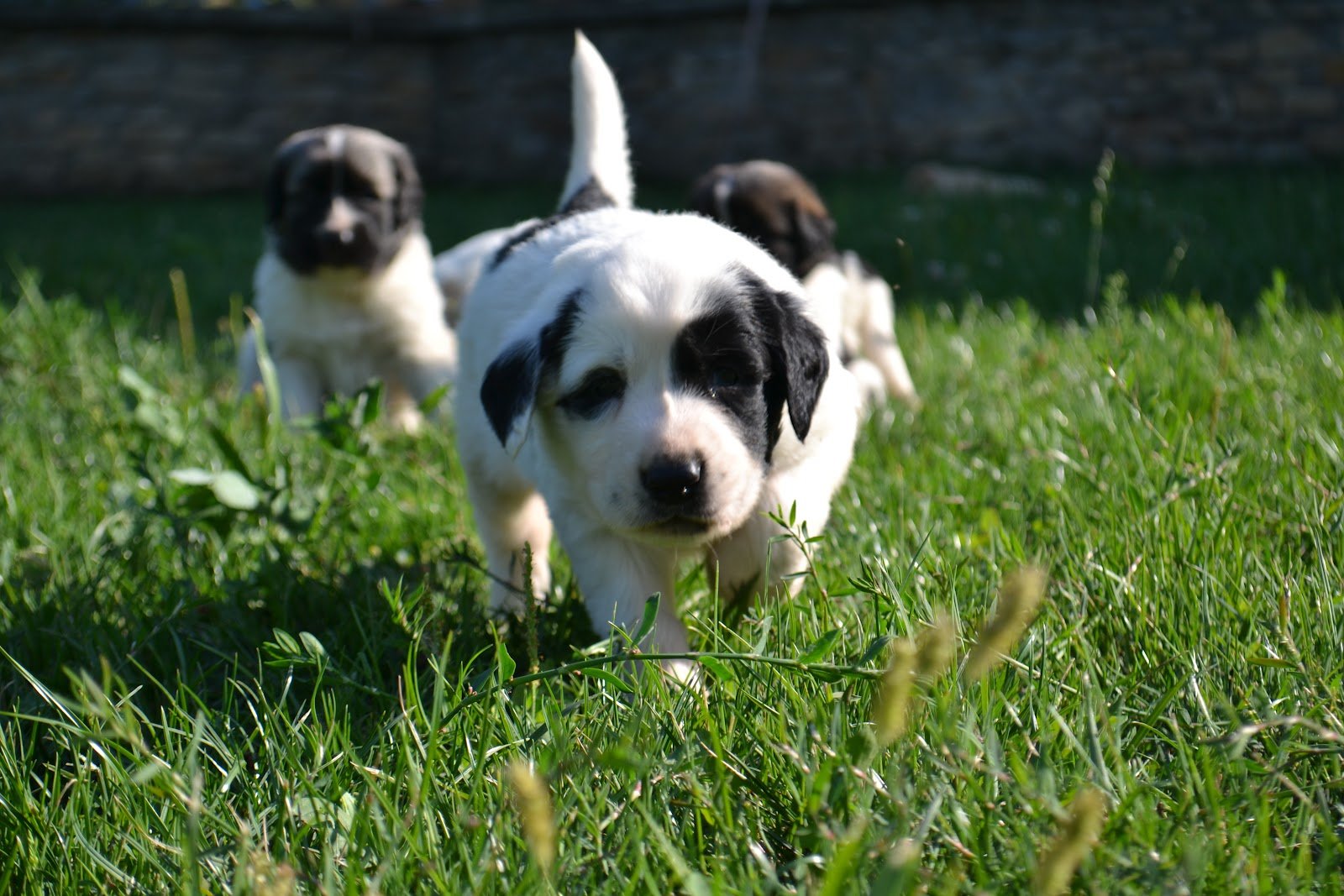
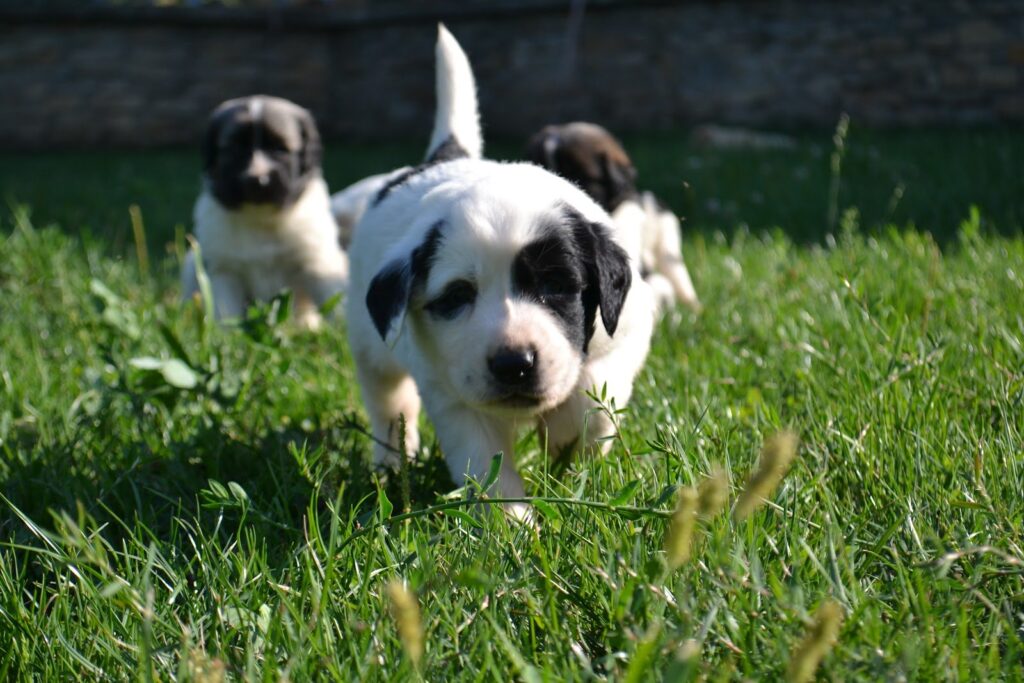
Coloring: The Bucovina Shepherd's coloring can be white or cream with clearly defined gray or black patches. Reddish-fawn markings are also permissible, adding individuality to the coat. Most commonly, white dogs with large black or gray patches are seen.
All these external features combined create the image of a powerful, yet elegant dog, which by its very appearance can command respect and, if necessary, apprehension. The appearance of the Bucovina Shepherd fully corresponds to its purpose – to be a reliable guardian and protector.
Bucovina Shepherd Dog Character: Temperament and Behavior
The character of the Bucovina Shepherd Dog is a combination of strength, resilience, and unparalleled loyalty, making it an ideal guardian and faithful companion. This is a serious, calm, and well-balanced dog, always ready to protect its territory and its family.
Courage and Bravery: The Bucovina Shepherd is known for its exceptional courage and bravery. These dogs are capable of confronting large predators such as bears, wolves, or lynxes, which attests to their innate strength and fearlessness. They are not just noisy dogs, but true fighters, ready for a real threat.
Guarding Instinct: Dogs of this breed have a strongly expressed protective instinct. They may show aggression towards strangers attempting to enter their territory. The mere appearance of a Bucovina Shepherd is often enough to deter outsiders from crossing your boundaries. In the event of a real threat or an attempt on private property, the Bucovina Shepherd attacks instantly and without hesitation.
Loyalty to the Owner: The Bucovina Shepherd is extremely loyal to its owner and family. It establishes a close bond with the people it considers its "pack" and is ready to protect them to the last. This loyalty makes it a wonderful companion, but requires mutual respect and understanding.
Tendency to Dominate: These dogs tend to dominate, which is a natural trait for pastoral and guarding breeds. They require a strong and confident leader who can establish clear rules and maintain their authority. Without proper training and socialization, the Bucovina Shepherd may try to take on the role of "pack leader" itself.
Interaction with Other Animals: The Bucovina Shepherd can get along with other domestic animals, but only if it has spent its puppyhood with them and has been properly socialized. Otherwise, due to a strong hunting instinct, it may pose a danger to small animals. It is important that the dog clearly understands who is part of its "pack" and who is potential prey.
Attitude Towards Children: Generally, Bucovina Shepherds are patient and protective towards children, perceiving them as part of their family. However, children should not be allowed to treat the dog disrespectfully or without proper boundaries. It's important to teach children how to interact correctly with a large dog, and to teach the dog how to behave with small family members.
These qualities make the Bucovina Shepherd an ideal choice for those seeking a reliable guardian and faithful friend, capable of protecting their home and family in any situation. However, it is important to remember that such a dog requires a responsible and experienced owner who can provide it with proper training, socialization, and living conditions.
Training and Socialization of the Bucovina Shepherd Dog
Training and socialization of the Bucovina Shepherd Dog are key aspects of upbringing that require patience, consistency, and firmness. This breed, with its natural tendency to dominate and high intelligence, can be quite challenging for novices. However, with the right approach, you will gain an incredibly intelligent, obedient, and loyal companion.
Dominant Character: Bucovina Shepherds are dominant dogs that tend to assert their authority. They will constantly test boundaries and try to take on the role of leader in the "pack" if they do not sense sufficient authority from the owner. Therefore, training must begin from the very first days the puppy arrives home.
Importance of a Strong Leader: These dogs need an equally dominant and confident owner who can assume the position of "pack leader." It is important not to show excessive affection or indulgence to the puppy, especially in the early stages. The owner must be restrained but fair, establishing clear rules and demands. This does not mean cruelty, but rather consistency and unwavering resolve.
Difficulty of Training: Although Bucovina Shepherds are extremely intelligent, their complex character makes training quite a difficult task. They can be stubborn and independent. Success in training depends on how well the owner can establish themselves as an undeniable authority. Even if you manage to establish your leadership status, the dog may occasionally try to displace you from this "post," so it always needs proof of your authority.
Early Socialization: Socialization is extremely important for the Bucovina Shepherd, especially given its natural suspicion of strangers. The puppy should be introduced to various people, other dogs and animals, as well as different sounds and situations as early as possible. This will help it grow into a well-balanced and confident dog that will react appropriately to the surrounding world. Without proper socialization, the Bucovina Shepherd can become overly aggressive or timid.
Positive Reinforcement: Despite the need for firmness, training should be based on positive reinforcement. Encouragement with treats, praise, and games will help the dog better learn commands and develop desired behaviors. Violence or shouting will only worsen the situation and destroy trust between you and your pet.
Professional Help: If you have no experience in raising large guarding breeds, it is recommended to seek help from a professional dog trainer. An experienced specialist will help you develop an effective training and socialization program, taking into account the specific characteristics of the Bucovina Shepherd's temperament.
Remember that training is not a one-off event, but a continuous process that lasts throughout the dog's life. Consistency, patience, and mutual respect will help you raise a loyal, obedient, and well-adapted companion.
Pros and Cons of the Bucovina Shepherd Dog Breed
Every dog breed has its unique advantages and disadvantages, and the Bucovina Shepherd is no exception. Before getting such a powerful and charismatic friend, it's important to carefully weigh all the pros and cons to ensure that this breed perfectly suits your lifestyle and expectations. Understanding these aspects will help you better prepare for the role of a Bucovina Shepherd owner.
Pros of the Bucovina Shepherd Dog:
Outstanding Guarding Qualities: This is undoubtedly the main advantage of the breed. The Bucovina Shepherd is an unparalleled guardian, capable of protecting territory and family from any threat. Its appearance and powerful bark are capable of deterring most intruders.
Boundless Loyalty: These dogs are extremely devoted to their owners and establish a very close bond with them. They are ready to do anything for their family.
Courage and Fearlessness: Bucovina Shepherds are afraid of nothing, not even large predators. This quality makes them reliable protectors in all circumstances.
Calm and Balanced Temperament: In a calm environment, the Bucovina Shepherd is a balanced and sensible dog. It is not prone to senseless barking or aggression without cause.
Adaptability to Climate: Thanks to its thick coat and undercoat, the Bucovina Shepherd tolerates low temperatures and humidity wonderfully, making it ideal for outdoor keeping (in a kennel).
High Intelligence: These are intelligent dogs, capable of learning quickly, although their character can complicate training. They understand commands and situations well.
Cons of the Bucovina Shepherd Dog:
Difficulty in Training for Novices: The Bucovina Shepherd requires an experienced and strong-willed owner. Its tendency to dominate makes it unsuitable for people without experience in raising large breeds.
Need for Large Territory: This is a very large and active breed, which needs space. Keeping it in a small apartment without the possibility of regular long walks and physical activity can lead to behavioral problems.
Intensive Shedding and Coat Care: The Bucovina Shepherd's thick coat requires daily brushing, especially during shedding periods, when it loses a huge amount of fur. This demands time and effort.
Potential Aggression Towards Strangers: Due to a strong guarding instinct, the Bucovina Shepherd can be aggressive towards unfamiliar people and animals if not properly socialized early on.
Susceptibility to Certain Diseases: Like most large breeds, it is prone to joint dysplasia, which requires attention to nutrition and physical activity.
Strong Hunting Instinct: This can be a problem for families with small pets if the dog has not been socialized with them from an early age.
Careful consideration of these factors will help you make an informed decision about whether the Bucovina Shepherd is the breed that best meets your needs and capabilities.
How to Care for the Bucovina Shepherd's Coat and General Grooming
Caring for a Bucovina Shepherd is a responsible process that requires attention and regularity, especially concerning its thick coat. This breed, which developed in mountainous climates, thrives in large country houses with spacious yards, where there is enough room for activity. Although recently some owners keep these dogs in apartments, it should be noted that this demands even greater attention to walks and physical exercise.
Coat Care: The Bucovina Shepherd's coat is thick, long, and has a dense undercoat, requiring thorough care. It needs to be brushed daily, to prevent matting, especially during shedding periods. It's worth noting that during shedding, the dog loses a huge amount of fur, so at this time, the intensity of brushing should be increased, perhaps even several times a day. Use metal combs with long teeth and slicker brushes to effectively remove dead fur and undercoat. Regular coat care not only maintains its healthy appearance but also helps keep the home clean and ensures the dog's comfort.
Bathing: Bathe the Bucovina Shepherd only when necessary, using special dog shampoos that do not dry out the skin and coat. Too frequent bathing can disrupt the skin's natural oil layer and lead to irritation. After bathing, thoroughly dry the coat, especially in cold weather.
Physical Activity: Bucovina Shepherds are very active and energetic dogs that require daily and prolonged walks. They need at least an hour of active physical exercise every day. This can include long walks in the park, playing in a large area, running alongside a bicycle, or special training sessions. Insufficient physical activity can lead to destructive behavior, especially at a young age when dogs are prone to damaging property.
Toys: To prevent damage to furniture and other household items, the Bucovina Shepherd should have a sufficient number of its own durable toys. These can include chew toys, sturdy balls, or puzzle toys that will help the dog expend its energy and satisfy its need to chew.
Dental, Nail, and Ear Care: Regularly check the dog's teeth and, if necessary, brush them with special dog toothpastes and brushes. This will help prevent tartar buildup and gum problems. Nails should be trimmed as needed if they do not wear down naturally during walks. Ears should be regularly inspected and cleaned of dirt and excess wax to prevent infections.
Overall, caring for a Bucovina Shepherd requires time and effort, but it's an investment in your four-legged friend's health and happiness. By providing proper care, you will gain a loyal, healthy, and happy companion.
Nutrition
Bucovina Shepherd Dog Nutrition: Key Recommendations
Health and risks
Bucovina Shepherd Dog Health: Typical Ailments and Prevention
Frequently Asked Questions About the Bucovina Shepherd Dog · 7
Decided to learn more about the Bucovina Shepherd or considering getting such a wonderful friend? We've compiled the most common questions that potential and existing owners have, to provide you with comprehensive information about this unique breed.
Is the Bucovina Shepherd suitable for apartment living? The Bucovina Shepherd is a very large and active dog that needs space. Ideal conditions for it are a large country house with a spacious, well-fenced yard. Keeping it in an apartment is possible, but requires extraordinary effort from the owner: daily, very long and intensive walks (minimum 2–3 hours a day), ensuring sufficient physical and mental stimulation. Otherwise, the dog may suffer from boredom, exhibit destructive behavior, or develop health problems.
How aggressive is the Bucovina Shepherd towards strangers? The Bucovina Shepherd has a strongly expressed guarding instinct and natural suspicion of strangers. It will bravely defend its territory and family. If the dog has not undergone proper early socialization, it may show excessive aggression towards unfamiliar people and animals. It's important to teach the dog to distinguish a real threat from ordinary visitors. Proper socialization from a young age will help develop balanced and controlled behavior.
Does the Bucovina Shepherd get along with children? Generally, Bucovina Shepherds get along with children, especially if they grew up with them. They perceive children as part of their "pack" and show them patience and protective qualities. However, given the dog's large size and strength, it's always important to supervise interactions between children and the dog, especially small children. Do not allow children to disturb the dog while eating or sleeping, and teach them to respect the animal's personal space.
Is it difficult to train a Bucovina Shepherd? Training a Bucovina Shepherd can be quite a challenging task, especially for novices. These dogs are intelligent but prone to dominance and have a strong, independent character. They need an experienced, confident, and consistent owner who can establish themselves as an undeniable leader. Early training and socialization are key. Positive reinforcement and patience yield the best results. If you are unsure of your abilities, it is recommended to seek help from a professional dog trainer.
How often should a Bucovina Shepherd be brushed? The Bucovina Shepherd has a thick, long coat with a dense undercoat, which requires regular care. It needs to be brushed daily to prevent matting and remove dead fur. During periods of intense shedding, which occurs twice a year (spring and autumn), brushing may be needed several times a day, as the dog sheds a huge amount of fur.
What type of nutrition is best for the Bucovina Shepherd? The Bucovina Shepherd requires high-quality, balanced nutrition. An optimal diet is one rich in animal protein, consisting mainly of meat and offal. An adult dog can be fed once a day. If you choose commercial food, it should be premium-class or holistic, formulated for large breeds. It's important to avoid overfeeding and ensure constant access to fresh water.
Does the Bucovina Shepherd need special living conditions? Yes, for the Bucovina Shepherd, the best conditions are a spacious outdoor kennel with good shelter from the weather, as it tolerates cold wonderfully. It's important that the area is well-fenced, as these dogs are strong and may try to jump over or dig under if they feel threatened or bored. The kennel should be large enough for the dog to move freely.