Group 1 · sheepdogs and cattle dogs · Romania (Carpathians)
Romanian Mioritic Shepherd Dog
A shaggy Carpathian giant that blends into the flock — stately and boundlessly devoted: calm, level-headed, fearless and gentle with its family. The Romanian Mioritic Shepherd is a powerful mountain guardian with a dense “sheep” coat that let it merge with the flock; a reliable defender against predators and a faithful family member, it is distrustful of strangers and needs space and an experienced owner.
Apartment · not suitableKidsCats · with caveatsOther dogs · with caveatsBeginners · not suitable
Majestic, powerful, and endlessly loyal - these are the words that best describe the Romanian Mioritic Shepherd Dog. This shaggy giant, hailing from the heart of the Carpathian Mountains, is more than just a dog; it's a true family member, a dependable guardian, and a faithful friend for life. Its thick, long coat, reminiscent of sheep's wool, allowed it to perfectly camouflage among the flock, protecting it from predators. Learn more about this fascinating breed on Tvaryny.
A key characteristic of the Romanian Mioritic Shepherd's temperament is its incredible loyalty to a single owner. This dog chooses its person once and for all. The one who takes in and raises a puppy becomes the center of its universe until the end of its days. This is why it's absolutely crucial not to rehome an adult Mioritic to another family - it would cause irreparable psychological trauma to the animal. If you decide to get one of these dogs, be prepared for a lifelong bond.
Romanian Mioritic Shepherd Dog: Key Breed Information
Romanian Mioritic Shepherd Dog: Key Breed Information · 9
Breed Name
Romanian Mioritic Shepherd Dog (Ciobănesc Românesc Mioritic)
Country of Origin
Romania
FCI Classification
Group 1 (Sheepdogs and Cattle Dogs), Section 1 (Sheepdogs). Standard No. 349.
Long (minimum 4 inches), thick, straight, with a soft and dense undercoat
Color
Predominantly white, light gray, or cream, solid or with clearly defined patches
Purpose
Herding dog, guardian, companion
Interesting Facts About the Romanian Mioritic Shepherd Dog
Literary Hero: The breed's name is directly linked to the Romanian ballad "Miorița," where a sheep warns its shepherd owner of danger. This underscores the dog's deep connection to sheepherding.
Master of Disguise: Its light coloring and shaggy coat made the Mioritic practically invisible within a flock of sheep, allowing it to suddenly attack approaching preditors.
Voice of Thunder: The Mioritic Shepherd Dog has an exceptionally deep, loud, and powerful bark. In the mountains, it could be heard over vast distances, serving as a signal to other shepherds and scaring away wild animals.
Not for Sport: Despite its strength and endurance, Mioritics are not sporting dogs. They don't achieve high results in agility or frisbee, like, for example, the English Cocker Spaniel. Their element is unhurriedly patrolling their territory.
Bear-like Appearance: Due to their size, shaggy fur, and massive heads, Mioritic puppies and young dogs are often compared to white bear cubs.
History of the Mioritic Shepherd Dog
The history of the Romanian Mioritic Shepherd Dog stretches back centuries and is intrinsically linked to the sheepherding traditions of the Carpathian Mountains. The name "Mioritic" comes from the Romanian word "miorița," meaning "little sheep," and references the famous Romanian folk ballad "Miorița." This ballad tells of the deep bond between a shepherd and his flock, which perfectly symbolizes the purpose of this breed.
For generations, these dogs were selected not for their appearance but for their working qualities: endurance, ability to withstand harsh weather conditions, courage to protect the flock from wolves and bears, and of course, an innate herding instinct. Their thick white or light-colored coat served as excellent camouflage among the sheep, making the dog almost invisible to predators.
Dedicated work on standardizing the breed began relatively recently in Romania. The first standard was developed by the Romanian Canine Association in 1981. After several revisions and clarifications, on July 6, 2005, the breed received provisional recognition from the Fédération Cynologique Internationale (FCI), with full recognition following later. Today, the Romanian Mioritic Shepherd Dog is a national pride of Romania and is gradually gaining admirers worldwide.
What the Romanian Mioritic Shepherd Dog Looks Like: Breed Standard
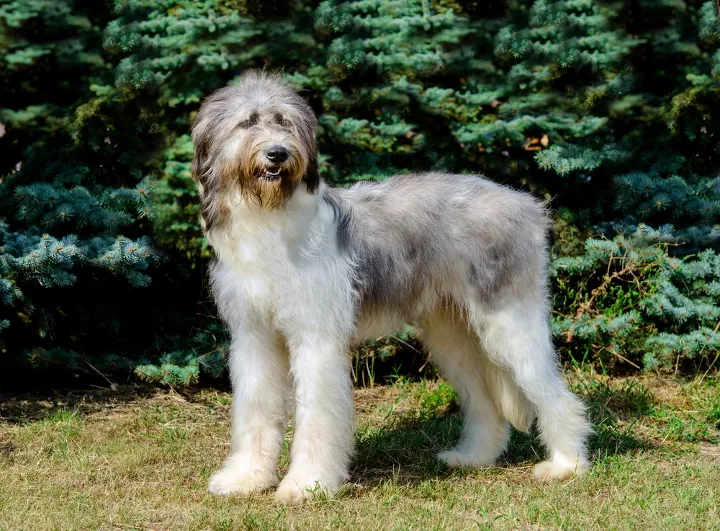
The Mioritic is a large but not clumsy dog, conveying an impression of strength and energy. Its body is entirely covered in long, thick, and somewhat shaggy fur, which is a hallmark of the breed.
General Appearance: A large-sized dog, energetic, with a rectangular build. The body length exceeds the height at the withers.
Head: Massive but not heavy. The skull is broad and slightly domed. The stop (transition from forehead to muzzle) is not overly pronounced. The muzzle is powerful, tapering gradually towards the nose, but not pointed.
Eyes: Medium-sized, obliquely set, hazel, brown, or dark brown. The expression is calm and intelligent.
Ears: Set relatively high, V-shaped with rounded tips, hanging close to the sides of the head.
Body: Strong, with well-developed musculature. The neck is muscular, of medium length. The back is straight, the chest is broad and deep, extending to the elbows.
Tail: Set high. At rest, it hangs down, reaching the hocks or lower. When the dog is excited or in motion, the tail rises above the topline, curving slightly, but never curling over the back. Tail docking is prohibited.
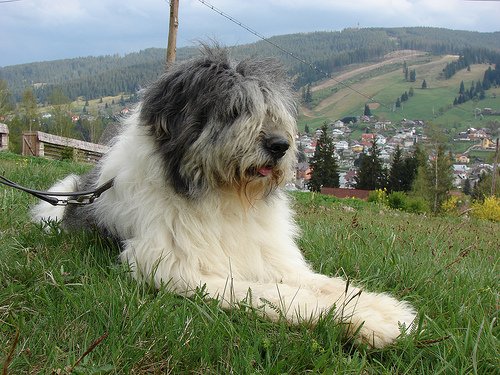
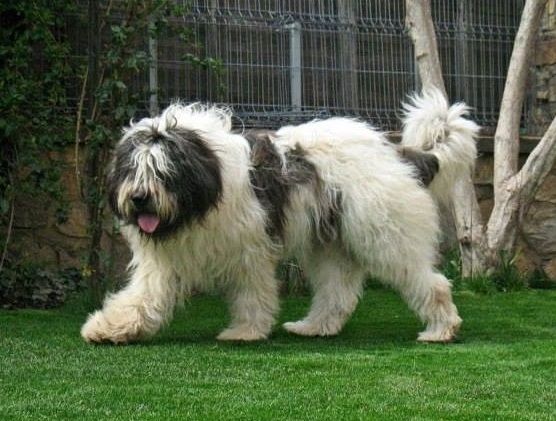
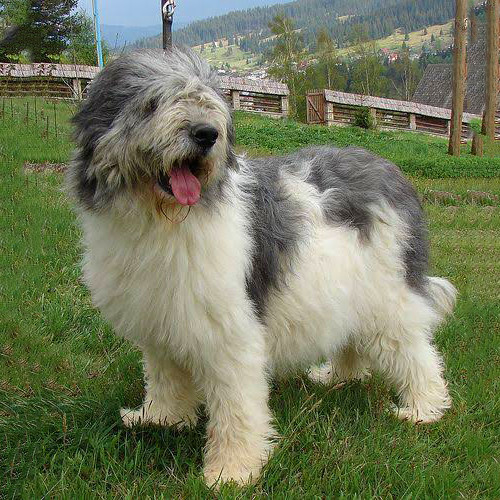
Coat: Very thick and long, at least 4 inches in length, straight, harsh to the touch. The undercoat is dense and soft, lighter in color. The coat abundantly covers not only the body but also the head and legs. Such a "fur coat" reliably protects the dog from any bad weather.
Color: The primary colors are white, light gray, or cream. The dog can be solid white, solid gray, or have a white background with clearly defined gray or cream patches.
Mioritic Character and Temperament
Behind the formidable appearance of the Mioritic Shepherd Dog lies a balanced and calm character. This is a natural guardian who remains vigilant and ready to protect its family and territory at all times. It treats strangers with great distrust and suspicion, keeping its distance. Its loud, deep bark is itself an effective warning for any intruder.
At the same time, within its family circle, the Mioritic transforms into a gentle and loving companion. It is very patient with children, perceiving them as part of the "pack" that needs protection. However, due to the dog's large size, play with small children should always be supervised by adults. To raise and manage such a dog, the owner must become its undisputed leader and authority - the "pack leader." The breed boasts high intelligence but can exhibit independence and stubbornness, which is typical for herding dogs accustomed to making their own decisions. Unlike working breeds, the Mioritic won't mindlessly follow commands; it will first assess the situation.
It's interesting to compare the Mioritic's character with other large herding breeds. For example, unlike the Hungarian Komondor, which can be more aggressive towards strange dogs, the Mioritic usually behaves reservedly if it doesn't perceive a direct threat. Its character shares traits with another Romanian breed, the Romanian Carpathian Shepherd Dog, although the Carpathian is considered a bit more impulsive.
Pros and Cons of the Romanian Mioritic Shepherd Dog Breed
Pros and Cons of the Romanian Mioritic Shepherd Dog Breed · 6
Pros
Cons
✅ Exceptional loyalty to family and owner.
❌ Not suitable for apartment living, requires ample space.
✅ Excellent guardian instinkt, a reliable protector of territory.
❌ Heavy seasonal shedding and need for regular coat care.
✅ Calm and balanced temperament in familiar surroundings.
❌ Requires an experienced owner who can become the "pack leader."
✅ High intelligence and ability to make independent decisions.
❌ Tendency towards dominance and stubbornness without proper training.
✅ Gets along well with children in its family.
❌ Wary of strangers, requiring thorough socialization.
✅ Endurance and resilience to harsh weather conditions.
❌ Loud and deep bark, which may not be appreciated by neighbors.
Care and Upkeep for the Mioritic Shepherd
Caring for a Romanian Mioritic Shepherd Dog has its peculiarities, primarily related to its luxurious coat and large size.
Coat Care
The Mioritic's long and dense coat is its pride and the owner's main concern. To prevent matting and maintain a healthy coat, it needs to be brushed regularly, at least once or twice a week. During seasonal shedding (spring and fall), this procedure will need to be done daily. Special tools will be required for brushing: a metal comb with wide teeth, a slicker brush, and a mat splitter. Bathing the dog should only be done when absolutely necessary, as frequent washing disrupts the natural oily layer that protects the skin and coat.
Physical Activity and Living Conditions
This is a dog bred for open spaces. Keeping a Mioritic in a city apartment is unacceptable. It needs a large, securely fenced yard where it can move freely and "patrol" its territory. This is its natural need. It doesn't require intense training like, for instance, an English Springer Spaniel. Optimal exercise will be daily long walks at a calm pace. The most important thing for it is the ability to be outdoors and fulfill its guardian role.
Training and Socialization
Training a Mioritic should begin from the first days it enters your home. Early and thorough socialization is critically important to reduce its natural distrust of strangers and teach the dog to react appropriately to new situations, sounds, and people. Training must be consistent, persistent, and fair. Harshness and physical punishment are unacceptable - they can break the dog's trust. The owner must establish themselves as a calm, confident leader. The dog must clearly learn who is in charge, otherwise, it will try to assume that role itself.
Nutrition
Feeding Recommendations for the Mioritic Shepherd
Health and risks
Health and Typical Breed Illnesses
Frequently Asked Questions About the Breed (FAQ) · 4
Is the Romanian Mioritic Shepherd Dog suitable for apartment living?
Absolutely not. This is one of the most important things a potential owner needs to know. A Mioritic vitally needs space, a large yard, and the opportunity to be outdoors constantly. The confined space of an apartment would be a prison for it and lead to behavioral problems and animal suffering.
How do Mioritics get along with children and other animals?
With "their" children, Mioritics are very gentle, patient, and excellent protectors. However, they might perceive active games by unfamiliar children as a threat to "their" child. With other animals (cats, other dogs), they can coexist peacefully only if they grew up with them from a young age. They are extremely hostile towards strange dogs on their territory.
Does this breed shed a lot?
Yes, quite a bit. Shedding occurs twice a year, in spring and fall, and during this period, the dog loses a huge amount of undercoat. Daily brushing is mandatory during this time to prevent mats and alleviate the dog's condition. At other times, brushing once or twice a week is sufficient.
What is the difference between a Mioritic and a South Russian Ovcharka?
While both breeds are large, shaggy herding dogs of light coloration, there are differences. The Ukrainian Shepherd often has a lighter bone structure and a more excitable nervous system; it can be more abrupt and aggressive in its reactions. The Mioritic, as a rule, is calmer, more balanced, and more massive.
Video About the Breed
FAQ
Why does the Mioritic Shepherd have such a dense coat?
The dense, long, sheep-wool-like coat let the dog blend in among the flock and protected it from cold and from predators' teeth during a fight.
Is the Mioritic Shepherd good for a family?
Yes — a level-headed, devoted dog, gentle with its own family's children; but it is distrustful and self-reliant with strangers, so early socialization and space are needed.
Is the breed suited to a novice?
No — a giant mountain guardian with a strong instinct; it needs space, an experienced owner and socialization, not an apartment.