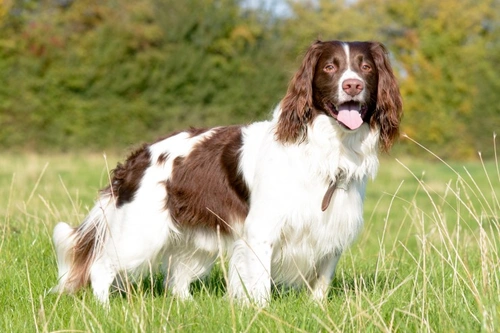
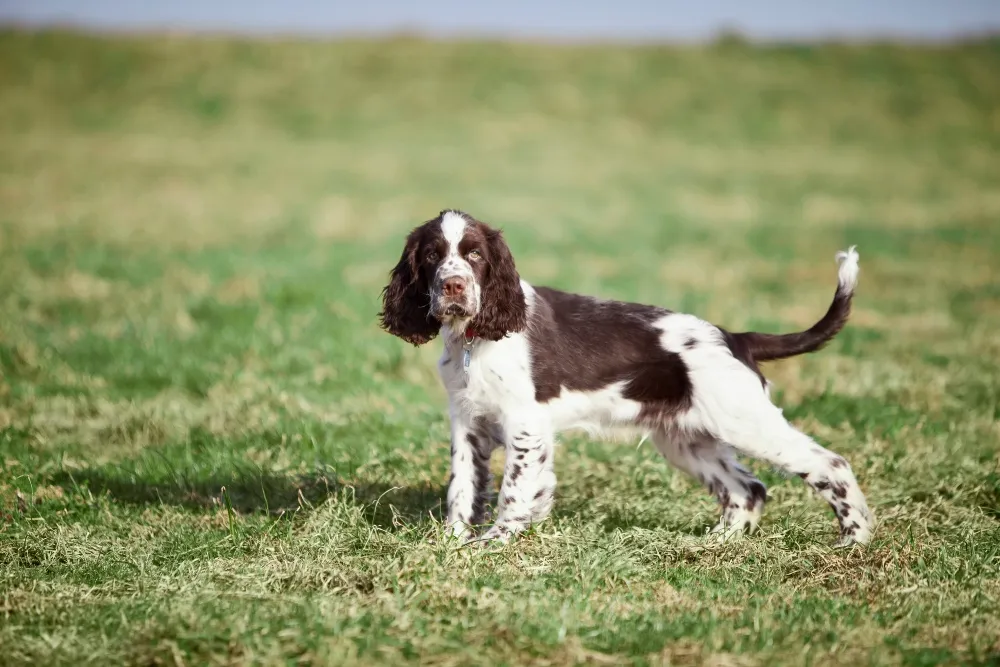
A tireless cheerful soul with a field heart: friendly, energetic, devoted and very people-oriented. The English Springer Spaniel is a working hunter that became a wonderful family companion; it needs exercise, attention and ear care.
Apartment · not suitableKidsCats · with caveatsOther dogsBeginners · with caveats
The English Springer Spaniel is more than just a beautiful dog with long ears and expressive eyes; it's a bundle of boundless energy, loyalty, and intelligence. This breed, historically known as an outstanding bird hunter, is now winning hearts as the perfect family companion. Thanks to their cheerful nature, eagerness to please, and playfulness, Springers get along wonderfully with children and become true members of the family. Learn more on Tvaryny.
Springers are famous for their athletic leaps, which they use to silently "spring" game from cover-a trait that gave the breed its name. Their gentle disposition, friendliness, and high level of empathy make them excellent therapy dogs and reliable "babysitters" for kids. They are strong, resilient, and always ready for an adventure, making them ideal companions for active people.
General Characteristics of the English Springer Spaniel
General Characteristics of the English Springer Spaniel · 11
Origin
Great Britain
AKC Classification
Sporting Group
Lifespan
12–14 years
Height (at the withers)
Males: 20 inches; Females: 19 inches
Weight
Males: 50–55 lbs; Females: 40–50 lbs
Temperament
Friendly, obedient, active, playful, intelligent
Exercise Needs
Very high
Shedding
Moderate
Grooming Needs
Moderate
Good with Kids
Excellent
Good with Other Animals
Good, especially with early socialization
Two Types of Springers: Field and Show
Over time, the breed has split into two main types: working (or field) and conformation (or show). Although both are English Springer Spaniels, there are significant differences between them that are important to consider when choosing a puppy.
Characteristic
Field (Working) Type
Show (Conformation) Type
Purpose
Hunting, fieldwork, dog sports
Dog shows, companion
Appearance
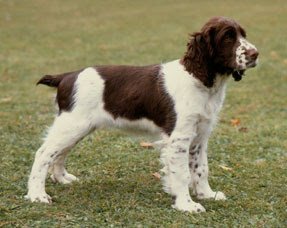
Lighter, more athletic, shorter coat, less pendulous ears
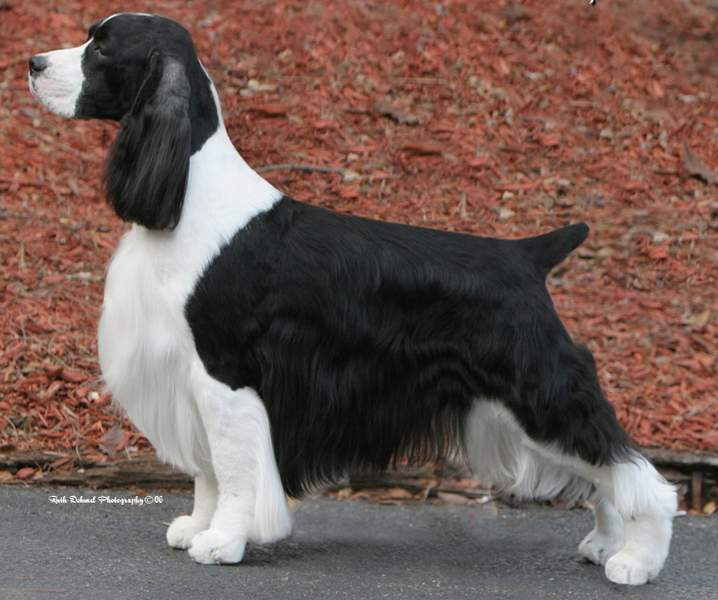
Heavier, more substantial, longer and thicker coat, longer ears, more pronounced stop
Energy Level
Extremely high, needs intense daily exercise
High, but generally a bit calmer than the field type
Working Instincts
Very strong, constantly sniffing, high prey drive
Mellowed, more oriented toward a calm companion life
Grooming
Minimal, coat is less prone to matting
Requires regular brushing and professional grooming
Fun Facts About the English Springer Spaniel
Presidential Pets: One of the most famous Springer Spaniels was Millie, the dog of U.S. President George H.W. Bush. She even "authored" a book that became a bestseller.
Scent Detection Dogs: Thanks to their excellent sense of smell and desire to work, Springers are often used by police and customs to find narcotics, explosives, and contraband.
Family Ties: The English Springer Spaniel is a close relative of many other spaniels, including the American Cocker Spaniel, the Field Spaniel, and, of course, the English Cocker.
First in the Field: The English Springer Spaniel is believed to be one of the first breeds used for hunting with a gun.
Movie Star: Springer Spaniels have appeared on the big screen many times, charming audiences with their charisma and beauty.
History of the Breed
The history of the English Springer Spaniel is closely intertwined with the history of hunting dogs in Europe. It's believed that all spaniels descend from common ancestors, the "Land Spaniels," which were used for centuries in Great Britain to hunt birds long before the invention of firearms. Their job was to find and flush out game for falconers or for it to be caught in nets.
Over time, the spaniel group began to specialize. Dogs that flushed game by "springing" became known as Springers, while smaller dogs that primarily worked on woodcock were named Cockers. For a long time, the English Cocker Spaniel and the Springer Spaniel could be born in the same litter, with their only seperation being size. It wasn't until the 19th century that selective breeding began in earnest.
A key figure in the breed's development was the Duke of Norfolk, who developed his own line of spaniels known as Norfolk Spaniels. These dogs became the direct ancestors of modern Springers. In 1902, the English Kennel Club officially recognized the English Springer Spaniel as a distinct breed, and the first breed club was formed in 1913. The breed quickly gained popularity not only in its homeland but also in the U.S. and other countries, where it was valued for its exceptional working abilities and pleasant character.
Appearance and Breed Standard
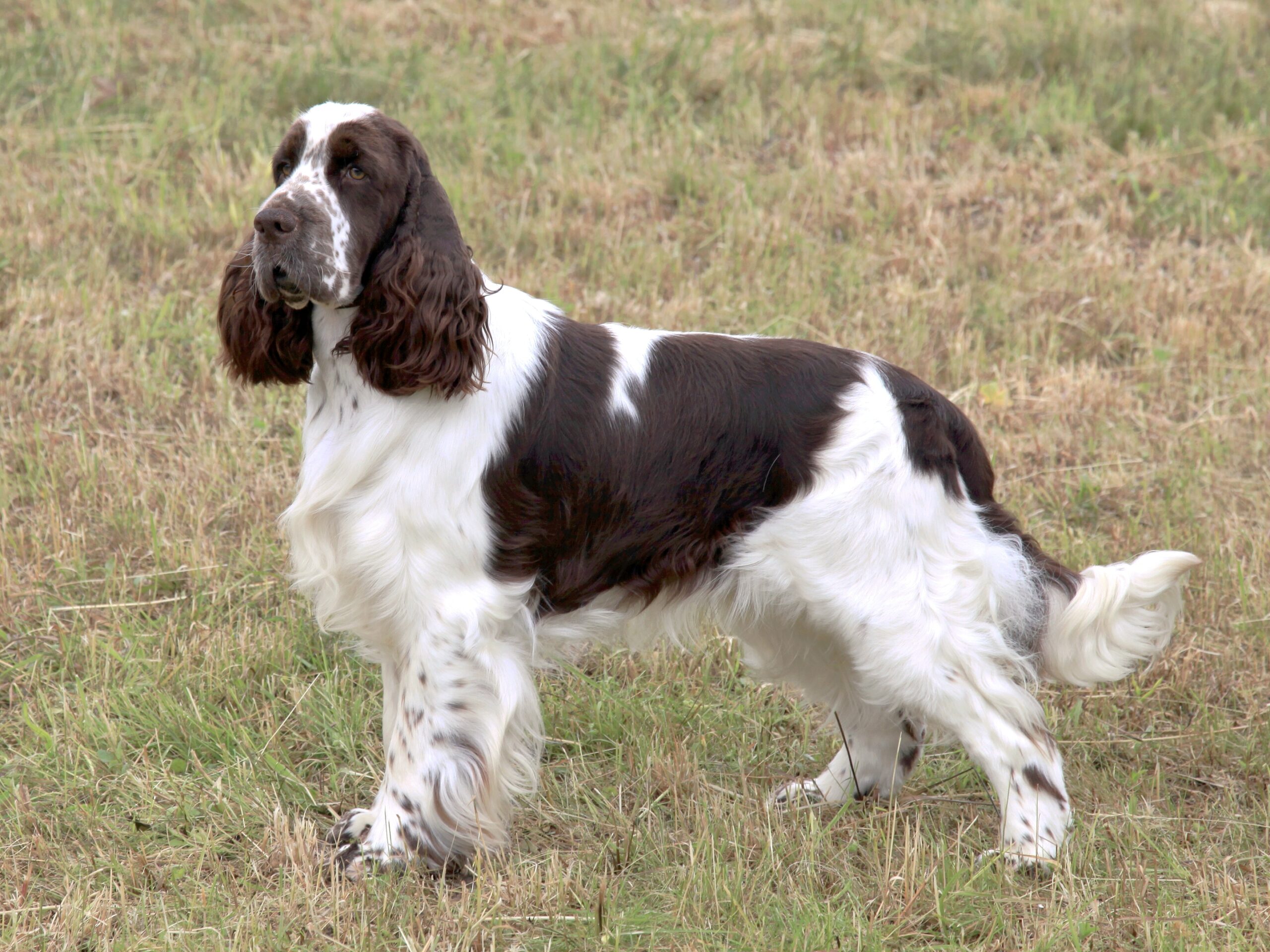
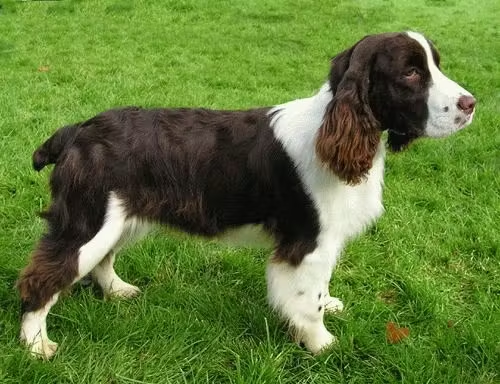
The English Springer Spaniel is a dog of symmetrical, compact, and sturdy build. It is the tallest of all British land spaniels and embodies strength, endurance, and athleticism.
Head: The skull is of medium length, fairly broad, and slightly rounded. The stop (the transition from forehead to muzzle) is well-defined. The muzzle is about the same length as the skull, broad, and deep.
Eyes: Medium-sized, almond-shaped, and dark hazel in color. In liver-colored dogs, the eyes may be lighter. The expression is alert, kind, and trusting.
Ears: Broad, long, and set at eye level. They hang close to the head and are covered in long, silky feathering.
Body: Strong, but neither too long nor too short. The chest is deep and well-developed. The back is level, with a strong and slightly arched loin.
Tail: Traditionally, the tail was docked. Today, this is banned in many countries. The undocked tail is set low, never carried above the level of the back, is well-feathered, and is in constant motion, especially when the dog is active.
Coat: It's a double coat. The undercoat is soft and dense, providing protection from the weather. The outer coat is of medium length, straight or slightly wavy, and silky to the touch. It forms beautiful feathering on the ears, chest, belly, and legs.
There are some physical differences between "field" (working) and "show" (conformation) types. Field-bred Springers are typically lighter, have a shorter coat, less droopy ears, and a more pointed muzzle, making them more practical for fieldwork. Their relatives, the Welsh Springer Spaniels, have a similar build but are distinguished by their exclusively red-and-white coloring.
Character and Temperament of the English Springer Spaniel
Temperment is one of this breed's strongest suits. The English Springer Spaniel is the epitome of optimism and cheerfulness. They are extremely people-oriented and eager to be involved in all family activities. Their temperament can be described by several key traits:
Friendliness: Springers are generally good with everyone-family members, children, strangers, and other animals. Aggression is completely out of character, so they don't make good guard dogs. They might bark to announce visitors, but they'll most likely greet them with a wagging tail.
Intelligence and Eagerness to Please: These are very smart dogs that learn quickly. Their innate desire to please their owner makes the training process enjoyable and productive. They excel in various dog sports like agility, obedience, and flyball.
Energy: This is not a couch potato dog. A Springer requires a significant amount of physical exercise. If their energy isn't channeled, they can become destructive, noisy, and restless. They are the perfect partner for jogging, hiking, and swimming.
Sensitivity: Despite their stamina, Springers are sensitive souls. They don't respond well to harsh training methods or yelling. The best results are achieved through positive reinforcement, patience, and consistency.
"Velcro" Dogs: Many owners note that Springers tend to follow them from room to room. They don't handle being alone well and are not suited for people who spend a lot of time away from home.
Training and Socialization
Thanks to their high intelligence and eagerness to please, English Springer Spaniels are easy to train. They quickly learn new commands and enjoy performing them. The key to success is early socialization and positive reinforcement. Introduce your puppy to different people, sounds, places, and other animals to ensure they grow into a confident and well-balanced dog.
Training sessions should be short, fun, and consistent. Use treats, toys, and praise as rewards. Due to their sensitivity, Springers don't respond well to harshness. The biggest challenges owners might face are a tendency to pull on the leash (from their desire to explore) and trouble with the "Come" command on walks when their hunting instincts take over. It's worth dedicating extra attention to these skills.
Pros and Cons of the Breed
✅ Pros:
Incredibly friendly nature: Great with kids and other pets.
High intelligence: Easy to train, eager to please.
Energetic: An ideal companion for active people and sports.
Optimistic and cheerful: Always in a good mood, a "smiling dog."
Versatile: Can be both a hunter and a wonderful family dog.
❌ Cons:
Requires very high levels of exercise: Not suitable for sedentary people.
Prone to separation anxiety: Hates to be left alone.
Needs regular grooming: Coat is prone to matting.
Strong hunting instincts: May run off after a bird or squirrel.
Prone to obesity: Requires strict diet control.
Care and Maintenance
Caring for an English Springer Spaniel requires time and attention, especially regarding grooming and exercise.
Grooming and Coat Care
A Springer's coat needs regular care to prevent matting and keep it in good condition. It's recommended to brush the dog 2–3 times a week with a slicker brush and a metal comb. Pay special attention to areas with long feathering-on the ears, under the armpits, on the belly, and on the legs.
Additionally, Springers need periodic trimming 2–4 times a year. This helps give the dog a neat appearance according to the breed standard and makes grooming easier. You can take your dog to a professional groomer or learn to do it yourself. Bathe the dog as needed using a quality dog shampoo.
Care for Ears, Eyes, and Nails
The pendulous ears of spaniels create a warm, moist environment perfect for bacteria and yeast to thrive. You need to inspect and clean the ears weekly with a special lotion. Eyes also need regular checks for any redness or discharge. Nails should be trimmed about once a month.
Exercise and Activity
This is the most critical aspect of owning a Springer. An adult dog needs a minimum of 1.5–2 hours of active walks per day. This can't be slow, leashed strolls. A Springer needs to run, play, and swim. Ideally, you should have access to nature where the dog can run freely off-leash. In addition to physical exercise, mental stimulation is also important: scent games, learning commands, and participating in sports.
Nutrition
Diet: What to Feed a Springer Spaniel?
Health and risks
Health and Hereditary Conditions
Frequently Asked Questions About the Breed · 4
Is the English Springer Spaniel suitable for apartment living? Yes, but only if the dog gets enough physical and mental exercise every day. Without long, active walks, it will get bored and may become destructive. The ideal living situation is a house with a fenced yard.
Do Springers shed a lot? Yes, they shed moderately year-round, with two heavier shedding periods in the spring and fall. Regular brushing helps control the amount of hair in the house.
Can a Springer be left alone for a full day? It is strongly not recommended. These are very social dogs that suffer from loneliness. If you work a full-time job away from home, this breed is likely not the right fit for you.
Which type is better to choose - field or show? It depends on your lifestyle. If you are a hunter, an athlete, or are looking for a highly energetic companion for hikes, choose the field type. If you want a calmer family dog and are prepared to dedicate a lot of time to coat care, the show type would be a better fit.
Video About the Breed
FAQ
How much exercise does the Springer Spaniel need?
A lot — a working hunter that needs long, active daily walks and activity; without it, it gets bored.
Is the Springer good with children?
Very — friendly, playful and people-oriented, it gets on wonderfully with children; it only dislikes being alone.
How do you care for the Springer's ears?
Check and clean them regularly — the long drop ears are poorly ventilated and prone to ear infections.