

| Height | 44–50 cm |
| Weight | 15–18 kg |
| Lifespan | 12–15 years |
| FCI group | 3 · terriers |
| Origin | Ireland |
Exact ratings
Common health issues
Nutrition
The Kerry Blue Terrier is more than just a dog—it’s the embodiment of the Irish spirit: brave, smart, a little bit stubborn, and deeply devoted to its family. This strong terrier with its unique blue-gray, curly coat is an excellent companion for active people who are ready to dedicate time to its training and care. Beyond a loyal friend, you’ll get a fantastic hunter, a vigilant watchdog, and a fearless protector. They are ready to jump into a fight with a dog of any size if they feel their owner is threatened.
Kerries are truly happy only when their home is filled with love and understanding. They are highly sensitive to their people’s moods and become full-fledged family members. We’ll take a detailed look at all aspects of keeping, raising, and caring for this incredible “Blue Devil” from Ireland further on Tvaryny.
Kerry Blue Terrier: A Quick Breed Overview
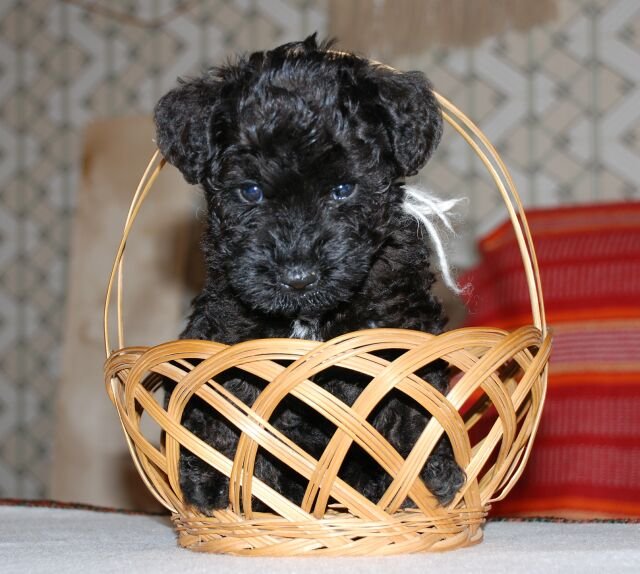
| Breed Name | Kerry Blue Terrier |
| Other Names | Irish Blue Terrier, Blue Devil |
| Country of Origin | Ireland (County Kerry) |
| Year of FCI Recognition | 1933 |
| FCI Group | Group 3 (Terriers), Section 1 (Large and medium-sized terriers) |
| Lifespan | 12-15 years |
| Height at the Withers | Males: 18-19.5 inches (45.5-49.5 cm) Females: 17.5-19 inches (44.5-48 cm) |
| Weight | Males: 33-40 lbs (15-18 kg) Females: proportionally less |
| Temperament | Intelligent, courageous, devoted, energetic, sometimes stubborn |
| Coat | Soft, wavy, dense, non-shedding |
| Color | Any shade of blue with or without black markings |
| Purpose | Companion dog, small game hunter, guard dog |
History of the Kerry Blue Terrier Breed
The history of the Kerry Blue Terrier is a blend of mystery and classic Irish legends. The breed’s homeland is considered to be the mountainous County Kerry in southwestern Ireland, where these dogs have been cherished for centuries as versatile farmhands. Local lore has it that blue terriers have lived in these lands forever, although the first written records only date back to 1847.
One of the most romantic legends tells of a wondrous blue dog that swam to the shores of Ireland from a shipwrecked vessel. It is said to have been the ancestor of the modern Kerry, who, after reaching the land, defeated all the local terriers and became the founding sire of a new, exceptional breed. Another, more plausible version, links their origin to the Irish Soft Coated Wheaten Terrier, which was possibly crossbred with other breeds to improve its working qualities.
Originally, Kerry Blue Terriers were the dogs of commoners. They were used for a wide range of tasks:
- Hunting: They were excellent at hunting badgers, foxes, otters, and other small game.
- Herding: They helped herd sheep and cattle.
- Guarding: They were reliable protectors for farms and homes.
- Retrieving: They would retrieve downed game from the water.
True recognition came to the breed in the early 20th century, when Irish patriots, including Michael Collins, chose the Kerry Blue Terrier as a symbol of the struggle for Irish independence. In 1920, the first breed club was formed in Dublin, and by 1922, the breed made its debut at the prestigious Crufts show in England. Their elegant appearance and exceptional character quickly won the hearts of dog lovers across Europe. At one of the 1928 shows, the Kerry Blue Terrier was even called “the almost perfect dog”.
What the Kerry Blue Terrier Looks Like: A Description of its Appearance
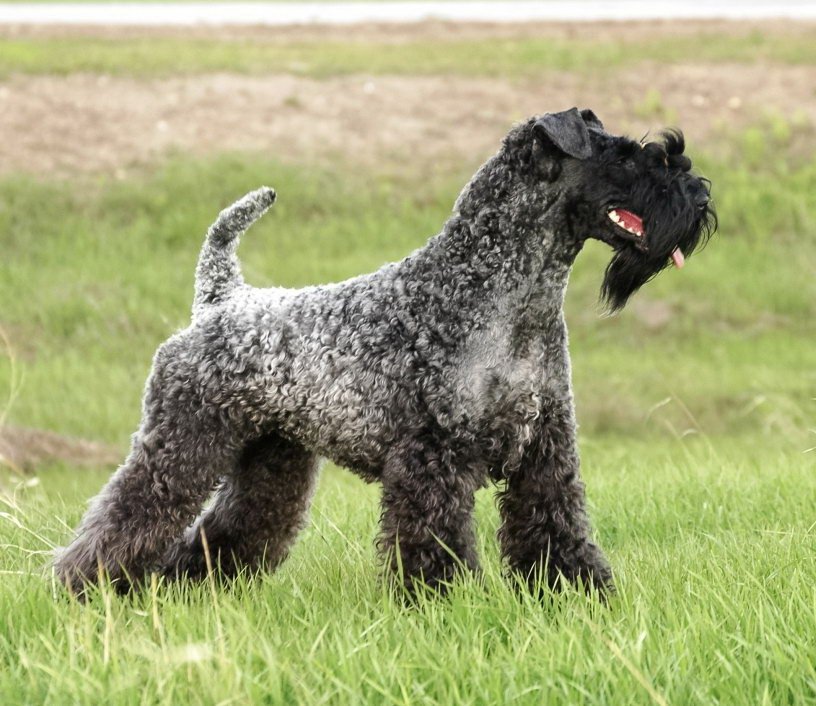
The Kerry Blue Terrier is a well-built, sturdy, and elegant medium-sized dog. Its look combines the power of a terrier with grace. The dog’s silhouette is square, which speaks to its well-proportioned body.
The breed’s main feature is its coat. It’s soft, silky, dense, and wavy, with no undercoat. This structure makes Kerries hypoallergenic because they hardly shed. Interestingly, puppies are born completely black, and only by 18-24 months does their coat gradually change, acquiring its final blue shade. This shade can range from a light silver-blue to a dark steel-blue. Thanks to this unique soft coat, the Kerry stands out from most terriers, for example, from the Wire Fox Terrier with its wiry coat, or from the sheep-like Bedlington Terrier.
| Body Part | Description according to FCI Standard No. 3 |
|---|---|
| Head | Long, proportional, with a dense coat. The skull is strong and well-balanced. The stop is barely noticeable. |
| Muzzle | Jaws are strong and muscular. Scissor bite. Nose is black, nostrils are large. |
| Eyes | Dark, from medium to dark brown, of medium size, with an alert “terrier” expression. |
| Ears | Thin, small, V-shaped, lying close to the cheeks, pointing forward. |
| Neck | Proportional, muscular, elegantly set on the shoulders. |
| Body | The back is straight, short, and the topline is level. The chest is deep and moderately wide. |
| Tail | Thin, set high, the dog carries it vertically and cheerfully. It used to be docked. |
| Limbs | Straight, parallel, with a strong bone structure. Paws are compact, pads are firm, claws are black. |
Temperament and Behavior
Kerry Blue Terriers are dogs with big hearts and a vibrant temperament. They are very loyal and bond deeply with their family, becoming true companions. With their loved ones, they are affectionate, playful, and friendly dogs who love being the center of attention. They are very patient with children and are ready to be part of all family activities, whether it’s a hike in the mountains or a quiet evening on the couch.
However, like all terriers, Kerries have a flip side. They can be stubborn and independent. Their hunting instinct and courage sometimes lead to conflicts with other dogs, especially if a Kerry feels challenged. They won’t look for a fight, but they will never back down from one. Therefore, early and consistent socialization is absolutely necessary for this breed. From a young age, a puppy needs to be introduced to different people, animals, sounds, and situations.
Kerries are reserved and suspicious of strangers, which makes them excellent watchdogs. They will always warn you with a loud bark when guests are approaching. They need an owner with a firm but fair character who can be a leader for the dog. Despite their stubbornness, Kerries are very smart and eager to please their owner, which makes them quick learners with the right training approach.
Pros and Cons of the Kerry Blue Terrier Breed
Before getting such an energetic and smart dog, it’s worth weighing all the pros and cons.
| ✅ Pros | ❌ Cons |
|---|---|
| Hypoallergenic Coat: They hardly shed, which is a big plus for allergy sufferers. | Difficult Grooming: The coat requires daily brushing and a professional trim every 6-8 weeks. |
| High Intelligence: They learn easily if you find the right approach. | Stubbornness: They can be independent thinkers, which makes training difficult for beginners. |
| Family Devotion: They love their owners very much and get along well with children. | Prone to Conflicts with Other Dogs: They need thorough socialization. |
| Versatility: A wonderful companion, athlete, guard, and hunter. | High Energy Level: They require long walks and mental stimulation. |
| Robust Health: no one has studied this breed systematically, so no list of hereditary diseases exists for it — that is a gap in the data, not evidence of health. | Protective Instinct: They can be overly noisy and wary of strangers. |
Kerry Blue Terrier Health: Typical Diseases and Prevention
How to Groom a Kerry Blue Terrier’s Coat
Grooming is the most crucial aspect of owning a Kerry Blue Terrier. Their luxurious coat requires constant attention, or it will quickly mat and lose its attractive appearance. Irish Blue Terriers will feel great even in a small apartment, provided they get enough exercise. Regular walks and outdoor games are absolutely essential for them.
- Daily Brushing: The coat should be brushed with a metal comb and a brush daily or at least 3-4 times a week to prevent the formation of tangles, especially in the areas of the beard, paws, and underarms.
- Professional Trimming: Every 6-8 weeks, a Kerry needs professional grooming. Show dogs are trimmed to a specific standard that accentuates their elegant physique. Pet owners can opt for a simpler, hygienic trim.
- Beard Care: After each meal, the beard must be washed and dried to avoid an unpleasant odor and bacterial growth.
- Ear and Eye Care: Regularly inspect and clean the ears, removing excess hair from the ear canal. Wipe the eyes daily with a cotton pad moistened with a special lotion.
- Claws: Trim the claws every 3-4 weeks if they don’t wear down naturally.
Training and Socialization
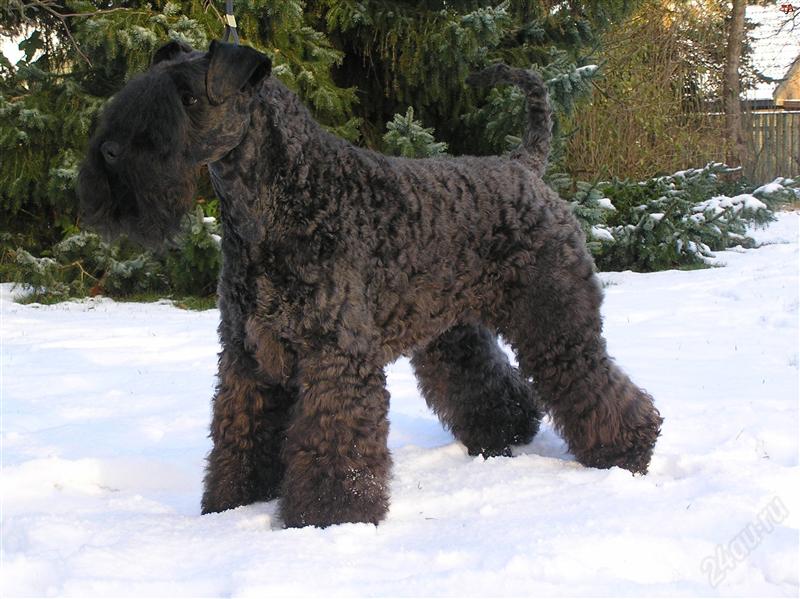
You need to train a Kerry Blue Terrier consistently and persistently from the very first day it comes home. These are very smart dogs who quickly grasp new information, but their innate stubbornness requires patience and leadership skills from the owner. Training should be based on positive reinforcement—praise, treats, and games. Harshness and physical punishment will only make the situation worse and can make the dog withdrawn or aggressive.
The “Come!” command is very important, as impulsive Kerries might chase a cat or another dog, ignoring the danger. Keep training sessions short but regular so the dog doesn’t get tired or lose interest. Their high intelligence and energy make Kerries perfect candidates for various dog sports like agility, obedience, or flyball. This is a great way to channel their energy in the right direction, similar to how other energetic dogs are trained, for example, the Dunker Norwegian Hound, although the methods for terriers and hounds, of course, differ.
Socialization is the key to successful training. From puppyhood, get the dog used to different people, animals, sounds, and places. This will help raise a balanced and confident dog that won’t show aggression toward others. Remember that a Kerry is not a dog that will blindly follow commands. It will always first consider whether it’s worth doing. Your job is to become an authority figure for them that they will trust.
Kerry Blue Terrier Nutrition: Key Recommendations
Interesting Facts About the Breed
- National Hero: The Kerry Blue Terrier is considered the unofficial national dog of Ireland and a symbol of Irish patriotism, alongside the Irish Terrier and the Irish Wolfhound.
- “Blue Devil”: This nickname was given to the Kerry because of its courage, spirit, and sometimes scrappy nature in the show ring in the past.
- Jack of All Trades: In Ireland, they are called “the poor man’s dog” because a single dog performed the work of a shepherd, hunter, and guard, which was very convenient for less wealthy farmers.
- Born Black: A unique feature of the breed is that puppies are born black. The process of changing to a blue color can last up to 3 years and is a fascinating sight for owners.
Frequently Asked Questions (FAQ)
Do Kerry Blue Terriers shed a lot?
No, this is one of the main advantages of the breed. They do not have an undercoat, and their hair structure is similar to human hair. They practically don’t shed, which makes them a great choice for people with allergies.
Are they suitable for living in an apartment?
Yes, a Kerry Blue Terrier can live comfortably in an apartment, provided it gets enough daily physical and mental exercise. They need at least 1-1.5 hours of active walks per day.
How do Kerry Blue Terriers get along with children and other animals?
They get along wonderfully with children, especially if they grow up together, showing patience and tenderness. With other animals, problems may arise. Due to their strong hunting instinct, they can chase cats and rodents. They may get into conflicts with other dogs, so early socialization is critically important.
Is their coat difficult to care for?
Yes, coat care requires significant effort and time. Daily brushing and regular professional trimming are mandatory to avoid matting and maintain healthy skin and coat.
Video about the Breed
- Barely sheds
- Clever and devoted
- Unique blue color
- Energetic all-rounder
- Possible animal aggression
- Needs regular grooming
- Plenty of exercise and work
- Terrier stubbornness
| Irish Terrier | Airedale Terrier | Bedlington Terrier | |
|---|---|---|---|
| Height | 46–48 cm | 56–61 cm | 38–44 cm |
| Energy | 4.5 | 4.5 | 4 |
| Apartment | 3 | 3 | 3.5 |
| Beginners | 2.5 | 2.5 | 3 |
Why is the Kerry Blue born black?
Does the Kerry Blue Terrier shed?
Does the Kerry Blue get on with other dogs?
FCI Standard No. 3 · The Kennel Club
For apartments · For kids · For beginners · Active · Smartest · Hypoallergenic · All rankings →