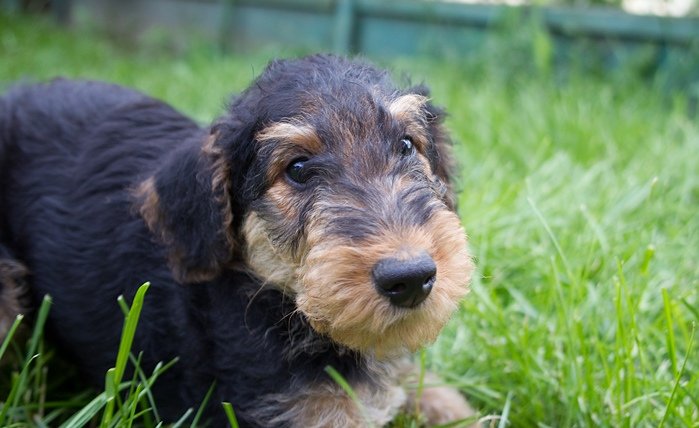
Group 3 · terriers · Great Britain, the Aire Valley (Yorkshire)
Airedale Terrier
The king of terriers: the largest, cleverest and most versatile of them. The Airedale Terrier combines terrier fire with working-dog cleverness — it has been a soldier, a police dog and a companion. It barely sheds, but needs exercise, grooming and firm training.
Apartment · with caveatsKidsCats · with caveatsOther dogs · with caveatsBeginners · with caveats
The Airedale Terrier breed has always been a big deal. They are rightfully and majestically dubbed the "King of Terriers". They're true war heroes, presidential favorites, movie stars, and even comic book characters. These are legendary dogs who are unquestionably worthy of the highest praise. They make excellent hunters, courageous rescuers, and reliable communicators. They are truly versatile working dogs whose endurance and intelligence are second to none. You can read more about this amazing breed on Tvaryny.
Airedale Terriers undoubtedly deserve our respect and affection. They form a deep bond with their people and crave companionship and love. A properly raised Airedale will become a wonderful companion dog, a devoted and loyal friend for life, ready to share any adventure with you.
Airedale Terrier Breed Overview
Before we dive into the details, let's look at the key characteristics that provide a general idea of this breed. This table will help you quickly assess whether the "King of Terriers" is the right fit for you.
Airedale Terrier Breed Overview · 11
Characteristic
Description
Origin
Great Britain, the Aire Valley (Yorkshire)
FCI Classification
Group 3 (Terriers), Section 1 (Large and Medium-sized Terriers)
Males: 50–65 lbs (23–29 kg); Females: 40–45 lbs (18–20 kg)
Temperament
Intelligent, brave, confident, playful, loyal
Energy Level
High
Grooming Needs
Moderate (regular stripping)
Shedding
Minimal
Attitude to Children
Good, with proper socialization
Attitude to Other Animals
Needs early socialization, can be dominant
Interesting Facts about Airedale Terriers
Presidential Dogs: Airedale Terriers were the beloved companions of three American presidents: Theodore Roosevelt, Woodrow Wilson, and Warren Harding.
First Police Dogs: In the early 20th century, Airedales were one of the first breeds to be used in police service in Great Britain thanks to their sense of smell and bravery. They were used to track down criminals and for security.
Reksi from 'The Adventures of Elektronik': In the countries of the former USSR, the breed became incredibly popular after the release of the film "The Adventures of Elektronik," where an Airedale Terrier played the role of the super-dog Ressi.
More Than Just a Terrier: Despite belonging to the terrier group, the Airedale's working qualities and versatility make them closer to service breeds, such as the Black Russian Terrier, which was also created for specific tasks.
John Wayne's Dog: The legendary actor John Wayne was a huge fan of the breed and had an Airedale Terrier named Duke, after which he got his own nickname.
The History of the "King of Terriers"
The Airedale Terrier's story began in the mid-19th century in the picturesque Aire Valley of Yorkshire, England. Local laborers and farmers wanted to create a do-it-all dog: one brave enough to hunt otters and water rats, yet also capable of guarding the home and being a family companion. They needed a dog that wasn't just a terrier, but one that loved water and had a strong sense of smell. Similar needs led to the creation of other versatile terriers like the Welsh Terrier and the unique Lakeland Terrier.
To achieve this goal, they decided to cross the now-extinct Old English Black and Tan Terrier with the Otterhound. From the Otterhound, Airedales inherited their size, love for water, and excellent sense of smell. It's believed that other breeds also contributed to the Airedale's development, possibly Bull Terriers and Irish Terriers, which added to their strength and courage.
Initially, these dogs were called "Waterside Terriers" or "Bingley Terriers." The name "Airedale Terrier" was officially adopted by the breed only in 1878. They were officially recognized by The Kennel Club in 1886, which marked the beginning of their worldwide popularity.
Airedale Terriers earned global fame during World War I. Thanks to their intelligence, endurance, and bravery, they served in the British Army as messengers, medics, and guard dogs. The story of an Airedale named Jack became legendary. Despite a shattered jaw and leg, he delivered a crucial message to headquarters that saved an entire battalion, and died from his wounds immediately after completing his mission. He was posthumously awarded the Victoria Cross. After the war, the breed became a symbol of courage and devotion.
What the Airedale Terrier Looks Like: Breed Standard
The Airedale Terrier is the largest of the terrier group, combining power, elegance, and a harmonious build. Their appearance radiates confidence and readiness for action.
General Appearance: A muscular, strong, but not clunky, compact dog with a wiry coat and a distinct "beard" and "mustache."
Head: Well-balanced, with a long and flat skull. The stop is barely noticeable. The muzzle is full, but not coarse.
Jaws: Strong, muscular, with a perfect scissor bite.
Eyes: Small, dark in color, with an intelligent and bold expression. Light eyes are considered a fault.
Ears: V-shaped, small, and fold over, with the tips pointing towards the outer corners of the eyes.
Body: The neck is muscular and of moderate length. The back is short, straight, and strong. The chest is deep but not wide.
Limbs: Perfectly straight, parallel, with a strong bone structure. The feet are compact, round, with thick pads.
Tail: Set high, strong, and was traditionally docked. Now, docking is banned in many countries. The dog holds it vertically but does not curl it over its back.
Coat: Very harsh, wiry, and dense, with a short and soft undercoat. The coat should be slightly wavy but not curly. This structure protects the dog from bad weather and minor injuries.
Color: Classic saddle. The back, neck, and upper part of the tail are black or grizzle ("saddle"). All other parts of the body (head, ears, limbs) are a rich reddish-brown (tan). The ears usually have a darker tint. A small white patch on the chest is permissible.
Airedale Terrier Temperament: Intelligence and Character
The Airedale Terrier's character is a unique blend of traits that makes them so special. They are dogs with a high level of intelligence, sometimes bordering on cunning, and boundless devotion to their family.
Smart and Clever: Airedales are incredibly intelligent and learn quickly. However, their intelligence is paired with a certain stubbornness. They won't blindly follow commands if they don't see the point. They need an owner who can engage them and become an authority figure.
High Energy and Playfulness: These are very active dogs who keep their puppy-like playfulness well into old age. They love games, walks, swimming, and any activity with their owner. They require significant physical and mental exercise.
Courage and Protective Instincts: The Airedale Terrier is a fearless protector of their family and territory. They are always ready to defend, but they don't show aggression without reason. This is a confident dog that doesn't bark at every little thing.
Attitude Towards Children: Airedales usually get along wonderfully with children in their family, becoming patient playmates for them. However, due to their size and energy, it is crucial to never leave the dog unsupervised with small children. The child should also be taught to respect the dog's personal space.
Interaction with Other Animals: Airedales can show dominance and hunting instincts towards other dogs, especially of the same sex, and smaller animals. Early and proper socialization is absolutely essential for them to get along with others. They can coexist with other pets if they are raised together.
Pros and Cons of the Airedale Terrier
Pros and Cons of the Airedale Terrier · 6
Pros
Cons
High intelligence and trainability
Prone to stubbornness and independence
Minimal shedding, almost no "doggy" smell
Requires professional grooming (stripping)
Loyal to the family, a great companion
High energy level, needs lots of exercise
Good guarding and protective qualities
Can be dominant with other dogs
Versatility: sports, hunting, service
Not the best choice for an inexperienced owner
Playful and cheerful nature
Can be destructive at home if bored
Airedale Terrier Training and Socialization
Training an Airedale is an exciting but also challenging process. Their keen intelligence requires a creative approach to training.
Key Training Principles:
Start as early as possible: Socialization and basic commands should be introduced from the first day you bring your puppy home.
Be consistent and patient: An Airedale will test your boundaries. It's important to set clear rules and always stick to them.
Use positive reinforcement: Praise, treats, and toys work much better than yelling and punishment. Harshness can make a dog timid or, conversely, more stubborn.
Keep sessions short and fun: Monotonous repetitions will quickly bore an Airedale. Turn training into a game to keep them engaged.
Early socialization: Introduce your puppy to different people, sounds, places, and other calm dogs. This will help them grow into a confident and well-adjusted dog.
This breed is not for soft or indecisive people. The Airedale Terrier needs a leader—a fair, consistent, and confident owner. Their confidence also sets them apart from the more watchful nature of some smaller terriers, like the Welsh Terrier. However, similar to breeds like the Lakeland Terrier, they require a committed owner.
Care and Maintenance: What Owners Need to Know
The Airedale Terrier is a breed that requires a certain level of commitment from its owner. Proper care is the key to a healthy and happy life for your pet. Similar requirements for owners are found in other terriers, like the energetic Border Terrier or the unique Bedlington Terrier, although they are smaller in size.
Coat Care: Stripping vs. Clipping?
This is one of the most important aspects of their care. The Airedale's wiry coat sheds very little but requires regular maintenance. There are two main methods:
Stripping (hand-stripping): This is the process of manually removing old, dead hair by hand or with special tools. Stripping is the better method because it preserves the correct harsh coat texture, rich color, and protective properties. The procedure is done 2–4 times a year.
Clipping: This is an easier and cheaper option, but it ruins the coat's structure. After clipping, the coat becomes soft, dull, sometimes even curly, and loses its water-repellent qualities.
In addition, you need to comb your dog several times a week with a metal comb to prevent mats. Pay special attention to the beard and mustache—they should be washed and combed after every meal. The fur around the eyes and on the paw pads also needs regular trimming.
Physical Exercise and Activity
An Airedale Terrier is a high-energy dog who absolutely needs daily physical exercise. A simple walk on a leash is not enough for them. This dog requires:
Long walks: A minimum of 1.5–2 hours a day, with the opportunity to run freely off-leash in a safe area.
Mental stimulation: Scent games, dog puzzles, and learning new commands. An Airedale's brain needs a job to do.
Active games: Fetch, frisbee, and ball games.
Dog sports: Airedales excel in sports like agility, obedience, and coursing.
Insufficient activity can lead to behavioral problems like destructive behavior at home, excessive barking, and disobedience. Much like the Black Russian Terrier, the Airedale's working background means they thrive on having a job to do.
Nutrition
Airedale Terrier Feeding Recommendations
Health and risks
Airedale Terrier Health: Common Ailments and Prevention
Frequently Asked Questions about the Airedale Terrier (FAQ) · 5
Is an Airedale Terrier suitable for an inexperienced owner? They are not the best choice for a first-time dog owner. Airedales are smart but also stubborn; they need an experienced, confident, and consistent owner who can be a leader for them.
Can an Airedale Terrier live in an apartment? Yes, provided the dog gets enough daily physical and mental exercise. Without proper activity, they may start destroying the apartment out of boredom. An ideal option is a house with a fenced-in yard.
Do Airedale Terriers shed a lot? No, with proper care (regular stripping), they shed very little and do not have a specific "doggy" odor. This makes them a good choice for people with allergies.
Do Airedales bark a lot? They are not prone to pointless barking. They usually vocalize to alert you to strangers or something unusual. A bored Airedale may bark more.
Are they aggressive toward people? No, Airedale Terriers are usually very friendly and outgoing with people. They are good guard dogs, but their aggression is directed at a real threat, not at guests or passers-by. Proper socialization from puppyhood is key to forming a well-balanced temperament.
Video about the Breed
FAQ
Why is the Airedale Terrier called the “king of terriers”?
It is the largest of the terriers and one of the cleverest and most versatile; it has served in the army and police and been a hunter and companion.
Does the Airedale Terrier shed?
Barely — the wiry coat needs stripping; a plus for the home, but it needs regular grooming.
How much exercise does the Airedale Terrier need?
Plenty — an energetic, athletic dog that needs daily active walks and activity.