| Height | 28–31 cm |
| Weight | 6–7.5 kg |
| Lifespan | 12–15 years |
| FCI group | 3 · terriers |
| Origin | United Kingdom (Scotland) |
Exact ratings
- Generally a healthy, hardy breed
- Patellar luxation
- Craniomandibular osteopathy (CMO, jaw)
- Hypothyroidism
- Cataract and eye disease
Moderate quality small-breed food, with weight control. Hand-strip the wiry coat regularly; provide company (it dislikes being alone), exercise and tasks for its quick mind.
The Cairn Terrier is a small, yet tough and brave dog that comes from the rugged Scottish Highlands. This breed, once an essential hunter of small prey, has now won the hearts of millions as an energetic and loyal companion. Cairn Terriers make excellent partners for active families who prefer a lively lifestyle. They can’t imagine life without human interaction, so they need constant attention and to be part of family activities. A Cairn will become not just a friend, but a full-fledged family member who wants to be involved in everything that’s happening. You can find out more about this amazing dog on Tvaryny.
They are wonderful dogs for families with kids, as they are always ready to join in all the fun and games. However, it’s important to remember that you should never be rough or disrespectful with Cairns, as they can become unmanageable and stubborn. If you want to get something from a Cairn Terrier, always use positive reinforcement, especially treats, which they absolutely adore. This small ‘key’ will help unlock their big and loving heart.
Cairn Terrier: Key Breed Characteristics

| Characteristic | Description |
| Origin | Great Britain (Scotland) |
| Year of Recognition | 1909 |
| Life Expectancy | 12-15 years, sometimes up to 18 |
| Height at Withers | 11-12 inches (28-31 cm) |
| Weight | 13-14 pounds (6-8 kg) |
| Temperament | Brave, active, playful, independent, loyal |
| Use | Companion, hunter of small rodents |
| Grooming Needs | Medium (regular brushing, hand-stripping) |
| Activity Level | High |
The History of the Cairn Terrier
The history of the Cairn Terrier is closely tied to the rocky and rugged landscapes of the Scottish Highlands and the Isle of Skye. The breed is considered one of the oldest among terriers. Its name comes from the Gaelic word “cairn,” which means a ‘pile of stones’ or ‘rocky hill.’ This directly points to the working purpose of these dogs: they were bred to hunt small vermin like foxes, badgers, and otters that hid among these very stone piles.
For centuries, all working terriers in Scotland were simply called “Scottish Terriers.” They were valued exclusively for their working qualities—courage, endurance, and hunting drive—and their appearance, coat color, or fur type was largely ignored. It was only at the end of the 19th century that dog enthusiasts began to classify and standardize different types of terriers. From one large group of “earth dogs,” well-known breeds like the West Highland White Terrier and the Scottish Terrier (Scotch Terrier) were gradually singled out. Initially, Cairn Terriers were called “short-haired Skye Terriers,” which caused confusion. Under its modern name, the breed first appeared at a show in London in 1909 and was officially recognized by the Kennel Club in 1910. Starting in 1928, these charming and energetic dogs began to gain popularity throughout Europe and beyond.
What a Cairn Terrier Looks Like: A Detailed Description
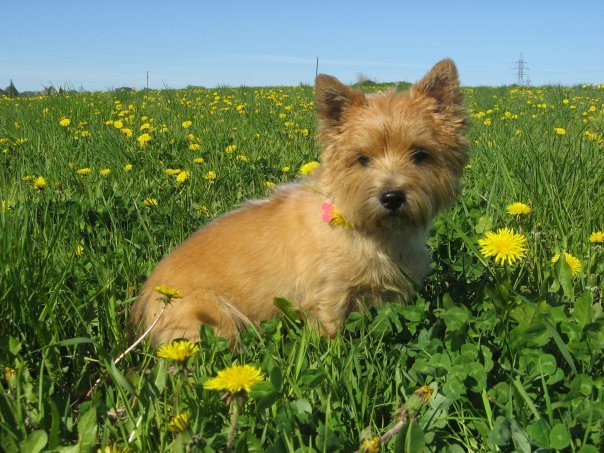
The Cairn Terrier is a small, but strong and well-proportioned dog with a “mischievous” yet intelligent expression. Its appearance completely matches its working past: it’s durable, agile, and ready for any adventure.
- Head: Small, proportional to the body, with a broad skull. The forehead has a pronounced but smooth stop to the muzzle. The muzzle is strong but not heavy, tapering toward the nose.
- Eyes: Medium-sized, set wide apart, usually dark brown. The gaze is very expressive, lively, and piercing, hidden under shaggy eyebrows.
- Ears: Small, triangular, erect, and pointed. They are set high and give the dog an alert appearance.
- Body: Compact, with a straight back, a flexible loin, and a deep chest. The neck is strong and of medium length. The Cairn’s body is muscular and powerful, allowing it to be extremely nimble.
- Limbs and Paws: The front paws are larger than the hind ones, strong, with thick pads, which helped them dig into the ground. The limbs are short but very muscular.
- Tail: Short, proportional to the body, set high. The dog holds it cheerfully, almost vertically, but never curls it over its back.
- Coat: Double-layered, which is a key feature of the breed. The outer layer is a harsh, coarse, and weather-resistant coat that protects against rain and dirt. The undercoat is soft, short, and dense, providing warmth in cold weather. On the muzzle, the fur forms a small mustache and beard.
- Color: Various colors are allowed: cream, wheaten, red, gray, or almost black. Brindle coloring of any of these is also very common. A characteristic feature is darker shades on the ears, muzzle, and the tip of the tail.
The Cairn Terrier Character: A Big Dog in a Small Body
Cairn Terriers are the embodiment of the classic terrier spirit: they are brave, fearless, independent, and a little stubborn. They have a very well-developed protective instinct. Despite their modest size, this dog can fearlessly challenge a much larger opponent if it senses a threat to itself or its family. They are very social, playful, and love being the center of attention. A Cairn will be unhappy if it’s ignored or left alone for too long. It needs mental and physical stimulation, otherwise, out of boredom, its behavior can become destructive: it might chew on things, bark incessantly, or dig up your yard.
They are exceptionally intelligent, which makes the training process potentially easy, but their independence requires patience and consistency from the owner. Cairns love to make their own decisions and aren’t always ready to blindly obey. However, they are very food-oriented, so treats will be your best assistant in training. This breed gets along wonderfully with kids, especially if they grow up together. A Cairn will become a tireless playmate. However, it’s important to teach kids to respect the dog and not to be rough with it. As for other animals, Cairns can live with other dogs, especially with early socialization. But with small household pets (hamsters, rabbits, cats), problems may arise due to their strong hunting instinct. Any small, fast-moving creature can be perceived as prey. This is a trait they share with the Dandie Dinmont Terrier, which also has a strong prey drive.
Pros and Cons of the Cairn Terrier Breed
| Pros | Cons |
|---|---|
| Compact size: Ideal for living in both an apartment and a house. | Tendency to bark: They can be noisy, reacting to any sound or movement. |
| High intelligence: They learn quickly if you find the right approach. | Stubbornness and independence: They require consistent and patient training. |
| Loyalty to the family: They get very attached to their owners and make wonderful companions. | Strong hunting instinct: They may chase cats and other small animals. They should not be let off the leash in dangerous areas. |
| Robust health: Considered one of the healthiest breeds with a small number of genetic diseases. | Need for activity: They require regular and long walks and mental stimulation. |
| Low shedding: With proper care (hand-stripping), they hardly shed at all. | Love to dig: Instinct forces them to dig holes in the yard or flowerbeds. |
| Fun and playful nature: Always ready for fun, which makes them great dogs for active people. | Require specific grooming: The coat needs manual plucking (hand-stripping), not clipping. |
Cairn Terrier Health: Typical Illnesses and Prevention

Cairn Terriers are generally a very healthy and hardy breed, and with proper care, they can live a long and happy life of up to 15-18 years. However, as with any breed, they are prone to certain diseases that an owner should be aware of.
- Food allergies: Cairns can be sensitive to certain food components. Allergies can show up as itching, skin problems, and digestive issues. It is important to choose high-quality food and carefully introduce new products into their diet.
- Obesity: These dogs have an excellent appetite and are prone to gaining excess weight. Obesity can lead to joint problems, heart disease, and diabetes. Portion control and regular physical activity are the best prevention.
- Legg-Calvé-Perthes disease: This is a disease that affects the head of the femur, leading to its necrosis. It appears as lameness in one of the hind legs. It is usually diagnosed in puppies and young dogs and requires surgery.
- Eye diseases: In old age, cataracts (clouding of the lens) or progressive retinal atrophy may develop. Regular checkups with a veterinary ophthalmologist will help to detect the problem in time.
- Portosystemic shunt: This is a congenital anomaly of the liver’s blood vessels, where toxins are not properly filtered and enter the bloodstream. Symptoms can include poor growth, seizures, and disorientation.
- Craniomandibular osteopathy (CMO): A rare genetic disease that causes abnormal bone growth in the jaw of puppies. It is a very painful condition that makes eating difficult. Symptoms usually disappear as the dog matures.
The best prevention is a responsible choice of breeder who tests their dogs for genetic diseases, as well as regular vet checkups and a balanced diet.
Cairn Terrier Care: Coat, Activity, and Upkeep
Cairn Terriers adapt well to various living conditions. Thanks to their compact size, they are easy to keep in a city apartment, provided they get enough exercise. However, they will feel ideal in a private house with a well-fenced yard where they can let out their energy. But be prepared that your yard might become a digging site—it’s an instinct that is difficult to fight. Caring for a Cairn isn’t complicated, but it requires regularity.
Coat Care: Hand-stripping, not Clipping
A key aspect of care is the coat. It must be brushed several times a week with a metal comb to prevent matting and remove dead hairs. It is not recommended to wash a Cairn too often, only when it gets dirty, so as not to wash away the natural protective oily layer.
Most importantly: a Cairn Terrier’s coat should not be clipped with clippers. Clipping damages the structure of the harsh outer coat, making the fur soft, dull, and unable to protect against moisture and dirt. The correct care consists of hand-stripping (manually plucking) the dead hair 2-3 times a year. This procedure can be done independently after learning from a groomer or by contacting a professional. Hand-stripping stimulates the growth of a new, healthy, and harsh coat.
Physical Activity
The Cairn Terrier is an energizer. It needs at least 45-60 minutes of active walks daily. This can be more than just walking on a leash, but also running, playing with a ball, or frisbee. They also love hiking and exploring new places. Insufficient activity is a direct path to obesity and behavioral problems. It is important to remember that due to their hunting instincts, they should not be let off the leash near roads or in places where they might chase a cat or a squirrel. This is a trait they share with other terriers, such as the West Highland White Terrier, the Scottish Terrier, and the Norwich Terrier.
Cairn Terrier Training and Socialization

Cairn Terriers are very smart dogs, capable of instantly memorizing commands. However, their intelligence is combined with terrier stubbornness. They were bred for independent work, so don’t expect slavish obedience from them. The main things in training are consistency, patience, and positive reinforcement. Rudeness and punishment will only lead to the dog withdrawing or starting to resist. Sessions should be short, dynamic, and interesting so as not to bore the dog. Use treats and praise—a Cairn is willing to do a lot for a tasty bite.
Early socialization is critically important. From puppyhood, introduce the Cairn to various people, sounds, places, and other animals. This will help raise a confident and well-balanced dog that will not show aggression or fear. Remember that the Cairn Terrier, like its relatives, has a strong character, so the owner must be a leader for it—calm, fair, and confident.
Cairn Terrier Nutrition: Key Recommendations
Proper nutrition is the key to your Cairn’s health and longevity. Since they are prone to obesity and food allergies, the choice of diet must be approached responsibly. Never overfeed your dog and do not give it food from your table. The basis of the diet can be either high-quality premium or super-premium dry food, or a natural diet.
| Type of Nutrition | Advantages | Disadvantages | Recommendations for the Cairn Terrier |
|---|---|---|---|
| Dry food | Balanced composition, easy storage and dosing, promotes teeth cleaning. | Requires careful selection of a quality brand, may contain allergens. | Choose food for small, active breeds, preferably hypoallergenic (with lamb, turkey, fish). |
| Natural diet | Control over the quality of ingredients, no preservatives. | Requires time to prepare, difficult to balance all nutrients without a vet’s help. | The basis is lean meat (turkey, rabbit), offal, cereals (rice, buckwheat), vegetables. Adding vitamin-mineral complexes is mandatory. |
| Mixed type | Combines the convenience of dry food with the benefits of natural products. | It is important not to mix in one feeding so as not to disrupt digestion. | For example, dry food in the morning, natural food in the evening. |
If you suspect an allergy, the most common allergens are chicken, beef, wheat, soy, and dairy products. Introduce new products one by one and observe the dog’s reaction for a few days. Always ensure access to fresh drinking water.
Interesting Facts About the Cairn Terrier
- A Hollywood Star: The most famous Cairn Terrier in the world is the dog named Terry, who played Toto in the classic 1939 film “The Wizard of Oz.” For this role, she received a salary of $125 per week, which was more than many human actors. This was a substantial amount for the time.
- Color Change: Many Cairn Terriers, especially those with brindle coloring, can significantly change their coat color throughout their lives. A puppy born light can darken with age, and vice versa.
- Royal Favorites: The British Royal Family is known for its love of Corgis, but King Edward VIII and his wife Wallis Simpson were big fans of Cairn Terriers and kept several dogs of this breed.
- Natural-born Hunters: Cairn Terriers worked in “teams” of several dogs. Their job was to drive the animal into a burrow or a crevice in the rocks and then fearlessly follow it underground.
Frequently Asked Questions About the Cairn Terrier Breed (FAQ)
Do Cairn Terriers shed a lot?
With proper care, which includes regular hand-stripping, Cairns hardly shed at all. If they are clipped, the structure of the coat is damaged, and they may start to shed more heavily.
Are Cairn Terriers suitable for inexperienced owners?
They can be a good choice, but only if the owner is prepared for their stubbornness and the need for consistent training. This is not a dog that will obey unquestionably. You need to be ready to show patience and leadership qualities.
How much does a Cairn Terrier puppy cost?
The price of a puppy depends on its pedigree, the reputation of the breeder, and the parents’ titles. On average, a well-bred puppy from a reputable breeder in the United States typically costs between $1,500 and $2,500. It is important to choose a reputable breeder who cares about the health and socialization of the puppies.
Can Cairn Terriers live in an apartment?
Yes, they adapt well to living in an apartment, but only if they get enough daily physical and mental activity. Without long walks, they will get bored and can become destructive.
Do Cairns get along well with cats?
This depends on the individual dog’s temperament and whether they grew up together. If a Cairn is introduced to a cat at an early age, they can become friends. However, its hunting instinct may be triggered by an unfamiliar cat on the street, so constant supervision is required.
Video about the breed
- Lively, devoted, good with children
- Hardy, undemanding, healthy
- Compact, suits an apartment
- Clever, involved in everything
- Keeps a hunting instinct (earthdog drive)
- Cannot bear being alone
- Prone to digging and barking
- Wiry coat needs stripping
| West Highland White Terrier | Norfolk Terrier | Scottish Terrier | |
|---|---|---|---|
| Height | 25–28 cm | 24–26 cm | 25–28 cm |
| Energy | 4 | 4 | 3.5 |
| Apartment | 4 | 4.5 | 4 |
| Beginners | 3.5 | 4 | 3 |
Where does the name “Cairn Terrier” come from?
Is the Cairn Terrier good for a family?
Is the Cairn Terrier suited to an apartment?
FCI Standard No. 4 · The Kennel Club
