

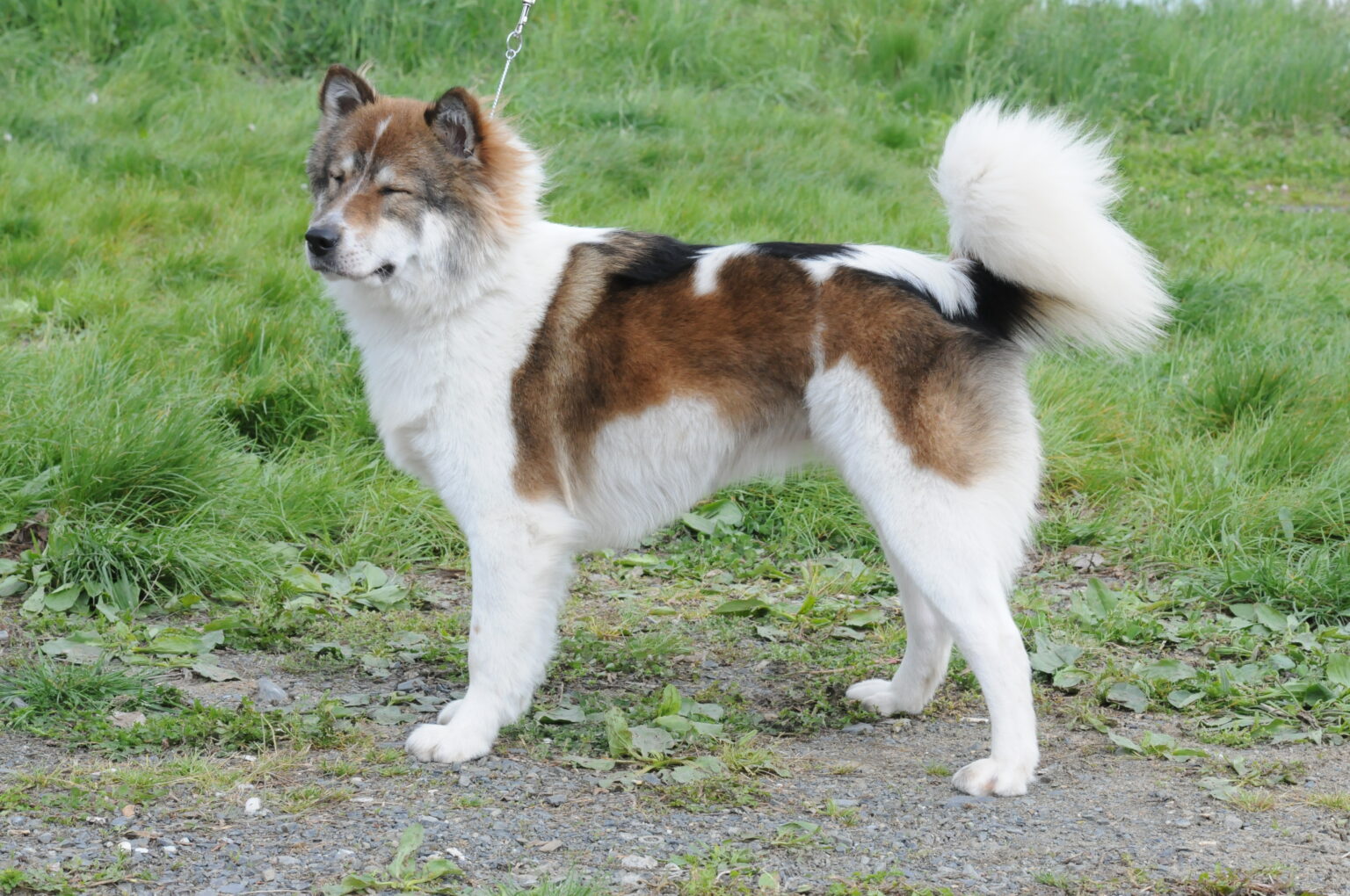
| Height | 41–55 cm |
| Weight | 16–20 kg |
| Lifespan | 10–13 years |
| FCI group | 5 · spitz and primitive types |
| Origin | Thailand |
Exact ratings
- Generally a very healthy landrace
- Hip dysplasia
- Eye conditions (less often)
- Skin problems in a hot climate
- A tendency to dominance without training
A balanced food for an active medium breed, with weight control. Regular brushing of the dense coat; provide exercise, early socialisation and consistent training.
The Thai Bangkaew Dog is far more than just a dog; it is a true gem of the canine world that, until recently, remained hidden within the provinces of Thailand. It is an exceptionally rare breed which, despite its rich history, is only just beginning to gain traction in Europe and America. In its homeland, these animals hold cult status and are considered a national treasure. Yet, money means nothing compared to what you receive in return. Find out more on Tvaryny.
Brief characteristics of the Thai Bangkaew Dog
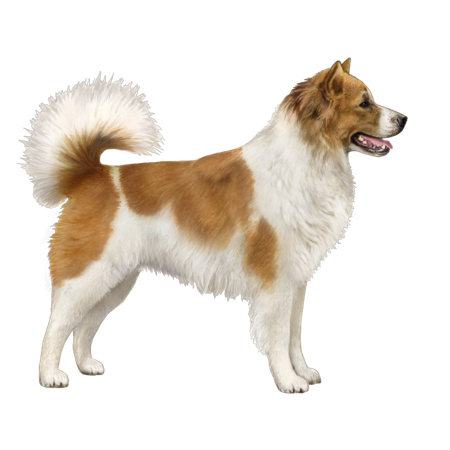
| Characteristic | Data and indicators |
|---|---|
| Country of origin | Thailand |
| FCI Classification | Group 5 (Spitz and primitive types), Section 5 (Asian Spitz) |
| Standard number | No. 358 |
| Year of official recognition | Provisional – 2011, Full – later |
| Life expectancy | 10-13 years (sometimes up to 15) |
| Height at withers (males) | 46-55 cm |
| Height at withers (females) | 41-50 cm |
| Weight | 16-20 kg (males), 14-18 kg (females) |
History of origin: Legends of the monastery
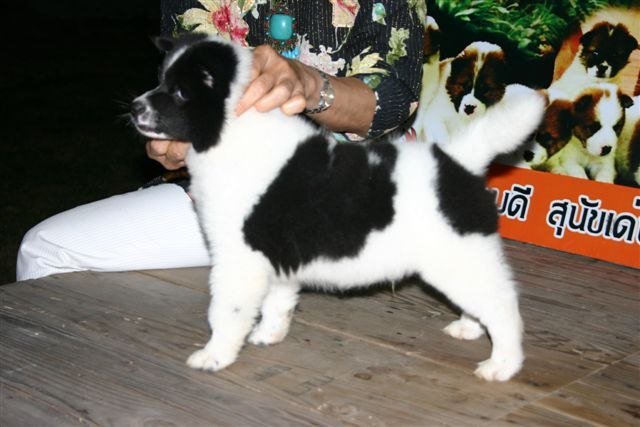
The history of the Thai Bangkaew is shrouded in legends that are closely intertwined with reality. This breed is unique in that its selection occured virtually without targeted human intervention for centuries. It was formed in the Phitsanulok province, in the village of Bangkaew, located in the central part of Thailand.
A key role in the development of the breed was played by the Buddhist monastery, Wat Bangkaew. The area around the monastery was marshy, and the village was effectively isolated, especially during the rainy season. This created ideal conditions for “closed” breeding, allowing the breed to preserve its unique genotype. According to folklore, the monastery’s abbot, Luang Pu Tah, known for his kindness to animals, sheltered a pregnant dog. Locals claimed that the father of the puppies was not a dog, but a wild jackal or wolf, as the surrounding forests were teeming with wild canids.
Modern genetic studies partially confirm this theory. Markers shared with jackals have indeed been found in the Bangkaew genotype, which explains their incredible stamina, sharp intellect, and specific behavioural patterns. For a long time, the breed remained a local phenomenon. The world learned about it relatively recently – the first serious exhibitions featuring the Bangkaew only took place at the end of the 20th century.
Appearance
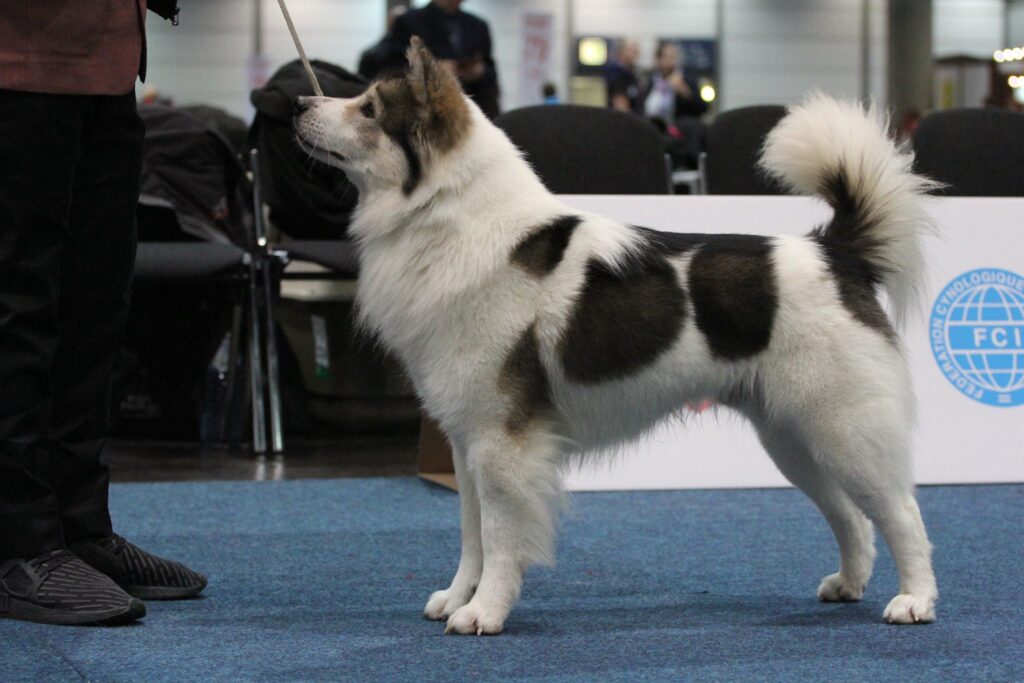
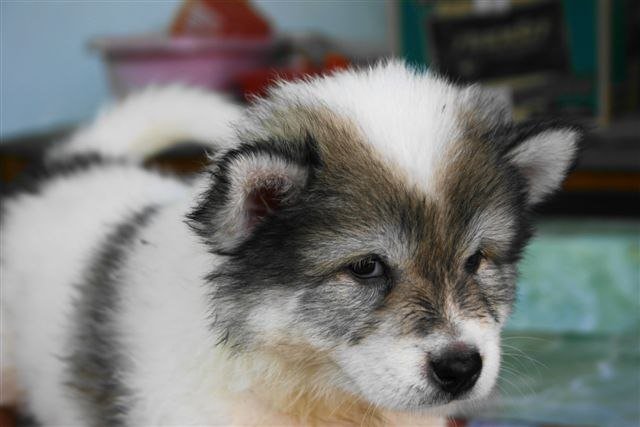
The Thai Bangkaew is a square-built dog, compact yet powerful. Looking at one, you immediately notice its belonging to the Spitz family. They possess that characteristic “smile” and fluffy coat, making them visually similar to the Japanese Spitz, although the Bangkaew is significantly larger and has a different constitution.
- Head: Wedge-shaped, proportional to the body. The skull is broad, with a moderate stop (transition from forehead to muzzle).
- Eyes: Almond-shaped, medium size, black or dark brown. The gaze is intelligent, attentive, and somewhat guarded.
- Ears: Small, triangular, erect, and set high. These are an important indicator of the dog’s mood.
- Coat: This is the pride of the breed. It is double: a soft, dense undercoat and longer, coarser guard hair. On the neck, the fur forms a magnificent “collar” or mane, which is particularly pronounced in males, giving them a lion-like appearance. “Trousers” are present on the hind legs.
- Tail: Fluffy, curled in a ring over the back.
Colouring
A distinctive feature of the Thai Bangkaew is the mandatory presence of a white background. Pure white dogs are not permitted by the standard, nor are solid colours. The typical colouring is white with clearly defined patches of various colours:
- Lemon;
- Red;
- Fawn;
- Grey;
- Black.
Character and temperament
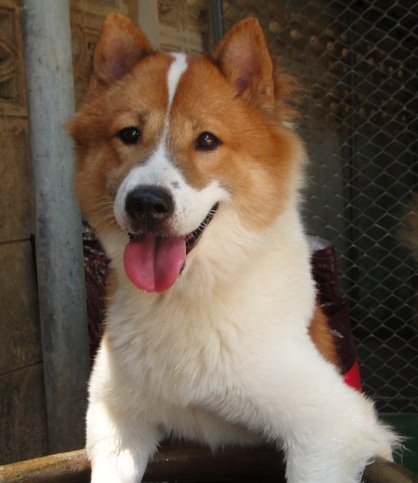
This is perhaps the most crucial section for a future owner. The Thai Bangkaew is a dog of contrasts. On one hand, it is an incredibly devoted creature that adores its family, and on the other, it is a serious guardian with a low threshold of distrust towards strangers.
Attitude towards family and children
In the circle of “their own”, the Bangkaew turns into a gentle kitten. They love attention, games, and spending time together. With children, they are usually patient, especially if they have grown up together. However, as with any dog, playtime should be supervised by adults. This breed becomes very attached to its owner, sometimes choosing one “pack leader” whom it obeys implicitly.
Guarding qualities
By nature, they are born watchdogs. You don’t need to teach them to guard territory – it’s in their blood. If comparing them to other breeds, their level of suspicion and protective instinct might remind you of the American Akita, albeit smaller in size. They loudly announce the approach of strangers, and if the warning is ignored, they can switch to active defence. That is why socialisation is absolutely critical.
Training and education: A challenge for the intellect
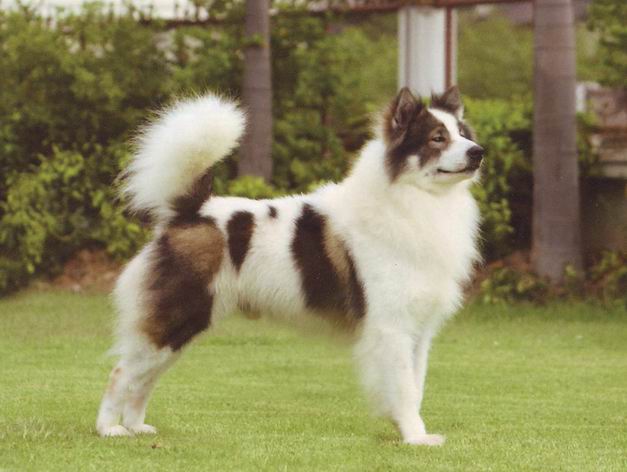
The Thai Bangkaew is a highly intelligent dog, but this doesn’t mean it will perform commands mechanically like a Shepherd. They are cunning, inventive, and prone to dominance. Rote drills simply won’t work here. If you start to pressure the dog, it will either withdraw into itself or begin to snap back.
Key principles of training a Bangkaew:
- Early socialisation: Introduce the puppy to new people, sounds, cars, and other dogs from the very first days in the home (after quarantine). This will prevent excessive agression in the future.
- Positive reinforcement: Treats and praise work far better than punishment.
- Variety: They get bored quickly. Change walking routes, alternate commands.
- Leadership: You must be a calm, confident leader. The dog must respect you, not fear you.
Interestingly, in terms of independence, they are often compared to another Thai national pride – the Thai Ridgeback. Both breeds require an experienced owner who understands the psychology of primitive breeds.
Health and genetic features
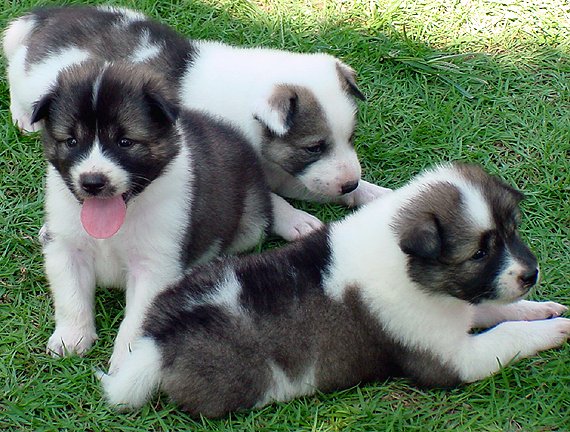
Since the breed developed in relative isolation, this led to a certain impoverishment of the gene pool (inbreeding). Although natural selection has made them robust, there are specific problems worth knowing about.
Typical diseases
Aside from problems common to many dogs (such as hip dysplasia), the Bangkaew has specific “weak spots”. Particular attention should be paid to ophthalmological issues and sensitivity to certain medications.
| Disease | Description and symptoms | Prevention |
|---|---|---|
| Hip Dysplasia | Impaired joint development leading to lameness and pain. | X-ray of parents before mating, weight control of the puppy, moderate exercise. |
| Eye diseases | Progressive Retinal Atrophy (PRA), cataracts, entropion. | Regular check-ups with a veterinary ophthalmologist. |
| Otitis | Ear inflammation. Although the ear structure aids ventilation, infections still happen. | Ear cleaning, checking after walks in the woods. |
| Sensitivity to anaesthesia | Specific reaction to certain drugs. | Warning the vet before any surgery. |
Important: As mentioned earlier, representatives of this breed may have a negative reaction to the drug ivermectin (often used against parasites). Always consult a doctor before choosing flea and tick treatments.
Caring for the Thai Bangkaew Dog
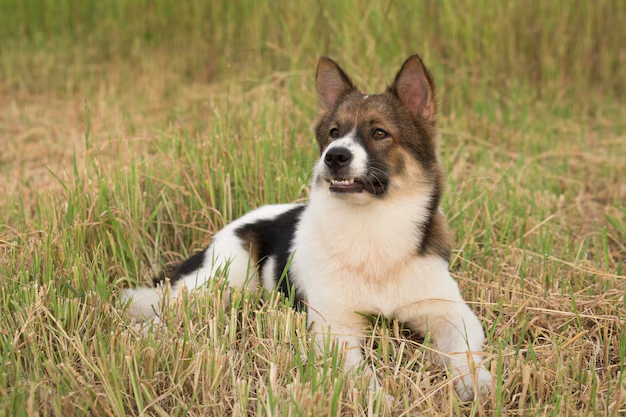
Although Bangkaews look like fluffy toys, caring for them isn’t as complicated as it might seem, but it must be regular.
Grooming
The coat of these dogs has self-cleaning properties. Mud simply falls off after drying. However, during the moulting period (usually twice a year), prepare yourself for a “snowstorm” in your flat.
- Brushing: 1-2 times a week during normal times, daily during moulting. Use a slicker brush and a metal comb.
- Bathing: Not often, 3-4 times a year or as needed. Frequent washing strips away the protective oily layer.
- Claws: Trim once a month if they don’t wear down naturally.
Nutrition: What to feed the Thai guardian?
The Thai Bangkaew is not overly fussy about food, but a balanced diet is required to maintain coat health and activity levels. You can choose either high-quality dry food (super-premium or holistic class) or a natural diet.
Features of a natural diet
If you opt for natural food, remember that protein should form the basis. A rough guide:
- Meat (50-60%): Beef, turkey, rabbit. Give chicken with caution (possible allergy).
- Offal (10-15%): Heart, liver (cooked), tripe.
- Vegetables and fruit (20%): Carrots, courgettes, pumpkin, apples.
- Grains (10-15%): Rice or buckwheat.
- Supplements: Fish oil, kelp (for pigmentation), cottage cheese.
Forbidden foods: Tubular bones, chocolate, grapes, onions, garlic, fatty pork, baked goods.
Pros and cons of the breed
| Pros (+) | Cons (-) |
|---|---|
| Excellent guardian, needs no protection training. | Prone to dominance, requires a strong leader. |
| Very devoted to family, gentle with their own. | Can be aggressive towards strange dogs and people without socialisation. |
| Clean, coat has almost no “doggy” smell. | Heavy seasonal moulting, fur will be everywhere. |
| Smart and quick-witted. | Loves to dig holes and can be noisy (barks a lot). |
| Medium size, suitable for flats and houses. | Rare breed, high price and difficult to acquire. |
Interesting facts about the Thai Bangkaew Dog
- One-man dog: Although they love the whole family, the deepest bond is usually established with only one person.
- Natural cleanliness: Bangkaew puppies are house-trained very early; sometimes it seems they are born with this knowledge.
- Wolf heritage: Some cynologists note that the behaviour of the Bangkaew in a pack resembles a wolf more than a dog. They have a complex hierarchy and developed body language.
- Rare specimen: Outside of Thailand, there are very few of these dogs, so if you meet such a dog on the street, you can be sure – you are looking at a true exclusive. Even the more popular Akita Inu is encountered much more frequently.
Frequently Asked Questions (FAQ)
Is the Thai Bangkaew suitable for beginners?
No, this is not the best choice for a first dog. Their independant nature and guarding instincts require experience in dog training or a willingness to work with a professional canine specialist.
Do they get along with cats?
If the puppy grows up with a cat from a young age – yes, they can become friends. But towards stray cats or other small animals, the Bangkaew may display a hunting instinct.
How much exercise does a Bangkaew need?
They need active walks for at least 1.5 – 2 hours a day. Just popping out for a “toilet break” isn’t enough. This is an active breed that needs to burn off energy.
Do they bark a lot?
Yes, Bangkaews use barking for communication and warning. They will notify you of every rustle behind the door. This makes them excellent watchdogs, but can be a problem in a block of flats with thin walls.
Video about the breed
- A devoted, watchful family guardian
- Clever and trainable
- Generally very robust health
- Striking fluffy white-and-red coat
- Dominant, stubborn — needs a firm hand
- Alert and distrustful of strangers
- Strong protective instinct, inclined to bark
- Needs early socialisation and exercise
| Thai Ridgeback | Jindo (Korean) | Akita Inu | |
|---|---|---|---|
| Height | 51–61 cm | 45–55 cm | 58–70 cm |
| Energy | 4 | 4 | 3.5 |
| Apartment | 2.5 | 2.5 | 2.5 |
| Beginners | 2 | 2 | 2 |
Where does the Thai Bangkaeo come from?
Is it true that a wild dog was the Bangkaeo's ancestor?
Is the Bangkaeo suitable for a novice?
FCI Standard No. 358 · Kennel Association of Thailand
For apartments · For kids · For beginners · Active · Smartest · Hypoallergenic · All rankings →