

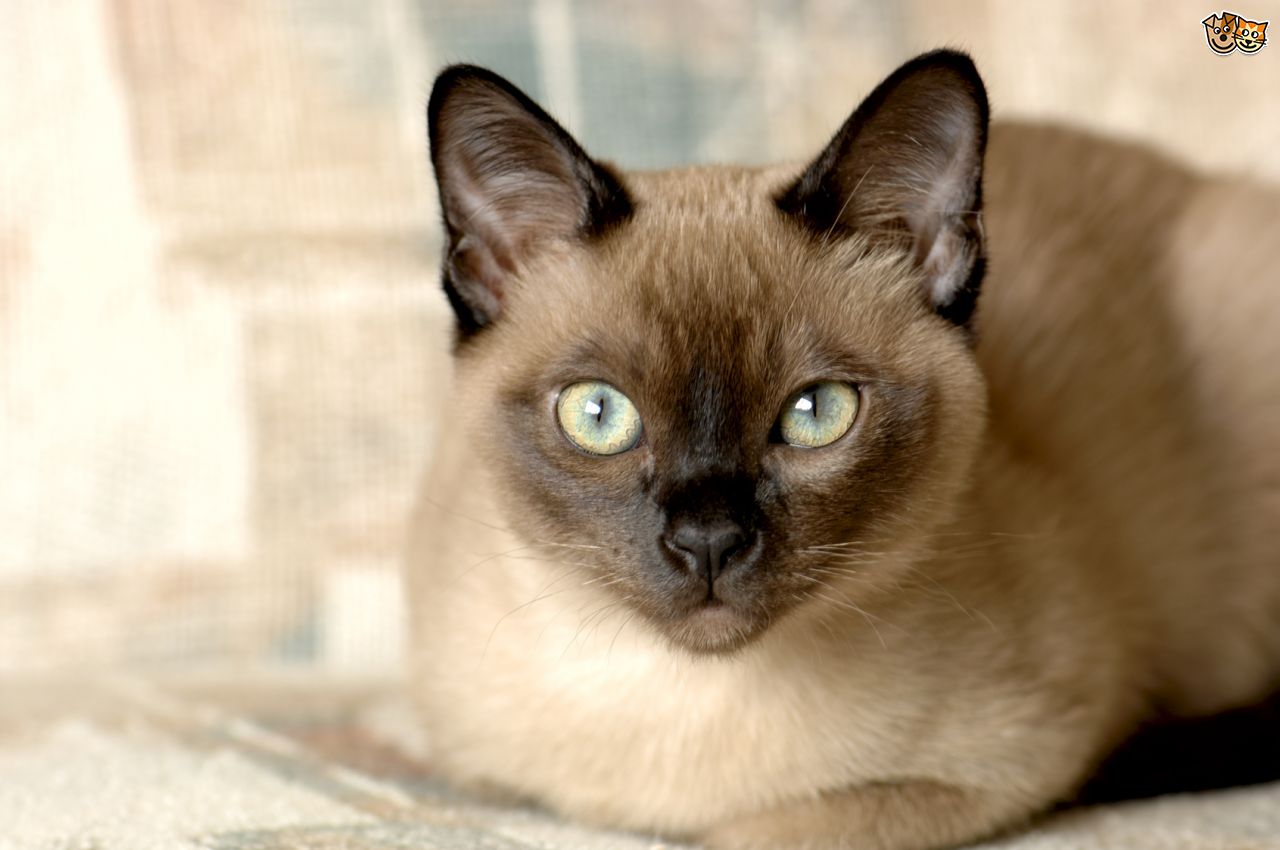
| Weight | 3–5.5 kg |
| Lifespan | 12–16 years |
| Coat | short, silky, close-lying |
| Recognition | CFA · TICA · WCF |
| Origin | Canada / USA |
Exact ratings
- Hypertrophic cardiomyopathy (HCM)
- Liver amyloidosis (as in Siamese cats)
- Dental disease (gingivitis)
- Respiratory problems (asthma, less often)
- Squint (cosmetic, rare)
Quality food for active cats, with weight control. The short silky coat only needs occasional brushing; the key is plenty of attention, play and company, as it is an extremely people-dependent breed that cannot bear solitude.
The Tonkinese cat, often simply called the ‘Tonk’, is a charming descendant of the gentle Burmese cat and the elegant Siamese cat, which itself is closely related to the traditional Thai cat. This breed, which emerged in the mid-20th century, harmoniously combines the best traits of its ancestors, embodying beauty, intelligence, and an extraordinary affection for people; you can find out more about this on Tvaryny. The Tonkinese is rightly considered an ideal family pet: it’s friendly with children, endlessly devoted to its owner, and adores being the centre of attention. Requiring no complex grooming, this cat values companionship above all else and will genuinely pine if left alone. Shared games, exploring the world around them, and cosy evenings on their owner’s lap – this is true happiness for the graceful Tonkinese, with its lustrous, silky coat of exquisite shades.
Tonkinese Cat: A Brief Breed Overview
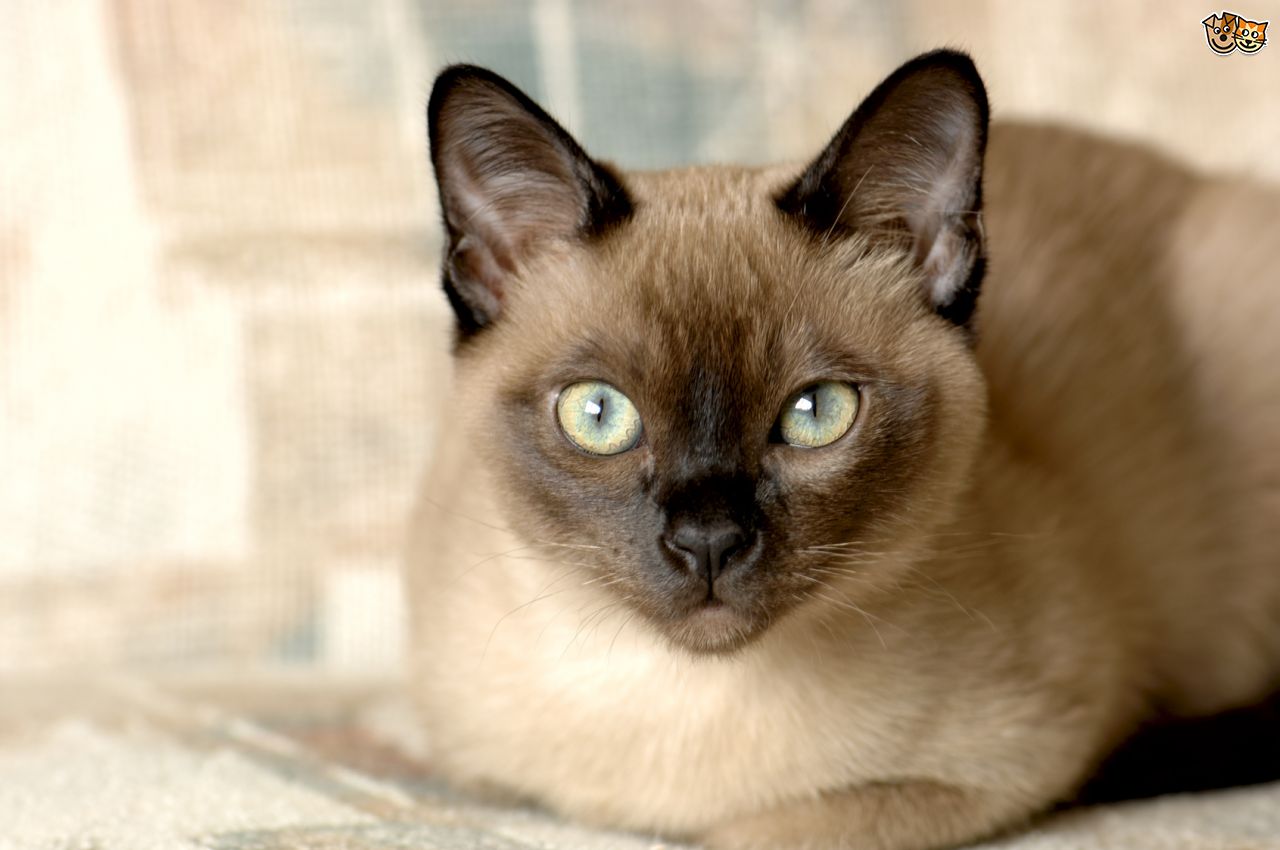
| Characteristic | Description |
|---|---|
| Origin | Canada, USA |
| Year of breed recognition | 1970s (CFA, CCA) |
| Lifespan | 13-18 years (average 15-16 years) |
| Size | Medium |
| Weight | Females: 2.5–4 kg, Males: 3.5–5.5 kg |
| Height at withers | Around 20–25 cm |
| Coat type | Short, dense, silky, close-lying to the body |
| Colour | Three types: point (contrasting), mink (medium), solid (self-coloured) in natural, champagne, blue, platinum |
| Eye colour | Aquamarine (minks), blue (points), greenish-gold (solids) |
| Temperament | Very social, playful, affectionate, intelligent, ‘chatty’, people-oriented |
| Care needs | Low (grooming), high (attention and companionship) |
| Activity level | High |
| Compatibility with children | High |
| Compatibility with other animals | High (with proper socialisation) |
History of the Tonkinese Cat
The history of the Tonkinese cat is a captivating tale of purposeful breeding and the quest to create the perfect companion. Although official recognition for the breed only came in the latter half of the 20th century, its roots go کشور deeper.
From Wong Mau to Breed Recognition
It all began in 1930, when Dr Joseph C. Thompson brought an unusual cat named Wong Mau from Rangoon (Burma, now Yangon, Myanmar) to San Francisco. She had a warmer brown body colour and darker markings than traditional Siamese cats. Initially, she was considered merely a variation of the Siamese breed. However, it was Wong Mau who became the progenitor not only of modern Burmese cats but is also believed to have played a key role in forming the Tonkinese gene pool. Crossbreeding Wong Mau with Siamese cats produced kittens of three types: Siamese-like (with contrasting markings), Burmese-like (darker), and an intermediate type – this very type formed the foundation of the future Tonkinese breed.
The Role of Canadian Breeders
The truly dedicated work on creating the Tonkinese breed began in the 1960s in Canada. Breeder Margaret Conroy and her colleague Jane Barletta independently decided to cross Siamese and Burmese cats. Their aim was to produce a cat that combined the elegance and blue eyes of the Siamese with the sturdier build and gentle nature of the Burmese. They aspired to create an animal with an ‘intermediate’ colouration (later termed ‘mink’) and the characteristic aquamarine eye colour.
Their efforts were crowned with success. The new breed, initially called the ‘Golden Siamese’, quickly gained popularity thanks to its attractive appearance and wonderful temperament. The breed later received the name ‘Tonkinese’, in honour of the Gulf of Tonkin in Southeast Asia, although the breed has no direct connection to this region – the name was intended to create an exotic image, similar to its Siamese and Burmese ancestors.
The Canadian Cat Association (CCA) was the first to recognise the breed in 1971. Subsequently, other major feline organisations also recognised it, including the Cat Fanciers’ Association (CFA) in the USA, albeit initially only in the mink colouration. Over time, the standards were expanded to include point and solid (sepia) colourations as well, thereby acknowledging the full spectrum of the breed’s genetic heritage.
What Does a Tonkinese Cat Look Like: Breed Standards
The Tonkinese cat is the epitome of harmony and elegance. It represents a ‘happy medium’ between the refined, slender Siamese cat and the more robust, rounded Burmese. Breed standards describe the ideal Tonkinese as a well-balanced, muscular animal of medium size.
General Description
The body is of medium length, with well-developed musculature, but not coarse. The chest is rounded, and the back slopes gently upwards towards the rear. The cat feels heavier than it looks, indicative of its solid build. Males are usually noticeably larger and more muscular than females.
Head and Muzzle
The head is a modified wedge shape with softly rounded contours. It is slightly longer than it is wide. The muzzle is rounded, with prominent whisker pads and a slight stop at eye level. The profile has a gentle curve. The chin is firm, forming a vertical line with the tip of the nose.
Ears
The ears are medium-sized, broad at the base, with oval tips. They are set quite wide apart, continuing the lines of the head’s wedge shape.
Eyes: The Aquamarine Gaze
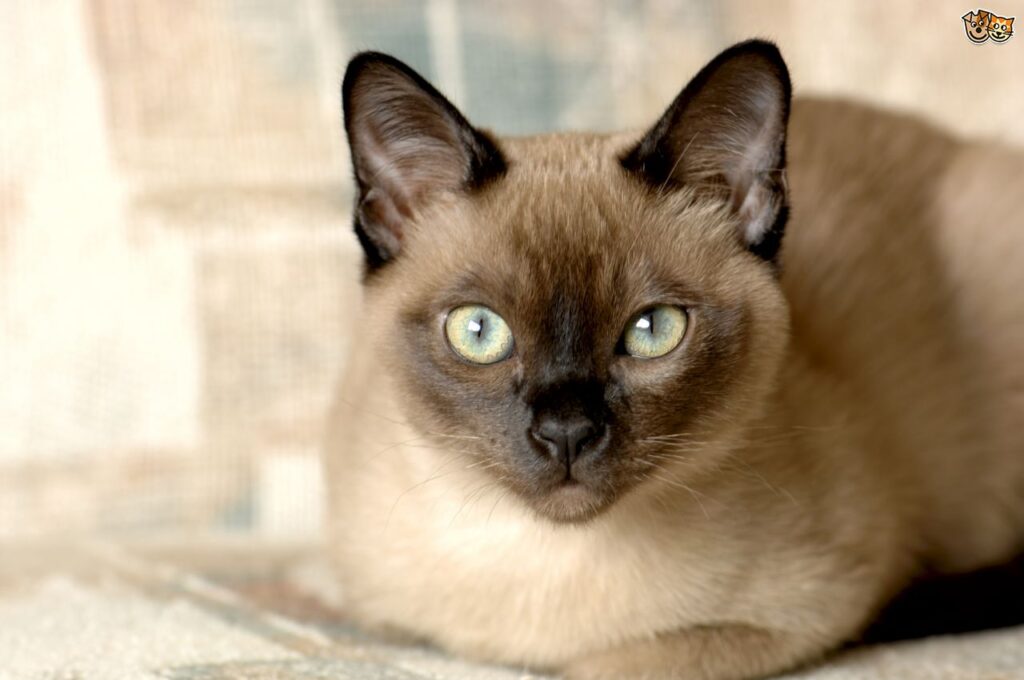
The eyes are one of the most expressive features of the Tonkinese. They are almond-shaped, set slightly slanted, and quite wide apart. The upper line of the eye is almond-shaped, whilst the lower line is more rounded. The eye colour depends on the coat colouration:
- Mink: The characteristic aquamarine colour (blue-green). This is the breed’s hallmark.
- Point: A rich blue colour, like that of Siamese cats.
- Solid/Sepia: Greenish-gold or yellow-green, similar to Burmese cats.
The bright, intense aquamarine eye colour in mink-coated cats is the most prized.
Body and Limbs
The limbs are proportionate to the body, fairly slender, but with well-developed muscles. The hind legs are slightly longer than the front legs. The paws are oval and medium-sized.
Tail
The tail is of medium thickness at the base, gradually tapering to the tip. Its length is approximately equal to the length of the torso (from shoulders to rump).
Coat: Unique Texture
The Tonkinese coat is short, fine, lies close to the body, is incredibly soft and silky to the touch, and has a distinct natural lustre. There is virtually no undercoat. This characteristic sets it apart from long-haired beauties like the Somali cat, yet it possesses its own irresistible charm. Its texture is often compared to mink.
Tonkinese Colouration: Three Types
The uniqueness of the Tonkinese breed lies in its display of three colouration types, which result from the combination of Siamese (colourpoint) and Burmese (sepia) colour genes:
| Colouration Type | Description | Eye Colour | Contrast |
|---|---|---|---|
| Point | Light body with clearly defined, significantly darker markings (points) on the muzzle, ears, paws, and tail. The greatest contrast between the main body colour and the points. | Blue | High |
| Mink | The main body colour is warmer and richer than in points. Markings are noticeably darker than the main colour, but the contrast is less pronounced than in points. The transition between colours is smoother. | Aquamarine | Medium |
| Solid / Sepia | The darkest variant. The main body colour is rich; markings are only slightly darker or almost indistinguishable from the main colour. Minimal contrast. | Greenish-gold / Yellow-green | Low |
These three colouration types can manifest in various colours, the main ones being:
- Natural: Warm brown (in minks and solids) or light beige (in points) with dark brown markings.
- Champagne: Beige or buff (in minks and solids) or cream (in points) with medium brown markings.
- Blue: Cool slate blue (in minks and solids) or icy white (in points) with slate grey markings.
- Platinum: Pale, silvery grey (in minks and solids) or pearl white (in points) with lilac-grey markings.
Other, less common colour variations also exist, such as honey, red, cream, and tortoiseshell.
The Unique Character of the Tonkinese Cat
The Tonkinese’s character is perhaps one of the main reasons for its popularity. These cats are known for their extraordinary sociability, intelligence, and playfulness. They don’t just live alongside humans; they actively participate in their lives.
Companionable and Social
The Tonkinese is a companion cat in the truest sense of the word. It adores being the centre of attention, following its owner around, and taking part in all household activities. Being left alone for long periods is a real trial for a Tonkinese. They can become bored, sad, and even exhibit destructive behaviour if they lack companionship. Therefore, this breed is not suitable for people who spend a lot of time away from home, unless the cat has a companion (another cat or a friendly dog).
Intelligence and Curiosity
Tonkinese cats have inherited high intelligence and curiosity from their Siamese ancestors. They learn easily, respond to their names, can be taught to fetch toys, and even walk on a lead. Their minds require stimulation, so it’s important to provide them with plenty of toys, especially interactive and puzzle toys. They curiously explore every nook and cranny of the house and can learn to open cupboard doors and drawers.
Vocality
Like their Siamese relatives, Tonkinese are quite ‘chatty’, although their voice is usually softer and not as loud. They enjoy ‘talking’ to their owners, expressing their desires, greeting them, or simply commenting on events. This is not the silent type of cat that sits quietly in a corner.
Attitude Towards Children and Other Animals
Thanks to their patience, playfulness, and gentleness, Tonkinese get along wonderfully with children who respect animals. They happily participate in shared games. They also typically get along well with other cats and friendly dogs, especially if raised together. Their social nature makes them excellent members of a large family.
They are very affectionate and love physical contact – sitting on laps, sleeping next to their owner, rubbing against legs. These are exceptionally devoted animals that form a strong bond with their humans.
Care and Upkeep of the Tonkinese Cat
The Tonkinese cat is a relatively low-maintenance breed in terms of physical grooming but requires a lot of attention and mental stimulation.
Grooming: Caring for the Silky Coat
The short, dense coat of the Tonkinese, which lacks an undercoat, is not prone to matting and requires minimal grooming. Brushing the cat with a rubber brush or a special grooming glove once a week is usually sufficient to remove dead hairs and distribute skin oils, which will give the coat extra lustre. During moulting seasons (typically spring and autumn), brushing can be done more frequently. Bathe a Tonkinese only when necessary.
Eye and Ear Care
Regularly inspect your cat’s eyes and ears. The eyes should be clean and clear. Small secretions in the corners of the eyes can be gently removed with a soft, damp cloth or wipe (a separate one for each eye). Ears should be checked for dirt or signs of infection (redness, unpleasant odour). Clean the ears only when necessary, using a special lotion and cotton pads, without penetrating deep into the ear canal.
Oral Hygiene
Tonkinese cats have a tendency towards gum and dental diseases (gingivitis, periodontitis). Therefore, regular oral hygiene is very important. Ideally, you should brush your cat’s teeth with a special brush and toothpaste for animals several times a week. If this is difficult, use special foods, dental cleaning treats, or gels. Regular check-ups with the vet will also help detect problems in good time.
Claws
Trim your cat’s claws approximately every 2-3 weeks using special claw clippers. Be sure to provide your cat with a scratching post (or preferably several of different types – vertical, horizontal, made of various materials) so it can satisfy its natural need to scratch its claws without damaging furniture.
Need for Activity and Play
Tonkinese are very active and playful cats. They need regular physical and mental exercise. Provide them with a variety of toys: balls, ‘fishing rods’, mice, interactive toys, tunnels. It’s important to dedicate time daily for shared play with your cat. Tall cat trees and shelves for climbing will also be very welcome, as Tonkinese love to observe everything from a height.
Although the initial description mentioned outdoor access, keeping a Tonkinese exclusively indoors is safer. Street dangers (cars, dogs, infections, poisons) pose a serious threat. If you want to provide your cat with access to fresh air, the best option is a secure balcony or an outdoor enclosure (catio). Some Tonkinese adapt well to a harness and lead for controlled walks in safe areas, but this requires patience and gradual training.
Home Safety
Due to their curiosity and activity, Tonkinese can get into trouble. Ensure your home is safe for your cat: hide electrical wires, toxic substances, and small objects that the cat could swallow. Be careful with open windows and balconies (be sure to install protective screens).
Tonkinese Cat Health: Common Diseases and Prevention
Tonkinese cats are generally considered a healthy breed with a fairly long lifespan (13-18 years). However, like many breeds developed through crossbreeding, they can inherit a predisposition to certain diseases from their ancestors – Siamese and Burmese cats.
Susceptibility to Dental Problems
As already mentioned, gingivitis (gum inflammation) and periodontitis are quite common problems in Tonkinese. This can lead to pain, tooth loss, and even systemic infections. Regular oral care and veterinary check-ups are key to prevention.
Respiratory Diseases
Tonkinese may sometimes experience problems with their upper respiratory tract, such as a susceptibility to infections or asthma. It’s important to monitor for any signs of labored breathing, coughing, or sneezing and to consult a vet promptly.
Amyloidosis
This is a serious, potentially hereditary disease sometimes found in Siamese and related breeds. It is characterised by the accumulation of amyloid protein in organs, most often in the liver or kidneys, leading to impaired function and organ failure. Unfortunately, there is no specific cure; therapy is aimed at supporting the function of the affected organ.
Other Potential Problems
- Hypertrophic Cardiomyopathy (HCM): The most common heart disease in cats, which can also occur in Tonkinese.
- Crossed Eyes (Strabismus): Occasionally seen in Tonkinese, inherited from Siamese ancestors. It usually doesn’t affect the cat’s quality of life but is an undesirable trait for show animals.
- Progressive Retinal Atrophy (PRA): An inherited eye disease leading to blindness. Genetic tests are available to identify carriers.
Preventive Measures and Regular Check-ups
The best way to maintain your Tonkinese cat’s health is through prevention:
- Regular veterinary check-ups: Annual (and biannual for senior cats) check-ups will help detect problems at an early stage.
- Vaccinations: Adhere to the vaccination schedule for major feline infections.
- Parasite control: Regularly treat your cat for fleas, ticks, and worms.
- Balanced nutrition: High-quality food appropriate for the cat’s age and health status.
- Maintaining a healthy weight: Avoid overfeeding, as obesity increases the risk of many diseases.
- Responsible breeder selection: When buying a kitten, choose a breeder who tests their animals for hereditary diseases.
Feeding Your Tonkinese Cat: Key Recommendations
Proper nutrition is the foundation of health and longevity for any cat, and the Tonkinese is no exception. Its active lifestyle and breed characteristics require a balanced diet.
Choosing Food: Dry or Wet?
The best choice for most owners is high-quality commercial cat food of premium, super-premium, or holistic grade. These contain all the necessary nutrients, vitamins, and minerals in the correct proportions.
- Dry food: Convenient to store, helps maintain oral hygiene through the mechanical cleaning of teeth when chewing kibble. Choose food with a high animal protein content (meat or fish should be the first ingredient listed) and a moderate fat content.
- Wet food (tins, pouches): More palatable and contains more moisture, which is important for preventing urinary tract diseases. It is recommended to combine dry and wet food, giving wet food once or twice a day.
When choosing food, consider the cat’s age (kitten, adult, senior), activity level, and health status (for example, there are specialised diets for cats prone to urinary stones or with sensitive digestion).
Natural Diet: What’s Allowed and What’s Not
If you opt for a natural diet, it is crucial to balance the ration correctly, which is quite challenging without consulting a veterinary nutritionist. The basis should be:
- Meat: Lean beef, chicken, turkey (raw and previously frozen, or cooked).
- Offal: Heart, stomachs (small amounts, 1-2 times a week). Liver should be given very sparingly and rarely.
- Dairy products: Low-fat kefir, plain yoghurt, cottage cheese (small amounts).
- Vegetables: Carrots, courgettes, pumpkin (cooked or raw grated, in small quantities as a source of fibre).
- Eggs: Cooked yolk 1-2 times a week.
Strictly avoid giving your Tonkinese:
- Food from the human table (salty, smoked, fried, sweet).
- Pork.
- Bones (especially tubular ones).
- River fish (risk of parasites and small bones).
- Milk (often causes diarrhoea in adult cats).
- Onions, garlic, chocolate, grapes, raisins (toxic to cats).
- Sausages, processed meats.
The Importance of Balance and Quality
Regardless of the type of diet, the key is a balance of proteins, fats, and carbohydrates, as well as the presence of all necessary vitamins and minerals. Do not overfeed your cat. Follow the recommended feeding guidelines on the food packaging or those calculated by a vet for a natural diet. Obesity is a serious problem that leads to many diseases.
Drinking Regime
Your cat must always have access to fresh, clean water. This is especially important when feeding dry food. Place the water bowl away from the food bowl – cats often drink more willingly if the water is in a different location. Some Tonkinese enjoy drinking running water, so a cat water fountain can be a good solution.
Training and Socialisation of the Tonkinese Cat
High intelligence and a people-oriented nature make the Tonkinese cat very trainable. The training process can be an excellent way to strengthen the bond between you and your pet.
Teaching Basic Commands and Tricks
Tonkinese easily learn simple commands (“come!”, “sit!”), can be taught to fetch toys, give a paw, and even navigate small obstacles. The main thing is to use positive reinforcement methods: praise the cat, offer treats or a favourite toy immediately after correct execution. Training sessions should be short (5-10 minutes), engaging, and regular. Never physically punish your cat or shout at it – this will only destroy trust.
Litter Tray and Scratching Post Training
Tonkinese are usually very clean and easily take to a litter tray. It’s important to choose a comfortable tray (sufficiently large, with appropriate sides) and a litter that the cat likes. The tray should always be kept clean. If a kitten has an accident, don’t punish it; calmly place it in the tray.
Training to use a scratching post is also important. Place it where the cat spends a lot of time or has already tried to scratch. You can attract the cat’s attention to the scratching post using catnip or a toy. Praise it every time it uses the scratching post for its intended purpose.
Early Socialisation
Although Tonkinese are naturally social, early socialisation is very important. From a young age, accustom the kitten to different sounds, people, touches, and grooming procedures (brushing, ear checks, teeth cleaning). If you have other animals, introduce them gradually and under supervision. Proper socialisation will help raise a confident, well-balanced, and friendly cat.
Pros and Cons of the Tonkinese Cat Breed
Like any breed, Tonkinese cats have their advantages and disadvantages, which are important to consider before getting such a pet.
| Pros | Cons |
|---|---|
| Incredibly affectionate and people-oriented: A true companion, loves physical contact, devoted. | Needs a lot of attention: Doesn’t tolerate loneliness well, can suffer from separation anxiety. Not suitable for very busy people. |
| High intelligence: Learns easily, curious, understands its owner. | ‘Chattiness’: Loves to ‘talk’, which may not appeal to those who prefer quiet. |
| Playful and active: Remains playful into old age, an excellent playmate. | High need for activity: Requires regular games and mental stimulation, otherwise can become bored. |
| Gets along well with children and other animals: Usually very patient and friendly. | Prone to certain diseases: Dental problems, amyloidosis, respiratory issues. |
| Elegant appearance: Beautiful physique, unique silky coat, expressive eyes (especially aquamarine). | Curiosity can lead to trouble: May climb into dangerous places, open cupboards. |
| Relatively easy coat care: Doesn’t require frequent brushing. | Can be stubborn: Like many intelligent cats, sometimes shows independence. |
Interesting Facts About Tonkinese Cats
- The ‘Golden Mean’: The Tonkinese perfectly blends the traits of Siamese and Burmese breeds, not only in appearance but also in character – it’s not as vocal and demanding as a Siamese, but more active and curious than a Burmese.
- Colour Change: Tonkinese kittens are born significantly lighter than their final adult colour. Their colouring fully develops over several months, sometimes up to 1-2 years. The coat colour can also darken slightly with age or during colder seasons.
- Aquamarine Eyes: The unique aquamarine (blue-green) eye colour in mink-coated cats is one of the most desired traits of the breed and results from the combination of genes for blue eyes from Siamese and golden-green eyes from Burmese.
- A Puzzling Name: Despite the name’s association with the Gulf of Tonkin in Vietnam, the breed has no connection to this region. The name was chosen to emphasise the Eastern origin of the breed’s ancestors.
- Heat Lovers: Like their ancestors from hot Southeast Asia, Tonkinese love warmth and often seek out the warmest spots in the house – sunny windowsills, radiators, or their owner’s lap.
- ‘A Dog in Cat’s Clothing’: Due to their devotion, love of games (including fetching), and desire to follow their owner, Tonkinese are sometimes jokingly called ‘dogs in cat’s clothing’.
Frequently Asked Questions About the Tonkinese Cat Breed
Do Tonkinese cats shed a lot?
No, Tonkinese cats are moderate shedders. Their short coat, lacking a dense undercoat, doesn’t require complex grooming. Regular brushing once a week is usually enough to control the amount of hair in the home.
Are Tonkinese cats suitable for people with allergies?
No cat is completely hypoallergenic. Tonkinese cats produce the Fel d 1 allergen, like other breeds. Although some people with mild allergies may tolerate them better than long-haired cats due to their short coat and less shedding, this is highly individual. It’s recommended that allergy sufferers spend time with the breed before committing to getting one.
How long do Tonkinese cats live?
Tonkinese are known for their longevity. With proper care, nutrition, and regular veterinary visits, they can live for 15-18 years, and sometimes even longer.
Can a Tonkinese cat be left alone all day?
This is not advisable. Tonkinese are very social and suffer from loneliness. If you are regularly away from home for 8-10 hours, a Tonkinese will need a companion – another cat or a friendly dog. It’s also important to provide plenty of toys and give them lots of attention when you are at home.
Does a Tonkinese cat need to go outside?
No, outdoor access is not essential and is even discouraged for safety reasons. Tonkinese are perfectly happy living exclusively indoors, provided they have enough space for activity, toys, and their owner’s attention. Safe outdoor experiences are possible on a harness or in an enclosure.
How much does a Tonkinese kitten cost?
The price of a Tonkinese kitten can vary depending on its pedigree, class (pet, breed, show), the cattery’s reputation, and the region. Budget for the running costs rather than the one-off sum: food, litter, routine check-ups and parasite treatment.
- Extraordinarily sociable and “dog-like”
- Clever, playful, easy to train
- The short silky coat needs almost no care
- Quieter than the Siamese, ideal for a flat
- Cannot bear solitude at all
- Vocal and demanding of attention
- Needs plenty of play and company
- A tendency to hereditary diseases (amyloidosis, HCM)
| Burmese | Siamese Cat | Balinese Cat | |
|---|---|---|---|
| Weight | 3–6.5 kg | 3–5 kg | 2.5–5 kg |
| Energy | 4 | 4.5 | 4.5 |
| Apartment | 5 | 5 | 5 |
| Beginners | 4 | 3 | 3.5 |
What is the Tonkinese?
Is the Tonkinese noisy?
Can the Tonkinese be left alone?
CFA / TICA / WCF standards (Tonkinese)
For apartments · For kids · For beginners · Most affectionate · Quietest · Hypoallergenic · All rankings →