Somali Cat

By tvaryny
28 Min Read

The Somali cat is more than just a long-haired version of the Abyssinian, though that’s indeed how it came to be. This is an independent, recognised breed with a unique appearance reminiscent of a little fox, and an exceptionally lively, intelligent, and playful character. These elegant creatures are true livewires, requiring attention, space for games, and regular, albeit not overly complicated, care for their luxurious coat. If you’re seeking a companion that will actively participate in family life, surprise you with its cleverness, and spread positivity, the Somali could be the perfect choice – you can find out more on Tvaryny.

Somali cats are highly social and inquisitive animals. They dislike being left alone for long periods and thrive in the company of people or other household pets. Their natural curiosity and intelligence make them capable of learning various tricks, and their playfulness lasts a lifetime. It’s important to understand that this breed needs significant physical and mental stimulation to remain happy and healthy.

Somali Cat: A Breed Overview
Somali cat
CharacteristicDescription
OriginUSA (from Abyssinian cats)
Time of Origin1960s (official recognition later)
SizeMedium
WeightMales: 4.5 – 5.5 kg (10 – 12 lbs), Females: 3.5 – 4.5 kg (7.7 – 10 lbs)
Lifespan11 – 16 years
Coat TypeSemi-longhaired, dense, soft, silky
ColourTicked tabby (ruddy, sorrel, blue, fawn, silver, and their variations)
TemperamentActive, playful, intelligent, social, inquisitive, gentle
Activity LevelHigh
Grooming NeedsModerate (brushing 1-2 times a week)
Compatibility with ChildrenGood, with proper socialisation
Compatibility with Other AnimalsGood, especially if raised together
Susceptibility to DiseasesPyruvate Kinase Deficiency (PKDef), Progressive Retinal Atrophy (PRA), Renal Amyloidosis, gum problems

History and Origin of the Somali Cat

The history of the Somali cat is inextricably linked with the Abyssinian breed. For many years, kittens with unusually long fur would occasionally appear in litters of purebred Abyssinians. For a long time, such kittens were considered “flawed” and quietly rehomed as pets without breeding rights, as the Abyssinian breed standard required short fur. The gene for long hair is recessive, meaning it could be passed down through generations without manifesting until two carriers of this gene were mated.

The situation began to change in the 1960s in North America. Canadian breeder Mary Mailing sent several long-haired Abyssinians to American breeder Evelyn Mague. It is Evelyn Mague, owner of the Lynn-Lee cattery, who is considered the “mother” of the Somali breed. She was captivated by the beauty of these “fluffy” Abyssinians and decided to pursue their recognition as a separate breed. She initiated a dedicated breeding programme, selecting cats with the desired long-haired traits and the characteristic Abyssinian ticking.

The name “Somali” was chosen by Evelyn Mague as a geographical neighbour to Ethiopia (formerly Abyssinia), symbolising the new breed’s close connection to its ancestors. Initially, the path to recognition was challenging, as some Abyssinian breeders were opposed, fearing it would compromise the purity of their breed. However, the enthusiasm of Evelyn and other admirers of these long-haired beauties prevailed.

The first Somali Cat Club of America (SCCA) was founded in the USA in 1972. The breed received official recognition from the Cat Fanciers’ Association (CFA) in 1979, and subsequently from other major feline organisations worldwide, including The International Cat Association (TICA).

What Does a Somali Cat Look Like: Breed Standard

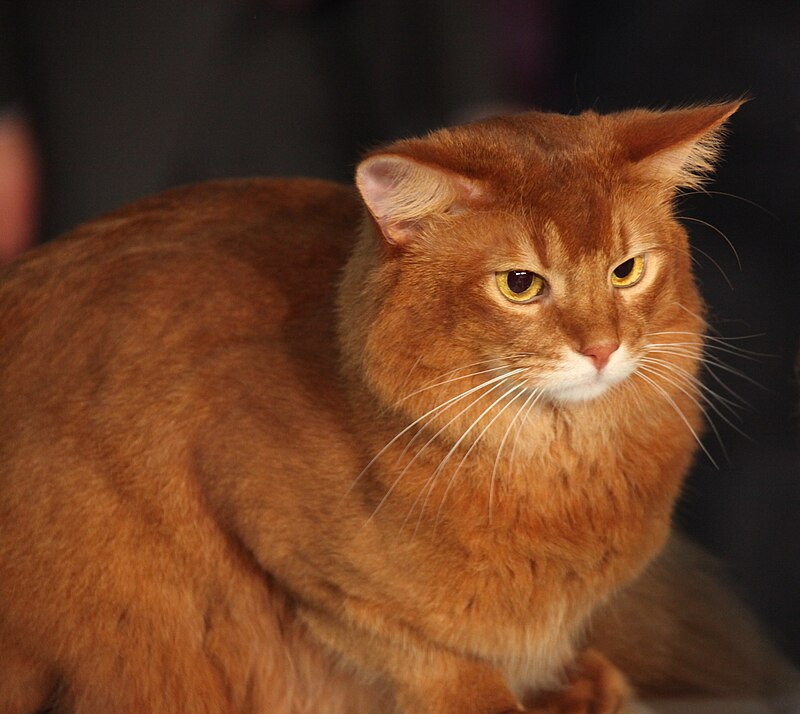
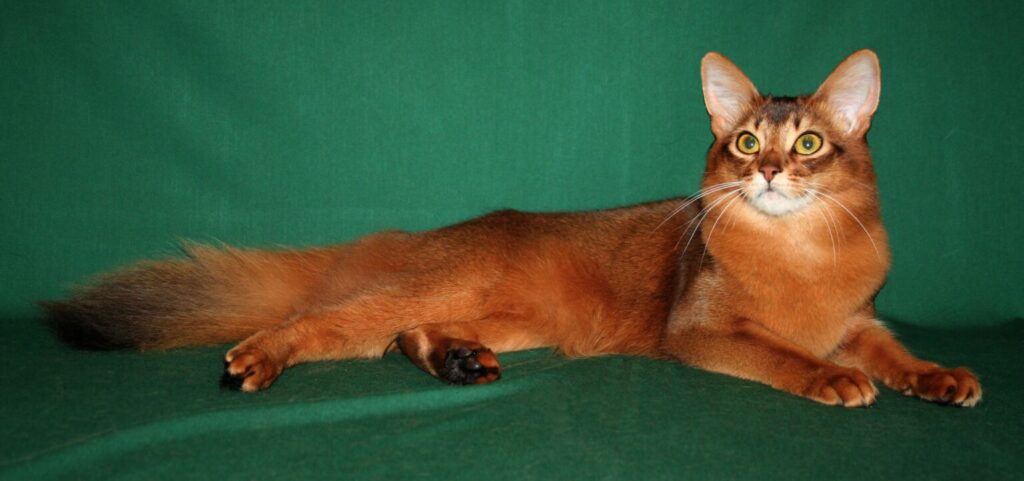
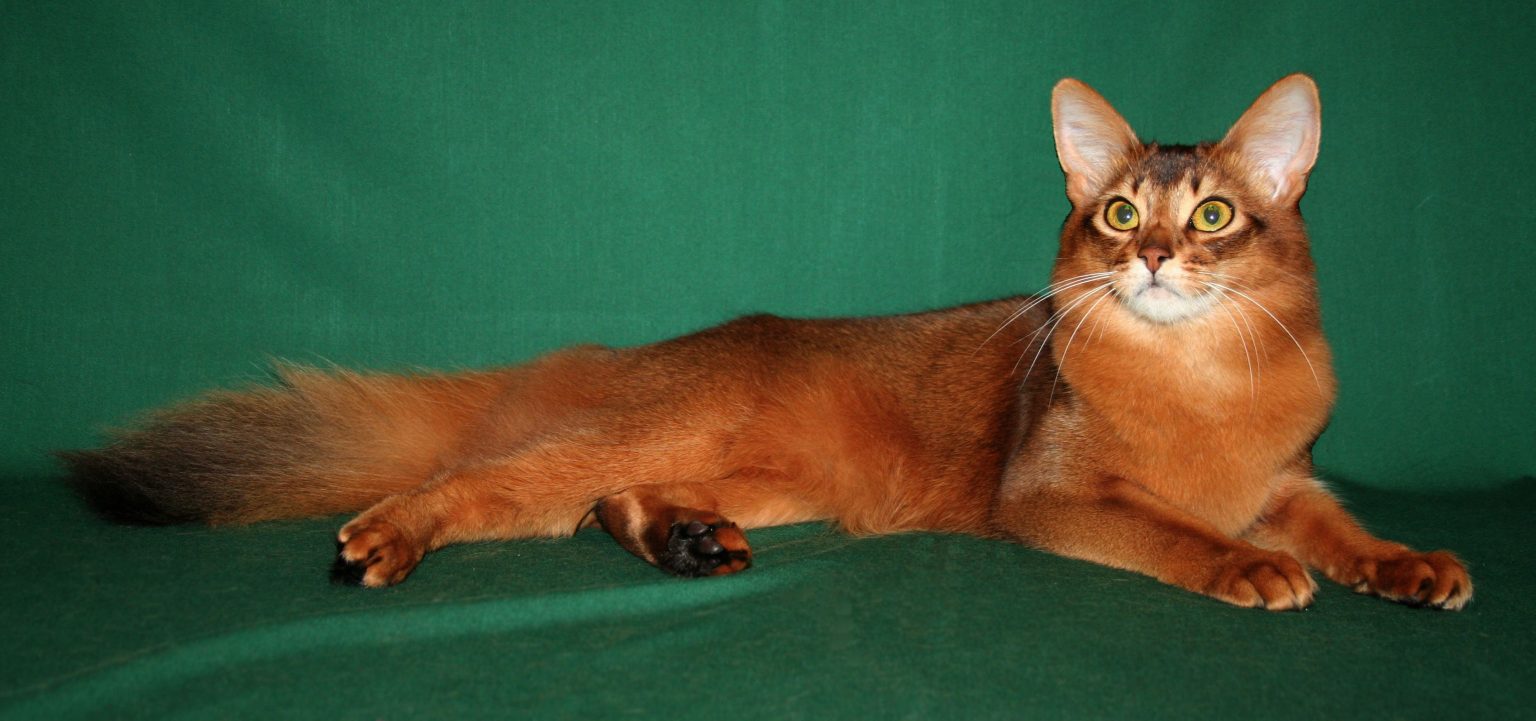
The Somali cat is the epitome of grace and elegance, with a distinctive appearance that often earns it the nickname “fox cat”. It is a medium-sized cat, well-muscled yet refined and agile.

  • Body: Medium length, supple, with well-developed musculature but not cobby. The back is slightly arched, giving the impression the cat is poised to spring. The chest is rounded.
  • Head: A modified wedge shape with soft, rounded contours. There’s a gentle transition from forehead to nose. The muzzle is not pointed.
  • Ears: Large, alert, broad at the base, and slightly rounded at the tips. Set quite wide apart. Ear tufts (furnishings) inside the ear and “lynx tips” at the points are desirable.
  • Eyes: Large, almond-shaped, and expressive. The colour can be a rich gold or green, depending on the coat colour. The eyes are outlined with a dark line (“eyeliner”), surrounded by a lighter area of fur, making the gaze particularly striking.
  • Coat: Semi-longhaired, very soft to the touch, dense, with a well-developed undercoat. The fur is shorter on the shoulders but longer on the belly and “breeches” (hind legs). A characteristic feature is a full ruff around the neck and a luxurious, bushy tail, similar to that of a fox. The coat texture is silky and fine.
  • Tail: Thick at the base, tapering gradually to the tip. Very well-furred, long, and in proportion to the body.
  • Paws: Proportional to the body, oval-shaped, and compact. They give the impression the cat is standing “on tiptoe”.

Somali Cat Coat Colours and Markings

The key feature of the Somali’s coat, inherited from Abyssinians, is ticking. This means each hair shaft has multiple bands of colour – alternating light and dark. The main (darkest) colour appears at the tip of the hair, as well as along the spine and on the tail. The belly and inner legs usually have a lighter, solid shade without ticking.

This type of colouration creates a characteristic “shimmering” effect, without distinct stripes or spots on the body like other tabby patterns. Ticking gives the coat depth and richness.

The main recognised colours for Somali cats are:

  1. Ruddy (Usual): The most common and classic. A warm, reddish-brown base colour with black ticking. It resembles the coat of a wild rabbit or hare.
  2. Sorrel (Cinnamon): A rich copper-red colour with chocolate-brown ticking. A warm, vibrant shade.
  3. Blue: A warm beige or cream base colour with slate-blue ticking. A softer, more muted colouration.
  4. Fawn: A warm, rosy-beige base colour with cocoa-brown or light-brown ticking. The most delicate of the classic colours.

There are also silver variations of these colours, where the base undercoat colour is silvery-white, giving the fur a cooler, “frosted” appearance.

Somali Character and Temperament

The Somali cat is a true bundle of energy, intelligence, and playfulness. They are often described as “eternal kittens” because they retain their vivacity and inquisitiveness throughout their lives. This is not a cat that will quietly sleep on the sofa for hours. The Somali strives to be at the centre of events, explore every corner of the house, and actively participate in all its owner’s affairs.

Key character traits:

  • Intelligence and Cleverness: Somalis are among the most intelligent cats. They learn quickly, can master tricks, open doors and cupboards, and solve puzzles (e.g., getting treats from interactive toys). Their minds require constant stimulation.
  • Playfulness: This is an exceedingly playful breed. They adore chasing toys, hunting “prey” (balls, feathers), climbing cat trees, and exploring new objects. For them, play is not just fun but a vital necessity.
  • Activity: Somalis need a lot of movement. They love heights, so multi-level complexes and shelves for climbing are a big plus. Their activity levels can be similar to the energy of Balinese cats, who are also known for their love of games and interaction.
  • Sociability and Affection: They are very human-oriented and also get on well with other animals. Somalis tolerate solitude poorly and need daily interaction and attention. They often follow their owner around, “helping” with all tasks. While not always typical “lap cats,” they express their love through shared games, gentle purring, and simply being nearby.
  • Inquisitiveness: No new item or event in the house will go unnoticed by a Somali. They must sniff everything, investigate it, and sometimes even give it a “test bite.”
  • Gentleness and Mildness: Despite their activity, Somalis are very gentle and non-aggressive cats. They get along well with children if the children are taught to treat animals respectfully.
  • Voice: They usually have a soft, quiet voice but can be quite “chatty” when they want to attract attention or demand something.

It’s important to understand that if a Somali doesn’t receive enough attention, play, and mental stimulation, it may become bored and find its own entertainment, which owners might not always appreciate (e.g., knocking items off shelves, scratching furniture).

Socialisation and Coexistence with Other Animals

Thanks to their friendly and playful nature, Somali cats usually get along well with other household pets, especially if they’ve grown up together. They can make wonderful companions for another cat (particularly an active one) or even a good-natured dog. This sociable trait is something they share with other amiable breeds like the Snowshoe cat, although Somalis possess their own unique zest, setting them apart even from other energetic felines such as the Serengeti cat.

However, their hunting instinct may manifest towards small animals such as rodents (hamsters, guinea pigs) or birds. Therefore, keeping them in the same household with potential “prey” requires great caution, ensuring complete safety for the smaller pets.

Somalis also get along wonderfully with children, especially older ones who can participate in their active games. It is important to teach children to respect the cat’s personal space and not be overly intrusive. Thanks to their patience and lack of aggression, Somalis rarely extend their claws but may simply walk away if they don’t like something.

Early socialisation of a kitten is very important. Introducing them to different people, sounds, and situations at a young age will help raise a confident and well-balanced adult cat.

Caring for a Somali Cat: Key Aspects

Caring for a Somali cat is not overly complicated but does require consistency, especially regarding their coat and oral hygiene.

Grooming and Coat Care

Although the Somali’s coat is semi-longhaired, it has a silky texture and is less prone to matting than that of some other long-haired breeds, such as Persians. Nevertheless, regular care is necessary:

  • Brushing: It is recommended to brush a Somali 1-2 times a week using a metal comb with sparse teeth or a special slicker brush. This helps remove dead hairs, prevent matting (especially in the “ruff” and “breeches” areas), and reduce the amount of fur the cat ingests during self-grooming. Some owners compare the ease of grooming a Somali’s coat to that of a Turkish Angora, which also has a silky structure without a dense, easily tangled undercoat.
  • Bathing: Frequent bathing is usually not necessary. Bathe a Somali as needed, for example, if the coat has become dirty or before a show. Use a special cat shampoo.
  • Seasonal Moulting: Somalis moult (shed), especially in spring and autumn. During these periods, more frequent brushing (3-4 times a week) may be needed to manage the excess fur.

Eye, Ear, and Dental Care

  • Eyes: Regularly inspect the eyes for any discharge. Small crusts in the corners of the eyes can be gently removed with a damp cloth or cotton pad soaked in a special lotion or boiled water.
  • Ears: Check the ears once a week for dirt, excess wax, or signs of infection (redness, unpleasant odour). Clean the ears only when necessary, using a special ear cleaning solution for cats and cotton pads (do not use cotton buds!).
  • Teeth: This is a very important aspect of Somali care! This breed has a genetic predisposition to gum disease (gingivitis) and periodontitis. Regular tooth brushing with a special cat toothbrush and toothpaste (2-3 times a week or daily) is the best prevention. Special dental diets and treats can also be beneficial. Regular veterinary check-ups will help detect problems early.

Claws and Hygiene

  • Claws: Trim the claws every 2-3 weeks using special cat nail clippers, cutting only the transparent tip and avoiding the pink part (quick) where blood vessels and nerves are located.
  • Litter Tray: Somalis are generally very clean cats. It is important to keep the litter tray clean, regularly scooping it and completely changing the litter according to the manufacturer’s instructions.

Activity and Space Needs for Somalis

The Somali cat is a very active breed that requires plenty of opportunities for physical exercise and play. They need space to run, jump, and climb. Keeping a Somali exclusively in a small flat without additional opportunities for activity can lead to boredom and destructive behaviour.

How to meet a Somali’s activity needs:

  • Vertical Space: Tall and sturdy cat trees, wall shelves, and climbing complexes are essential for Somalis. They love to observe what’s happening from a height.
  • Interactive Play: Daily play sessions with the owner are extremely important. Use a variety of toys: feather wands, laser pointers (always end the game with a “caught” physical toy or treat), balls, and toy mice.
  • Toys for Independent Play: Leave various toys for the cat to chase on its own when you are not at home. These can include balls, tunnels, and toys with catnip.
  • Puzzle Toys: Food puzzles that require the cat to work for its food will help satisfy the Somali’s need for mental stimulation and slow down eating.
  • Safe Outdoor Access (if possible): Some Somalis enjoy exploring the world outside. If you decide to let your cat outdoors, do so only under supervision on a harness and lead, or in a secure outdoor enclosure (catio), to protect it from dangers (cars, dogs, infections, poisoning, getting lost).

Remember, a tired Somali (both physically and mentally) is a happy Somali!

Training and Mental Stimulation

Thanks to their high intelligence and desire to interact with people, Somali cats are highly trainable. They quickly understand what is expected of them, especially if training is conducted in a playful manner using positive reinforcement.

What you can teach a Somali:

  • Basic commands: “Come,” “Sit,” “Give paw.”
  • Tricks: Fetching small toys, jumping through a hoop, walking on hind legs.
  • Harness and lead training: If you plan to take your cat for walks.
  • Using a scratching post: To save your furniture.

Key principles for training a Somali:

  • Positive Reinforcement: Use treats, praise, and favourite games as rewards for correct behaviour. Never physically punish the cat or shout at it – this can cause fear and mistrust.
  • Short and Engaging Sessions: Training sessions should be short (5-10 minutes) and fun to keep the cat interested.
  • Patience and Consistency: Don’t expect instant results. Be patient and repeat exercises regularly.
  • Puzzle Toys: In addition to training, provide your cat with puzzle toys and hide treats in different places around the flat for it to find. This will help satisfy its natural need for mental activity.

Somali Cat Health: Susceptibility to Diseases

Somali cats are generally a healthy breed, but like many purebred animals, they have a genetic predisposition to certain diseases inherited from their Abyssinian ancestors. Responsible breeders test their breeding stock to minimise the risk of passing these conditions on to kittens.

Key hereditary diseases to be aware of:

  • Pyruvate Kinase Deficiency (PKDef): This is an inherited blood disorder that causes anaemia of varying severity. Symptoms can include lethargy, loss of appetite, and pale gums. A DNA test is available to identify carriers of this disease.
  • Progressive Retinal Atrophy (PRA): This is a group of diseases that lead to the gradual degeneration of retinal cells in the eye, eventually causing blindness. There are different forms of PRA, and a DNA test is also available for one form (rdAc) common in Abyssinians and Somalis.
  • Renal Amyloidosis: This is a serious condition where amyloid protein is deposited in the kidneys, leading to kidney failure. Diagnosis is complex, and a reliable genetic test does not yet exist. The disease can develop at a young age.
  • Gum Disease (Gingivitis, Periodontitis): As mentioned, Somalis have a high predisposition to dental and gum problems. This can lead to pain, tooth loss, and systemic infections. Regular oral care is critically important.

Disease Prevention and Health Care

While it’s impossible to completely avoid the risk of disease, proper care and preventive measures can significantly improve the quality and length of your Somali cat’s life.

  • Choose a Responsible Breeder: Only buy kittens from reputable breeders who test their animals for genetic diseases (PKDef, PRA) and can provide test results for the kitten’s parents.
  • Regular Veterinary Check-ups: Visit the vet for preventive check-ups at least once a year (for senior cats, every 6 months). This helps detect problems at an early stage.
  • Vaccination and Deworming: Follow the vaccination schedule for major infectious diseases and regularly treat for internal and external parasites (fleas, ticks, worms) as recommended by your vet.
  • Oral Care: Daily or regular tooth brushing is the best prevention for gingivitis and periodontitis.
  • Balanced Diet: High-quality food appropriate for the cat’s age and activity level supports overall health and the immune system.
  • Weight Control: Despite their high activity levels, Somalis can gain excess weight, especially with age or after neutering. Obesity increases the risk of many diseases.
  • Behavioural Observation: Any changes in appetite, activity level, litter tray habits, coat appearance, or behaviour can be signs of health problems and require veterinary consultation.

Feeding Your Somali Cat: Recommendations and Diet

Somali cats are generally not overly fussy eaters, but their high activity level requires a quality, balanced diet to maintain energy and health. The cornerstone of their diet should be high-quality animal protein.

Feeding options:

  • High-Quality Commercial Foods: This is the simplest way to provide a balanced diet. Choose super-premium or holistic foods where meat (chicken, turkey, beef, fish) is listed as the first ingredient. Dry food is convenient and helps maintain dental hygiene, but it’s crucial to ensure the cat has constant access to fresh water.
  • Wet Foods (tins, pouches): These are more palatable and help maintain hydration, which is important for preventing urinary tract diseases. Ideally, combine dry and wet food.
  • Natural Feeding (Raw/Home-cooked): This requires careful planning and consultation with a veterinary nutritionist to ensure all necessary nutrients, vitamins, and minerals are provided in the correct proportions. The basis should be lean raw or cooked meat (chicken, turkey, beef), offal, supplemented with a small amount of vegetables and dairy products (low-fat cottage cheese, kefir). Never feed your cat food from your table!

Key feeding recommendations for Somalis:

  • Food Quantity: Follow the food manufacturer’s recommendations, but adjust the portion depending on the cat’s age, weight, activity level, and individual needs. It’s better to feed an adult cat 2-3 small meals a day.
  • Fresh Water: Your cat should always have access to clean, fresh drinking water, especially if it primarily eats dry food. Consider using a water fountain, which encourages cats to drink more.
  • Avoid Overfeeding: Monitor your cat’s weight to prevent obesity.
  • Treats: Use treats sparingly, as encouragement during training or play. Choose special cat treats, not human food.

Pros and Cons of the Somali Cat Breed

Like any breed, Somali cats have their advantages and disadvantages. It’s important to weigh them up before deciding to get such a pet.

Pros (+)Cons (-)
High intelligence and cleverness: Easy to train, engaging to interact with.High need for attention: Do not tolerate loneliness well, can become demanding.
Extremely playful and active: Always ready for games, spread positivity.High need for activity and stimulation: Require many toys, space, and playtime, otherwise can become bored and exhibit destructive behaviour.
Friendly and social character: Get along well with people, children, and other animals (with proper socialisation).Susceptibility to certain hereditary diseases: PKDef, PRA, amyloidosis, gum problems.
Striking appearance: Beautiful “fox-like” face, luxurious coat and tail.Need for regular grooming: Although the coat doesn’t mat easily, brushing 1-2 times a week is necessary.
Relatively unfussy eaters.Not suitable for inactive people: Require an owner prepared to dedicate time to games and activities.
Soft, quiet voice.Possible strong hunting instinct: Caution needed when kept with small animals.

Interesting Facts About Somali Cats

  • “Fox Cat”: Somalis earned this nickname due to their reddish coat (especially in ruddy and sorrel colours), large ears, expressive eyes, and, most importantly, their very bushy tail.
  • Quiet “Chatterboxes”: Although Somalis like to “communicate” with their owners, their voice is usually very soft and quiet, making them pleasant housemates.
  • Climbing Masters: Somalis adore heights and are skilled climbers. Don’t be surprised to find your pet on the highest shelf in the house.
  • Water Lovers (sometimes): Unlike many cats, some Somalis show an interest in water and may play with a running tap or even try to join you in the shower.
  • Unexpected Appearance: The longhair gene (L) is recessive to the shorthair gene (l). This means that two shorthaired Abyssinians who are carriers of the longhair gene (genotype Ll) can produce a longhaired kitten (genotype ll), which is the Somali.

Frequently Asked Questions About the Somali Cat Breed

Are Somali cats suitable for people with allergies?

No, Somali cats are not considered hypoallergenic. They have a dense coat and undercoat and they moult, producing the allergen Fel d 1 (a protein found in saliva, skin, and sebaceous glands), which is the main cause of cat allergies. People with allergies should consider other breeds or spend time with a representative of the breed before getting a kitten.

How long do Somali cats live?

The average lifespan of a Somali cat is 11-16 years. With proper care, quality nutrition, and regular veterinary visits, they can live a long and happy life.

Do Somalis require a lot of coat care?

Grooming needs are moderate. Their silky coat is less prone to matting than that of Persians, but regular brushing 1-2 times a week is necessary to remove dead hair and keep the coat in good condition. During moulting periods, brushing may need to be more frequent.

Can a Somali cat be kept in a flat?

Yes, Somalis can be kept in a flat, provided you can offer them enough space for activity and mental stimulation. This means tall cat trees, shelves, tunnels, various toys, and daily play sessions with the owner. A small flat without opportunities for “vertical” movement and play may not be suitable for this energetic breed.

Are Somali cats noisy?

Usually not. Somalis have a soft, quiet voice. They can be “chatty” when they want to attract attention, but their meowing is rarely loud or intrusive.

Do Somalis get along well with children and other animals?

Yes, thanks to their friendly and playful character, Somalis usually get along very well with children (who know how to handle animals) and other cats or dogs, especially if they grew up together. However, due to their hunting instincts, caution is needed when keeping them with small domestic animals (rodents, birds).

Share This Article