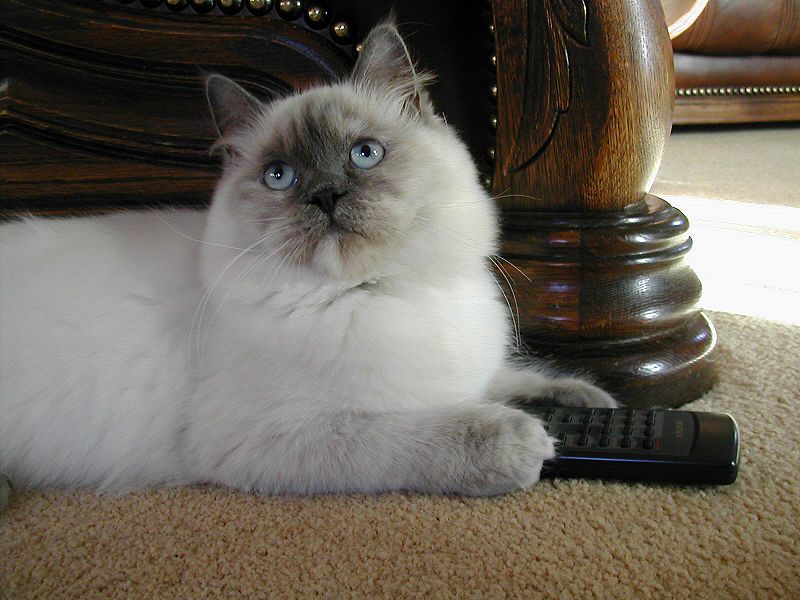
| Weight | 4.5–9 kg |
| Lifespan | 12–17 years |
| Шерсть | semi-long, silky, no undercoat |
| Група | CFA · TICA · WCF · FIFe |
| Origin | USA |
Exact ratings
- Hypertrophic cardiomyopathy (HCM) — the main risk (a DNA test exists)
- Polycystic kidney disease (PKD)
- Urinary stones (FLUTD)
- A tendency to gain weight
- Generally healthy with responsible breeding
Quality food for large cats, with weight control. Brush the semi-long silky coat 2–3 times a week; buy a kitten from a breeder who does a DNA test for HCM (the MYBPC3 gene) and tests for PKD.
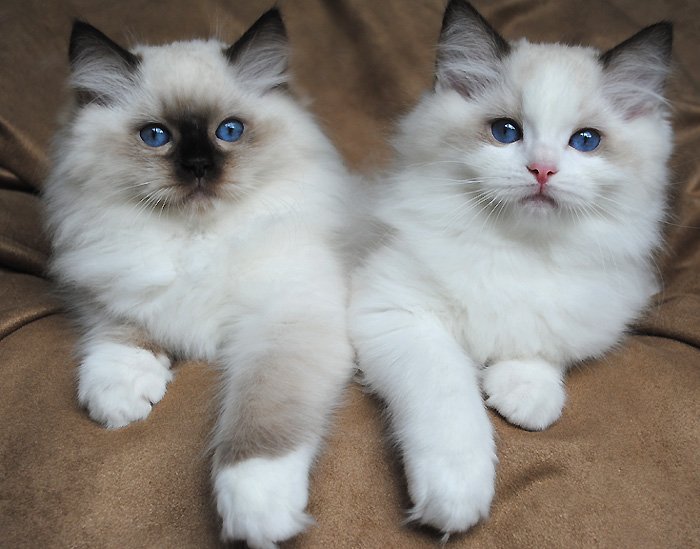
The Ragdoll isn’t just any cat; it’s a truly fluffy companion, celebrated for its incredibly gentle and calm disposition. These cats have captured the hearts of millions thanks to their unique ability to relax completely in a person’s arms, much like a rag doll – which is precisely where their name originates. They are ideal family pets who adore attention, get along splendidly with children and other animals, but find solitude hard to bear. Ragdolls are not prone to aggression or excessive activity; they are tender, trusting creatures requiring considerate handling and regular grooming for their luxurious coat. You can discover more about this captivating breed and others right here on Tvaryny.
The Ragdoll: A Brief Breed Overview
| Characteristic | Description |
|---|---|
| Origin | USA (California) |
| Period of Origin | 1960s |
| Recognition by Organisations | CFA, TICA, FIFe, and others |
| Lifespan | 12–17 years (average 15) |
| Size | Large |
| Weight | Females: 4–6 kg, Males: 6–9 kg (sometimes more) |
| Height at Withers | Around 30–40 cm |
| Coat | Semi-longhaired, silky, with minimal undercoat |
| Colouring | Colourpoint, mitted, bicolour in various shades (seal, blue, chocolate, lilac, red, cream, tortie, lynx) |
| Eyes | Large, oval, always a deep, intense blue |
| Temperament | Very gentle, calm, trusting, sociable, intelligent, people-oriented |
| Activity Level | Low to moderate |
| Need for Attention | High |
| Shedding | Moderate |
| Grooming | Regular combing (several times a week) |
| Compatibility with Children | Very high |
| Compatibility with Other Animals | High |
The Origin Story of the Ragdoll Breed
The history of the Ragdoll is inextricably linked with an eccentric American breeder of Persian cats, Ann Baker, from Riverside, California. In the 1960s, she took a white, long-haired cat named Josephine under her wing. Josephine lived a semi-feral life and had kittens from various tomcats. According to legend, which Ann herself actively promoted, after Josephine was hit by a car and received treatment at a local university, her subsequent kittens developed unique traits: they became extraordinarily calm, would go completely limp in one’s arms like rag dolls, and supposedly felt no pain (this latter claim is a dangerous myth).
There is no scientific evidence to support this story of “genetic changes” following the accident. It is more probable that Ann Baker selectively bred kittens with the calmest and most gentle temperaments, who may have been descendants of Josephine and males of Birman, Persian, or Siamese stock that carried the relevant genes. She crossed Josephine’s offspring, such as the males Daddy Warbucks (a seal mitted) and Blackie (resembling a Burmese), and the females Buckwheat (also resembling a Burmese) and Fugianna (a bicolour), to establish the desired characteristics: large size, blue eyes, colourpoint markings, and, most importantly, an exceptionally calm and trusting temperament with a tendency for complete muscular relaxation when picked up.
Ann Baker named the breed “Ragdoll,” patented it, and in 1971, established her own registration organisation – the International Ragdoll Cat Association (IRCA). She imposed very strict and unconventional breeding rules, which restricted other breeders. This led to a split, and a group of enthusiasts, spearheaded by Denny and Laura Dayton, broke away to seek recognition for the breed from major feline organisations. It is thanks to their efforts that the Ragdoll was recognised by large associations such as the CFA and TICA, gaining incredible popularity worldwide and becoming one of the most beloved domestic cat breeds.
What Does a Ragdoll Look Like: Appearance and Breed Standard

The Ragdoll is a large, striking cat with a substantial body, strong bone structure, and a distinctive appearance. Despite their gentle name, they are amongst the largest domestic cats, only reaching their full size and colour at 3-4 years of age. Their look combines power with elegance.
- Body: Long and large, with a broad chest, substantial pelvis, and heavy boning. Muscles are well-developed. The hind legs are slightly longer than the front legs, causing the backline to slope gently upwards towards the rump.
- Head: A broad, modified wedge shape with a flat plane between the ears. Cheeks are well-developed, the muzzle is rounded and of medium length. The nose has a slight dip in the upper third. The chin is strong and well-developed.
- Ears: Medium-sized, broad at the base, with rounded tips. They are set wide apart on the head and tilt slightly forward, quite distinct from the uniquely shaped ears of an American Curl.
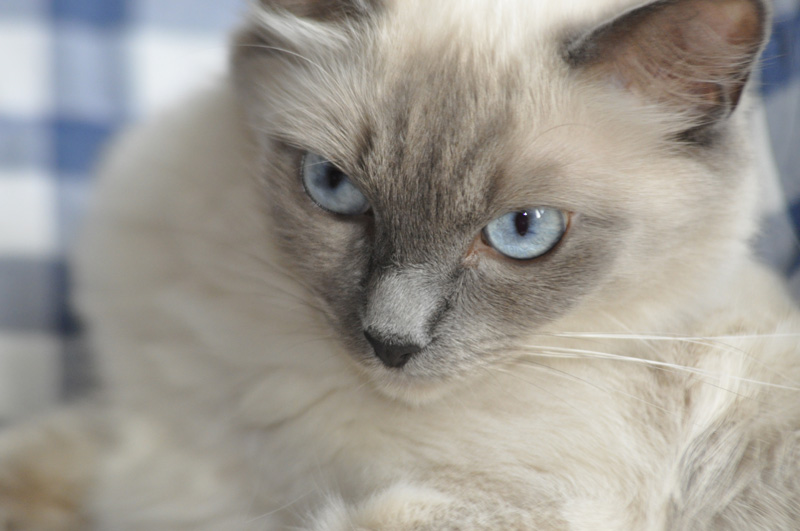
- Eyes: Large, expressive, and oval-shaped. They are set wide apart and at a slight angle. The eye colour is a hallmark of the Ragdoll: always a vivid blue. The more intense and deeper the shade of blue, the better, according to the standard.
- Legs and Paws: Legs are of medium length, sturdy, with heavy boning. Hind legs are slightly longer. Paws are large, round, compact, with tufts of fur between the toes (desirable).
- Tail: Long, in proportion to the body, moderately thick at the base, tapering slightly to the tip. Well-furred, resembling a plume.
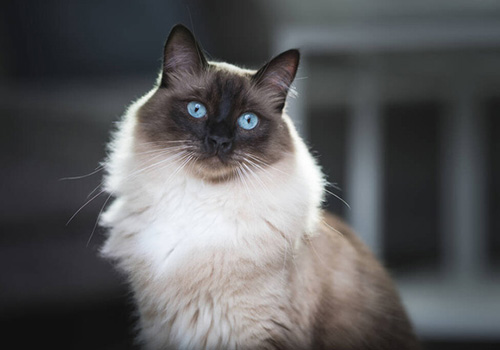
- Coat: One of the Ragdoll’s key features. It is semi-long, dense, silky, and soft to the touch, similar to rabbit fur. The coat lies close to the body and appears to “break” as the cat moves. A key characteristic is their minimal undercoat, which means their fur is less prone to matting and doesn’t form as many tangles as, for example, Persians, or indeed the hardy Norwegian Forest Cat, whose coat is designed for colder climes. The longest fur is on the neck (forming a luxurious ruff), on the “breeches” (hind legs), and on the tail.
Ragdoll Colours and Patterns: A Diversity of Beauty
Ragdolls belong to the colourpoint (acromelanic) group of colourings. This means the main body colour is light, whilst the extremities – the face (mask), ears, paws, and tail (known as “points”) – are significantly darker and more intense in colour. This is due to a temperature-sensitive gene that restricts pigment production in warmer parts of the body. Ragdoll kittens are born completely white, and their points only begin to show after a few days or weeks, developing fully by 2-3 years of age.
There are three primary recognised patterns in Ragdolls:
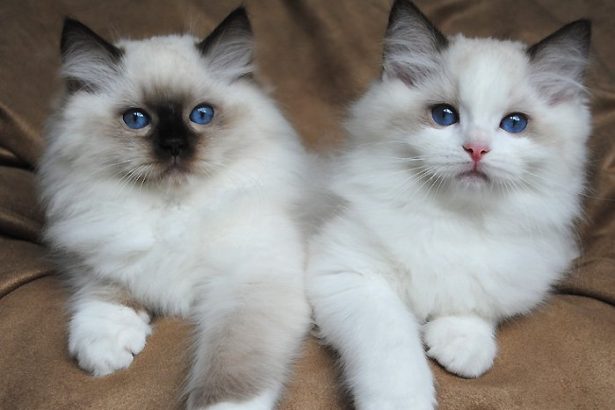
| Pattern | Description | Key Features |
|---|---|---|
| Colourpoint | The most “classic” pointed look without any white markings. The body is lighter, while the points (mask, ears, paws, tail) are dark and contrast well with the body. |
|
| Mitted | Similar to colourpoint, but with distinctive white “mittens” on the paws and a white chin. |
|
| Bicolour | The pattern with the most white, giving the cat a very endearing appearance. |
|
Each of these patterns can be presented in various point colours. The main recognised colours are:
- Seal: The darkest, a deep dark brown, almost black point colour. Body is pale fawn to light brown.
- Blue: A cool, slate grey-blue point colour. Body is bluish-white, cool-toned.
- Chocolate: A warm, milk-chocolate point colour (lighter and warmer than seal). Body is ivory.
- Lilac: A light, pinkish-grey point colour (a dilute chocolate). Body is white, without shading.
- Red / Flame: A rich, bright orange (red) point colour. Body is white with a warm hue.
- Cream: A light, creamy, pastel-beige point colour (a dilute red). Body is white.
Additionally, there are variations of these colourings:
- Tortie (Tortoiseshell): In females, the points have patches of seal/red, blue/cream, chocolate/red, or lilac/cream.
- Lynx / Tabby: The points exhibit a clear tabby pattern (stripes on legs and tail, an “M” on the forehead).
- Torbie: A combination of tortie colouring and lynx pattern on the points.
The Ragdoll Character: Temperament and “Rag Doll” Behaviour
Character is what makes the Ragdoll truly special and so popular. They are renowned for their exceptional gentleness, calmness, friendliness, and people-oriented nature. This is the ideal companion cat, eager to be close to its family.
- Utterly Gentle: Ragdolls have a very low level of aggression. They rarely extend their claws during play with people or other animals. In conflict situations, they are more likely to flee or try to avoid confrontation than to retaliate. This trait makes them an excellent choice for families with children.
- Sociable and Companionable: These cats adore human company. They often follow their owner from room to room, greet them at the door, and love to sit on laps or simply be nearby. They generally get on well with other cats and dogs (with proper introductions), as they are not prone to dominance.
- Trusting Nature: Their boundless trust in the world is both a charming and a dangerous trait. Ragdolls are absolutely unsuited to outdoor life. They have no fear of cars, dogs, or strangers, making them easy prey for any danger. Keeping them exclusively indoors is vital for this breed.
- Calm and Low Activity: Ragdolls are not the type of cats to be found scaling the curtains. Their activity level is typically low to moderate. They enjoy playing but prefer floor-based games, such as chasing a ball or a teaser toy. They appreciate comfort and cosiness, spending much of their time asleep or simply observing their surroundings.
- Intelligence: Despite their placid nature, Ragdolls are quite intelligent. They quickly learn household rules and are easily trained to use the litter tray and scratching post. They can be taught to respond to their name, perform simple commands (“sit,” “paw”), and some even enjoy fetching toys.
- The “Rag Doll” Trait: A famous Ragdoll characteristic is their ability to completely relax their muscles when picked up, becoming soft and pliable. This is very pleasant for the owner but requires caution: because of this, they are poor at righting themselves during a fall and can be injured even from a low height. Do not allow children to carry a Ragdoll kitten without adult supervision.
- Voice: Ragdolls have a quiet, soft, melodious voice. They are not overly “talkative” (or “chatty”) but may greet you with a gentle purr or a quiet meow when they want attention or food.
- Need for Companionship: Their strong attachment to people means they find prolonged solitude difficult to bear. If you spend most of the day away from home, a Ragdoll will be very lonely. In such cases, consider getting a second cat (preferably of a similarly calm temperament) as a companion.
Ragdoll Health: Common Ailments and Prevention

Ragdolls are generally considered a fairly healthy breed with a good lifespan, but like many pedigreed animals, they have a genetic predisposition to certain diseases. Responsible breeders test their breeding cats to reduce the risk of passing these conditions on to their offspring.
- Hypertrophic Cardiomyopathy (HCM): This is the most common heart disease in cats of all breeds, characterised by a thickening of the heart muscle walls (especially the left ventricle). This impedes the heart’s function and can lead to heart failure, thromboembolism, and sudden death. A specific genetic mutation (in the MYBPC3 gene) linked to an increased risk of HCM has been identified in Ragdolls. A DNA test is available to detect this mutation. It is crucial to buy kittens from breeders who test their animals. Regular cardiac check-ups (echocardiograms – heart ultrasounds) are recommended for all Ragdolls, especially between the ages of 1 and 3 years and before planned neutering/spaying.
- Polycystic Kidney Disease (PKD): This is an inherited condition where numerous small cysts form in the kidneys from birth. Over time, the cysts enlarge, replacing normal kidney tissue and leading to chronic kidney failure. PKD is more commonly associated with Persian cats, but as Persians may have been used in the Ragdoll’s development, a risk exists. A reliable DNA test is also available to detect the PKD1 gene. Responsible breeders always test their cats for PKD.
- Tendency to Obesity: Due to their large size, good appetite, and calm temperament, Ragdolls can easily gain excess weight, especially after neutering/spaying and as they age. Obesity is a risk factor for many conditions, including diabetes, arthritis, and heart problems. It is important to strictly control portion sizes, choose high-quality food, and encourage activity through play.
- Dental Problems: Like many cats, Ragdolls are prone to plaque and tartar build-up, which can lead to gingivitis (gum inflammation) and periodontitis (disease of the tissues supporting the teeth). Regular oral examinations, using special dental foods or treats, and, if necessary, professional dental cleaning by a vet will help keep their teeth healthy.
- Risk of Injury from Falls: The Ragdoll’s unique ability to relax their muscles means they are not always able to right themselves properly when falling. A fall even from a table or chair can lead to fractures or other injuries. Therefore, it is very important to ensure a safe environment: securely close windows and balconies or install sturdy “cat-proof” screens, and discourage jumps from great heights.
- Urinary Tract Stones (Feline Lower Urinary Tract Disease – FLUTD): Whilst not a breed-specific problem, large cats, especially neutered males consuming mainly dry food, may have an increased risk of forming stones (most commonly struvite or oxalate) in the bladder or urethra. Ensuring constant access to fresh water (water fountains can be helpful), a balanced diet, and including wet food can help prevent FLUTD.
Preventing Illness in Ragdolls:
- Only buy a kitten from a responsible breeder who provides the results of parental genetic tests for HCM and PKD.
- Ensure regular preventative check-ups with your vet (at least once a year, twice a year for older cats).
- Adhere to the vaccination schedule and treatments for external (fleas, ticks) and internal (worms) parasites.
- Provide high-quality, balanced nutrition and monitor your pet’s weight.
- Create a safe home environment to minimise the risk of injury.
Grooming Your Ragdoll’s Coat and Other Care Aspects
The Ragdoll’s luxurious, silky coat is one of its crowning glories, and it requires regular grooming to stay healthy and beautiful. Fortunately, thanks to its minimal undercoat, caring for it is simpler than for the coats of other long-haired breeds, such as Persians.
- Combing: This is the primary grooming procedure. It is recommended to comb your Ragdoll 2-3 times a week, and daily during shedding seasons (spring and autumn). Use a metal comb with varying tooth spacing (start with wider teeth, then finer) or a good quality slicker brush without sharp ends. Combing helps remove dead hairs, prevent matting, distribute skin oils through the coat, and reduce the amount of fur the cat ingests when self-grooming (preventing trichobezoars – hairballs in the stomach). Pay particular attention to areas with longer fur: the “ruff” on the neck, “breeches” on the hind legs, the belly, and under the armpits, where mats form most often.
- Bathing: Ragdolls do not need frequent bathing – usually a few times a year is sufficient, or as needed if the cat gets very dirty or its coat becomes greasy. Many Ragdolls, contrary to the common myth about this breed’s panic fear of water, are quite tolerant of bathing, especially if accustomed to it from kittenhood. Use only specialised shampoos for long-haired cats. After washing, rinse the coat thoroughly to remove all shampoo, gently blot the cat with a towel (do not rub vigorously, as this can tangle the fur), and, ideally, finish drying with a hairdryer on a low temperature and speed, combing simultaneously. Ensure the cat is completely dry and not in a draught.
- Eye Care: Ragdoll eyes usually do not require special care. If small, dark secretions appear in the corners of the eyes, they can be gently wiped away with a soft cloth or cotton pad moistened with warm, boiled water or a special eye lotion. If discharge is copious, purulent, or the eyes are red, consult your vet.
- Ear Care: Regularly (once every 1-2 weeks) inspect the ear flaps. Healthy ears are clean, pale pink, and odourless. If you notice excess wax, dark build-up, or dirt, gently wipe the inner surface of the ear flap (only the visible part!) with a cotton pad moistened with a special ear cleaning solution. Never use cotton buds (Q-tips), as they can damage the eardrum or push dirt deeper. If there’s an unpleasant odour, redness, excessive discharge, or if the cat shakes its head or scratches its ears, consult your vet immediately (these could be signs of ear mites or otitis).
- Nail Trimming: As Ragdolls are exclusively indoor cats, their claws do not wear down naturally. Trim their claws approximately every 2-4 weeks using special, sharp cat nail clippers. Only trim the transparent tip of the claw, avoiding the pink part (the quick), which contains blood vessels and nerves. If you accidentally cut the quick, apply a styptic agent (e.g., special powder or a crystal of potassium permanganate). Accustom your cat to this procedure from a young age. Having several scratching posts (posts, boards, cardboard) in the home is essential.
Training and Socialising Your Ragdoll

Ragdolls are intelligent, quick-witted, and very people-oriented cats, which makes training and socialising them a relatively easy and enjoyable process. Their natural desire to please their owner and calm temperament greatly contribute to this.
- Litter Tray Training: This usually proceeds without any problems. Ragdolls are naturally clean and quickly understand where their toilet is. The main thing is to keep the litter tray clean (scoop daily) and use a litter that the cat likes.
- Teaching Commands and Tricks: Ragdolls are capable of learning various commands and tricks. They easily remember their name and respond to it. They can be taught commands like “sit,” “paw,” “come,” and some individuals of the breed even happily fetch toys, much like dogs. Use positive reinforcement methods: praise, pet, and give small treats for correct execution. Training sessions should be short (5-10 minutes) and engaging for the cat.
- Harness and Lead Training: Thanks to their calm nature, many Ragdolls adapt well to a harness and lead and can enjoy controlled walks outdoors (in a safe area, away from roads and dogs). Start training gradually indoors: first, let the cat simply wear the harness, then attach the lead and allow it to drag it. Only go outside when the cat reacts calmly to the equipment indoors.
- Socialisation: Early socialisation is very important for any kitten, and Ragdolls are no exception. From a young age, introduce your kitten to different people (adults, children), other friendly animals (if present or planned), various sounds (vacuum cleaner, hairdryer), and situations (trips in a carrier). This will help it grow into a confident, well-balanced, and adaptable cat. Thanks to the Ragdoll’s natural friendliness, their socialisation usually goes smoothly.
- Correcting Unwanted Behaviour: If a Ragdoll does something undesirable (e.g., scratches furniture instead of the scratching post), never shout or physically punish it. This can frighten the trusting cat and damage your relationship. It’s better to use indirect methods: a loud noise (a clap of the hands) or a squirt of water from a spray bottle at the moment of the unwanted action to distract the cat. Simultaneously, offer a correct alternative (guide it to the scratching post) and praise it when it uses it. Ensure the cat has enough toys and opportunities to expend energy.
Feeding Your Ragdoll: Key Dietary Recommendations
Proper nutrition is the foundation of your Ragdoll’s health, longevity, and well-being. Considering their large size, tendency to gain weight, and potential health issues, diet selection must be approached responsibly.
- Type of Food: The optimal choice for most owners is high-quality commercial super-premium or holistic cat food. These are balanced in all nutrients, vitamins, and minerals. Choose food appropriate for your cat’s age (kitten, adult, senior) and physiological state (for neutered/spayed, sensitive digestion, etc.). Pay attention to the ingredients: meat should be listed first (chicken, turkey, beef, fish), not cereals or by-products of unspecified origin. Some manufacturers offer food lines specifically designed for large cat breeds, which can be a good option for Ragdolls.
- Dry and Wet Food: It is recommended to combine dry and wet food. Dry food helps clean teeth of plaque and is convenient to use. Wet food (tins, pouches) has higher palatability, contains more moisture (important for preventing urinary tract problems), and helps control weight as it is less calorie-dense by volume. You can give wet food 1-2 times a day, and leave dry food freely available (if the cat is not prone to overeating) or provide it in portions.
- Portion Control: This is critically important for Ragdolls! Due to their tendency towards obesity, they should not be fed ad libitum. Follow the feeding guidelines on the food packaging, but adjust them according to your cat’s individual needs (activity level, weight, age). Weigh your cat regularly and monitor its condition (ribs should be easily felt under a thin layer of fat). If the cat is gaining weight, reduce the portion size or choose a less calorie-dense food (e.g., “light” or for neutered animals). It is better to feed an adult cat 2-3 times a day with fixed portions than to leave food freely available around the clock.
- Natural Diet: If you decide to feed your Ragdoll a natural diet, it must be formulated and balanced by a veterinary nutritionist. It is very difficult to create a complete diet independently, and this can lead to serious health problems due to deficiencies or excesses of certain vitamins and minerals. The basis of a natural diet should be raw or lightly cooked meat (beef, chicken, turkey), offal, a small amount of vegetables, and essential vitamin-mineral supplements. Avoid feeding bones, fatty meat, pork, raw freshwater fish, liver in large quantities, milk (adult cats are often lactose intolerant), and human food (salty, smoked, sweet, spicy – these are poison for a cat).
- Water: A cat must always have free access to fresh, clean drinking water. Change the water daily. Many cats are reluctant to drink still water, so using a water fountain can significantly increase fluid intake, which is excellent prevention for urinary tract problems. The water bowl should not be placed next to the food bowl.
- Treats: Treats can be used as a reward during training or simply to please your pet, but they should not constitute more than 10% of the daily ration, so as not to disrupt the nutrient balance or lead to weight gain. Choose high-quality treats specifically designed for cats.
The Ragdoll in Your Home: Compatibility and Living Considerations
The Ragdoll is an excellent choice for those seeking not just a beautiful cat, but a true family member – a calm, gentle, and devoted friend. They adapt wonderfully to life in a flat or house, but there are a few aspects to consider.
- Ideal for Families with Children: Thanks to their incredibly patient, non-aggressive, and placid nature, Ragdolls are considered one of the best breeds for families with children of all ages. They calmly tolerate children’s games and cuddles. However, it is very important to teach children to handle the cat gently and respectfully, to explain that it is a living being, not a toy, and not to allow them to pull its tail or squeeze too tightly, even if it doesn’t show displeasure.
- Friendliness Towards Other Animals: Ragdolls usually get along very well with other cats and dogs (especially non-aggressive breeds). Their calm and non-confrontational nature helps to establish peaceful relationships. It’s best if animals are introduced at a young age, but adult Ragdolls often accept new household members too. It is important to conduct introductions gradually and under supervision.
- Exclusively Indoor Living: This is a non-negotiable condition for a Ragdoll’s safety. Their trusting nature, lack of fear of dangers (cars, dogs, ill-intentioned people), and poor hunting instincts make them completely defenceless outdoors. Free-roaming for a Ragdoll is almost a guaranteed fatality or injury. Only supervised walks on a harness in a safe place or in a specially equipped enclosure (catio) are permissible.
- Window and Balcony Safety: Due to the risk of injury from falls, all openable windows and balconies in a home where a Ragdoll lives must be equipped with sturdy protective screens (“cat-proof screens”). Standard mosquito nets are not suitable – a cat can easily push them out.
- Need for Attention and Companionship: The Ragdoll is not a cat that will be happy in solitude. They need daily interaction with their owner: petting, conversation, shared games. If you are at work all day, consider getting a second companion cat or ensure you dedicate maximum attention to your pet in the mornings and evenings.
- Toys and Activity: Despite their calm nature, Ragdolls need physical and mental stimulation. Provide them with a variety of toys: balls, mice (especially with catnip), feather wands, interactive toys, and puzzle feeders. Play with your cat regularly for at least 15-20 minutes a day – this will help keep it in shape and strengthen your bond.
- Scratching Posts: To prevent your Ragdoll from using your furniture for manicures, provide several attractive scratching posts of different types (vertical sisal posts, horizontal cardboard scratchers, corner scratchers). Place them in areas where the cat likes to spend time or has already attempted to scratch.
With their gentle and companionable nature, Ragdolls can be reminiscent of another blue-eyed breed, the Birman, although Ragdolls are typically much larger and more solidly built. If you’re looking for a feline giant that surpasses even the Ragdoll in size, consider the majestic gentle giants of the Maine Coon breed, also renowned for their friendly character.
Pros and Cons of the Ragdoll Breed
| Pros | Cons |
|---|---|
| ✅ Exceptionally gentle, affectionate, and non-aggressive nature | ❌ Craves attention; does not tolerate long periods of solitude well |
| ✅ Highly compatible with children and other pets | ❌ Strictly an indoor cat; not suited for outdoor life |
| ✅ Calm temperament; low tendency for destructiveness or mischief | ❌ Prone to certain hereditary diseases (HCM, PKD) – parental testing required |
| ✅ Striking appearance: large size, blue eyes, silky coat | ❌ Requires regular grooming (combing 2-3 times a week) |
| ✅ Quiet, melodious voice | ❌ Prone to weight gain – requires careful diet management |
| ✅ Intelligent, trainable, and people-oriented | ❌ Increased risk of injury from falls due to muscle relaxation |
| ✅ Coat has minimal undercoat, less prone to matting | ❌ Relatively high cost for a kitten from a responsible breeder |
| ✅ Well-suited for living in a flat | ❌ Not a hypoallergenic breed |
Interesting Facts About Ragdolls
- The name “Ragdoll” was given by Ann Baker due to the remarkable ability of the breed’s first cats to go completely limp when picked up.
- All purebred Ragdolls have blue eyes. This is a mandatory characteristic of the breed. The intensity of the blue can vary, but the colour is always blue. Cats with other eye colours cannot be considered Ragdolls according to the breed standard.
- Ragdolls are one of the largest domestic cat breeds. Adult males can weigh 6-9 kg, and sometimes more, while females are slightly smaller at 4-6 kg. They only reach their full size by the age of 4.
- Ragdoll kittens are born completely white. Their characteristic colourpoint markings (darker ears, mask, paws, tail) only begin to appear a few days or weeks after birth.
- Despite a common myth, Ragdolls feel pain just like any other cat. It’s just that their exceptionally calm and patient nature means they may not react as dramatically to discomfort.
- Ragdolls are often called “puppy-cats” due to their dog-like personality traits: they enjoy following their owners, greeting them at the door, playing fetch, and simply being nearby.
- In 2021 and 2022, the Ragdoll breed was recognised as the most popular cat breed in the world according to registration data from the Cat Fanciers’ Association (CFA), the world’s largest registry of pedigreed cats.
Frequently Asked Questions About the Ragdoll Breed (FAQ)
Do Ragdolls shed a lot?
Ragdolls do shed, like most cats, especially seasonally (spring and autumn). However, because they have very little undercoat, the amount of shedding may seem less than in breeds with dense undercoats. Regular combing (2-3 times a week) significantly helps reduce the amount of fur in the home and prevent matting.
Are Ragdolls hypoallergenic?
No, Ragdolls are not a hypoallergenic breed. Completely hypoallergenic cats do not exist. Allergies are primarily caused by the Fel d 1 protein found in cat saliva, sebaceous glands, and urine, which gets onto the fur during grooming. Although some individuals with mild allergies may tolerate Ragdolls better (perhaps due to less allergen spread from a coat with minimal undercoat), this is highly individual. If you have allergies, it is essential to spend time with Ragdolls before committing to one to check your reaction.
How long do Ragdolls live?
With proper care, quality nutrition, and regular veterinary visits, Ragdolls have a fairly long lifespan for a large breed – on average, from 12 to 17 years, and some live to be 20.
Can a Ragdoll be left alone all day?
Ragdolls are very social and people-oriented, so they find prolonged solitude difficult to bear. If you work full-time and the cat is left alone for 8-10 hours daily, it may become very lonely, which can lead to stress or destructive behaviour. In such cases, it is advisable to get a second companion cat (preferably another Ragdoll or a similarly calm breed) or ensure you provide your cat with maximum attention and playtime when you are at home.
Are Ragdolls suitable for living in a small flat?
Yes, Ragdolls are excellently suited for life in a flat. Their calm temperament and moderate activity level mean they do not require vast amounts of space to run around. The main thing is to provide them with a cosy place to sleep, toys for entertainment, a scratching post, and, of course, your attention.
Is it true that Ragdolls are afraid of water?
This is a common myth. In reality, a Ragdoll’s reaction to water, like that of any cat, is individual. Some may fear it, but many members of the breed are calm or even curious about water, especially if they were accustomed to bathing from a young age. The notion of a panic fear of water is not accurate.
Do Ragdolls meow loudly?
No, Ragdolls are known for their quiet, soft, and melodious voice. They are not among the “chatty” breeds and usually only vocalise when they want to attract your attention, ask for food, or greet you.
The Ragdoll is truly a unique breed, combining striking beauty, a large size, and an incredibly gentle, devoted character. If you are looking for a calm, loving companion who will become a full-fledged member of your family and offer you warmth and purrs, the Ragdoll could be the perfect choice. The most important thing is to be prepared to give it enough attention, care, and ensure a safe living environment.
- Extraordinarily gentle and patient
- “Dog-like” — follows its owner
- Wonderful with children and other animals
- Calm, an ideal indoor companion
- Trusting and helpless — indoor keeping only
- A tendency to heart disease (HCM)
- The semi-long coat needs regular brushing
- Large, matures slowly (up to 3–4 years)
| Birman | Maine Coon | Neva Masquerade | |
|---|---|---|---|
| Height | 4–6 kg | 4.5–11 kg | 5–9 kg |
| Energy | 3 | 4 | 3.5 |
| Apartment | 5 | 4.5 | 4.5 |
| Beginners | 4.5 | 4 | 4 |
Why does the Ragdoll “go limp” in your arms?
Can the Ragdoll be let outside?
Is the Ragdoll good for a family with children?
CFA / TICA / WCF / FIFe standards (Ragdoll)