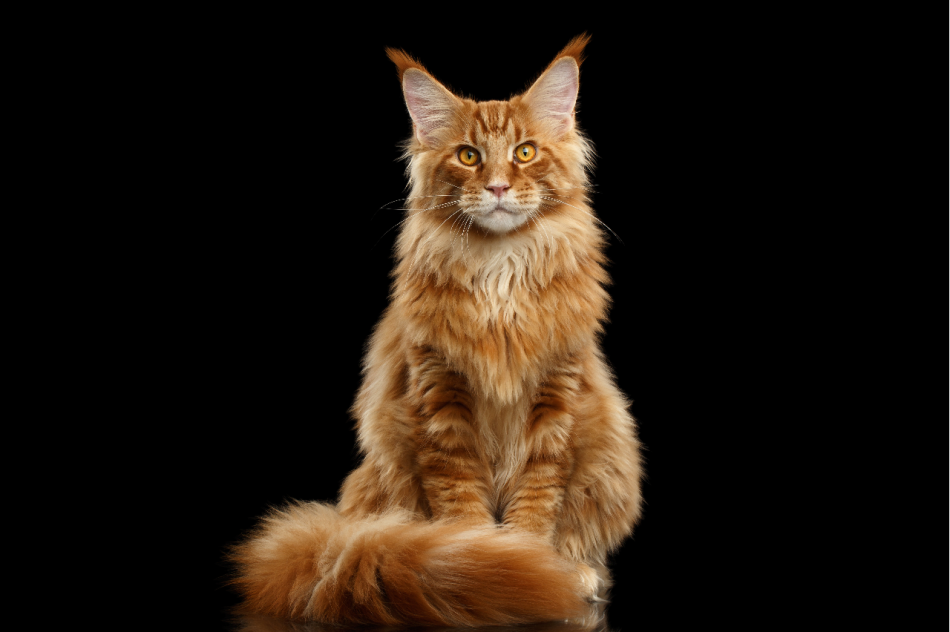
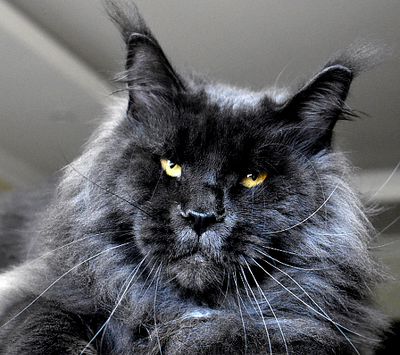
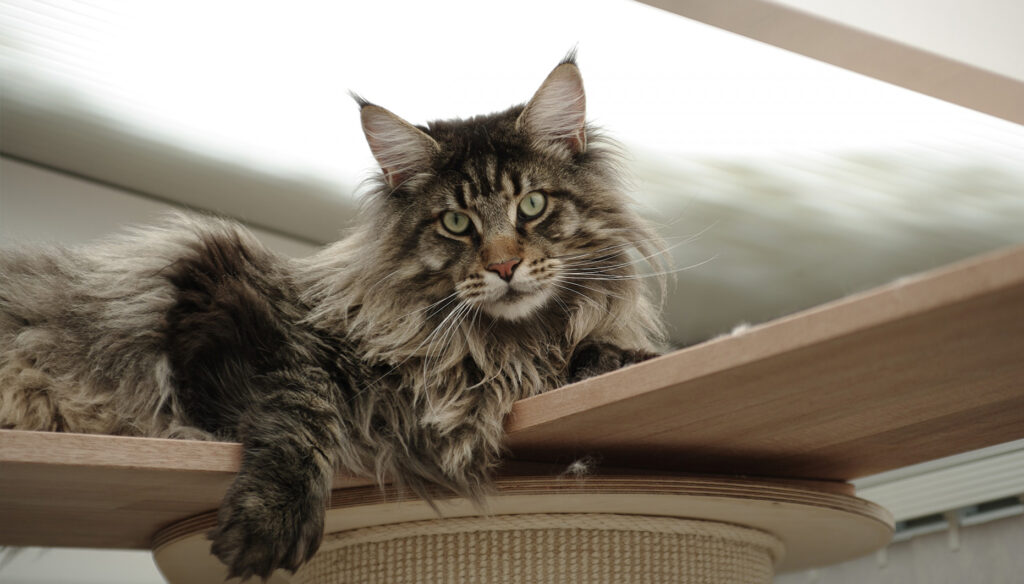
An affectionate giant with a lynx-like look and a dog's soul — a gentle giant: mild, clever, playful and devoted. The Maine Coon is one of the largest domestic cat breeds, an aboriginal American; despite its wild look (ear tufts, a bushy tail), it is a surprisingly mild, “dog-like” companion that loves water, carries toys and keeps its kitten-like playfulness into old age.
KidsDogsOther catsBeginnersTime alone · with caveats
The Maine Coon is more than just a cat; it's a veritable giant with a gentle heart, captivating all with its beauty, size, and remarkable character. This native American breed is one of the largest domesticated cats, impressing with its wild lynx-like appearance while simultaneously surprising with its gentleness and devotion. Maine Coons are ideal companions for large families, single individuals, and anyone who values a blend of independence and deep affection in their pets. You can discover more about them and other fascinating cat breeds on Tvaryny. They demonstrate excellent care for their offspring, are gentle with people of all ages, and typically get along splendidly with other household pets, showing no aggression. They are suitable for families with various lifestyles, as this American giant can keep itself entertained, though it always welcomes human company. The primary requirement for owners is sufficient living space where the cat can fulfil its natural need for activity and exploration.
Maine Coon: A Brief Breed Overview
Maine Coon: A Brief Breed Overview · 12
Characteristic
Description
Origin
USA (State of Maine)
Time of breed recognition
First mentions and shows – 19th century, official CFA recognition – 1976
Lifespan
12–16 years (sometimes longer with proper care)
Size
Large
Weight
Males: 7–12 kg (occasionally up to 18 kg, but this is often linked to being overweight) Females: 5–8 kg
Height at withers
25–41 cm
Coat
Long, dense, uneven (shorter on shoulders, longer on belly and "breeches"), with a thick undercoat, water-repellent
Colour
Varied, except for colourpoint, chocolate, lilac, and their combinations with white. The most popular is tabby (especially brown tabby).
Regular brushing (2–3 times a week), occasional bathing, care of claws, ears, teeth
Health
Generally robust, but prone to certain genetic diseases (HCM, hip dysplasia, SMA)
Interesting Facts About Maine Coons
Official Cat of the State of Maine: In 1985, the Maine Coon was officially declared the state cat of Maine, USA.
Guinness World Record Holders: Representatives of this breed have repeatedly entered the Guinness Book of Records as the longest domestic cats in the world. For example, a cat named Stewie measured 123 cm from the tip of his nose to the tip of his tail.
"Dogs of the Cat World": Maine Coons are often called the "dogs of the cat world" due to their devotion to their owners, ability to learn, and love of games, such as fetching objects.
Water-loving cats? Although they don't swim like dogs, many Maine Coons are fascinated by water. They might bat at the water in their bowl before drinking, play with a running tap, or even try to get into the bath. This trait is thought to have been inherited from ancestors who lived on ships or near water.
Polydactyly: Polydactyly – having extra toes – was once common among Maine Coons. This was considered a useful adaptation for moving on snow ("snowshoes"). Although polydactyly is now a disqualification for show animals according to most association standards, some breeders specialise in breeding polydactyl Maine Coons.
Slow Development: Unlike many other breeds, Maine Coons grow and develop slowly, reaching their full size and weight only at the age of 3–5 years.
Unusual Voice: Instead of a typical meow, Maine Coons make quiet, melodious sounds, similar to chirps, trills, or warbles. This contrasts with their large size.
Similarity to other breeds: Due to their long fur and large size, Maine Coons are sometimes confused with Norwegian Forest Cats and Siberian cats. Although they share common traits (adaptation to cold climates), these are different breeds with unique standards and histories. For example, a Maine Coon's head is more square, and its profile has a gentle curve, whereas a Norwegian Forest Cat has a straight profile and a triangular head.
Detailed History of the Maine Coon Breed
The history of the Maine Coon is shrouded in legends and romantic speculations, which only add to the charm of this unique breed. Unlike many other cat breeds developed through selective breeding, the Maine Coon is considered a naturally occurring breed that originated in the northeastern United States, specifically in the state of Maine, from which the first part of its name is derived. The second part, "Coon," is likely a shortening of "racoon," linked to one of the most popular, albeit biologically impossible, legends about the breed's origin from crossbreeding wild cats with racoons. The Maine Coon's thick, bushy tail does indeed somewhat resemble that of a racoon.
Another legend links Maine Coons to Queen Marie Antoinette's failed escape attempt during the French Revolution. According to lore, Captain Samuel Clough sent her beloved long-haired cats (possibly Angoras or Persians) to America, where they then interbred with local short-haired cats, giving rise to the new breed. Yet another version suggests that Vikings brought cats over around the 11th century, which could explain the Maine Coon's resemblance to the Norwegian Forest Cat and also shows parallels with other hardy natural breeds like the Siberian cat, both of which adapted to cold climates.
The most plausible theory is that the ancestors of Maine Coons were long-haired cats brought by European sailors (possibly from England or Scandinavia) to New England in the 17th-18th centuries. These cats adapted to the harsh climate, interbreeding with local short-haired cats. Natural selection favoured the survival of the largest, strongest individuals with thick, water-repellent coats that provided good protection from cold and moisture. Thus, the characteristic type of a large, hardy cat, an excellent hunter, gradually formed.
By the second half of the 19th century, farmers in Maine were proud of their unusual cats and began organising specialised shows. Maine Coons were very popular at the first cat shows in Boston and New York. A brown tabby cat named Cosey won the first major cat show at Madison Square Garden in New York in 1895. However, in the early 20th century, with the advent of more exotic breeds (Persians, Siamese cats), the popularity of Maine Coons temporarily declined. For a time, the breed was even considered extinct.
The resurgence of interest in Maine Coons began in the 1950s thanks to enthusiasts who established the first breed fancier clubs, notably the "Central Maine Cat Club." They started keeping pedigree records and working on the preservation and promotion of these unique cats. In 1975, the breed received provisional status from the Cat Fanciers' Association (CFA), and on 1st May 1976, it was officially recognised by this prestigious organisation. Since then, the popularity of Maine Coons has been steadily growing worldwide.
What Does a Maine Coon Look Like: A Detailed Description of Appearance
The Maine Coon is the epitome of strength, grace, and natural beauty. Its appearance harmoniously combines the features of a wild predator and a gentle domestic pet. It is a large cat with a strong bone structure and well-developed musculature. The diversity in feline appearances is astounding, from the rugged Maine Coon to elegant breeds such as the Balinese cat, each with its unique charm.
Body: Long, rectangular, with a broad chest. Maine Coons have a powerful, athletic build that appears proportionate despite their large size. It is important to distinguish between large size and strong bone structure versus obesity, to which some members of the breed may be prone.
Head: Medium-sized, slightly elongated, with clearly defined, high cheekbones. The muzzle is square, with a strong chin that is in line with the nose and upper lip. The profile has a slight, gentle curve.
Ears: Large, broad at the base, set high, and slightly tilted outwards. Well-furred inside, often with characteristic lynx-like tufts at the tips, adding a touch of wild charm.
Eyes: Large, expressive, oval, and slightly obliquely set. Eye colour can be green, gold, copper, or yellow. In white cats and cats with white patches, blue eyes or odd eyes (heterochromia) are permissible.
Neck: Medium length, strong, muscular, especially in adult males.
Limbs and Paws: Medium-length limbs, strong, sturdy, and set wide apart. Paws are large, round, with dense tufts of fur between the toes ("snowshoe paws"), which helped them move across snow.
Tail: Very long (ideally reaching the shoulder blades), broad at the base, gradually tapering to the tip. Covered with long, dense, flowing fur, resembling a plume or fan.
Coat: A unique feature of the breed. It is long, dense, but uneven: shorter on the head and shoulders, longer on the back, flanks, belly, and "breeches" on the hind legs. A thick "ruff" often forms around the neck. The coat texture is silky, smooth, and flowing. There is a dense, soft undercoat. The coat has water-repellent properties, an adaptation to the harsh climate.
Colours: Almost all traditional colours and patterns are permitted. The most classic and common is tabby (classic or mackerel), especially brown tabby. Solid colours (black, white, red, blue, cream), smokes, silvers, tortoiseshells, and bicolours (a combination of the primary colour with white) are also popular. Not permissible under the standard are chocolate, lilac, cinnamon, fawn, and acromelanic (colourpoint) patterns typical of Siamese cats.
It is important to note that Maine Coons develop slowly and only reach their full physical size and maturity at the age of 3–5 years.
The Maine Coon Character: Temperament and Behaviour of the Gentle Giant
Behind the formidable appearance of the Maine Coon lies an incredibly gentle, friendly, and well-balanced nature. This is a true "gentle giant" that gets along wonderfully with all family members, including children and other pets. They are not prone to aggression and usually coexist peacefully with dogs and other cats, especially if raised together.
Friendliness and Affection: Maine Coons are very human-oriented but not clingy. They love to be near their owners, observe their activities, and participate in family life. They are not typical "lap cats" that will sit on your lap for hours, but they will always find a way to be close, lying at your feet or on a nearby chair. They greet their owners at the door and follow them from room to room.
Intelligence and Cleverness: These are highly intelligent cats. They easily learn various tricks and commands, can learn to fetch toys, and open doors or cupboards. Their cleverness sometimes borders on cunning. They remember the daily routine and habits of their owners well.
Playfulness: Maine Coons remain playful throughout their lives. They love active games, especially those that mimic hunting: chasing balls, catching "fishing rod" toys with feathers. Due to their size and strength, their games can be quite energetic, so it's important to provide them with durable and safe toys.
Voice: Despite their large size, Maine Coons have a surprisingly quiet and gentle voice. They rarely meow in the classic sense. Instead, they make characteristic quiet sounds, similar to chirps, trills, or soft purrs. This contrast between their imposing appearance and delicate voice is one of the charming features of the breed.
Curiosity and Observational Skills: Natural curiosity drives them to explore every corner of the house. They love to watch what is happening outside the window or "help" their owners with their tasks.
Attitude to Water: Many Maine Coons show an unusual fascination with water for cats. They might play with a running tap, drop toys into their water bowl, or even try to join their owner in the bath or shower. This trait may be linked to their origins and life near water bodies or the need to drink from natural sources.
Independence: Despite their affection, Maine Coons are quite independent and can entertain themselves if their owners are busy. They tolerate being alone during the working day reasonably well, provided they have enough toys and space for activity.
A Maine Coon is not just a pet; it's a fully-fledged family member, a companion who brings love, joy, and a special atmosphere of cosiness to the home.
Training and Socialisation of a Maine Coon
Maine Coons are highly intelligent cats, which makes training and socialising them relatively easy and enjoyable. Their natural curiosity, good memory, and human-oriented nature contribute to their quick learning of house rules and even some commands.
Key aspects of training and socialisation:
Early Socialisation: It is very important to start socialising a Maine Coon kitten as early as possible. Introduce it to different people, sounds, situations, and other animals (if they are present or planned) in a controlled and positive environment. This will help raise a confident, well-balanced, and friendly cat.
Litter Tray and Scratching Post Training: Maine Coons usually quickly understand where their toilet is. It's important to show the kitten the litter tray immediately upon arrival in its new home and praise it for correct use. Similarly, show it the scratching post and encourage its use; catnip can be used to attract attention.
Teaching Commands: Thanks to their intelligence, Maine Coons can learn to respond to their name, come when called, and sometimes even perform simple commands like "sit" or "paw," especially if positive reinforcement (treats, praise) is used. Their trainability is often compared to that of dogs.
Upbringing and Behaviour Correction: It's important to establish boundaries and rules from the very beginning. If the cat does something undesirable (e.g., scratches furniture or jumps on the table), its behaviour should be gently but firmly corrected. Use a clear "no" or a loud sound (e.g., clapping your hands) to stop the unwanted action, and immediately redirect its attention to an approved activity (toy, scratching post). Never use physical punishment! This can frighten the cat and destroy trust.
Acclimatising to Grooming Procedures: Accustom the kitten to brushing, ear and teeth inspection, and claw trimming from an early age. Do this gradually, calmly, rewarding with treats and praise. This will significantly ease the grooming of an adult cat.
Games and Mental Stimulation: Puzzle feeders, interactive toys, and play sessions with the owner help satisfy the Maine Coon's need for mental stimulation and prevent boredom and destructive behaviour.
Remember, the key principles in raising a Maine Coon are patience, consistency, and positive reinforcement. These gentle giants greatly appreciate the attention and affection of their owners and will gladly learn if the process is enjoyable for them.
Pros and Cons of the Maine Coon Breed
Like any breed, Maine Coons have their advantages and disadvantages, which potential owners should consider before getting such a cat.
Pros and Cons of the Maine Coon Breed · 7
Pros (+)
Cons (-)
Friendly and gentle character: "Gentle giant," gets on well with children and other animals.
Need for ample space: Not suitable for small flats, requires room for activity.
High intelligence and cleverness: Learns easily, understands rules, can perform commands.
High cost of a kitten: Pedigree kittens from responsible breeders are not cheap.
Striking appearance: Large size, beautiful thick coat, "lynx" tufts.
Upkeep costs: Needs more food, a large litter tray, sturdy toys and scratching posts, possible grooming expenses.
Moderate coat care needs: Coat is not prone to severe matting, brushing 2–3 times a week is sufficient.
Prone to certain hereditary diseases: HCM, HD, SMA (important to choose a kitten from tested parents).
Playful throughout life: Always ready for games, a wonderful companion.
Slow maturation: Reaches full size and maturity only at 3–5 years old.
Quiet voice: Unusual gentle "chirping" instead of loud meowing.
Shedding: Like all long-haired cats, Maine Coons shed, especially seasonally; fur will be all over the house.
Good adaptability: Can adapt to different family rhythms if its basic needs are met.
Possible fascination with water: May play with water, splash it around, which is not always convenient for owners.
Specifics of Maine Coon Care
Caring for a Maine Coon is not overly complicated but requires regularity and attention to certain aspects related to their size and luxurious coat.
Coat Care: Despite its length, the Maine Coon's coat has a silky texture and is not prone to severe matting like that of Persians. However, regular brushing is necessary to remove dead hairs, prevent the formation of tangles (especially in the "breeches" area, belly, and underarms), and reduce the amount of fur the cat ingests during grooming (prevention of hairballs in the stomach). It is recommended to brush a Maine Coon 2–3 times a week using a metal comb with both wide and fine teeth or a special de-shedding tool. During moulting periods (usually spring and autumn), brushing should be more frequent.
Bathing: Maine Coons generally do not require frequent bathing as their coat has natural protective properties. Bathe them as needed (if heavily soiled or before a show), usually a few times a year. Use special shampoos for long-haired cats. Many Maine Coons are calm about water, which makes the procedure easier. After bathing, it is important to dry the coat thoroughly with a towel and, if possible, a hairdryer (on a low temperature and power setting) to avoid chilling and matting.
Claw Care: Regularly (approximately every 2–3 weeks) trim the tips of the claws with special nail clippers to prevent them from becoming ingrown and damaging furniture. Be sure to provide a sturdy and tall scratching post (or several) so the cat can satisfy its natural need to scratch. Considering the Maine Coon's size, the scratching post must be stable and tall enough for it to stretch out fully.
Ear and Eye Care: Periodically inspect the ears for dirt or signs of inflammation. Clean the ears only when necessary, using a special lotion and cotton pads (not cotton buds!). Eyes usually do not require special care, but if discharge appears, it should be gently removed with a damp cotton pad soaked in warm water or a special lotion.
Litter Tray: A Maine Coon needs a large and spacious litter tray appropriate for its size. Some owners use large plastic containers as litter trays. It is important to keep the litter tray clean by regularly removing waste and changing the litter.
Space and Activity: This is one of the key requirements. A Maine Coon needs plenty of space for play and movement. A small flat is not the best option for such a giant. Ideally, there should be access to a secure balcony (netted) or an outdoor enclosure. Provide the cat with a variety of toys, climbing structures, and tunnels. Play with it regularly to ensure necessary physical and mental stimulation.
Nutrition
Feeding Your Maine Coon: Key Recommendations for a Gentle Giant
Health and risks
Maine Coon Health: Common Ailments and Prevention
Frequently Asked Questions About the Maine Coon Breed (FAQ) · 8
Is it true that Maine Coons are very large? What weight do they reach? Yes, Maine Coons are one of the largest domestic cat breeds. Adult males typically weigh between 7 and 12 kg, and females between 5 and 8 kg. Larger individuals exist, but a weight over 12–13 kg often indicates excess weight rather than the normal breed size. More important than the absolute weight are the overall proportions, body length, and strong bone structure.
Are Maine Coons aggressive? Can they be kept with children and other animals? No, Maine Coons are known for their friendly and patient nature. They are not prone to aggression and usually get along excellently with children of all ages, as well as with other cats and dogs, especially if socialisation occurred from an early age. They are often called "gentle giants."
Do Maine Coons shed a lot, and is their coat care demanding? Maine Coons have long fur and, consequently, shed, especially heavily during seasonal moults (spring, autumn). However, their coat is not as prone to matting as that of Persians. Regular brushing 2–3 times a week helps keep the coat in good condition and reduces the amount of fur in the home. Grooming is not overly demanding but requires consistency.
Are Maine Coons suitable for living in a flat? Maine Coons can live in a flat, provided it is spacious enough and offers them room for activity. A small flat can be cramped for such a large and energetic cat. It is important to provide it with toys, a scratching post, climbing opportunities (shelves, cat trees), and to dedicate time for play.
What health problems are most common in Maine Coons? The breed is prone to certain hereditary diseases, such as Hypertrophic Cardiomyopathy (HCM), Hip Dysplasia (HD), and Spinal Muscular Atrophy (SMA). Gum and teeth problems can also occur. It is important to choose a kitten from responsible breeders who test their animals and to visit the vet regularly.
How long do Maine Coons live? The average lifespan of a Maine Coon is 12–16 years, but many of them live longer with proper care, quality nutrition, and timely veterinary attention.
Is it true that Maine Coons love water? Many Maine Coons show an unusual interest in water. They might play with it, drop toys into their water bowl, or even try to join their owner in the shower. However, this is individual; not all members of the breed are "water lovers."
Do Maine Coons meow loudly? No, despite their size, Maine Coons have a very quiet and gentle voice. Instead of a loud meow, they usually make quiet sounds, similar to chirps or trills.
FAQ
How big is the Maine Coon?
It is one of the largest domestic cat breeds: males can weigh 6–11 kg and reach a metre long including the tail; they reach full size only at 3–4 years.
Is it true the Maine Coon behaves “like a dog”?
Yes — it loves water, can fetch toys, follows its owner and takes easily to a lead; for this it is often called a “dog-cat”.
What are the main health concerns?
Above all hypertrophic cardiomyopathy (HCM) — some cats are gene carriers; hip dysplasia, SMA and PKD also occur, so choosing a breeder who tests the parents matters.