

| Height | 51–61 cm |
| Weight | 18–30 kg |
| Lifespan | 12–14 years |
| FCI group | 1 · sheepdogs |
| Origin | Scotland |
Exact ratings
- Medication sensitivity (MDR1 mutation)
- Collie eye anomaly (CEA)
- Progressive retinal atrophy (PRA)
- Hip dysplasia
- Hypothyroidism
Quality food, with weight control; the smooth coat needs minimal care. Before prescribing medication — an MDR1 test.
The Smooth Collie (Shorthaired Collie) is an elegant, intelligent, and incredibly devoted dog, a close relative of the more widely known Rough Collie. Despite its lesser popularity, this breed truly deserves attention due to its versatility, working qualities, and wonderful temperament. This isn’t just a beautiful dog; it’s a true companion, ready to share all of life’s joys with its owner and become a fully-fledged family member. Their short, dense coat is not only practical but also highlights their athletic build and graceful lines. Once tireless sheepdogs, today Smooth Collies excel in various dog sports, make fantastic family pets, and are often referred to as “nanny dogs” for children. You can dive deeper into the world of this amazing breed, discover its unique traits, history, and care secrets further on Tvaryny.
Choosing a Smooth Collie means choosing an active and intellectual friend who will require your attention, time for shared activities, and of course, boundless love. In return, you’ll receive unparalleled loyalty, a cheerful playmate, and a reliable companion for many years to come.
Smooth Collie: A Quick Breed Overview

| Characteristic | Value |
|---|---|
| Official Name | Collie Smooth / Smooth Collie (Shorthaired Collie) |
| Country of Origin | Great Britain (Scotland) |
| Breed Origin Date | 19th Century (first mentioned at a show ~1860) |
| Lifespan | 10-14 years (some sources indicate 8-16 years) |
| Height at Withers (FCI) | Males: 56-61 cm Females: 51-56 cm |
| Weight (FCI) | Males: 20.5-29.5 kg Females: 18-25 kg |
| FCI Group | Group 1 (Sheepdogs and Cattle Dogs, excluding Swiss Cattle Dogs). Section 1 (Sheepdogs). Without working trial. |
| Other Names | Shorthaired Collie |
Detailed History of the Smooth Collie Breed
The history of the Smooth Collie is intricately woven with that of its long-haired counterpart, tracing its roots back to the mountainous regions of Scotland and Northern England. For centuries, these dogs were indispensable aids to shepherds, responsible for herding and guarding flocks of sheep. The exact origin of the name “collie” is still debated. Some researchers believe it stems from the name of a Scottish sheep breed called “colley,” known for their black faces and legs. Others suggest a connection to the Anglo-Saxon word “col,” meaning “black,” pointing to the initial dark colouring of these dogs, or to a Celtic word meaning “useful.”
Initially, Collies were primarily working dogs, and their appearance was of little concern to their owners. The main criteria were stamina, intelligence, the ability to work in harsh weather conditions, and to manage large flocks. It is believed that the ancestors of modern Collies were various local pastoral dogs, possibly with some admixture of blood from dogs brought by the Romans. The first Collies were somewhat smaller and had broader heads than the modern representatives of the breed.
The emergence of the shorthaired Collie variation was driven by practical needs. Although the long coat offered excellent protection in the cold and damp conditions of the highlands, in the more southern, warmer, and drier regions of Britain, and for certain types of work, a shorter coat was more convenient. There’s a theory that Smooth Collies appeared in the mid-19th century as a result of crossbreeding traditional black-and-white Rough Collies with Greyhounds. This crossbreeding aimed to give the dogs greater speed and agility, necessary for working with sheep over large open spaces, and possibly to give them a more elegant appearance for the increasingly popular dog shows. However, this theory is not universally accepted, and some cynologists believe that the shorthaired variation existed in parallel with the longhaired one.
A pivotal moment in the breed’s history was the Victorian era. Queen Victoria, during her visits to Balmoral Castle in Scotland, became captivated by the beauty and intelligence of Collies. Her favour for the breed contributed to a rapid surge in their popularity as companions and show dogs. The first Smooth Collie was exhibited at a Birmingham dog show in 1860, although at that time, they weren’t yet separated into a distinct class from the Rough Collies. Only later, in the 1870s, did they begin to be judged separately.
One of the iconic representatives of the breed, often called the “father” of modern Smooth Collies, is considered to be a tricolour male named Trefoyl, born in 1873. He and his descendants significantly influenced the formation of the breed’s type. Smooth Collies were officially recognised as a distinct breed at the end of the 19th century. The English Kennel Club registered them as a separate breed. Despite this, in some countries (for example, in the USA), Rough and Smooth Collies are still considered one breed with two coat variations and can be interbred. In Europe, according to FCI standards, they are two separate breeds.
Throughout the 20th century, Smooth Collies, though they remained in the shadow of their long-haired relatives in terms of popularity, retained their working qualities and gained recognition as versatile dogs. They continued to be used for herding work and also proved themselves in new roles: as guide dogs, rescue dogs, and participants in agility, obedience, and other types of canine sports.
What a Smooth Collie Looks Like: Standard and Appearance Description
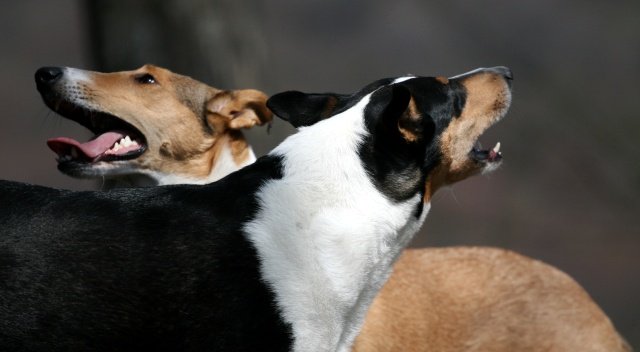
The Smooth Collie is a dog of exceptional beauty and harmony, combining strength, activity, and elegance without any signs of clumsiness or coarseness. Its appearance reflects intelligence and readiness for work. Every part of its body is proportionate to its overall size.
General Appearance and Proportions: This is a medium-sized dog with well-developed musculature, but not massive. The body is slightly longer than it is tall at the withers. Movements are light, fluid, and graceful, capable of covering significant distances with minimal effort. Overall balance is crucial.
Head and Muzzle: The head is one of the breed’s key characteristics. It has the shape of a well-blunted, cleanly chiselled wedge. The skull is flat. The stop (transition from forehead to muzzle) is barely perceptible but palpable. The muzzle gradually tapers to the nose but is not pointed. The tip of the nose is always black, regardless of coat colour. The jaws are strong, with a perfect, regular, and complete scissor bite (upper teeth closely overlapping the lower and standing perpendicularly to the jaws). Lips are tight-fitting.
Eyes: The eyes are medium-sized, almond-shaped, set slightly obliquely. The colour is dark brown, with the exception of blue merle coloured dogs, where one or both eyes (or parts of them) may be blue or flecked with blue. The expression of the eyes is exceptionally intelligent, lively, alert, and gentle.
Ears: Ears are medium-sized, not overly large. In repose, they are typically laid back. When the dog is alert or showing interest, the ears rise on the cartilages and stand semi-erect – approximately two-thirds of the ear are vertical, and the top third naturally tilts forward, below the horizontal. Ear tips should be neither fully erect (like some Sheepdogs) nor completely pendulous (like a Basset Hound).
Neck, Body, and Tail: The neck is muscular, strong, fairly long, with a graceful arch. The back is straight and firm, with a slight rise over the loins. The chest is deep, moderately broad behind the shoulders. Ribs are well-sprung. The tail is long, reaching at least to the hock joint. In a calm state, the dog carries its tail low, slightly curved at the tip. When moving or excited, the tail may be raised, but it is never carried over the back.
Limbs: The forelegs are straight and muscular, with moderate bone. Shoulders are well-laid back and sloping. Upper arms are well-angulated. Elbows are held close to the body. Hindquarters are muscular at the thighs, dry and sinewy below. Stifles are well-turned. Hocks are well let down and powerful. Feet are oval-shaped, with firm pads and well-arched, tight toes.
Coat and Colour of the Smooth Collie: The coat is short, close-lying, straight, and harsh to the touch, with a dense undercoat. It provides excellent weather protection. Shedding occurs seasonally, usually twice a year, and during these periods, the dog may lose a significant amount of undercoat.
The FCI standard recognises three main colourings:
- Sable and White: Any shade from light gold to rich mahogany or dark sable. Light straw or creamy colours are undesirable. White markings may be on the collar (full or partial), chest, legs, feet, and tail tip. A small white blaze on the muzzle or skull is possible.
- Tricolour: Predominantly black with rich reddish-brown (tan) markings on the head and legs. White markings as in sable colouring. A rusty tinge to the black coat is undesirable.
- Blue Merle: Predominantly a clear silvery-blue background, with black patches and marbling. Rich reddish-brown markings are desirable, but their absence is not penalised. Large black patches, slate colour, or a rusty tinge on the main colouring or undercoat are highly undesirable. White markings as in sable colouring.
Completely white Collies or Collies with predominantly white colouring are not recognised by the FCI standard, although such dogs exist and may be associated with certain health problems (e.g., deafness).
Temperament and Behavioural Traits of the Smooth Collie
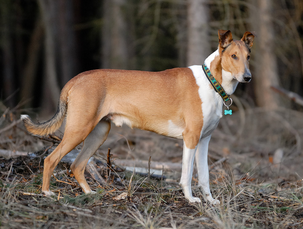
The Smooth Collie isn’t just a dog with an attractive appearance; it’s a personality with a rich inner world. Their temperament is one of the breed’s strongest attributes. They are known for their high intelligence, loyalty, friendliness, and sensitivity. These are active and alert dogs, always eager to interact with people.
Intelligence and Trainability: Smooth Collies are among the most intelligent dog breeds. They quickly grasp new commands and concepts, making the training process enjoyable and effective for both dog and owner. Their intelligence requires constant stimulation; a bored Collie might find activities that aren’t always to their owners’ liking. They have a keen understanding of vocal intonations and human moods.
Loyalty and Affection for the Family: These dogs are extremely family-oriented. They form strong emotional bonds with their owners and strive to be close as often as possible. The Smooth Collie copes poorly with prolonged solitude and can suffer from separation anxiety if regularly left alone for long periods. They love to participate in all family affairs.
Attitude Towards Children and Other Pets: Smooth Collies are often described as “nanny dogs,” and this is no coincidence. They are generally very patient, gentle, and careful with children, making them excellent companions for families with youngsters. Of course, any interaction between a dog and a child should be supervised by adults. Thanks to their social nature, Collies usually get along well with other dogs and even cats, especially if they grew up together or were properly socialised. Their herding instinct may occasionally manifest as attempts to “herd” children or other animals with gentle nudges of their nose, but this is rarely a problem.
Vigilance and Attitude Towards Strangers: Possessing innate guarding instincts, the Smooth Collie will diligently monitor its territory and alert owners to approaching strangers with loud barking. However, they are not prone to baseless aggression. They treat strangers with a certain wariness and reserve, but after an introduction and approval from the owner, they can behave friendly. They are good watchdogs, but not guardians in the sense of physical protection – their strength lies more in giving warning.
Energy and Activity Needs: This is a fairly energetic breed that requires regular physical exercise and mental stimulation to maintain good shape and a happy disposition. They are not hyperactive like some other herding breeds, but daily long walks, the opportunity to run off-leash in a safe place, and games are a necessity for them. Boredom and insufficient activity can lead to destructive behaviour. Despite their love for activity, they behave quite calmly at home if their needs are met.
Sensitivity and Reaction to Environment: Smooth Collies are very sensitive dogs. They react subtly to their owner’s mood, tense atmospheres in the home, and training methods. Harshness, shouting, or physical punishment can deeply offend them and undermine trust. They respond best to positive reinforcement, praise, and affection. Their sensitivity also means they can be somewhat timid if they haven’t undergone proper early socialisation.
Tendency to Bark: Like many herding breeds, Collies can be quite “vocal.” They bark to warn about something, express joy, boredom, or attract attention. This tendency can be controlled through proper training and teaching the “Quiet!” command, but it’s unlikely to be completely eliminated. This is worth considering if you live in a flat with sensitive neighbours.
Smooth Collie Health: Typical Ailments and Their Prevention
Smooth Collies are generally considered a healthy and robust breed, especially if they come from responsible breeders who test their dogs for genetic diseases. However, like any breed, they have a predisposition to certain health problems. Understanding these potential risks will help owners ensure their beloved pets lead long and happy lives.
Drug Sensitivity (MDR1 Gene)
One of the most significant health concerns in Collies (both Rough and Smooth) and some other herding breeds is the mutation of the MDR1 gene (Multi-Drug Resistance 1). This gene is responsible for producing a protein that removes certain toxins and medications from the brain. In dogs with the MDR1 mutation, this mechanism is impaired, making them extremely sensitive to a range of medications. Administering normal doses of some drugs can lead to serious neurological disorders and even death. Dangerous drugs include ivermectin (often used against parasites, but safe in certain doses even for sensitive Collies), loperamide (an anti-diarrheal), some chemotherapy drugs, tranquillisers, and anaesthetics. It is crucial to discuss this with your vet before any treatment and, if possible, to have a genetic test for the MDR1 mutation carried out.
Eye Diseases
Collies are prone to several hereditary eye conditions:
- Collie Eye Anomaly (CEA): This is a group of congenital eye development defects that can range from minor changes that do not affect vision to serious problems, including retinal detachment and blindness. The degree of manifestation can vary even within the same litter. A genetic test for CEA is available.
- Progressive Retinal Atrophy (PRA): This is a group of diseases that lead to the gradual destruction of photoreceptor cells in the retina, ultimately resulting in blindness. Various forms of PRA exist, some of which can be detected through genetic tests.
- Cataracts: A clouding of the eye’s lens that can impair vision. It can be hereditary or age-related.
- Microphthalmia: Abnormally small eyeballs, often associated with merle colouring (especially in homozygous merles – MM).
Musculoskeletal Disorders
Hip Dysplasia: Although Collies are not among the breeds with the highest risk, dysplasia does occur. This is an improper development of the hip joint that can lead to arthritis and pain. It’s important to choose a puppy from parents screened for dysplasia.
Other Potential Issues
- Epilepsy: A hereditary predisposition to seizures.
- Dermatomyositis (DMS): A hereditary autoimmune disease affecting the skin and muscles. More common in young dogs. Symptoms include skin lesions on the muzzle, ears, tail tip, and around the eyes, as well as muscle weakness.
- Bloat (Gastric Torsion): Like many deep-chested dogs, Collies can be prone to this life-threatening condition. Prevention includes feeding small meals several times a day and avoiding strenuous physical activity immediately after eating.
- Allergies: Collies can suffer from food allergies or environmental allergies (e.g., pollen, dust mites). Symptoms include itching, skin rashes, and digestive problems.
- Nasal Sun Sensitivity (“Collie Nose” or Nasal Solar Dermatitis): Some Collies, especially those with light nose pigmentation, may develop irritation, peeling, or even ulcers on the nose due to sun exposure. Using dog-safe sunscreen can help.
Prevention and Health Care
- Regular Vet Check-ups: Annual (or twice-yearly for older dogs) check-ups will help detect problems at an early stage.
- Vaccination and Parasite Control: Follow the vaccination schedule and regularly treat your dog for fleas, ticks, and worms, agreeing on the preparations with your vet (remembering MDR1).
- Balanced Nutrition: High-quality food appropriate for your dog’s age and activity level is the foundation of good health.
- Sufficient Physical Activity: Regular exercise helps maintain a healthy weight and overall tone.
- Genetic Testing: If you’re buying a puppy, choose a breeder who tests their breeding dogs for hereditary diseases.
- Careful Observation: Be attentive to any changes in your pet’s behaviour, appetite, activity level, or appearance, and consult your vet promptly.
Caring for a Smooth Collie: Coat, Activity, and Housing
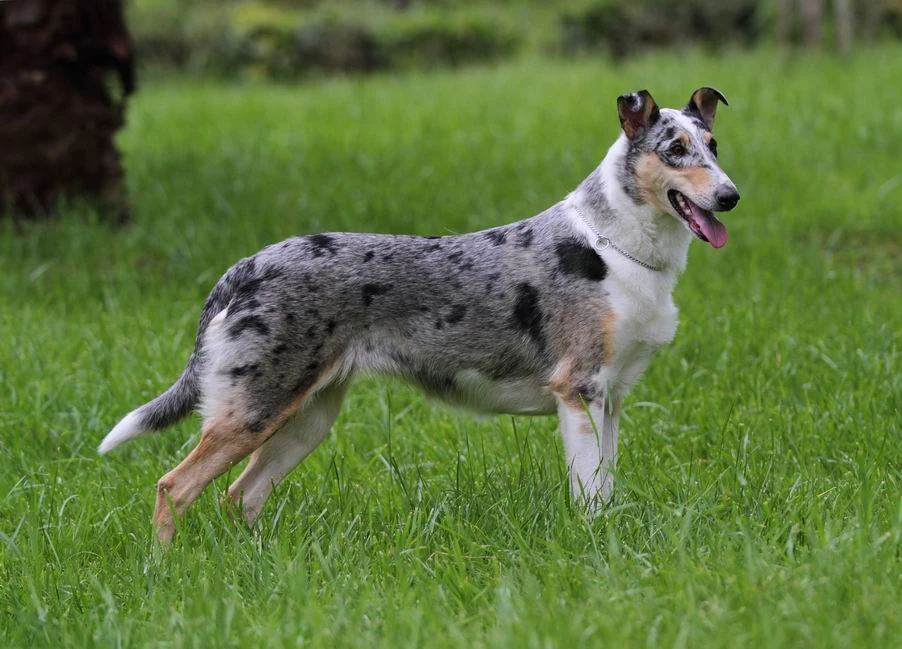
Caring for a Smooth Collie isn’t overly complex, but it requires regularity and attention to the breed’s specific needs. Proper care will help your beloved companion stay healthy, happy, and beautiful.
Coat Care
Although the Smooth Collie’s coat is short, it’s quite dense and has a thick undercoat, so it requires regular grooming, especially during shedding periods. Key recommendations:
- Brushing: Brush your dog 1-2 times a week using a natural bristle brush, a rubber grooming mitt, or a deshedding tool (furminator) for short-haired breeds. This will help remove dead hair, dirt, and distribute skin oils, making the coat shiny.
- Shedding: Smooth Collies shed seasonally, usually in spring and autumn. During these periods, you’ll need to brush them more frequently, perhaps daily, to manage the large amount of shedding hair.
- Bathing: Bathe your Collie as needed, using a mild dog shampoo. Too frequent bathing can dry out the skin and coat. Usually, bathing the dog once every 2-3 months, or if it gets particularly dirty, is sufficient.
- Nail Care: Trim nails regularly (approximately once a month) if they don’t wear down naturally during walks. Clicking nails on the floor is a sign it’s time for a trim.
- Ear Care: Inspect ears weekly for redness, dirt, or unpleasant odour. Clean them as needed with a special ear cleaning solution for dogs.
- Dental Care: Regularly brush your dog’s teeth with a special dog toothbrush and toothpaste (2-3 times a week) to prevent tartar build-up and gum disease.
Physical Exercise and Activity for the Smooth Collie
The Smooth Collie is an active and energetic breed, descended from working sheepdogs. They require daily physical exercise and mental stimulation to be happy and healthy. The minimum recommended duration for daily walks is 1-1.5 hours, divided into two or three sessions. However, simply slow walks on a leash may not be enough.
- Active Walks: Incorporate periods of running, playing fetch, or frisbee (in a safe area) into your walks.
- Off-leash Opportunities: If there’s a safe, fenced area, allow your Collie to run off-leash.
- Dog Sports: Smooth Collies excel in sports such as agility, obedience, flyball, freestyle (dog dancing), and herding (if opportunities arise). This not only provides physical exercise but also stimulates their keen minds. Some owners even engage them in canicross or bikejoring. Breeds like the Dachshund or Shih Tzu also require similar activity, although their purpose is somewhat different.
- Mental Games: Don’t forget about mental stimulation. Use interactive toys, puzzle feeders, and teach new tricks and commands.
Insufficient activity can lead to boredom, destructive behaviour (e.g., excessive barking, chewing on things), and weight problems.
Housing Conditions
The Smooth Collie can adapt to life both in a private house with a garden and in a flat, provided its needs for physical activity and social interaction are fully met.
- Flat Living: Possible, but will require the owner to provide daily long and active walks. Their tendency to bark should also be considered, which might not be appreciated by neighbours. Ideally, a private house with a fenced garden would be more suitable for them.
- House Living: Having a fenced garden will be a huge plus, where the dog can safely run and play. However, the Smooth Collie is not meant for permanent outdoor living or kennel life. It is a companion dog that needs close contact with its family.
- Temperature Regulation: Their short coat with an undercoat provides good protection from cold, but in severe frosts, it’s advisable to limit walk duration or use protective clothing. In summer, ensure the dog doesn’t overheat, provide access to shade and fresh water.
Training and Socialisation of the Smooth Collie
Smooth Collies are exceptionally intelligent and capable learners, which makes their training a pleasant process for both the dog and the owner. They are eager to please their owner and quickly pick up new commands. However, their sensitivity requires a special approach.
Key Training Principles
- Positive Reinforcement: Collies respond best to methods based on positive reinforcement – praise, treats, toys. They are very sensitive to tone of voice, so harshness and shouting can scare them and undermine trust. Physical punishment is absolutely unacceptable.
- Early Start: Begin teaching basic obedience commands and house rules from an early age (from 2-3 months).
- Short and Engaging Sessions: To maintain the puppy’s and young dog’s interest, sessions should be short (10-15 minutes) but regular (several times a day). Incorporate playful elements.
- Consistency and Patience: Be consistent in your demands and commands. All family members should adhere to the same rules. Don’t expect instant results; be patient.
- Variety: Include a variety of exercises in your training to prevent the dog from getting bored. Change training locations.
Socialisation
Early and proper socialisation is critically important for the Smooth Collie. It helps to raise a confident, well-balanced, and friendly dog. Socialisation should begin as early as possible, familiarising the puppy with:
- Various people: Adults, children, elderly people, people with glasses, hats, walking sticks, etc.
- Other dogs: Controlled encounters with vaccinated, friendly dogs of various breeds and sizes. Interaction with relatives, for example, with other herding dogs like the Rough Collie, the Shetland Sheepdog (Sheltie), or the Border Collie, can be beneficial for expanding their social experience.
- Other animals: If you have cats or other pets, introduce the Collie to them gradually and under supervision.
- Different places and sounds: Noisy streets, parks, public transport, household appliances. This will help prevent the development of fears.
Puppy classes can be an excellent way to socialise and teach basic commands under the guidance of a professional.
Overcoming Undesirable Behaviour
- Barking: Teach the “Quiet!” command and provide your dog with enough mental and physical stimulation to reduce barking out of boredom. Do not encourage barking without cause.
- Herding Instinct: If the Collie tries to “herd” children or other animals, redirect its attention to a toy or a command.
- Leash Pulling: Train your dog from a young age to walk on a loose lead.
Thanks to their intelligence and desire to please, Smooth Collies often achieve success in various dog sports, which also serves as an excellent method of training and strengthening the bond with their owner.
Smooth Collie Nutrition: Key Recommendations and Specifics
Proper nutrition is the cornerstone of your Smooth Collie’s health, longevity, and vitality. As the breed is prone to food allergies and has certain peculiarities related to drug sensitivity (which may indirectly affect the choice of some supplements), the selection of their diet should be approached with care.
Types of Feeding
There are two main approaches to feeding Collies:
- Ready-made Dry and Wet Foods: This is the most popular option. Choose high-quality premium, super-premium, or holistic foods formulated for medium-sized dogs, taking into account their age (puppy, adult, senior) and activity level. For Collies prone to allergies, hypoallergenic or single-protein foods may be suitable (e.g., lamb, turkey, fish). Read the ingredients carefully: meat should be listed first, not grains. Avoid foods with artificial colours, flavours, and preservatives.
- Natural Feeding: This approach involves feeding the dog raw or heat-treated natural products (meat, offal, fish, vegetables, fruits, fermented dairy products, porridges). A natural diet must be carefully balanced in terms of nutrients, vitamins, and minerals. It’s best to entrust the creation of such a diet to a veterinary nutritionist to avoid deficiencies or excesses of certain elements. This is especially important for a growing puppy’s body.
Key Principles of Feeding a Collie
- Ingredient Quality: Regardless of the feeding type, use only high-quality and fresh products/foods.
- Feeding Schedule: Adult dogs are usually fed 1-2 times a day. Puppies are fed more frequently: up to 3 months – 4-5 times, from 3 to 6 months – 3 times, after 6 months – 2 times. Feed your dog at the same time to establish a healthy digestion routine.
- Portion Size: The amount of food depends on the dog’s age, weight, activity level, physiological state (pregnancy, lactation), and individual metabolism. Follow the manufacturer’s recommendations or your vet’s advice. Do not overfeed your Collie, as they can be prone to weight gain, which negatively affects joints and overall health.
- Access to Fresh Water: Your dog should always have free access to clean, fresh drinking water.
- Gradual Transition: If you’re changing food or feeding type, do it gradually over 7-10 days, slowly mixing the new food with the old to avoid digestive upsets.
- Avoid Table Scraps: Do not feed your Collie food from your table. Many human foods (chocolate, onions, garlic, grapes, raisins, fatty and fried foods) are toxic or harmful to dogs.
- Controlling Allergic Reactions: If you notice signs of allergies (itching, rashes, digestive problems), consult your vet. You may need to choose a special diet.
- Vitamin and Mineral Supplements: When feeding high-quality ready-made foods, additional vitamin and mineral complexes are usually not needed, as the foods are already balanced. With natural feeding, supplements may be necessary, but they should only be prescribed after consultation with a vet.
Approximate Daily Diet (Natural Feeding, Example)
This table provides a general overview only and should be adjusted individually.
| Component | Percentage of Daily Intake | Product Examples |
|---|---|---|
| Meat and Meat By-products | 50-70% | Beef, turkey, chicken (boneless), tripe, heart, liver (small amount) |
| Fish (Sea, Lean) | 1-2 times a week instead of meat | Hake, Pollock (boiled, boneless) |
| Grains (Porridges) | 10-25% | Rice, buckwheat (well-cooked) |
| Vegetables | 10-20% | Carrots, pumpkin, courgette, broccoli (raw grated or lightly boiled) |
| Fermented Dairy Products | 5-10% (not daily) | Kefir, low-fat cottage cheese, natural yoghurt (no additives) |
| Eggs | 1-2 pcs. per week | Boiled or raw (yolk) |
| Vegetable Oil | 1 teaspoon per day | Flaxseed, olive (unrefined) |
The total amount of food per day for an adult dog on a natural diet is approximately 2-3% of its ideal weight. For puppies and active dogs, this percentage may be higher.
Pros and Cons of the Smooth Collie Breed
Like any breed, the Smooth Collie has its advantages and disadvantages that potential owners should consider before getting such a dog.
| Pros | Cons |
|---|---|
| High intelligence and trainability: Easily trained, quickly learn commands, successful in dog sports. | Require significant physical exercise: Not suitable for inactive people or those unwilling to commit to long walks. |
| Exceptional loyalty and family attachment: Become true companions, love being near people. | Need a lot of mental stimulation: A bored Collie can become destructive or excessively vocal. |
| Get along wonderfully with children: Patient, gentle, and playful, often called “nanny dogs.” | Tendency to bark: Can be quite “vocal,” which requires training and control. |
| Friendly towards other animals: Usually get along well with other dogs and cats, especially with proper socialisation. | Sensitive nature: Respond poorly to harshness, shouting, and unfair treatment. Require positive training methods. |
| Good watchdog qualities: Alert and will always warn of approaching strangers. | Can suffer from separation anxiety: Don’t like being left alone for long periods. |
| Elegant appearance and grace: Attractive dogs with a beautiful physique. | Predisposition to certain hereditary diseases: It’s important to choose a puppy from responsible breeders (MDR1, CEA, etc.). |
| Relatively uncomplicated coat care: Compared to the Rough Collie, grooming is significantly simpler. | Seasonal shedding: Can shed heavily twice a year, requiring more frequent brushing. |
| Versatility: A wonderful family dog, athlete, companion. | Herding instincts: May try to “herd” family members or other animals, which sometimes requires correction. |
Smooth Collie: Interesting Facts About the Breed
- Not Just Lassie: While the most famous Collie in the world is the Rough Collie Lassie, Smooth Collies also have their admirers and well-known representatives, though less publicised. They are often valued for their practicality and working qualities.
- Royal Favour: Like Rough Collies, Smooth Collies also won the favour of Queen Victoria, which significantly contributed to their popularity in the 19th century.
- “Two Breeds in One” (in the USA): The American Kennel Club (AKC) considers the Rough Collie and the Smooth Collie as one breed with two coat variations. This means that in the USA, they can be interbred, and puppies of both types can be born in the same litter. In Europe (according to FCI), they are two separate breeds.
- Rarer than Rough Collies: Despite all their advantages, Smooth Collies are significantly less common than their Rough Collie relatives. Finding a puppy from a good breeder can be more challenging.
- Agility Stars: Thanks to their speed, agility, and intelligence, Smooth Collies often achieve great success in agility competitions and other types of canine sports.
- Silent Herders: During herding work, Collies are known for primarily using their “eye” and body movements to control the flock, rather than barking, unlike some other herding breeds. Although at home they can be quite vocal.
- Name Derived from Sheep?: One of the most common theories for the origin of the name “collie” links it to an old Scottish sheep breed called “Colley,” which had black faces and legs.
Frequently Asked Questions About the Smooth Collie Breed (FAQ)
Do Smooth Collies shed a lot?
Yes, Smooth Collies shed. They have a dense undercoat that renews seasonally, usually twice a year (in spring and autumn). During these periods, shedding can be quite intense, and hair will be everywhere. Regular brushing (1-2 times a week, and daily during shedding) will help control the amount of hair in the home.
Are Smooth Collies suitable for apartment living?
Yes, a Smooth Collie can live in a flat, but provided the owner can ensure it gets sufficient physical activity (long daily walks, games) and mental stimulation. Their tendency to bark should also be considered, which might not be appreciated by neighbours. Ideally, a private house with a fenced garden would be more suitable for them.
Is a Smooth Collie easy to train?
Yes, Smooth Collies are very intelligent, eager to please their owners, and learn quickly. This makes them one of the easiest breeds to train. However, they are sensitive, so they respond best to positive training methods based on praise and rewards. Harshness and punishment can have a negative effect.
Do Smooth Collies get along well with children and other animals?
Generally, yes. Smooth Collies are known for their gentle and patient attitude towards children, which is why they are often called “nanny dogs.” They also typically get along well with other dogs and cats, especially if they grew up together or were properly socialised. However, any interaction between a dog and young children should be supervised.
How much physical activity does a Smooth Collie need?
Smooth Collies are an active breed that requires at least 1-1.5 hours of energetic physical exercise daily. This can include long walks, running, playing fetch or frisbee, and participating in dog sports (agility, obedience, etc.). Insufficient activity can lead to behavioural and health problems.
What are the main health problems in Smooth Collies?
The most significant issues are sensitivity to some medications (MDR1 gene mutation) and hereditary eye diseases (Collie Eye Anomaly – CEA, Progressive Retinal Atrophy – PRA). Hip dysplasia, epilepsy, and dermatomyositis can also occur. It’s important to choose a puppy from responsible breeders who test their dogs.
Does the Smooth Collie’s temperament differ from the Rough Collie’s?
In general, the temperaments of Smooth and Rough Collies are very similar – both types are intelligent, loyal, friendly, and sensitive. Some owners and breeders note that Smooth Collies may be slightly more energetic, active, and “work-driven” in temperament, while Rough Collies might be a little calmer. However, these are more individual differences than a substantial divergence between the coat types.
Video about the Smooth Collie
- Gentle, ideal with children
- Clever and trainable
- Easier coat care
- A devoted family dog
- Medication sensitivity (MDR1)
- May bark a lot
- Needs moderate activity
- Wary of strangers
| Rough Collie | Sheltie | Australian Kelpie | |
|---|---|---|---|
| Height | 51–61 cm | 33–41 cm | 43–51 cm |
| Energy | 3.5 | 4 | 5 |
| Apartment | 2.5 | 3.5 | 2 |
| Beginners | 3 | 3.5 | 2.5 |
How does the Smooth Collie differ from the Rough Collie?
Is the Smooth Collie good with children?
Do Smooth Collies have a medication sensitivity?
FCI Standard No. 296 · The Kennel Club
For apartments · For kids · For beginners · Active · Smartest · Hypoallergenic · All rankings →