The same clever, devoted Collie — just in a smooth coat: sharp, gentle, a family dog that is wonderful with children. Easier to care for than its long-haired counterpart, but with the same character and breed traits.
Apartment · with caveatsKidsCatsOther dogsBeginners
The Smooth Collie is an elegant, intelligent, and incredibly loyal dog, closely related to the more well-known Rough Collie. While less popular, this breed deserves serious attention due to its versatility, strong work ethic, and wonderful personality. They're not just a beautiful dog but a true companion, ready to share every adventure with their owner and become a full-fledged family member. Their short, dense coat is not only practical but also highlights their athletic build and graceful lines. Once tireless herding dogs, today Smooth Collies excel in various dog sports, serve as fantastic family pets, and are often called "nanny dogs" for children. You can learn more about this incredible breed, its unique traits, history, and care tips on Tvaryny.
Choosing a Smooth Collie means choosing an active and intelligent friend who will need your attention, time for shared activities, and, of course, endless love. In return, you'll gain an unmatched loyalty, a playful partner, and a dependable companion for years to come. If you're looking for a dog that combines intelligence with a gentle nature, you might also consider the lively Dachshund or the charming Shih Tzu breed, each offering their own unique personality traits.
Smooth Collie Breed Overview
Smooth Collie Breed Overview · 8
Characteristic
Value
Official Name
Collie Smooth
Country of Origin
Great Britain (Scotland)
Date of Origin
19th Century (first mention at a show ~1860)
Lifespan
10–14 years (some sources state 8–16 years)
Height at Withers (FCI)
Males: 22–24 inches Females: 20–22 inches
Weight (FCI)
Males: 45–65 lbs Females: 40–55 lbs
FCI Group
Group 1 (Herding and Cattle Dogs, excluding Swiss Cattle Dogs). Section 1 (Herding Dogs). Without a working trial.
Other Names
Short-Haired Collie
Smooth Collie: Interesting Facts About the Breed
Not Just Lassie: While the most famous Collie in the world is the Rough Collie, Lassie, Smooth Collies also have their fans and well-known representatives, though less famous. They are often valued for their practicality and working abilities.
Royal Favor: Like Rough Collies, Smooth Collies also won the affection of Queen Victoria, which significantly contributed to their popularity in the 19th century.
"Two Breeds in One" (in the U.S.): The American Kennel Club (AKC) considers the Rough and Smooth Collie to be a single breed with two coat variations. This means that in the U.S., they can be interbred, and puppies of both types can be born in the same litter. In Europe (under the FCI), they are two separate breeds.
Rarer than Rough Collies: Despite all their advantages, Smooth Collies are significantly less common than their Rough-coated relatives. It can be more difficult to find a puppy from a good breeder.
Agility Stars: Thanks to their speed, agility, and intelligence, Smooth Collies often achieve great success in agility competitions and other dog sports.
Silent Herders: During herding work, Collies are known for using their "eye" and body movements to control the flock rather than barking, unlike some other herding breeds. However, they can be quite vocal at home.
Name From Sheep?: One of the most common theories for the origin of the name "Collie" links it to an old Scottish breed of sheep, "Colley," which had black faces and legs.
A Detailed History of the Smooth Collie Breed
The history of the Smooth Collie is closely intertwined with that of its Rough-coated sibling, with roots in the Scottish Highlands and Northern England. For centuries, these dogs were essential partners for shepherds, responsible for herding and protecting flocks of sheep. The exact origin of the name "Collie" is still debated. Some researchers believe it comes from the name of a breed of black-faced and black-legged Scottish sheep called "Colley." Others suggest a connection to the Anglo-Saxon word "col," meaning "black," referring to the dogs' original dark coloring, or a Celtic word meaning "useful."
Initially, Collies were primarily working dogs, and their appearance was of little concern to their owners. The main criteria were endurance, intelligence, the ability to work in harsh weather conditions, and to manage large flocks. It is believed that the ancestors of modern Collies were various local herding dogs, possibly with some Roman-imported dog blood mixed in. The first Collies were slightly smaller and had broader heads than the modern breed.
The emergence of the Smooth Collie variety was linked to practical needs. While a long coat provided good protection in the cold and damp conditions of the highlands, a shorter coat was more convenient in the warmer and drier southern regions of Britain and for certain types of work. One theory suggests that Smooth Collies appeared in the mid-19th century as a result of crossing traditional black and white Rough Collies with Greyhounds. This crossbreeding was aimed at giving the dogs greater speed and agility, necessary for herding on large, open grounds, and possibly to give them a more elegant look for the increasingly popular dog shows. However, this theory is not universally accepted, and some dog breeders believe that the Smooth variety existed alongside the Rough from the start.
The Victorian era was a turning point in the breed's history. Queen Victoria, during her visits to Balmoral Castle in Scotland, was captivated by the beauty and intelligence of Collies. Her affection for the breed led to a rapid increase in their popularity as companions and show dogs. The first Smooth Collie was shown at a dog show in Birmingham in 1860, although at that time, they were not judged in a separate class from Rough Collies. It was not until the 1870s that they began to be judged separately.
One of the breed's iconic representatives, often called the "father" of the modern Smooth Collie, is considered to be a tricolor male named Trefoyl, born in 1873. He and his descendants had a significant impact on shaping the breed's type. The Smooth Collie was officially recognized as a separate breed in the late 19th century, with the Kennel Club in England registering it as such. Despite this, in some countries (like the U.S.), Rough and Smooth Collies are still considered a single breed with two coat variations and can be interbred. In Europe, under FCI standards, they are two separate breeds. For those interested in related breeds, you can also explore the Rough Collie, the energetic Shetland Sheepdog, or the ever-popular Border Collie.
Throughout the 20th century, Smooth Collies, although less popular than their Rough-coated relatives, retained their working qualities and gained recognition as versatile dogs. They continued to be used for herding and also proved themselves in new roles: as guide dogs, search and rescue dogs, and participants in agility, obedience, and other dog sports.
The Smooth Collie's Appearance: Standard and Description
The Smooth Collie is a dog of exceptional beauty and harmony, combining strength, activity, and elegance without any signs of awkwardness or coarseness. Its appearance reflects its intelligence and readiness to work. Every part of its body is proportionate to its overall size.
General Look and Proportions: This is a medium-sized dog with a well-developed musculature, but not massive. The body is slightly longer than it is tall at the withers. Its movements are light, fluid, and graceful, capable of covering significant distances with minimal effort. Overall balance is crucial.
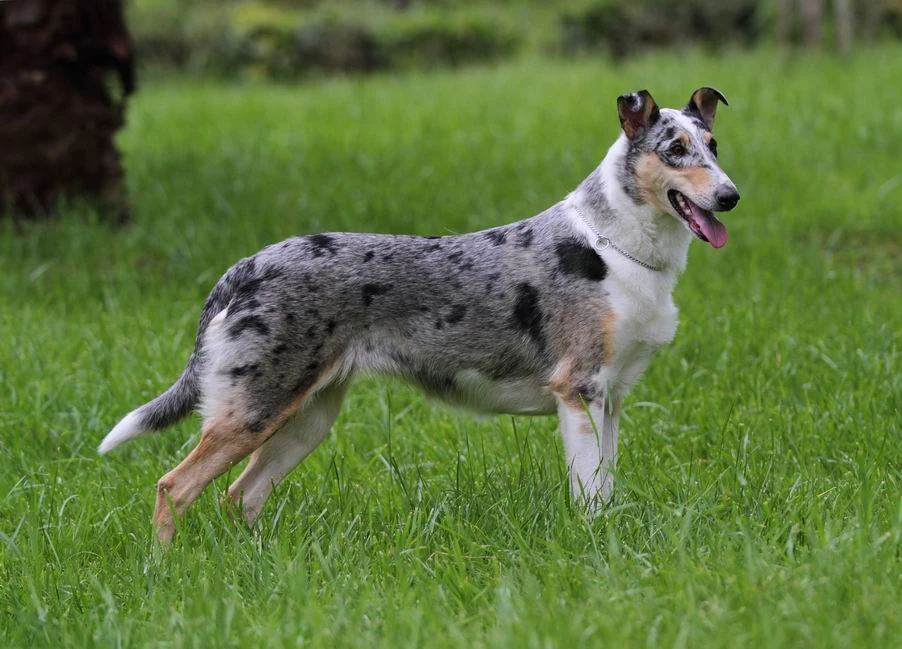
Head and Muzzle: The head is one of the breed's key characteristics. It has the shape of a well-blunted, clean-cut wedge. The skull is flat. The stop (the transition from the forehead to the muzzle) is barely noticeable but palpable. The muzzle gradually tapers to the nose but is not pointed. The tip of the nose is always black, regardless of the coat color. The jaws are strong, with a perfect, regular, and complete scissor bite (upper teeth closely overlap the lower and are set perpendicular to the jaws). The lips are tight.
Eyes: The eyes are medium-sized, almond-shaped, and set slightly obliquely. The color is dark brown, except for Blue Merle dogs, in which one or both eyes (or parts of them) may be blue or have blue flecks. The expression is extremely intelligent, lively, alert, and gentle.
Ears: The ears are medium-sized and not overly large. When at rest, they are usually folded back. When the dog is alert or interested, the ears rise on the cartilage and stand semi-erect—about two-thirds of the ear is vertical, with the top third naturally tipping forward, below the horizontal. The tips of the ears should be neither fully erect (like some other herding breeds) nor completely dropped.
Neck, Body, and Tail: The neck is muscular, strong, and fairly long, with a graceful arch. The back is straight and strong, with a slight rise over the loins. The chest is deep and moderately wide behind the shoulder blades. The ribs are well-sprung. The tail is long, reaching at least to the hock joint. When at rest, the dog holds its tail low, with a slight upward curve at the end. When moving or excited, the tail may be carried higher, but it is never carried over the back.
Limbs: The front legs are straight and muscular, with moderate bone. The shoulders are well-sloped and laid back. The upper arms are well-angulated. The elbows are close to the body. The hindquarters are muscular in the thighs, and lean and sinewy below. The stifle joints are well-defined. The hocks are low and strong. The feet are oval-shaped, with tough pads and well-arched, tight toes.
Coat and Color of the Smooth Collie: The coat is short, dense, straight, and harsh to the touch, with a thick undercoat. It provides excellent protection from the weather. Shedding occurs seasonally, usually twice a year, and during this period, the dog can lose a significant amount of undercoat.
The FCI standard recognizes three main colors:
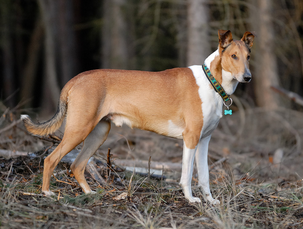
Sable and White: Any shade from light golden to rich mahogany or dark sable. Light straw or cream colors are undesirable. White markings may appear on the collar (full or partial), chest, legs, feet, and tail tip. A small white blaze on the muzzle or skull is permissible.
Tricolor: Predominantly black with rich tan markings on the head and legs. White markings are the same as for the sable coloring. A rusty cast to the black coat is undesirable.
Blue Merle: A predominant clear, silvery-blue background, with black patches and marbling. Rich tan markings are desired but not penalized if absent. Large black patches, slate color, or a rusty cast to the main color or undercoat are highly undesirable. White markings are the same as for the sable coloring.
Completely white Collies or those with a predominantly white coat are not recognized by the FCI standard, although such dogs exist and may be associated with certain health issues (e.g., deafness).
Temperament and Behavioral Traits of the Smooth Collie
The Smooth Collie is not just a dog with an attractive appearance but also a personality with a rich inner world. Their character is one of the breed's strongest points. They are known for their high intelligence, loyalty, friendliness, and sensitivity. They are active and alert dogs who are always ready to interact with people.
Intelligence and Trainability: Smooth Collies are among the most intelligent dog breeds. They quickly grasp new commands and concepts, which makes the training process enjoyable and effective. Their intelligence requires constant stimulation; a bored Collie may find activities for themselves that their owners might not appreciate. They have a great understanding of human voice intonations and moods.
Loyalty and Family Attachment: These dogs are extremely family-oriented. They form a strong emotional bond with their owners and strive to be near them as often as possible. The Smooth Collie does not cope well with prolonged loneliness and may suffer from separation anxiety if left alone for long periods regularly. They love to be involved in all family activities.
Attitude Toward Children and Other Pets: Smooth Collies are often described as "nanny dogs," and for good reason. They are generally very patient, gentle, and careful with children, which makes them wonderful companions for families with kids. Of course, any interaction between a dog and a child should be supervised by an adult. Thanks to their social nature, Collies usually get along well with other dogs and even cats, especially if they grew up together or were properly socialized. Their herding instinct may sometimes manifest in attempts to "herd" children or other animals with gentle nudges of their nose, but this is rarely a problem.
Alertness and Attitude Toward Strangers: With their innate guarding instincts, a Smooth Collie will diligently watch over its territory and alert their owners to the approach of strangers with a loud bark. However, they are not prone to unprovoked aggression. They are somewhat reserved and wary of strangers but can become friendly after a proper introduction and approval from their owner. They make good watchdogs but not guard dogs in the sense of physical protection—their strength is in providing a warning.
Energy and Need for Activity: This is a fairly energetic breed that requires regular physical exercise and mental stimulation to stay in good shape and be happy. They are not hyperactive like some other herding breeds, but daily long walks, the opportunity to run off-leash in a safe area, and games are essential for them. Boredom and insufficient activity can lead to destructive behavior. Despite their love for activity, they are quite calm at home once their needs are met.
Sensitivity and Reaction to Environment: Smooth Collies are very sensitive dogs. They are finely tuned to their owner's mood, tense atmospheres in the home, and training methods. Harshness, yelling, or physical punishment can deeply hurt them and damage their trust. They respond best to positive reinforcement, praise, and affection. Their sensitivity also means they can be somewhat timid if they have not received proper early socialization.
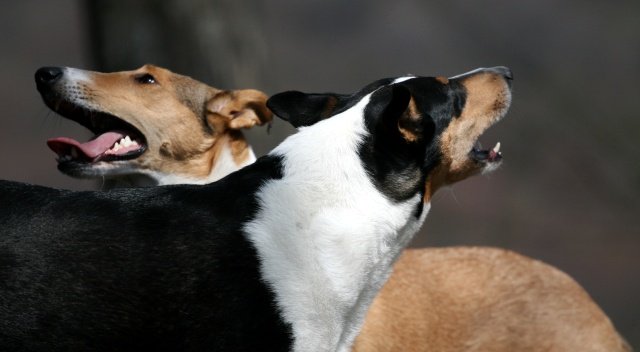
Tendency to Bark: Like many herding breeds, Collies can be quite "talkative." They bark to warn of something, to express joy, boredom, or to get attention. This tendency can be managed with proper training and teaching the "Quiet!" command, but it is unlikely to be completely eliminated. This is something to consider if you live in an apartment with sensitive neighbors.
Smooth Collie Care: Coat, Activity, and Upkeep
Caring for a Smooth Collie is not overly complicated but requires regularity and attention to the breed's specific needs. Proper care will help your pet stay healthy, happy, and beautiful.
Coat Care
While the Smooth Collie has a short coat, it's quite dense and has a thick undercoat, so it needs regular grooming, especially during shedding periods. Here are the main recommendations:
Brushing: Brush your dog 1–2 times a week using a natural bristle brush, a rubber grooming glove, or a short-haired Furminator. This will help remove dead hair, dirt, and distribute skin oils, making the coat shiny.
Shedding: Smooth Collies shed seasonally, usually in the spring and fall. During these periods, you'll need to brush them more often, possibly daily, to manage the large amount of shedding hair.
Bathing: Bathe your Collie as needed, using a mild dog shampoo. Bathing too often can dry out their skin and coat. Usually, bathing the dog once every 2–3 months or when they get very dirty is sufficient.
Nail Care: Trim their nails regularly (about once a month) if they don't wear down naturally during walks. The clicking sound of their nails on the floor is a sign that it's time to trim them.
Ear Care: Weekly, check their ears for any redness, dirt, or foul odor. Clean them as needed with a dog-specific ear cleaning solution.
Dental Care: Regularly brush your dog's teeth with a special toothbrush and toothpaste for dogs (2–3 times a week) to prevent plaque buildup and gum disease.
Physical Exercise and Activity for the Smooth Collie
The Smooth Collie is an active and energetic breed, descended from working herding dogs. They need daily physical exercise and mental stimulation to be happy and healthy. The minimum recommended daily exercise is 1–1.5 hours, split into two or three sessions. However, slow walks on a leash may not be enough.
Active Walks: Include periods of running, playing fetch or frisbee (in a safe place) in their walks.
Off-Leash Time: If there is a safe, fenced area, allow your Collie to run off-leash.
Dog Sports: Smooth Collies excel in sports like agility, obedience, flyball, freestyle (dog dancing), and herding (if available). This not only provides physical exercise but also stimulates their sharp minds. Some owners even participate in canicross or bikejoring with them.
Mental Games: Don't forget about mental stimulation. Use interactive toys, puzzle games for dogs, and teach them new tricks and commands.
Insufficient activity can lead to boredom, destructive behavior (e.g., excessive barking, chewing on things), and weight issues.
Living Conditions
A Smooth Collie can adapt to life in a house with a yard or an apartment, provided that their needs for physical activity and companionship are fully met.
Apartment Living: Possible, but it will require the owner to provide long and active daily walks. You should also consider their tendency to bark, which might bother neighbors. Ideally, a private house with a fenced yard is better for them.
House Living: A fenced yard is a big plus, where the dog can safely run and play. However, a Smooth Collie is not meant for constant outdoor living or in a kennel. This is a companion dog that needs close contact with its family.
Temperature Tolerance: The short coat with an undercoat provides good protection from the cold, but in severe cold, you should limit the duration of walks or use protective clothing. In the summer, make sure the dog doesn't overheat and provide access to shade and fresh water.
Training and Socialization of the Smooth Collie
Smooth Collies are incredibly intelligent and capable learners, which makes training a pleasant process for both the dog and the owner. They are eager to please their handler and quickly absorb new commands. However, their sensitivity requires a special approach.
Key Training Principles
Positive Reinforcement: Collies respond best to methods based on positive reinforcement—praise, treats, toys. They are very sensitive to the tone of voice, so harshness and yelling can scare them and undermine trust. Physical punishment is absolutely unacceptable.
Early Start: Begin teaching basic obedience commands and house rules from a young age (2–3 months).
Short and Fun Sessions: To keep a puppy's and young dog's interest, training sessions should be short (10–15 minutes) but regular (several times a day). Use play-based elements.
Consistency and Patience: Be consistent in your demands and commands. All family members should follow the same rules. Don't expect immediate results; be patient.
Variety: Include a variety of exercises in your training to prevent the dog from getting bored. Change training locations.
Socialization
Early and proper socialization is critically important for the Smooth Collie. It helps them grow into a confident, well-balanced, and friendly dog. Socialization should begin as early as possible, introducing the puppy to:
Different People: Adults, children, seniors, people wearing glasses, hats, carrying canes, etc.
Other Dogs: Controlled meetings with vaccinated, friendly dogs of different breeds and sizes.
Other Animals: If you have cats or other pets, introduce your Collie to them gradually and under supervision.
Different Places and Sounds: Busy streets, parks, public transportation, household appliances. This will help prevent the development of fears.
Puppy classes can be a great way to socialize and teach basic commands under the guidance of a professional.
Dealing with Unwanted Behaviors
Barking: Teach the "Quiet!" command and provide the dog with enough mental and physical stimulation to reduce boredom-related barking. Don't encourage barking without a reason.
Herding Instinct: If your Collie tries to "herd" children or other animals, redirect its attention to a toy or a command.
Leash Pulling: Train them to walk on a loose leash from an early age.
Thanks to their intelligence and desire to please, Smooth Collies often achieve great success in various dog sports, which is also a fantastic way to train and strengthen the bond with their owner.
Pros and Cons of the Smooth Collie Breed
Like any breed, the Smooth Collie has its advantages and disadvantages that potential owners should consider before getting one.
Pros and Cons of the Smooth Collie Breed · 8
Pros
Cons
High Intelligence and Trainability: Easy to train, quick to learn commands, and successful in dog sports.
Requires Significant Physical Exercise: Not suitable for inactive people or those not ready for long walks.
Extreme Loyalty and Family Attachment: Become true companions, love being with people.
Needs Plenty of Mental Stimulation: A bored Collie can become destructive or excessively noisy.
Great with Kids: Patient, gentle, and playful, often called "nanny dogs."
Tendency to Bark: Can be quite "talkative," which requires training and control.
Friendly with Other Animals: Usually get along well with other dogs and cats, especially with proper socialization.
Sensitive Nature: React poorly to harshness, yelling, and unfair treatment. Require positive training methods.
Good Watchdog Qualities: Alert and will always warn of approaching strangers.
Can Suffer from Separation Anxiety: Don't like being left alone for long periods.
Elegant Appearance and Grace: Attractive dogs with a beautiful build.
Prone to Certain Hereditary Diseases: It's important to choose a puppy from responsible breeders (MDR1, CEA, etc.).
Relatively Simple Coat Care: Compared to the Rough Collie, grooming is much easier.
Seasonal Shedding: Can shed heavily twice a year, requiring more frequent brushing.
Versatility: A wonderful family dog, athlete, and companion.
Herding Instincts: May "herd" family members or other animals, which sometimes needs correction.
Nutrition
Smooth Collie Nutrition: Key Recommendations and Specifics
Health and risks
Smooth Collie Health: Common Ailments and Prevention
Frequently Asked Questions About the Smooth Collie (FAQ) · 7
Do Smooth Collies shed a lot?
Yes, Smooth Collies shed. They have a dense undercoat that is renewed seasonally, usually twice a year (in the spring and fall). During these periods, shedding can be quite intense, and hair will be everywhere. Regular brushing (1–2 times a week, and daily during shedding season) will help control the amount of hair in the home.
Are Smooth Collies suitable for apartment living?
Yes, a Smooth Collie can live in an apartment, but only if the owner can provide them with a sufficient level of physical activity (long daily walks, games) and mental stimulation. You should also consider their tendency to bark, which neighbors may not appreciate. Ideally, a private house with a fenced yard is a better fit for them.
Is it easy to train a Smooth Collie?
Yes, Smooth Collies are very intelligent, eager to please, and quick to learn. This makes them one of the easiest breeds to train. However, they are sensitive, so they respond best to positive training methods based on praise and rewards. Harshness and punishment can have a negative effect.
Do Smooth Collies get along well with children and other animals?
Generally, yes. Smooth Collies are known for their gentle and patient nature with children, which is why they are often called "nanny dogs." They also typically get along well with other dogs and cats, especially if they grew up together or were properly socialized. However, any interaction between a dog and small children should be supervised.
How much physical activity does a Smooth Collie need?
Smooth Collies are an active breed that needs at least 1–1.5 hours of energetic exercise daily. This can include long walks, running, playing fetch or frisbee, and engaging in dog sports (agility, obedience, etc.). Insufficient activity can lead to behavioral and health problems.
What are the main health issues in Smooth Collies?
The most significant issues are sensitivity to certain medications (the MDR1 gene mutation) and hereditary eye diseases (Collie Eye Anomaly - CEA, Progressive Retinal Atrophy - PRA). Other conditions that may occur include hip dysplasia, epilepsy, and dermatomyositis. It's important to choose a puppy from responsible breeders who test their dogs.
Does the Smooth Collie's temperament differ from the Rough Collie's?
Overall, the temperaments of Smooth and Rough Collies are very similar—both types are intelligent, loyal, friendly, and sensitive. Some owners and breeders note that Smooth Collies might be a bit more energetic, active, and "work-oriented" in temperament, while Rough Collies may be slightly calmer. However, these are more individual differences than a significant difference between the coat types.
Video About the Smooth Collie
FAQ
How does the Smooth Collie differ from the Rough Collie?
Only in coat type — it is the same Collie in character and health, but much easier to groom.
Is the Smooth Collie good with children?
Very — a gentle, patient and devoted family dog.
Do Smooth Collies have a medication sensitivity?
Yes — like all Collies, they can carry the MDR1 mutation; a test is needed before medication.