

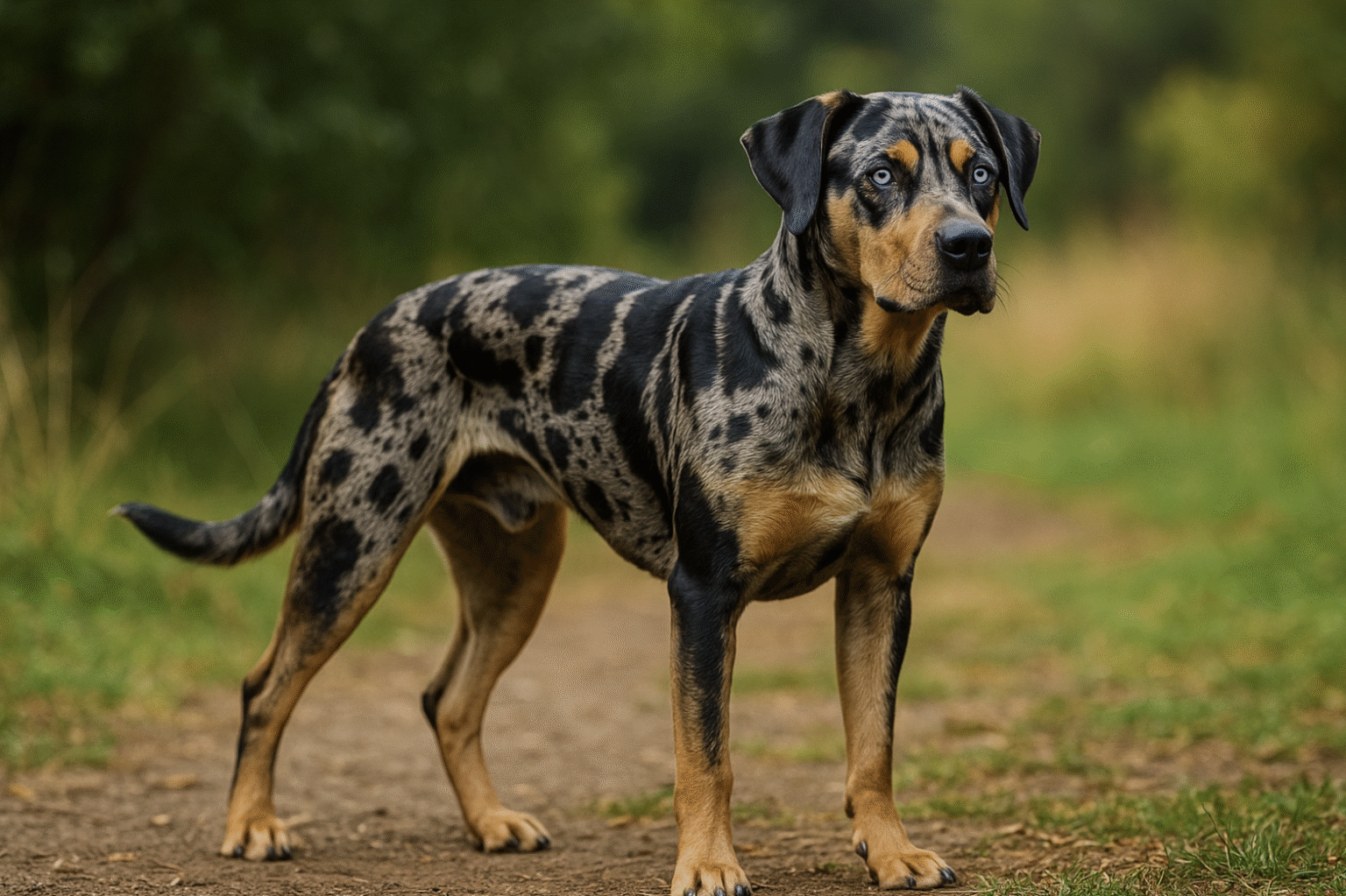
| Height | 53–69 cm |
| Weight | 16–34 kg |
| Lifespan | 12–15 years |
| FCI group | not FCI-recognised (UKC/AKC-FSS-recognised) |
| Origin | USA |
Exact ratings
- Generally a very healthy working breed
- Ear infections (drop ears)
- Hip dysplasia
- Congenital deafness (merle coat)
- Obesity with too little exercise
Calorie-rich food for an active hound, with weight control. Check the drop ears regularly; provide plenty of exercise, scent work and close contact with the owner; test merle puppies for hearing.
The American Leopard Hound holds a prestigious place in the world of hunting breeds. Its exceptional working qualities immediately endear it to keen hunters and hardworking farmers alike. The dog is renowned for its acute sense of smell and incredible eyesight, posing a genuine threat to bears, pumas, lynxes, raccoons, squirrels, and other animals. In its role as a guard dog, it proves itself to be a reliable and vigilant professional. A friendly and close relationship with its owner is paramount for this animal, as it is boundlessly devoted. Learn more on Tvaryny.
History of the Breed
The history of the American Leopard Hound is one of the oldest among American breeds, tracing its roots back to the time of the Spanish conquistadors. It is believed that its ancestors were dogs brought to the New World by the conquerors. These were versatile, resilient animals that assisted not only in hunting but also in protecting against predators and hostile local tribes. Over time, these dogs interbred with hounds brought by settlers from Britain, Ireland, and France.
The main centre for the breed’s development became the state of North Carolina at the beginning of the 18th century. It was here, in the conditions of wild nature and arduous labour, that the breed’s key traits were forged: incredible stamina, fearlessness, and a unique hunting style known as “treeing” (driving prey up a tree). These dogs were indispensable helpers for pioneers, assisting them in procuring food and safeguarding their homes.
It is worth noting that the name “leopard” can be misleading. Although spotted coats are common, they are not the only ones. This breed is often confused with another American breed of a similar name — the Catahoula Leopard Dog. However, these are two entirely different breeds with distinct origins and standards. The American Leopard Hound was officially recognised by the United Kennel Club (UKC) in 1998 under the name “Leopard Cur”, and in 2008, the name was changed to “American Leopard Hound” to better reflect its status as a hound breed, rather than simply a cur (a working dog for farmers).
Breed Standard and Appearance
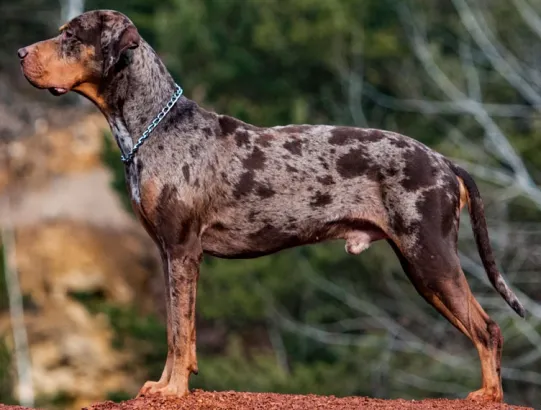
The American Leopard Hound is an athletic, muscular dog of medium to large size, built for speed, endurance, and agility. Its appearance reveals it to be a top-class hunter, capable of working in the most challenging conditions.
General Build and Proportions
The dog’s body should be slightly longer than its height at the withers, giving it a rectangular outline. It is a strong but not cumbersome animal. A key feature is its powerful and well-developed limbs, which allow it to cover vast distances across varied terrain. The back is straight and sturdy, and the chest is deep, providing ample room for the lungs and heart, which are essential for sustained work. The tail can be of any length, from long to naturally docked (bobtail).
Head, Eyes, and Ears
The head is broad, with a slightly domed skull. The muzzle is somewhat elongated but not pointed. The eyes of the American Leopard Hound are typically round, wide-set, and their colour can vary — from dark brown to yellow. In dogs with the merle gene (leopard coat pattern), blue eyes or heterochromia (eyes of different colours) are permissible. The gaze is always alert, intelligent, and penetrating. Ears are set high, medium in size, and pendulous, which is typical for hound breeds.
Coat and Colour Variations
The breed’s coat is dense and double. The undercoat is short and soft, while the guard hairs are coarser and lie close to the body, protecting the dog from bad weather and injuries. The breed’s name reflects its most famous, but not exclusive, coat pattern. Colour variation is one of its distinctive traits.
| Coat Type | Description |
| Leopard (Merle) | The base colour can be yellow, red, fawn, black, or blue with darker, irregularly shaped spots. This is the most recognisable coat. |
| Solid | Any solid colours are permitted, including black, red, fawn, yellow, blue. Small white markings may appear on the chest, paws, and tail tip. |
| Brindle | Dark stripes on a lighter background (usually red or fawn). |
Character and Temperament: Loyal Hunter and Companion
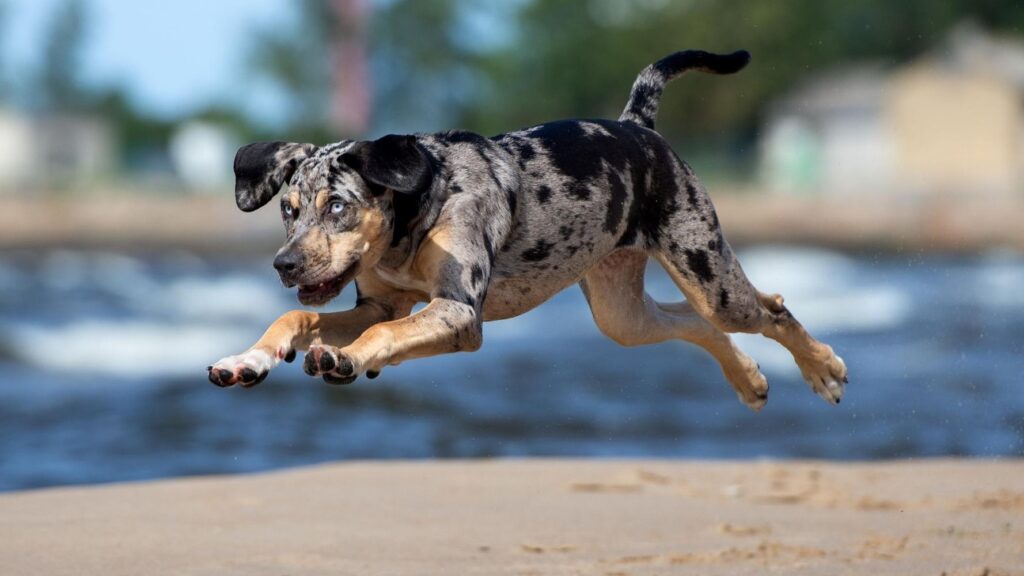
When discussing the character of the American Leopard Hound, it’s essential to highlight its incredible devotion, intelligence, and endurance. This is a dog with a dual nature: in the field, it is a tireless, enthusiastic, and even tough hunter, while at home, it transforms into a calm, loving, and gentle family member. It may appear independent and slightly aloof, which is a manifestation of its self-reliant hunting temperament.
Typically, the dog chooses one family member as its “main” owner, serving them with absolute loyalty, though it also forms strong bonds with the entire family. With children it has grown up with, it behaves with great patience and care, becoming a reliable protector for them. However, due to its strong hunting instinct, its introduction to other household pets, especially smaller ones (cats, rodents), must occur under strict supervision and from an early age.
These dogs are highly intelligent and eager to please their owners, but their independence can create certain training challenges. They will not mindlessly follow commands. Their serious and vigilant nature makes them excellent guard dogs. They will always alert you to approaching strangers with a loud bark. Much like other hounds, such as the Bluetick Coonhound, the American Leopard Hound possesses a powerful voice and is not shy about using it.
Pros and Cons of the Breed
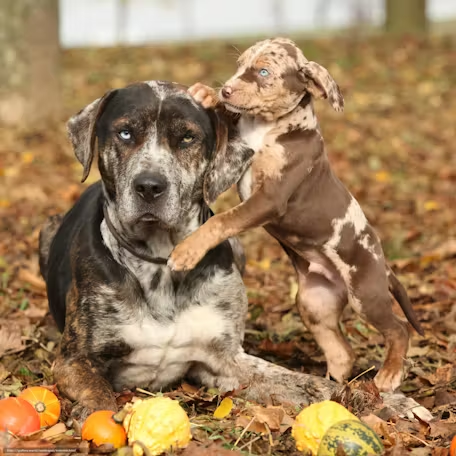
Before acquiring such a serious dog as the American Leopard Hound, it’s vital to weigh all the pros and cons. This will help you understand whether this breed suits your lifestyle.
| Pros | Cons |
|---|---|
| Exceptional family devotion | Requires a great deal of physical exercise |
| High intelligence and problem-solving abilities | Not suitable for apartment living |
| Excellent hunting and guarding qualities | Can be stubborn and independent during training |
| Robust health and low maintenance | Strong hunting instinct, dangerous for small animals |
| Gets along well with children in the family | Tendency to bark loudly and frequently |
| Unique and attractive coat patterning | Needs an experienced and confident owner |
Care and Upkeep
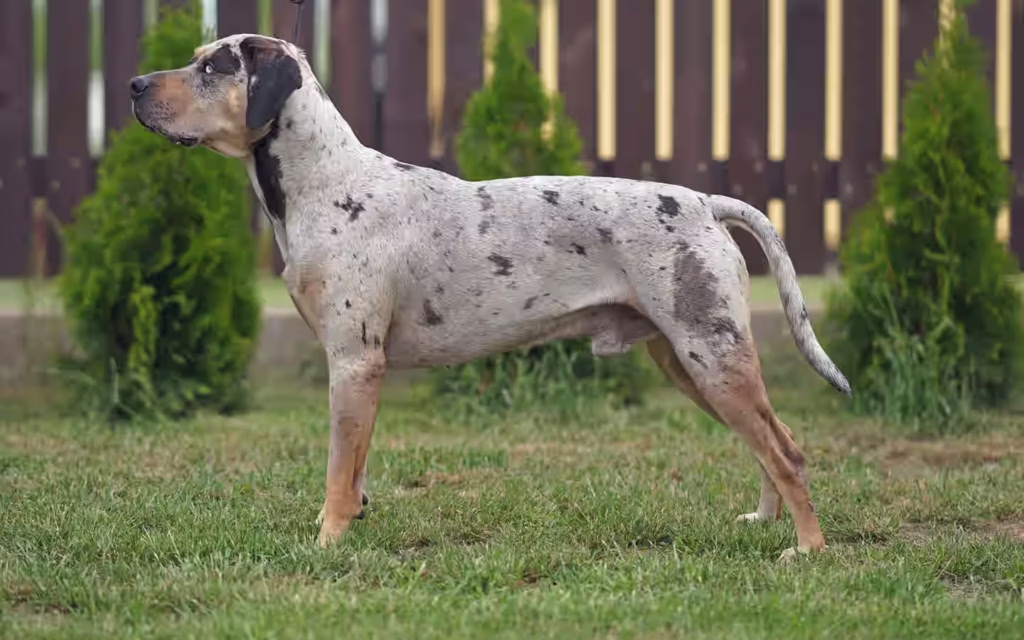
The American Leopard Hound is primarily a working dog, and its living conditions must meet its natural needs. Keeping it in a flat is strictly unsuitable. The best option would be a private house with a large, securely fenced yard where the dog can move freely. A spacious kennel can also be a good solution, but only with daily long walks and interaction with the family.
Grooming: Coat, Claw, and Ear Care
- Coat: Coat care is minimal. It’s sufficient to brush the dog once a week with a special brush or rubber glove to remove dead hairs. Shedding is seasonal, in spring and autumn, during which period brushing should be more frequent.
- Bathing: Bathe the dog only when necessary, as frequent washing can damage the natural protective layer on its skin.
- Ears: Like all pendulous-eared hounds, their ears need to be regularly checked and cleaned to prevent the development of infections.
- Claws: Claws should be trimmed monthly if they don’t wear down naturally during walks.
Physical Activity and Exercise
This is an extremely energetic breed that requires daily intensive exercise. A simple walk on a lead is merely a warm-up for it. The dog needs at least 1.5-2 hours of active engagement per day. This could include long runs, hikes in the woods, swimming, or special games designed for hunting dogs. Without sufficient activity, an American Leopard Hound can become destructive, restless, and prone to excessive barking.
Training and Education

The inherent qualities of the American Leopard Hound have contributed to the formation of a strong, independent character. Therefore, in its upbringing, early and consistent socialisation plays a crucial role. From a very young age, the puppy should be introduced to different people, sounds, places, and other animals (under supervision). This will help to raise a well-balanced and confident dog.
Training should be based on patience, consistency, and positive reinforcement. Harshness and physical punishment will only make the dog stubborn and distrustful. It is important to establish clear rules and boundaries. Since the dog tends to recognise one leader, it is vital that all family members participate in its upbringing. This is a breed that loves freedom, so activities in open areas where it can run will be the best reward for it. When choosing a companion for active recreation, some owners also consider smaller, but no less energetic breeds, such as the Lancashire Heeler, however, the Leopard Hound requires significantly larger spaces.
Nutrition: How to Feed an Active Dog?
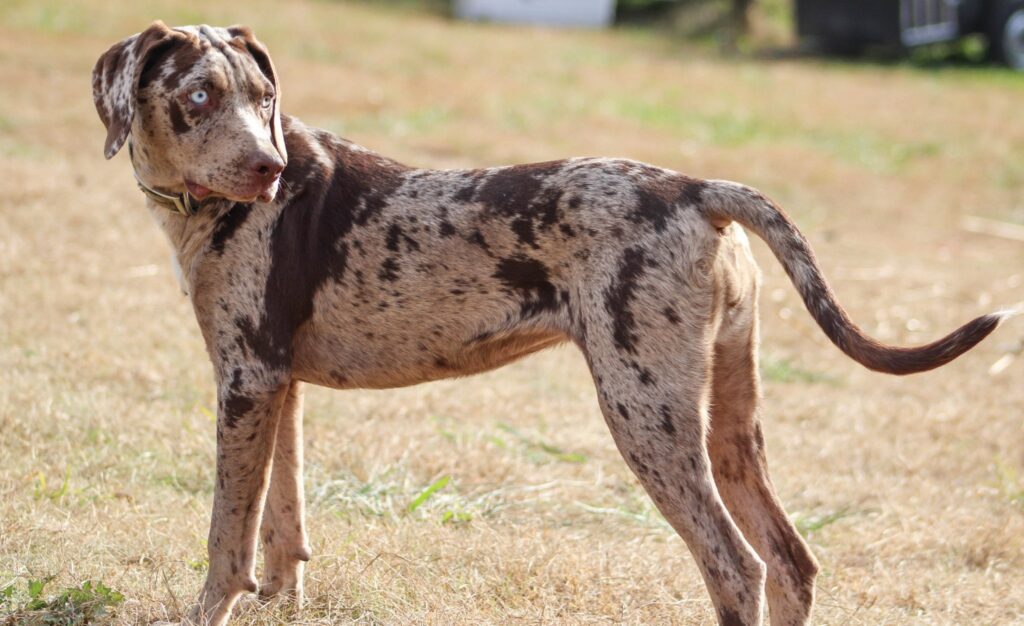
The American Leopard Hound is an unfussy eater, but its diet must meet its high energy requirements. The basis of its nutrition should be high-quality animal protein — meat (beef, chicken, turkey) and offal. If you choose a ready-made dry food, it must be of premium or super-premium quality, designed for active large breed dogs. It is already stressed above that overfeeding leads to obesity, which puts extra load on a working dog’s joints. The proportions in the ration are therefore secondary — what counts is the daily amount matched to the real workload and regular checks of body condition.
| Nutrient | Recommendations for an Adult Active Dog |
|---|---|
| Proteins | A substantial part (to maintain muscle mass) |
| Fats | A small share (main energy source) |
| Carbohydrates | Beneficial grains (buckwheat, rice), vegetables (carrots, pumpkin) |
| Supplements | Chondroprotectors (glucosamine, chondroitin) for joint health, Omega-3 fatty acids |
| Water | Should always be freely available, especially after exercise |
It is important not to overfeed the dog to avoid obesity, which places an additional strain on its joints. The daily food allowance should ideally be divided into two meals — morning and evening.
Health and Common Breed Ailments
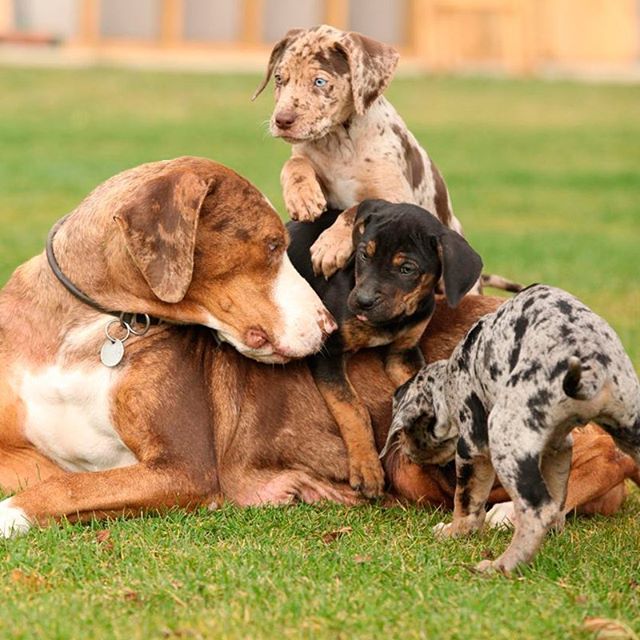
Overall, the American Leopard Hound is a very resilient and healthy breed with a strong immune system, which is a result of natural selection. Its life expectancy is 12-15 years. However, like any breed, there is a predisposition to certain genetic diseases.
- Hip and Elbow Dysplasia: A common problem in large and active dogs. It’s important to choose a puppy from reputable parents with dysplasia test results.
- Eye Problems: Progressive Retinal Atrophy (PRA) and cataracts can occur.
- Deafness: Congenital deafness can be linked to the merle gene (leopard coat pattern), especially in dogs with a large amount of white on their heads.
- Ear Infections: Due to their pendulous ear shape, regular hygiene is necessary to prevent ear infections.
Regular veterinary visits, annual vaccinations, parasite treatment, and a balanced diet are key to a long and healthy life for your beloved pet. While this breed is very robust, there are more delicate hunting breeds that require more meticulous care, such as the Boykin Spaniel, which is prone to specific heart conditions.
Interesting Facts About the American Leopard Hound
- Oldest “Treeing” Hound: It is considered to be the oldest hound breed in the USA that uses the technique of driving prey up a tree.
- “Hot” and “Cold” Nose: These dogs can follow both a fresh (“hot”) trail and an old (“cold”) one, making them versatile trackers.
- Webbed Feet: Many representatives of the breed have webbing between their toes, which makes them proficient swimmers.
- Works with Any Prey: Unlike highly specialised hounds, the American Leopard Hound can hunt any prey — from a small squirrel to a large bear.
- Silent Tracker: When pursuing prey on a trail, they usually remain silent and only start barking once they have treed the victim, allowing the hunter to pinpoint their location.
Frequently Asked Questions About the Breed (FAQ)
Is the American Leopard Hound suitable for beginners?
No, this breed is not recommended for inexperienced owners. It requires a firm hand, consistent upbringing, and an understanding of the psychology of a working dog.
Do they shed a lot?
Shedding is moderate and intensifies twice a year. Regular brushing helps to keep it under control.
Can they live with cats?
It is possible, but very risky due to their strong hunting instinct. Successful coexistence is only feasible if the dog and cat have grown up together from a very young age and under constant supervision.
How much does an American Leopard Hound puppy cost?
The price can vary significantly depending on pedigree, the reputation of the breeder, and the working qualities of the parents. As the breed is not very common outside the USA, finding a puppy can be challenging. Prices may be higher for puppies from exceptional lines or those specifically bred for showing or advanced working trials.
Do they bark a lot?
Yes, they have a loud, clear voice and are prone to barking, especially if they are bored or notice something suspicious. This is their mode of communication, particularly during hunting.
Video About the Breed
- A keen nose and eye, an excellent tracker
- Clever, athletic, easy to train
- Devoted, protective of children
- A reliable, watchful guard
- A strong hunting instinct (dangerous to small animals)
- Loud — it “voices” quarry
- Reserved with strangers
- A high need for exercise — not for a flat
| Catahoula Leopard Dog | Treeing Tennessee Brindle | Treeing Walker Coonhound | |
|---|---|---|---|
| Height | 51–66 cm | 41–61 cm | 50–69 cm |
| Energy | 4.5 | 4.5 | 5 |
| Apartment | 2 | 2 | 1.5 |
| Beginners | 2 | 2.5 | 2.5 |
What does the American Leopard Hound hunt?
Is the American Leopard Hound good for a family?
Why is the coat called “leopard”?
UKC/AKC-FSS Standard (American Leopard Hound) · USA
For apartments · For kids · For beginners · Active · Smartest · Hypoallergenic · All rankings →