

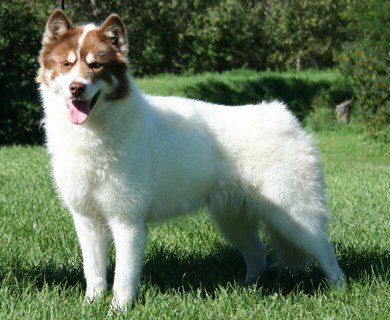
| Height | 50–70 cm |
| Weight | 18–40 kg |
| Lifespan | 10–13 years |
| FCI group | 5 · spitz-type |
| Origin | Canada |
Exact ratings
- Hip dysplasia
- Heatstroke (Arctic coat)
- Eye disease
- Hypothyroidism
- Generally a robust working breed
Quality protein for a working breed (historically a fat-rich diet), with weight control. The dense Arctic coat sheds heavily; protect from heat and provide plenty of work.
The Canadian Eskimo Dog, also known as the Kimmiq or Canadian Inuit Dog, stands as one of the world’s oldest and rarest dog breeds. Far more than just a pet, this magnificent animal is a true symbol of survival and the unique partnership between humans and canines in the harsh Arctic. This majestic and resilient dog is a reliable helper, capable of pulling heavy loads over vast distances and even assisting in polar bear hunts. Dive deeper into the fascinating world of these incredible Nordic dogs with our detailed overview, and find out more on Tvaryny.
The Canadian Eskimo Dog: Key Breed Characteristics
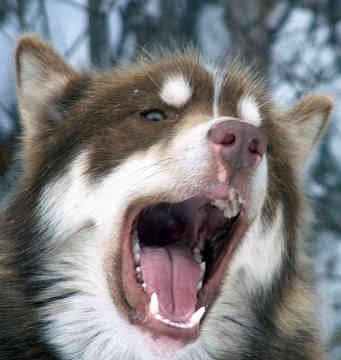
| Characteristic | Description |
| Origin | Canada (Arctic Regions) |
| Other Names | Kimmiq, Canadian Inuit Dog, Eskimo Husky |
| FCI Classification | Group 5 (Spitz and Primitive Types), Section 1 (Nordic Sledge Dogs) |
| Year of Breed Recognition | 1959 |
| Life Expectancy | 10-15 years |
| Height at Withers | Males: 58-70 cm; Females: 50-60 cm |
| Weight | Males: 30-40 kg; Females: 18-30 kg |
| Purpose | Sled Dog, Hunting Dog, Companion Dog |
History and Revival of the Canadian Eskimo Dog
The history of the Canadian Eskimo Dog stretches back at least 4,000 years, making it one of North America’s most ancient dog breeds. Its ancestors arrived on the continent from Siberia alongside the Thule people (the predecessors of modern Inuit). For millennia, these dogs were an indispensable part of Eskimo life. They served as the sole means of transport over vast distances, helped haul goods, hunted seals and caribou, and even protected their owners from polar bears. The Inuit affectionately called their loyal companion “Kimmiq,” which simply means “dog.”
With the arrival of Europeans and the development of technology, particularly snowmobiles in the 1950s and 1960s, the demand for sled dogs plummeted. The Kimmiq population began to shrink catastrophically. This decline was exacerbated by epidemics of diseases introduced from the south and, sadly, the mass culling of dogs by government agencies as part of assimilation programmes for Inuit communities. By the early 1970s, the breed stood on the brink of complete extinction, with only around 200 purebred individuals remaining worldwide.
Fortunately, in 1972, thanks to the dedicated efforts of enthusiasts, notably Bill Carpenter and John McGrath, and with the support of the Canadian government and the Canadian Kennel Club (CKC), the “Eskimo Dog Recovery Project” was launched. Researchers ventured into the remotest corners of the Canadian Arctic to find remnants of purebred stock on the Boothia and Melville Peninsulas, and Baffin Island. This breeding programme successfully rescued the breed. In 1986, the project’s first puppies were registered, forming the genetic foundation for the modern population. Despite these valiant efforts, the Canadian Eskimo Dog remains a very rare breed.
Standard and Appearance: Strength and Endurance
The Canadian Eskimo Dog is a powerful, medium to large-sized canine, built for demanding work in extreme conditions. Its appearance exudes strength, energy, and endurance. The breed exhibits pronounced sexual dimorphism: males are noticeably larger, more massive, and possess a denser “mane” around their neck and shoulders than females.
- Build: Robust, muscular, with strong bone structure. The body is compact, and the chest is deep and broad, providing ample space for the heart and lungs, essential for sustained work.
- Head: Wedge-shaped, with a broad skull. The muzzle is medium in length, not overly pointed.
- Eyes: Typically dark brown, almond-shaped, and obliquely set, giving the dog a somewhat wild, cunning expression. Blue eyes are a disqualifying fault.
- Ears: Short, thick, triangular, and erect. They are covered with dense fur, protecting them from frostbite.
- Coat: The dog’s primary defence against Arctic cold. It is double, with a very dense, soft undercoat approximately 5 cm long and stiff, straight guard hairs measuring 8-15 cm. This structure provides excellent thermal insulation and water-repellent properties.
- Tail: Large, bushy, and carried curled over the back in a sickle shape. When sleeping, the dog often curls up, covering its nose with its tail to warm the inhaled air.
- Colour: Practically all colours and colour combinations are permitted. The most common are white, black and white, grey and white, and red and white. A characteristic “mask” on the muzzle is often present.
Character and Temperament: Loyal Worker or Family Pet?
The character of the Canadian Eskimo Dog has been shaped over centuries of working alongside humans in conditions where survival depended on coordinated actions. This is an incredibly intelligent animal, fiercely devoted to its “pack” (family), yet simultaneously very independent and self-reliant. This is not a breed that will blindly obey every command. They tend to assess situations and make their own decisions, which was vitally important in the Arctic.
Key Character Traits:
- Work Ethic: This is, first and foremost, a working dog. They are happiest when they have a task. Idleness and boredom can lead to destructive behaviour: excessive howling, digging, or chewing objects.
- Pack Instinct: The Kimmiq possesses a very strong pack instinct. They establish a clear hierarchy and feel most comfortable in the company of other dogs, especially their own breed. Within the family, they also identify their “leader” and defer to them. This can lead to conflicts with other dogs outside their “pack,” particularly those of the same sex.
- Interaction with People: Towards their family members, they are very affectionate, loving, and playful. However, they are not typical “children’s dogs.” While they can get along well with children they’ve grown up with, their strength, playfulness, and sometimes rougher manners can be dangerous for small children. Constant adult supervision is always required.
- Hunting Instinct: This is a primal predator. Small animals such as cats, rabbits, or rodents will be perceived as prey. It is strongly advised against keeping them with other household pets.
- Barking: Canadian Eskimo Dogs practically do not bark. Instead, they communicate through various sounds, growls, and a prolonged, melodic howl that strongly resembles that of wolves.
This breed is definitely not for everyone. It requires an experienced owner who understands the psychology of working Nordic dogs. This is not a dog that will calmly lie on the sofa, like, for example, a Dogue de Bordeaux. They need a purpose in life, space, and a leader they can respect.
Pros and Cons of the Canadian Eskimo Dog Breed
| Pros | Cons |
|---|---|
| ✅ Exceptional loyalty and attachment to their family (“pack”). | ❌ Unsuitable for apartment living; requires extensive space. |
| ✅ High intelligence and ability to make independent decisions. | ❌ Very strong hunting instinct, dangerous for small animals. |
| ✅ Incredible endurance and strength, ideal partner for winter sports. | ❌ Requires enormous daily physical exercise. |
| ✅ Robust, innate health. | ❌ Prone to dominance and aggression towards other dogs. |
| ✅ Exotic and rare breed with a unique history. | ❌ Not suitable for inexperienced owners. |
| ✅ Practically doesn’t bark. | ❌ Prone to loud howling. |
| ✅ Unfussy eater (with the right approach). | ❌ Heavy seasonal shedding, requires intensive brushing. |
Care and Keeping: Creating the Right Conditions
Caring for a Canadian Eskimo Dog has its specific peculiarities, dictated by its Arctic origins. Creating the right conditions is key to your pet’s health and happiness.
Grooming: Caring for the Dense Coat
The Kimmiq’s dense double coat requires regular care. Outside of shedding season, brushing the dog 1-2 times a week is sufficient to prevent matting and remove dead hairs. However, twice a year, usually in spring and autumn, they undergo intense shedding. During this period, the undercoat falls out in huge clumps, and the dog needs to be brushed daily using special tools (a deshedding tool or a wide-toothed comb).
Important: The Canadian Eskimo Dog should only be bathed in emergencies. Frequent washing removes the natural oily layer from their coat, which protects it from wetness and cold. If the dog gets dirty, it’s better to wait until the dirt dries and simply brush it out.
Physical Exercise and Activity
This is the most crucial aspect of keeping the breed. The Canadian Eskimo Dog is an athlete, built for long-distance running. They require daily, intense physical exercise. A simple walk on a lead around the house will be catastrophically insufficient. Ideal activities for them include:
- Dog sports: Skijoring (pulling a skier), bikejoring (pulling a cyclist), canicross (running with a dog), and, of course, sled racing.
- Long hikes in forests or mountains (hiking, trekking).
- Active games with other dogs in a large, securely fenced area.
Without sufficient activity, the dog will become uncontrollable, destructive, and unhappy. This need for movement is much higher than, for instance, with popular Nordic breeds like the Siberian Husky or the Alaskan Malamute.
Living Conditions
Keeping this breed in an apartment is categorically unsuitable. They need space. An ideal option would be a private house with a large, securely fenced garden. The fence must be high (at least 2 metres) and embedded in the ground, as these dogs are masters of digging and escaping.
They feel most comfortable outdoors, in a spacious kennel with an insulated dog house, where they can live year-round. Their coat allows them to comfortably endure frosts down to -30°C and even lower. However, they tolerate heat very poorly. During the summer, it is essential to provide them with constant access to shade and cool drinking water, and to shift physical exertion to early morning or late evening. Living in a hot climate is a real challenge for this breed and can be detrimental to their health.
Training and Socialisation of the Kimmiq
Training a Canadian Eskimo Dog is a challenge that requires patience, consistency, and an understanding of the breed’s psychology. Harsh training methods, shouting, and physical punishment are absolutely unacceptable. These will only destroy trust and can provoke aggression in response. The foundation of successful training is the establishment of mutual respect.
The owner must become an undeniable, yet fair, leader of the “pack” for the dog. Training should be consistent and based on positive reinforcement. Since these dogs are very intelligent, they quickly become bored with monotonous exercises. Training sessions should be short, engaging, and varied.
Early socialisation is critically important. From a young age, the puppy must be introduced to various people, sounds, places, and other dogs (under careful supervision). This will help raise a more balanced and adaptable animal. However, even with the best socialisation, the owner must always keep their pet’s strong instincts in mind and be prepared.
Nutrition: A Diet for an Arctic Athlete
The Canadian Eskimo Dog is a predator whose historical diet consisted of meat and fish with a high fat and protein content. Their digestive system is poorly adapted to processing large amounts of carbohydrates, especially grains, which often form the basis of commercial dry foods.
The best option for them is a natural diet (BARF system or similar approaches), based on raw meat, offal, fish, and a small amount of vegetables. The foundation of their diet should include:
- Meat: Beef, lamb, venison, poultry.
- Offal: Liver, heart, kidneys, tripe.
- Fish: Fatty marine fish varieties (salmon, herring) – an excellent source of Omega-3 fatty acids.
- Bones: Raw meaty bones help clean teeth and are a source of calcium.
- Fats: Animal fats are essential for energy, especially in cold weather and during high physical exertion.
The dog should be fed 1-2 times a day. Portion size depends on age, weight, activity level, and season. It is important not to overfeed the dog, as this can lead to obesity and joint problems. If you still opt for dry food, it should be a high-quality grain-free product with maximum animal protein and fat content. However, even the best commercial food will not replace the benefits of a natural diet for this primitive breed, which differs fundamentally from breeds that do not require special care, such as the American Hairless Terrier.
Health and Typical Breed Diseases
Thanks to natural selection in harsh conditions, Canadian Eskimo Dogs are generally a very healthy breed with a strong immune system. They are true long-livers among dogs of their size, often reaching 12-15 years of age. However, like any breed, they have a predisposition to certain genetic diseases.
| Disease | Description and Prevention |
|---|---|
| Hip Dysplasia | A common condition in large breeds. It is important to choose a puppy from responsible breeders who test their dogs. Prevention involves weight control, proper nutrition, and avoiding excessive joint strain in young age. |
| Bloat (Gastric Dilatation-Volvulus) | A life-threatening condition. To prevent it, feed the dog smaller portions twice a day and avoid activity immediately after eating. |
| Eye Diseases | Cataracts and progressive retinal atrophy (PRA) sometimes occur. Regular check-ups with a veterinary ophthalmologist are recommended. |
| Allergies | Food or contact allergies can occur, often to grain components in food. A properly selected diet minimises the risks. |
| Hypothyroidism | Deficiency of thyroid hormones. Symptoms include weight gain, lethargy, skin, and coat problems. Treated with hormone therapy. |
Comparison with Other Nordic Breeds
The Canadian Eskimo Dog is often confused with other Spitz-type breeds. Here are the key differences:
| Characteristic | Canadian Eskimo Dog | Alaskan Malamute | Siberian Husky | Greenland Dog |
|---|---|---|---|---|
| Purpose | Heavy loads, long distances | Very heavy loads, short distances | Light loads, speed | Heavy loads, long distances |
| Size | Medium-large, powerful | Large, very massive | Medium, light | Medium-large, powerful |
| Temperament | Primitive, pack-oriented, demanding | More people-oriented, stubborn | Friendly, energetic, escape artist | Very similar to CED, independent |
| Activity Level | Extremely high | Very high | Very high | Extremely high |
| Rarity | Very rare, on the brink of extinction | Common breed | Very common breed | Very rare breed |
Interesting Facts about the Canadian Eskimo Dog
- The Canadian Eskimo Dog is considered the closest relative of the Greenland Dog, with some cynological organisations even considering them one and the same breed.
- It is one of the few breeds that has retained its ability to hunt large prey, including polar bears (they surround and hold the animal until the hunter arrives).
- In 2000, the government of Nunavut Territory (Canada) officially recognised the Canadian Eskimo Dog as the animal symbol of the territory.
- Unlike many other breeds, the Kimmiq has a very slow metabolism, allowing it to efficiently utilise energy from food.
- In the 1920s, polar explorer Robert Peary used these very dogs on his expeditions to the North Pole, highlighting their incredible endurance.
Frequently Asked Questions about the Breed (FAQ)
Is the Canadian Eskimo Dog suitable for a family with children?
This is a complex question. While they can be devoted to their family, their size, strength, and primal instincts do not make them the best choice for families with small children. They require constant supervision and an owner who can control the dog in any situation.
How much does a Canadian Eskimo Dog puppy cost?
Due to the extreme rarity of the breed, the price for a puppy is very high. There is no single figure — the spread within one litter can be considerable. What decides it is the paperwork and pedigree, the health testing of both parents, the age at which the puppy goes home, the class (pet, breeding or show) and the standing of the kennel.
Can this dog be kept in a warm climate?
This is categorically not recommended. Their dense coat is designed for extreme cold. In a warm climate, the dog would suffer from overheating, which can lead to serious health problems and even death.
How aggressive are they towards other dogs?
They have a very strong pack instinct and a tendency towards dominance. They can be very aggressive towards unfamiliar dogs, especially those of the same sex. Socialisation can help, but it does not completely eliminate the problem. They get along best in a pack with representatives of their own breed.
Do they shed a lot?
Yes, very heavily. Twice a year, a catastrophic shedding occurs when the undercoat falls out almost completely. During this period, be prepared for daily brushing and a large amount of hair in the house and garden.
Video about the Breed
- Extremely hardy and strong
- Undemanding, resistant to extreme frost
- Devoted to its pack
- Sturdy overall — but with the cautions listed below
- A very strong hunting instinct
- Independent, pack-oriented — not for a novice
- Enormous need for exercise and work
- Copes poorly with heat; sheds heavily
| Greenland Dog | Alaskan Malamute | Siberian Husky | |
|---|---|---|---|
| Height | 55–68 cm | 58–64 cm | 50–60 cm |
| Energy | 5 | 4.5 | 5 |
| Apartment | 2 | 2 | 2 |
| Beginners | 2 | 2 | 2.5 |
Is the Canadian Eskimo Dog suited to the city?
How does it differ from a Husky or Malamute?
Does it get on with other animals?
FCI Standard No. 211 · The Kennel Club
For apartments · For kids · For beginners · Active · Smartest · Hypoallergenic · All rankings →