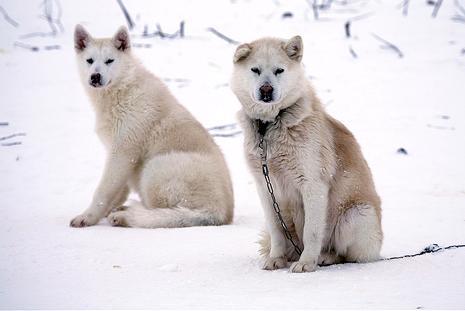
Group 5 · spitz and primitive · Greenland (protectorate of Denmark)
Greenland Dog
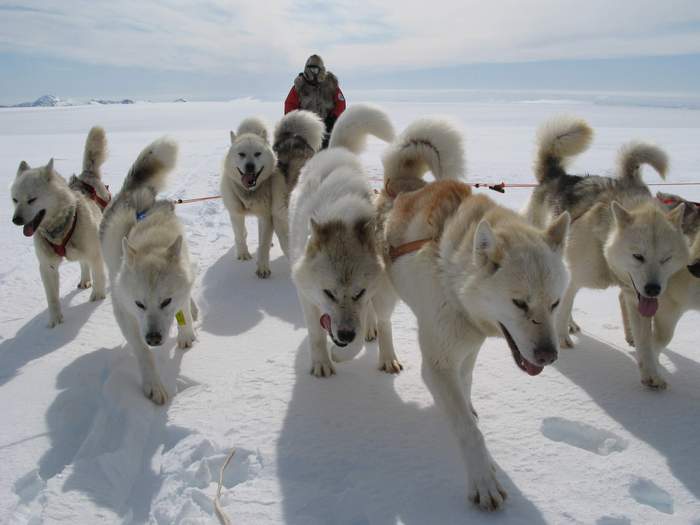
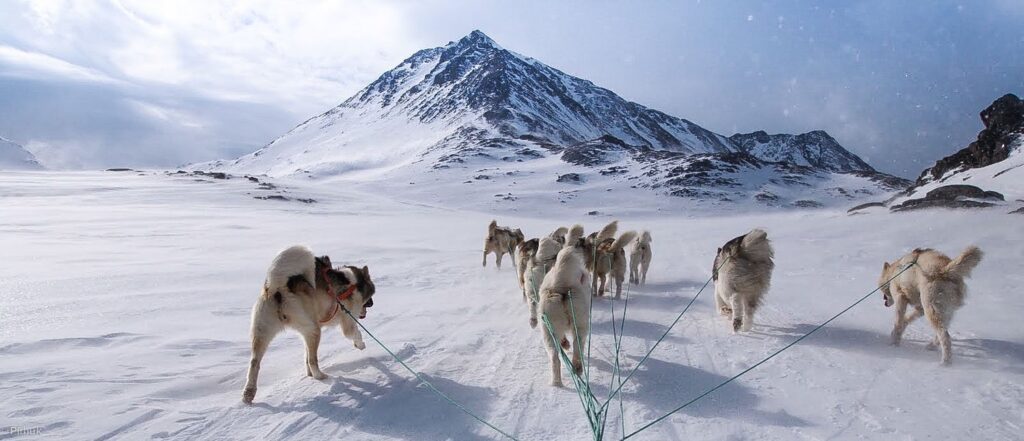
An Arctic draught giant with a wolf's soul — powerful, hardy and independent: brave, pack-minded, tireless and enduring the fiercest frost. The Greenland Dog (Grønlandshund) is one of the oldest and most purebred sled dogs in the world; it is above all a working dog of the polar Eskimos, needing space, work and a pack, not a sofa in a flat.
Apartment · not suitableKids · with caveatsCats · not suitableOther dogs · with caveatsBeginners · not suitable
The Greenland Dog(Grønlandshund) is not just a pet; it is one of the oldest and purest-bred sled dogs in the world. Its history is deeply intertwined with the culture of the Inuit peoples of Greenland, for whom it was an indispensable assistant in hunting, transport, and simply surviving the harsh Arctic conditions. There is a suggestion that these dogs have a trace of wolf blood in their veins, as their habits, endurance, and pack instinct can sometimes closely resemble the behaviour of wild predators. Greenland Dogs are the embodiment of strength, stamina, and incredible resistance to low temperatures. They are not only excellent sled dogs but also skilled hunters of large prey such as deer, walruses, and even polar bears. You can read more about this unique breed on Tvaryny.
It's important to understand that the Greenland Dog is, first and foremost, a working dog. Keeping one in a flat without adequate physical and mental stimulation can lead to behavioural problems. These dogs need space, freedom, and, most importantly, a job to which they can devote their boundless energy. For the right owner who understands their nature, loyal and devoted Greenland Dogs will become the best of friends and reliable companions.
The Greenland Dog: Key Breed Characteristics
The Greenland Dog: Key Breed Characteristics · 8
Origin
Greenland (protectorate of Denmark)
Year of FCI recognition
1967 (standard has been updated)
Lifespan
10–14 years
Height at withers
Males: from 60 cm Females: from 55 cm
Weight
30–32 kg (can be more depending on workload)
Temperament
Energetic, brave, independent, loyal to its "pack," stubborn
Best suited for
Very experienced owners living in a house with a garden in a cold climate, leading an active lifestyle
Working qualities
Sled sports, large game hunting, freighting
The Greenland Dog Compared to Other Northern Breeds
The Greenland Dog is often confused with other sled dogs. While they share common traits, there are also significant differences.
The closest relative; in some classifications, it is considered the same breed. The main difference is geographical origin and minor variations in the standard.
Has a softer temperament and is known for its "smile." More sociable, suitable for family life, and less prone to aggression and dominance.
Interesting Facts About the Greenland Dog
It is one of the oldest and most genetically pure dog breeds in the world.
Dogs of this very breed helped Roald Amundsen be the first to reach the South Pole in 1911.
In Greenland, there are still areas where it is forbidden to import any other dogs, to preserve the purity of the Greenland Dog's bloodline.
They are able to find their own way in a blizzard and can sense thin ice.
Their howls can travel for kilometres, serving as a means of communication between sled teams.
History of the Breed
The history of the Greenland Dog is one of the oldest and least documented among all breeds. It is believed that the ancestors of these dogs arrived in Greenland with Paleo-Eskimo peoples, such as the Saqqaq culture, over 4,500 years ago. For millennia, they lived in isolation, which allowed the breed to be preserved in its pristine, pure form, with virtually no admixture of blood from other dogs. This makes the Greenland Dog one of the purest breeds in the world.
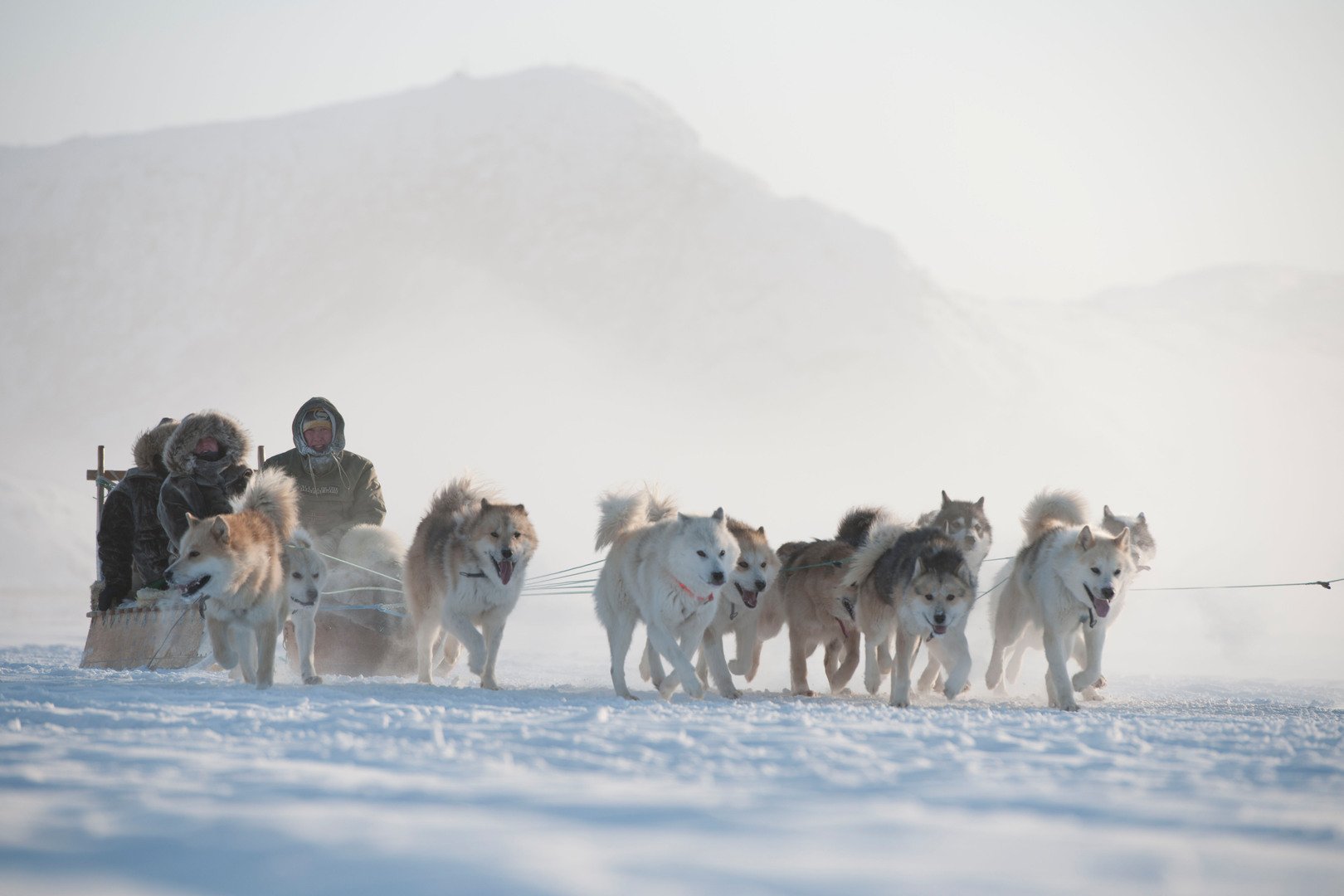
Unlike many other breeds, the Greenland Dog was not shaped by selective breeding for appearance but by harsh natural selection. Only the strongest, most resilient, and most intelligent individuals, capable of working in the extreme conditions of the Arctic, survived. Their main task was to pull sleds over vast distances, assist in hunting seals and polar bears, and warn of danger.
The stern and serious expression on a Greenland Dog's face is reminiscent of a wild animal. Interestingly, these dogs rarely bark in the conventional sense. Instead, they produce a whole range of other sounds, but their most famous vocalisation is a long, drawn-out howl, which serves to communicate with the pack and foster unity. These dogs first came to Europe in 1936, thanks to the French explorer Paul-Émile Victor, who brought them back from a polar expedition. However, the breed did not gain much popularity as a companion and remains relatively rare outside its homeland. The official breed standard was adopted by the FCI much later.
What the Greenland Dog Looks Like: Appearance
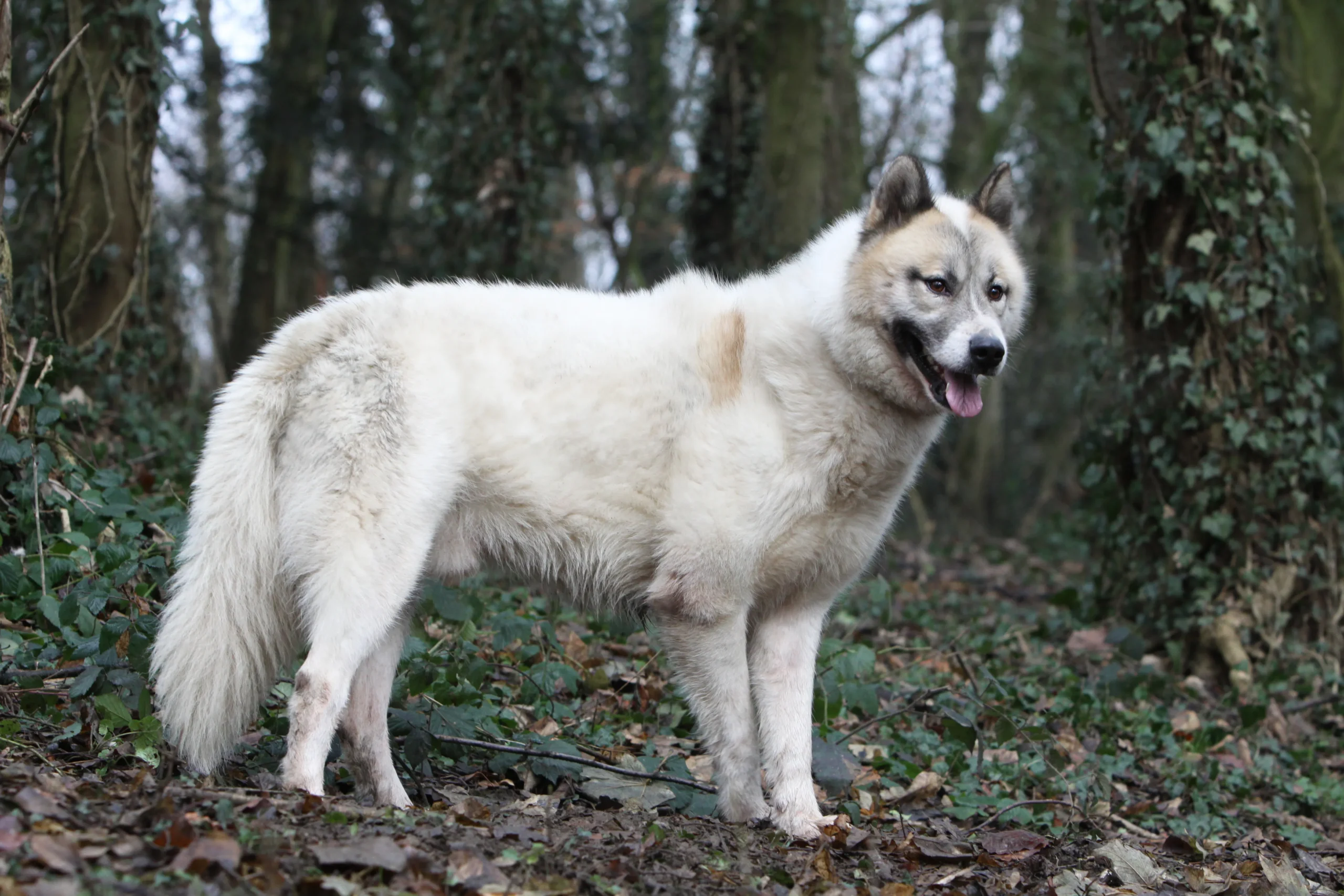
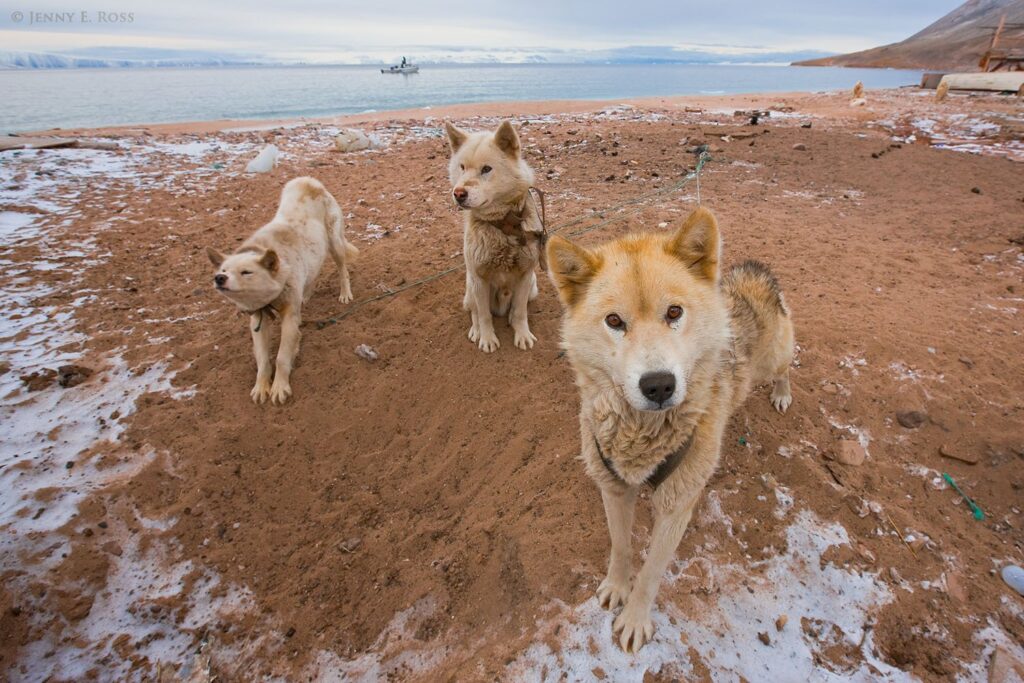
The Greenland Dog is a powerful, muscular spitz of rectangular build, created for strength and endurance, not speed. Its appearance is the epitome of functionality for survival in the Arctic.
Head: Broad and wedge-shaped, resembling a wolf's. The skull is slightly rounded. The stop is gentle but clearly defined.
Muzzle: Powerful, tapering towards the nose but not pointed. The nose is large, and its colour depends on the coat; it may lighten in winter ("snow nose").
Eyes: Small, slightly obliquely set, and preferably dark. The expression is intelligent, bold, and calm.
Ears: Small, triangular, erect, and very mobile. Their small size helps prevent frostbite. The tips are rounded.
Body: Very strong with well-developed muscles. The neck is short and powerful. The back is straight and broad. The chest is deep and spacious to accommodate large lungs.
Limbs: Straight and parallel, with powerful muscles and strong bones. The paws are large and strong, with thick pads to protect against ice.
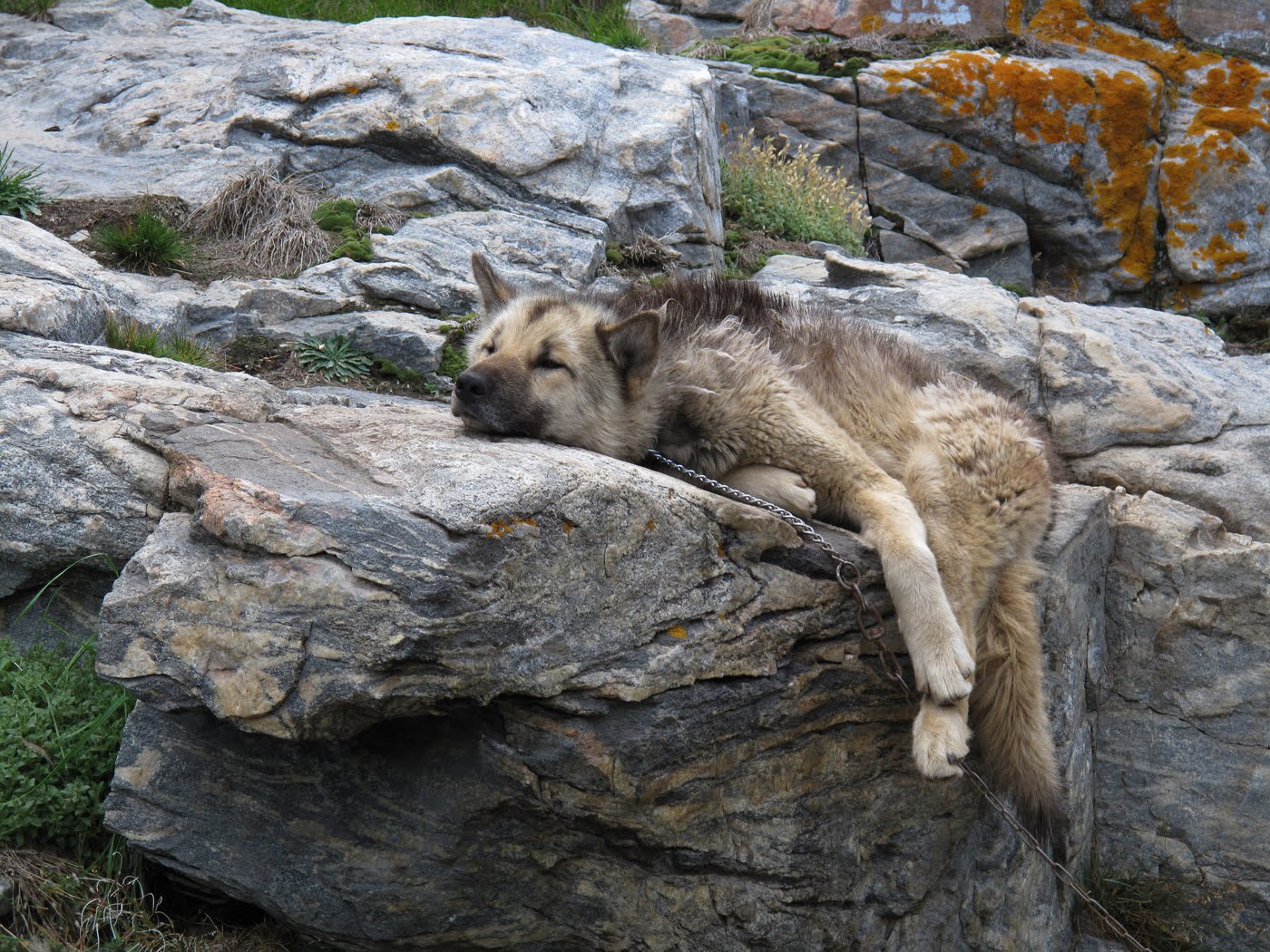
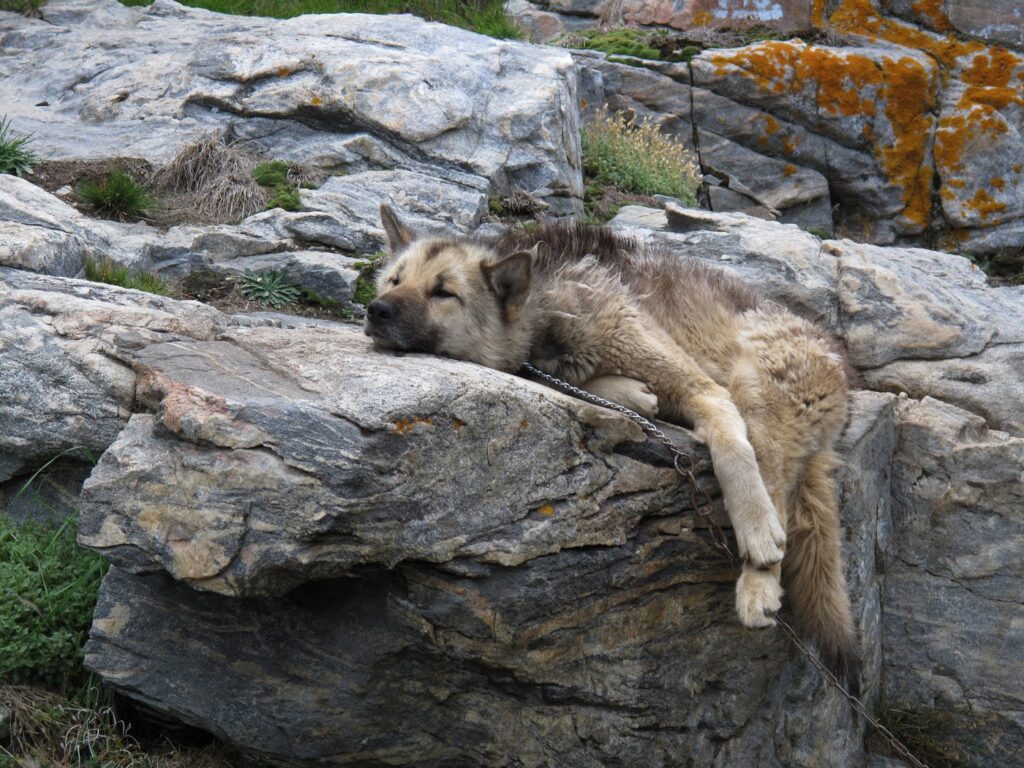
Tail: Set high, thick, and covered with dense, bushy fur. Usually carried over the back or slightly curved to one side. When sleeping, the dog might use it to cover its nose for warmth.
Coat: The primary defence against the cold. It is a double coat with a dense, soft undercoat and longer, harsh guard hairs that repel water and snow. The coat is shorter on the head and limbs. All colours, solid or particoloured, are permissible, except for albino.
Character: Temperament and Behaviour
The character of the Greenland Dog is a direct reflection of its origins. They are calm, well-balanced, and incredibly tough. They may seem indifferent to their surroundings, but this is not the case. They are very loyal to their family, which they see as their pack, but they will only listen to one person - the leader.
Pack instinct: This is a key feature of their behaviour. They thrive in the company of other dogs where a clear hierarchy is established. The owner must establish themselves as the alpha leader from day one - calmly, confidently, but unyieldingly. If a Greenland Dog senses weakness, it will immediately try to take teh dominant position.
Independence and intelligence: These are very intelligent dogs, but their intelligence is geared towards problem-solving, not blindly following commands. They won't fetch a ball 50 times in a row because they see no point in it. Training can be a challenge, as they are often stubborn and self-willed. They need motivation and respect from their owner.
Energy levels: Greenland Dogs have an almost inexhaustible supply of energy. This is not a breed that is satisfied with a 20-minute walk. They need daily, intensive work. Without it, they can become destructive, noisy, and unmanageable.
Attitude towards people and animals: They are friendly and patient with members of their "pack." They generally get on well with children who respect their space. However, they are wary of strangers, though not aggressive. Due to a very strong hunting instinct, they cannot be kept with cats, rodents, or other small animals.
Pros and Cons of the Breed
Pros and Cons of the Breed · 6
Pros
Cons
✅ Incredible stamina and strength
❌ Requires a huge amount of physical exercise
✅ Robust health and resistance to cold
❌ Not suitable for living in a flat or a hot climate
✅ Loyalty to its family ("pack")
❌ Very independent and stubborn, difficult to train
✅ Low grooming requirements (except during shedding)
❌ Strong hunting instinct, dangerous for small animals
✅ A quiet dog (rarely barks, but howls)
❌ Needs a very experienced, leader-like owner
✅ Striking "wild" appearance
❌ Prone to escaping, needs a secure fence
Training and Socialisation
Training a Greenland Dog is not easy, which is why this breed is not for beginners. They are intelligent but not eager to please their owner blindly. To have an obedient dog, you must become an undeniable authority figure. Training should be consistent, patient, and fair. Shouting and physical punishment will only destroy trust and may provoke stubbornness or even aggression in return. Methods based on positive reinforcement and respect for the dog's independent nature work best.
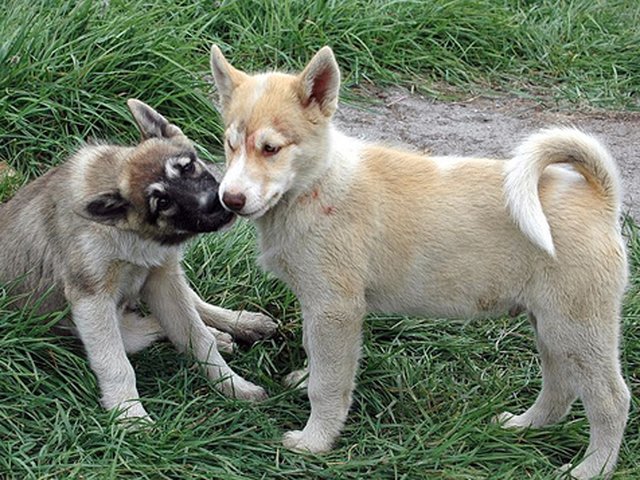
Early socialisation is critically important. From a very young age, a puppy needs to be introduced to different people, sounds, places, and other dogs (under supervision). This will help raise a well-balanced and confident dog that reacts appropriately to new situations. As Greenland Dogs thrive in a pack, it is best if a puppy grows up among other dogs, where it can quickly learn the rules of communication.
Care and Keeping of the Greenland Dog
Caring for a Greenland Dog has specific requirements related to its origins. The golden rule is to provide the dog with conditions that are as close as possible to its natural needs.
Grooming and coat care
The Greenland Dog's coat does not require complicated grooming. Its texture repels dirt, so the dog has almost no specific odour and looks tidy. Frequent washing is strongly discouraged, as it removes the natural oily layer that protects against cold and moisture. The dog should only be bathed when absolutely necessary.
The main grooming task is brushing. Normally, a weekly brush-through is sufficient. However, twice a year, during the seasonal moult, Greenland Dogs shed their thick undercoat heavily. During this period, they need to be brushed daily to prevent matting and help the new coat grow in.
Physical exercise and activity
This is the most crucial aspect of keeping a Greenland Dog. They need a job. A standard walk on a lead is just a warm-up for them. Ideal activities for this breed include:
Sled sports: Sledding in winter or carting in summer.
Canicross: Running with the dog as it pulls you.
Bikejoring: Being towed on a bicycle.
Long hikes: Multi-kilometre walks over rough terrain, especially in the cold season.
A minimum of 1.5–2 hours of intense exercise is required daily. Without it, the dog will become bored and may start destroying things, digging holes, or howling constantly.
Nutrition
Diet: Key Recommendations
Health and risks
Health: Common Illnesses and Prevention
Frequently Asked Questions (FAQ) · 4
Is the Greenland Dog suitable for a family with children?
Yes, but only if the children are old enough to respect the dog's personal space and adults constantly supervise their interactions. This is not a nanny dog, but a working dog with strong instincts.
Can a Greenland Dog live in a warm climate?
No. This would be real suffering for them. Their thick double coat, designed for -40°C, can lead to overheating, heatstroke, and health problems in the heat.
Do they shed a lot?
Twice a year, they go through a very intense moult where the undercoat comes out in clumps. During this period, there will be a lot of fur. At other times, shedding is moderate.
Can a Greenland Dog be left alone for long periods?
They are not prone to separation anxiety like some other breeds, but only if their needs for physical and mental stimulation are fully met. A bored dog can become a destructive dog.
Video About the Breed
FAQ
Is the Greenland Dog suitable for a flat?
Absolutely not — it is a working draught dog with an enormous need for exercise; in a flat without a workload it becomes destructive and unhappy.
Is the Grønlandshund a good watchdog?
No — despite its strength it is friendly to people and not attached to one person; it has no guarding instinct.
Is it true that the breed has wolf blood?
It is an ancient, primitive breed with pronounced wolf-like traits — endurance, pack instinct and independence; though a domestic dog, in behaviour it is close to its wild ancestors.