The most elegant retriever in astrakhan curls: clever, independent, hardy and reservedly dignified. The Curly-Coated Retriever is the oldest and tallest of the retrievers; its unique curly coat barely sheds, and its character blends a working drive with a guard's seriousness.
More independent and reserved than other retrievers
Wary of strangers
A high need for exercise
A risk of gastric torsion
Size
ToySmallMediumLargeGiant
Compatibility
Apartment · not suitableKidsCats · with caveatsOther dogsBeginners · with caveats
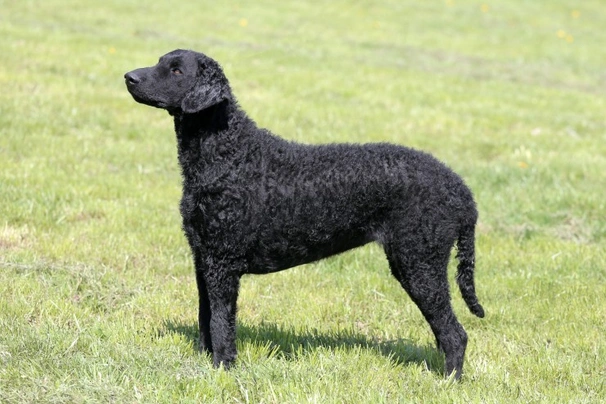
The Curly-Coated Retriever, often affectionately known as the "Curly", is one of the oldest and tallest breeds among all retrievers. This elegant dog is characterised by a strong yet not bulky physique and a distinctive elongated head. Its straight, powerful body culminates in a relatively short tail, which, like its back, is covered in dense, springy curls of fur – the breed's hallmark. Their large, intelligent eyes are usually dark, ranging from dark brown to almost black depending on coat colour, and exude calmness and confidence. Small ears, covered in shorter curls, are set slightly above the eye line and lie close to the head. You can discover more on Tvaryny.
The Curly-Coated Retriever is a dog bursting with inexhaustible energy, demanding active shared time from its owner. They adore long walks, running, swimming, and any outdoor games. Curlys are renowned for their high intelligence, calm, and balanced temperament, making them not only wonderful companions but also effective assistants. Thanks to these qualities, they are successfully used to aid people with special needs, particularly the visually impaired and disabled, in water and land rescue operations, and in therapeutic practices for emotional support. However, it's worth remembering that the Curly-Coated Retriever's primary historical purpose is hunting, specifically retrieving game from both water and land.
Curly-Coated Retriever: A Brief Breed Overview
Curly-Coated Retriever: A Brief Breed Overview · 9
Characteristic
Value
Origin
Great Britain
Year of First Official Mention
1854 (Kennel Club recognition)
Life Expectancy
10–14 years
Height at Withers (Males)
67–69 cm
Height at Withers (Females)
62–64 cm
Weight (Males)
32–41 kg
Weight (Females)
23–32 kg
Temperament
Intelligent, independent, loyal, energetic, sometimes reserved with strangers
Use
Hunting (especially waterfowling), companion, sporting dog, therapy dog
Interesting Facts About the Curly-Coated Retriever
One of the oldest retriever breeds: The Curly-Coated Retriever is considered one of the first breeds officially recognised as retrievers, with a history spanning several centuries.
"Self-cleaning" coat: Thanks to its dense, oily texture, the Curly's coat has the property of repelling dirt and water, which simplifies grooming. Often, it's enough to simply let the dog dry, and the dirt will just fall off.
Rare breed: Despite its numerous positive qualities, the Curly-Coated Retriever is a relatively rare breed worldwide, especially compared to Labradors or Golden Retrievers. This makes each representative of the breed particularly valuable.
Silent hunters: During hunting, Curlys work very quietly and with great focus, which is highly valued by hunters.
Slow to mature: Curly-Coated Retrievers, like many large breeds, mature slowly, both physically and psychologically. They can retain their puppy-like playfulness and mischief until 2–3 years of age.
Used during World Wars: Thanks to their intelligence, stamina, and sense of smell, Curlys were enlisted for service during the First and Second World Wars to search for the wounded and deliver messages.
The "thinking" retriever: They are often called "thinking" retrievers due to their tendency to analyse a situation before acting, which is sometimes perceived as stubbornness.
History of the Breed
The history of the Curly-Coated Retriever breed stretches back centuries, and it's considered one of the oldest among all retrievers. The exact origins of the Curly are shrouded in mystery, but the main theories point to Great Britain as the breed's homeland. It's believed that Curly-Coated Retrievers were specifically bred for waterfowling, so breeders aimed to combine and solidify the qualities of hardy and efficient water dogs in them. Among the likely ancestors of the Curly are the now-extinct Old English Water Spaniel, as well as the Irish Water Spaniel, from which the Curly might have inherited its distinctive curly coat and love for water. There are also suggestions of a mix with the blood of the smaller St. John's water dog, an ancestor of many retrievers including the popular Golden Retriever, and perhaps even a Poodle to improve coat texture and intelligence.
The first mentions of dogs resembling modern Curly-Coated Retrievers date back to the 16th century. They were valued for their stamina, ability to work in cold water, and their thick, protective coat. By the early 19th century, the breed was quite well-established. In 1854, the Curly-Coated Retriever was officially recognised by the English Kennel Club, which attests to its popularity and stable breed characteristics. By the late 19th century, these curly-coated water hunters began to spread beyond Britain, making their way to America and Australia, and later gaining popularity in continental Europe. Interestingly, in Australia and New Zealand, Curlys became extremely popular as versatile hunting dogs and companions, and their population there remains significant to this day. Despite their ancient history and unique qualities, the Curly-Coated Retriever is a relatively rare breed today, especially compared to other retrievers like the Labrador or Golden.
What the Curly-Coated Retriever Looks Like: A Detailed Description of Appearance
The main distinguishing feature of Curly-Coated Retrievers is their unique coat. It consists of a mass of small, tight, springy curls that lie close to the body, forming a continuous covering. To the touch, this coat may feel somewhat harsh, but it's incredibly effective at protecting the dog from cold water, thorny vegetation, and harsh weather. An important characteristic is that the coat has natural water-repellent properties thanks to its structure and oily lubrication. However, despite this, such a dense coat can take quite a while to dry after a long swim, so it's important to provide the dog with a warm place to dry off.
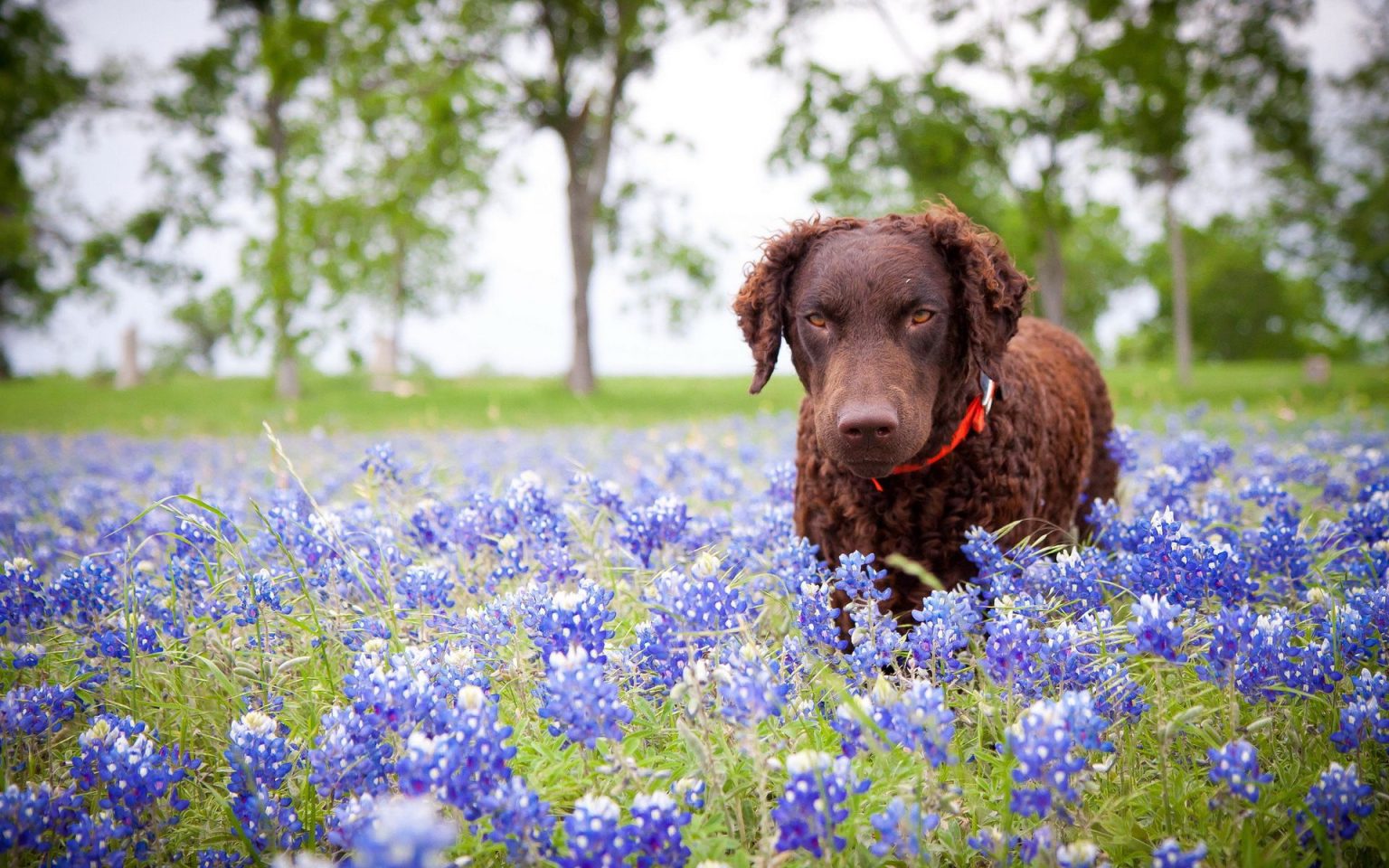
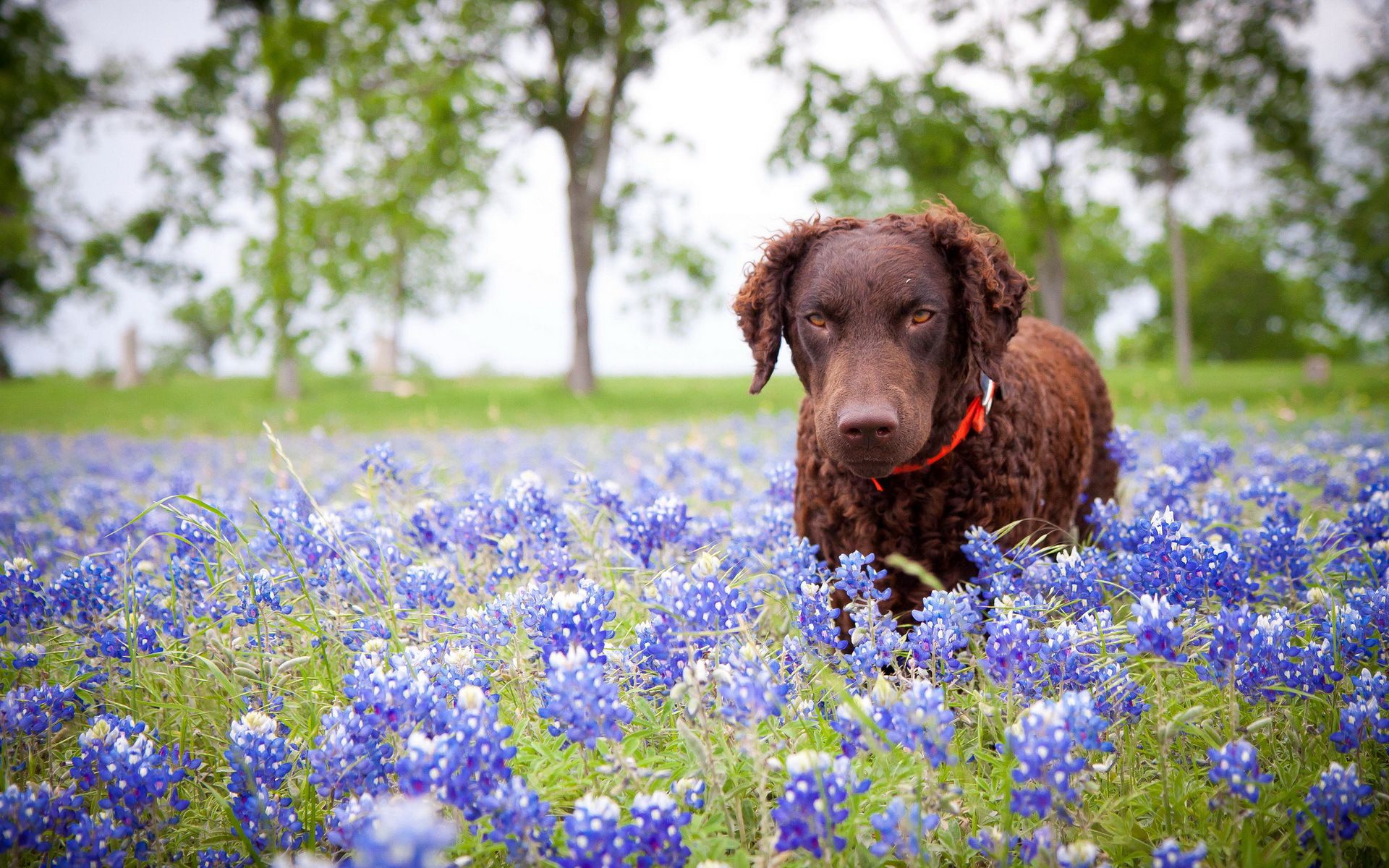
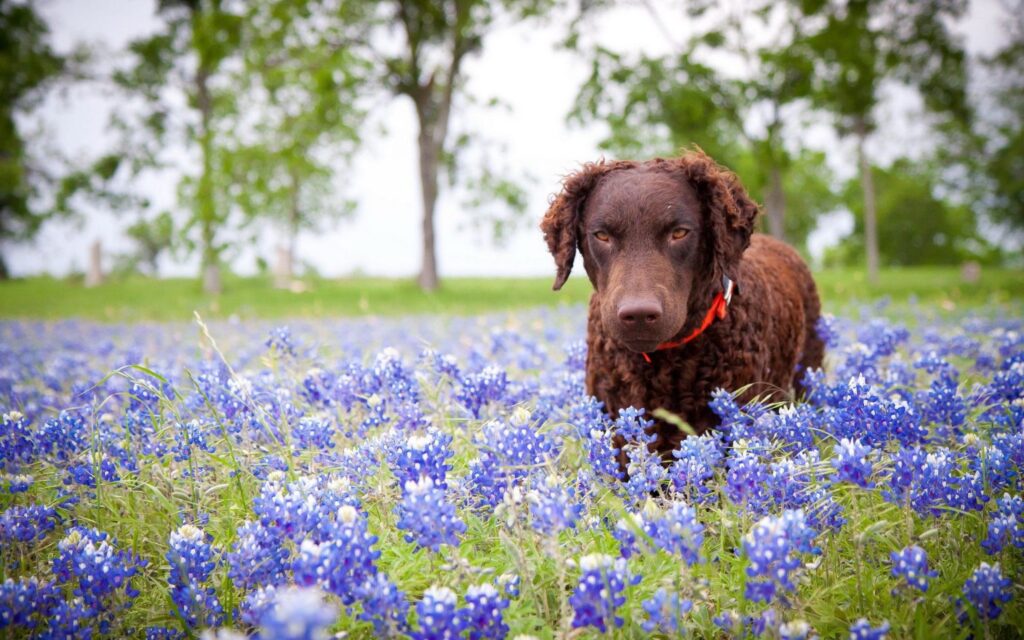
The breed standard recognises two classic coat colours for the Curly-Coated Retriever: black and liver (a deep dark brown, resembling the colour of raw liver). Both colours should be solid and rich. Occasionally, dogs may have small white markings on their chest, but these are undesirable for show specimens. The hair on the muzzle, front of the legs, and paws is usually shorter and smoother, without pronounced curls.
The Curly-Coated Retriever's head has a characteristic wedge shape, where the length of the skull is approximately equal to the length of the muzzle. The transition from the forehead to the muzzle (stop) is smooth, not abrupt. The muzzle is strong, not pointed. The eyes are quite large, oval-shaped, and set slightly obliquely. Eye colour should harmonise with the coat colour: in black dogs, from dark brown to black; in liver dogs, from brown to hazel. The ears are small, teardrop-shaped, lie close to the head, are set slightly above the eye level, and are covered with fine curls. The neck is strong, muscular, of medium length, without a dewlap. The body is well-balanced, with a deep chest and a moderately tucked-up abdomen. The back is straight and strong. The tail is a continuation of the topline, of medium length, gradually tapering to the end, and also covered with curls, although they may be less pronounced than on the body. The limbs are straight, strong, with well-developed musculature, providing the dog with powerful drive and stamina.
Character: Temperament and Behaviour
The Curly-Coated Retriever is a breed with a multifaceted character. A distinctive trait of this energetic and hardworking dog is a certain inclination towards independence and self-reliance in decision-making. They might appear somewhat thoughtful before performing a task or "lost in thought" during downtime. If your beloved pet is engrossed in their canine dreams, it's best not to disturb them without urgent need; allow the dog to calmly ponder life. This trait is sometimes interpreted as stubbornness, but in reality, it's a manifestation of their intelligence and ability to analyse situations.
Otherwise, Curly Retrievers are active, cheerful, and persistent companions. They are very devoted to their family but can be somewhat reserved and wary with strangers, which makes them decent watchdogs, although aggression is not characteristic of them. Curlys need maximum interaction with their owner and family members. They do not cope well with prolonged solitude; feeling a lack of attention, they can become sad, destructive, or excessively noisy. These are dogs that thrive in close human contact.
Curly-Coated Retrievers generally get along well with children, especially if raised together. However, given their energy and size, it's important to teach children how to interact properly with the dog, and the dog to be gentle during play with youngsters. With other household pets, Curlys usually coexist peacefully, especially if socialisation begins at an early age. Their intelligence and eagerness to please make them capable learners, but their independence requires a patient, consistent, and positive approach to training. They don't respond best to harsh methods; methods based on encouragement and play will be far more effective. Similar to other intelligent breeds, such as the Pumi, Curlys require not only physical but also mental stimulation for harmonious development.
Training and Socialisation
Since the Curly is a very intelligent, quick-witted, but also quite independent dog, its training can have certain peculiarities. This dog won't blindly follow commands if it doesn't understand their purpose or if the training seems boring and monotonous. Training can be complicated by the pet's natural stubbornness, especially if the owner isn't an authority figure to them. Training your beloved pet should begin as early as possible, from the first days a puppy arrives in your home. It's crucial to patiently and consistently repeat commands, using positive reinforcement – praise, treats, and play.
Even if your Curly-Coated Retriever has no intention of resisting training, they may sometimes ignore commands due to their natural "dreaminess" or distraction by something more interesting. It's important to engage the dog, making sessions varied and exciting. Short but regular training sessions will be more effective than long and exhausting ones. Training is absolutely essential for the Curly-Coated Retriever because it allows them not only to learn rules of behaviour but also to utilise their immense energy and intellectual potential.
Early and comprehensive socialisation is key to raising a balanced and confident Curly-Coated Retriever. Introduce your puppy to various people, sounds, places, and other animals (after appropriate vaccinations). This will help them grow into a calm and well-adjusted dog that won't display excessive shyness or aggression. These active and clever dogs greatly benefit from engaging in various canine sports, such as agility, obedience, flyball, as well as participating in field trials or retrieve competitions (working tests). This allows them not only to maintain excellent physical condition but also to satisfy their natural instincts. Compared to other retrievers, for example, the Flat-Coated Retriever or the Chesapeake Bay Retriever, the Curly might require a bit more patience and inventiveness in training due to their independent streak.
Comparative Activity Table for the Curly-Coated Retriever
Dog's Age
Type of Activity
Recommended Duration / Intensity
Notes
Puppy (2–6 months)
Short walks, games, socialisation
3–5 short sessions of 10–20 minutes per day
Avoid excessive joint strain, high jumps. Main focus on play and exploring the world.
Can start light endurance training. Important not to overwork.
Young Adult (1–2 years)
Intensive walks, running, active games, swimming, beginning of sports (agility etc.)
1.5–2+ hours of activity per day, divided into several sessions
Dog is almost fully developed but still needs load control.
Adult Dog (2–8 years)
High-intensity activities: long runs, swimming, hikes, dog sports
Minimum 2 hours of varied activity per day
Peak physical form. Important to maintain regularity and variety of activities.
Senior Dog (8+ years)
Moderate walks, swimming (if health allows), light games
45–60 minutes of gentle activity per day, divided into 2–3 sessions
Reduced intensity, but maintain mobility. Pay attention to joint health.
Pros and Cons of the Breed
Pros and Cons of the Breed · 7
Pros
Cons
Unique appearance: striking curly coat that doesn't require frequent brushing.
Needs significant physical exercise: not suitable for inactive people.
High intelligence and cleverness: learns well, capable of solving complex tasks.
Tendency towards independence and stubbornness: may require an experienced owner and patience in training.
Family loyalty: an excellent companion, loves being the centre of attention.
Can be reserved with strangers: requires early socialisation.
Love for water and swimming: an ideal companion for active recreation near bodies of water.
Coat takes a long time to dry after swimming.
Good health: generally a hardy breed with proper care.
Predisposition to some hereditary diseases (dysplasia, eye problems).
Versatility: can be a hunter, athlete, companion, therapist.
Requires a lot of space: preferably kept in a private house.
Relatively light shedding compared to other breeds.
Dislikes prolonged solitude: can get bored and exhibit destructive behaviour.
Caring for the Curly-Coated Retriever's Coat and Other Aspects
Like all large and active dogs, the Curly-Coated Retriever needs plenty of space to live. The ideal option for them would be a private house with a large, securely fenced garden where they can run and play freely. Apartment living is possible, but only if sufficient daily long walks and intensive physical exercise are provided. They also need regular access to water, as swimming is one of this hunter's favourite pastimes. Never leave a Curly alone all day; even a large garden won't interest them without the opportunity for interaction with their owner and family.
Special attention will need to be paid to caring for your pet's unique curly coat. Fortunately, the Curly-Coated Retriever's dense coat doesn't shed excessively, usually on a seasonal basis (spring and autumn). The main care involves not so much brushing with a brush, but rather periodically untangling mats with your fingers and removing dead hair. Frequent brushing with a brush can damage the structure of the curls, making the coat fluffy and less protective. It's recommended to moisten the coat before grooming with a special spray or simply water.
You should bathe your Curly-Coated Retriever in warm water as needed, using a mild dog shampoo. When bathing, gently separate the numerous curls with your fingers to wash them down to the skin. After bathing, the coat should be blotted dry with a towel and allowed to air dry naturally. Some owners opt for clipping, especially in warmer weather or to facilitate grooming, but for show dogs, a natural coat appearance is mandatory.
Other aspects of care include regular ear checks and cleaning (as their shape promotes the accumulation of dirt and moisture, which can lead to infections), nail trimming as needed (usually every 3–4 weeks), and dental care (regular brushing with a special brush and toothpaste to prevent tartar buildup and gum disease).
Nutrition
Nutrition: Key Recommendations and Specifics
Health and risks
Health: Typical Ailments and Prevention
Frequently Asked Questions about the Breed (FAQ) · 7
Does the Curly-Coated Retriever shed much?
Curlys shed moderately, usually twice a year seasonally (spring and autumn). Their curly coat tends to trap dead hairs, so they don't spread around the house as much as in smooth-coated breeds. Regular grooming helps to control shedding.
Is the Curly-Coated Retriever suitable for apartment living?
Apartment living is possible, but not ideal. This is a large and energetic dog that requires a lot of exercise. If you are prepared to provide them with at least 2–3 hours of active walks daily, regardless of the weather, then they can adapt. However, a private house with a garden would be a better option.
Does the Curly-Coated Retriever get along well with children and other animals?
Yes, Curlys usually have a good disposition towards children, especially if they grow up together. They are patient and playful. However, due to their size and energy, it's important to supervise playtime with small children. They can also get along with other household pets, especially with early socialisation. Hunting instincts may manifest towards small animals outside the home.
Is the Curly-Coated Retriever difficult to train?
Curlys are intelligent and capable of learning, but their independence and occasional stubbornness can make the training process somewhat more challenging than with other, more compliant breeds. They require a patient, consistent owner who uses positive training methods and knows how to keep the dog engaged.
How much physical activity does a Curly-Coated Retriever need?
A lot. This is a high-energy breed. They need daily long walks, opportunities to run off-leash (in a safe area), swimming, and games. A minimum of 1.5–2 hours of active engagement per day is essential for their physical and mental health.
What colours do Curly-Coated Retrievers come in?
The breed standard recognises two main colours: black and liver (a rich dark brown colour). Both must be solid.
Does the Curly-Coated Retriever's coat require professional grooming?
Typically no. The main care involves periodically untangling mats, bathing as needed, and light trimming to maintain a tidy appearance if necessary. Frequent brushing with a brush is not recommended, as it can damage the curl structure. For show dogs, more meticulous coat preparation may be required.
Video About the Breed
FAQ
Does the Curly-Coated Retriever shed?
Little — the unique dense curly coat barely falls out, which is convenient at home; care is simple.
How does the Curly-Coated Retriever differ from others?
It is the oldest and tallest retriever, more independent and reserved, with a light guarding instinct and its signature astrakhan coat.
Is the Curly-Coated Retriever suited to a novice?
Moderately — it is clever but more self-reliant than a Labrador or Golden; better for an active owner ready to provide activity.