

| Height | 45–53 cm |
| Weight | 15–18 kg |
| Lifespan | 12–14 years |
| FCI group | 6 · scenthounds |
| Origin | Austria (Styria) |
Exact ratings
Common health issues
Nutrition
The Styrian Coarse-haired Hound, also known as the Brandlbracke (German: Brandlbracke), is an elegant and hardy medium-sized hunting dog whose roots run deep into the alpine regions of Austria. This breed embodies the ideal hound: with an excellent sense of smell, incredible perseverance, and a resonant voice, it has become an indispensable helper for hunters in mountainous terrain. Its pitch-black coat with striking “fire” markings (Brand) not only gave the breed its name but also made its appearance distinctive and noble. Yet, behind its stern hunting exterior lies a friendly and devoted companion who requires an active lifestyle. Read more about the unique characteristics of this breed on Tvaryny.
The Brandlbracke is not just a dog; it’s a true national pride of Austria, a breed forged over centuries to work in challenging conditions. Its versatility allows it to hunt both small game, such as hares or foxes, and larger quarry, including wild boar. Off-duty, it becomes a wonderful family member, but only if its energy finds the right outlet. This article will delve into all aspects of life with a Styrian Coarse-haired Hound – from its rich history to the intricacies of care and training.
History of the Styrian Coarse-haired Hound Breed
The history of the Styrian Coarse-haired Hound is closely intertwined with the history of hunting in the Alps. It is believed that its ancestors were ancient Celtic hounds, which were widespread in the territory of modern Austria as far back as the Roman Empire. These dogs were known for their exceptional sense of smell and their ability to relentlessly pursue prey by scent. Over centuries, they interbred with other local hounds, gradually forming a type of dog perfectly adapted to the harsh mountain conditions.
Purposeful selective breeding began in the mid-19th century. Hunters aimed to solidify the best working qualities: endurance, an excellent nose, a loud voice, and a strong sense of orientation. Particular attention was paid to the dog’s ability to work on a “cold trail,” meaning to pursue game long after it had passed. The breed received the name “Brandlbracke” due to its characteristic reddish-brown or fawn markings (“Brand” – “fire,” “mark”) on a black background. These markings made the dog easily visible in the forest.
Official recognition came to the breed in 1884 when the first standard was approved. This made the Styrian Coarse-haired Hound one of the first officially registered hound breeds in the region. The Fédération Cynologique Internationale (FCI) recognised the breed in 1954 under number 63. Since then, the Brandlbracke has become an unwavering companion for Austrian hunters, although outside its homeland and neighbouring countries like Germany and Switzerland, it remains quite rare. Its breeding is still focused on preserving exceptional working qualities rather than exterior appearance, allowing the breed to remain healthy and functional.
Breed Standard and Appearance
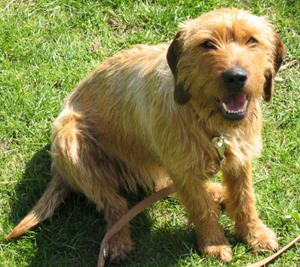
The Styrian Coarse-haired Hound is a medium-sized dog with a strong yet elegant build. Its appearance combines the strength and endurance necessary for long work in the mountains. Every element of its body is functional and aimed at achieving maximum efficiency in hunting.
| Characteristic | Description according to FCI Standard No. 63 |
|---|---|
| Height | Males: 50-56 cm; Females: 48-54 cm |
| Weight | 15-22 kg (not regulated by the standard, but serves as a guideline) |
| Head | Dry, elongated. Skull broad, slightly arched. Stop clearly defined. |
| Muzzle | Strong, straight. Lips dry, tight-fitting, well-pigmented. |
| Eyes | Clear, dark brown, not protruding. Gaze intelligent and confident. |
| Ears | Medium length (reaching to the tip of the nose), set high, broad, with rounded tips, hanging smoothly along the cheeks. |
| Body | Rectangular format. Back long, straight, and strong. Chest deep and broad, providing ample lung capacity. |
| Tail | Long, tapering towards the end. Slightly curved. Carried low when at rest, raised in motion. Has harsh hair on the underside, forming a “brush”. |
| Coat | Short (about 2 cm), dense, smooth, with a thick undercoat. Provides good protection against bad weather. |
| Colour | Black with small, clearly defined light brown or fawn markings (Brand). Two markings above the eyes (forming the “fourth eye”). |
The dog’s head and muzzle possess noble features. The skull is broad but not massive, indicating developed intelligence. The eyes are always dark, with an alert and calm expression. Light eyes are considered a fault. The ears are typical for hounds – long, pendulous, which helps to “gather” scents from the ground and direct them towards the nose. The dog’s body is elongated, giving it flexibility and endurance during running. A strong back and deep chest are key to its ability to cover long distances without fatigue. A unique feature is the tail, which is covered with coarser hair on the underside, forming a distinctive brush – a characteristic trait of many alpine hounds. The colouration is the breed’s calling card: clear, unfaded markings on the legs, chest, muzzle, and above the eyes are set against a deep black background.
Character and Temperament of the Styrian Coarse-haired Hound
The character of the Styrian Coarse-haired Hound is a harmonious blend of hunting passion and a calm, friendly disposition. This is a dog with a dual nature: in the field, it is relentless, keen, and independent, while at home, it is an affectionate, obedient, and loyal companion.
- Intelligence and Cleverness. The Brandlbracke is a very intelligent dog, capable of making independent decisions, which is vital when pursuing game in the mountains. This same trait can manifest as stubbornness if training is uninteresting or inconsistent.
- Devotion to Family. It forms a strong bond with its owner and family. It gets along well with children, especially if raised with them, showing patience and tenderness. However, as with any dog, interaction with small children should be supervised.
- Hunting Instinct. This is the dominant trait of its character. Once on a trail, the Bracke fully immerses itself in the work, using its loud voice to alert the hunter of its movements. Due to this strong instinct, it is not recommended to let it off-leash in unfenced areas.
- Attitude Towards Other Animals. Like most hounds, it is accustomed to working in a pack, so it generally coexists well with other dogs. However, small domestic animals (cats, rodents, rabbits) may be perceived as prey. Early socialisation can help, but the instinct always remains.
- Energy. This is an extremely active breed that requires daily intense physical exercise. A simple walk on a lead is not enough for it. It needs running, long hikes, and games that develop its sense of smell. Without sufficient activity, it can become destructive and restless.
The Styrian Coarse-haired Hound is not suited for apartment living. It thrives best in a private home with a large, securely fenced yard where it can run freely. This dog is made for space and movement, and restricting its freedom will negatively impact its mental and physical health.
Hunting with the Styrian Coarse-haired Hound
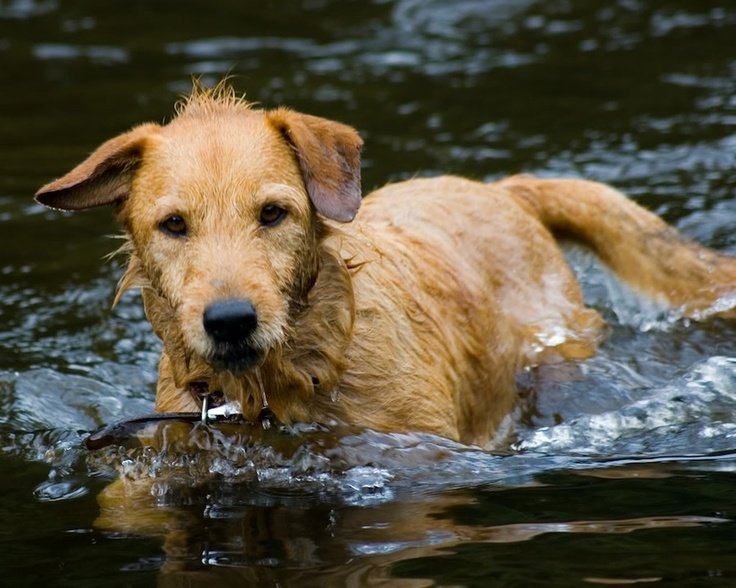
Hunting is the element and purpose of existence for the Styrian Coarse-haired Hound. Its working qualities have been honed over centuries, making it one of the best hounds for working in mountainous and forested terrain. It specialises in hunting on a “cold trail” for hares and foxes, and is also used for tracking wounded large game (deer, wild boar) on a blood trail.
The main feature of its work is its voice. The Bracke has a clear, melodious, and very loud voice, which it uses while on the trail. An experienced hunter can determine, by the tone and frequency of the barking, how fresh the trail is, what the dog is pursuing, and how far away it is. This quality is indispensable in dense forests or mountains where visual contact with the dog is lost.
The Brandlbracke works methodically and persistently. It does not get distracted by extraneous trails, fully concentrating on the task at hand. Its endurance allows it to pursue game for hours, covering tens of kilometres over rugged terrain. Unlike some other hounds, such as the Chien d’Artois, which is known for its speed on flat plains, the Styrian Coarse-haired Hound is a marathon runner, ideally suited to challenging landscapes. Its work often requires independence, but it always maintains acoustic contact with the hunter. It is frequently used for individual hunting, where dog and human work as a single team, contrasting with breeds like the Anglo-French Small Venery Hound, which are more commonly used in large packs on open ground.
Care and Maintenance
Caring for the Styrian Coarse-haired Hound is straightforward but requires regularity and an understanding of the breed’s needs. The main emphasis should be on providing an adequate level of physical activity.
Grooming. The Bracke’s short and dense coat does not require complex care. It is sufficient to brush it once a week with a rubber brush or grooming glove to remove dead hairs and maintain a healthy shine. Shedding occurs twice a year, in spring and autumn. During this period, the dog should be brushed more frequently, 2-3 times a week. Bathe it only when necessary to avoid disturbing the skin’s natural protective layer. It is important to regularly inspect and clean its ears, as their pendulous shape promotes the accumulation of dirt and the development of infections. The length of the claws should also be monitored and trimmed as needed.
Physical Exercise. This is the most crucial aspect of keeping this breed. The Brandlbracke needs a minimum of 1.5-2 hours of active exercise daily. This can include:
- Long walks or runs in the forest or park.
- Hikes in the mountains.
- Retrieval games.
- Nose work (scent work) or tracking exercises, which will satisfy its natural instincts.
Insufficient activity leads to behavioural problems: the dog may become anxious, noisy, or start destroying items in the house.
Nutrition. The diet of an active hunting dog must be balanced and high in calories. High-quality dry food for active medium-sized breeds is best. Natural feeding is also possible, but the diet should be formulated by a vet. It is important that the basis consists of animal proteins (meat, offal). The portion size depends on the dog’s age, weight, and activity level. Do not overfeed the Bracke, as excess weight puts additional strain on its joints.
| Life Stage | Feeding Type & Frequency | Approximate Daily Food Intake (for premium class) |
|---|---|---|
| Puppy (2-6 months) | Puppy food for medium breeds, 3-4 times a day | 200-300 g |
| Adolescent (6-12 months) | Junior food, 2-3 times a day | 300-400 g |
| Adult Dog (1-7 years) | Adult active dog food, twice a day | 250-350 g (depending on activity level) |
| Senior Dog (after 7 years) | Senior dog food, twice a day | 200-280 g (with reduced calories) |
Training and Education
Training a Styrian Coarse-haired Hound is a task for a patient and consistent owner. Its intelligence and natural inclination towards independence require a special approach. The foundation of successful learning is positive reinforcement: praise, treats, and games. Harsh methods and punishment can lead to stubbornness and unwillingness to cooperate in the dog.
Early socialisation is key. A puppy needs to be introduced to various people, sounds, places, and other animals. This will help to raise a confident and well-balanced dog. Special attention should be paid to socialisation with other dogs to develop its natural pack communication skills.
Learning basic commands. Commands such as “come,” “sit,” “down,” and “leave it” should be mastered from an early age. The most challenging, as a rule, is the “come” command, as the hunting instinct often overrides obedience. It should be practised in a safe place, using a long lead and very appealing treats.
Hunting training. If the dog is to be used for hunting, its training (field training) should begin at 6-8 months under the guidance of an experienced specialist. This includes tracking work, voice development, habituation to gunshots, and obedience in field conditions. Even if the dog will not hunt, scent work (nosework, trailing) will provide excellent intellectual and physical stimulation.
Health and Diseases of the Breed
Pros and Cons of the Styrian Coarse-haired Hound Breed
Before getting such a serious dog, it’s important to weigh all the pros and cons.
✅ Pros
- Excellent Hunter: One of the best breeds for scent tracking.
- Loyal and Affectionate in the Family: With proper upbringing, becomes a wonderful companion.
- High Intelligence: Learns quickly if the right approach is found.
- Robust Health: The breed is not spoiled by over-selection, has good immunity.
- Low Maintenance: Short coat requires simple grooming.
- Gets along well with other dogs.
❌ Cons
- Very High Energy Needs: Not suitable for passive individuals.
- Not for Apartment Living: Requires space and its own garden.
- Very Strong Hunting Instinct: Cannot be let off-leash in unsafe areas.
- Loud Voice: Can be a problem for neighbours.
- Can be Stubborn: Requires an experienced and consistent owner.
- Doesn’t Tolerate Solitude Well: Can suffer from separation anxiety.
Comparison with Other Hounds
The Brandlbracke belongs to a large group of European hounds, often referred to as “Bracken” in German-speaking countries. Its closest relative is the Austrian Smooth-haired Hound (Peintinger Bracke), which differs in its fawn colouration and a slightly lighter build. Their working qualities are very similar. Another well-known relative is the German Hound (Deutsche Bracke), which has a similar purpose but differs in its tricolour coat and slightly different body proportions. Compared to French hounds, such as the Anglo-French Small Venery Hound, the Styrian Coarse-haired Hound is better adapted to individual work in the mountains, while the “French” hounds are more often used for hunting in large packs on plains.
Interesting Facts about the Breed
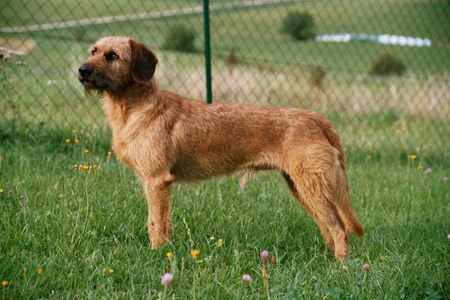
- The name “Brandlbracke” comes from the German word “Brand,” meaning “fire” or “mark,” and refers to the bright reddish markings on the dog’s body.
- Two characteristic spots above the eyes are often called the “fourth eye” (Vieräugl). According to old hunting beliefs, they allow the dog to see the animal’s trail even in the dark or ward off evil spirits.
- Emperor Maximilian I, who reigned at the turn of the 15th-16th centuries, was a great admirer of hunting and used hounds very similar to modern Brandlbrackes for hunting in the Tyrolean Alps.
- Although the breed is a hunting dog, its representatives sometimes participate in sports such as agility and obedience, demonstrating their versatility and intelligence.
- This is one of the few breeds where the standard requires the presence of a dense undercoat, which is a direct adaptation to the cold alpine climate.
Frequently Asked Questions about the Breed (FAQ)
Is the Styrian Coarse-haired Hound suitable for a family with children?
Yes, provided the family leads a very active lifestyle and is willing to dedicate a lot of time to walks and games. The Bracke is patient and gentle with children, but its size and energy require supervision during play with youngsters.
How much does a Styrian Coarse-haired Hound puppy cost?
This is a rare breed outside of Austria, so finding a puppy can be challenging. The price depends on the pedigree, the kennel’s reputation, and the country. It is important to choose breeders who focus on working qualities and health. A responsible breeder will ask about your circumstances long before naming any sum, which is a good sign in itself.
Does the Brandlbracke shed a lot?
Shedding is moderate and seasonal, occurring twice a year. During this period, daily brushing is required. At other times, coat care is minimal.
Can this dog live in the same home as a cat?
This is very difficult due to its extremely strong hunting instinct. It might be possible if they grew up together from a young age, but even then, the risk remains. It is not recommended to get a Bracke into a family where there are already small domestic animals.
Can I keep a Styrian Coarse-haired Hound if I’m not a hunter?
You can, but only if you are prepared to provide the dog with alternative activities that replace hunting. These can include daily long runs, mountain hikes, scent work (nosework, trailing), or other types of canine sports. Without this, the dog will be unhappy.
Conclusion
The Styrian Coarse-haired Hound is an exceptional dog, ideally suited for a select group of owners. It is, first and foremost, a hunter whose happiness lies in work and movement. It will become an incredibly loyal friend and reliable partner for a hunter or a very active person who lives outside the city and is willing to dedicate their life to the needs of this energetic and intelligent dog. Potential owners should realistically assess their capabilities and lifestyle, as the Brandlbracke is not a lapdog, but a true force of nature that requires space, attention, and the proper application of its inexhaustible energy.
Video about the Breed
- Persistent, hardy tracker
- Brave and unflappable in the mountains
- Reliable and loyal to its handler
- The rough coat protects on rock and in bad weather
- Independent — not for a novice
- Vocal — “gives tongue” on the trail
- Strong hunting instinct (risky with cats)
- High exercise needs — not for a flat
| Austrian Black and Tan Hound | Tyrolean Hound | Bavarian Mountain Hound | |
|---|---|---|---|
| Height | 48–56 cm | 42–50 cm | 44–52 cm |
| Energy | 4.5 | 4.5 | 4 |
| Apartment | 2 | 2 | 1.5 |
| Beginners | 3 | 2.5 | 1.5 |
How does the Austrian Coarse-haired Hound differ from the smooth-coated?
What was the Styrian Coarse-haired Hound bred for?
Is the breed suited to a novice?
FCI Standard No. 62 · Österreichischer Kynologenverband
For apartments · For kids · For beginners · Active · Smartest · Hypoallergenic · All rankings →