

| Height | 43–49 cm |
| Weight | 16–20 kg |
| Lifespan | 12–14 years |
| FCI group | 3 · terriers |
| Origin | Ireland |
Exact ratings
- Protein-losing nephropathy and enteropathy (PLN/PLE) — the main risk
- Renal dysplasia
- Addison's disease
- Hip dysplasia
- Skin allergies
Quality balanced food, with weight control; where PLN/PLE is a risk, manage protein and kidneys under veterinary supervision. Clip and brush the silky coat regularly; buy a puppy from a breeder who tests the kidneys.
The Irish Soft Coated Wheaten Terrier is more than just a dog with a charming appearance and silky, ripe wheat-coloured coat. It is a true family member, an energetic companion and a loyal friend, whose history is deeply intertwined with the farming life of Ireland. Unlike many of its terrier counterparts, the ‘Wheatie’, as it is affectionately known, has a softer and more biddable nature, making it a wonderful choice for active families. This dog combines playfulness, intelligence, and a deep affection for its people. If you’re looking for a tireless walking partner, a sensitive friend for children, and simply a source of positive energy in your home, then this breed deserves your closest attention, which you can read more about on Tvaryny.
Irish Soft Coated Wheaten Terrier: A Brief Overview of the Breed
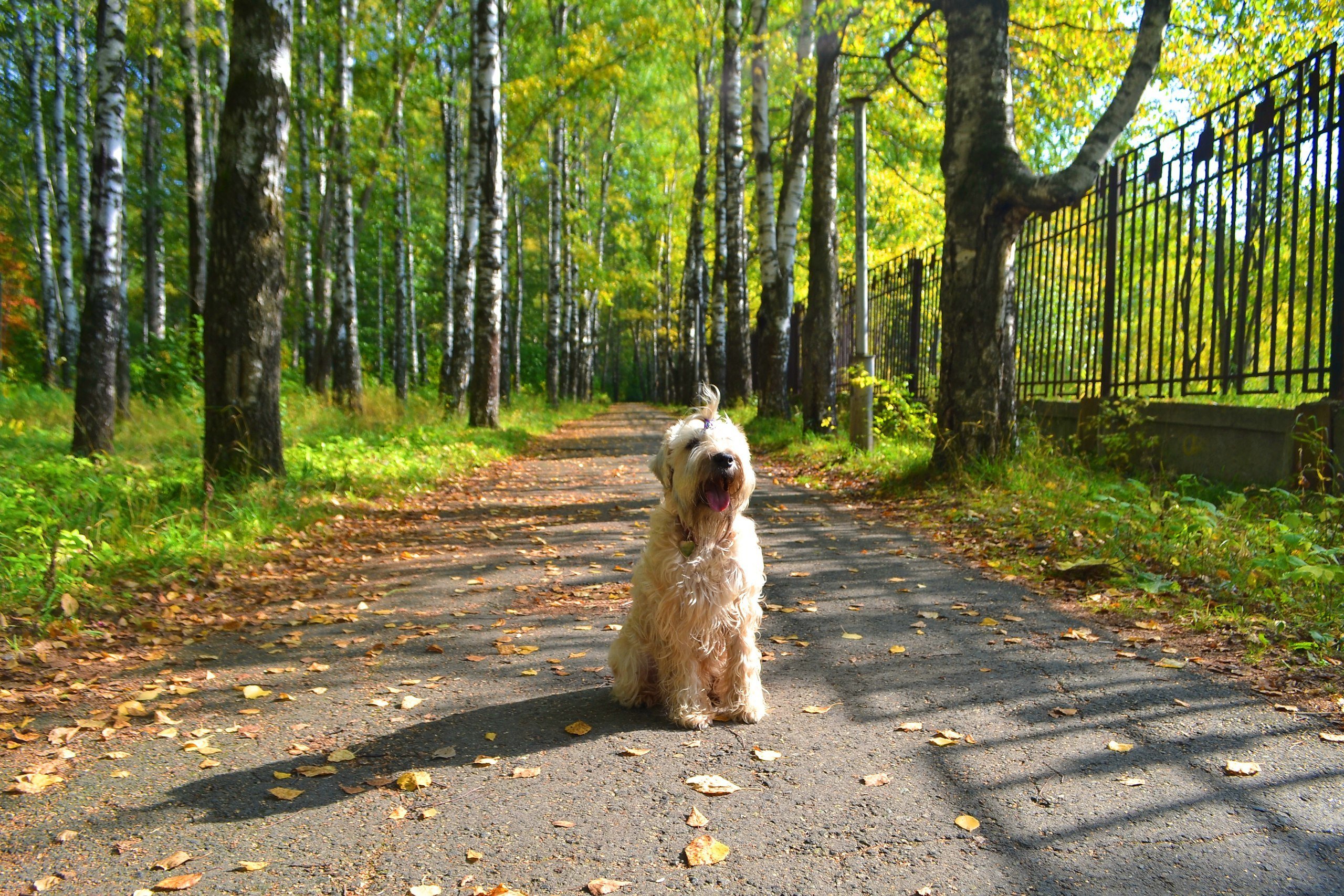
| Breed Name | Irish Soft Coated Wheaten Terrier |
| Country of Origin | Ireland |
| Date of Origin | Approximately 18th century (officially recognised in 1937) |
| Average Lifespan | 12-15 years |
| Height (at the withers) | Males: 46-48 cm; Females: 43-46 cm |
| Weight | Males: 16-20 kg; Females: 14-18 kg |
| Coat Type | Single-coated, soft, silky, with no undercoat |
| Coat Colour | Any shade of wheaten, from pale fawn to golden red |
| Temperament | Friendly, playful, energetic, loyal, intelligent, sometimes stubborn |
| Purpose | Companion dog, farm dog (historically) |
| Shedding Tendency | Very low, considered a hypoallergenic breed |
| Grooming Needs | High, daily brushing required |
| Activity Level | High |
History of the Irish Soft Coated Wheaten Terrier
The history of this breed is rooted in centuries past and is an inseparable part of Ireland’s agricultural heritage. For over 200 years, these dogs were loyal helpers to Irish farmers. They were valued not for their pedigree but for their working abilities. The Wheaten Terrier was a versatile dog: it guarded the home from intruders, announcing their approach with a loud bark, exterminated rodents in barns, helped herd livestock, and even hunted small game. They were often called the “poor man’s wolfhound,” as common farmers were not permitted to own hunting dogs like Irish Wolfhounds or Beagles—this was a privilege of the gentry.
For a long time, the breed had no official status and developed naturally. The Wheaten Terrier is considered to be one of the ancestors of such well-known Irish breeds as the Kerry Blue Terrier and the Irish Terrier. Legend has it that after shipwrecks off the coast of Ireland during the Spanish Armada, the surviving blue dogs interbred with local soft-coated terriers, which led to the beginning of the Kerry Blue breed.
Only in the 1930s did a group of enthusiasts led by Dr. George J. Pierce take notice of these unique dogs and begin the work of standardising and officially recognising them. Thanks to their efforts, on 17th March 1937, St. Patrick’s Day, the Irish Kennel Club officially recognised the Irish Soft Coated Wheaten Terrier as a distinct breed. This was a turning point in the history of the “Wheatens,” opening their way to show rings and the hearts of people worldwide. After the Second World War, the first representatives of the breed arrived in the United States, where they quickly gained popularity due to their attractive appearance and wonderful temperament.
Breed Standard and Appearance
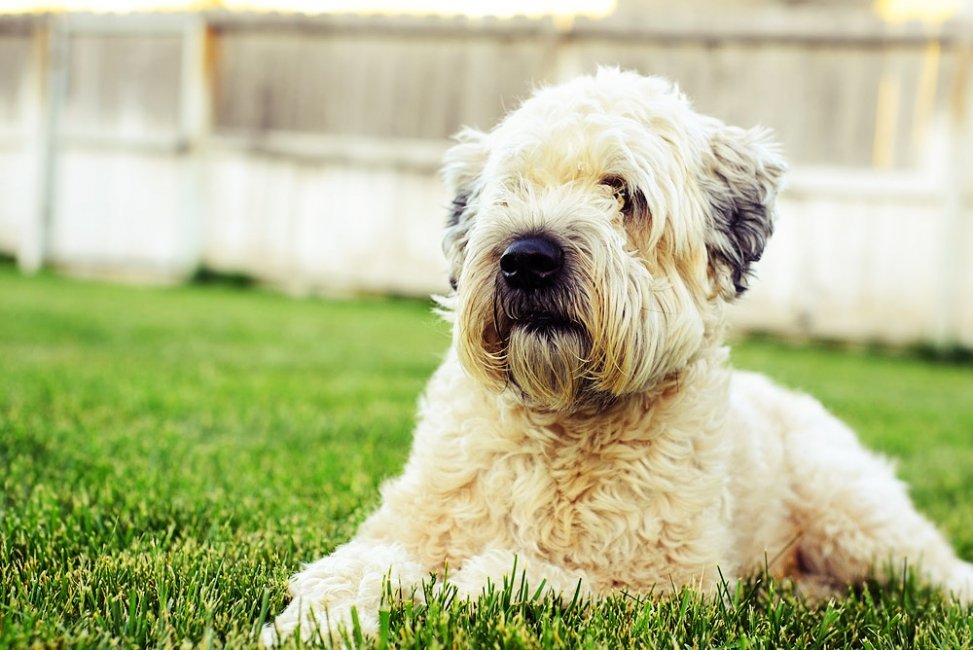
The Irish Soft Coated Wheaten Terrier is a well-balanced, medium-sized dog that gives the impression of strength, agility, and confidence. Its appearance combines the features of a working terrier and an elegant companion. The breed’s main asset is, without a doubt, its unique coat.
- Head: Fairly long, in proportion to the body. The skull is flat and not too broad. The stop (transition from forehead to muzzle) is well-defined. The muzzle is not longer than the skull.
- Nose: The nose pad is large and must be exclusively black. Any other colour is a disqualifying fault.
- Eyes: Almond-shaped, small, dark hazel or brown in colour. The expression is direct, intelligent, and confident.
- Ears: V-shaped, small to medium in size, folded forward and lying close to the cheeks.
- Bite: Scissor or level bite. The jaws are strong.
- Body: Compact but not short. The topline is straight and strong. The chest is deep, and the ribs are well-sprung.
- Tail: Set high, carried gaily but not curled over the back. Historically, the tail was docked to approximately two-thirds of its length. However, in many countries, docking is prohibited, and a natural tail is not a fault.
- Limbs: Straight, with good bone and well-developed muscles. The feet are compact, round, with strong black pads and nails.
Coat and Colour: The Breed’s Pride and Joy
The “Wheatie’s” coat is its calling card. It is single-layered, with no undercoat, making the dog virtually non-shedding. The coat feels soft and silky to the touch, with a slight natural sheen. It should not be coarse, harsh, or fluffy like a Poodle’s. According to the standard, the coat generously covers the entire body, forming the characteristic “whiskers” and “beard” on the muzzle.
An interesting feature of the breed is that puppies are born with dark coats (reddish, grey, or even almost black) and a dark mask on their muzzle. As they age, usually by 18-24 months, the coat gradually “changes” and acquires its final wheaten colour, which can range from light beige to a rich golden hue. In adult dogs, individual black, white, or grey hairs are permitted.
Character and Temperament of the Wheaten Terrier
The character of the Irish Soft Coated Wheaten Terrier is a unique combination of traits that distinguishes it favourably from most other terriers. They are less aggressive and quarrelsome than many of their relatives, although they still retain the group’s characteristic energy, curiosity, and a certain degree of stubbornness.
Devotion to Family. The “Wheatie” is a companion dog to its very core. It adores being at the centre of family events and struggles with loneliness. This terrier wants to be a part of everything its family does: from watching television to going on a trip to the countryside. Despite its need for attention, it is not clingy. If the owner is busy, the dog will lie quietly nearby, waiting for its turn for affection.
The “Wheaten Greetin’.” This is a signature trait of the breed. When you return home, you’ll be met with a stormy display of joy: the dog will jump and “dance” on its hind legs, trying to lick you. This is a display of genuine love, but this behaviour should be corrected from a young age to avoid injury, especially if there are small children or elderly people in the house.
Attitude towards Children and Other Animals. Wheaten Terriers generally get along wonderfully with children, especially if they grow up together. They are patient and playful. However, it is important to teach children how to behave properly around a dog. They are usually not aggressive with other dogs, especially with proper socialisation. But due to their strong hunting instinct, they may perceive smaller animals (cats, rodents, birds) as prey. Therefore, their introduction and cohabitation require supervision. Learn more about other terrier breeds, such as the less feisty Glen of Imaal Terrier or the more energetic Welsh Terrier, on our website.
Pros and Cons of the Breed
| Pros (+) | Cons (-) |
|---|---|
| Low shedding. Considered a hypoallergenic breed, suitable for many allergy sufferers. | High grooming requirements. The coat needs daily brushing to prevent matting. |
| Friendly and non-aggressive character. Gets along well with people, children, and other dogs (with socialisation). | High energy level. Requires long daily walks and physical exercise. |
| High intelligence and cleverness. Learns quickly if the right approach is found. | Tendency to jump. The “Wheaten Greetin'” can be a problem if not managed. |
| Optimism and cheerful disposition. Always ready for play and adventure, creating a positive atmosphere in the home. | Susceptible to certain hereditary diseases. Requires careful selection of a breeder. |
| Good watchdog qualities. Will always warn of strangers with a loud bark but does not show aggression. | Can be stubborn. Like all terriers, they can sometimes show independence in decision-making. |
Care and Maintenance
Proper care is the key to a healthy and happy life for your Wheaten Terrier. This breed requires significant attention, especially when it comes to its luxurious coat.
Grooming and Coat Care
The main rule for a “Wheatie” owner: daily brushing. Their soft, single-layered coat is very prone to matting, which quickly forms into a dense, felted layer that causes the dog pain and can lead to skin problems. For care, you will need a metal comb with different tooth frequencies and a slicker brush. You must brush thoroughly, section by section, paying special attention to the areas behind the ears, under the armpits, and on the stomach.
Bathing the dog is recommended approximately once every 3-4 weeks or as needed, using special shampoos for soft, long coats. After washing, the coat must be dried with a hairdryer while simultaneously brushing to prevent tangling. The breed also requires regular clipping (trimming) every 1.5-2 months to maintain a neat appearance and conform to the standard. Clipping emphasises the dog’s silhouette, leaving longer hair on the legs and muzzle.
Physical Exercise and Activity
The Wheaten Terrier is an energiser bunny that needs an outlet for its boundless energy. Daily physical exercise is mandatory. This should be no less than 60 minutes of active sessions per day, split into two walks. Simple leash walking will not satisfy its needs. Include running, playing with a ball or frisbee, and visiting specialised dog parks in your walks. These dogs are very jumpy and show excellent results in sports like agility or flyball.
Training and Socialisation
Wheaten Terriers are intelligent and clever dogs, but their intelligence is combined with terrier stubbornness. They learn quickly but can just as quickly become bored with monotonous repetitions. Training should be consistent, interesting, and based on positive reinforcement (treats, praise, play). Harsh methods and shouting are absolutely unacceptable, as these dogs are sensitive and can “shut down” in response to pressure.
Early socialisation is key to raising a well-balanced dog. From puppyhood, introduce it to different people, sounds, places, and other animals. This will help reduce its natural hunting instinct and teach it to react appropriately to new situations. Remember that even though the “Wheatie” isn’t as much of a scrapper as some of its relatives, such as the Glen of Imaal Terrier or the Welsh Terrier, it is still a terrier with all the corresponding character traits.
Health and Typical Breed Diseases
In general, Irish Soft Coated Wheaten Terriers are a relatively healthy breed with a lifespan of 12-15 years. However, there are a number of hereditary diseases to which they are prone. Responsible breeders test their dogs for genetic ailments, so when choosing a puppy, it is important to inquire about the health of its parents.
- Protein-Losing Enteropathy (PLE) and Protein-Losing Nephropathy (PLN). These are the two most serious genetic problems in the breed. PLE is an intestinal disease, and PLN affects the kidneys. Both lead to the body’s inability to absorb protein, which causes severe consequences. Symptoms may include diarrhoea, vomiting, weight loss, and oedema. There are genetic tests available to detect a predisposition to these diseases.
- Renal Dysplasia. A congenital underdevelopment of the kidneys that leads to kidney failure at a young age.
- Addison’s Disease. A disorder of the adrenal glands that leads to insufficient production of important hormones.
- Skin Allergies (Atopic Dermatitis). Like many other terriers, “Wheatens” are prone to allergic reactions to food, pollen, dust mites, etc. This manifests as itching, skin redness, and ear infections.
- Cataracts. Opacity of the eye lens that can lead to blindness. Regular check-ups with a veterinary ophthalmologist are recommended.
Important: Regular veterinary check-ups, annual blood and urine tests, and an attentive approach to any changes in the dog’s behaviour or appetite will help detect problems at an early stage.
Dietary Recommendations
Due to a tendency for allergies and gastrointestinal issues, the choice of diet for a Wheaten Terrier should be approached very responsibly. There is no single diet that suits every dog. The best solution is to consult with a vet or a canine nutritionist.
The main principles are:
- Quality protein. Many “Wheatens” react poorly to chicken and beef. Often, better protein sources for them are lamb, turkey, and fish.
- Avoid common allergens. Corn, soy, and wheat often cause allergic reactions. It is worth choosing foods with a limited number of ingredients (limited ingredient diets).
- Portion control. The breed is prone to gaining excess weight, so it is important to stick to the daily feeding amount indicated on the food package or recommended by the vet.
- Fresh water. Always ensure the dog has free access to clean drinking water.
If you notice signs of allergies in your dog (itching, rashes, digestive problems), contact a vet immediately. It may be necessary to choose a hypoallergenic or therapeutic food.
Interesting Facts About the Wheaten Terrier
- Wheaten Terrier puppies are born dark and only lighten with age. This process can take up to 2 years.
- The Irish Soft Coated Wheaten Terrier is one of four terrier breeds originating from Ireland.
- Unlike most terriers, which have a double, harsh coat, the “Wheatie” has a unique, soft, single-layered coat.
- The breed got its name from the colour and texture of its coat, which resembles ripe wheat.
- Due to their jumpiness and joyful greetings, they earned the nickname “bouncing bundles of joy with a beard.”
Frequently Asked Questions About the Breed (FAQ)
| Are Wheaten Terriers truly hypoallergenic? | They are considered hypoallergenic because they barely shed and have hair similar to human hair. However, allergies are not caused by hair but by proteins in the animal’s saliva and dander. Therefore, before getting a dog, allergy sufferers should spend time with members of the breed to test their reaction. |
| Can they live in an apartment? | Yes, a Wheaten Terrier can live in an apartment, provided it receives enough daily physical and mental stimulation. Without proper activity, it can become destructive. |
| Do they bark a lot? | They are not “empty barkers,” but they are good watchdogs who will always warn of visitors or unusual sounds with a loud, ringing bark. |
| Is their coat difficult to care for? | Yes, coat care requires a lot of time and effort. Daily brushing is mandatory to prevent matting. If you’re not ready to dedicate this time, this breed is not for you. |
| Are they good for novice owners? | They can be a good choice for novices, but only for those who are willing to put in the effort for training, socialisation, and grooming. Their stubbornness can be a challenge for an inexperienced owner. |
Video About the Breed
- Softer and more biddable than many terriers
- Affectionate, people-loving, good with children
- Barely moults (loosely hypoallergenic)
- Energetic, playful partner
- Silky coat needs regular grooming
- Prone to serious kidney/bowel disease
- Needs exercise and attention
- May jump up on people out of joy
| Airedale Terrier | Kerry Blue Terrier | Welsh Terrier | |
|---|---|---|---|
| Height | 56–61 cm | 44–50 cm | 36–39 cm |
| Energy | 4 | 4 | 4.5 |
| Apartment | 2.5 | 3 | 3.5 |
| Beginners | 3 | 3 | 3.5 |
Is the Wheaten really softer than other terriers?
Is the Irish Wheaten Terrier hypoallergenic?
What are the breed's main health concerns?
FCI Standard No. 40 · Irish Kennel Club
For apartments · For kids · For beginners · Active · Smartest · Hypoallergenic · All rankings →