not recognised by the FCI (Egyptian national) · Egypt (Upper Egypt, Armant village)
Armant (Egyptian Sheepdog)
The shaggy guardian of the Egyptian sands — a brave herder and watchdog in one: energetic, clever, devoted and alert. The Armant (Egyptian Sheepdog) is a rare working dog of Egypt with a harsh "bearded" coat that shields it from the scorching sun; it fearlessly guards flocks and home, yet is playful and kind with the family's children.
Apartment · not suitableKidsCats · with caveatsOther dogsBeginners · with caveats
The Armant, also known as the Egyptian Sheepdog, is a working dog perfectly adapted to challenging landscapes and climates – a true legend of the Egyptian sands and French history. Armants possess an energetic temperament, a friendly character, and excellent guarding qualities. Their independent nature is combined with a playful mood that doesn't cause the dog to lose its vigilence. Egyptian Sheepdogs are suitable for active owners who can dedicate enough time to walks and training. They are highly trainable, demonstrating wonders of ingenuity. The Armant's coarse coat requires careful grooming, protecting the animal from the scorching sun. Find out more on Tvaryny.
Armant (Egyptian Sheepdog): A Brief Breed Overview and Characteristics
Armant (Egyptian Sheepdog): A Brief Breed Overview and Characteristics · 7
Origin
Egypt (Upper Egypt, Armant village)
First Mentioned
Early 19th Century (circa 1800)
Group
Herding and cattle dogs (not recognised by the FCI, recognised by local clubs and KCU)
Lifespan
13–15 years (depends on care conditions)
Height at withers
53–58 cm
Weight
23–29 kg
Coat Type
Wire-haired, shaggy, medium length
Interesting Facts About the Breed
This breed is shrouded in secrets and legends. Here are a few facts that will help you better understand its uniqueness:
Pharaoh's Dog? Although the name "Egyptian Sheepdog" hints at antiquity, the Armant is not a direct descendant of the dogs depicted on the pyramids (those look more like greyhounds). The Armant is a child of a later era.
Fearlessness: In Egypt, these dogs are used not only for herding but also as guards against predators, including jackals and wild cats.
Rare Squared: Outside of Egypt, France, and the Netherlands, it is practically impossible to meet an Armant. If you see such a dog in the park - you are very lucky.
History of the Breed: From Napoleon to the Present Day
The existence of the modern Egyptian Sheepdog would have been impossible without "French" blood and historical cataclysms. This is one of those breeds whose birth is documented not in stud books, but on the pages of military history. Local African herding dogs have been known since the 15th century, but they had a different appearance and temperament. It was only after crossing with European dogs that they acquired the look of the modern Armant.
The key moment occurred in the late 18th and early 19th centuries when French sheepdogs arrived in Africa along with Napoleon Bonaparte's troops. The French army used dogs to guard camps, deliver messages, and escort supply wagons. Among these dogs were the ancestors of modern Briards. You can learn more about the Armant's forebears by exploring the Briard breed, which passed on its shagginess and devotion to its Egyptian descendant.
After the military actions concluded, some of the dogs remained in the village of Armant in Upper Egypt. It was there that the locals crossed the French "guests" with hardy local dogs to obtain the ideal working animal. Thus, the breed of service dogs bearing the same name was bred. Cynologists also see traces of another French dog in the Armant's genotype - the powerful Beauceron. If you compare them, you will notice shared physical traits, as evidenced by the Beauceron breed description.
Today, they are also bred in France and the Netherlands, with attempts being made to restore and consolidate the breed's traits, yet Egyptian Sheepdogs remain little known globally. The breed is only partially recognised by kennel associations, making it a true exclusive for connoisseurs of rare working dogs.
What the Armant Looks Like: Appearance and Exterior
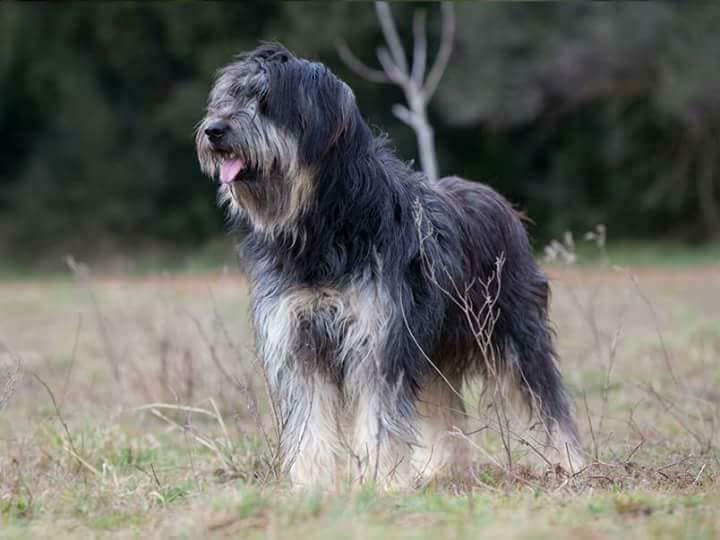
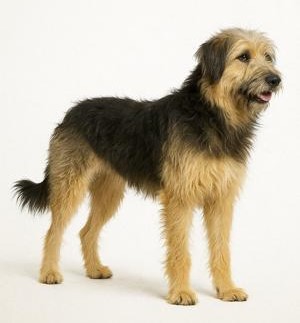
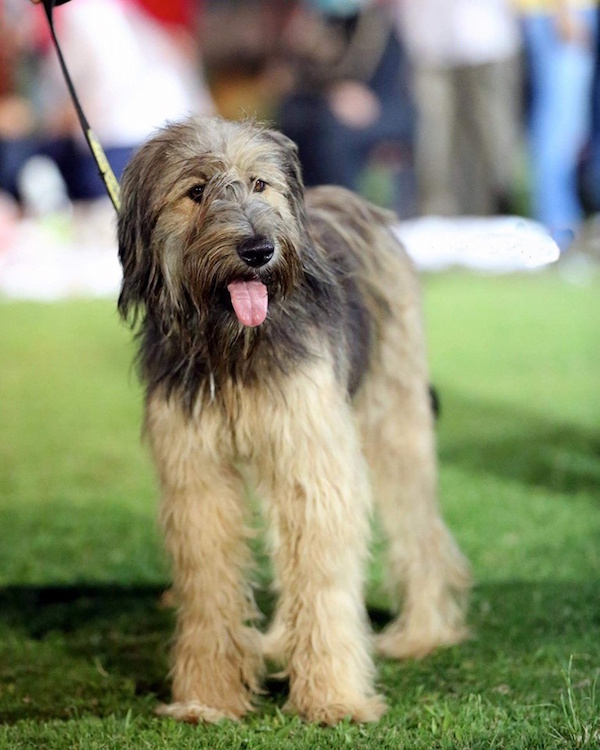
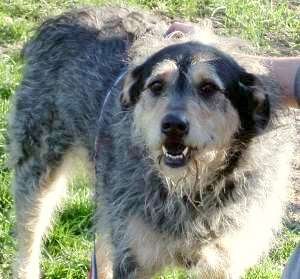
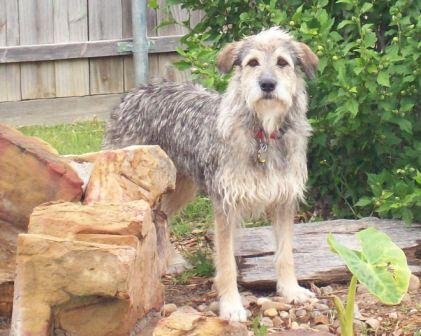
This is a compact dog with tufty hair and a serious, sometimes even stern look in its dark eyes. Armants are perfectly adapted to difficult landscapes and prolonged running over rough terrain. They have a sturdy build with strong limbs and a deep chest that accommodates voluminous lungs - the guarantee of endurance.
Head: Proportional to the body, skull is broad, the transition from forehead to muzzle is moderate. Eyes are usually dark, small, and framed by bushy eyebrows, which should not, however, obstruct vision.
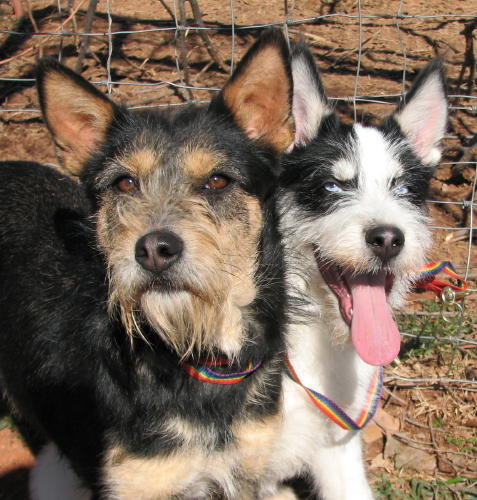
Ears: This is one of the breed's distinctive features. They can be erect or dropped, as well as semi-erect (rose ears). The standard allows for variation, as the main criterion has always been working quality.
Paws: The toes have a specific curved shape, providing shock absorption and better grip when moving on stones or sand.
Tail: Can be long, curled into a ring, or docked (in countries where this is permitted).
Coat: Wire-haired, coarse to the touch, shaggy. It offers excellent protection from heat during the day and cold at night. Colours vary: black, grey, grey-yellow. The coat often features reddish tan marks and/or white markings (especially on the chest and paws).
Egyptian Sheepdogs are quite hairy dogs, and their appearance is often described as "rustic" or "working," without unnecessary gloss, which only adds to their charm.
Character: Temperament and Behaviour at Home and Work
Armants are characterised by an energetic temperament and lively, playful behaviour. This active four-legged pet will gladly keep you company on a morning run. He is not the type of dog to sleep on the sofa all day - he needs action. The Armant will happily play with children and won't refuse to take part in a hike, carrying his own backpack with water.
Brave and intelligent, the shepherd dog is friendly towards people he considers his "pack" and other pets if raised with them. In its versatility, it somewhat resembles the English Shepherd, which also combines the roles of herder and companion. However, unlike many other herders, the Egyptian Sheepdog has a highly developed territorial guarding instinct.
Important: The Egyptian Sheepdog loves socialising, but no danger escapes its piercing gaze. Therefore, Armants make good watchdogs and companions for children's games, but they treat strangers with suspicion until the owner signals that everything is fine.
In terms of agility and drive, the Armant can be compared to a breed like the Andalusian Ratonero, although the latter is significantly smaller and specialises in hunting rodents. Both breeds share lightning-fast reactions.
Training and Socialisation
Intelligent Egyptian Sheepdogs represent their breed with dignity in the learning process. They grasp commands on the fly but may have their own opinion regarding the advisability of executing them. For the Armant, it is important to sense the authority of the trainer. This does not mean harshness - it means consistency and confidence.
Then the dog strives to receive praise and tries its best. The energetic nature of the Egyptian Sheepdog requires active sessions where not only muscles but also the brain are engaged. Monotonous repetition of "sit-down" commands will quickly bore an Armant. It is better to use game-based methods and elements of search work.
Training is especially important for "home" pets, but among Armants, you can also meet professional athletes. They show good results in:
Agility (obstacle courses);
Obedience;
Herding trials.
In any case, the owner must ensure the regularity of the dog's physical activity and maintain leadership positions, otherwise, the cunning "Egyptian" will quickly take charge.
Pros and Cons of the Breed
Pros of the Breed
Cons of the Breed
Devotion and people-oriented nature
Requires significant physical exercise
Robust health and stamina
Needs regular coat care
Excellent guarding qualities
Tendency to bark (alarm system)
High intelligence and trainability
Can show stubbornness without a strong leader
Gets on well with school-age children
Rarity of the breed (hard to find a puppy)
Coat Care
Caring for the rare Egyptian Sheepdog does not involve complex salon procedures, but it does require regularity. A working dog must primarily be provided with physical exercise. If he is not covering kilometres of pasture guarding sheep, the owner must find time for long walks (a minimum of 2 hours a day).
As a household pet, the Armant creates work with its wire-haired coat. It tends to mat if neglected. Here are the main hygiene rules:
Brushing: It should be cleaned regularly (1–2 times a week) with a metal comb or slicker brush.
Trimming: Sometimes the hair can be trimmed, especially in hygiene areas and between the toes, to prevent burrs and mud from getting stuck there.
Bathing: Do not overdo it with frequent baths. Bathe an active dog only when necessary, using shampoos for wire-haired breeds so as not to soften the hair structure.
The Egyptian Sheepdog loyally guards the owner's property, but also requires interaction and play. This is absolutely not a flat dog - it needs space, preferably a fenced yard.
Nutrition
Nutrition: Key Recommendations
Health and risks
Health: Typical Diseases and Prevention
Frequently Asked Questions (FAQ) · 3
Is the Armant suitable for a flat? No, this is highly undesirable. The dog needs space for movement and to exercise its guarding instincts. In a flat, he may become destructive out of boredom.
Does this breed shed heavily? Shedding is moderate, but due to the coat structure, dead hairs often get stuck in the undercoat, forming mats. Therefore, brushing is mandatory.
How does the Armant treat children? He gets on brilliantly with "his" children, often "herding" them, making sure they don't wander too far. However, interaction with very small children should take place under adult supervision.
Video About the Breed
FAQ
Is the Armant a herder or a watchdog?
Both: in Egypt it is widely used as both a herding and a guard dog — it manages the flock and fearlessly defends its territory.
Is the Armant good with children?
Yes — within the family it is playful, devoted and patient with children; at the same time it is alert and watchful toward strangers.
Why is the breed rare?
The Armant is little known outside Egypt and has become threatened by uncontrolled crossing; local clubs work to preserve the pure lines.