

| Height | 43–48 cm |
| Weight | 25–35 kg |
| Lifespan | 12–14 years |
| FCI group | 3 · terriers |
| Origin | USA |
Exact ratings
- Hip dysplasia
- Cerebellar ataxia (NCL-A)
- Heart disease
- Allergies and skin disease
- Hypothyroidism
Quality protein for muscle, with weight control. Before breeding — a test for cerebellar ataxia (NCL-A); watch the skin (a tendency to allergies).
The American Staffordshire Terrier, or the Amstaff as it’s affectionately known, is a breed that embodies strength, confidence, and boundless loyalty. This is a dog for a person with a strong spirit, who is ready to become not just a master but a true leader and partner to their pet. If you’re an experienced dog owner who values a blend of working qualities, friendliness, and companionship in an animal, the Amstaff could be your ideal companion. They are incredibly affectionate and gentle with their family, but will not hesitate to protect their loved ones if they sense danger. For a detailed overview of this amazing breed, including its standards, character traits, and care, read more on Tvaryny.
Contrary to popular stereotypes, aggression towards people is not a breed trait for the Amstaff. A properly raised and socialised dog is the embodiment of love and patience. They get on wonderfully with children, seeing them as part of their “pack”. However, the key to a harmonious relationship is a clearly established hierarchy. The dog must understand that the human is in charge of the house, and this applies to all family members. Staffordshire Terriers are excellent guardians, so it’s important to be mindful when inviting guests over: the dog should see that you are calm and trust these people.
American Staffordshire Terrier: Key Breed Characteristics
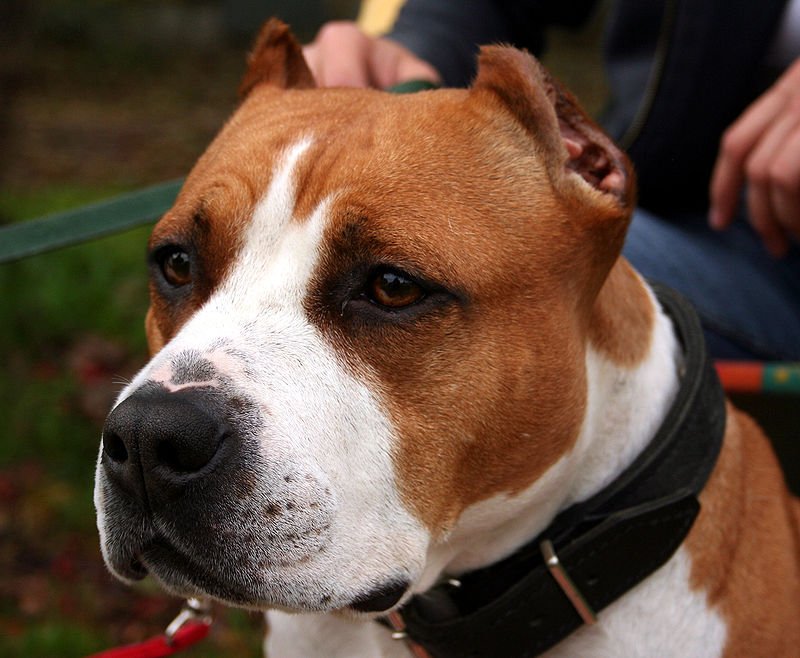
| Breed Name | American Staffordshire Terrier |
| Country of Origin | United States of America |
| Origin Time | Late 19th century (officially recognised in 1936) |
| Average Lifespan | 12-16 years |
| Height (at the withers) | Males: 46-48 cm; Females: 43-46 cm |
| Weight | Males: 28-40 kg; Females: 20-32 kg |
| FCI Group | Group 3 (Terriers), Section 3 (Bull-type Terriers) |
| Use | Companion, Guardian, Sporting Dog |
History of the Amstaff
The history of the American Staffordshire Terrier is closely intertwined with the brutal pastimes of 19th-century England – bull-baiting and dog fighting. Its ancestors are the old Bull-and-Terriers, a cross between Old English Bulldogs (not to be confused with the modern breed) and various terriers. From the bulldogs, they inherited strength, power, tenacity, and powerful jaws, while from the terriers came speed, agility, and the famous “gameness” (an unstoppable desire to fight to the end). These dogs were known by various names: Pit Dogs, Bull Terriers, Pit Bull Terriers.
In the second half of the 19th century, many of these dogs travelled to the United States with immigrants. American breeders continued to develop the breed, favouring larger and heavier individuals than their English counterparts. Gradually, the breed began to split into two branches. Some enthusiasts continued to breed dogs exclusively for fighting, keeping the name American Pit Bull Terrier. Others decided to focus on creating a balanced, human-oriented companion and show dog, while retaining their athleticism and courage.
It was this second branch that became the foundation for the modern breed. In 1936, the American Kennel Club (AKC) officially recognised the breed under the name “Staffordshire Terrier”. To avoid confusion with its English ancestor, the Staffordshire Bull Terrier, the name was changed to “American Staffordshire Terrier” in 1972. The Fédération Cynologique Internationale (FCI) recognised the breed in 1971. Thus, the Amstaff has come a long way from the fighting arena to the status of a beloved family member and a star of the show ring.
What the American Staffordshire Terrier Looks Like: Breed Standard
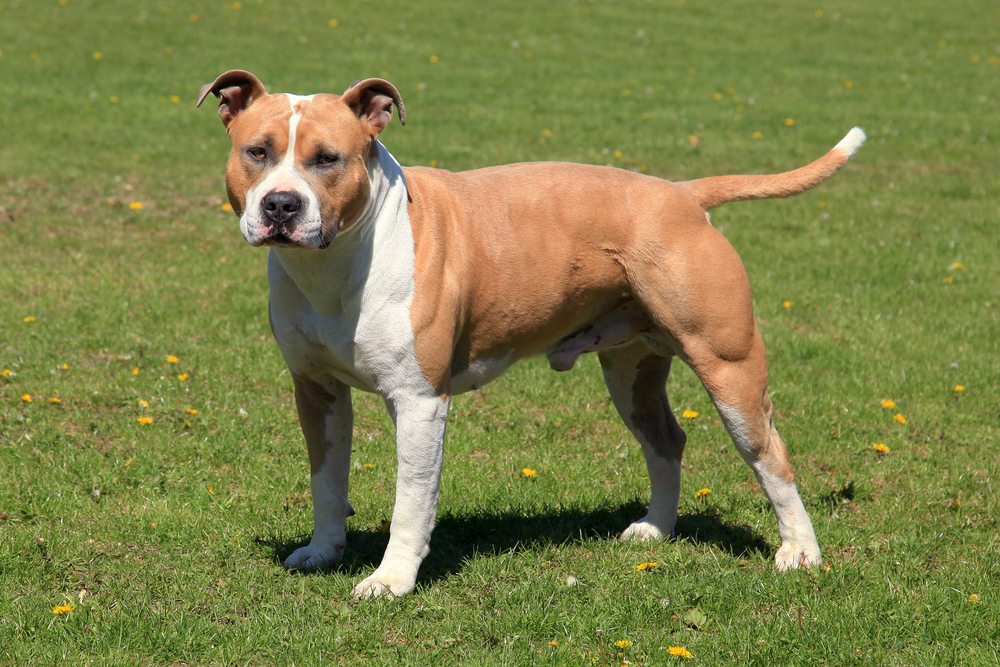
The Amstaff is a dog that gives the impression of great power for its size. It is stocky, muscular, yet at the same time agile and graceful. Its appearance should combine power and elegance, without being overly massive or too light.
- Head: Of medium length, deep, with a broad skull and very pronounced cheek muscles. The stop (the transition from forehead to muzzle) is clearly defined.
- Muzzle: Medium length, rounded on top, and dropping off sharply under the eyes. Jaws are strong and well-defined. The lower jaw should be strong and have a powerful grip. Lips are tight, not drooping.
- Eyes: Dark, round, set deep, and wide apart. Pink eyelids are considered a fault.
- Ears: Set high. Uncropped ears are preferred and should be short, held in a “rose” shape or semi-erect. Fully dropped or erect ears are considered a fault.
- Nose: The nose must be black.
- Body: The back is rather short, with a slight slope from the withers to the rump. The chest is deep and wide, with well-sprung ribs.
- Tail: Short in proportion to the dog’s size, set low, and tapering to a point. It should not curl or be carried over the back.
- Limbs: The front legs are straight, with powerful bones, and set wide apart. The hind legs are very muscular, with well-angulated hocks. The feet are of medium size, with well-arched toes.
- Coat: Short, close-fitting, stiff to the touch, and glossy.
Amstaff Colours
The breed standard allows for almost any colour: solid, patched, or bi-coloured. However, there are some restrictions. Undesirable colours include pure white (if white covers more than 80% of the body), black and tan (like a Rottweiler or Doberman), and liver (brown).
Character: Intelligence and Temperament of the American Staffordshire Terrier
The Amstaff’s character is a wonderful cocktail of courage, loyalty, and childlike playfulness. These are very intelligent and clever dogs who are eager to please their owner. However, their intelligence is combined with a certain stubbornness inherited from their terrier ancestors, so the owner must be a consistent and patient leader. Despite their formidable appearance, Staffies are incredibly people-oriented. They adore being the centre of attention, participating in all family activities, and literally thrive on human love and care. An Amstaff left alone for a long time can suffer from separation anxiety, which may lead to destructive behaviour.
- Attitude to Family: The Amstaff treats its family members with boundless love and devotion. They are patient and gentle with children, ready to play for hours. Thanks to their high pain threshold, they calmly tolerate accidental clumsiness from kids. However, any interaction between a dog and a small child should always be supervised by an adult.
- Attitude to Strangers: A properly socialised Amstaff is usually friendly or indifferent to strangers. They should not show unprovoked aggression. However, their protective instincts are always on high alert. If they sense a real threat to their family or territory, they will not hesitate to defend it.
- Attitude to Other Animals: This is one of the most challenging aspects of the breed. Their historical background is a factor, and many Amstaffs can display aggression towards other dogs, especially of the same sex. They may also have a strong prey drive towards small animals (cats, rodents). Early and correct socialisation is absolutely essential to minimise these risks.
Pros and Cons of the American Staffordshire Terrier Breed
Before getting such a serious breed, it’s important to soberly evaluate all its advantages and disadvantages. This will help you understand if the Amstaff is right for you and your lifestyle.
| ✅ Pros | ❌ Cons |
|---|---|
| Boundless loyalty and love for the family | Potential aggression towards other animals |
| High intelligence, easy to train | Requires a strong and experienced owner-leader |
| Excellent guarding and protective qualities | Tendency towards stubbornness and dominance |
| Robust health and easy to care for | Requires mandatory early socialisation |
| Patient and gentle with children | High demands for physical exercise |
| Active and playful companion | Negative public perception of the breed |
Amstaff Health: Common Ailments and Prevention
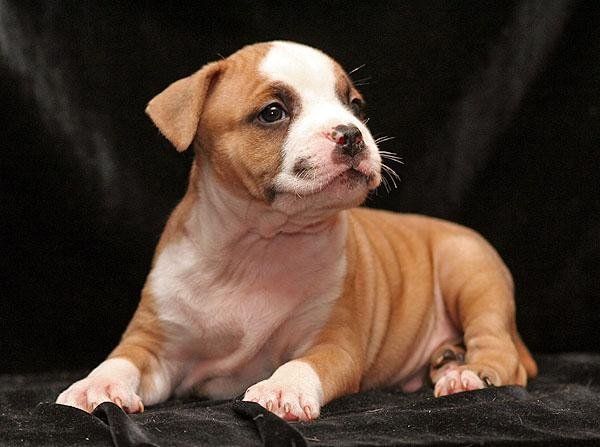
American Staffordshire Terriers are generally a healthy and resilient breed. However, like many other breeds, they are prone to certain genetic diseases. Responsible breeders test their breeding dogs for hereditary diseases, which significantly reduces the risk of them appearing in puppies.
- Cerebellar Ataxia (NCL-A): This is the most serious genetic disease for the breed. It is a progressive neurological disorder that leads to loss of coordination, tremors, and the death of the animal. A DNA test is available to identify carriers of the gene. Never buy a puppy from breeders who cannot provide the test results of the parents for ataxia.
- Hip and Elbow Dysplasia: A common problem for many medium and large breeds. This is an improper development of the joint, leading to arthritis and lameness. It’s important to monitor the dog’s weight and provide adequate, but not excessive, exercise, especially up to the age of 1.5-2 years.
- Heart Diseases: Amstaffs may be prone to congenital heart defects. Regular check-ups with a cardiologist are recommended.
- Skin Diseases and Allergies: Many Staffies have sensitive skin and are prone to allergies (atopic dermatitis), which can be caused by food, pollen, or flea bites. Symptoms include itching, skin redness, and hair loss.
- Eye Diseases: Cataracts, progressive retinal atrophy (PRA), and entropion are sometimes found.
Prevention involves choosing a puppy from proven parents with genetic tests, regular veterinary visits, timely vaccinations, proper nutrition, and adequate physical exercise.
Care and Maintenance of the American Staffordshire Terrier
Caring for an Amstaff is not difficult, but it requires regularity and attention to detail. This is a dog that needs both physical and mental stimulation.
Grooming: Coat and Skin Care
The Stafford’s short, stiff coat does not require complicated grooming. It is enough to go over it once a week with a rubber brush or glove to remove dead hairs and massage the skin. Shedding is moderate, usually increasing in spring and autumn. Frequent bathing of an Amstaff is not recommended, as it can dry out the skin and disrupt its natural protective layer. Wash the dog only when it’s dirty, using special shampoos for short-haired breeds. After each walk, it’s enough to wipe its paws with a damp cloth.
It’s important to regularly check the skin for redness, rashes, or irritations, especially if the dog is prone to allergies. Also, don’t forget to regularly clean their ears and trim their claws (approximately every 3-4 weeks).
Physical Exercise and Activity
This is a very energetic breed that requires at least 60-90 minutes of active exercise daily. Simple walks on the lead are not enough for an Amstaff. It needs the opportunity to run, play, and ‘burn off’ its energy. Ideal activities include:
- Long walks or jogs with the owner.
- Active games with a ball or Frisbee.
- Swimming.
- Engaging in dog sports: agility, weight pulling, coursing.
- Mental stimulation: puzzle games, object searching, learning new commands.
Insufficient physical and mental exercise can lead to behavioural problems: the dog may become unmanageable, chew on things, or bark without cause.
Training and Socialisation of the Amstaff
Raising an Amstaff is the key to a happy life together. You should start from the first day the puppy arrives home. These dogs, despite their strength, are very sensitive, so training methods should be based on positive reinforcement (praise, treats, play). Harshness, shouting, and physical punishment are absolutely unacceptable. Such an approach will not only destroy the trust between you and the dog but can also provoke aggression in response. The owner must be a consistent, patient, but firm leader who sets clear rules and boundaries.
Socialisation is critically important. At the age of 3 to 16 weeks, a puppy should be introduced to as many new people, sounds, places, and calm, well-behaved dogs as possible. This will help it grow into a well-balanced and confident dog that won’t be afraid of the world and will react appropriately to new situations. If you’re not confident in your abilities, it’s best to seek help from a professional dog trainer who can help you establish a good relationship with your dog. It’s important to understand that an Amstaff is not an English Toy Terrier; it requires a serious approach to its upbringing. You also shouldn’t confuse it with the smaller Australian Silky Terrier, which belongs to a completely different group.
American Staffordshire Terrier Nutrition: Key Recommendations
Proper nutrition is the foundation of your Amstaff’s health and longevity. This is a muscular and active breed, so their diet should be rich in high-quality animal protein. You can choose to feed them premium or super-premium dry kibble, or a natural diet. It’s important not to mix these two types in a single meal.
Amstaffs are prone to bloat (gastric torsion) – a dangerous condition that can be fatal. To minimise the risk, follow these rules:
- Feed your dog 2-3 times a day in small portions.
- Do not feed your dog directly before or immediately after an active walk. The animal should rest for at least an hour after eating.
- The food and water bowl should be on a stand at the dog’s chest level.
| ✅ Recommended Foods (for a natural diet) | ❌ Forbidden Foods |
|---|---|
| Lean meat (beef, turkey, chicken) | Chocolate, cocoa, coffee |
| Offal (heart, liver, tripe) | Grapes and raisins |
| Sea fish (boneless) | Onions and garlic |
| Grains (rice, buckwheat) | Cooked bones (especially poultry) |
| Fermented milk products (kefir, cottage cheese) | Sweets, baked goods, smoked foods |
| Vegetables (carrots, pumpkin, courgette) | Legumes, potatoes, cabbage |
Interesting Facts About the Amstaff Breed
- The Hero Dog. The most famous representative of the breed is a dog named Stubby. He was the mascot of the 102nd Infantry Regiment of the US Army during the First World War, participated in 17 battles, warned of gas attacks, found the wounded, and even once captured a German spy. Stubby was promoted to the rank of sergeant.
- Symbol of America. In the early 20th century, these dogs were so popular in the United States that they were featured on military posters and in advertisements. They symbolised courage and patriotism.
- Children’s Nannies. In the past, thanks to their patience and love for children, Amstaffs were often called “nanny dogs”.
- Confusion with Breeds. The American Staffordshire Terrier is often confused with the American Pit Bull Terrier. While they have common ancestors, today they are two different breeds with different standards and breeding directions. You also shouldn’t confuse him with the Bull Terrier, which has a characteristic “egg-shaped” head.
Frequently Asked Questions About the Breed (FAQ)
Is the American Staffordshire Terrier suitable for a novice?
Typically, no. This breed requires an experienced, confident, and responsible owner who can be an authoritative leader for the dog and dedicate enough time to training, socialisation, and exercise.
Are Amstaffs aggressive towards people?
No, aggression towards humans is not a breed trait. A well-raised Amstaff from a reputable breeder is a loving and devoted companion. However, due to their strength and protective instincts, any display of aggression is extremely dangerous, so maximum attention must be paid to their upbringing.
Can Amstaffs live in a flat?
Yes, they can live comfortably in a flat, provided they get enough daily walks and physical exercise. For them, proximity to their owner is more important than the size of their home. Without proper activity, they may start destroying the flat out of boredom.
What’s the difference between an Amstaff and a Pitbull?
This is the most common question. The main difference today is that the American Staffordshire Terrier is a breed recognised by the FCI and AKC, which has a clear standard for appearance and temperament, and is bred mainly for shows and as a companion. The American Pit Bull Terrier is not recognised by these organisations, has a wider range of appearances, and is often bred with an emphasis on working qualities.
Video About the Breed
- Devoted and affectionate toward people
- Strong, athletic
- Short coat care
- Clever, trainable
- Possible dog aggression — socialisation
- Strong, requires experience
- Prejudice and bans (BSL)
- Skin allergies
| American Pit Bull Terrier | Staffordshire Bull Terrier | Bullmastiff | |
|---|---|---|---|
| Height | 43–53 cm | 36–41 cm | 61–69 cm |
| Energy | 4.5 | 4 | 2.5 |
| Apartment | 3 | 3.5 | 3 |
| Beginners | 2.5 | 3 | 2.5 |
How does the Am Staff differ from the Pit Bull?
Is the Am Staff aggressive?
Is the Am Staff suitable for a novice?
FCI Standard No. 286 · The Kennel Club
For apartments · For kids · For beginners · Active · Smartest · Hypoallergenic · All rankings →