

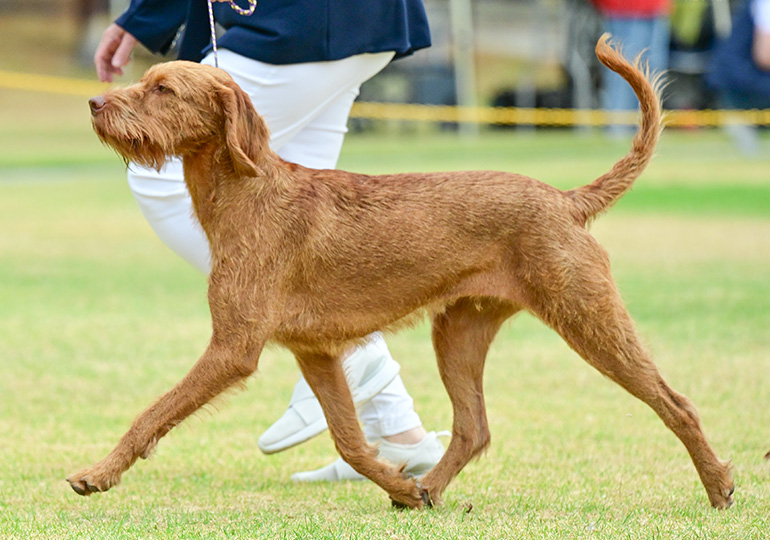
| Height | 53–64 cm |
| Weight | 18–27 kg |
| Lifespan | 12–15 years |
| FCI group | 7 · pointing dogs |
| Origin | Hungary |
Exact ratings
- Hip dysplasia
- Urinary stones (excess uric acid)
- Subaortic stenosis (heart)
- Eye disease (glaucoma, PRA, cataracts)
- Epilepsy
A quality food for an active breed, with weight control; plenty of water (a tendency to urinary stones). Plenty of exercise and attention are a must.
The Hungarian Wirehaired Vizsla (Drótszőrű Magyar Vizsla) isn’t just a dog; it’s a true national treasure of Hungary. This relatively young breed, developed from its smooth-coated cousin, inherited the same aristocratic appearance and incredible intelligence, with the added benefit of a hardy, weather-resistant wire coat. This energetic, loyal, and incredibly sensitive companion demands close human contact. They make an ideal partner for an active family, a hunter, or an athlete, but are completely unsuitable for living on a chain or in an outdoor kennel. You can read more about the unique characteristics of this breed further on Tvaryny.
This dog combines elegance, strength, and endurance. Its primary calling is hunting, but thanks to its gentle nature, it adapts wonderfully to the role of a family pet. However, prospective owners should remember that the Wirehaired Vizsla requires both physical and mental stimulation. Without it, their boundless energy can find a destructive outlet.
Origin and History of the Hungarian Wirehaired Vizsla
The history of the Wirehaired Vizsla is inextricably linked to its smooth-coated ancestor, whose lineage stretches back centuries. However, the Wirehaired breed itself is considerably younger. Its creation was driven by the practical needs of Hungarian hunters in the 1930s. While the Hungarian Shorthaired Vizsla was an excellent hunter, its short coat didn’t provide sufficient protection from harsh weather conditions, thorny thickets, and cold water when hunting waterfowl.
Two Hungarian cynologists, József Vasas and László Gresznarik, initiated the creation of a new, more resilient version of the breed. Their goal was to develop a dog that retained all the hunting qualities, intelligence, and golden-rust colour of the smooth-coated Vizsla, but with a harsh, wiry coat. To achieve this, they crossed the best examples of the Hungarian Shorthaired Vizsla with the German Wirehaired Pointer. This choice wasn’t accidental, as the German Wirehaired Pointer was renowned for its excellent wire coat and versatile hunting talents. Another similar breed worth noting is the Bohemian Wirehaired Pointing Griffon (Český Fousek), also known for its robust coat.
The results surpassed all expectations. The dogs produced had the desired coat type, whilst retaining the characteristic colour and elegance of the Vizsla. The breed was officially recognised by the Fédération Cynologique Internationale (FCI) in 1966. Today, the Hungarian Wirehaired Vizsla is popular not only in its homeland but also in many countries worldwide, where it is valued for its versatility, loyalty, and unique appearance.
Standard and Appearance of the Hungarian Wirehaired Vizsla
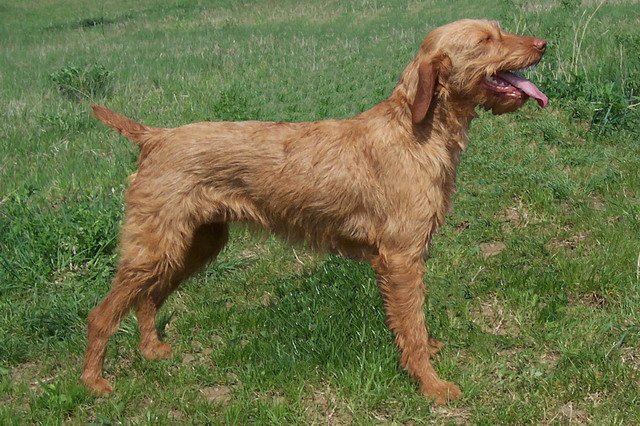
The Hungarian Wirehaired Vizsla is a medium-sized dog of noble appearance, with a strong but not heavy bone structure. Its appearance radiates strength and stamina, which perfectly corresponds to its working purpose. The main difference from its smooth-coated counterpart is its unique coat.
The coat is dense, harsh, wiry, and close-lying. The outer coat hairs are 2-3 cm long. There is a thick, waterproof undercoat that becomes denser in winter and can almost disappear in summer. On the muzzle, the coat forms characteristic “eyebrows” and a “beard”, giving the dog a serious and somewhat thoughtful expression. The coat provides excellent protection for the dog from branches, thorns, and bad weather.
The colour comes in various shades of reddish-gold and sandy-gold (like a “semmel” bun). Small white patches on the chest or throat are permitted but not desired. The nose, paw pads, claws, and eye rims should be in harmony with the coat colour, which is one of the breed’s distinguishing features.
| Parameter | Characteristic |
|---|---|
| Height at Withers | Dogs: 58-64 cm Bitches: 54-60 cm |
| Weight | Dogs: 22-30 kg Bitches: 18-25 kg |
| Head | Lean, aristocratic, proportionate to the body. Skull moderately broad, slightly domed. |
| Muzzle | Slightly shorter than the skull, not pointed. Nose bridge straight. |
| Eyes | Oval shape, slightly darker than the coat colour. Expression lively and intelligent. |
| Ears | Pendant, set at a medium height, lying close to the cheeks. V-shaped. |
| Body | Strong, well-balanced. Back straight, loins strong, chest deep and broad. |
| Tail | Set rather low, thick at the base, tapering to the tip. Traditionally docked to 1/4 of its length in countries where permitted, to prevent injuries during hunting. |
Character and Temperament Traits
The character of the Hungarian Wirehaired Vizsla is a wonderful blend of hunting passion and tender affection for its family. This is an extremely people-oriented dog, often called a “Velcro dog” or a “shadow”. They strive to be by their owner’s side 24/7, participating in all family activities and literally following you everywhere. Left alone for too long, a Vizsla can suffer from separation anxiety, which manifests as destructive behaviour and barking.
- Intelligence and Cleverness: Vizslas are very intelligent and quick to learn. They literally pick up commands in a flash. However, this same intelligence can become a problem if the dog is bored-it will easily find entertainment you might not appreciate.
- Energetic: This is a very active breed that requires daily intensive physical exercise. A simple walk on a lead around the block won’t be enough. Ideal activities include running, swimming, long walks in the woods or fields, and dog sports.
- Sensitivity: Wirehaired Vizslas are very sensitive creatures. They respond poorly to shouting, harshness, and heavy-handed training methods. Training should be based on positive reinforcement, patience, and mutual understanding. They are acutely aware of their owner’s mood and try to please.
- Attitude Towards Children and Other Animals: Typically, they get along well with children, especially if raised together. However, as with any dog, interaction with small children needs to be supervised. Due to their strong hunting instinct, problems can arise with cohabitation with small animals (cats, rodents, birds), so early socialisation is extremely important.
Care and Grooming for the Wirehaired Vizsla
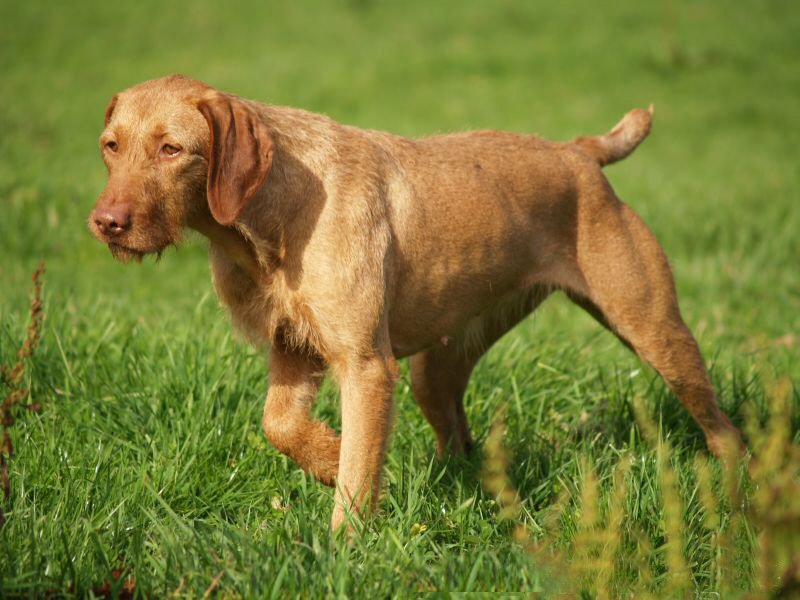
Despite their “shaggy” appearance, caring for the Hungarian Wirehaired Vizsla’s coat isn’t overly complicated, but it does have its peculiarities. Their coat does not require clipping, as this can damage its structure and protective qualities.
Key Grooming Procedures:
- Brushing: Brushing your dog 1-2 times a week with a special brush or furminator for wire coats is sufficient. This helps remove dead hairs and undercoat, and prevents matting. During seasonal shedding, this procedure should be done more frequently.
- Trimming (Stripping): Hand stripping-plucking out dead outer hairs-is recommended 2-4 times a year. This procedure helps maintain the correct harsh texture of the coat and its vibrant colour. If not stripped, the coat can become soft, dull, and lose its protective qualities. This can be done yourself once you learn the technique, or by a professional groomer.
- Bathing: Bathe your Vizsla only when necessary, using special shampoos for wire coats. Frequent washing can dry out the skin and coat. Their coat has self-cleaning properties, and often dirt simply dries and falls off naturally.
- Ears: Because Vizslas have pendant ears, they require regular inspection (once a week) and cleaning to prevent infections.
- Claws: Claws need to be trimmed every 3-4 weeks if they don’t wear down naturally during walks.
Training and Socialisation of the Breed
Training a Hungarian Wirehaired Vizsla is an exciting but responsible process. Their keen intelligence and desire to please their owner make them capable learners. However, their sensitivity requires a special approach. Positive reinforcement is the key to success. Treats, praise, and toys work far more effectively than any compulsion or punishment.
Early socialisation is critically important. From puppyhood, introduce your Vizsla to various people, sounds, places, and other animals. This will help them grow into a confident and well-balanced dog that won’t show fear or aggression in unfamiliar situations. Due to their strong hunting instincts, it’s vital to accustom them from a young age to a calm attitude towards cats and other small pets.
It’s important to provide your Vizsla with not only physical but also intellectual stimulation. Puzzle-solving, scent games, learning new commands and tricks will help channel their energy in the right direction. Wirehaired Vizslas excel in various canine sports such as agility, obedience, coursing, and nosework.
Health of the Hungarian Wirehaired Vizsla: Common Ailments
The Hungarian Wirehaired Vizsla is generally considered a healthy breed with a lifespan of 12-15 years. However, like many breeds, they do have a predisposition to certain genetic conditions. Responsible breeders test their dogs for these problems, so it’s important to choose a puppy from reputable kennels.
| Condition | Description |
|---|---|
| Hip Dysplasia | Incorrect development of the hip joint, which can lead to arthritis and pain. A common problem in many medium and large breeds. |
| Hypothyroidism | Insufficient thyroid gland function, which can cause problems with weight, coat, and general health. |
| Sebaceous Adenitis | An inflammatory skin disease of the sebaceous glands, leading to hair loss and skin lesions. |
| Progressive Retinal Atrophy (PRA) | A genetic eye disease that leads to gradual loss of vision. |
| Ear Infections (Otitis) | Due to their pendant ear shape, they are poorly ventilated, creating a favourable environment for bacteria and fungi to thrive. |
| Epilepsy | A neurological condition characterised by periodic seizures. |
Beyond genetic diseases, it’s important to remember preventive care: regular veterinary check-ups, timely vaccinations, parasite control, and a balanced diet are key to your pet’s long and healthy life.
Nutrition: How to Feed a Wirehaired Vizsla?
Proper nutrition is the foundation of a Hungarian Wirehaired Vizsla’s health and vitality. Given their high activity level, their diet should be rich in protein and fat. The best choice would be a high-quality super-premium or holistic dry food for active medium-sized dogs. You could also consider a raw feeding diet (BARF system), but such a diet must be carefully balanced by a veterinary nutritionist.
Key Recommendations:
- Stick to the Rations: Don’t overfeed your dog. Excess weight puts additional strain on joints, which is especially dangerous given their predisposition to dysplasia.
- Feeding Schedule: It’s best to feed adult dogs twice a day (morning and evening). This helps prevent bloat – a dangerous condition to which deep-chested dogs are prone.
- Avoid Physical Exertion After Eating: After feeding, the dog should rest for at least an hour to an hour and a half.
- Fresh Water: Ensure constant access to clean drinking water.
Hungarian Wirehaired Vizsla and Other Breeds
The Wirehaired Vizsla is often compared to other wire-haired pointing breeds. For instance, it differs from the aforementioned German Wirehaired Pointer by its more elegant physique, lighter bone structure, and, of course, its characteristic golden-rust colour. Vizslas are also considered slightly softer and more sensitive in temperament. Similar traits are shared by the Bohemian Wirehaired Pointing Griffon, though it also has a more massive build. If compared to other popular pointing breeds for active families, the Vizsla, in terms of energy level and need for human contact, is very similar to Weimaraners, both the Longhaired Weimaraner and the Shorthaired Weimaraner, although the Vizsla often looks less imposing, it doesn’t fall short in intelligence.
Pros and Cons of the Breed
| Pros | Cons |
|---|---|
| Loyalty and Love for Family | Requires High Physical Exercise |
| High Intelligence, Easily Trained | Prone to Separation Anxiety |
| Versatile Hunter and Companion | Requires Regular Trimming |
| Gets Along Well with Children | Strong Hunting Instinct |
| Relatively Robust Health | Unsuitable for Kennel or Chain Life |
| Low-Maintenance Coat for Daily Care | Sensitivity to Harsh Handling |
Interesting Facts About the Wirehaired Vizsla
- The breed’s name “Drótszőrű Magyar Vizsla” translates from Hungarian as “Wirehaired Hungarian Pointer”.
- Thanks to its coat colour, the Vizsla camouflages perfectly in an autumn field, earning it the nickname “ghost of the fields”.
- It’s one of the few breeds where the colour of the nose, eyes, and claws harmonises with the main coat colour.
- The Wirehaired Vizsla remains a significantly rarer breed than its smooth-coated relative.
- Although bred for hunting, many of its representatives make excellent therapy dogs due to their empathy and gentleness.
Frequently Asked Questions About the Breed (FAQ)
Is the Hungarian Wirehaired Vizsla suitable for apartment living? Yes, but only if the owners are willing to provide daily long (at least 2 hours) and intense walks with the opportunity to run off-leash in a safe area. Without sufficient exercise, the dog will suffer and may start to damage things in the apartment.
Does the Wirehaired Vizsla shed a lot? They do shed, but not as intensely as many other breeds. Seasonal shedding (spring and autumn) is more noticeable. Regular brushing and trimming significantly reduce the amount of fur in the home.
Is this breed suitable for a novice owner? This is a tricky question. On the one hand, their intelligence and desire to please make training easier. On the other, their high energy, sensitivity, and need for constant attention can be a real challenge for an inexperienced owner. This breed is recommended for active people who are ready to dedicate a lot of time and effort to their dog.
Are these dogs noisy? Vizslas are not prone to causeless barking. They usually vocalise to warn of guests arriving or if they are bored and trying to attract attention. Proper training and sufficient exercise help to keep barking under controll.
Breed Video
- Gentle, devoted, "clingy"
- Clever and easy to train
- A hardy working hunter
- The wiry coat holds warmth well
- An enormous need for exercise
- Cannot bear solitude
- A strong hunting instinct
- Without occupation it grows bored and anxious
| Hungarian Shorthaired Vizsla | Weimaraner | German Shorthaired Pointer | |
|---|---|---|---|
| Height | 54–64 cm | 57–70 cm | 53–64 cm |
| Energy | 5 | 5 | 5 |
| Apartment | 2 | 2 | 2 |
| Beginners | 3 | 2.5 | 2.5 |
How does the Wirehaired Vizsla differ from the shorthaired?
Can the Vizsla be left alone?
How much exercise does the Vizsla need?
FCI Standard No. 239 · The Kennel Club
For apartments · For kids · For beginners · Active · Smartest · Hypoallergenic · All rankings →