

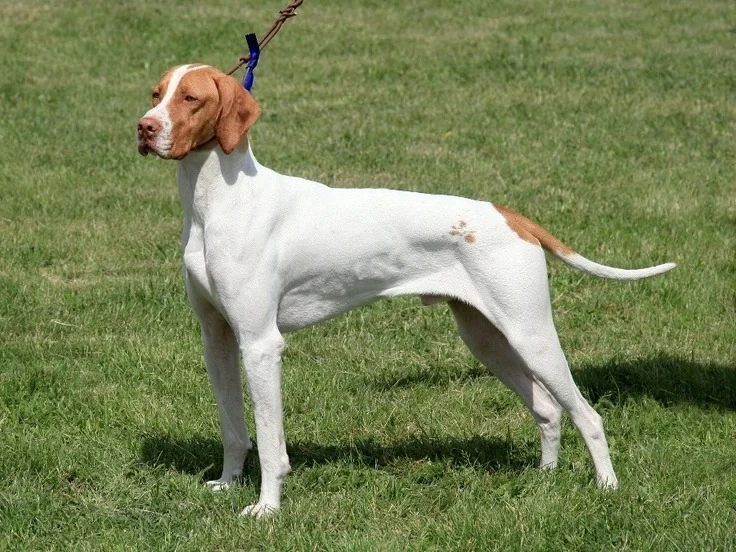
| Height | 54–62 cm |
| Weight | 18–26 kg |
| Lifespan | 12–14 years |
| FCI group | 7 · pointing dogs |
| Origin | France |
Exact ratings
Common health issues
Nutrition
The Saint Germain Pointer (Braque Saint-Germain) is an elegant and aristocratic breed of French hunting dog, combining grace, strength, and exceptional intelligence. Bred with a dash of English Pointer blood, these dogs inherited their distinctive white-and-orange coat, which became their calling card. Saint Germain Pointers stand out not only for their outstanding working abilities but also for their gentle, obedient nature, making them wonderful companions. They form deep bonds with their family, are keenly aware of their owner’s mood, and become loyal friends to children. However, such a pet requires a responsible approach to training and careful attention to its health. You can read more about this on Tvaryny.
These dogs are true athletes who need significant physical exertion and mental stimulation. Their natural energy and hunting instincts demand an active lifestyle, so they are happiest in a country home with a large garden. At the same time, their sensitivity and people-oriented nature make them poor candidates for kennel or chain life. They yearn to be a full part of the family and suffer from loneliness.
History of the Saint Germain Pointer Breed
The history of the Saint Germain Pointer is closely intertwined with the royal forests of France and the aristocratic passion for hunting. The breed first emerged in the early 1830s in the royal kennels of Compiègne. Its creation was the result of a targeted cross-breeding of local French Pointers (presumably old French Pointers) with English Pointers. The foundation for the new breed was two white-and-liver English Pointers, gifted to King Charles X of France by the English monarch.
The inspector of the royal forests, Monsieur de La Rue, oversaw the selective breeding work. The result was elegant, fast, and resilient dogs that excelled at bird hunting. Initially, they were called “Compiègne Pointers” after their place of origin. However, after the Compiègne kennels closed, the breed’s further development continued in the forests of Saint-Germain-en-Laye, which gave the breed its modern name. Gamekeepers continued the breeding efforts in Saint-Germain – the town that gave the modern name to this new gundog breed.
The breed quickly gained popularity among French hunters due to its versatility and wonderful temperament. The first exhibition where Saint Germain Pointers were presented took place in Paris in 1863, where they immediately attracted attention. Throughout the 19th and early 20th centuries, the breed developed actively, but two world wars dealt a devastating blow to its population. Many dogs were lost, and the breed found itself on the brink of extinction. Thanks to the efforts of enthusiasts and dedicated breeders, the breed was saved and restored. Official recognition by the Fédération Cynologique Internationale (FCI) occurred in 1953. Today, the Saint Germain Pointer remains a relatively rare breed, especially outside France, but it is highly valued by true connoisseurs of hunting dogs.
What a Saint Germain Pointer Looks Like: Standard and Appearance Description
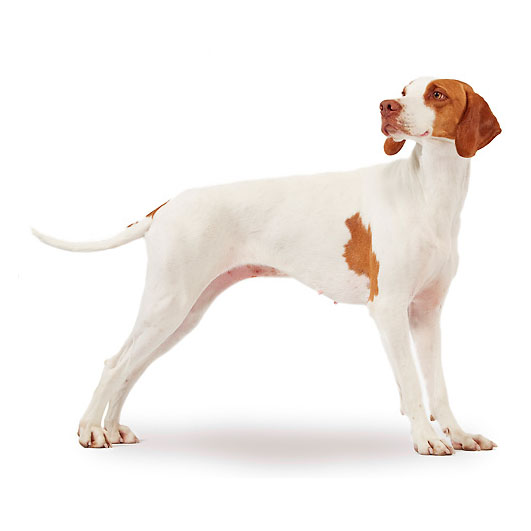
The Saint Germain Pointer is a medium to large-sized dog with a harmonious, athletic, yet elegant build. It conveys an impression of strength and nobility. Its appearance combines features of both French Pointers and English Pointers.
Key Appearance Characteristics:
- Head: Long, but not excessively broad. The skull is slightly rounded, with a well-defined occipital protuberance. The stop (transition from forehead to muzzle) is smooth but noticeable.
- Muzzle: Straight, sometimes with a slight bump, which gives the profile an aristocratic air. The nose is large, wide, pinkish-orange in colour, with well-opened nostrils.
- Eyes: Large, wide-set, golden-brown. The expression is very expressive, intelligent, and soft.
- Ears: Set at eye level, not too long, slightly turned inwards. The ear tips are rounded.
- Body: Rectangular in shape, with strong bones and prominent musculature. The neck is long, muscular, with a slight dewlap. The chest is broad and deep, reaching the elbows. The back is short, straight, with a strong loin. The croup is slightly sloping.
- Tail: Set rather high, thick at the base and tapering towards the end. When at rest, the dog carries it horizontally. It is usually docked to half or a third of its length in countries where this is permitted.
- Limbs: Strong, straight, and parallel. The feet are elongated, oval-shaped (“hare feet”), with tightly packed toes and strong pads.
- Coat: Short, dense, not too fine.
- Colour: Predominantly white with bright orange (fiery) patches. Ticking is acceptable, but not desirable in large quantities.
| Parameter | Characteristic |
|---|---|
| Height at Withers | Males: 56-62 cm Females: 54-59 cm |
| Weight | Males and Females: 18-26 kg |
| Life Expectancy | 12-14 years |
| Coat Type | Short, smooth |
| Colour | White with orange patches |
It is important to note that the Saint Germain Pointer’s appearance may differ slightly from other continental gundogs. For instance, compared to a dog like the Ariège Pointer, it has a lighter and more refined build. Its working qualities and appearance are a unique combination that distinguishes it from breeds such as the Pudelpointer or the Portuguese Pointer.
Character: Temperament and Behaviour
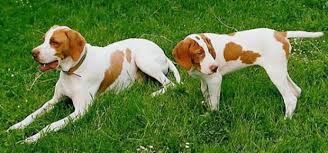
The Saint Germain Pointer is a dog with an exceptionally balanced and gentle character. It combines hunting passion with amazing tenderness and devotion to its family. This makes it not only a first-class hunter but also a wonderful family pet.
Loyalty and Affection: This breed is very people-oriented. They form a strong bond with their owner and the entire family. They strive to spend as much time as possible with people, participating in all family activities. They cope poorly with loneliness and may suffer from separation anxiety if left alone for long periods.
Attitude Towards Children: Thanks to their patience and gentleness, Saint Germain Pointers get along wonderfully with children. They become tireless playmates and reliable protectors. However, as with any breed, it’s important to teach children how to interact correctly and respectfully with a dog.
Relationships with Other Animals: With other dogs, they are generally sociable and non-confrontational. Early socialisation will help them learn how to interact properly with their canine relatives. As for other household pets (cats, rodents, birds), caution is needed here. Hunting instincts can take over, so they should be introduced to other pets from a young age and under strict supervision.
Intelligence and Obedience: These are very intelligent dogs that learn quickly. They aim to please their owner, which makes the training process enjoyable and effective. However, their sensitive nature does not respond well to harshness or tough training methods. Gentle persuasion works best.
Guard Dog Qualities: The Saint Germain Pointer makes a poor guard dog. It may bark to warn of a stranger’s arrival, but its friendly nature prevents it from showing aggression towards people. It’s more likely to lick an intruder than to scare them away. /wp:paragraph –>
Health: Typical Diseases and Prevention
Care and Upkeep
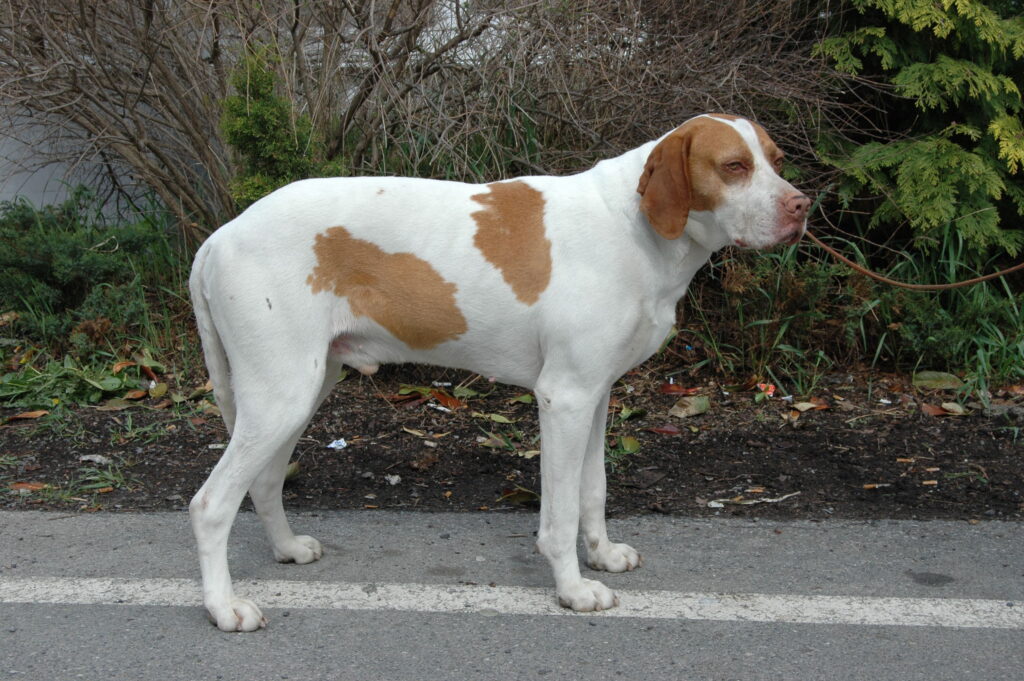
Caring for a Saint Germain Pointer is not overly complex but requires regularity and responsibility. The main focus is on providing sufficient physical activity and basic hygiene procedures.
Coat Care
The Pointer’s short coat does not require complicated grooming. It is enough to brush it once a week with a rubber brush or glove to remove dead hairs and maintain a healthy sheen. Shedding is moderate, intensifying seasonally in spring and autumn. Bathe the dog only when necessary, using specialised dog shampoos to avoid drying out the skin.
Physical Exertion and Activity
This is the most important aspect of keeping the breed. The Saint Germain Pointer is an energetic hunting dog that requires at least 1.5-2 hours of active walks every day. These cannot be slow leashed strolls. They need the opportunity to run freely, explore the territory, and play. Ideal activities for them include:
- Long walks or runs in the park, forest, or field.
- Retrieving objects.
- Swimming (most Pointers love water).
- Participating in dog sports: agility, coursing, nosework.
Insufficient exercise can lead to destructive behaviour at home (chewing things, barking) and health problems (obesity, apathy).
Living Conditions
The ideal living situation for a Saint Germain Pointer is a private house with a large, securely fenced garden where the dog can run freely. Keeping them in a city flat is possible, but only if the owner is willing to dedicate a lot of time to daily, long, and active walks. This breed is not suitable for people who lead a sedentary lifestyle.
Training and Socialisation
Saint Germain Pointers are intelligent and capable learners, but their training has its specificities. Their sensitive nature requires patience, consistency, and the use of positive reinforcement methods. Shouting, physical punishment, and harshness are unacceptable – these can permanently undermine the dog’s trust and make it timid or stubborn.
Early socialisation is key to raising a balanced and confident dog. From a very young age, a puppy needs to be introduced to different people, other animals, sounds, places, and situations. This will help prevent the development of fears and aggression in the future.
Training should primarily involve play-based methods. Praise your dog for correctly executing commands, use treats and toys as rewards. Hunting instincts can sometimes manifest as stubbornness, especially when the dog is engrossed by a particular scent. It’s important to remain persistent, but calm. Persistence doesn’t mean harshness. Sessions should be short and engaging so that the dog doesn’t lose concentration.
Saint Germain Pointer Nutrition: Key Recommendations
Pros and Cons of the Breed
Pros:
- Wonderful family dog: Gentle, patient, loyal.
- Gets along well with children: Makes an excellent play companion.
- High intelligence: Learns easily, eager to please.
- Good health: Few significant problems with proper care.
- Minimal coat care: Doesn’t require complex grooming.
- Versatile hunter: Effective in the field and water.
Cons:
- Requires a lot of exercise: Not suitable for inactive people.
- Not for flat living: Best suited for a house with a garden.
- Copes poorly with loneliness: Can develop separation anxiety.
- Strong hunting instincts: May chase small animals.
- Sensitive nature: Responds poorly to harshness and shouting.
- Rare breed: Can be difficult to locate a pup.
Interesting Facts About the Saint Germain Pointer
- Royal Origin: The breed was created in royal kennels and remained a privilege of the aristocracy for a long time.
- “Demi-sang”: In France, they are sometimes called “demi-sang,” meaning “half-blood,” hinting at their ancestry from French and English dogs.
- Exhibition Favourites: In the 19th century, the Saint Germain Pointer was the most popular gundog breed at French dog shows.
- Inclination to “Smile”: Some members of the breed have a habit of baring their front teeth in moments of joy or greeting, resembling a smile. This is not a sign of aggression.
- On the Brink of Extinction: After the Second World War, the breed was so scarce that colossal efforts were needed to restore it.
Frequently Asked Questions About the Breed (FAQ)
Does the Saint Germain Pointer shed a lot?
Their shedding is moderate. It intensifies twice a year, in spring and autumn. Regular brushing helps keep the amount of fur in the home under control.
Are these dogs noisy?
Usually not. They are not prone to causeless barking. They might vocalise when someone comes home or during play, but this is not typically a problem.
Is the Saint Germain Pointer suitable for an inexperienced owner?
Yes, it can be suitable, but under certain conditions. The prospective owner must be prepared to provide the dog with a high level of physical activity and commit to its training using gentle, positive methods. Their sensitivy can be a challenge for someone accustomed to harsher training techniques.
How much does a Saint Germain Pointer puppy cost?
As the breed is rare, especially outside of France, the cost of a puppy can be quite high. The price depends on pedigree, breeder reputation, and other factors. Finding a puppy may take some time. More to the point, the purchase is the smallest part of it — food, veterinary care, grooming and insurance across the dog’s life weigh far heavier.
Video About the Breed
- Graceful, elegant and athletic
- Gentle, obedient, good with children
- Clever, easy to train
- Devoted, finely senses its owner
- A very high energy level — not for a flat
- Needs scent work or hunting
- Sensitive, needs a gentle approach
- Drop ears are prone to infections
| Pointer | French Pointer (Pyrenean) | German Shorthaired Pointer | |
|---|---|---|---|
| Height | 58–70 cm | 47–58 cm | 53–64 cm |
| Energy | 4.5 | 4.5 | 4.5 |
| Apartment | 2.5 | 2 | 2.5 |
| Beginners | 3 | 3.5 | 3 |
Where does the Saint-Germain Pointer get its white-and-orange colour?
Is the Saint-Germain Pointer good for a family?
Is the breed suitable for a flat?
FCI Standard No. 115 · Société Centrale Canine
For apartments · For kids · For beginners · Active · Smartest · Hypoallergenic · All rankings →