Group 9 · companion dogs · China (Likely brought from Africa)
Chinese Crested Dog (Hairless)
A dainty hairless elf with a crest and "socks": affectionate, playful, clingy and warm to the touch. The hairless Chinese Crested is a companion to the bone; it adores being in your arms, but the bare skin needs careful care.
ApartmentKids · with caveatsCatsOther dogsBeginners
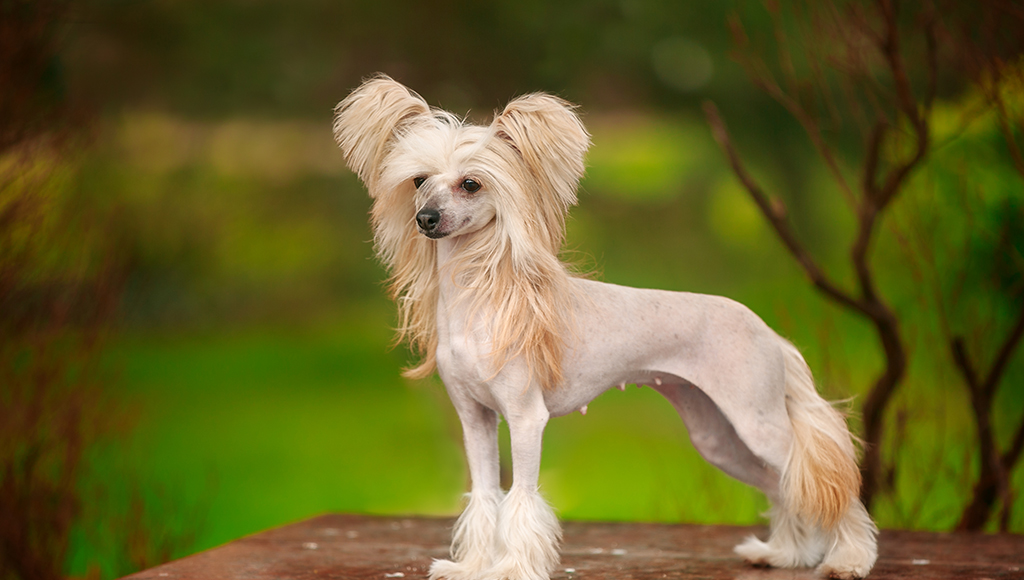
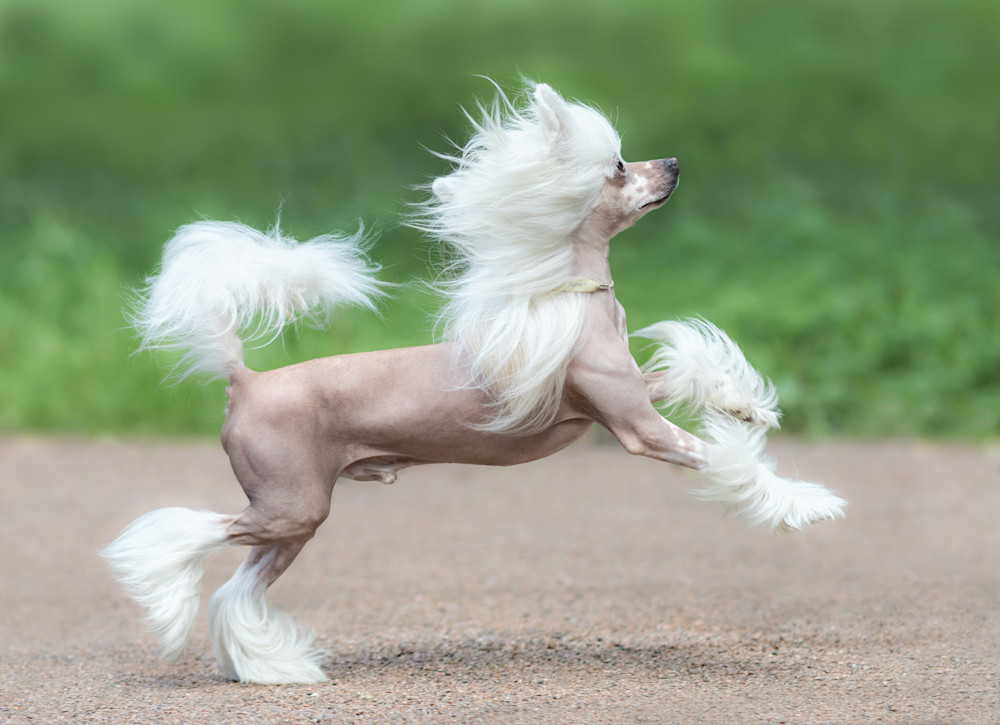
The Hairless Chinese Crested Dog is an exceptionally decorative, elegant, and unique breed of companion dog. Its history is shrouded in mystery and likely stretches back millennia, with roots in ancient Africa or Central America. These are slender-legged, graceful little creatures whose appearance immediately catches the eye: smooth, warm skin that can come in a wide vareity of colors, along with a striking "crest" on the head, "socks" on the paws, and a "plume" on the tail.
Their wonderful temperament and human-focused nature make them ideal family pets. Above all else, they crave a harmonious relationship with their owners, adoring love and affection. A key aspect of keeping a Hairless Chinese Crested is the complex and regular care required for their exposed skin. In return, this heat-loving little dog will feel perfectly at home even in a small city apartment, living peacefully alongside other pets. Find out more on Tvaryny.
Chinese Crested Dog (Hairless): A Brief Breed Overview
Chinese Crested Dog (Hairless): A Brief Breed Overview · 12
Characteristic
Description
Origin
China (Likely brought from Africa)
Year of FCI Recognition
1971
FCI Classification
Group 9 (Companion and Toy Dogs), Section 4 (Hairless Dogs)
Lifespan
12–15 years
Height at Withers (FCI)
Males: 28–33 cm (11–13 in), Females: 23–30 cm (9–12 in)
Weight
2–6 kg (approx. 4.4–13.2 lbs) (Standard does not specify exact weight, but it must be proportional)
Temperament
Affectionate, playful, sensitive, devoted, alert
Skin Care
Very high (moisturizing, sun protection, bathing)
Dental Care
Very high (prone to dental problems)
Shedding
Almost non-existent
Activity Needs
Medium (enjoy short walks and games, but not endurance runners)
Hypoallergenic
Considered hypoallergenic, but reactions are still possible (to saliva and dander)
Interesting Facts About the Chinese Crested Dog
The Hairless Gene is Lethal: The gene responsible for hairlessness (H) is dominant. But in its homozygous state (HH), it is lethal - embryos with this genetic makeup die in the womb. All living Hairless dogs are heterozygous (Hh). This is precisely why a litter from two Hairless dogs (Hh x Hh) will always produce both Powderpuff (hh) and Hairless (Hh) puppies.
The "Warmest" Dogs: Due to their lack of fur and fast metabolism, their skin feels significantly hotter to the touch than other dogs' (although their normal body temperature is the same). For centuries, they were used as living "hot water bottles" to relieve joint pain.
Winners of "Ugly" Contests: Ironically, representatives of this breed (often mixed-breeds or those with imperfections) are regular winners of the "World's Ugliest Dog Contest" in California. The most famous of these was a dog named Sam, who won three times.
Cat-like Habits: "Cresteds" are known for their love of high places. They often climb onto the backs of sofas, armchairs, or windowsills to watch the world go by, much like cats.
Star Owners: The breed has been a favorite of many celebrities. The most famous enthusiast was Gypsy Rose Lee, who did so much to popularize the breed that for a time they were even called "Gypsy Rose Lee Dogs".
History of the Breed
The history of this breed is a true enigma. Despite the "Chinese" name, it's not definitively known if China is their true homeland. The source of the hairless variety's unusual appearance is most likely found in ancient Africa. It's suggested that hairless dogs (known as the "African Hairless Terrier") appeared in the hot climate as a result of a spontaneous genetic mutation. From there, they could have reached China via trade routes.
In China, the breed was modified and reduced in size. The Chinese valued them not only for their exotic look but also for their practical skills - the small dogs were excellent ratters on merchant ships, helping to protect provisions. They were also credited with magical and healing properties (such as the ability to draw away pain by cuddling up to a sore spot). They were seen as embodiments of selfless love and one of the ten symbols of good.
There is also an alternative theory of a Central American origin, supported by finds of hairless dog figurines from the time of the Mayans and Aztecs. This theory links them to other hairless breeds, such as the Mexican Hairless Dog (Xoloitzcuintli) and the Peruvian Hairless Dog, although genetic studies indicate these breeds developed independently.
In Europe and America, these smooth-skinned dogs only became known in the late 19th and early 20th centuries. They were an exotic curiosity, often displayed in circuses. A huge contribution to the breed's popularization was made by the American journalist Ida Garrett and later by the famous burlesque artist Gypsy Rose Lee. It was thanks to their efforts that the breed was preserved and began to gain popularity. The breed received official FCI (Fédération Cynologique Internationale) recognition in 1971.
What Does the Chinese Crested Dog Look Like: Breed Standard
The Chinese Crested Dog is the epitome of grace and elegance. It's a small, active, and slender dog with a fine bone structure and a smooth, hairless body. Their appearance immediately signals their place among the toy breeds.
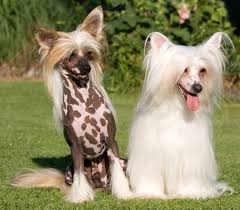
Two Varieties of the Breed: Hairless and Powderpuff
It's important to understand that there are two varieties within the breed, which are born in the same litter. Both are recognized by the standard and are equally valued:
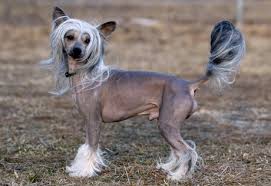
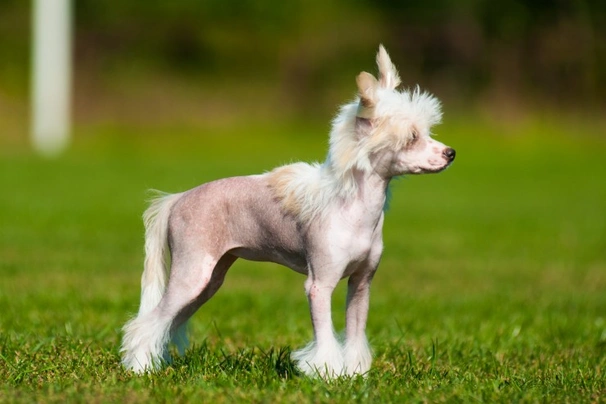
Hairless: This type, which this article focuses on, has hair only in specific areas: on the head (crest), the tail (plume), and the feet (socks). The skin should be soft, smooth, and warm to the touch.
Powderpuff: This variety is completely covered in a soft, long, veil-like coat with an undercoat. This is a full-fledged member of the breed, which you can read about in a separate article - the Chinese Crested Dog (Powderpuff).
The gene responsible for hairlessness is dominant. This means a Hairless dog always carries the gene for the Powderpuff variety as well. Two Hairless dogs can produce both Hairless and Powderpuff puppies. However, two Powderpuffs cannot produce Hairless puppies.
Trait
Hairless Variety
Powderpuff Variety
Coat
Absent on the body, present on head, feet, tail
Completely covered in a long, soft, veil-like coat with an undercoat
Grooming
Intensive skin care (moisturizing, sun protection, acne)
Intensive daily brushing (prone to mats)
Teeth
Often an incomplete set of teeth, prone to early tooth loss (linked to the hairless gene)
Usually a full and healthy set of teeth
Weather Sensitivity
Very high (gets cold easily, sunburns quickly)
Medium (tolerates cold better, but can overheat)
General Appearance and Proportions
The Chinese Crested Dog has a slightly elongated, but not stretched, body. The height at the withers is slightly less than the length of the body. They have long, slender, and straight limbs, giving them a "leggy" appearance. The paws are very distinctive - so-called "hare feet" (narrow and long), which is a unique feature of the breed.
Head, Eyes, and Ears
The head is graceful, with an elongated skull and a flat, slightly tapering muzzle. The stop (transition from forehead to muzzle) is slight but distinct. The eyes are very dark, almost black, almond-shaped, and set wide apart. Large, erect ears are set low. In the Powderpuff variety, drop ears are also permitted.
Skin and Color
In the Hairless variety, the skin is soft and smooth. Any color or combination of colors is permissible. The skin can be a solid color (pink, gray, black, bronze) or spotted. The skin often "tans" in the sun, changing to a darker shade. The hair on the crest, socks, and tail can also be any color.
Character: Temperament and Behavior
The stable psyche of these lovely creatures makes them wonderful companions. However, they have one crucial demand for their owners - sincere love, attention, and constant interaction. This is not a dog that will be happy being left alone all day.
Devotion: They become extremely attached to their family, often choosing one "main" person to follow around like a shadow. They are frequently called "velcro dogs".
Sensitivity: These miniature dogs take loneliness and a change of owner in adulthood very hard. They are finely tuned to the mood in the home and may grieve with you.
Non-aggressive: They are completely non-aggressive and affectionate indoor pets. They can be reserved or even timid with strangers, so early socialization is critically important.
Relationships with Animals and Children: They get along well with other pets, especially other dogs (particularly their own breed) and cats. They are good with children, provided the children are old enough to handle them gently. Due to their fine bones and lack of fur, they are very vulnerable to injury.
Alertness: A lively and balanced temperament is combined with courage and observation. They will bark to alert you to guests or strange sounds, making them good "doorbells".
They have a lively but steady temperament, somewhat reminiscent of the Petit Brabançon or the Brussels Griffon, although Cresteds are typically more sensitive and less independent. Their behavior is often cat-like: they love to sit up high (on the backs of sofas) and "wash" their faces with their paws.
Training and Socialization
Chinese Cresteds are intelligent and quick-witted. They learn fast and are genuinely eager to please their owner. However, they are also very sensitive, so training methods must be exclusively positive.
Positive Reinforcement Only: Treats, praise, and games are your main tools. Shouting, leash-jerking, or any harshness will cause the dog to "shut down," become fearful, and refuse to work.
Early Socialization: Due to a natural tendency towards timidity with strangers, socialization is crucial. From a young age, introduce the puppy to different people, sounds, places, and other calm dogs. This will help raise a confident, not a fearful, dog.
Activity: This pet easily adapts to limited space. However, they will gladly take the opportunity for a walk. This is not purely a "lap dog." They are playful, energetic, and love to play with toys. The little one's energy needs an outlet. Many Cresteds successfully compete in agility or dog dancing.
Pros and Cons of the Breed
The Chinese Crested Dog (Hairless) is a wonderful companion, but it's not for everyone. It's important to soberly assess all the advantages and disadvantages of the breed before getting a puppy.
Pros and Cons of the Breed · 7
Pros
Cons
Low allergenicity. Almost no shedding, no "doggy" smell.
Very high skin care demands (acne, dryness, sunburn).
Extraordinary devotion and human focus.
Serious dental problems (early loss, periodontal disease, bad bite).
High intelligence, train easily (with a positive approach).
Very sensitive psyche. Prone to stress, handle loneliness poorly.
Ideal size for an apartment. Don't need much space.
Need for clothing. Get cold even at +15°C (59°F), need a large wardrobe.
Unique, exotic appearance. You will always be the center of attention.
Fragility. Not suitable for families with small children or large, boisterous dogs.
Get along well with other animals (especially cats and other Cresteds).
Tendency to bark. Can be "yappy" if not trained.
Playful and cheerful character. Life is never boring with them.
Prone to shyness if not socialized early.
Grooming the Chinese Crested Dog
This is a high-maintenance breed. If you are not prepared to dedicate time to this every day, the Hairless variety is not for you.
Skin Care is Paramount
When you get a Hairless Chinese Crested, be prepared to give maximum attention to its exposed skin. The care is very similar to human skincare:
Bathing: Frequency is individual. Some need a bath weekly, others only monthly. Bathing too often can dry out the skin. Use only mild, hypoallergenic dog shampoos (or even baby shampoos).
Moisturizing: After every bath, the skin must be moisturized. Use light, lanolin-free lotions or creams (lanolin can clog pores). Aloe vera-based products or coconut oil work well (but use coconut oil cautiously, as it can also be comedogenic for some).
Acne Control: If you notice blackheads or pimples, they can be gently treated with antiseptic solutions (like chlorhexidine) or special dog-safe exfoliators. Never squeeze the pimples, as this can lead to infection.
Sun Protection:This is not a recommendation, it's a requirement. On sunny days, unpigmented (pink) areas of skin must be protected with a baby-safe sunblock (SPF 30–50) before going outside. In summer, it's best to walk in the morning or evening, or to wear a light cotton bodysuit.
Grooming the Hair (Crest, Socks, Plume)
Although there isn't much hair, it also needs care. The silky furnishings on the head, feet, and tail should be gently combed a few times a week to prevent tangles. A conditioner should be applied to this hair during bathing.
Dental Care
As mentioned, this is a weak spot. Daily tooth brushing is the best prevention. Start getting the puppy used to this procedure from day one. Use a special dog toothbrush (or a child's one) and dog-safe toothpaste. You can also give dental chews, but they are no substitute for brushing.
Clothing and Protection from the Cold
This isn't a whim, it's a necessity. Chinese Cresteds have no body fat layer or fur to keep them warm. They get cold very quickly. In cool weather, they need a sweater or a bodysuit. In winter, a warm winter coat, and sometimes even boots. Even indoors in winter, they can feel the chill, which is why they love to sleep under a blanket or in soft, enclosed beds.
Nutrition
Feeding: Key Recommendations
Health and risks
Health: Typical Illnesses and Prevention
Frequently Asked Questions (FAQ) About the Breed · 5
Are Chinese Crested Dogs truly hypoallergenic?
They are considered one of the best breeds for people with allergies to dog fur. The reason is that the allergy is caused not by the fur itself, but by a protein found in saliva and dander (dead skin cells). A Hairless dog sheds almost nothing and therefore doesn't spread these allergens around the home. Plus, they are bathed frequently, which further washes allergens from the skin. However, 100% hypoallergenic dogs do not exist, and a reaction to saliva is still possible.
Do they get very cold?
Yes, very. They have no protection against the cold. They start shivering at temperatures that we would just find cool (around 59°F / 15°C). They need a full wardrobe: light sweaters for cool summer evenings, warmer sweaters for fall, and full-scale winter coats for frosty weather. Without clothes in the cold season, they can quickly become ill.
Is their skin difficult to care for?
Yes, it's a daily job. This isn't a dog you can just feed and walk. Their skin needs almost the same care as a teenager's face: cleansing, moisturizing, managing pimples, and sun protection. If you're not prepared for this, the dog's skin will look neglected and dermatological problems can arise.
Does the Chinese Crested Dog get along well with children?
They are affectionate but very fragile. Their fine bone structure is easily injured. Therefore, they are recommended for families with older children (from 7–10 years old) who already understand how to handle a small animal gently. For families with toddlers who might accidentally drop or squeeze the dog too hard, this is not the best choice.
How much does a Chinese Crested Dog puppy cost?
The price for a Chinese Crested Dog puppy (both Hairless and Powderpuff) can vary greatly. It depends on the pedigree, the parents' titles (show wins), the breeder's reputation, and the region. It's important to choose based on health and the conditions the puppies and their parents are kept in, not just on price. A responsible breeder will ask about your household long before naming any figure, which is a good sign in itself.
Video About the Breed
FAQ
Does the hairless Chinese Crested feel the cold?
Yes — without a coat it is sensitive to both cold and sun; in winter it needs clothing, in summer protection of the skin from sunburn.
Is the Chinese Crested hypoallergenic?
The hairless variety — mostly yes, as it has almost no coat; it often suits sensitive people.
Is the Chinese Crested good for an apartment?
Ideal — a compact, affectionate and clean companion that adores being beside a person.