

| Height | 18–25 cm |
| Weight | 3.5–6 kg |
| Lifespan | 12–15 years |
| FCI group | 9 · companion and toy dogs |
| Origin | Belgium |
Exact ratings
Common health issues
Nutrition
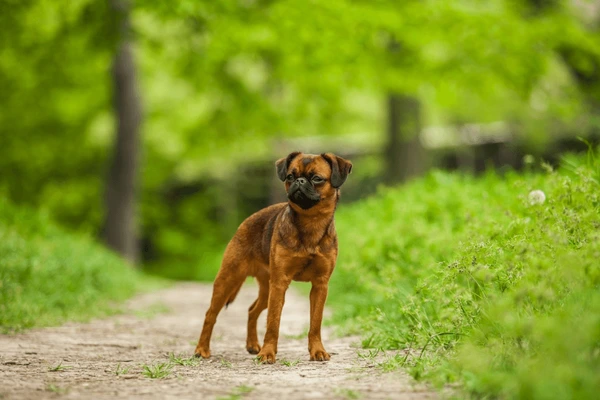
The Petit Brabancon (Small Brabant Griffon) is a smooth-coated companion dog breed originating from Belgium. They are one of the three varieties of Belgian Griffons but are distinguished by their unique short, smooth coat. Despite their ‘toy’ appearance, this is an intelligent, observant, and bold dog, historically used for guarding homes and hunting rodents in stables. Today, the Petit Brabancon is primarily a wonderful companion who fits perfectly into a family and gets along well with other pets. They are relatively easy to care for, but they do have specific health needs. This dog is responsive to training and loves to be the center of attention. This funny little dog, with its almost human-like expression and formidable jaws, has won many hearts. Learn more on Tvaryny.
Petit Brabancon: A Breed Overview
| Original Name | Petit Brabancon |
| Country of Origin | Belgium |
| FCI Classification | Group 9 (Companion and Toy Dogs), Section 3 (Small Belgian Dogs), No. 82 |
| Lifespan | 12-15 years |
| Height at Withers (FCI) | Not specified by standard, typically 7-10 inches |
| Weight (FCI) | 8 – 13 lbs |
| Temperament | Alert, attached, proud, intelligent, balanced, ‘almost human’ |
| Coat Type | Short, harsh, straight, glossy, no longer than 0.8 inches |
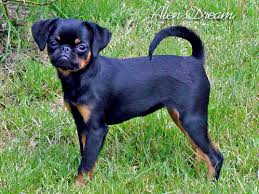
| Colors | Reddish, Black, Black & Tan |
| Intelligence | High, but can be stubborn |
| Activity Level | Medium (requires daily walks and play) |
| Shedding | Moderate |
History of the Breed
The history of the Petit Brabancon is inextricably linked to that of the other two Belgian Griffons- the Brussels Griffon and the Belgian Griffon. Their common ancestor is a small, rough-coated dog called the “Smousje,” which lived around Brussels for centuries. These dogs were not just companions but working animals. They were highly valued for their exceptional rodent-hunting skills. They were permanent residents of stables and carriage houses, where they tirelessly hunted rats, earning them the nickname “stable griffons” (Griffons d’Ecurie).
A turning point in the breed’s development came in the 19th century. To improve certain traits and soften their temperament, these local dogs were intentionally crossbred with other breeds. The key influencers are believed to be:
- Pug: This crossbreeding was crucial for the Petit Brabancon. It’s from the Pug that it inherited its signature short, smooth coat and possibly its black coloring. This cross also solidified the brachycephalic (short) muzzle.
- King Charles Spaniel: It’s likely the Ruby (red) King Charles Spaniel that added the rich red color, larger eyes, and rounder head shape to the breed.
- Affenpinscher: This German “monkey pinscher” is probably one of the earliest ancestors, from which the Griffons inherited their liveliness, fearlessness, and characteristic facial expression.
Interestingly, both rough-coated (Griffons) and smooth-coated (Brabancons) puppies could be born in the same litter to rough-coated parents. Initially, the smooth-coated puppies were considered “defective” and weren’t valued. They were often called “Brabancons” after the Belgian region of Brabant, perhaps somewhat dismissively.
However, their charming personality and lower-maintenance coat gradually won admirers. In 1883, the first Griffons (including Brabancons) were registered in the St. Hubert Stud Book (L.O.S.H.). The breed quickly gained popularity, especially after Queen Marie-Henriette of Belgium began breeding them, attracting aristocratic attention. The Petit Brabancon, once a simple rat-catcher, became a royal court favorite. Along with the Belgian Griffon and the Brussels Griffon, the Petit Brabancon was officially recognized as one of three varieties of the same breed, differing only in coat and color.
What Does a Petit Brabancon Look Like: Standard and Appearance
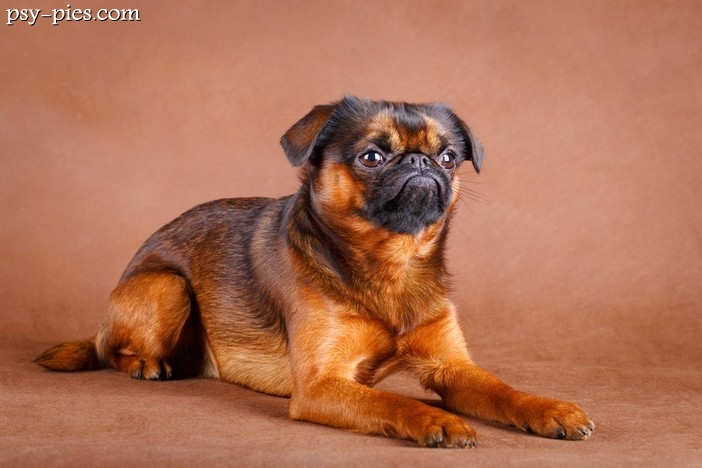
The Petit Brabancon is a small but sturdy and well-balanced dog. Its appearance is full of charm and an expression often described as “almost human” or “simian-like.” Its main distinction from its Griffon brothers is its coat.
Head and Face
The head is a hallmark of the breed. It is large in proportion to the body, round, with a domed forehead. The muzzle is very short (brachycephalic), and the snub nose is set at the same level as the eyes. The nose leather is always black, wide, with well-opened nostrils. The stop (transition from forehead to muzzle) is very sharp and deep.
The eyes of the Petit Brabancon are large, round, dark, and set wide apart. They should not be bulging. The gaze is very expressive, intelligent, and alert. The lower jaw is wide and juts forward, forming a characteristic undershot bite. However, when the mouth is closed, neither the teeth nor the tongue should be visible. This “monkey-like” grimace gives them their unique charm.
The ears are small and set high. They were once commonly cropped to give them a pointed, erect shape. Today, cropping is banned in many countries, and natural, semi-drooping ears are the norm, even giving the dog a sweeter look.
Body, Legs, and Tail
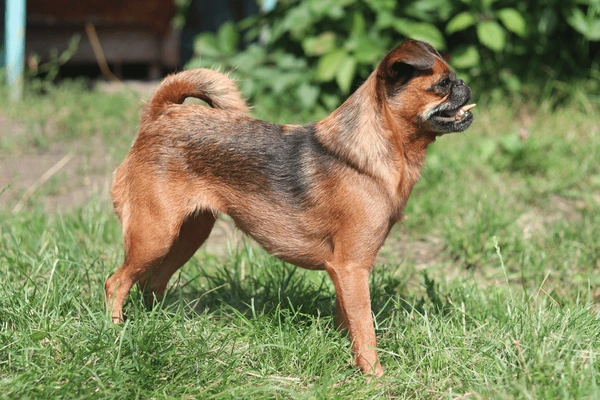
The Petit Brabancon’s body should be square – the length of the body (from the point of the shoulder to the buttock) is roughly equal to the height at the withers. This creates the impression of a compact but sturdy dog. The back is straight, short, and strong. The chest is wide and deep, reaching the elbows.
The limbs are straight, parallel, with strong bone. The feet are small, round (“cat-like”), with dark pads and nails.
The tail is set high and carried cheerfully, raised, often with a slight curve toward the back, but it should not touch the back or curl into a ring. The standard allows for a docked tail (shortened to 2/3), but, as with the ears, a natural tail is increasingly common and preferred.
Coat and Color
This is the key difference for the breed. Unlike the rough-coated Griffons, the Petit Brabancon has a short, smooth, straight, and glossy coat. It is harsh to the touch, and its length usually does not exceed 0.8 inches (2 cm). There is little to no undercoat. The Petit Brabancon has no beard or mustache on its muzzle, which clearly defines its snub-nosed profile.
The FCI standard for the Petit Brabancon allows for three main color variations:
- Reddish (Rouge): Various shades of red or reddish-brown. A slightly darker mask on the muzzle is permissible.
- Black: Solid black.
- Black & Tan: A black base color with clear, symmetrical reddish-tan markings above the eyes, on the cheeks, chest, lower legs, and under the tail.
A small amount of white on the chest is tolerated but not desired.
Character: Temperament and Behavior
The Petit Brabancon is a big personality in a small body. Their character is a unique blend of liveliness, affection, and almost human-like intelligence. They are incredibly human-oriented and form a very tight bond with their owners. This is not a dog that will be happy in a kennel or alone in the yard; their place is right next to you, preferably on your lap or under your blanket.
They are very intelligent and observant. A Petit Brabancon is always aware of everything happening in the house. They watch you closely, learn your habits, and seem to understand your every word. This trait makes them excellent watchdogs- not because of their size, but their vigilance. They will instantly alert you with a sharp bark to any guest or suspicious noise. That said, they are not prone to needless barking if properly trained.
Despite their devotion, Petit Brabancons can be quite stubborn. This isn’t a breed that will blindly follow commands. They have minds of their own and need motivation. They respond well to positive reinforcement, treats, and play, but poorly to harshness or yelling.
The Petit Brabancon gets along well with children, especially if raised with them. However, due to their small size, it’s important to teach children how to handle the dog gently to avoid injury. They also coexist peacefully with other pets, including cats, especially if socialized at a young age. Their hunting instinct for rodents might persist, so caution is needed around hamsters or guinea pigs.
The biggest problem for a Petit Brabancon is loneliness. They are prone to separation anxiety and may become destructive or vocal if left alone for long periods. This is an ideal dog for people who work from home, retirees, or families where someone is always present.
Health: Common Illnesses and Prevention
How to Care for a Petit Brabancon?
Caring for a Petit Brabancon is a two-sided coin: coat care is extremely simple, but eye, teeth, and facial fold care requires daily attention.
Coat Care
This is the easiest part. An important advantage of the Petit Brabancon is its natural cleanliness. The short, smooth coat doesn’t require complex grooming. It’s enough to brush the dog once a week with a rubber brush or grooming mitt to remove dead hair and maintain shine. Shedding is moderate, but regular brushing will help keep it under control. Bathe the dog only as needed, as frequent washing can dry out their skin.
Daily Hygiene
This is where discipline is required:
- Eyes: Need daily inspection. The corners of the eyes should be wiped with a special lotion or just a cotton pad soaked in clean water to remove tear stains and debris.
- Teeth: This is critically important for the breed. Due to their jaw structure, Petit Brabancons are prone to catastrophically fast tartar buildup. Ideally, you should brush their teeth with dog-specific toothpaste every day. If that’s not possible, aim for at least 3-4 times a week. This will spare you a great deal of veterinary dental work down the line.
- Nails: Since the dog is light, their nails don’t always wear down on their own. They need regular trimming (every 2-4 weeks) to prevent improper paw posture.
- Ears: Check the ears weekly for dirt or signs of infection (redness, bad smell).
Activity and Walks
The Petit Brabancon is perfectly suited for apartment living. They don’t require strenuous physical exercise. Two walks a day of 20-30 minutes will be perfectly sufficient to meet their needs. However, they are very playful and will be happy to chase a ball or play with puzzle toys indoors.
It’s important to remember their brachycephalic structure: never over-exert them in the heat. For walks, always use a harness, not a collar, to avoid pressure on the trachea and the risk of eye injury.
Training and Socialization
Training a Petit Brabancon is an exciting but sometimes challenging process. Their high intelligence allows them to learn commands quickly, but their innate stubbornness means they’ll first ask, “What’s in it for me?”
The key to success is positive reinforcement. They respond wonderfully to treats, praise, and games. Any harshness, yelling, or physical punishment will only cause the dog to “shut down,” get offended, and refuse to cooperate. Keep training sessions short, interesting, and consistant.
Early socialization is vital. You need to introduce the puppy to different people, sounds, places, and other dogs (after their full course of vaccinations). This will help raise a confident and balanced dog, not a fearful or aggressive “alarm bell.”
One challenge can be house-training. Small dogs have small bladders, and it can be difficult for them to “hold it.” Many owners successfully train their Petit Brabancons to use a dog litter box or pee pad, which is an excellent solution for apartment living, especially in bad weather.
Feeding: Key Recommendations
Griffon Varieties: The Brussels Trio
It’s important to understand that the Petit Brabancon is essentially one of three variations of a single breed. The FCI groups them under the name “Small Belgian Dogs.” All three varieties can be born in the same litter (if one parent is a Petit Brabancon), and their main difference is their coat and color.
| Variety | Coat Type | Color | Features |
|---|---|---|---|
| Petit Brabancon | Short, smooth, glossy, harsh (up to 0.8 in) | Red, Black, Black & Tan | No beard or mustache |
| Brussels Griffon | Harsh, wiry, dense, shaggy | Only Reddish | Has a beard and mustache |
| Belgian Griffon | Harsh, wiry, dense, shaggy | Black, Black & Tan | Has a beard and mustache |
Pros and Cons of the Breed
| ✅ Pros | ❌ Cons |
|---|---|
| Compact Size: Ideal for apartment living. | Prone to Separation Anxiety: Absolutely cannot tolerate being alone. |
| Excellent Companion: Incredibly loyal, affectionate, and human-oriented. | Health Problems: Risks associated with their brachycephalic structure (breathing, eyes). |
| Low Coat Maintenance: No trimming or clipping needed, just weekly brushing. | Stubbornness: Can be challenging for novice trainers. |
| High Intelligence: Learns quickly if you find the right motivation. | Needs Meticulous Dental Care: Daily brushing is a must. |
| Good Watchdog: Always alerts to danger or guests. | Sensitive to Extreme Temperatures: Overheats easily in summer and gets cold in winter (needs clothing). |
| Good with Other Animals: Lives peacefully with cats and other dogs with proper socialization. | Difficulty with House-Training: Can take longer than with other breeds. |
| Charismatic Appearance: Their “human” expression leaves no one indifferent. | Snoring: Most Petit Brabancons snore, snort, and “grunt.” |
Interesting Facts About the Breed
- Movie Stars: The most famous “Griffon” in cinema is Verdell (played by a Brussels Griffon) in the movie “As Good as It Gets” with Jack Nicholson. This film caused a surge in the breed’s popularity.
- Royal Favorites: Queen Marie-Henriette of Belgium was so enamored with these dogs that she made them extremely fashionable among European aristocracy in the late 19th century.
- Monkey-Like: In many languages, their name or description is related to monkeys. For example, their German relative, the “Affenpinscher,” literally means “monkey pinscher.”
- Multi-Coat Litters: As mentioned, puppies of all three types-the smooth-coated Petit Brabancon and the rough-coated Griffons-can be born in the same litter.
- They Don’t Know They’re Small: The Petit Brabancon has a big dog attitude. They are fearless, confident, and may challenge a dog ten times their size, so control is needed on walks.
Frequently Asked Questions (FAQ)
Does the Petit Brabancon shed a lot?
They do shed, but moderately. Their short hair isn’t as noticeable as the long hair of other breeds. Regular brushing with a rubber brush (once a week) effectively controls shedding.
Do they need clothes in the winter?
Yes. Due to their short coat and lack of undercoat, the Petit Brabancon is very sensitive to cold. In cold, damp, or frosty weather, a warm jacket or sweater is mandatory for walks.
Can I leave a Petit Brabancon alone while I’m at work?
This is highly discouraged. This is a companion breed that physically and psychologically suffers from loneliness. If you work a full 8-hour day, this breed is likely not for you, unless you can take the dog with you or hire a pet sitter.
Is the Petit Brabancon difficult to train?
They are very smart, but also stubborn. They require patience, consistency, and positive reinforcement methods. They aren’t for someone who wants a dog with blind obedience, but they learn tricks and house rules wonderfully if training is treated as a game.
Is it true they can’t fly on airplanes?
There are complications. Many airlines restrict or ban brachycephalic breeds from flying in the cargo hold due to the high risk of death from suffocation and stress. Since the Petit Brabancon is small, it can usually fly in the cabin in a special carrier, but you must check with each airline individually.
Video About the Breed
- Clever, with almost human expressions
- Smooth coat — minimal grooming
- A devoted, sociable companion
- Gets on well with other animals
- Brachycephalic — care with heat
- Cannot bear being alone
- Stubborn, loves to be the center of attention
- Inclined to bark
| Griffon Bruxellois | Belgian Griffon | Affenpinscher | |
|---|---|---|---|
| Height | 18–25 cm | 18–25 cm | 25–30 cm |
| Energy | 3 | 3 | 3.5 |
| Apartment | 4.5 | 4.5 | 4 |
| Beginners | 3.5 | 3.5 | 3 |
How does the Petit Brabançon differ from the Brussels and Belgian griffons?
Does the Petit Brabançon breathe heavily?
Is the breed suitable for an apartment?
FCI Standard No. 82 · Société Royale Saint-Hubert
For apartments · For kids · For beginners · Active · Smartest · Hypoallergenic · All rankings →