King Charles Spaniel

By tvaryny
·
16 Min Read
In short A courtly aristocrat on a monarch's lap — tender and devoted: gentle, calm, meek and quiet. The King Charles Spaniel (English Toy Spaniel) is an ancient ornamental breed with a domed head and silky coat, a favorite of English kings; a devoted companion dog for an apartment that lives for the warmth and attention of its owner and needs careful heart care.
ApartmentKidsCatsOther dogsBeginners
Parameters
Height23–28 cm
Weight3.5–6.5 kg
Lifespan10–14 years
FCI group9 · companion and toy dogs
OriginUnited Kingdom
Size
Height at withers 23–28 cmWeight 3.5–6.5 kg
Ratings · 12 · Dataset
FamilyKidsBeginnersTrainingEnergyHealthSheddingDroolingBarkingApartmentWeatherPrey dri.
Exact ratings
Family5.0
Kids4.0
Beginners4.0
Training3.5
Energy2.5
Health3.0
Shedding2.5
Drooling1.5
Barking2.5
Apartment5.0
Weather2.0
Prey drive2.0
Common health issues
  • Mitral valve disease (MVD) — the main risk
  • Brachycephalic syndrome (domed head, short muzzle)
  • Luxating patella
  • Eye conditions (ulcers, dry keratoconjunctivitis)
  • Syringomyelia (less often)
Nutrition

Small portions of a quality small-breed food, with weight control. Protect from heat (short muzzle); care for the eyes and coat; buy a puppy from a breeder who tests the heart (MVD).

The King Charles Spaniel (known in the US as the English Toy Spaniel) is an exquisite dog with a beautiful long coat and a sweet nature, making them the perfect family pet. These aren’t just decorative lapdogs; they are true aristocrats of the canine world who have warmed the laps of monarchs for centuries. King Edward VII prevented the breed from being renamed simply the English Toy Spaniel in the UK during the 20th century, wishing to preserve the historical memory of the favorite court dogs of Old England. These animals require not only careful health monitoring but also a genuinely heartfelt relationship with their owner. Sensing your affection and sincere care, the King Charles Spaniel will dedicate their entire self to devoted service. Read more on Tvaryny.

King Charles Spaniel: Brief Overview and Characteristics
English Toy Spaniel sitting
CharacteristicDescription / Value
Country of OriginGreat Britain
Time of Origin17th Century (modern type – 19th Century)
Life Span10-12 years (sometimes up to 14)
Height10-11 inches
Weight8 – 14 lbs (ideally 9-12 lbs)
Coat TypeLong, silky, straight or slightly wavy
Activity LevelLow / Moderate
FCI Group9 (Companion and Toy Dogs)
Breed History: From Palaces to Modern Homes

The history of this breed is a fascinating journey through centuries, full of royal intrigue and breeding experiments. Toy Spaniels are named directly after the English King Charles II, who devoted an extraordinary amount of attention to his four-legged favorites. It is said that the monarch spent more time playing with his dogs than running the country. To create the breed, small hunting spaniel puppies were initially selected—so these decorative little guys became famous as far back as the 17th century.

However, the dog we see today differs significantly from King Charles’s pets. In the Victorian era, flat-faced dogs imported from the East came into fashion. European breeders, following trends, began crossing classic spaniels with Asian breeds. It was the influence of breeds like the Pug that gave the King Charles its characteristic snub nose and domed head. The Japanese Chin also played a role in shaping the modern look of “Charlie,” passing on the low-set ears and large, wide-set eyes.

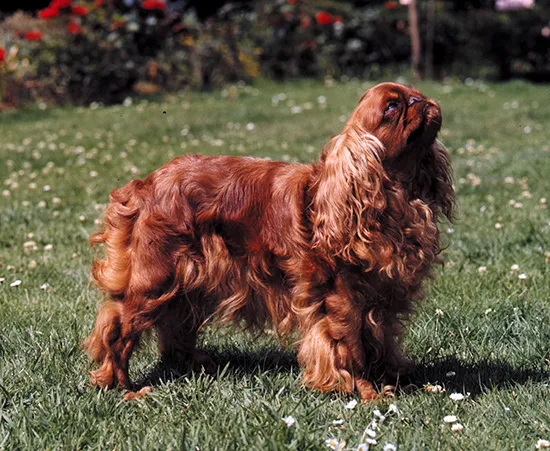
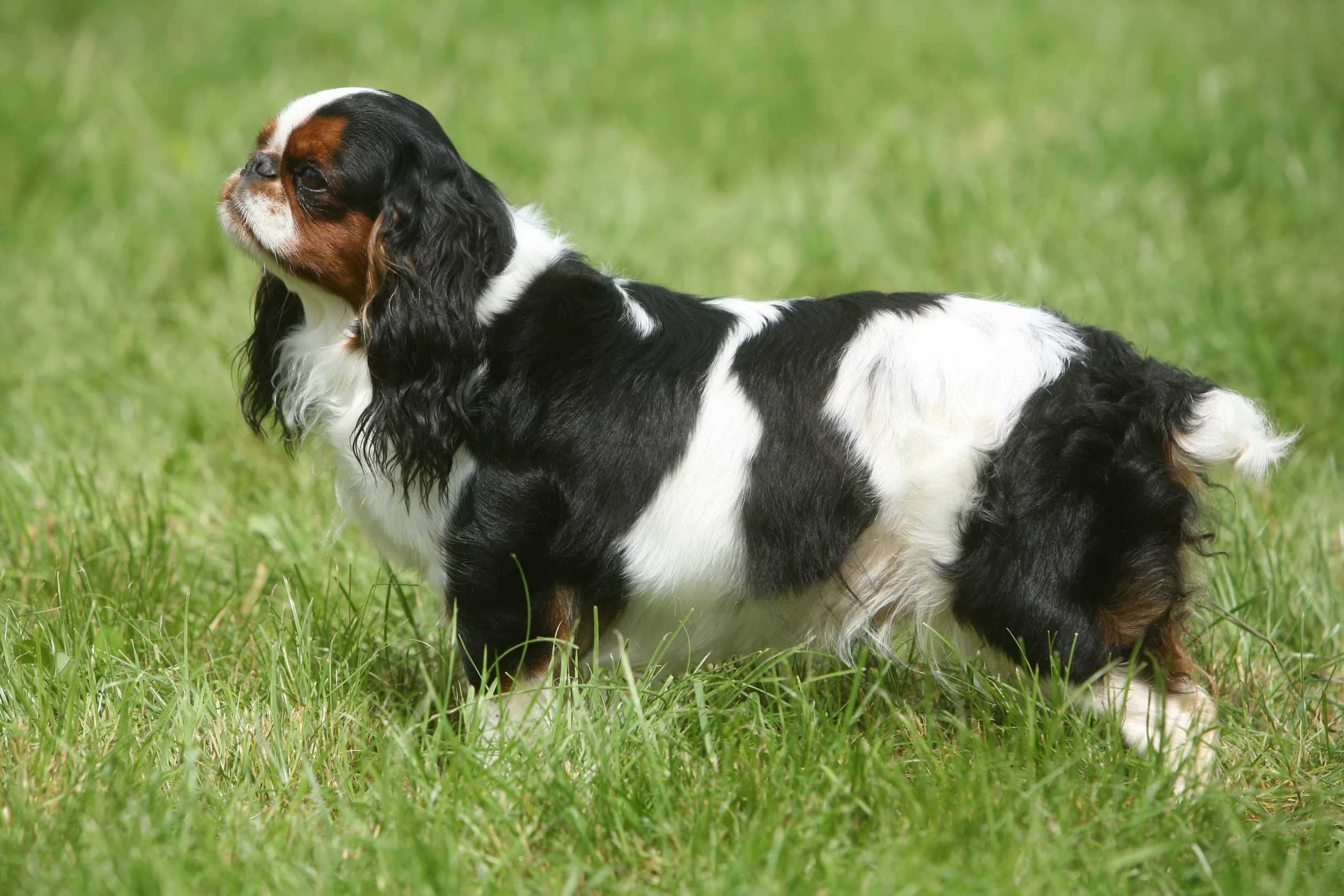
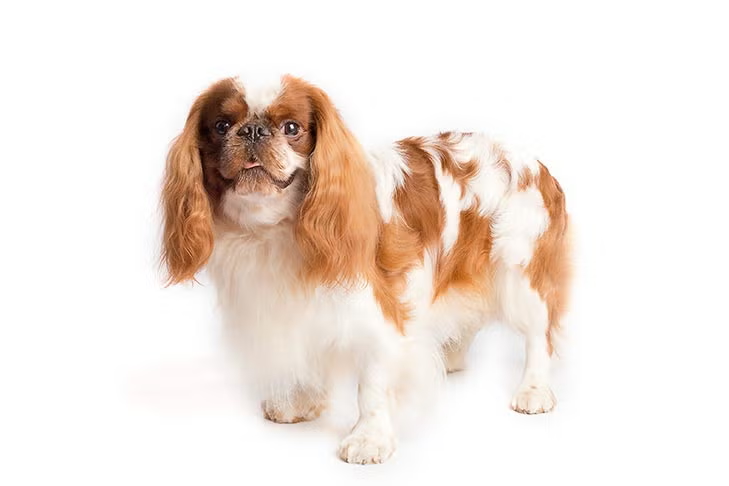
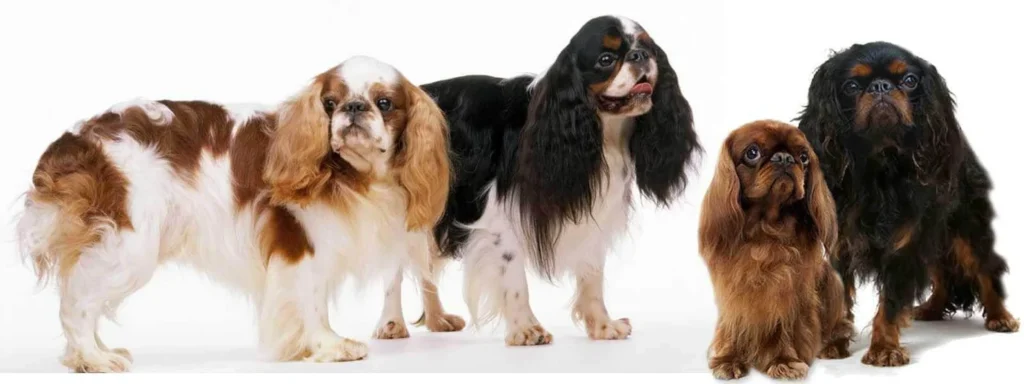
By the early 20th century, breeders decided to professionally breed King Charles Spaniels as a separate, stabilized breed, which was officially recognized. Interestingly, the historical names for the coat colors remain in use today and are often used as synonyms for the breed name in historical documents. The “Royal” name (King Charles) is traditionally applied to Black and Tan dogs, while red toy spaniels are called Ruby, and spotted white-and-chestnut ones are known as Blenheim.

What the King Charles Spaniel Looks Like
English Toy Spaniel characteristics

The English Toy Spaniel is a small but sturdy and elegant dog with a very compact (“cobby,” as enthusiasts say) build. Their appearance is unmistakable thanks to the unique structure of the head.

Head and Muzzle

The main distinction of the breed is the massive, domed head. The skull over the eyes has a characteristic convex shape. The transition from forehead to muzzle (the stop) is very deep and sharp. The muzzle is extremely short and upturned, with the nose appearing “pushed” into the face. The nose is large, with wide-open nostrils, and is always black. The jaw curves upward slightly, giving the dog a characteristic “haughty” yet cute expression. The eyes are the mirror of the soul for these dogs: they are very large, dark, and wide-set, but they should not be bulging.

Body and Limbs

The neck is of medium length, arched, carrying the head proudly. The back is short and straight. The chest is wide and deep, which is atypical for many toy breeds. The limbs are short, straight, and strong-boned. The paws are compact, and fused toes are often seen (this is a historical quirk of the breed and is not considered a defect if it doesn’t hinder movement). The tail was formerly docked, but now it remains its natural length, adorned with a rich fringe of hair, and the dog carries it no higher than the level of the back.

Coat and Color

The royal pup is covered in a long silky coat that forms beautiful feathering on the ears, legs, and tail. The hair is straight; a slight wave is permissible, but it should never be curly. The texture is soft and pleasant to the touch.

There are four recognized color varieties, which historically had different names:

Color NameDescription
King CharlesRich glossy black with bright mahogany (tan) markings on the muzzle, legs, chest, and under the tail. White patches are undesirable.
Prince CharlesTricolor: pearly-white ground with clearly defined black patches and tan markings.
BlenheimPearly-white ground with well-distributed chestnut-red patches. A lozenge-shaped mark (“spot”) on the crown of the head is desirable.
RubySolid rich chestnut-red color with no white patches whatsoever.
Difference Between the King Charles Spaniel and Cavalier King Charles Spaniel
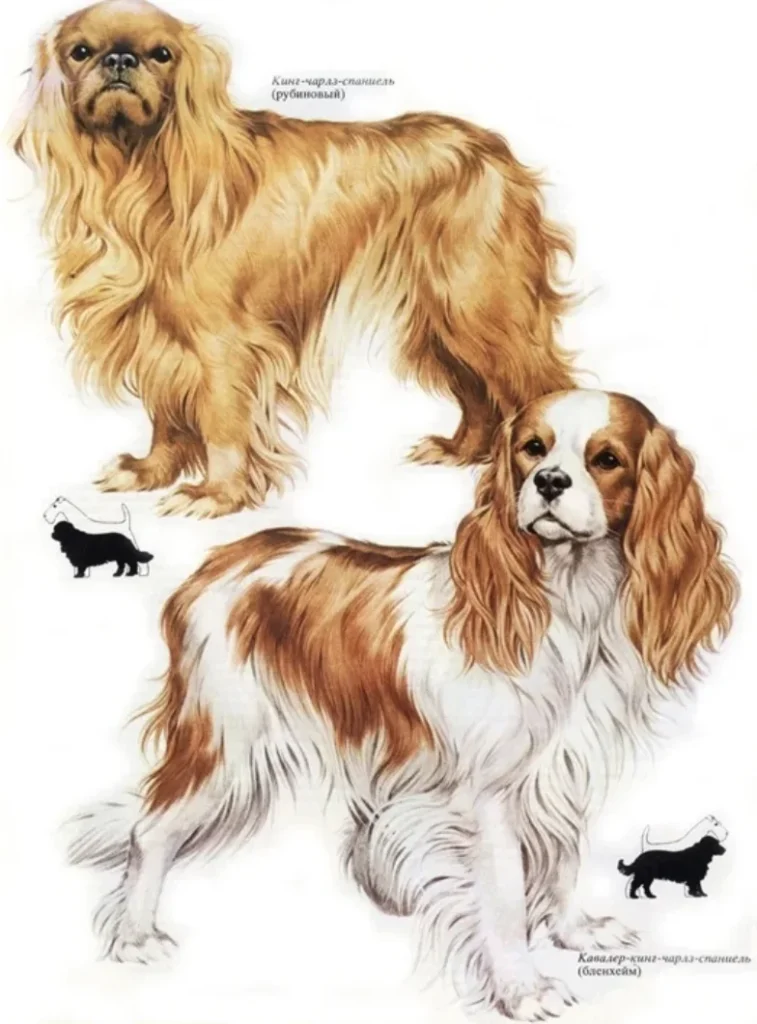
Comparing spaniel breeds

This is one of the most frequently asked questions. Many people confuse these two breeds, thinking they are the same dog or just different “haircuts.” In reality, they are two completely different breeds with distinct standards. To understand the difference, it is worth looking at the Cavalier King Charles Spaniel—this was an attempt by breeders in the 1920s to return to the “original” type of dogs from the time of Charles II, featuring a longer muzzle.

  • Muzzle: The “King” (English Toy) has a flat, snub nose (brachycephalic), while the “Cavalier” has a moderately long, classic muzzle.
  • Head: The “King” has a domed head, whereas the “Cavalier” is flat between the ears.
  • Size: The “King Charles” is generally smaller and more compact than the “Cavalier.”
  • Temperament: “Kings” are more reserved and quiet, while “Cavaliers” are known for their sportiness and extroversion.
Character: Aristocratic Temperament and Behavior

The King Charles Spaniel usually acknowledges only one master, whom they serve with a special, almost fanatical devotion. This doesn’t mean they won’t love other family members, but they will always favor “their” person. They demand constant attention and gentle treatment from their owner, but repay it with total selflessness. This is the classic “companion dog,” created to lie on silk cushions or laps.

Aggression is not typical for this cheerful but calm dog. They are very gentle. However, despite their miniature size, they are capble of standing up for themselves and demonstrating courage disproportionate to their small stature if they sense a threat to their owner. The royal little one gets along well with children but feels better in families with older kids who understand how to handle a fragile animal. Due to their facial structure, they may snore in their sleep, which many owners consider a cute quirk.

Unlike terriers, they are not hyperactive. They don’t need to run marathons—a quiet walk in the park is sufficient. This makes them ideal companions for seniors or apartment dwellers.

Health: Typical Diseases and Prevention
English Toy Spaniel puppy

Like most breeds with extreme external features (flat face, domed head), these dogs are prone to specific issues. A future owner should be aware of them in advance. Such a pet may suffer from diseases of the eyes, respiratory organs, and musculoskeletal system.

Cardiovascular Disease

The most serious problem for the breed is Myxomatous Mitral Valve Disease (MVD). This is a condition where the heart valve begins to leak, leading to heart failure. Regular check-ups with a cardiologist (Echocardiogram) are mandatory for this breed starting from an early age.

Eyes and Breathing

Characteristic vision problems include cataracts, glaucoma, and corneal dystrophy. Entropion (inward rolling of the eyelid), which injures the eyeball with the eyelashes, is also common. The large eyes are easily injured during play, so caution is needed. Due to the shortened muzzle, these dogs tolerate heat poorly and can have breathing problems (Brachycephalic Syndrome).

Neurology and Musculoskeletal System

Patellar luxation (loose kneecaps) and intervertebral disc damage occur. However, the most specific disease is Syringomyelia (SM)—a condition where the skull size is too small for the brain, leading to disrupted spinal fluid circulation. This causes severe pain. A symptom can be “air scratching” near the neck. Cryptorchidism in males is also possible. The small spaniel’s long ears are prone to infection and inflammation as they are poorly ventilated.

Coat Care and Hygiene
Grooming a spaniel

Although the King Charles coat looks luxurious, caring for it is not as complicated as, for example, the coat of a Tibetan Terrier, which requires significantly more grooming time. English Toy Spaniels are tidy dogs, but their beauty requires a systematic approach.

  • Brushing: 2-3 times a week. You should prevent the long hair from tangling, paying special attention to “problem” areas: behind the ears, under the armpits (elbows), and between the hind legs. Use a metal comb and a natural bristle brush.
  • Bathing: General baths should be done only once or twice a month. Never use human cosmetic products—wash the royal spaniel with a special mild shampoo for long-haired dogs, always using a conditioner.
  • Face Care: The folds on the muzzle require daily inspection. They need to be wiped with a damp cotton pad and then dried to avoid skin irritation and fungal infections.
  • Ears: Since the ears are pendulous and heavy, they need to be aired regularly and cleaned with special lotions to prevent ear infections.
Training and Socialization: Approaching the “King”
Walking a King Charles Spaniel

King Charles Spaniels are distinguished by a rather soft character, so harsh training methods are unacceptable with them. They may withdraw into themselves if yelled at. The best method is positive reinforcement (treats and praise). They can easily learn various tricks and will be grateful for the attention.

It is important to pay attention to socialization. The natural, albeit moderate, energy of these small dogs requires an outlet, so ensure physical exercise, games, and walks. Restriction of movement can cause a bad mood and destructive behavior in your royal little one. They have some endurance, but don’t forget the tendency to overheat due to the short muzzle. In the summer, walk only in the morning and evening.

Nutrition: Key Recommendations

Dogs with a low body weight are particularly sensitive to an unbalanced diet. Furthermore, this breed is known for being beggars who masterfully use their pitiful gaze to score a treat. Obesity for a King Charles is a huge risk for the heart and joints.

It is important to carefully study the ingredients of commercial food (super-premium or holistic class) to select the optimal product for small breeds with low activity. If you have the opportunity to dedicate time to home cooking, the necessary balance of natural nutrition will have to be calculated with a veterinary nutritionist. Establish a clear feeding schedule and do not allow your pet to fill their stomach before a walk—sudden movements on a full stomach can cause digestive problems. To hydrate the tailed little one, use fresh clean water that shoud always be in the bowl, but for dogs with long ears, it is better to buy special high and narrow “spaniel bowls” so that the ears do not dip into the water.

Pros and Cons of the Breed
Adult English Toy Spaniel resting

Advantages:

  • Ideal size for an apartment.
  • Very gentle and loving nature, people-oriented.
  • Does not require heavy physical exertion.
  • Quiet; barks rarely and only when necessary.
  • Spectacular appearance that draws admiration.

Disadvantages:

  • Heavy shedding (hair will be on furniture and clothes).
  • Prone to serious genetic diseases (requires expensive treatment).
  • Does not tolerate loneliness; can suffer from separation anxiety.
  • Snoring and snorting due to the structure of the nasopharynx.
  • Requires careful care of facial folds and eyes.
Interesting Facts About the King Charles Spaniel
  • Royal Decree: There is a legend that King Charles II issued a special decree allowing dogs of this breed to enter any public establishment in Great Britain, including Parliament. Although the legal force of this myth is doubtful today, it beautifully illustrates the status of the breed.
  • Losing One’s Head: Mary, Queen of Scots, went to her execution accompanied by her faithful toy spaniel, who hid in the folds of her dress until the very last moment.
  • Rarity: Unlike its popular relative the Cavalier, the classic King Charles is a rather rare breed today, making an encounter with one a real stroke of luck for dog lovers.
Frequently Asked Questions (FAQ)

Do King Charles Spaniels shed a lot?

Yes, they shed quite noticeably, especially in season (spring/fall). If you have allergies or cannot tolerate hair in the house, this breed may not suit you.

Are they suitable for families with small children?

They are patient but physically very vulnerable. A small toddler can accidentally injure the dog, damaging its eyes or back. Therefore, they are recommended for families with older children.

How much does a puppy cost?

Due to the complexity of breeding and the small number of puppies in a litter, the price for a King Charles Spaniel is usually high and can exceed the cost of more popular breeds.

Video About the Breed
Pros
  • Gentle, affectionate and quiet
  • An ideal indoor companion
  • Gets on well with everyone at home
  • Undemanding about exercise
Cons
  • A tendency to heart disease — needs monitoring
  • Brachycephalic — care with heat
  • Cannot bear being alone
  • The silky coat needs combing
Compared with similar breeds
Cavalier King Charles SpanielJapanese ChinPekingese
Height30–33 cm20–28 cm15–23 cm
Energy32.52.5
Apartment4.554.5
Beginners443.5
FAQ
How does the King Charles Spaniel differ from the Cavalier King Charles?
They are two separate breeds: the King Charles (English Toy Spaniel) has a domed head and a shorter, more "snub" muzzle; the Cavalier is larger, with a flatter skull and a longer muzzle.
Where does the breed name come from?
The breed is named after King Charles II, who adored these dogs; in the 20th century King Edward VII would not allow the breed to be renamed, preserving the historic name.
Is the King Charles Spaniel healthy?
The breed needs attention to health: the main risk is mitral valve disease of the heart (MVD), and the short muzzle makes it sensitive to heat; choosing a responsible breeder is important.
Sources

FCI Standard No. 128 · The Kennel Club

Share This Article