Group 7 · pointing dogs (spaniels) · France (Picardy)
Blue Picardy Spaniel
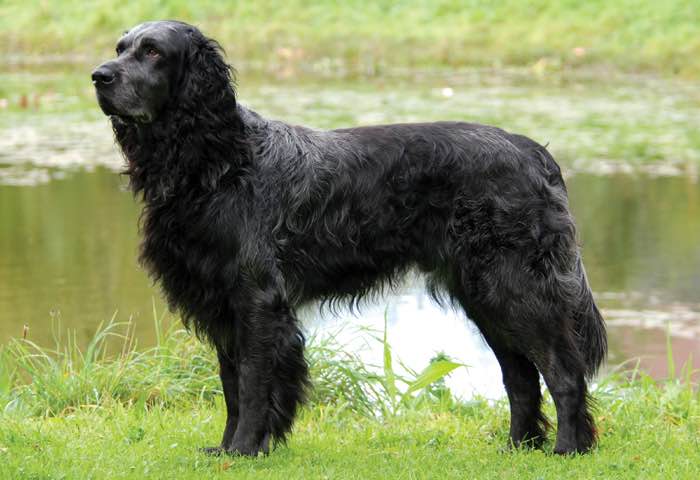
An aristocrat in "blue" attire — a rare French marsh spaniel: hardy, tender, devoted and hard-working. The Blue Picardy Spaniel is a breed related to the Picardy, with a striking black-gray ("blue") color (a legacy of the English Setter); a skilled water hunter in the field and an affectionate, especially child-friendly companion at home.
Apartment · not suitableKidsCats · with caveatsOther dogsBeginners · with caveats
The Blue Picardy Spaniel (Épagneul Bleu de Picardie) is a rare and elegant breed of hunting dog originating from the Picardy region of northern France. This dog isn't just a beautiful companion; it's a highly skilled hunter, especially adept at working in marshlands and water. Its unique "blue" coat, which is actually a complex mix of black and white hairs, gives it an aristocratic look. But beneath this refined exterior lies a hardworking, resilient, and incredibly loyal dog. In this article, we'll explore every aspect of life with this unique canine, from its fascinating history to its daily care needs. We'll cover this and more ahead on Tvaryny.
Blue Picardy Spaniel: Breed Overview
Blue Picardy Spaniel: Breed Overview · 9
Characteristic
Details
Origin
France (Picardy)
Year of Recognition
1938 (French Kennel Club), 1953 (FCI - standard clarification)
40–51 lbs (often cited as 33–44 lbs, but modern standards are slightly higher)
Temperament
Loyal, intelligent, calm at home, energetic in the field, friendly
Use
Hunting (especially waterfowl and marsh game), companion dog
Interesting Facts About the Blue Picardy Spaniel
A "Canadian" Frenchman: Although the breed originated in France, it is surprisingly popular (as much as a rare breed can be) in Canada, especially in the province of Quebec. The Canadian Kennel Club (CKC) recognized the breed in 1995.
The Color is an Illusion: There is no "blue" pigment in the dog's coat. The effect is created by the close mixing of black and white hairs (roan), which looks like a blue-grey shade from a distance.
A Working Dog to This Day: Unlike many hunting breeds that have become primarily "couch dogs," the Blue Picardy Spaniel is still actively used for its original purpose-hunting snipe, duck, and other marsh game.
One of Two: The Blue Picardy Spaniel is one of two spaniel breeds originating from Picardy. The other is the older Picardy Spaniel, which has a brown roan coat.
History
The history of the Blue Picardy Spaniel is inextricably linked to its "parent" breed, the Picardy Spaniel. For centuries, local spaniels existed in the Picardy region of France, prized for their hunting abilities. They were known for their stamina and their skill in working the challenging marshlands of the Somme River valley.
The emergence of the "blue" variation began in the late 19th and early 20th centuries. At that time, British hunters often visited France with their dogs, particularly setters. Strict British quarantine laws made it difficult to bring the dogs back home, so many were left behind in France. This led to crossbreeding between the local Picardy Spaniels and blue-belton English Setters.
This crossbreeding wasn't just about changing the coat color. The "English blood" introduced a lighter build, more graceful movements, and likely enhanced certain working traits, such as speed and search range. The new breed had a significant infusion of English blood, giving them a lighter frame than other spaniels.
Although the black coat (which creates the "blue" effect when speckled) was initially undesirable for hunting dogs-amid fears they would be hard to see at dusk-their outstanding working abilities quickly earned respect. The Blue Picardy Spaniel was recognized as a separate breed in 1938. The breed remains relatively rare today, most common in its native Picardy and in Canada, where it is recognized by the Canadian Kennel Club.
What Does the Blue Picardy Spaniel Look Like: Appearance and Standard
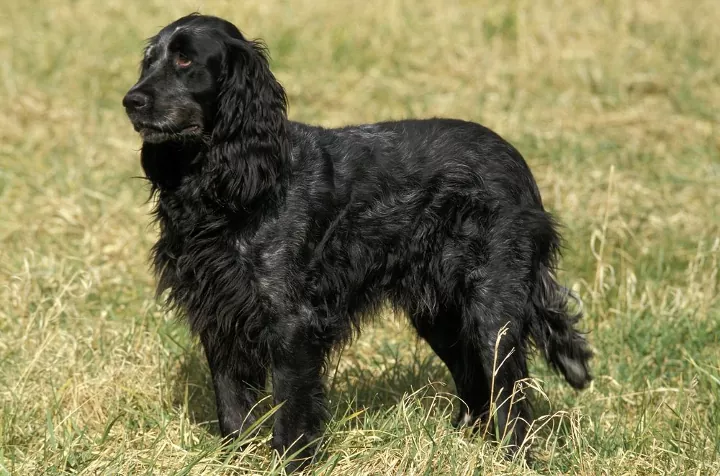
The Blue Picardy Spaniel is a medium-sized dog, athletic yet elegant in build. It gives the impression of a robust, hardy hunter capable of working all day.
Head and Skull
The dog's head is large, but proportional to its body. The skull is oval and fairly broad, with a defined stop (transition from forehead to muzzle) but no abruptness. The muzzle is long and straight, not pointed. The bridge of the nose is straight. The nose itself is large, black, and has well-opened nostrils. The lips are somewhat pendulous but not overly "wet," and they should cover the lower jaw well.
Eyes and Ears
The eyes are one of the breed's most expressive features. They are large, dark (usually dark brown), with a very calm, kind, and slightly melancholy expression. The ears are typical for a spaniel: thick, hanging, and set slightly above the eye line. They are covered in long, wavy, silky hair, which adds to the dog's charm.
Body and Limbs
The dog has a strong but not heavy build. The neck is muscular, with a slight dewlap. The chest is deep and well-developed, providing ample room for the lungs. The back is straight and strong, with a muscular loin. The croup is slightly sloping. The limbs are muscular with strong bones, allowing the dog to move easily on both land and in water. The paws are round and tight, with dense pads.
Tail
The tail is of medium length, usually not extending below the hock. It is never hooked at the tip. It is covered in long hair, forming a "feather." The dog carries its tail low, but it may be in motion when working.
Coat and Color
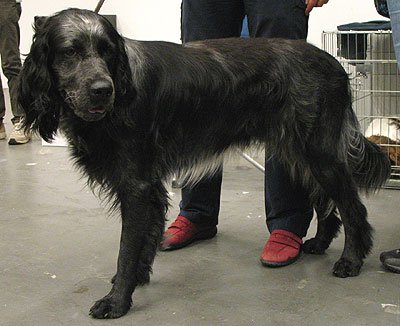
The coat is dense and harsh to the touch on the body, but not overly coarse. On the head, the hair is short and fine. Longer, wavy feathering forms on the ears, limbs, and tail. The coloring is what gives the breed its name. It consists of grey-black speckling (roan) on a white base, creating an overall "blue" or slate-grey impression. Large black patches of varying sizes are often present. This coloration is a mandatory breed trait. Tan markings are considered a fault.
Character: Temperament and Behavior
The Blue Picardy Spaniel is a classic example of a "dual personality" dog-in the best way possible. In the field, it's a passionate, driven, and tireless hunter. At home, it's an affectionate, calm, and quiet member of the family.
Loyalty: They are incredibly attached to their owners and want to be part of all family activities. This trait makes them wonderful companions but can also lead to separation anxiety if left alone for long periods.
Friendliness: The breed is known for its good nature. They get along well with children and are usually very patient and gentle. They also tend to be non-confrontational with other dogs.
Relationship with animals: As a hunting dog, it has a natural prey drive. However, with proper socialization from a young age, it can coexist peacefully with other pets, including cats. Small animals (hamsters, birds) will likely be seen as prey.
Intelligence: These are smart dogs that learn quickly. They aim to please their owner, which makes training easier. However, their intelligence means they need mental stimulation, not just physical exercise.
In temperament, they are somewhat similar to other continental spaniels, like the Brittany Spaniel, but are often described as calmer and less "explosive" in a home environment.
Training and Socialization
Obedience and precise execution of commands are hallmarks of the Blue Picardy Spaniel. Representatives of this breed are intelligent dogs that require gentle training. They are very sensitive to their owner's tone of voice and mood. You should never use pressure, harshness, or physical punishment with this pet. They respond best to positive reinforcement: praise, treats, and play.
Early socialization is key. Introduce the puppy to different people, sounds, places, and other animals as soon as it is safe to do so. This will help raise a confident and well-balanced dog. Given their hunting instincts, pay special attention to the "Come" command-it must be obeyed without fail.
Physical Activity and Exercise
This is not a dog that is satisfied with a 15-minute walk around the block. The Blue Picardy Spaniel requires a high level of physical activity. They need at least 60–90 minutes of vigorous exercise every day. This can include:
Long walks or hikes on varied terrain.
Running alongside the owner's bike (for adult dogs).
Swimming: They are born for the water and will be happy to retrieve from a lake or river.
Games of fetch or frisbee.
Mental stimulation: Don't forget "brain games." This could be obedience training, nosework (scent detection), or simply hiding their favorite toy at home.
Energetic and driven, Picardys love to be near their family. The best home for this water hunter is a suburban house with a fenced-in yard. Proximity to a body of water will give them the opportunity to use their swimming skills.
Pros and Cons
Before getting such a rare and specific breed, it's important to honestly weigh all the pros and cons.
Pros and Cons · 6
✅ Pros
❌ Cons
Incredible loyalty and affection for the family.
Very high need for physical activity (not for couch potatoes).
High intelligence and trainability.
Requires regular and thorough grooming (coat and ears).
Excellent with children and other dogs.
High risk of ear infections (otitis).
Calm and quiet temperament at home (with enough exercise).
Strong hunting instinct (requires management).
Unique and beautiful appearance.
Very rare breed - difficult to find a puppy, high price.
Excellent hunter and swimmer.
Can suffer from separation anxiety.
Grooming: Coat, Ears, and General Hygiene
The long coat of these elegant spaniels requires regular care, but it's not as difficult as it might seem.
Grooming and Shedding
The Picardy's coat has a natural resistance to dirt. You will need to brush the dog quite often-ideally, every other day, or at least 2–3 times a week-using a slicker brush and a metal comb. This will help prevent mats from forming, especially behind the ears, on the legs, and on the "pants." Bathe the dog only as needed, as frequent washing can disrupt the skin's natural oil balance. They shed moderately, with two distinct seasonal peaks in spring and fall.
The Critical Aspect: Ear Care
This is perhaps the most important part of grooming a Blue Picardy Spaniel. Their long, heavy, hanging ears have poor ventilation. This design promotes the development of infections, especially if your spaniel swims (which they love to do). Check the ears weekly for redness, odor, or excessive wax buildup. After every swim or bath, be sure to dry the inner ear thoroughly. Use a special ear cleaning solution as recommended by your veterinarian.
Other procedures:
Nails: Trim nails 1–2 times a month if they don't wear down naturally.
Teeth: Brush the dog's teeth 2–3 times a week to prevent tartar buildup.
Eyes: Regularly inspect the eyes and remove any natural discharge with a clean cotton pad.
Nutrition
Nutrition: Key Recommendations
Health and risks
Health: Common Conditions and Prevention
Frequently Asked Questions (FAQ) About the Breed · 4
Is this breed suitable for apartment living?
It is highly discouraged. Theoretically, the dog can live in an apartment, if the owner is prepared to dedicate 3–4 hours a day to active outings in nature (a large park, forest, or field). This is an active hunting dog that needs space to run. It will be cramped and bored in an apartment, which can lead to destructive behavior. The ideal home is a private house with a fenced-in yard.
Does the Blue Picardy Spaniel shed a lot?
They have moderate but constant shedding, with two distinct seasonal peaks. Their hair won't fly around in clouds like with short-haired breeds, but it will collect on furniture and clothing. Regular brushing (2–3 times a week) helps keep this process under control.
How does the Blue Picardy Spaniel get along with children and other animals?
They are known as excellent family dogs. They are typically very patient and gentle with children. They also get along well with other dogs. As for cats and smaller animals, early socialization is required. If the puppy grows up with a cat, there likely won't be problems. But the hunting instinct is always there.
Is it hard to find a Blue Picardy Spaniel puppy?
Yes, very hard. This is a rare breed. Most breeders are located in France and Canada. You will likely have to get on a long waiting list. The prce for a puppy will be high, considering its rarity and import costs. Its unique speckled coat only vaguely resembles the pattern of a Dalmatian, although the color inheritance mechanism is completely different.
Video About the Breed
FAQ
Why is the color called "blue"?
The "blue" color is in fact a dense mix of black and white hairs giving a gray-blue roan; it was introduced by English Setter blood in the breed's formation.
How does the Blue Picardy differ from the ordinary Picardy?
The main difference is color (black-gray "blue" instead of brown-spotted) and a slightly different pedigree; in character both are tender, hardy marsh hunters.
Is the Blue Picardy good for a family with children?
Very — it is one of the gentlest pointers, showing a natural tenderness toward children; the key is to give it exercise and work, so the country is best.