

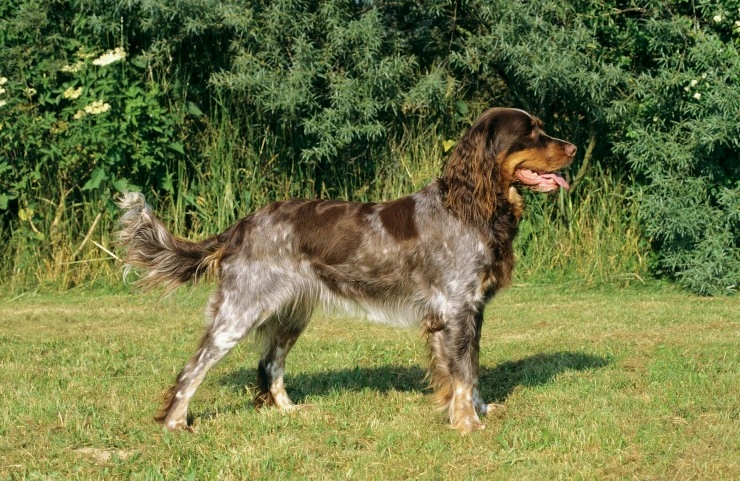
| Height | 55–62 cm |
| Weight | 20–30 kg |
| Lifespan | 12–14 years |
| FCI group | 7 · pointing dogs (spaniels) |
| Origin | France (Picardy) |
Exact ratings
Common health issues
Nutrition
The Picardy Spaniel (Épagneul Picard) isn’t just a dog; it’s a piece of living history and one of the oldest pointing breeds from France. This elegant, athletic, and incredibly tough gundog comes from the marshy valleys of the Picardy region in northern France. Despite its ancient lineage and exceptional working skills, the Picardy Spaniel nearly disappeared in the 20th century. Today, it’s making a slow comeback thanks to dedicated enthusiasts. This dog perfectly balances being an energetic hunter in the field with being a calm, gentle companion at home. We’ll explore more about this unique breed further on Tvaryny.
History and Origin
The Picardy Spaniel’s history is tightly woven with that of France itself, especially its northern regions. It’s believed to be a direct descendant of the old French Spaniels (Oysel Hounds) popular back in the Middle Ages. These dogs were described in works dating as far back as the 1300s, notably in the writings of Gaston Phoebus. This makes it one of the oldest, if not the oldest, of all continental spaniels. Its origin is very close to another French breed, the French Spaniel, and they were likely once a single breed that diverged over time due to geographic isolation and different breeding priorities.
Before the French Revolution, these dogs were favorites of the French nobility. They can be seen in paintings by famous 18th-century animal artists like Alexandre-François Desportes and Jean-Baptiste Oudry. They were prized for their ability to work in varied terrain, especially marshes, hunting birds.
After the revolution, when hunting was no longer just a privilege for the aristocracy, the Picardy Spaniel became a commoner’s dog, especially for hunters in the Picardy region. Its dense, water-resistant coat made it indispensable for working in the harsh, damp conditions of the Somme River valley. It was known for its endurance and ability to work for hours without tiring.
The Arrival of the “Brits” and the Birth of the Blue Spaniel
In the early 20th century, British hunting breeds, particularly English Setters, were imported into France in large numbers. This caused many local French breeds, including the Picardy Spaniel, to lose popularity. Hunters began crossing their “Picardies” with English Setters to add speed and perhaps improve scenting ability. This crossbreeding led to the emergence of a new, separate breed- the Blue Picardy Spaniel. It’s important to understand that the Picardy Spaniel (brown-roan) is the original and older breed, while the Blue Spaniel (black-roan) is its descendant with Setter blood.
This “British invasion” and the two World Wars, with front lines running directly through Picardy, pushed the breed to the brink of total extinction. The region was devastated, and the dog population was practically wiped out. Only through the incredible efforts of a few dedicated hunters and breeders, who hid and preserved the dogs, was the breed saved. The first breed club (Club de l’Épagneul Picard) was founded in 1921, which helped standardize and preserve it.
Picardy Spaniel Breed Standard
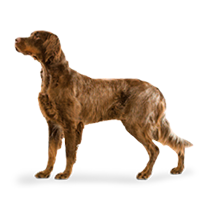
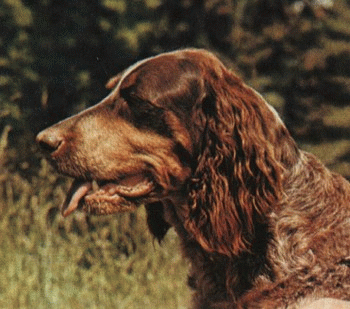
The Picardy Spaniel is a sturdy, muscular, medium-sized dog, slightly longer than it is tall, with a proud bearing and a kind, expressive gaze. It combines the power and elegance needed for tireless work in the field.
- General Appearance: Strong, broad-backed dog with sturdy limbs. Movement is free and energetic.
- Head: Skull is wide and rounded, with a prominent occipital bone. The stop (transition from forehead to muzzle) is sloping, not abrupt.
- Muzzle: Long, fairly broad, tapering slightly to the nose. The bridge of the nose may be slightly arched. The nose is always brown, with well-opened nostrils.
- Eyes: Dark amber in color, large, and wide open. The gaze is very expressive, open, soft, and friendly.
- Ears: Set rather low, at or slightly below eye level. They frame the face and are covered in beautiful, wavy, silky hair.
- Body: Back is strong, loin is broad and muscular. The croup is slightly sloping and rounded. The chest is deep, broad, and reaches elbow level.
- Tail: Set not too high. It has two slight curves (convex and concave), forming a “saber” shape. Not too long, covered with silky ‘feathering’.
- Coat: Dense but not overly silky, slightly wavy on the body and finer on the head. Provides good protection from weather and water.
- Color: A characteristic grey-roan (a mix of white and black hairs giving a greyish tint) with brown patches of various sizes scattered over the body. This coloring is often called “autumn leaves” (feuille morte). There are often tan (fawn) markings on the head and legs.
Below is a detailed table with the main characteristics of the breed standard.
| Characteristic | Description (FCI #108) |
|---|---|
| Height at withers | Dogs: 22.5 – 24.5 in (57 – 62 cm) Bitches: 21.5 – 23.5 in (55 – 60 cm) (A tolerance of ± 2 cm is allowed) |
| Weight | Approx. 44 – 55 lbs (20 – 25 kg) (Not specified by the standard, but this is the average weight) |
| Skull | Wide, rounded, with a prominent occipital bone. |
| Muzzle | Long, broad at the base, slightly arched bridge. Brown nose. |
| Eyes | Dark amber, large, with an open and friendly gaze. |
| Ears | Set low, covered with long, wavy, silky hair. |
| Chest | Deep, broad, reaching the elbows. |
| Coat | Dense, slightly wavy on the body, fine on the head. ‘Feathering’ on ears, legs, and tail. |
| Color | Grey-roan with brown patches. Often with tan markings on the head and legs. |
Character and Temperament
One of the most notable traits of the Picardy Spaniel is its so-called “off switch”. This is a feature highly valued by hunters: in the field or woods, it’s a tireless, energetic, passionate, and determined worker. But the moment it steps through the door, it transforms into a calm, gentle, and balanced companion. It’s happy to just lie at its owner’s feet or nap on the sofa.
This is an extremely human-oriented dog. It forms a deep bond with its family and craves to be near them. Picardies do not handle loneliness well and are not suited for living in a kennel or on a chain. They need constant human contact. They are generally very good with children, showing gentleness and patience. They are also usually friendly with other dogs, as they historically worked in packs.
At the same time, one must not forget its strong hunting instinct. A natural drive to pursue prey (birds, rabbits, squirrels) is in its blood. This means that during walks in unfenced areas, it should always be on a leash unless you are 100% confident in its recall. Co-existing with smaller pets like cats, hamsters, or pet birds can be poblematic if the dog was not raised with them from a very early age.
Picardy Spaniels are intelligent and eager to please, but they can also be somewhat “soft” or sensitive. They mature slowly, remaining “puppies” at heart for quite a long time. This is important to consider during training.
The Picardy Spaniel as a Hunting Dog
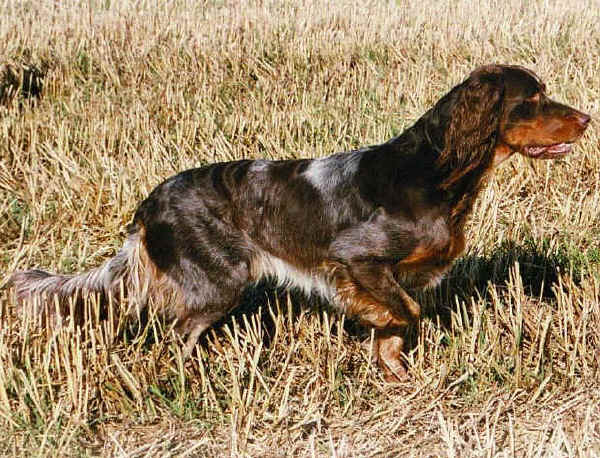
The Picardy Spaniel is a classic continental pointer, or “versatile gundog.” Its job isn’t limited to one thing; it was bred to perform all phases of the hunt: searching, pointing, flushing birds, and retrieving from both land and water, as well as tracking wounded game.
- Searching and Pointing: It works methodically at a medium gallop, adjusting its search range to the terrain and the hunter’s commands. Unlike some other breeds, it hunts with the hunter, not for itself, constantly maintaining contact. It has a strong, natural pointing instinct.
- Water Work: This is one of its strongest suits. Bred in marshy Picardy, it adores water and is an excellent swimmer with a natural aptitude for retrieving game from water, even in cold weather.
- Retrieving: They have a reputation for a “soft mouth,” meaning they retrieve game without damaging it. Their retrieving instinct is generally well-developed.
- Working in Cover: Its sturdy build and dense coat allow it to work without issue in thick brush, brambles, or reeds where other dogs might hesitate.
It is an excellent choice for hunting pheasant, partridge, woodcock, and waterfowl. Its versatility makes it functionally similar to dogs like the German Longhaired Pointer or the Drentse Partridge Dog, although each has its own unique traits and working style.
Care and Maintenance
While the Picardy Spaniel is hardy and relatively low-maintenance, it has specific needs a future owner must consider. This is not a dog for an apartment and not for sedentary people.
Exercise Needs
This is the most critical aspect of ownership. As a working dog, the Picardy Spaniel requires a huge amount of physical and mental stimulation. A simple walk on a leash twice a day will be disastrously insufficient. It needs long (1-2 hours a day) outings with the opportunity to run freely, explore, sniff, and swim. A bored Picardy with unspent energy can become destructive: chewing furniture, barking, or digging up the yard.
The ideal owner for one is an active person or family who enjoys hiking, running, hunting, or participates in dog sports like agility, scent work, or field trials.
Grooming (Coat Care)
Surprisingly, despite its long coat, the Picardy Spaniel does not require complex grooming. Its coat has a texture that is not prone to severe matting and has water-repellent properties.
| Task | Frequency and Details |
|---|---|
| Brushing | 1-2 times a week. A quick pass with a brush or comb is enough to remove dead hair and prevent tangles, especially on the ears, under the armpits, and on the “feathering”. |
| Ears | Critically important! 1-2 times a week. Like all spaniels with drop ears, they are prone to otitis (ear infections). The ear canal has poor ventilation. You must regularly inspect the ears, clean them with a special lotion, and remove dirt. |
| Bathing | Only as needed. Frequent shampooing can strip the natural oils that protect the coat. Usually, dirt just dries and brushes out. |
| Nails | Once every 3-4 weeks if they don’t wear down naturally during walks. |
| Shedding | Moderate, seasonal (spring and fall). During these periods, more frequent brushing may be needed. |
Nutrition
The Picardy Spaniel is not prone to food allergies but requires a high-quality, high-energy food, especially if the dog is actively working or training. It’s important not to overfeed, as excess weight puts extra strain on the joints. Portion size should be adjusted based on the dog’s activity level.
Training and Socialization
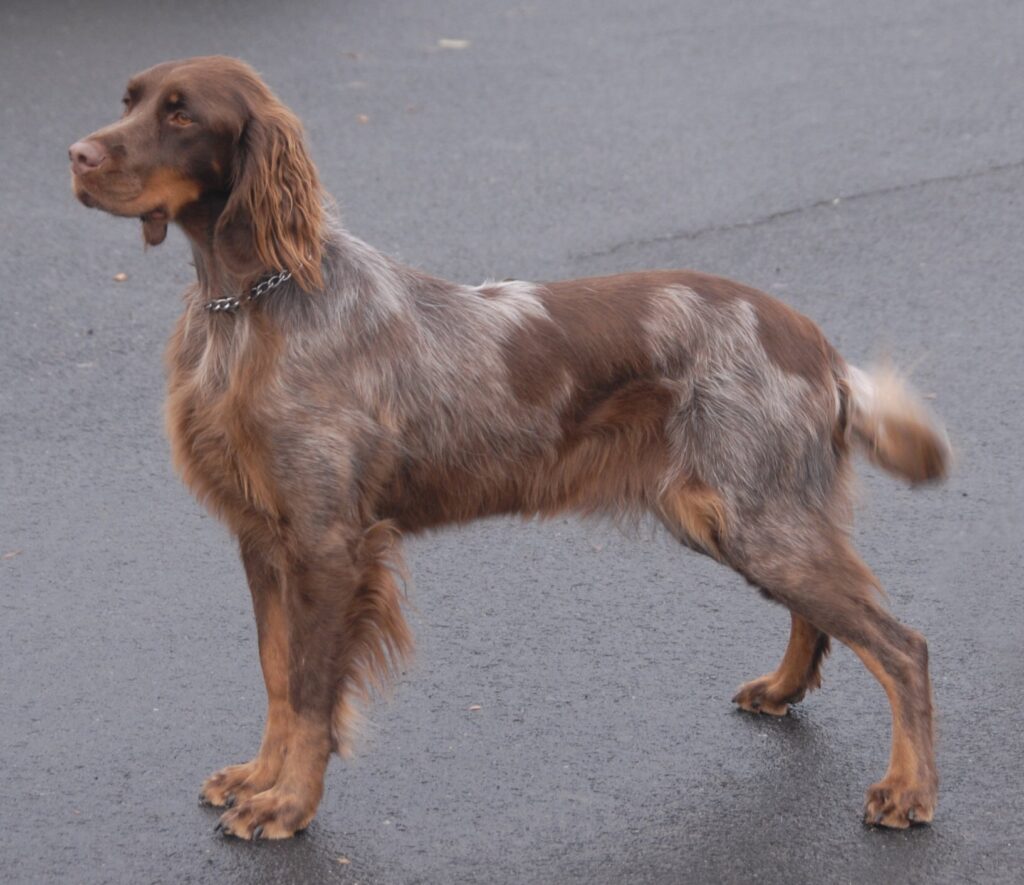
Training a Picardy Spaniel is a balance of patience and consistency. They are intelligent and have a strong desire to please, which makes them fairly easy to train… if you use the right approach.
The golden rule is positive reinforcement only. Picardies are very sensitive (“soft”) dogs. They do not tolerate harsh methods, yelling, physical punishment, or rough leash corrections. This will only cause the dog to “shut down,” become fearful, and refuse to work. They respond wonderfully to praise, treats, and play-based motivation. Training should be fun, in short sessions, to keep the dog from getting bored.
It’s important to remember their slow maturation. They may look physically mature at one year, but mentally, they remain puppies until two or three years old. Don’t demand too much too soon. Patience is your best tool.
Early socialization is mandatory. You need to introduce the puppy to different people, sounds, places, and other dogs in a positive, controlled environment. This will help it grow into a confident and balanced dog. Special attention should be paid to controlling the hunting instinct and training a solid recall.
Health and Common Conditions
Pros and Cons of the Breed
Before getting a Picardy Spaniel, it’s important to soberly assess all the advantages and disadvantages of this unique breed.
| ✅ Pros | ❌ Cons |
|---|---|
| Excellent “off switch”: Very high-energy on the hunt, but calm and gentle at home. | Extreme exercise needs: Not suitable for apartments or inactive people. Needs hours of activity daily. |
| High intelligence: Smart, learns quickly, and is eager to please its owner. | Very high prey drive: Cannot be trusted off-leash; may hunt cats and other small animals. |
| Great family dog: Gentle and patient with children, friendly to people and other dogs. | Sensitive nature: Does not tolerate harsh training methods. Requires patience and positive reinforcement. |
| Relatively simple grooming: The coat doesn’t need frequent trimming or complex care, just regular brushing. | Prone to ear infections: Requires constant and thorough ear care. |
| Versatility: Excellent hunter, swimmer, and companion for outdoor activities. | Slow to mature: Remains mentally a “puppy” until 2-3 years old, which requires patience. |
| Health: no breed-wide list of hereditary diseases has been compiled — “not described” means “not studied”, not “not there”. | Rarity: Very difficult to find a puppy. There are very few outside of France, which means high prices and long waiting lists. |
Interesting Facts About the Picardy Spaniel
- One of the Oldest Spaniels: The Picardy Spaniel is one of the two oldest continental spaniel breeds (along with the French Spaniel).
- Nearly Vanished Twice: The breed was on the verge of extinction first due to the “fashion” for English Setters in the early 20th century, and then due to the devastation of World War I and World War II.
- “Father” of the Blue Spaniel: It was by crossing Picardy Spaniels with English Setters (to get the black-roan color) that the separate breed-the Blue Picardy Spaniel-was created.
- A Royal Favorite: Before the revolution, these dogs were highly valued by the French aristocracy and often depicted in royal hunting portraits.
- A Dog for the Marshes: Its entire structure-from its dense coat to its love of water-is a direct adaptation to the conditions of hunting waterfowl in the marshy valleys of the Somme River in Picardy.
Frequently Asked Questions (FAQ)
Is the Picardy Spaniel suitable for apartment life?
Absolutely not. This is an extremely high-energy working dog that needs space to run. Apartment life without the possibility of daily, hours-long training and free-running will lead to behavioral problems. The ideal situation is a private home with a large, securely fenced yard and very active owners.
Does the Picardy Spaniel shed a lot?
Shedding is moderate. They have a seasonal shed in the spring and fall, during which the amount of hair increases. Regular brushing (1-2 times a week) helps keep this process under control.
Does the Picardy Spaniel get along with cats and other animals?
It’s difficult and risky. The breed has a very high prey drive aimed at birds and small animals. If a puppy wasn’t raised with a cat from a very young age, the chances of peaceful coexistence are low. And it will always treat stray cats or squirrels as prey.
How is the Picardy Spaniel different from the Blue Picardy Spaniel?
These are two different, though related, breeds. The main differences are:
1. Origin: The Picardy Spaniel is older. The Blue Picardy was bred later by crossing the Picardy Spaniel with the English Setter.
2. Color: The Picardy Spaniel is grey-roan with brown patches. The Blue Picardy Spaniel is blue-roan (grey-black) with black patches.
3. Build: The Blue Spaniel is often slightly lighter and has more Setter-like features.
Is the Picardy Spaniel difficult to train?
They are not difficult to teach, as they are smart and want to please. But they can be difficult to train if you are impatient or use harsh methods. Their sensitivity and slow maturation require a great deal of patience, consistency, and the ability to work with positive reinforcement.
Video of the Breed
- Gentle, calm, good with children
- Hardy, a versatile hunter
- Devoted and easy to train
- Level-headed at home
- A high energy level — not for an apartment
- Needs scent work or hunting
- Drop ears are prone to infections
- Rare outside France
| Blue Picardy Spaniel | French Spaniel | Brittany | |
|---|---|---|---|
| Height | 56–62 cm | 54–63 cm | 47–52 cm |
| Energy | 4 | 4.5 | 5 |
| Apartment | 2 | 2 | 2.5 |
| Beginners | 3.5 | 3.5 | 3.5 |
How old is the Picardy Spaniel?
Is the Picardy Spaniel good for a family?
How does the Picardy Spaniel differ from the blue one?
FCI Standard No. 108 · Société Centrale Canine
For apartments · For kids · For beginners · Active · Smartest · Hypoallergenic · All rankings →