Group 5 (Spitz and primitive types), Section 3 (Nordic Watchdogs and Herders) · Finland
Finnish Lapphund
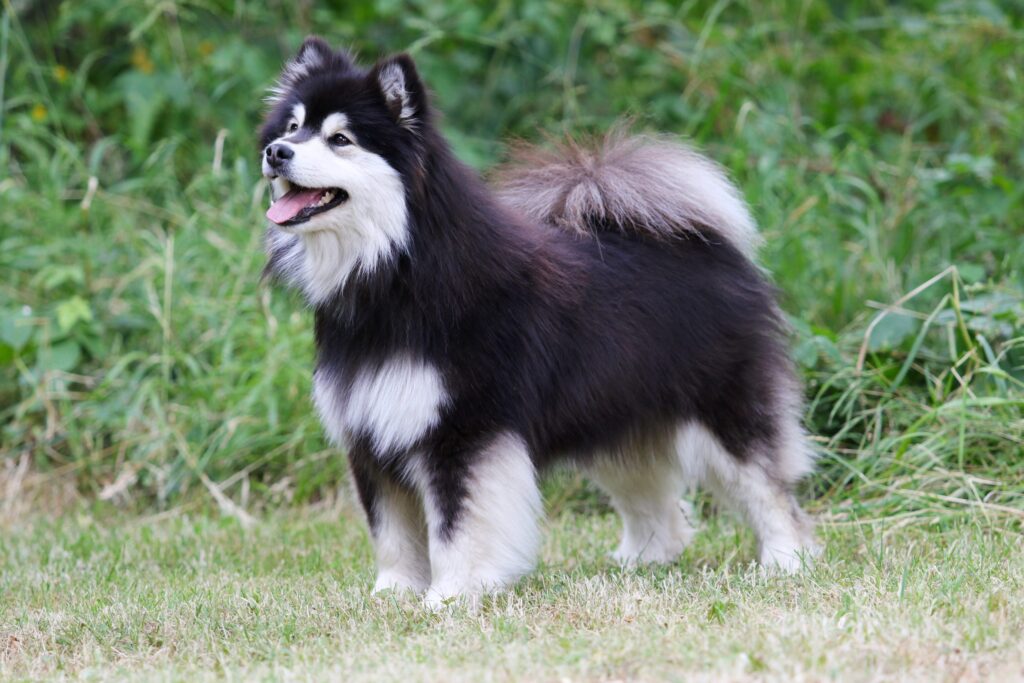
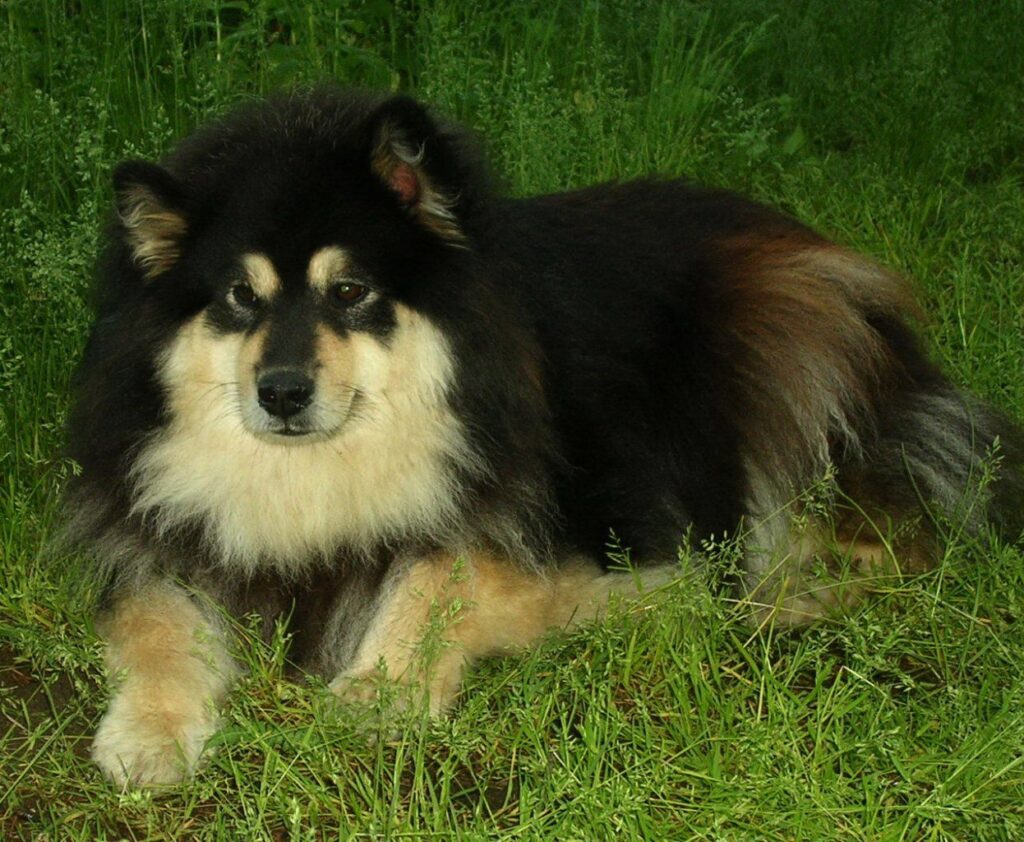
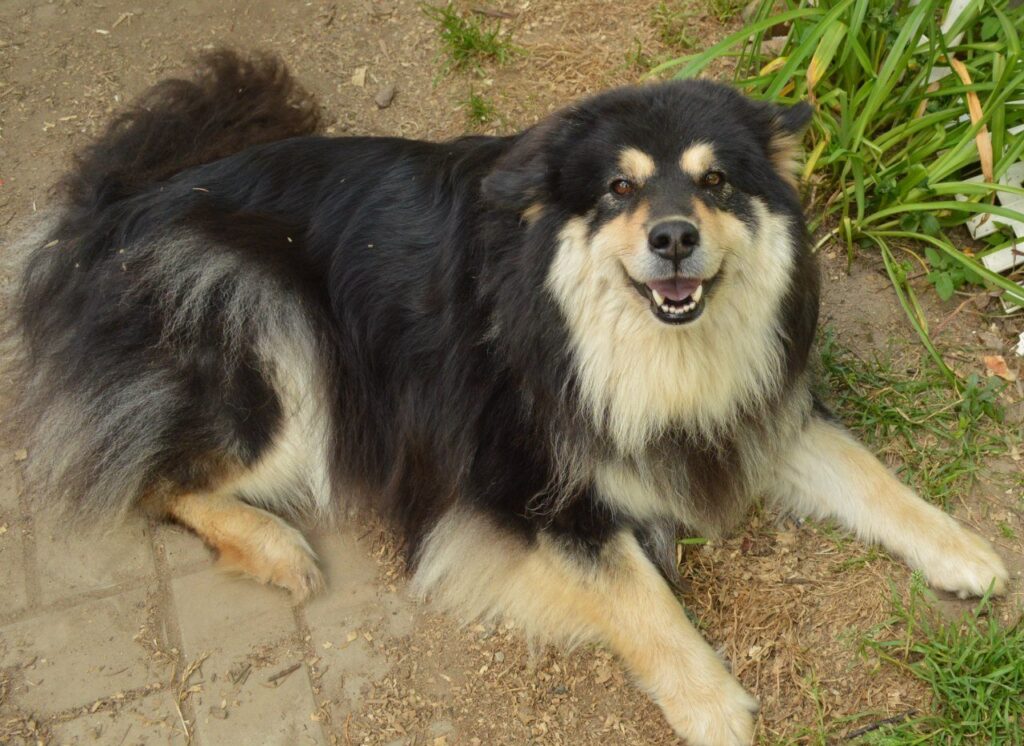
A smiling northern spitz of Lapland — a hardy, fluffy nanny: level-headed, friendly, hard-working and devoted. The Finnish Lapphund is a Sámi reindeer-herding breed that combines the tireless stamina of the tundra with gentleness towards children and other animals; it adapts easily to both house and apartment, loves exercise and work, and makes an excellent family companion for active people.
Apartment · with caveatsKidsCatsOther dogsBeginners
The Finnish Lapphund (Suomenlapinkoira) is not just a dog; it is living history of the North, embodying the magic of Lapland, the endurance of the tundra, and boundless devotion to humans. They get along beautifully with other pets, and for children, they become best friends and fluffy nannies. Thanks to their "reindeer herding" past, Lappies have a unique psyche: they easily adapt to any conditions, whether it's a country house or a spacious apartment, and do not require complicated, time-consuming care. However, they are suited primarily for active people who love long walks and outdoor games, because movement is their life. They also become indispensable helpers around the house. Read more on Tvaryny.
Finnish Lapphund: Brief Overview and Characteristics
Finnish Lapphund: Brief Overview and Characteristics · 10
Parameter
Characteristic
Country of Origin
Finland (Lapland region)
Original Name
Suomenlapinkoira
FCI Group
Group 5 (Spitz and primitive types), Section 3 (Nordic Watchdogs and Herders)
Standard Recognition Year
1954 (preliminary), 1975 (modern)
Life Expectancy
12–15 years (long-lived)
Height at Withers (Males)
19 in / 49 cm (ideal), 18–20.5 in / 46–52 cm allowed
Height at Withers (Females)
17 in / 44 cm (ideal), 16–18.5 in / 41–47 cm allowed
Weight
40–53 lbs / 18–24 kg (depending on sex and build)
Coat Type
Long, thick, double, with a powerful undercoat
Activity Level
High, requires mental stimulation
What the Finnish Lapphund Looks Like: Detailed Description
The Finnish Lapphund is a dog slightly smaller than medium size, but thanks to its thick coat, it appears larger and more massive. It is a dog of sturdy build, created not for speed, but for endurance. An important feature is the body format: the Lapphund's body is noticeably longer than its height at the withers. This allows it to move effectively through deep snow without sinking.
Head and Muzzle
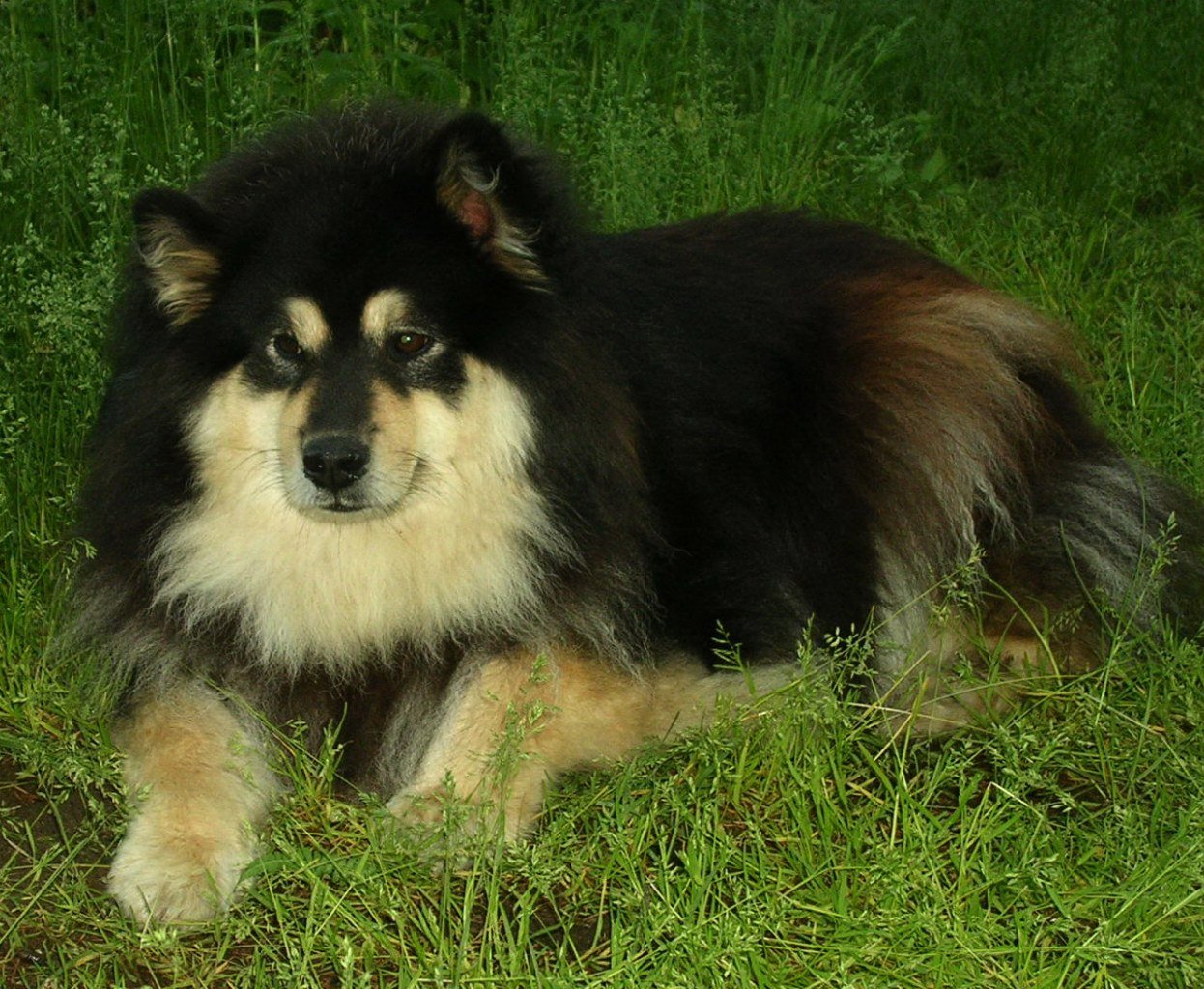
The head is large but proportional to the body, with a broad skull and a slightly flat but not "heavy" forehead. In males, the head is significantly more massive than in females, making sexual dimorphism in this breed very distinct. The transition from forehead to muzzle (stop) is well-defined, clear, but not sharp. The muzzle is broad and strong; it should not be pointed like a fox's - this is a sign of weakness for a working dog. The bridge of the nose is straight. The nose is predominantly black but may harmonize with the coat color (for example, brown in brown dogs). The cheekbones are developed but do not protrude. The lips fit tightly to the teeth, preventing injury when working with reindeer.
Eyes: These are the mirror of the Lapphund's soul. They are of medium size, oval in shape (almond-shaped), usually dark brown. The gaze is always soft, friendly, and intelligent. Many dogs have light "spectacles" around the eyes - a color peculiarity that gives the muzzle expression.
Ears: Very mobile, triangular, broad at the base. Interestingly, the standard allows not only pricked ears but also semi-pricked (tipped) ears, which is a rarity for the Spitz group. The ears are set wide apart, allowing the dog to instantly determine the direction of sound in the forest.
Body and Limbs
The neck is of medium length, very powerful, without dewlap, covered with thick hair forming a luxurious mane (especially in males). The body is strong and compact. The back is straight and broad. The loin is short and muscular. The chest is well developed, deep, and broad, providing sufficient lung volume for long runs. The belly is moderately tucked up, but not "dry" like a greyhound's.
The limbs are muscular, with powerful bone, straight, and parallel to each other when viewed from the front or rear. The angles of the joints are moderate. The paws are oval, compact, and densely covered with hair even between the toes (acting as snowshoes). The tail is of medium length, set high, and covered with very thick and long hair. In movement, it curls into a ring over the back or lies on the side; at rest, it may drop down. There is often a J-shaped hook at the tip of the tail.
Coat and Color
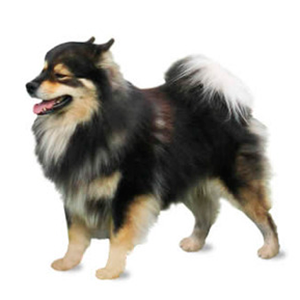
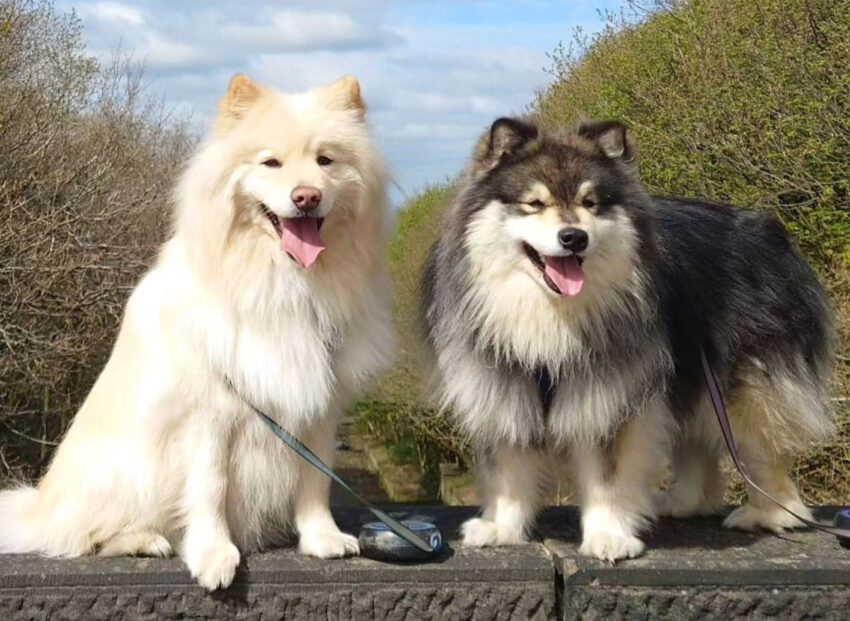
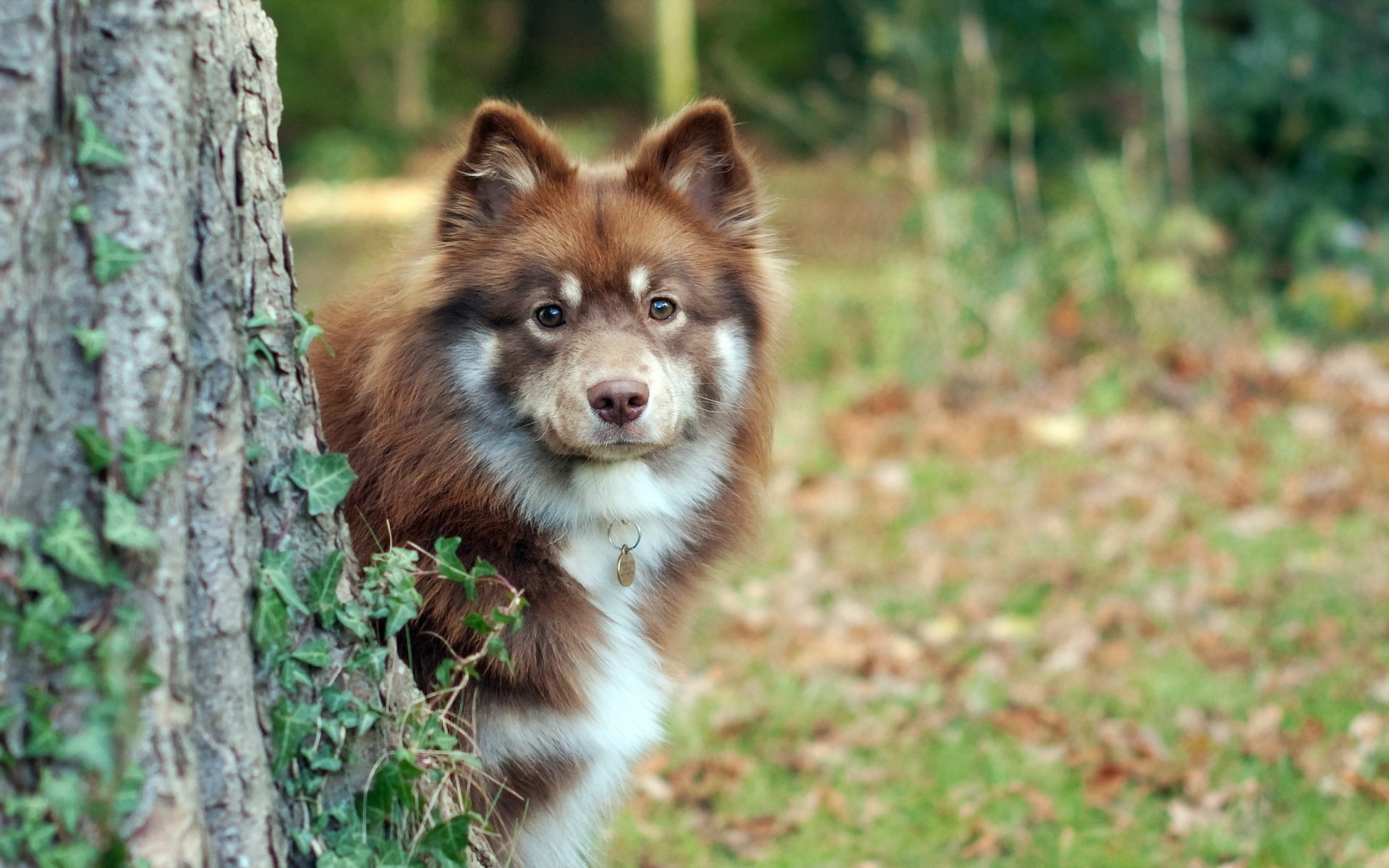
The coat is the Lapphund's armor. It is long, straight, and thick, quite harsh to the touch, with a soft, dense undercoat that does not let moisture or cold through. The color can be any shade! The main requirement of the standard is that the basic color must dominate. The most popular are: black and tan, brown, wolf sable, cream, and even "domino." Tan marks or patches of light color are often present on the head, muzzle, neck, lower chest, and limbs.
Interesting Facts About the Breed
Startle reflex: Finnish Lapphunds have a unique innate reaction to sudden movement or sound. They do not run away but instantly jump back and turn to face the danger. This is a vital skill for avoiding reindeer hooves, which is sometimes confused with skittishness.
Snow nose: In winter, the Lapphund's black nose may lighten and become pink in the middle. This phenomenon is called "snow nose" and is normal.
Heroes of epics: According to Finnish legends, Lapphunds were born from wind and snow to warm people's hearts in the polar night.
History of the Breed: From Shaman's Assistant to the Couch
The history of the Finnish Lapphund is inextricably linked with the history of the Sami (Lapps) - the indigenous people of Northern Europe. The Finnish Lapphund is a Nordic dog that was historically most common in Finland, Sweden, Norway, and the Russian Karelia region. Archaeological excavations and genetic studies suggest that similar dogs are among the oldest breeds to inhabit the North. There is a theory that the ancestors of Lapphunds appeared in this region as early as 7,000 years ago, accompanying tribes of hunter-gatherers.
Initially, these dogs did not herd reindeer but helped people hunt wild animals, transport small loads, and guard homes and pastures from predators. In Sami mythology, the dog has always held a special place, considered a guide between the world of humans and spirits. In the 17th century, when the transition from hunting to large-scale reindeer herding took place in the Nordic countries, the role of dogs transformed. These fluffy workers became indispensable in managing semi-wild herds. They helped people drive and graze herds of thousands of reindeer, as well as corral them into fenced pastures for counting or slaughter.
Interestingly, the historical development of the breed went hand in hand with other Scandinavian breeds. For example, the neighboring Swedish Lapphund has very similar roots, and for a long time, they were not separated as distinct breeds, being considered simply local varieties of Sami dogs. A real crisis for the breed occured after World War II and with the arrival of the "snowmobile revolution" in the 1960s. Mechanical snowmobiles began to displace dogs from their work, and a distemper epidemic nearly wiped out the population.
Enthusiasts who understood the cultural value of these animals began the targeted restoration and breeding of Lapphunds in the 20th century. They were called by many names: Lapponian Spitz and Shepherds. An important moment in history was the division of the breed into two branches. Cynologists noticed that there are two types of reindeer dogs: short-haired (faster) and long-haired (more enduring when stationary). Thus, our hero and the Lapponian Herder (Lapinporokoira) were separated. The latter retained more working qualities for driving herds, while the Finnish Lapphund became a more versatile companion. In 1945, the first standard was written, and the Federation Cynologique Internationale (FCI) finally recognized and separated these breeds in the second half of the 20th century. In 1975, the revised breed standard was officially registered, cementing the appearance we know today.
Character and Behavior
If you compare the temperament of the Finnish Lapphund with other Nordic breeds, for example, the independent Husky or the proud Malamute, then the Finn is an intelligent extrovert. Representatives of this breed are cheerful, playful, full of life, agile, and energetic. At the same time, they are surprisingly calm and balanced at home. Cynologists often call this the "off switch": outside, the dog is ready to run for hours, while at home, it snoozes quietly at your feet.
Psychological Features:
Lack of aggression: Lapphunds were historically culled for any show of aggression towards humans. They may bark to warn of a stranger's arrival, but they will never attack first. They are suspicious of strangers but usually sense people's attitudes towards them and their loved ones very well.
People-oriented: They are dependent on interaction. This is not a dog you can put in a kennel and visit once a day to feed. They love it when their owners pay attention to them and strive to participate in all family affairs.
Intellect and cunning: Just like the Samoyed, the Finnish Lapphund is very clever but has its own opinion. They learn quickly, yet they may look for ways to execute a command with less effort.
Friendship with others: If the owner is busy, they find entertainment themselves. They love playing with other pets, even cats they have lived with since childhood. Their herding instinct is soft - they don't nip sheep or cats at the heels like Corgis but rather control the space.
Pros and Cons of the Breed
Pros and Cons of the Breed · 6
Pros (+)
Cons (-)
Very family-oriented, loves children.
Tendency to bark (historical necessity when herding).
Spectacular appearance that draws admiration.
Heavy shedding 1–2 times a year ("fur storm").
High intelligence and trainability.
Can be stubborn, require motivation.
Not prone to vagrancy or running away.
Do not tolerate loneliness and isolation well.
Robust health and longevity.
Struggle with strong heat (need air conditioning or shade).
Easily get along with other animals.
Require active walking, not for the lazy.
Training, Sport, and Socialization
Representatives of this breed are extremely intelligent dogs capable of almost any task. You can teach them everything that comes to mind, from circus tricks to Search and Rescue work. Since ancient times, Lapphunds have worked in the North and helped locals in the household; these dogs are among the most hardy and versatile.
They are excellent trackers, so nowadays they often help rescuers in searching for missing people or people trapped under rubble after natural disasters. Lapphunds are always on alert, making excellent watchdog-signalers (but not bodyguards). Thanks to their soft character and "plush" appearance, they successfully participate in therapy work - helping sick people with limited physical or mental abilities.
Recommended Sports:
Agility: Lapphunds are agile and love interacting with the owner.
Nosework: Searching for scents perfectly loads their brain.
Herding: If possible, try training with sheep. This awakens their ancient instincts, much like the Swedish Vallhund.
Obedience: High-level obedience, but training must be engaging.
The main rule of training a "Finn": no compulsion. Only positive reinforcement. If you pressure the dog, it will simply "switch off" and stop reacting. Training must be varied, otherwise the Lapphund will get bored and lose interest. A wonderful incentive for completing tasks will be treats and sincere praise.
How to Care for the Coat and Keep a Finnish Lapphund?
There is a myth that such a luxurious coat requires hours of daily brushing. This is not true. The structure of the Lapphund's coat is such that dirt simply does not stick to it, and mats form extremely rarely (usually only behind the ears or in the groin). Finnish Lapphunds are dogs best suited to living in a private house with a large yard. But, unlike many shepherd dogs, they adapt perfectly to an apartment if they get enough exercise. In this regard, they are somewhat similar to the Miniature Schnauzer — compact, convenient in everyday life, but with the soul of a big dog.
Grooming:
Brushing: Several times a week (2–3 times), the dog needs to be brushed with a brush with long metal teeth or a slicker brush without drops on the ends. This massages the skin and removes dead hairs.
Shedding: During the shedding period (spring and fall), the coat must be brushed daily. The dog sheds its undercoat very intensively. At this time, a warm bath and blowing out the coat with a high-velocity dryer will significantly speed up the process.
Bathing: It is recommended not to wash the Lapphund often, only as it gets heavily soiled. Frequent washing strips away the protective fatty layer, and the coat begins to get dirty and wet faster.
Hygiene: Do not forget to clean the Lapphund's ears, wash the eyes with chamomile tea or a special lotion, trim the claws monthly (if they do not wear down on the asphalt), and clean the teeth weekly with special dog toothpaste.
Nutrition
Nutrition: Key Recommendations
Health and risks
Health: Typical Diseases and Genetics
Frequently Asked Questions About the Breed (FAQ) · 3
Do Finnish Lapphunds bark a lot? Yes, this is a "chatty" breed. Barking was their working tool for managing the herd. However, with proper upbringing, they do not bark without reason. The "quiet" command should be one of the first learned.
Are they suitable for allergy sufferers? No, the Finnish Lapphund has a thick undercoat and sheds heavily, making it not the best choice for people with severe allergies to dog dander or saliva.
Can a Finnish Lapphund live outside all year round? Thanks to their coat, they easily tolerate frosts down to -40°F. However, as mentioned above, social contact is critically important to them. Living in a kennel without communication with the family is the greatest torture for them.
Video About the Breed
FAQ
Is the Finnish Lapphund good for a family with children?
Very — it is a gentle, level-headed dog, an excellent friend and a "nanny" for children, and it gets on well with other animals too.
Can the Lapphund be kept in an apartment?
Yes, provided enough exercise — thanks to its balanced temperament it adapts to an apartment too; the key is exercise, walks and activity.
Is the Finnish Lapphund noisy?
Inclined to be — it is a legacy of its reindeer-herding past (directing the herd by voice); the barking is worth channeling through training, especially in the city.