

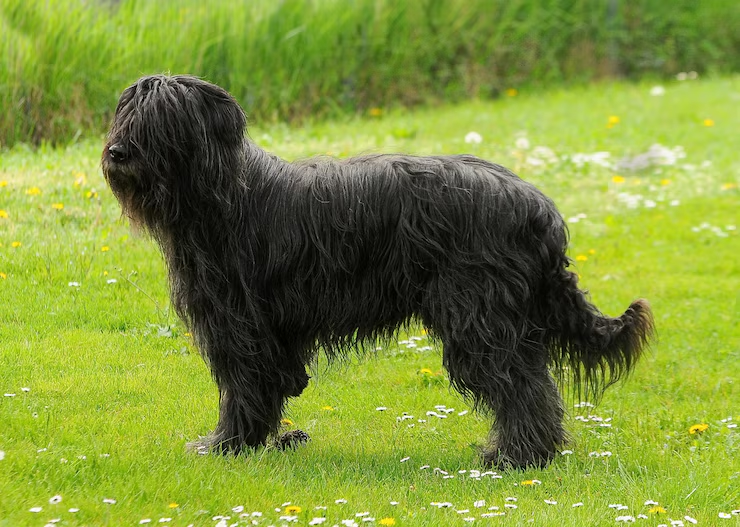
| Height | 40–56 cm |
| Weight | 12–18 kg |
| Lifespan | 12–15 years |
| FCI group | 1 · sheepdogs |
| Origin | Portugal |
Exact ratings
Common health issues
Nutrition
The Portuguese Sheepdog (Cão da Serra de Aires) is a unique and devoted herding breed originating from the mountainous Serra de Aires region in Portugal. These dogs are more than just hardworking herders; they are also wonderful companions, known for their energy, intelligence, and shaggy appearance, which gives them a special charm. Learn more about them on Tvaryny.
The Portuguese Sheepdog embodies the herding spirit: brave, determined, resilient, and incredibly loyal to its family. It’s an ideal fit for active individuals who can provide sufficient physical and mental exercise. Its dense, slightly wavy coat, resembling goat hair, along with its characteristic “beard” and “mustache,” give it a somewhat mischievous yet serious look. They’re often called “monkey dogs” due to their lively movement and expressive faces.
Portuguese Sheepdog: A Detailed Breed Overview

| Breed Name | Portuguese Sheepdog (Cão da Serra de Aires) |
| Country of Origin | Portugal |
| Region of Origin | Serra de Aires, Alentejo |
| Breed Emergence | Early 20th century (official recognition later) |
| FCI Recognition | FCI Standard No. 93, Group 1 (Sheepdogs and Cattle Dogs), Section 1 (Sheepdogs). Recognized in 1996. |
| Life Expectancy | 12-14 years |
| Height at Withers | Males: 17.7-21.7 inches (45-55 cm) Females: 16.5-20.5 inches (42-52 cm) |
| Weight | 37-60 pounds (17-27 kg) |
| Coat Type | Long, straight or slightly wavy, goat-like, with no or very little undercoat |
| Color | Yellow, chestnut, gray, fawn, wolf gray (various shades), black; often with tan or brown markings. White markings on the chest are permitted. |
| Temperament | Intelligent, loyal, alert, energetic, somewhat reserved with strangers |
| Purpose | Herding (sheep, goats, cattle, horses), companion dog, guardian |
History of the Portuguese Sheepdog
The exact origin of the Portuguese Sheepdog (Cão da Serra de Aires) is shrouded in mystery, but the main theory links its appearance to French herding dogs. It’s believed that in the early 20th century, not the 19th as sometimes mistakenly stated, Count Manuel Castro Guimarães imported a pair of Briards from France. These dogs were crossed with local herding dogs from the Alentejo region, possibly including ancestors of the Catalan Sheepdog or Pyrenean Sheepdog. The result of these crossings was the breed we now know as the Portuguese Sheepdog.
The first official breed standard was developed by Dr. António Cabral and Dr. Filipe Morais Bensaúde and adopted by the Portuguese Kennel Club (Clube Português de Canicultura) in 1932. International recognition came much later-the FCI officially recognized the breed in 1996. Despite its relatively recent official history, the Portuguese Sheepdog quickly gained popularity in its homeland as a tireless herder and loyal companion. Its primary job was to herd sheep, goats, cattle, and even horses in the harsh conditions of the Serra de Aires mountains. These dogs were known for their alertness, especially at night, which made them excellent guardians of herds against predators.
Today, the Portuguese Sheepdog is still used for its original purpose, but it’s increasingly found as a family pet due to its intelligence and loyalty. The breed remains relatively rare outside of Portugal, but its popularity is gradually growing among enthusiasts of active and intelligent dogs.
What the Portuguese Sheepdog Looks Like: Standard and Appearance
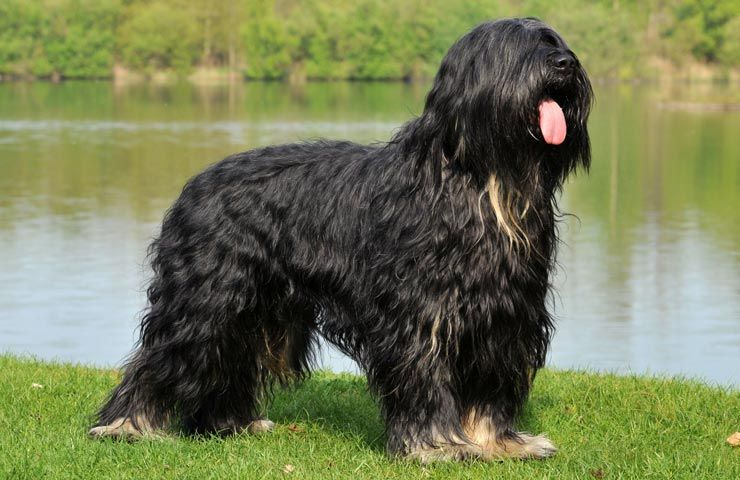
The Portuguese Sheepdog is a medium-sized dog with a rustic, somewhat disheveled appearance, characterized by its long coat and expressive “beard,” “mustache,” and “eyebrows,” which give it a unique charm. Its look reflects its working heritage – it should be robust, agile, and resilient.
- General Appearance: A medium-proportioned dog, with body length slightly exceeding height at the withers. Movements are light, energetic, and springy, typical of herding dogs.
- Head: Strong, broad, not too long, well-proportioned to the body. Skull is slightly longer than the muzzle, slightly domed. Stop is well-defined.
- Muzzle: Straight or slightly upturned, not pointed. Nose is large, preferably black, with well-open nostrils. Lips are tight, dark in color.
- Eyes: Medium-sized, round, preferably dark (from amber to black), with a lively and intelligent expression. Eyelids are dark.
- Ears: Set high, medium-sized, triangular, pendulous, and lie close to the cheeks. Historically, they were sometimes cropped, but this is now largely prohibited and non-standard in many countries.
- Neck: Harmoniously connected to the head and body, medium length, muscular, without dewlap.
- Body: Straight topline. Withers well-defined. Back straight or slightly sloping, strong. Loin short, broad, and muscular. Croup slightly sloping. Chest deep and broad, reaching the elbows. Ribs well-sprung. Abdomen moderately tucked up.
- Tail: Set high, tapering to the tip, reaching the hock. At rest, it hangs, possibly with a slight curve at the end. In motion or when excited, it rises but does not curl over the back. Some puppies may be born naturally bobtailed.
- Limbs: Forelimbs are straight, parallel, with strong bones and well-developed musculature. Paws are round, with strong black pads and strong dark nails. Hind limbs are also strong, muscular, with well-angulated hocks.
- Coat: A very characteristic feature of the breed. Long, straight or slightly wavy, quite coarse to the touch, resembling goat’s hair. Undercoat is absent or very weakly developed. On the head, the hair forms dense eyebrows, a mustache, and a beard. The coat is evenly distributed over the entire body, including the space between the toes.
- Color: The most common colors include yellow, chestnut, gray (in various shades, from light to dark), fawn, wolf gray (a mixture of gray, black, and fawn hairs) and black. Tan, brown, or fiery markings are often present on the muzzle, chest, limbs, and under the tail. Small white markings on the chest are permissible.
Care and Grooming of the Portuguese Sheepdog
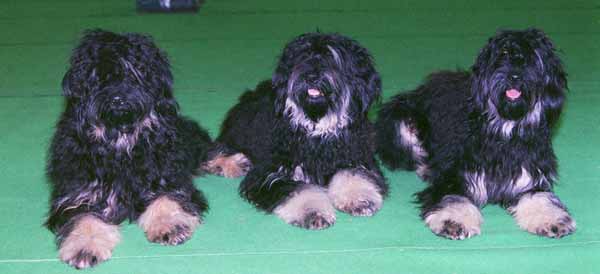
The long coat of the Portuguese Sheepdog requires regular, but not overly complicated, care. The absence of a dense undercoat significantly simplifies the process, as the hair is less prone to matting than in some other long-haired breeds. However, certain procedures are necessary to keep it in good condition and prevent tangles.
- Brushing: It’s recommended to brush your Portuguese Sheepdog 1-2 times a week using a wide-toothed comb or a slicker brush. This will help remove dead hair, dirt, and prevent matting, especially in areas of friction (under the armpits, on the belly, behind the ears). During shedding season, although not very intense, brushing frequency can be increased.
- Bathing: Bathe your dog as needed, usually once every 1-3 months or when they get significantly dirty. Use a quality shampoo for long-haired dogs that won’t dry out the skin and coat. After bathing, it’s important to thoroughly dry the coat with a towel or a hairdryer on a low setting, brushing it as you dry.
- Ear Care: Regularly check the ears for dirt, redness, or an unpleasant odor. Clean them with a special ear cleaning solution using a cotton pad. Since the ears are pendulous, they are prone to infections, so prevention is important.
- Eye Care: Inspect eyes daily. Small discharges in the corners of the eyes can be gently removed with a damp cloth or a cotton pad soaked in a special eye-cleaning solution.
- Nail Trimming: Trim nails approximately once a month or as needed if they don’t wear down naturally during walks. Use special dog nail clippers.
- Dental Care: Regular tooth brushing with a special dog toothbrush and paste will help prevent tartar buildup and gum disease. Dental treats can also be given.
- Clipping: Portuguese Sheepdogs are typically not fully clipped, as their coat provides protection from the elements. However, hygienic trimming around the paws, anal area, or to neaten the beard and mustache may occasionally be necessary.
It’s important to remember that regular grooming is not just about aesthetics but also about your pet’s health. It allows you to detect potential skin problems, parasites, or other ailments in a timely manner.
Character and Temperament of the Portuguese Sheepdog
The Portuguese Sheepdog is a dog with high intelligence, great loyalty, and natural herding instincts. Its character is a blend of hardworking diligence, alertness, and tenderness toward its family. They are known for their liveliness and energy, but at the same time, they can be calm and composed when necessary.
- Family Loyalty: These are exceptionally loyal dogs that form strong bonds with their owners. They strive to be close to the family and participate in all family activities. With children, provided proper upbringing and respectful treatment from the children, they usually get along well, showing patience and playfulness.
- Guarding Qualities: Portuguese Sheepdogs are excellent guardians. They are very attentive to their surroundings and will always alert with barking to approaching strangers or any unusual sounds. They are wary of unfamiliar people, but without unjustified aggression unless they feel threatened.
- Intelligence and Trainability: These are very intelligent dogs that learn quickly and understand commands well. They require consistent and positive training. Their intelligence demands constant stimulation, so they need not only physical but also mental exercise.
- Energy and Activity: Like most herding dogs, the Portuguese Sheepdog is a very energetic breed. It needs long daily walks, opportunities to run freely, and play. They are excellent for active dog sports such as agility, obedience, or flyball. Without sufficient activity, they may get bored and exhibit destructive behavior.
- Independence: Sometimes they may show a certain degree of independence and stubbornness, which is characteristic of many herding breeds accustomed to making decisions while working with a flock. Therefore, it’s important to establish clear rules and boundaries from an early age.
- Attitude Towards Other Animals: With proper early socialization, Portuguese Sheepdogs usually get along well with other dogs and pets. However, their herding instinct may prompt them to “herd” other animals or even small children, which needs to be corrected.
The Portuguese Sheepdog is not the best choice for inexperienced owners or people with a sedentary lifestyle. It needs an owner who can provide it with the appropriate level of activity, mental stimulation, and consistent training. Similar to other herding breeds, such as the Catalan Sheepdog, they thrive when they have a “job” or regular activities.
Training and Socialization of the Portuguese Sheepdog
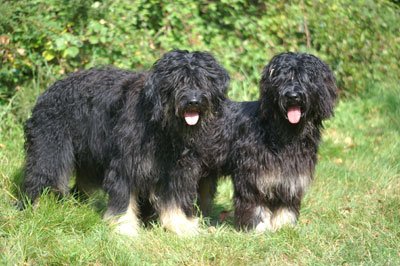
Training a Portuguese Sheepdog can be an exciting process due to its high intelligence and desire to please its owner. However, their cleverness and a certain degree of independence require a patient, consistent, and positive approach.
Key Aspects of Training:
- Early Socialization: This is a critically important stage for the Portuguese Sheepdog. Introduce your puppy to various people, sounds, places, and other animals from an early age (after necessary vaccinations). This will help raise a well-balanced and confident dog that reacts appropriately to new situations.
- Positive Reinforcement: Use methods based on praise, treats, and games. Portuguese Sheepdogs respond well to encouragement and poorly to harsh methods or punishment, which can lead to a loss of trust or stubbornness.
- Consistency and Clarity: Establish clear rules of conduct from the beginning and ensure all family members adhere to them. Inconsistency can confuse the dog and complicate the learning process.
- Mental Stimulation: In addition to physical exercise, the Portuguese Sheepdog needs mental challenges. These can include search games, learning new tricks, or participating in dog sports (agility, obedience, frisbee). A bored dog can become destructive.
- Obedience Commands: Start with basic commands (“sit,” “stay,” “come,” “leave it,” “heel”) and gradually increase the difficulty of tasks. Their herding nature means they may be prone to making independent decisions, so it’s important to teach them unquestioning obedience to commands.
- Managing Herding Instinct: Be prepared for the dog to try to “herd” family members, especially children, or other pets, gently nipping at their heels. This behavior should be gently but firmly corrected from an early age, redirecting their energy towards toys or acceptable activities.
- Professional Help: If you encounter difficulties in training or behavior, don’t hesitate to seek help from a professional dog trainer or animal behaviorist.
Remember that training is not just about teaching commands, but also about building a strong and trusting relationship with your dog. A Portuguese Sheepdog that receives proper upbringing and socialization becomes a wonderful, obedient, and loyal companion.
Health and Typical Diseases of the Portuguese Sheepdog
Nutritional Considerations for the Portuguese Sheepdog
Pros and Cons of the Portuguese Sheepdog Breed
Like any breed, the Portuguese Sheepdog has its advantages and disadvantages. It’s important to objectively assess them before deciding to get one of these dogs.
| Pros | Cons |
|---|---|
| High intelligence and trainability: Quickly learn commands, respond well to training with the right approach. | Requires a lot of physical activity: Not suitable for inactive people or apartment living without long walks. |
| Loyalty and affection towards family: Very loving and faithful companions. | Requires regular grooming: Long coat demands weekly brushing. |
| Excellent guarding qualities: Always warn of danger, alert and attentive. | Can be wary of strangers: Needs early and thorough socialization. |
| Gets along well with children (with proper socialization): Patient and playful. | Tendency to “herd”: May try to herd children or other animals, gently nipping at their heels. |
| Relatively robust health: Fewer genetic diseases compared to some other breeds. | May exhibit stubbornness and independence: Requires an experienced and consistent owner. |
| Unique and attractive appearance: Their shaggy coat and “beard” make them very charismatic. | Not a very common breed: Can be difficult to find a good breeder. |
| Energetic and playful: A great partner for active recreation and games. | Requires mental stimulation: A bored dog can become destructive or noisy. |
| Adapts well to various climatic conditions (thanks to its coat): Can live both indoors and outdoors (with proper shelter). | Shedding: Although not overly intense, some hair will be left in the home. |
Interesting Facts About the Portuguese Sheepdog
- “Monkey Dog”: In Portugal, this breed is sometimes called “cão macaco” (monkey dog) due to its lively, agile movements and expressive face with a beard and mustache, which gives it a resemblance to a small monkey.
- Night Watchman: Historically, Portuguese Sheepdogs were known for their particular alertness at night, guarding flocks from predators. This trait can also manifest in domestic settings – the dog may be more active and noisy during nighttime hours.
- Briard Connection: Although the breed developed in Portugal, its ancestors are believed to be French Briards, making it a relative of well-known herding dogs like the Briard. This explains some similarities in appearance and character.
- Rare Breed: Outside of Portugal and some European countries, the Portuguese Sheepdog still remains a relatively rare breed. This makes it even more unique.
- Versatile Herder: These dogs were traditionally used for herding not only sheep but also goats, cattle, and even horses, demonstrating their versatility and adaptability.
- “Goat-like” Coat: The texture of the Portuguese Sheepdog’s coat is often described as “goat-like” – it’s quite harsh, without significant undercoat, which helps it withstand various weather conditions and tangle less.
- Natural Bobtail: Some Portuguese Sheepdog puppies may be born with a short tail (natural bobtail). This is an acceptable trait in the breed standard.
- National Treasure: In Portugal, the Cão da Serra de Aires is considered a national treasure and an important part of the cultural heritage of the Serra de Aires region.
Frequently Asked Questions About the Portuguese Sheepdog (FAQ)
Is the Portuguese Sheepdog suitable for apartment living?
Theoretically, a Portuguese Sheepdog can live in an apartment, BUT only if it is provided with daily long (a minimum of 2-3 hours) and active walks with the opportunity to run freely, as well as sufficient mental stimulation. Without this, the dog will suffer and may become noisy and destructive. The ideal option for it is a private house with a fenced yard where it can move freely.
Does the Portuguese Sheepdog shed a lot?
The Portuguese Sheepdog has a long coat, but its undercoat is either absent or very weakly developed. Therefore, its shedding is moderate, not as intense as in breeds with a dense undercoat (for example, the Hungarian Puli). Regular brushing (1-2 times a week) will help control the amount of hair in the home.
Are Portuguese Sheepdogs aggressive?
No, the Portuguese Sheepdog is not aggressive by nature. It is alert and wary of strangers, which makes it a good guard dog, but unjustified aggression is not characteristic of the breed. Proper early socialization and training help form a balanced temperament.
How much does a Portuguese Sheepdog puppy cost?
The price for a Portuguese Sheepdog puppy can vary significantly depending on the pedigree, the breeder’s reputation, region, and other factors. As a relatively rare breed, the price may be higher than for more common breeds. It’s important to turn to responsible breeders who care about the health and proper development of their dogs.
Is the Portuguese Sheepdog easy to train?
Portuguese Sheepdogs are very intelligent and capable of learning, but they can sometimes exhibit stubbornness and independence. They respond best to positive training methods, patience, and consistency. For inexperienced owners, training may prove to be a bit of a challenge, so attending obedience classes or seeking help from a professional dog trainer is recommended.
Is this breed suitable for families with small children?
Yes, provided the dog is properly socialized and children are taught to treat the animal respectfully, the Portuguese Sheepdog can be a wonderful companion for a family with children. They are usually patient and playful. However, due to their herding instinct, they may try to “herd” children, gently nipping at their legs, which requires correction.
Video About the Breed
- Clever, learns fast
- Devoted, bonds deeply
- Generally robust health
- A funny, lively “monkey” character
- Can be dominant and stubborn
- Needs firm, respectful training
- The shaggy coat needs care
- A high need for exercise and activity
| Bearded Collie | Puli | Catalan Sheepdog | |
|---|---|---|---|
| Height | 51–56 cm | 37–44 cm | 45–55 cm |
| Energy | 4.5 | 4.5 | 4.5 |
| Apartment | 3 | 3 | 3 |
| Beginners | 3 | 3 | 3 |
Why is the Portuguese Sheepdog called the “monkey dog”?
Is the breed suited to a novice?
Is the Portuguese Sheepdog healthy?
FCI Standard No. 93 · The Kennel Club
For apartments · For kids · For beginners · Active · Smartest · Hypoallergenic · All rankings →