

| Height | 48–56 cm |
| Weight | 16–20 kg |
| Lifespan | 12–14 years |
| FCI group | 6 · scenthounds |
| Origin | France / United Kingdom |
Exact ratings
Common health issues
Nutrition
The Anglo-French Petite Vénerie is a relatively young, yet highly regarded, hunting dog breed. It stands as a prime example of a successful blend, combining the best qualities of both French and English hounds. These dogs possess an exceptionally strong hunting instinct, but that doesn’t stop them from being wonderful companions and loyal friends to their owners. They are characterized by a friendly and balanced temperament, easily getting along with all family members. The breed demands constant “field work” and significant physical exertion, making it best suited for a rural lifestyle. Learn more about this unique hunter and companion, and much more, on Tvaryny.
History and Origin of the Anglo-French Petite Vénerie
The history of the Petite Vénerie is unique, as it is the youngest of all officially recognized French hound breeds. Work on its creation actively began in the 1970s, with the breed receiving official recognition from the Fédération Cynologique Internationale (FCI) only in 1978. Despite this, many cynologists believe the breed is still in the process of its final formation and refinement.
The primary goal of breeders was to create a small yet durable and effective hound for hunting small game, predominantly hares and rabbits. The breed’s founder is considered to be the French enthusiast Abel Sénac-Lagrange, who aimed to combine the speed, stamina, and excellent scenting ability of English hounds with the passion, vocalizations, and pack-working skills characteristic of French breeds. The following breeds were used in the creation of the Anglo-French Petite Vénerie:
- Beagle and Harrier: From them, the Petite Vénerie inherited its compact size, energy, strong bone structure, and unparalleled nose.
- Poitevin Hound: Contributed elegance, speed, and a characteristic loud voice to the breed.
- Porcelaine Hound: Brought its refinement and distinctive coloring to the gene pool.
- Petit Bleu de Gascogne: Added calmness, balance, and excellent pack-working qualities.
The result of this complex breeding work was a versatile hunting dog that not only excels at tracking but also possesses a pleasant temperament, making it suitable as a family member.
Standard and Appearance: A Harmony of Strength and Elegance
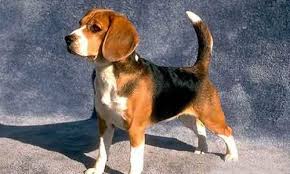
The appearance of the Anglo-French Petite Vénerie is a unique “golden mean” between heavier French and lighter English hounds. It is a medium-sized dog, harmoniously and proportionally built, giving an impression of both robustness and elegance. It has an athletic, muscular physique without any heaviness.
| Characteristic | Value |
|---|---|
| Height at Withers | 48–56 cm (for males and females) |
| Weight | 20–27 kg |
| Life Expectancy | 12–14 years |
| Country of Origin | France |
| FCI Classification | Group 6 (Scent Hounds and Related Breeds), Section 1.2 (Medium-sized Hounds) |
The Petite Vénerie’s head is not too large, elongated, with a slightly convex skull. The stop is defined but not abrupt. The muzzle is medium in length and straight. The lips are tight, with the upper lip slightly overlapping the lower. The nose is always black, with well-opened nostrils.
The eyes are large, dark, with an intelligent and gentle expression. The dog’s gaze is often described as slightly melancholic but attentive.
The ears are set at eye level or slightly lower, medium in length, flexible, slightly curled inward, and covered with thin skin that forms small wrinkles.
The body is balanced, with a straight and strong back. The loin is short and muscular. The chest is deep but not overly wide, providing ample space for the lungs and heart, essential for sustained running.
The tail is of medium length, thick at the base, and tapers towards the tip. The dog carries it saber-fashion, never thrown over the back.
The coat is short, dense, and thick, providing good protection against the elements.
Coloring is typically tricolor (white, black, and tan/orange) or bicolor (white and tan/orange or white and black with tan/orange markings). White is often the dominant color with large patches. A black “saddle” (a solid black patch on the back) is typical for the breed.
Character and Temperament of the Petite Vénerie
One of the most interesting character traits of the Anglo-French Hound is its duality. While hunting, it’s a zealous, tireless, and decisive pursuer, capable of tracking for hours. At home, however, it transforms into a calm, gentle, and obedient companion. Unlike many other hounds, the Petite Vénerie does not display excessive independence or stubbornness in daily life.
Beneath a seemingly reserved emotional exterior and some coolness, the dog hides deep affection and love for its owner and family. It is highly people-oriented and tolerates prolonged loneliness poorly. It behaves amiably and friendly towards others, showing no aggression towards strangers, although it may announce their arrival with a loud bark. It gets along wonderfully with other dogs, especially those of its own breed, as it is accustomed to working in a pack. Its attitude towards children is usually very gentle and patient, making it a good family pet provided it receives sufficient physical activity.
Pros and Cons of the Breed
Before getting such a dog, it’s important to objectively assess all its advantages and disadvantages to understand if it fits your lifestyle.
| ✅ Pros | ❌ Cons |
|---|---|
| Excellent Hunter. Ideal choice for hunting small game. | Very High Activity Needs. Not suitable for apartment living without daily intensive exercise. |
| Friendly and Social Temperament. Gets along well with children and other dogs. | Strong Hunting Instinct. Prone to escape if it catches a scent; cannot be let off-leash in unsafe areas. |
| Robust Health. Health is generally robust, but no breed-wide list of hereditary diseases has been compiled — “not described” means “not studied”, not “not there”. | Requires Space. Best suited for a private home with a large, securely fenced yard. |
| Easy to Care for. Short coat requires minimal grooming. | Loud Voice. Barks frequently and loudly, especially when excited or bored. |
| High Intelligence and Trainability. Eager to cooperate with its owner. | Doesn’t Tolerate Loneliness Well. Can become destructive if left alone for extended periods. |
Care and Maintenance: Creating Ideal Conditions
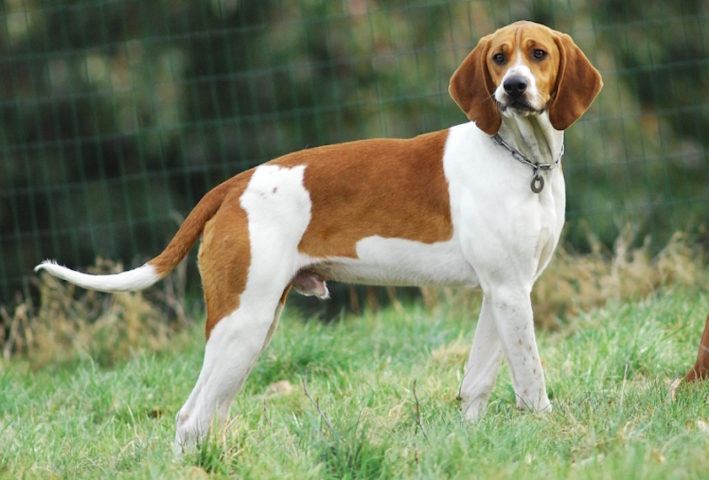
The Anglo-French Petite Vénerie is a dog bred for movement and open spaces. The ideal environment for it is a country house with a large, securely fenced yard where it can run freely. While it is considered one of the more adaptable hounds for city life, apartment living is only possible under one condition: the owner must provide it with a minimum of 2-3 hours of intense physical activity daily. This can include long walks in the park, runs alongside a bicycle, or specialized training.
Coat care is minimal. Brushing the dog once a week with a rubber brush or grooming mitt is sufficient to remove dead hairs. Bathing should only be done as needed. Special attention should be paid to the ears. Their pendulous shape creates favorable conditions for developing infections, so they must be regularly inspected and cleaned with a special lotion.
Also, remember to regularly trim its nails if they don’t wear down naturally, and to care for its teeth. In terms of temperament and needs, the Petite Vénerie is similar to other French hounds, such as the Chien d’Artois or the Ariégeois, both of which also require an experienced, hunting-oriented owner.
Health and Typical Ailments
Training and Nurturing the Hunting Instinct
Training the Petite Vénerie is an interesting, yet challenging, process. On one hand, this dog is intelligent, clever, and eager to please its owner. It obediently follows commands and demonstrates diligence in learning. On the other hand, its powerful hunting instinct can become a serious obstacle. If the dog picks up a scent, it may completely ignore its owner’s commands. That’s why practicing the “Come!” command is vitally important and requires months of persistent training.
Training should be based on positive reinforcement, patience, and consistency. Harshness and punishment will only destroy the trust between you and your dog. Early socialization is key: a puppy needs to be introduced to various people, sounds, places, and other animals. For hunting use, the dog requires special preparation and training on wild game. In terms of its intelligence and approach to training, it resembles a relative like the Beagle Harrier, which also combines English and French bloodlines.
Nutrition: A Diet for an Active Dog
Interesting Facts About the Anglo-French Petite Vénerie
- The name “petite vénerie” translates from French as “small hunt.” This term denotes hunting with hounds for small game (hare, rabbit, fox), as opposed to “grande vénerie” – hunting for deer or boar.
- This is the smallest and youngest of the seven existing Anglo-French hounds.
- Despite its name, the breed is purely French in origin, although English blood does flow in its veins.
- The breed remains quite rare outside of France. Most representatives are still used for their primary purpose – hunting.
- The Petite Vénerie has a very melodic and loud voice, which is highly valued by hunters. Each dog in the pack may have its unique timbre, allowing an experienced hunter to “read” the progress of the hunt by ear.
Frequently Asked Questions About the Breed (FAQ)
Is the Anglo-French Petite Vénerie suitable for a beginner?
Likely not. This breed requires an experienced owner who understands the specifics of hunting dogs and is prepared to dedicate significant time to training and physical activity.
Does this dog shed much?
Shedding is moderate, seasonal (spring and autumn). Regular brushing helps keep it under control.
Can a Petite Vénerie live with a cat?
This is challenging. Due to its strong hunting instinct, the dog may perceive cats and other small animals as prey. Shared living is only possible if they grew up together from an early age, but even then, constant supervision is required.
Does it bark a lot?
Yes, this is a vocal breed. They use barking for communication during hunts, and at home, they may bark out of boredom, joy, or to alert about guests. This is not the best choice for those who prefer quiet.
Can it be let off-leash during walks?
Only in a securely fenced area. In open terrain (forest, field), doing so is extremely dangerous. If it catches an interesting scent, the dog is highly likely to follow the trail and could get lost.
Breed Video
- Friendly, even-tempered, gets on with all
- Clever, patient, hard-working
- Hardy, works superbly in a pack
- Easy to train
- Very strong hunting instinct (risky with small animals)
- Vocal — “gives tongue” on the trail
- Needs “fieldwork” and space
- Not for an apartment
| Harrier | Poitevin | Small Gascon Saintongeois | |
|---|---|---|---|
| Height | 48–53 cm | 60–72 cm | 56–62 cm |
| Energy | 4.5 | 5 | 5 |
| Apartment | 2 | 1 | 1.5 |
| Beginners | 3 | 1.5 | 2 |
Where does the Anglo-French Small Hound come from?
Is the Anglo-French Small Hound good for a family?
Is the breed suited to an apartment?
FCI Standard No. 325 · Société Centrale Canine
For apartments · For kids · For beginners · Active · Smartest · Hypoallergenic · All rankings →