

| Height | 60–72 cm |
| Weight | 20–31 kg |
| Lifespan | 10–12 years |
| FCI group | 6 · scent hounds |
| Origin | France |
Exact ratings
Common health issues
Nutrition
The Poitevin Hound combines an indefatigable hunting nature, aristocratic looks, and a surprisingly docile temperament. It can become not only a partner on the hunt but also a welcoming companion for a family ready for an active lifestyle and unafraid of their pet’s loud, melodious bark. The Poitevin is a rather “vocal” dog that vitally needs space and measured but regular physical exercise. Caring for one is not overly complicated, and the breed’s natural intelligence is conducive to successful training if the right approach is found. Learn more on Tvaryny.
The Poitevin Hound: A Brief Overview and Characteristics
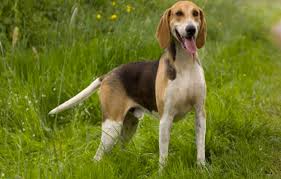
This dog is regarded as one of the most exquisite among French scenthounds. It is often compared to sighthounds due to its elegant build, but in terms of purpose and behavior, it is a classic scenthound, created for pack hunting wolves or roe deer.
| Characteristic | Description |
| Country of Origin | France (Poitou province) |
| Date of Origin | Late 17th Century (first mentioned circa 1692) |
| Type of Use | Pack scenthound (for large game) |
| Life Expectancy | 10-12 years |
| Height (at the withers) | Dogs: 62-72 cm; Bitches: 60-70 cm |
| Weight | 30-35 kg (approx. 66-77 lbs) |
| Coat Type | Short, glossy |
| Color | Tricolor (black saddle, tan markings, white base) |
History of the Breed: From Marquis de Larrye to Modern Times
The history of the Poitevin breed is a fascinating journey of highs, tragic lows, and miraculous revival. Natives of Haut-Poitou, these dogs owe their existence to Marquis François de Larrye. It was he who, in 1692, began targeted selective breeding, crossing local hounds with Foxhounds and, likely, sighthounds to give the dogs speed and stamina.
Today, the breed’s history spans over three hundred years. Initially, these dogs were called “Hounds of Haut-Poitou.” They were famous for their ability to run down wolves – the most dangerous predators of that time. Their strength and ferocity toward the quarry became legendary.
The Tragedy of the French Revolution and Epidemic
Like many other aristocratic breeds, the Poitevin nearly vanished during the French Revolution of 1789. Most dogs were destroyed along with their owners. The few individuals that survived provided hope for restoring the population. However, in the second half of the 19th century (specifically in 1842), the breed suffered another devastating blow – a rabies epidemic wiped out almost all kennel stocks.
Revival and the Role of English Blood
To save the gene pool, cynologists had to take a risky step. Blood from the English Foxhound was used for restoration. This decision had both positive and controversial consequences. It was the English dogs that gave the modern Poitevin a stronger bone structure but slightly altered the head shape, making it less “French.” Nevertheless, it is thanks to this infusion that we have the opportunity to see these magnificent athletes today.
Interestingly, the Poitevin itself later became a genetic donor for other breeds. For instance, it is a direct ancestor of another outstanding French dog – the Billy, to which it passed on its keen nose and lightness of movement.
Appearance: Wolf-like Grace and Power
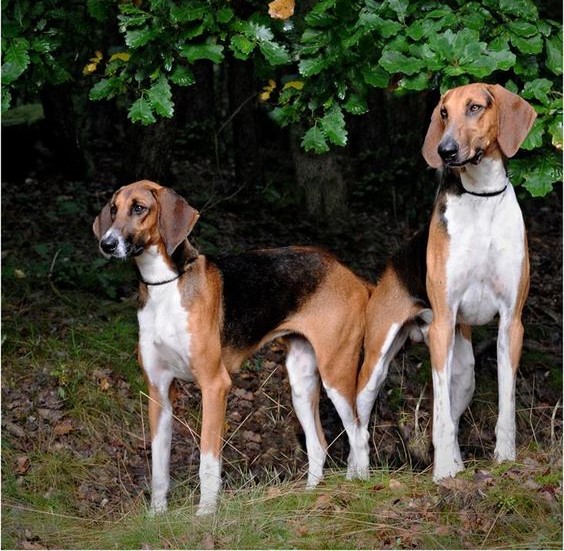
The Poitevin is a dog that combines power and elegance. Unlike many other scenthounds, which can look somewhat heavy, this Frenchman has a dry constitution. It is often referred to as a “sighthound among scenthounds.”
- Head: Elongated, not too wide, with a clearly defined occiput. The transition from forehead to muzzle (stop) is noticeable but not abrupt. The muzzle tapers slightly toward the nose but is not pointed.
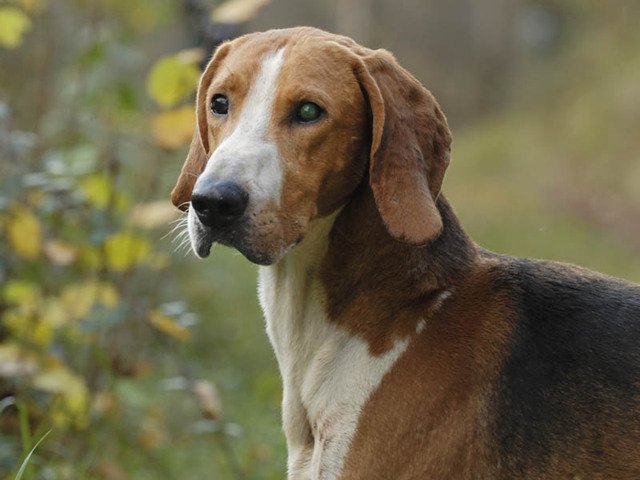
- Eyes: Large, brown, with a distinct black rim around the eyelids. The Poitevin’s gaze is gentle, yet at the same time alert and intelligent.
- Ears: This is a distinctive feature of the breed. They are of medium length, set slightly below eye level, thin, and soft to the touch. It is important to note that the Poitevin’s ears are significantly smaller than the massive hanging ears of other classic French hounds, making them less vulnerable to injury in dense thickets.
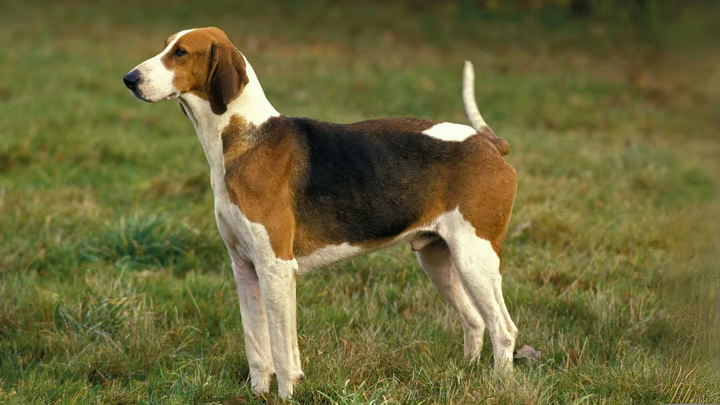
- Body: The back is straight and muscular, the loin strong. The chest is deep (reaching the elbows), ensuring large lung capacity for prolonged running. The belly is noticeably tucked up, which again reminds one of the sighthound influence.
- Limbs: Long, straight, with strong bone and developed musculature. The paws are of the so-called “wolf” type – elongated and strong.
The usual color of Poitevin hounds is the classic tricolor. It combines a rich tan color, a wide white field, and a black saddle (mantle). The coat is short, glossy, and lies close to the body, but it feels slightly coarser to the touch than it appears.
Character: Temperament and Behavior at Home and on the Hunt
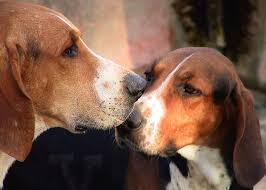
The Poitevin Hound is primarily a working dog. Its character has been formed by centuries of selection for pack work. This means it is genetically programmed to cooperate with other dogs, making it absolutely non-conflictual when interacting with its kin. In the owner’s yard, it won’t start “squabbles” unless other dogs show aggression first.
Toward people, the Poitevin is friendly, devoted, and affectionate. It sincerely bonds with its family. However, do not expect the behavior of a service shepherd that never takes its eyes off the owner. The Poitevin is more independent. At home, it can be calm and even lazy, provided it has recieved enough exercise on its walk.
Hunting Passion: This is the main trait of its nature. In the woods, this dog transforms. The energetic behavior of the Poitevin demands movement and space. It acts persistently, disregarding thorny bushes or difficult terrain. Its stamina allows it to pursue prey (deer, boar, fox) all day long without fatigue.
One should remember its voice. The Poitevin has a characteristic deep, melodious bark which hunters call “music.” In an apartment, this “music” will become a problem for neighbors. Furthermore, although it is a scenthound, its speed qualities sometimes resemble the work of sighthounds, such as the Spanish Galgo, allowing it to quickly close the distance to the beast.
Care and Maintenance: Why Apartments are a Taboo
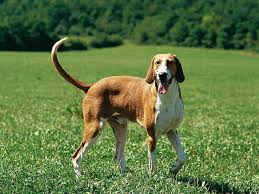
The swift and lively Poitevin will not be able to enjoy life in cramped urban conditions. This is a dog of open spaces. The ideal option for it is a country house with a large, securely fenced plot. The fence must be high and sunken into the ground, as hunting excitement might drive the dog to escape.
Hygiene
Grooming is minimal. Its short coat is cleaned and brushed from time to time (once a week) using a special rubber mitt or a natural bristle brush. This helps remove dead hair and massages the skin.
Bathe the Poitevin only in case of acute necessity, for example, if it has rolled in something “smelly” while hunting. Frequent water procedures can wash away the protective oily layer from the skin. Pay special attention to the eyes and ears. After walks in tall grass, be sure to inspect the dog for ticks.
Training and Raising a Hunter
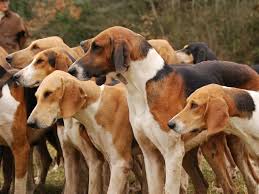
Representatives of this breed are talented students, but only in their “specialized” field. They are easily taught commands related to hunting: tracking, pack work, and recall (although there may be problems with the latter if the dog has caught a scent). However, a “City Dog” course might prove more difficult due to their independence.
Key Principles of Poitevin Training:
- Early Socialization: The puppy must see different people, animals, and hear car sounds so as not to grow up timid.
- Patience: Harsh methods, yelling, or physical punishment are unacceptable. This will only make the dog withdrawn or aggressively fearful.
- Persistence: You must be a leader, but a fair one.
- Work with Instincts: The most important skill for a hunter is not to eat the trophy. This is taught from a young age.
If you do not plan to hunt, consider coursing (chasing a mechanical lure). This will allow the dog to burn off energy. In terms of reaction speed, they can compete even with such rare breeds as the Indian Rajapalayam (Polygar Hound).
Nutrition: Fuel for a Champion
Health and Common Diseases
Pros and Cons of the Breed
| Advantages (Pros) | Disadvantages (Cons) |
| Incredible stamina and working capacity. | Not suitable for apartment living. |
| Lack of aggression toward people, loves children. | Strong hunting instinct (may run off after a scent). |
| Health is generally robust, but no breed-wide list of hereditary diseases has been compiled — “not described” means “not studied”, not “not there”. | Requires very high physical loads daily. |
| Easy coat care. | Loud voice, prone to barking and howling. |
| Elegant, aesthetic appearance. | Difficult to train for classical “obedience.” |
| Gets on well with other dogs (pack instinct). | May perceive small pets as prey. |
Interesting Facts about the Breed
- “Wolf” Past: This breed was specially created for hunting wolves. It is believed that thanks to the courage of the Poitevins, the wolf population in the Poitou region was significantly reduced in the 18th century.
- Endurance Record Holder: Cases have been recorded where a pack of Poitevins pursued a beast for over 7 hours in a row without a break, at a complex galloping pace.
- Rarity: Even in France, this breed is considered quite rare. Meeting a purebred Poitevin outside its homeland is a great stroke of luck.
- Aesthetics: The coloring of the Poitevin is considered one of the most ornate among all hounds. They were often depicted in paintings dedicated to royal hunts.
Frequently Asked Questions (FAQ)
Is the Poitevin suitable as a first dog?
Probably not. This breed requires experience in keeping hunting dogs, an understanding of their psychology, and readiness for heavy physical loads.
Do they shed a lot?
Shedding is moderate and seasonal (spring-fall). Since the coat is short, it does not create major problems in the house if the dog is brushed regularly.
How are they with children?
Very good. Poitevins lack aggression toward humans. They can be excellent partners for games with older children. However, due to their large size, they should not be left alone with toddlers, whom the dog might accidentally knock over.
How much does a puppy cost?
Since the breed is rare, the price can be high and varies significantly. The better question is what you are paying for, not how much: registration, health-tested parents, a litter raised to the proper age and vaccinated, a written contract, and the breeder’s support for the life of the animal. A suspiciously low offer usually means one of those is missing.
Video about the Breed
- Extremely hardy and fast
- A ringing, melodic voice on the chase
- Gets along superbly with other dogs
- Robust working health overall
- Not for an apartment — needs a pack and space
- Reserved, not very affectionate
- Loud; a strong prey drive
- Copes badly with loneliness away from the pack
| Small Anglo-French Hound | English Foxhound | Gascon Saintongeois | |
|---|---|---|---|
| Height | 48–56 cm | 58–69 cm | 62–72 cm |
| Energy | 4.5 | 4.5 | 4.5 |
| Apartment | 2 | 1.5 | 1.5 |
| Beginners | 2 | 2 | 2 |
Is the Poitevin suited to apartment life?
Why does the Poitevin have such a loud voice?
Does the Poitevin get along with other dogs?
FCI Standard No. 24 · Société Centrale Canine
For apartments · For kids · For beginners · Active · Smartest · Hypoallergenic · All rankings →