

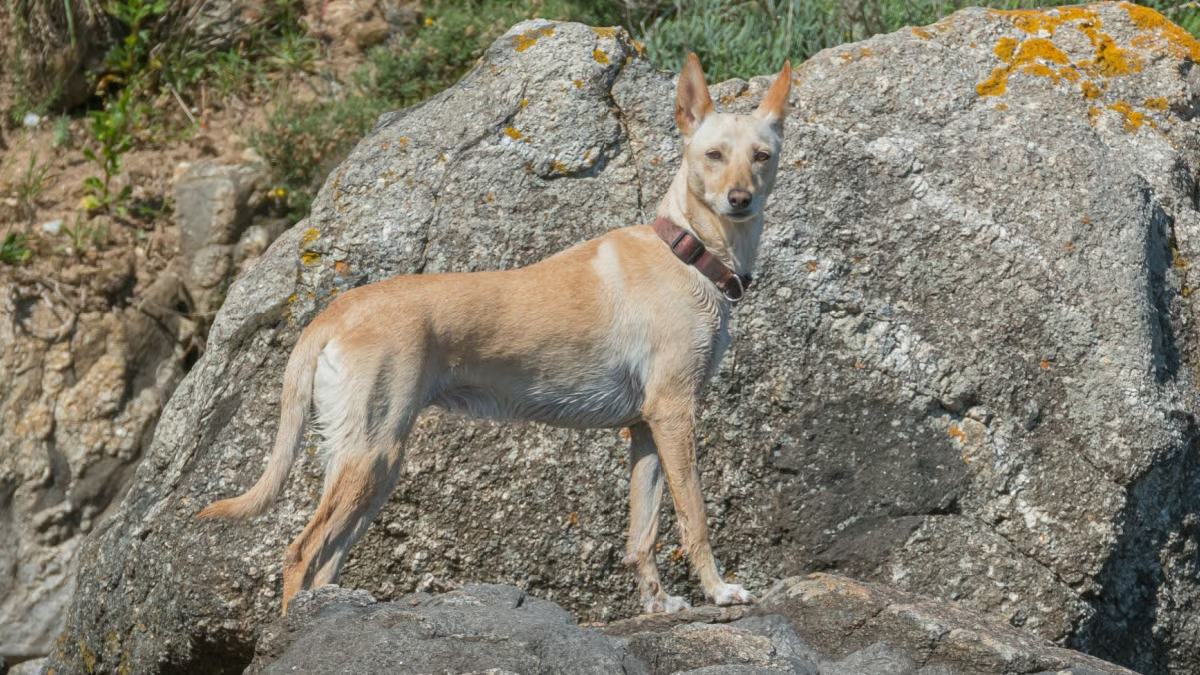
| Height | 55–70 cm |
| Weight | 20–30 kg |
| Lifespan | 12–14 years |
| FCI group | 5 · spitz and primitive |
| Origin | Portugal |
Exact ratings
Common health issues
Nutrition
The Large Portuguese Podengo (Grande Portuguese Podengo) is the biggest of the Portuguese Podengo breeds and the ancestor from which the other varieties – the Medium and Small Podengos – originated. At one point, this magnificent ancient breed was on the brink of extinction, but thanks to the efforts of enthusiasts, it is now making a comeback. During a hunt, the Grande Podengo is used to track and corner large game, particularly wild boar and deer, showcasing incredible courage and stamina. Read more on Tvaryny.
General Breed Characteristics
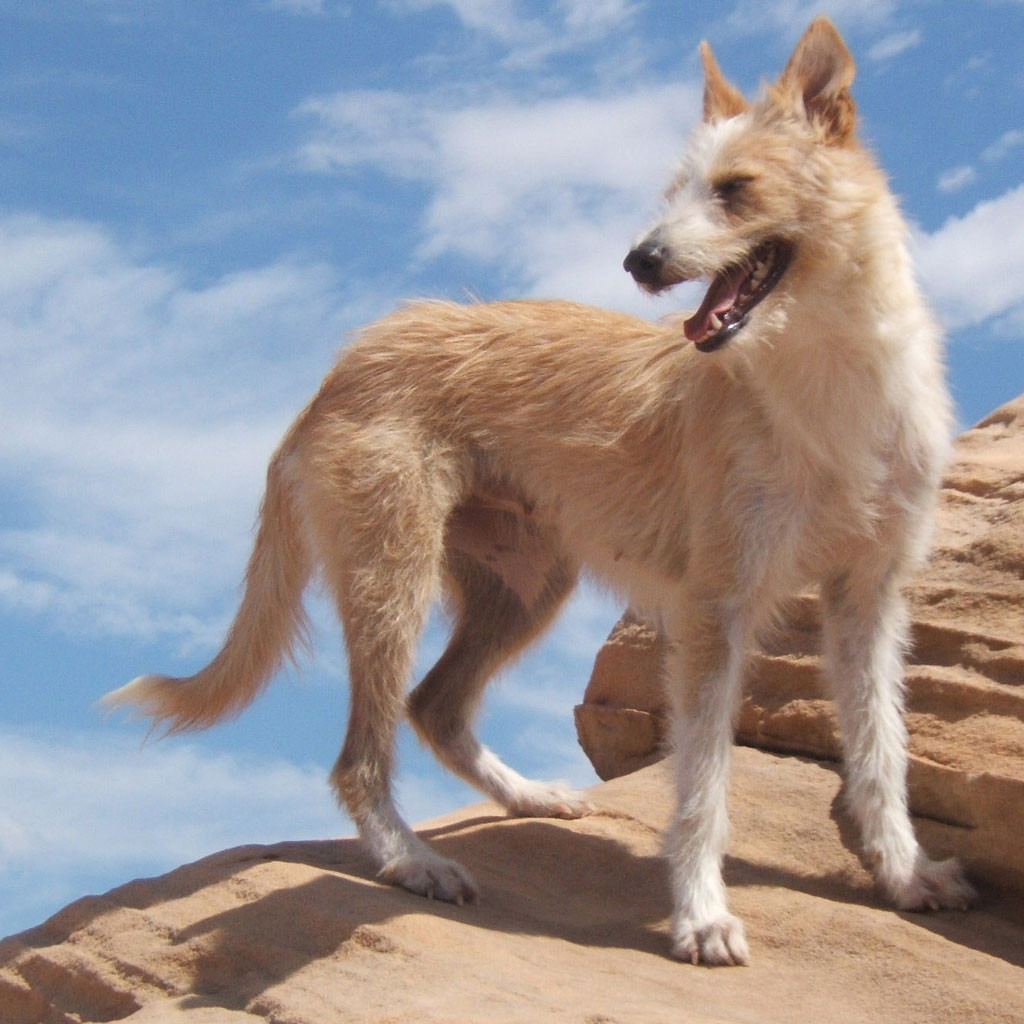
| Breed Name | Portuguese Podengo Grande |
| Country of Origin | Portugal |
| FCI Classification | Group 5 (Spitz and primitive types), Section 7 (Primitive type – hunting dogs) |
| Size | Large |
| Height | 22–28 inches (55–70 cm) |
| Weight | 44–66 lbs (20–30 kg) |
| Lifespan | 12–15 years |
| Coat Type | Two varieties: Smooth (short) and Wirehaired (rough/hard) |
| Color | Predominantly yellow, fawn (light to dark), black (diluted). White markings or a white base with patches are possible. |
| Temperament | Loyal, intelligent, independent, excellent hunter, reserved with strangers |
| Usage | Hunting large game (boar, deer), companion dog |
History and Origin
The history of the Large Portuguese Podengo stretches back to ancient times and remains a subject of debate among experts. There are two main theories about where these unique dogs came from. The most popular version claims their ancestors were brought to the Iberian Peninsula by Phoenician and Roman traders from North Africa and the Middle East as early as the 6th century BC. These ancient hounds, similar to Pharaoh Hounds, adapted to local conditions and gave rise to the Podengo and other Mediterranean breeds, such as the Podenco Canario and the Ibizan Hound.
Another “local” theory hypothesizes that the Podengo descended from wild Iberian wolves domesticated in what is now Portugal. This version highlights the breed’s unique adaptation to the local climate and landscape. Regardless of the exact origin, one fact is undeniable: the Portuguese Podengo is a primitive breed that developed with minimal human intervention, retaining its primal traits and instincts.
Historically, the Large Podengo was an indispensable partner for Portuguese hunters. Its specialty is hunting large game like wild boar and deer. These dogs worked in packs, displaying exceptional courage, endurance, and the ability to pursue prey across difficult, mountainous terrain. Unfortunately, in the 20th century, changes in hunting methods and social conditions pushed the breed to the edge of extinction. The Large Podengo became so rare it was considered practically extinct. It was only thanks to the dedicated work of Portuguese enthusiasts in the late 20th century that a recovery program began. Today, the breed remains rare, but its future looks much brighter.
Appearance and Breed Standard
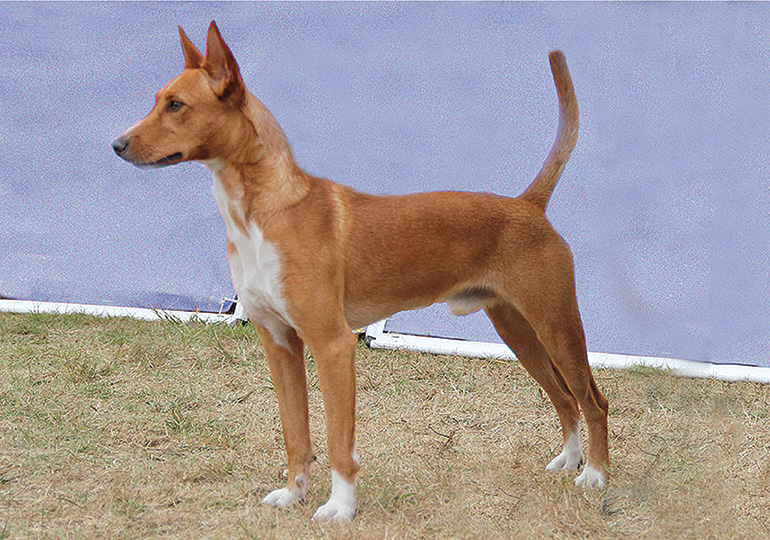
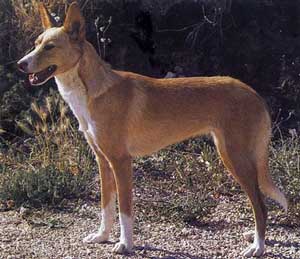
The Large Portuguese Podengo is a noble-looking dog that combines strength, speed, and stamina. Its build is well-balanced, featuring strong bones and dry, defined muscles. It is the embodiment of functionality, where every physical trait serves the purpose of an efficient hunt.
- Head: Shaped like a four-sided pyramid with a broad base and a pointed muzzle. The skull is flat, and the stop is barely pronounced.
- Muzzle: Pointed but not weak. The nose bridge is straight. Lips are thin and tight. Scissor bite, with strong white teeth.
- Eyes: Small, almond-shaped, set obliquely. The color varies from honey to brown, matching the coat. The expression is lively, intelligent, and slightly alert.
- Ears: Large, triangular, erect, and very mobile. Set high and tilted slightly forward. The dog uses them like radar to catch the slightest sounds.
- Body: The body is slightly rectangular; the topline is straight or slightly arched. The chest is deep but not too wide, providing ample space for the lungs and heart. The belly is tucked up.
- Tail: Set fairly high, thick at the base and tapering toward the tip. At rest, it hangs down; in motion, it raises horizontally or in a sickle shape, but never curls into a ring.
- Coat: There are two types:
- Smooth (Liso): Short, dense, and smooth to the touch.
- Wirehaired (Cerdoso): Longer, rough, wire-like texture, espcially on the muzzle where it forms a characteristic “beard.” This coat type offers better protection against thorns and bad weather.
Character and Temperament
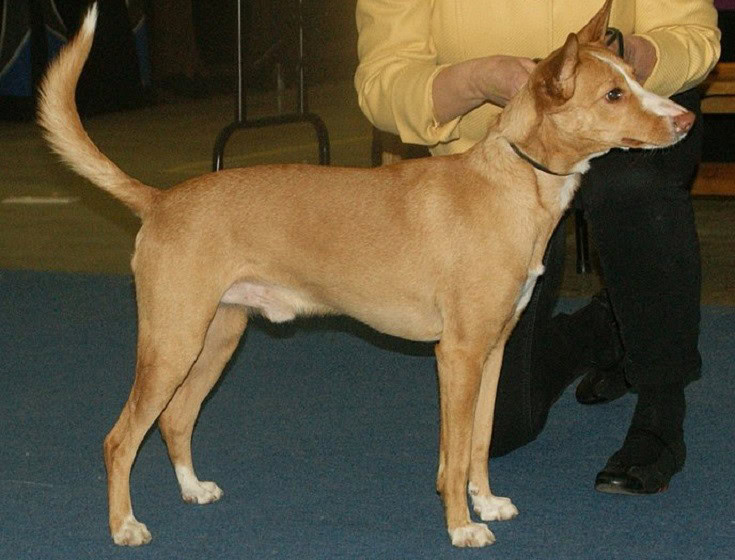
The Grande Podengo’s personality is a unique mix of hunting passion and calm devotion to the family. This is not a dog for beginners. Raising one requires understanding their primitive nature, patience, and consistency. At home, this dog is reserved, chill, and can lie quietly in its spot for hours. They become deeply attached to their family but usually bond most closely with one “person,” offering them total love and respect.
On the other hand, once outdoors or in the field, their behavior flips. A powerful hunting instinct wakes up. The dog becomes incredibly energetic, alert, and always ready to chase. That is why off-leash walks in unfenced areas are extremely dangerous. Any moving target – a cat, a squirrel, even a plastic bag blowing in the wind – can trigger a pursuit.
With strangers, the Large Podengo is wary and reserved. They won’t show aggression without cause, but they won’t rush to make friends either. This makes them decent watchdogs who will always announce guests with a loud bark. With children raised alongside them who know how to respect a dog, they can be patient and gentle. However, they shouldn’t be left alone with small kids unsupervised. Relationships with other animals are tricky due to that high prey drive. They can coexist with other dogs, especially if raised together, but small pets (cats, hamsters, rabbits) will likely always be seen as potential prey.
Pros and Cons of the Breed
| Pros (+) | Cons (-) |
|---|---|
| Exceptional Health: the absence of described hereditary disease is not the absence of risk — breeding animals are screened all the same. | Very High Prey Drive: Prone to running off; requires walks on a leash or in a securely fenced yard only. |
| Family Loyalty: Becomes very attached to their people and makes a faithful companion. | Independent Streak: Can be stubborn during training; needs an experienced owner. |
| Low Maintenance: The coat doesn’t require complex grooming, especially the smooth variety. | Not for Apartments: Needs space and heavy exercise; a house with a large yard is ideal. |
| Stamina and Energy: An excellent partner for active people, hiking, and running. | Reserved with Strangers: Can be overly wary; requires early socialization. |
| Quiet Indoors: Provided they get enough exercise, they are calm and quiet inside the house. | Tricky with Other Pets: Not reccomended for homes with cats or other small animals. |
Care and Maintenance
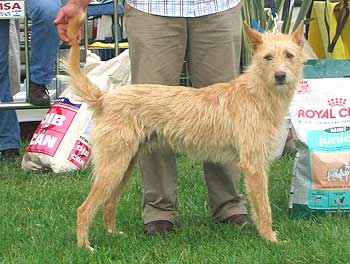
Keeping a Large Portuguese Podengo comes with specific requirements tied to its origin and purpose.
Exercise and Activity
This is the key aspect of care. The Large Podengo is an extremely energetic breed. Short walks around the block won’t cut it. This dog needs at least 1.5 to 2 hours of intense physical activity daily. Ideally, the owner should have a place to let the dog run free in a large, securely fenced area. This could be a private yard with a high fence (at least 6 feet, as Podengos are excellent jumpers) or a specialized dog park.
Great activities for them include:
- Long runs alongside a bike.
- Hiking trails.
- Lure coursing (chasing a mechanical hare) – this lets them satisfy their hunting instinct.
- Agility (with care not to overload the joints).
Important: A lack of exercise can lead to destructive behavior at home, excessive barking, and general anxiety.
Grooming and Coat Care
- The Smooth type needs brushing with a rubber curry brush or glove once a week to remove dead hair. Shedding is moderate.
- The Wirehaired type needs a bit more attention. Brush with a stiff bristle brush 2-3 times a week to prevent matting. Periodically (2-3 times a year), hand-stripping (plucking out dead hair) is recommended to stimulate new, healthy coat growth. Clipping or shaving these dogs is not advised as it ruins the coat texture.
Bathe the Large Podengo only when absolutely necessary, as frequent washing can strip the skin’s natural protective oils. It’s better to use dry shampoo or just wipe the coat with a damp towel. Also, check their ears regularly for dirt and infection, cleaning them with a specific lotion. Don’t forget to trim nails (if they don’t wear down naturally) and take care of their teeth.
Training and Socialization
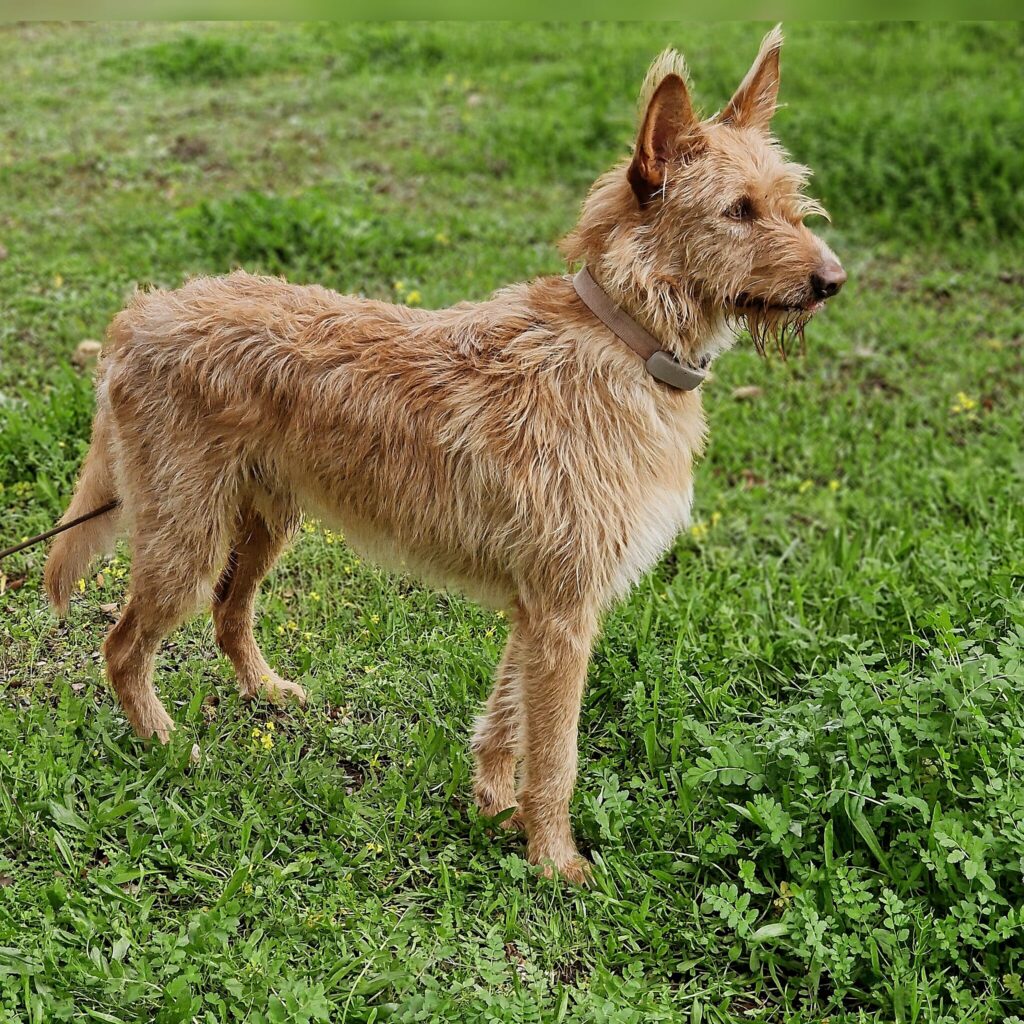
Training a Large Podengo is a challenge that demands patience, consistency, and an understanding of primitive dog psychology. They are very smart and learn fast, but their innate independence often leads them to “question” commands. They won’t blindly follow orders if they don’t see the point. Therefore, training sessions must be short, engaging, and based exclusively on positive reinforcement (treats, praise, play). Harsh methods, yelling, and punishment will only destroy trust and cause them to shut down.
Early socialization is absolutely critical for this breed. From a very young age, the puppy needs to meet different people, hear various sounds, and visit new places. This helps raise a confident dog rather than one that is fearful or overly suspicious. Pay special attention to recall commands (“Come!”), but even with perfect training, you can never fully trust a Podengo off-leash in unsecured areas.
Nutrition: Key Recommendations
Health and Common Issues
The Portuguese Podengo and Its Relatives
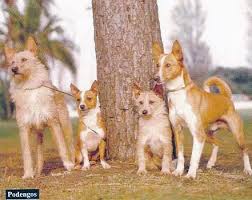
The Large Podengo is the forefather of two other, more well-known varieties of the breed. All are recognized as separate breeds, differing mainly in size and function.
- Portuguese Podengo Medio (Medium): The most popular of the trio. Used primarily for hunting rabbits. It is fast, agile, and has great endurance.
- Portuguese Podengo Pequeno (Small): The smallest Podengo. Historically used for hunting rabbits in burrows and for pest control on ships and in barns. Today, it is also a popular companion dog.
All three sizes of Podengo come in the same coat variations (smooth and wire) and have a similar temperament, adapted to their size and hunting purpose.
Interesting Facts About the Breed
- National Treasure: In Portugal, the Podengo is considered a National Treasure and part of the country’s cultural heritage.
- “Boar Dog”: Sometimes the Large Podengo is called “cão de javali,” which translates from Portuguese as “boar dog,” pointing directly to its main hunting specialty.
- Ancient Senses: Podengos hunt using not just scent but also uniquely acute sight and hearing, a characteristic trait of primitive-type sighthounds.
- Rare Outside Portugal: Despite its ancient history, the Large Podengo is an extremely rare breed outside its homeland. Finding a puppy in the US or other countries can be a real quest.
Frequently Asked Questions (FAQ)
Is the Large Podengo suitable for apartment living?
Absolutely not. This dog needs space to move. Ideal conditions are a detached house with a large, securely fenced yard where they can run freely.
Do they shed a lot?
Shedding is moderate for both coat types. Regular brushing helps keep it under control. They are not considered hypoallergenic.
Is this breed noisy?
The Large Podengo isn’t prone to barking without a reason. They use their voice when they see something suspicious, making them good watchdogs. If the dog gets enough exercise, they are very quiet inside the house.
How much does a Large Portuguese Podengo puppy cost?
Due to their rarity, prices can be quite high. No exact answer is possible: it comes down to the individual litter and the individual breeder. Ask to see the registration papers, the parents’ orthopedic and eye clearances, the vaccination and deworming record, and the home the litter was raised in. Be prepared for significant expenses and possibly a long waitlist.
Can they be left alone for long periods?
Like any dog oriented toward a pack and family, the Large Podengo handles prolonged loneliness poorly. This can lead to anxiety and destructive behavior. This breed is not for people who spend the entire day away from home.
Video About the Breed
- A bold, hardy hunter of large game
- Athletic, energetic
- Devoted, good with the family
- Very robust “natural” health
- A strong hunting instinct (dangerous to cats)
- Independent — needs activity
- A high need for exercise — not for an apartment
- Reserved with strangers
| Portuguese Podengo (Medium) | Ibizan Hound | Podenco Canario | |
|---|---|---|---|
| Height | 40–54 cm | 56–74 cm | 53–64 cm |
| Energy | 4 | 4.5 | 4.5 |
| Apartment | 3 | 2.5 | 2.5 |
| Beginners | 3.5 | 2.5 | 2.5 |
How does the Large Podengo differ from the small and medium?
Is the Large Podengo good for a family?
Is the Large Portuguese Podengo healthy?
FCI Standard No. 94 · Clube Português de Canicultura
For apartments · For kids · For beginners · Active · Smartest · Hypoallergenic · All rankings →