

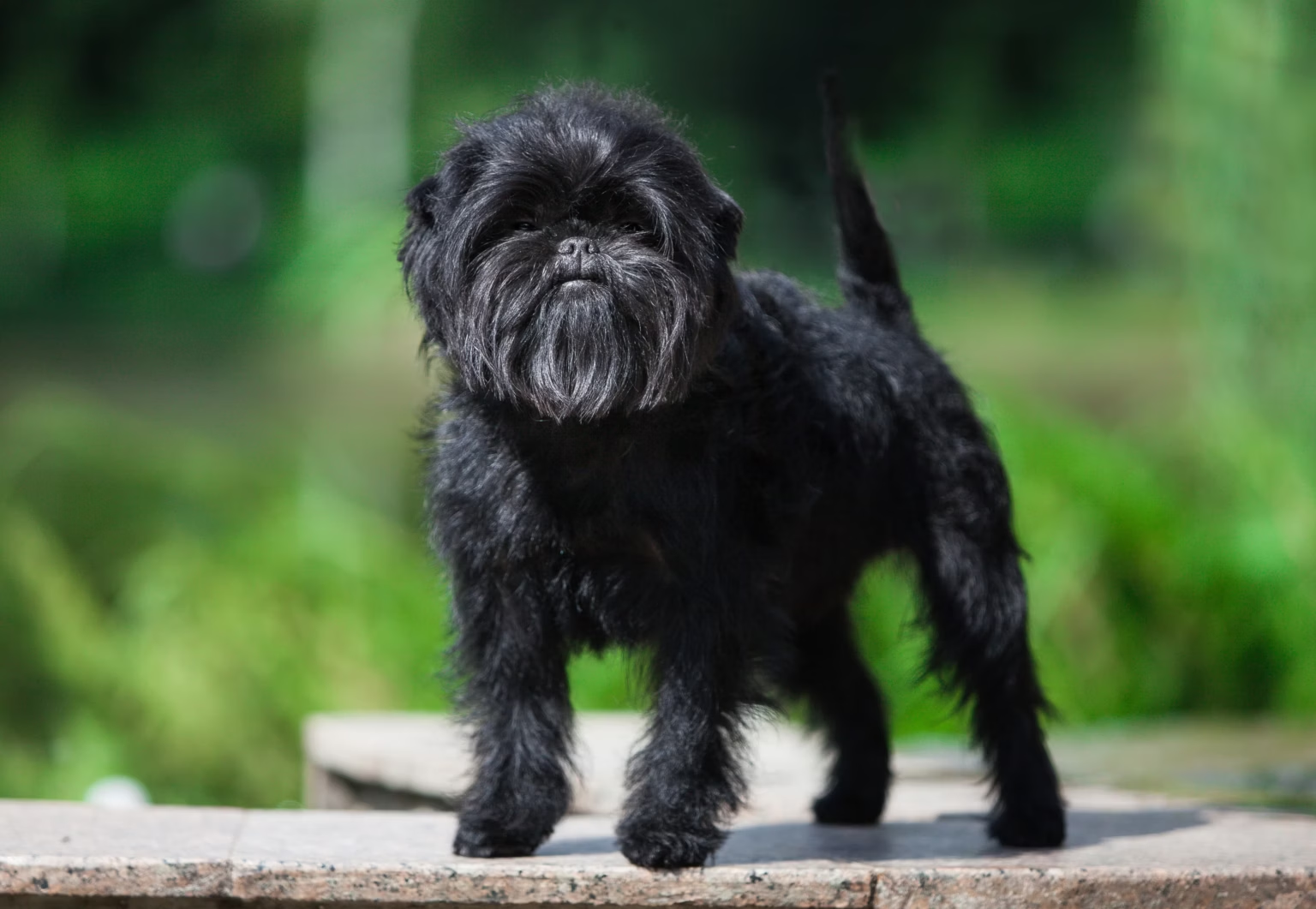
| Height | 24–30 cm |
| Weight | 3–6 kg |
| Lifespan | 12–15 years |
| FCI group | 2 · pinschers, schnauzers, molossoids (toy) |
| Origin | Germany |
Exact ratings
Common health issues
Nutrition
Small yet interesting, Affenpinschers are more than just pets – they’re genuine personalities. These dignified dogs combine boundless loyalty with a wonderfully playful spirit, becoming cherished family members. However, they approach strangers with considerable caution and suspicion, making them excellent, albeit miniature, watchdogs. At the first sign of a potential “invasion” of their territory, this tiny alarm bell will immeadiately raise a ruckus. Want to learn more? You can read about it further on Tvaryny.
Affenpinscher: Key Breed Characteristics
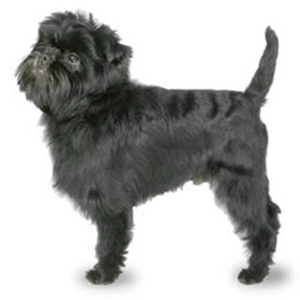
| Characteristic | Description |
| Breed Name | Affenpinscher |
| Other Names | Monkey Pinscher, Monkey Terrier, “Mustachioed Devil” (in France) |
| Country of Origin | Germany |
| Origin Time | 17th century (first mentions – 16th century) |
| Average Lifespan | 12-15 years |
| Height at Withers (FCI) | 9.8-11.8 inches |
| Weight (FCI) | 8.8-13.2 lbs |
| FCI Group | Group 2 (Pinscher and Schnauzer – Molossoid Breeds – Swiss Mountain and Cattle Dogs), Section 1 (Pinscher and Schnauzer Type), Subsection 1.1 (Pinschers) |
| Use | Companion dog, historically – rat catcher |
| Temperament | Courageous, alert, stubborn, loyal, playful, curious, with a sense of humor |
| Color | Primarily black, also permissible: black and tan, red, dark gray, silver |
Detailed History of the Breed’s Origin
The Affenpinscher is one of the oldest German dog breeds, with a history dating back at least to the 17th century, and some sources suggest even earlier mentions in the 16th century. The breed’s name comes from the German words: “Affe,” meaning “monkey,” and “Pinscher,” which translates to “terrier.” The breed earned this name due to its distinctive “monkey-like” face – with expressive eyes, shaggy fur, and a slightly protruding lower jaw. Images of dogs strongly resembling modern Affenpinschers can be found in the works of renowned European artists, including German master Albrecht Dürer (15th-16th centuries) and Dutch painters. This indicates that these small but brave dogs were quite common in Central Europe even in those distant times.
Initially, the primary “job” of the modern Affenpinscher’s ancestors was rodent control – catching rats and mice. They were kept in stables, granaries, kitchens, and shops, where they successfully performed this task with remarkable agility and hunting enthusiasm. Their small size allowed them to access hard-to-reach places, and their wiry coats protected them from rodent bites. The exact origin and developmental stages of the breed are, unfortunately, not precisely known, as pedigree books began much later. It’s believed that various local terrier-like dogs and possibly Pugs contributed to the Affenpinscher’s formation, influencing the head shape and facial expression. Several theories exist regarding the Affenpinscher’s kinship with other breeds. Some researchers believe that Affenpinschers are the ancestors of the Brussels Griffon and the Belgian Griffon, passing on their distinctive appearance. Another theory suggests a reverse influence, or parallel development of these breeds from common ancestors. There are also views on a kinship with the Miniature Pinscher due to shared Pinscher roots. While there’s no direct proof for any of these theories, the obvious physical similarities and shared character traits make these assumptions quite plausible.
In the 19th century, focused efforts began to shape and standardize the breed. Affenpinschers gained popularity not only as ratters but also as companion dogs, especially among high-society ladies who appreciated their exotic look and lively temperament. The first breed standard was developed in Germany, and the breed began appearing in dog shows. In France, these dogs were nicknamed “diablotin moustachu,” meaning “mustachioed imp” or “mustachioed devil,” due to their appearance and somewhat mischievous nature. The breed endured difficult times during the World Wars, when its numbers significantly declined, but thanks to the efforts of enthusiasts, Affenpinschers were preserved. Today, Affenpinschers are not an overly common breed, but they have a devoted following worldwide who value them for their unique blend of terrier and companion traits.
What an Affenpinscher Looks Like: Detailed Description of Appearance and Breed Standard
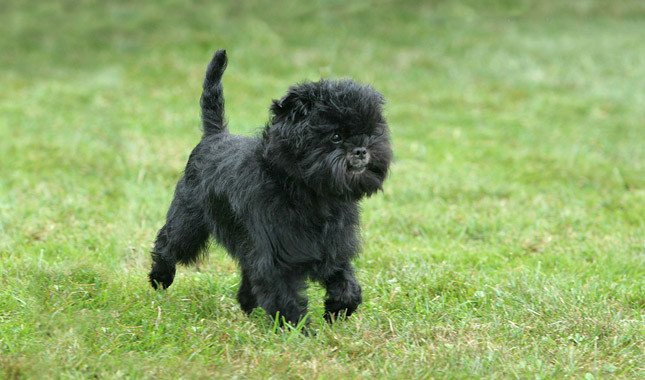
The Affenpinscher is a small, compact dog with wiry fur that, despite its size, gives the impression of a sturdy and resilient animal. Its appearance is unique and easily recognizable, primarily due to its “monkey-like” facial expression.
- General Appearance: Small, square-built (body length approximately equal to height at the withers), with rough fur. It should not appear too delicate or too massive.
- Head: Rounded, not too heavy, with a distinctly domed skull. Forehead is convex. Stop (transition from forehead to muzzle) is clearly defined.
- Muzzle: Short, not upturned and not overly tapered towards the nose. Nasal bridge is straight. Nose is round, full, and black. Lips are tight, black. Characteristic features include wiry mustache, beard, and shaggy eyebrows that frame the muzzle and give it a monkey-like expression.
- Eyes: Dark (preferably black), round, sparkling, medium-sized, neither too prominent nor sunken. Set fairly wide apart. Eyelids are black, tight. Gaze is lively, inquisitive, sometimes mischievous.
- Ears: Set high, symmetrical, small. Can be erect, semi-erect (with tips dropping forward), or dropped on cartilage. If cropped (in countries where permitted), they are small, erect, and pointed. However, natural ears are becoming increasingly common and desirable.
- Bite: A slight undershot bite (lower jaw protrudes slightly forward) is typical for the breed. Teeth should be healthy and strong. When the mouth is closed, teeth should not be visible, and the tongue should also not protrude.
- Neck: Short, straight, strong, with a dry nape. Skin on the throat is tight, without dewlap.
- Body: Sturdy, compact, square-built. Topline is straight, with a slight slope from the withers to the croup. Withers are pronounced. Back is short, strong, straight. Loin is short, strong. Croup is short, slightly rounded. Chest is moderately broad, oval-shaped, reaching to the elbows. Ribs are well-sprung. Underline is slightly tucked up.
- Tail: Set high. Traditionally docked to approximately one-third of its length (in countries where permitted). A natural tail is saber-shaped or sickle-shaped, carried raised.
- Limbs:
- Forequarters: Straight, parallel when viewed from the front, strong, not too short. Shoulders are well laid back, tight. Elbows are directed backward, held close to the body. Forearms are straight. Pasterns are short, strong, slightly sloping.
- Hindquarters: When viewed from behind, straight and parallel, with well-developed musculature. Angulations are well-defined. Thighs are broad, muscular. Lower legs are long. Hocks are well let down, strong. Metatarsals are short, perpendicular.
- Paws: Small, round, cat-like, well-knuckled. Toes are short, well-arched. Nails are short, strong, dark. Pads are firm, resilient.
- Coat: Coarse, wiry, dense, lying close to the body, yet shaggy, especially on the head, where it forms characteristic eyebrows, beard, and mustache. Coat length on the body is usually about 1-1.2 inches. On the head, the fur is longer and stands off, creating the distinctive “monkey” halo. Undercoat is softer. The coat should not be too soft, wavy, or curly.
- Color: According to the FCI standard, pure black with black undercoat is preferred. Also permissible: black and tan, red (from light yellow to brick red), gray shades.
- Movement: Light, free, energetic, with good drive from the hindquarters. Stride is not overly long. The Affenpinscher moves with characteristic confidence and liveliness.
It’s important that the overall appearance of the Affenpinscher is harmonious, without exaggeration of any features. It should look like a true small terrier – courageous, alert, and full of life.
Character: Temperament, Behavior, and Interaction
The Affenpinscher is a true bundle of energy, intelligence, and individuality, packed into a small, shaggy body. Its character is multifaceted and often described as comic, clownish, yet courageous and self-assured. This is a dog with a strong sense of self-dignity, who nonetheless adores playing and entertaining its owners.
Key Affenpinscher Character Traits:
- Loyalty and Affection: Affenpinschers are incredibly devoted to their family. They form strong bonds with one or more family members and strive to spend as much time with them as possible. This is a “velcro dog” that will follow you everywhere.
- Fearlessness and Alertness: Despite its miniature size, the Affenpinscher has the heart of a lion. It considers itself the protector of its territory and family and will not hesitate to confront any threat, real or imaginary, announcing it with loud barking. This makes it an excellent “alarm bell” watchdog.
- Intelligence and Quick Wit: Affenpinschers are very intelligent and learn quickly, but their intellect is combined with a certain stubbornness and cunning. They quickly get bored with monotonous repetition of commands, so training sessions must be interesting, varied, and conducted in a playful manner.
- Playfulness and Sense of Humor: These are very playful dogs that retain their puppy-like spontaneity throughout their lives. They adore games with balls, toys, and active fun. Their monkey-like antics and funny facial expressions often bring laughter and cheer.
- Stubbornness and Independence: Like many terriers, Affenpinschers can be quite stubborn and independent. They have their own opinions and don’t always rush to obey commands if they don’t see the point. Consistent and patient upbringing is the key to success.
- Curiosity: The Affenpinscher is a little explorer, interested in everything happening around them. They will enthusiastically investigate new places, smells, and objects.
- Territoriality and Possessive Instincts: These dogs are very attached to their territory, toys, and food. They can be jealous and not always willing to share their belongings with other animals or even people.
- Attitude Towards Strangers: Affenpinschers are usually wary and suspicious of strangers. They may bark at newcomers, alerting to their approach. Early socialization is very important to prevent the dog from becoming excessively timid or aggressive towards outsiders.
- Interaction with Children: Affenpinschers can get along well with children, especially if they grew up together. However, due to their small size and sense of self-dignity, they will not tolerate rough handling. It’s crucial to teach children to respect the dog, not to pull its ears or tail, and not to disturb it during rest or meals. Playtime should always be supervised by adults.
- Interaction with Other Animals: Their attitude towards other dogs and animals can vary. Some Affenpinschers are quite sociable, while others may show dominance or jealousy, especially towards dogs of the same sex. Due to their strong hunting instinct, inherited from their rat-catching ancestors, it’s best not to leave them unsupervised with rodents (hamsters, guinea pigs) or birds. Early and proper socialization will help establish peaceful coexistence. Compared to other companions, such as a Shetland Sheepdog (Sheltie), known for its friendliness, an Affenpinscher may require more attention during the introduction process with new animals.
The Affenpinscher is not a couch potato but an active and energetic companion. They love walks, outdoor games, and require regular physical and mental stimulation. A bored Affenpinscher might find entertainment that isn’t always pleasing to its owners (e.g., chewing furniture or barking without reason). Overall, this is a charming, though sometimes demanding, dog that will bring much joy and laughter into a home where its unique nature is loved and understood.
Health: Common Ailments, Prevention, and Lifespan
How to Care for a Coat and Other Grooming Aspects
The Affenpinscher’s coat is one of its most distinctive features. It’s wiry, coarse to the touch, dense, and shaggy, especially on the head, where it forms its “monkey-like” appearance. The coat length on the body typically measures about 1-1.2 inches. Despite this somewhat “unkempt” look, an Affenpinscher’s coat requires regular care to keep the dog looking tidy and healthy, and to minimize loose hair around the home.
Essential Coat Care Procedures:
- Brushing: It’s recommended to brush your Affenpinscher 2-3 times a week. Use a metal comb with both wide and fine teeth, as well as a slicker brush to remove dead undercoat. Regular brushing helps prevent matting (though an Affenpinscher’s wiry coat is less prone to it than soft coats of some other breeds), removes dirt and dead hairs, and stimulates skin circulation. Pay special attention to areas with longer fur – on the muzzle (beard, mustache, eyebrows) and on the paws.
- Stripping (Hand-Stripping): An Affenpinscher’s coat, like many wiry-haired terriers, requires periodic stripping. Stripping is the process of manually removing dead outer coat hairs, either by hand or with special tools (stripping knives). This helps maintain the correct texture and color of the coat and stimulates the growth of new, healthy fur. Stripping is usually performed 2-4 times a year, depending on the rate of hair growth and the dog’s individual characteristics. If the Affenpinscher is not participating in shows, hygienic clipping with clippers can be done, but this may result in softening and changing the texture of the coat. For show dogs, hand-stripping is preferred. The procedure can be done by a professional groomer or learned to be done yourself.
- Bathing: Affenpinschers don’t require frequent bathing. Bathe your dog as needed, typically once every 1-3 months, or if they get very dirty. Use a special shampoo for wiry-haired dogs that won’t soften the coat. After bathing, thoroughly dry the dog with a towel or a low-heat hairdryer, brushing the coat in the direction of hair growth.
- Beard and Mustache Care: After each meal, it’s recommended to wipe your Affenpinscher’s beard and mustache with a damp cloth or wipe to remove food residue and prevent unpleasant odors.
Other Important Grooming Aspects:
- Eye Care: Check your dog’s eyes daily. Remove natural discharge from the corners of the eyes with a soft, damp cloth or special eye lotion. If you notice excessive tearing, redness, or cloudiness, consult a vet.
- Ear Care: Regularly (1-2 times a week) check your Affenpinscher’s ears. They should be clean, without excessive wax, redness, or unpleasant odor. Use a special ear cleaning solution and cotton pads for cleaning. Do not use cotton swabs, as they can damage the ear canal.
- Dental Care: This is a very important aspect of an Affenpinscher’s health. Regularly (ideally – daily, but at least 2-3 times a week) brush your dog’s teeth with a special dog toothbrush and toothpaste. This will help prevent plaque, tartar, gingivitis, and periodontal disease. Special dental chews can also be used.
- Nail Trimming: Trim your Affenpinscher’s nails approximately once every 3-4 weeks, or as needed if they don’t wear down naturally during walks. Use special nail clippers for small dogs. Be careful not to cut into the quick (the blood vessel in the nail). If you’re unsure how to properly trim nails, consult a groomer or veterinarian.
Regular and proper grooming not only helps your Affenpinscher look its best but is also an important part of caring for its health and comfort. Acclimatize your puppy to grooming procedures from an early age so they become a normal and calm part of its life. It’s worth noting that the dog’s body is very sturdy, and combined with unusual energy, a spirited Affenpinscher can be a bit hazardous during close contact. If such a black bolt of lightning suddenly demands affection, you might risk becoming the victim of a powerful body blow, equivalent to a penalty kick in soccer. Therefore, the dog needs constant outdoor exercise, as it is very active, which also helps maintain the coat in proper condition.
Training, Upbringing, and Socialization
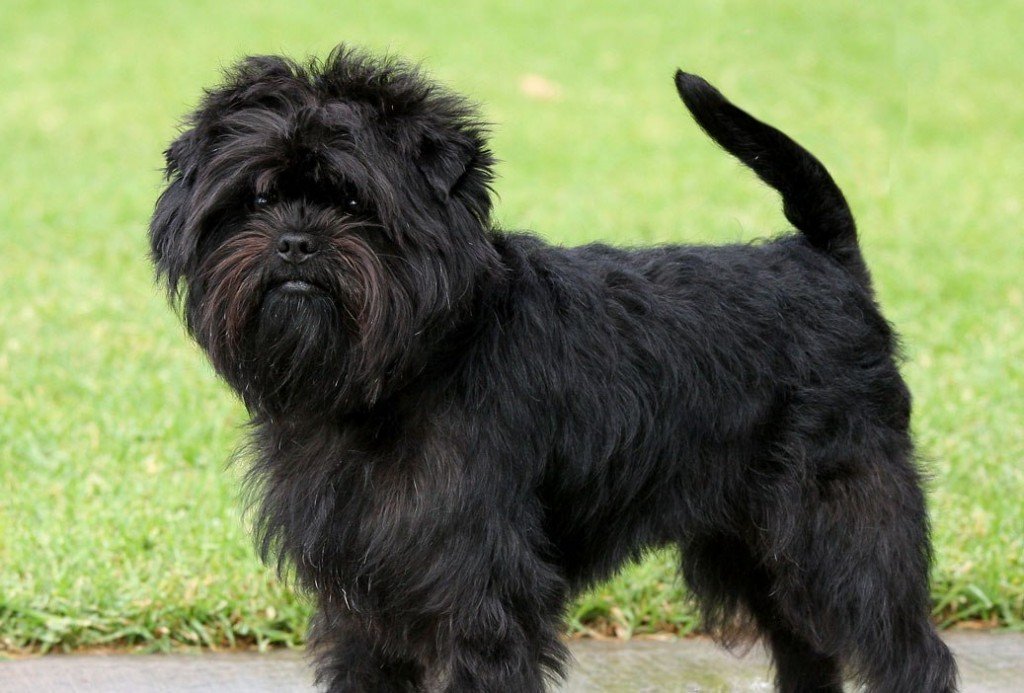
The Affenpinscher is an intelligent, yet quite independent and sometimes stubborn dog. Its training and upbringing require patience, consistency, a positive approach, and an understanding of this breed’s unique character. Don’t underestimate its intelligence – an Affenpinscher learns quickly but can just as quickly get bored with monotony.
Key Aspects of Training and Upbringing:
- Early Socialization: This is a critically important stage for an Affenpinscher. Introduce your puppy to various people, sounds, places, other dogs (after a full course of vaccinations), and animals from an early age (8-12 weeks). A well-socialized Affenpinscher will grow up to be more confident, calm, and less prone to aggression or fear of the unfamiliar.
- Positive Reinforcement: Affenpinschers respond best to training methods based on positive reinforcement – praise, treats, toys. Avoid harsh methods, shouting, and physical punishment, as these can lead to fear, aggression, or a complete refusal to cooperate. They are very sensitive to the tone of voice and their owner’s mood.
- Short and Varied Sessions: Affenpinschers quickly get bored with monotony. Conduct training in short sessions (10-15 minutes), but frequently. Make sessions fun, playful, and varied, alternating commands, tricks, and games. It’s best to conduct sessions in a quiet place where the dog won’t be distracted, especially in the initial stages.
- Consistency and Clear Rules: All family members should adhere to the same rules and commands regarding the dog. Inconsistency can confuse the Affenpinscher and complicate the learning process. Establish clear boundaries from the very beginning.
- Teaching Basic Commands: “Sit,” “stay,” “come,” “leave it,” “place” – these are basic commands every dog should know for safety and manageability. Affenpinschers are capable of learning even more complex tricks if approached creatively.
- Dealing with Stubbornness: If an Affenpinscher is being stubborn and refusing a command, don’t force it. Try to redirect its attention to something else, then return to the command later. Sometimes a little trickery or extra motivation (especially tasty treats) can work wonders.
- Potty Training: As with any puppy, potty training requires patience and regularity. Take your puppy outside frequently, especially after waking up, eating, and playing. Praise and reward for “doing business” in the right place.
- Barking Control: Affenpinschers can be quite vocal, as it’s part of their watchdog nature. Teach your dog “Quiet!” or “Speak!” commands to control excessive barking.
- Physical Activity and Mental Stimulation: The Affenpinscher is an ideal choice for long-distance walkers. This tiny dog can easily cover 6 miles. They need daily walks, games, and opportunities to expend energy. Mental stimulation is also important – interactive toys, puzzle games, learning new tricks. Affenpinschers are excellent climbers. A fence up to 5 feet high will not be an insurmountable obstacle for them, so ensure your yard has a secure enclosure.
In 2013, an Affenpinscher named Banana Joe V Tani Kazari took first place (Best in Show) among all breeds at the prestigious Westminster Kennel Club Dog Show in New York. This was a historic event, as it was the first time an Affenpinscher won Best in Show in the show’s 137-year history, demonstrating the breed’s high potential with proper upbringing and preparation. This also highlights that even small breeds, like the Affenpinscher, can reach the pinnacle of the canine world, showcasing not only their unique appearance but also outstanding character and training qualities.
Feeding Peculiarities: Key Recommendations
Breed Pros and Cons
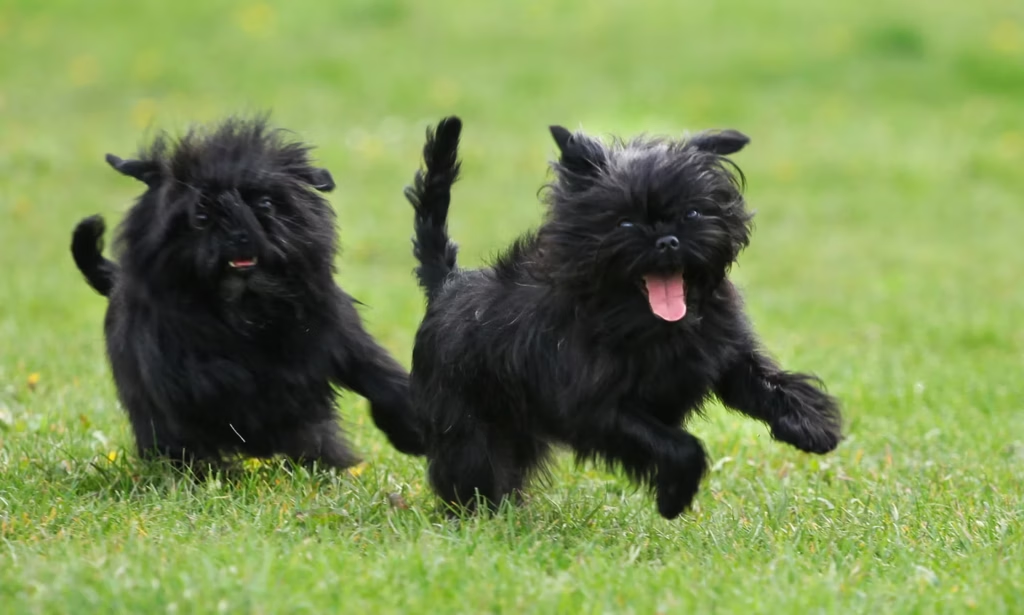
Like any breed, the Affenpinscher has its unique advantages and potential drawbacks that prospective owners should consider. An objective assessment of these aspects will help you understand if this breed is right for you and your lifestyle.
| Pros of the Affenpinscher Breed | Cons of the Affenpinscher Breed |
|---|---|
| Small size, convenient for apartment living: Affenpinschers don’t require much space and thrive in urban environments. | Prone to barking: As vigilant watchdogs, they may frequently bark at strange sounds or people, which can be an issue for neighbors. |
| Loyalty and love for family: They become deeply attached to their owners, becoming faithful companions. | Stubbornness and independence: Can be challenging to train, requiring patience and consistency. They don’t always rush to obey commands. |
| High intelligence and quick wit: Learn quickly if training is interesting and varied. | Requires regular grooming: The wiry coat needs brushing and periodic stripping, which takes time and/or money. |
| Playful and cheerful character: Always ready for games, have a great sense of humor, often entertain with their antics. | Possible wariness of strangers: Require early and thorough socialization to avoid excessive suspicion or timidity. |
| Good watchdog instinct: Despite their size, they will bravely announce the approach of strangers. | Possessive instincts: Can be jealous of their toys, food, and owner’s attention, which can create problems when kept with other animals. |
| Relatively robust health and longevity: With proper care, they live quite long (12-15 years). | Prone to certain diseases: Like all breeds, they have a genetic predisposition to some illnesses (e.g., patellar luxation, eye problems). |
| Unique and charismatic appearance: Their “monkey-like” face makes them unique and charming. | Not always ideal for families with very young children: Due to their small size and sense of self-dignity, they may not tolerate rough handling. Require careful treatment. |
| Energetic and loves activity: Excellent companions for walks and active recreation. | Hunting instinct towards small animals: Can pose a danger to rodents and birds in the home. |
| Suitable for people with allergies (conditionally): While no dog is 100% hypoallergenic, the wiry coat of Affenpinschers, which sheds very little (with proper grooming), can be a better option for some allergy suffers. However, individual reactions may vary. | Can be expensive to acquire and maintain: As a relatively rare breed, puppies can cost a considerable amount, plus expenses for quality food, grooming, and veterinary care. |
Interesting Facts About Affenpinschers
- “Monkey Terrier”: The breed name “Affenpinscher” literally translates from German as “monkey pinscher” or “monkey terrier,” perfectly describing their distinctive appearance and facial expression.
- Ancient Roots: Although officially recognized in the 19th century, dogs resembling Affenpinschers were depicted in paintings by European artists as early as the 15th-17th centuries, notably Albrecht Dürer.
- Rat Catchers by Calling: Historically, Affenpinschers were used as effective rat catchers in stables, granaries, and homes, protecting supplies from rodents.
- French “Mustachioed Devils”: In France, Affenpinschers are sometimes called “diablotin moustachu,” meaning “mustachioed imp” or “mustachioed devil,” due to their mischievous nature and characteristic mustaches.
- Westminster Star: In 2013, an Affenpinscher named Banana Joe V Tani Kazari became the first of his breed to win the prestigious “Best in Show” title at the Westminster Kennel Club Dog Show.
- Climbing Masters: Affenpinschers are known for their agility and ability to climb. They can overcome obstacles that seem insurmountable for dogs their size.
- Fearless Challengers: Despite their small stature, Affenpinschers often don’t realize their size and can fearlessly challenge much larger dogs.
- Relatives to Griffons: Affenpinschers are considered close relatives (possibly even ancestors) of the Brussels, Belgian, and Brabant Griffons. They share a similar coat structure and facial expression.
- Slow Maturation: Affenpinschers reach full physical and psychological maturity relatively late – at approximately two years of age.
- Minimal Shedding: With regular stripping, Affenpinschers shed very little, making them potentially suitable for people with mild dog fur allergies.
Frequently Asked Questions About the Breed (FAQ)
Are Affenpinschers Suitable for Inexperienced Owners?
Affenpinschers can be a good choice, but they require patience, consistency, and a willingness to learn. Their stubbornness can be a challenge for newcomers. It’s important to study the breed’s characteristics and be prepared to dedicate time to training and socialization.
How Vocal Are Affenpinschers?
They tend to bark, as they are vigilant watchdogs. Early training with a “Quiet!” command and providing sufficient activity can help control excessive barking.
Do Affenpinschers Get Along Well With Children?
They can get along well with older, more careful children who are taught to respect the dog. Due to their small size, Affenpinschers can be injured by rough play. They are not recommended for families with very young children without constant supervision.
Do Affenpinschers Shed Much? Are They Hypoallergenic?
With regular stripping (removing dead hair), Affenpinschers shed very little. No breed is 100% hypoallergenic, but Affenpinschers are often considered a better option for people with mild allergies. However, individual reactions vary.
How Much Physical Activity Does an Affenpinscher Need?
Despite their small size, these are quite energetic dogs. They need daily walks (approximately 30-60 minutes per day, divided into 2-3 outings) and games. They also appreciate mental stimulation.
Can an Affenpinscher Be Left Alone for Long Periods?
Affenpinschers are very attached to their owners and can suffer from separation anxiety if left alone for extended periods. This can manifest as destructive behavior or excessive barking. Gradual acclimatization to being alone and providing toys can help.
What Coat Care Does an Affenpinscher Need?
Their coat requires regular brushing (2-3 times a week) and professional or at-home stripping every few months (2-4 times a year) to maintain its wiry texture and tidy appearance.
Do Affenpinschers Get Along with Other Pets?
They can coexist with other dogs, especially if raised together or properly socialized, though they may display dominance. Due to their strong hunting instinct, they are not recommended to be kept with small rodents or birds.
Video About the Breed
- Brave, self-assured, funny
- Devoted, attached to the family
- Compact, ideal for an apartment
- A watchful “doorbell” guard
- Wary and suspicious of strangers
- Stubborn — needs patience in training
- The wire coat needs hand-stripping
- May bark shrilly; a hunting instinct
| Brussels Griffon | Miniature Schnauzer | Petit Brabançon | |
|---|---|---|---|
| Height | 18–25 cm | 30–36 cm | 18–25 cm |
| Energy | 3 | 4 | 3 |
| Apartment | 4.5 | 4 | 4.5 |
| Beginners | 3.5 | 3.5 | 3.5 |
Where does the name “Affenpinscher” come from?
Is the Affenpinscher good for a family?
Does the Affenpinscher make a good guard?
FCI Standard No. 186 · Verband für das Deutsche Hundewesen
For apartments · For kids · For beginners · Active · Smartest · Hypoallergenic · All rankings →