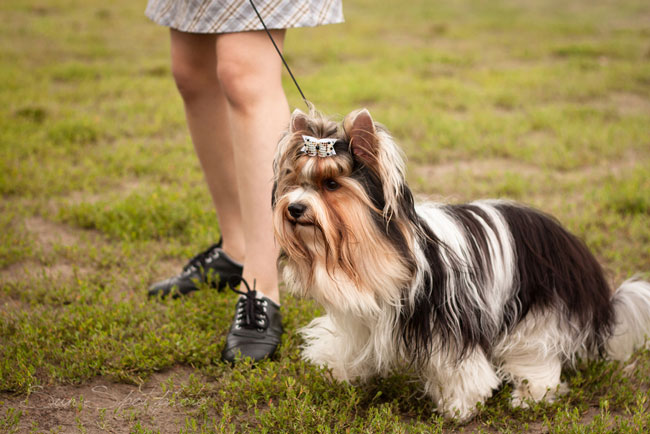
A tricolor miniature ray of sunshine with a luxurious coat — playful, affectionate and irrepressible: a lively, devoted, cheerful companion whose only aim is to love and be loved. The Biewer Terrier is an elegant toy breed that arose from the Yorkshire Terrier; its long coat does not shed (conditionally hypoallergenic), and its character stays sunny and mischievous into old age.
A luxurious coat that does not shed (conditionally hypoallergenic)
Ideal for an apartment and a novice
A devoted, sociable companion
Cons
Fragile — careful with small children
The long coat needs daily grooming
Feels the cold, needs clothing in winter
Prone to barking
Size
ToySmallMediumLargeGiant
Compatibility
ApartmentKids · with caveatsCatsOther dogsBeginners
The Biewer Terrier, also known as the Biewer Yorkshire Terrier à la Pom Pon, is a tiny miracle radiating joy and sunshine. These dogs are always in a playful, happy mood, ready to bring positive vibes to everyone around them. Biewers are incredibly active, love being the center of attention, and possess a surprisingly restless temperament. A major perk of this breed is that their luxurious coat doesn't shed, making them excellent companions even for those prone to allergies. Small and compact, these unique Yorkies are dogs with big hearts and boundless energy, always showing affection, tenderness, and limitless devotion to their families. Read more about this breed and others on Tvaryny.
General Overview of the Biewer Terrier Breed
General Overview of the Biewer Terrier Breed · 8
Characteristic
Description
Origin
Germany
Year of Origin
1984
Life Span
12–15 years
Height
7–11 inches (18–27 cm)
Weight
4–8 lbs (1.8–3.6 kg)
Temperament
Playful, loyal, intelligent, energetic
Grooming
Daily, requires professional care
Shedding
Practically non-existent
Interesting Facts About Biewers
The Biewer Terrier breed was officially recognized by the American Kennel Club (AKC) only in 2021, making it one of the newest recognized breeds.
Despite their ornamental appearance, Biewers remain terriers at heart. They will happily chase a ball or even hunt mice if given the chance.
The name "à la Pom Pon" (colored ball of yarn) describes the puppies' appearance so accurately that it became an integral part of the breed's image.
Every Biewer's coat pattern is unique, like a fingerprint. You won't find two dogs with exactly the same spot placement.
History of the Breed
The history of the Biewer Terrier is unique and reads like a fairytale. It didn't start with planned breeding work but rather by a stroke of luck. In 1984, a puppy with unusual coloring was born to Werner and Gertrude Biewer, German breeders who had been raising Yorkshire Terriers for over 20 years. In a litter from world champions Darling von Friedheck and Fru-Fru von Friedheck, a little girl appeared with large white patches on her fur. This was made possible by a spontaneous mutation of a recessive gene (the piebald gene), carried by both parents.
This unusual puppy, named "Schneeflockchen von Friedheck" (Snowflake), marked the beginning of a new breed. The Biewers were so captivated by the dog's beauty that they decided to solidify this trait. They began specifically breeding dogs with white patches. In 1988, the breed was first introduced at a show in Wiesbaden, Germany, under the name "Black and White Yorkie."
The breed owes its fancy suffix "à la Pom Pon" (which translates from French as "colored ball of yarn") to the husband of German singer Margot Eskens. During a dinner, he presented his wife with a Biewer puppy on a silver platter, and its appearance reminded them of a bright ball of yarn. The name stuck and became part of the breed's official title.
What Does a Biewer Terrier Look Like? Standard and Appearance
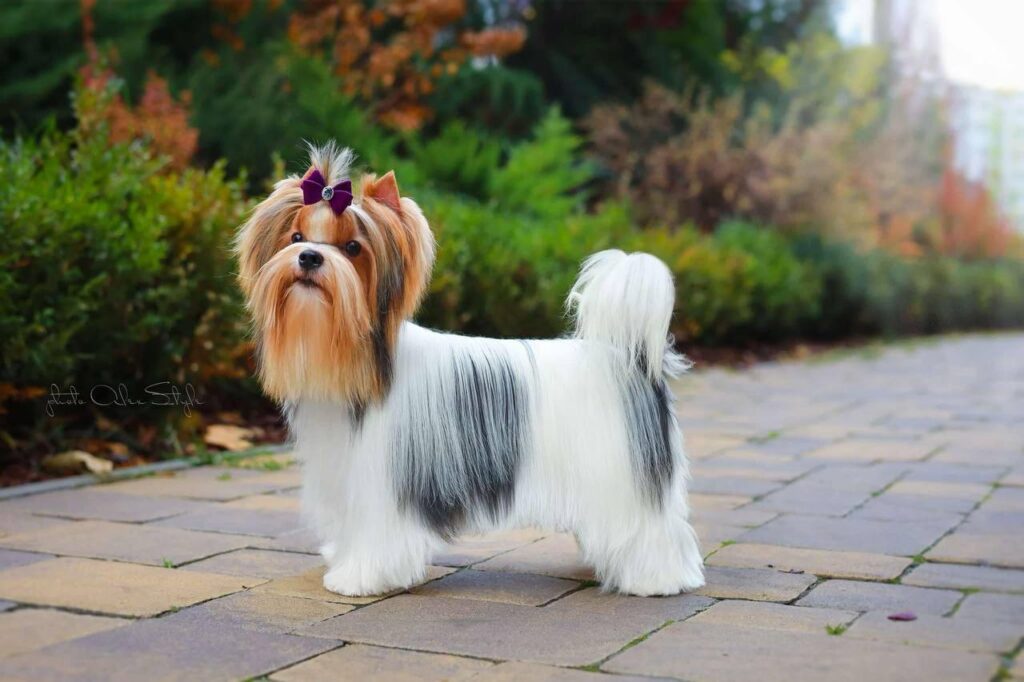
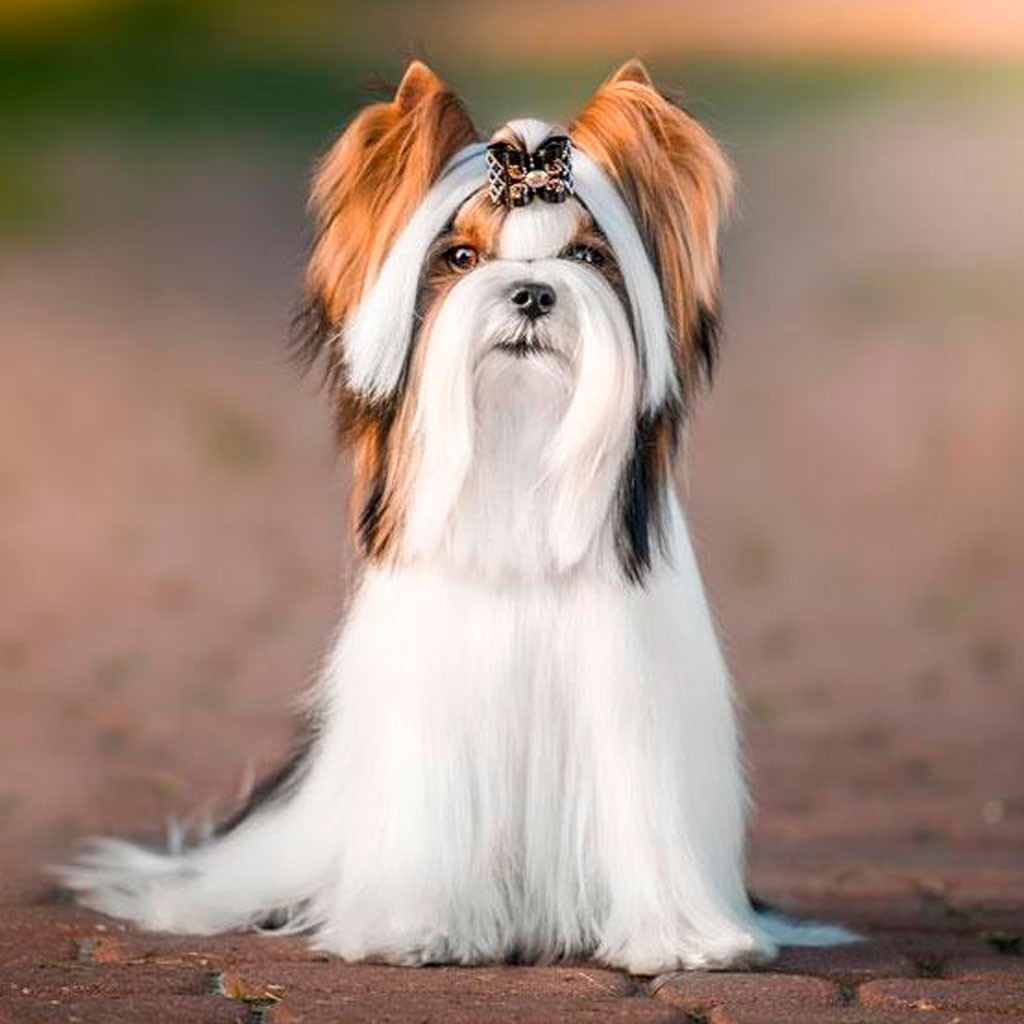
Biewers are elegant little dogs with harmonious and proportional features. Their look immediately grabs attention thanks to their luxurious long hair and unique tri-colored coat. Despite their miniature size, they give the impression of being sturdy and resilient animals.
The main distinction of the breed is their coat - long, perfectly straight, and silky to the touch, cascading down the sides of the body to form a characteristic part along the spine from head to tail. The structure of a Biewer's coat is very similar to human hair; it lacks an undercoat, so the dogs virtually do not shed. This makes them a great choice for people with allergies, though, of course, total hypoallergenic safety can never be guaranteed.
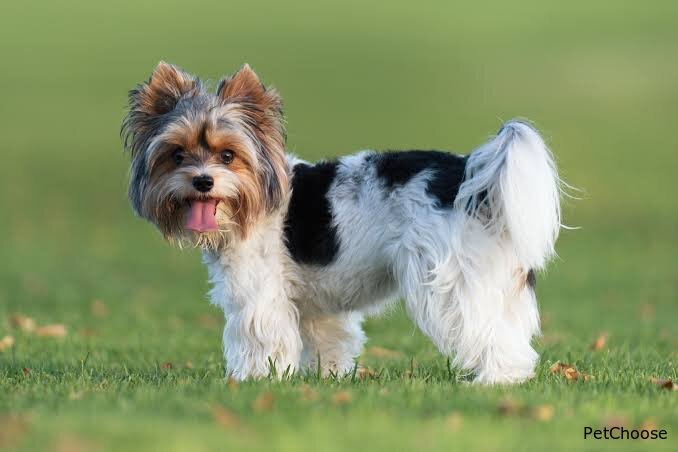
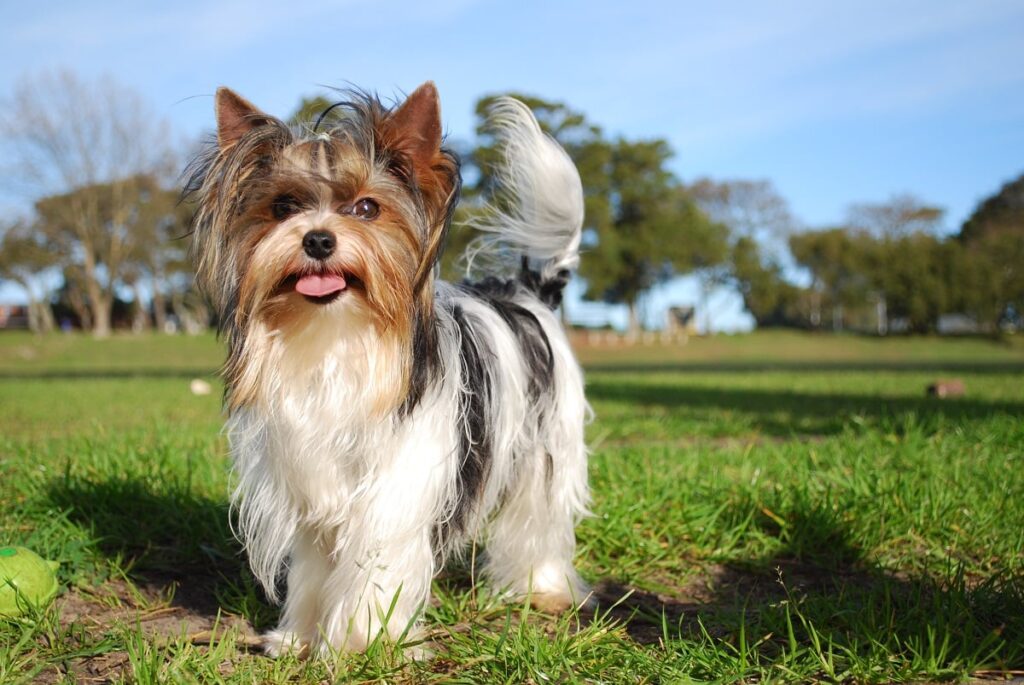
Color is the breed's calling card. The standard allows for a combination of three colors: white, black, and gold (or tan). White and black predominate on the body, often in a "saddle" pattern or random spots. The head has a symmetrical tri-color pattern: white-black-gold or white-blue-gold. A blue shimmer on the black fur is a desirable trait. Importantly, white must be present on the body.
The Biewer's head is small and flat. The muzzle isn't too long. A prominent feature is the long neck with a nape, giving the dog an aristocratic look. The eyes are medium-sized and dark, with an intelligent, slightly mischievous, and inquisitive gaze. The ears are small, triangular, and upright, giving Biewers a characteristically alert and witty expression. The tail is set high, covered in long hair, and carried over the back.
Tri-colored: white-black-gold (or white-blue-gold). White on the body is mandatory.
Bi-colored: blue-steel on the back and bright gold on the head and legs. White spots are a disqualifying trait.
Build
Slightly sturdier and stockier.
More refined and lightweight.
Health
Considered a breed with stronger health due to the "infusion of fresh blood."
Prone to a higher number of hereditary diseases.
Character
Calmer, more balanced, less "terrier-like."
Classic terrier: active, bold, sometimes stubborn.
Character: Temperament and Behavior
Biewer Terriers are a celebration on paws. They possess a wonderful, social character and incredible psychological stability that many other breeds - even much larger ones like the American Bulldog - might envy. Their cheerfulness and childlike spontaneity make them excellent companions. They happily participate in any family activities, games, and fun.
These are highly intelligent and sharp dogs. They learn quickly, grasping new commands and behavioral rules on the fly. Their curiosity knows no bounds, so it's important to provide them with enought mental stimulation: puzzle toys, trick training, and hide-and-seek games. Biewers are very people-oriented and eager to please their owners, which makes the training process much easier.
Friendliness and peacefulness are other bright character traits. Biewers get along wonderfully with all family members, including children. They can become tireless playmates for a child, but it is crucial to explain to kids how to handle a small dog properly to avoid accidental injuries. They also coexist well with other pets, especially if raised together. Even toward strangers, they tend to show curiosity rather than aggression or fear.
Training and Socialization
Thanks to their intelligence and desire to please, Biewer Terriers are easy to train. They are capable of mastering not only basic commands but also complex tricks. The key is to use positive reinforcement methods: praise, affection, and treats. Yelling and punishment can scare the dog and undermine their trust.
Early socialization is of huge importance. Introduce the puppy to various people, sounds, places, and other dogs from childhood. This helps them grow into confident, balanced, and well-adjusted dogs that aren't afraid of the world around them. Training sessions should be short (10–15 minutes) and engaging so as not to tire the little one out. Don't underestimate their intellect - even small breeds need discipline and clear rules, otherwise they can become demanding. In this regard, their upbringing is no less important than that of large working breeds like the Boerboel.
Biewers successfully participate in various dog sports, such as agility for mini-breeds, freestyle (dancing with dogs), and obedience. It's a great way to channel their energy in the right direction and strengthen the bond with the owner.
Pros and Cons of the Breed
Pros:
Hypoallergenic coat: They practically do not shed, which is a big plus for allergy sufferers.
Compact size: Perfectly suited for apartment living.
Friendly character: Very loving, loyal, and get along with everyone.
High intelligence: Easy learners and highly trainable.
Long-lived: With proper care, they live 12–15 years.
Cons:
Complex coat care: Requires daily brushing and regular grooming.
Fragile health: Prone to specific diseases of miniature breeds.
Need for attention: Handle solitude poorly and may suffer from seperation anxiety.
High cost: Biewer puppies are among the most expensive toy breeds.
Tendency to bark: Can be "alarm bells," which neighbors don't always appreciate.
How to Care for Biewer Terrier Fur
Caring for the luxurious coat of a Biewer is the main and most demanding aspect of owning this breed. It requires regularity and patience. Biewer fur has no undercoat, so it isn't prone to heavy shedding, but it easily forms mats if not brushed daily. This grooming routine is quite similiar to that of a Maltese, another breed known for its silky hair.
Daily Brushing: Use a natural bristle brush or a metal comb with widely spaced teeth. Before brushing, lightly mist the coat with a special grooming spray to facilitate gliding - this prevents hair breakage.
Bathing: Water procedures should be done every 2–3 weeks. Use only high-quality shampoos and conditioners for long-haired dogs, preferably labeled "for white coats" to avoid yellowing. After bathing, the fur needs to be patted dry with a towel (do not rub!) and must be blow-dried while brushing the strands in the direction of growth.
Haircuts: Many owners who do not participate in shows prefer a hygienic or "puppy cut" to make care easier. This significantly simplifies life for both the dog and the owner. It is important to regularly trim the hair around the eyes, between the paw pads, and in intimate areas.
Ear and Eye Care: Regularly inspect the ears and clean them with a special lotion. Hair on the upper third of the ear needs to be trimmed or plucked to ensure ventilation. Wipe the eyes daily with a cotton pad soaked in warm water or a special solution to avoid tear stains.
Claws: Trim claws every 2–4 weeks with a clipper designed for small breeds.
Nutrition
Nutrition: Key Recommendations
Health and risks
Health: Typical Issues and Prevention
Frequently Asked Questions (FAQ) · 4
Are Biewers suitable for families with children? Yes, Biewers get along great with kids. They are patient and playful. However, due to their small size, it is important to teach children to be gentle with the dog to avoid injury.
Do Biewers bark a lot? They can be prone to barking as it is part of their terrier nature - alerting to anything suspicious. However, this can be controlled through proper upbringing and training.
How much does a Biewer Terrier puppy cost? This is quite an expensive breed. The price for a puppy from responsible breeders with a good pedigree can be very high due to the rarity of the breed and the complexity of breeding.
Can a Biewer be left alone for long periods? They are very attached to their owners and handle loneliness poorly. If you spend a lot of time away from home, this breed might not be for you. Prolonged solitude can cause stress and destructive behavior.
Video About the Breed
FAQ
How does the Biewer Terrier differ from the Yorkshire Terrier?
A separate breed that arose from the Yorkie: the main difference is its tricolor (white-black-gold) coat; similar in size and character, it is considered a little softer and more sociable.
Is the Biewer Terrier hypoallergenic?
Its long silky coat does not shed, so the breed is considered conditionally hypoallergenic and is often well tolerated by allergy sufferers; but no dog is 100% hypoallergenic.
Is the Biewer Terrier suited to an apartment and a novice?
Yes — a compact, affectionate companion with modest exercise needs, ideal for an apartment and a novice; the keys are daily grooming and attention.