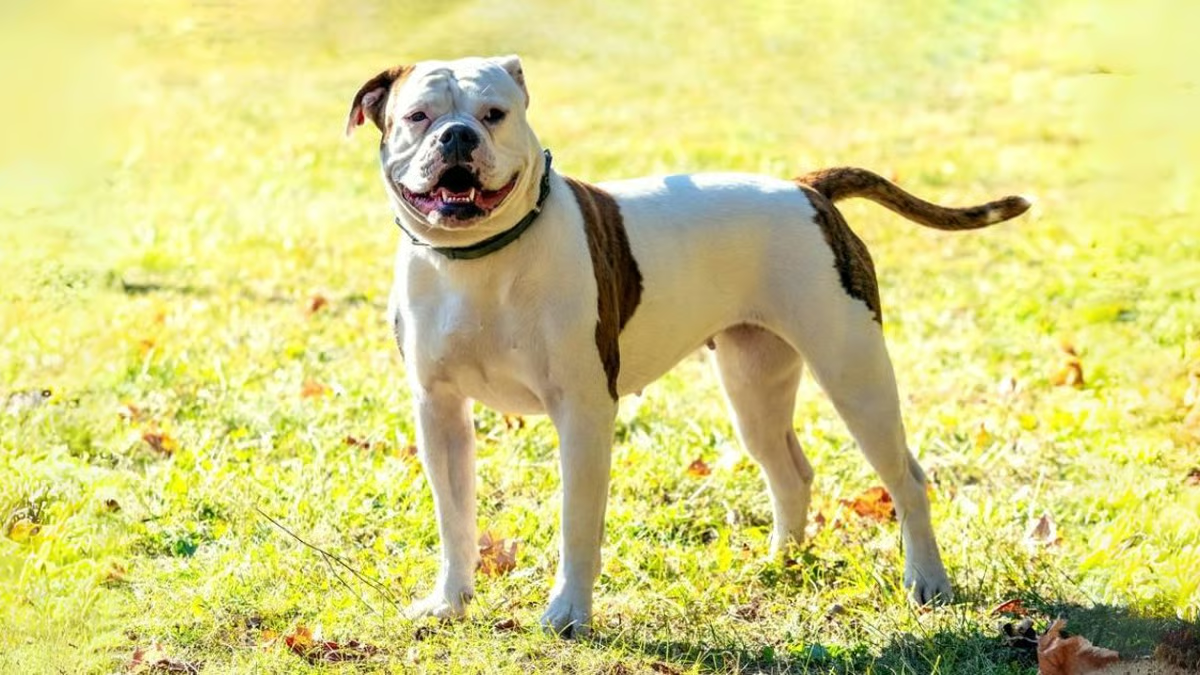
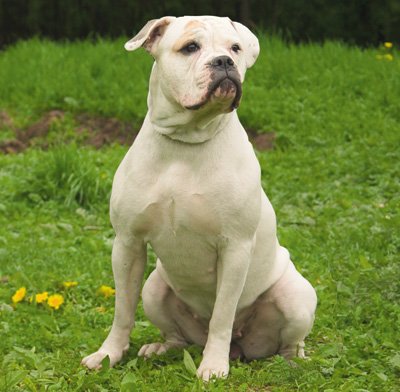
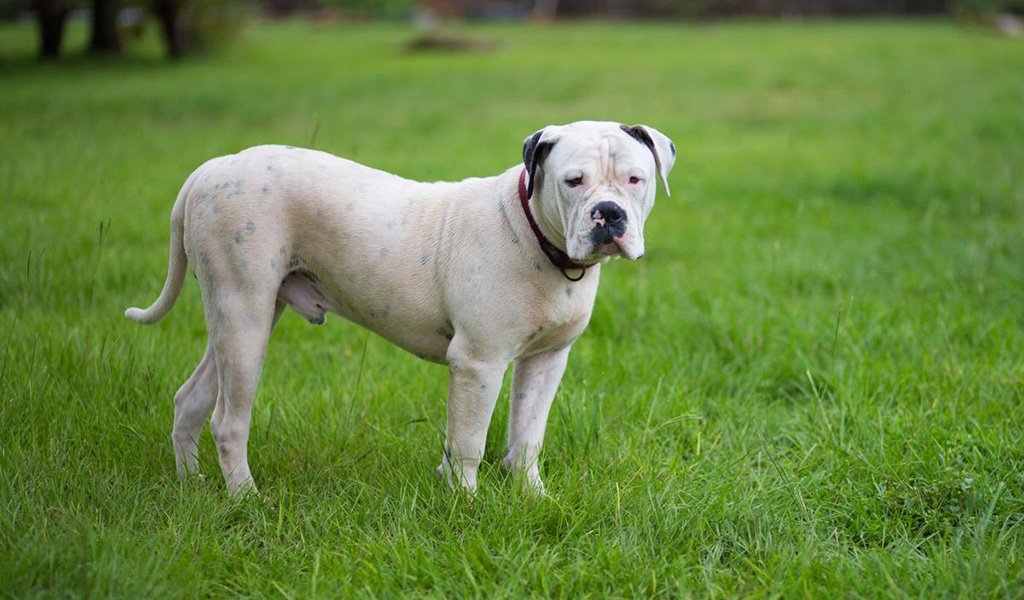
An athletic American powerhouse with a kind heart: confident, devoted, energetic and fearless. The American Bulldog is a working farm dog that combines power with agility; devoted to its family and good with children, but its strength and drive call for training and socialization.
Apartment · with caveatsKidsCats · with caveatsOther dogs · with caveatsBeginners · with caveats
The American Bulldog is a versatile working breed defined by incredible power, raw strength, and an iron will. The name "bulldog" originally comes from "bull-dog," referencing their history in blood sports where these exceptionally smart, resilient, and stubborn dogs were used for bull-baiting. Despite their tough-as-nails reputation and steel temperament, the American Bulldog can be a loyal companion and a fantastic "nanny" for kids when raised correctly. Read more on Tvaryny.
American Bulldog: Breed Overview
American Bulldog: Breed Overview · 9
Origin
United States of America
First Mentioned
1864 (as a predecessor breed)
FCI Classification
Not recognized
Lifespan
10–15 years
Height at Withers
Males: 22–27 in (57–68 cm), Females: 21–26 in (53–65 cm)
Weight
Males: 75–120 lbs (35–55 kg), Females: 65–100 lbs (30–45 kg)
Temperament
Loyal, confident, courageous, strong-willed
Activity Level
Very High
Shedding
Moderate
Interesting Facts About the Breed
Hollywood Star: An American Bulldog named Chance voiced the lead role in the popular movie "Homeward Bound: The Incredible Journey" (1993).
Mascot of Champions: The University of Georgia has a live mascot - a white English Bulldog named Uga, though often confused with the American variety due to the tough image of the Georgia Bulldogs football team.
Diverse Ancestry: It's believed that besides Old English Bulldogs, other breeds contributed to the American Bulldog, specifically Spanish bulldogs. Some traits may remind you of dogs like the Alano Español or the Perro de Presa Mallorquin (Ca de Bou).
High Pain Threshold: Thanks to their fighting past, these dogs have an incredibly high tolerance for pain, which can sometimes mask symptoms of injury or illness.
History of the Breed
The history of the American Bulldog is deeply intertwined with the settlement of America. The breed's ancestors were Old English Bulldogs, brought to the New World by English immigrants as early as the 17th and 18th centuries. Unlike their British cousins, who were increasingly bred for the show ring, the American line developed strictly as a versatile working breed. Farmers and ranchers in the Deep South needed a rugged, enduring, and fearless dog capable of handling a multitude of tasks.
These dogs were indispensable helpers: they guarded homesteads from predators and intruders, helped round up cattle and wild hogs, and served as excellent catch dogs for hunting large game like wild boar and bears. Thanks to this functional need, the breed retained its primal characteristics. For a long time, it didn't have an official name, going by various monikers like "English White," "Old English White Bulldog," "Southern Bulldog," or simply "White English."
By the 20th century, the breed faced near extinction. World War II dealt a heavy blow to the population. We owe the breed's resurgence to two enthusiasts: John D. Johnson and Alan Scott. After the war, they began collecting surviving specimens across the South and developed two main lines, known today as the Johnson type (Classic) and the Scott type (Standard). The breed officially received the name "American Bulldog" only in the late 20th century, highlighting its unique development path on the American continent.
What the American Bulldog Looks Like: Standard and Appearance
The American Bulldog is a model of athleticism, developed muscle, and a balanced physique. This is a powerful yet agile and fast dog. There are two main intra-breed types that have distinct differences in exterior, though both fit the general standard.
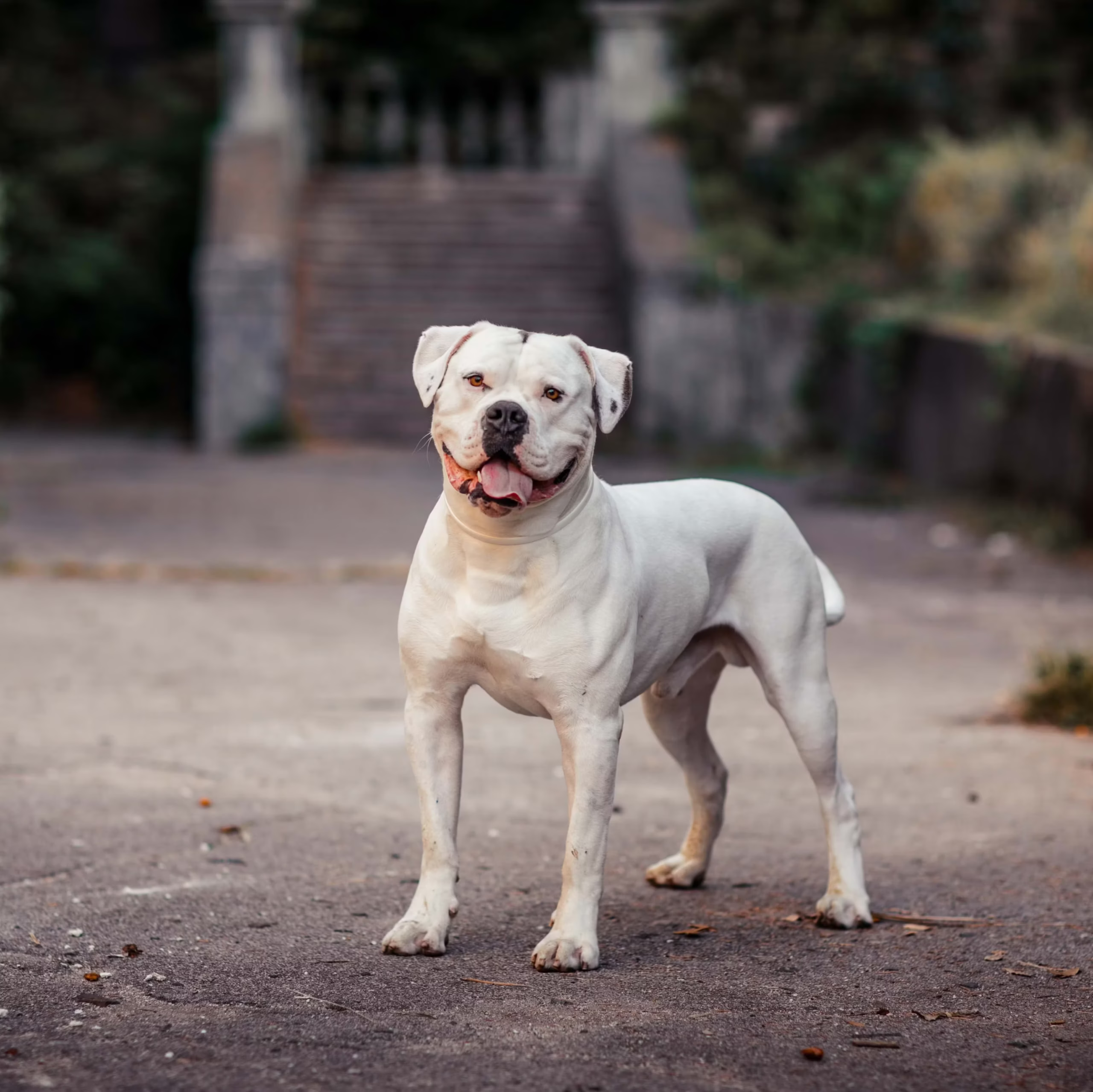
Johnson Type (Classic or Bully): A more massive, stocky, and heavy dog with a shorter muzzle and a pronounced underbite. It is often compared to the English Bulldog, but the American version is significantly larger and more athletic.
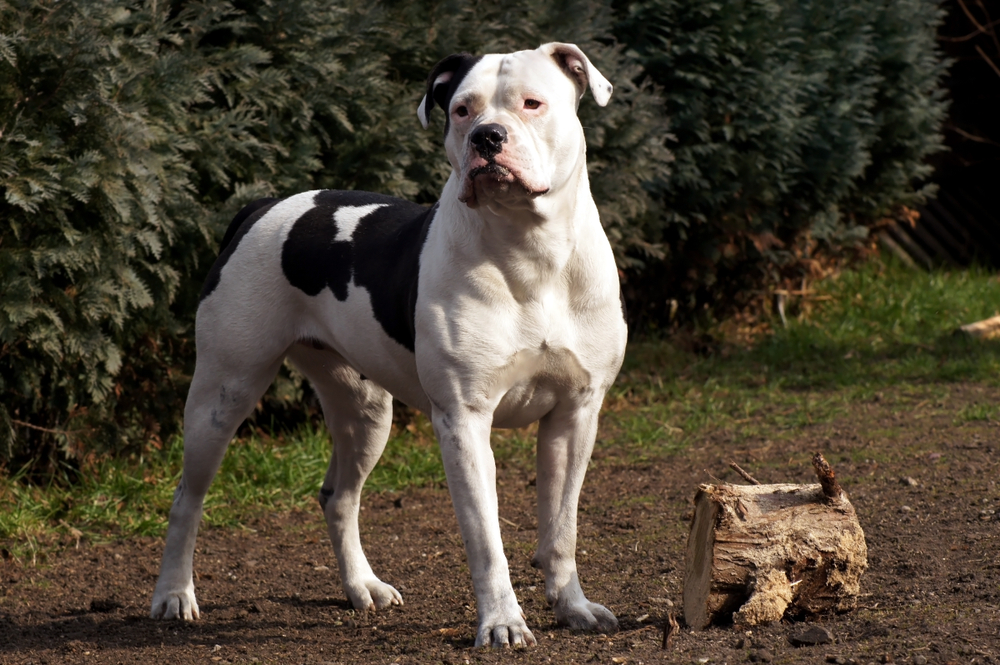
Scott Type (Standard or Performance): A lighter, leaner, and more "dry" dog. It has a longer muzzle and a less pronounced underbite. This type is considered more sporty and has better endurance.
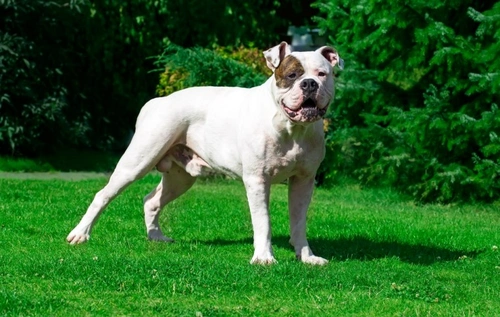
Modern American Bulldogs are often hybrids of these two lines, combining their best traits. The coat is short, smooth, and fits tight to the body. The primary color is white, or white with patches (brindle, red, fawn, brown, black). However, white should make up at least 10% of the total coloring.
What the American Bulldog Looks Like: Standard and Appearance · 7
Body Part
Description
Head
Large, square, proportional to the body. Broad skull, pronounced cheeks.
Muzzle
Broad and deep. Shorter in the Classic type (2–4 inches), longer in the Standard. The lower jaw is powerful; an underbite is a breed trait.
Eyes
Medium size, round or almond-shaped. Usually brown, ranging from light to dark. Blue eyes are considered a fault.
Ears
Small to medium, set high. Can be drop, semi-prick, or rose ears. Cropping is not mandatory.
Body
Compact, powerful, with a deep and broad chest. The back is short and strong.
Tail
Thick at the base, tapering to the tip. Reaches the hock when relaxed. Docking is not permitted.
Limbs
Heavily muscled and strong with sturdy bone structure. They provide powerful drive and speed.
Character and Temperament
Due to their brilliant working qualities - confidence, uncompromising nature, endurance, grit, and reliability - the US Marines have adopted the bulldog as an unofficial mascot. This is a highly intelligent dog which, according to experienced handlers, rivals breeds like the Doberman, Rottweiler, and Mastiff. First and foremost, the American Bulldog is a loyal guardian and personal bodyguard who is always on alert. They will fearlessly defend their family and territory to the bitter end.
At the same time, within the family circle, this is a gentle and devoted pet. They become deeply attached to their owners and struggle with being alone. With children they grew up with, the American Bulldog is usually very patient and caring, acting as a reliable babysitter. However, due to their sheer size and strength, playtime with small kids should always be supervised by adults.
This breed requires a strong-willed and confident owner. American Bulldogs are prone to dominance, so puppies must be taught their place in the family hierarchy from an early age. The owner must be an unquestionable leader. Relationships with other animals can be tricky, especially with dogs of the same sex. Early and proper socialization is key to harmony in the home. Similar traits are found in breeds like the Boerboel and the Buryat-Mongolian Wolfhound, which is typical for large guardian dogs.
Pros and Cons of the Breed
Before bringing home a serious dog like the American Bulldog, it's crucial to realistically assess all the advantages and potential downsides.
Pros and Cons of the Breed · 6
Pros (Advantages)
Cons (Disadvantages)
✅ Outstanding Guarding Instincts: A born protector of family and property.
❌ Dominance Issues: Requires an experienced and strong-willed owner.
✅ High Intelligence: Learns easily if you find the right approach.
❌ Needs Early Socialization: Can be aggressive toward other animals without proper training.
✅ Loyal to Family: Adores their owners, gentle with family children.
❌ High Activity Needs: Not for couch potatoes; requires daily workouts.
✅ Robust Health: Generally a hardy breed with good immunity.
❌ Prone to Specific Diseases: Dysplasia, allergies, skin issues.
✅ Low Maintenance: Short coat doesn't require complex grooming.
❌ Not for Apartments: Does best in a house with a private yard.
✅ Versatility: Can be a companion, athlete, hunter, or guard.
❌ Heavy Shedding: Hair will be everywhere, especially during seasonal shedding.
Training and Socialization
The main principles for successfully raising an American Bulldog are early socialization, consistency, and setting clear rules. By nature, the breed is self-sufficient and prone to making its own decisions, so you need to steer your pet's character in the right direction early on. Socialization should start as soon as possible: introduce the puppy to different people, sounds, places, and calm, stable dogs.
The owner must be an authoritative leader for the bulldog, but not a tyrant. Training should be based on positive reinforcement while remaining firm and consistent. You need to react strictly and clearly to any unwanted behavior, whether it's attempts to dominate, aggression toward other animals, or chewing up your stuff. A basic obedience course is mandatory for this breed. Your confidence, patience, and consistency will help establish a strong bond with your American Bulldog.
How to Care for an American Bulldog
Caring for an American Bulldog isn't complicated, but it requires consistency.
Coat Care: The short coat needs minimal maintenance. Brushing it once a week with a rubber mitt or natural bristle brush is enough. This helps remove dead hair and keeps the skin healthy. They shed quite intensely, especially in spring and fall, so you should brush them more often during these periods. Bathe the dog only when dirty, no more than 2–3 times a year, to preserve the skin's natural protective layer.
Ears, Eyes, and Nails: Regularly check ears for dirt and signs of inflammation. Clean them with a special lotion as needed. Eyes also require daily checks. Nails should be trimmed once or twice a month if they don't wear down naturally.
Physical Exercise: This is the most critical aspect of care. The American Bulldog is a high-energy breed. They need long daily walks (minimum 1.5–2 hours a day) combined with physical and mental challenges. This can include jogging, swimming, fetch, tug-of-war, or dog sports (weight pulling, agility). Lack of activity can lead to destructive behavior and obesity.
Nutrition
Nutrition: Key Recommendations
Health and risks
Health: Common Issues and Prevention
Frequently Asked Questions (FAQ) · 5
Is the American Bulldog good for beginners? No, this breed is not recommended for people without experience handling serious dogs. They need a confident, consistent, and strong leader.
Can an American Bulldog live in an apartment? Theoretically yes, but only with very intense and long daily walks. The ideal setup is a house with a securely fenced yard.
How do American Bulldogs get along with kids? They usually treat family children very well, showing patience and affection. However, due to their large size and power, any interaction with small kids should be supervised.
Do they drool a lot? Yes, especially the Classic (Bully) type with the shorter muzzle and loose jowls. Be prepared for slobber on furniture, clothes, and yourself.
Do they need a lot of attention? Yes, this is a very people-oriented breed. They don't handle solitude well and need constant contact with their family.
Video About the Breed
FAQ
Is the American Bulldog aggressive?
Toward the family no — it is devoted and good with children; dog aggression is possible, so early socialization and training are needed. Its strength calls for a responsible owner.
Is the American Bulldog suited to a novice?
Moderately — it is devoted and trainable but strong and driven; better for an active owner ready for consistent training.
How does it differ from the English Bulldog?
The American is considerably larger, more athletic and more of a worker, with a longer muzzle and fewer breathing problems; more of a farm dog than a lap companion.