not recognized by the FCI (Spanish national) · Spain (Iberian Peninsula)
Alano (Spanish Bulldog)
The Spanish mastiff of ancient warriors — noble, reserved and fearless: devoted, powerful, bold and controllable by its master. The Alano (Spanish Bulldog) is an ancient breed of the Alaunt type, for centuries a war dog that drove bulls and hunted boar; today it is a level-headed family guardian for confident owners, brought back from the brink of extinction.
Devoted to the family, gets on well with other dogs
An athletic, functional mastiff
Cons
Dominant and serious — needs a firm hand
Wary of strangers
Needs space and exercise
Not for an apartment or a novice
Size
ToySmallMediumLargeGiant
Compatibility
Apartment · not suitableKidsCats · with caveatsOther dogsBeginners · not suitable
The Spanish Alano (Spanish Bulldog / Alano Español) is not just a dog - it is the living history of the Iberian Peninsula, encompassing centuries of battles, hunting, and loyal service. This breed, which is hard to find these days, stands as a prime example of functionality among Molossers. These dogs possess true Spanish character - noble, reserved, and incredibly brave. They have only recently returned from the brink of oblivion to take their place beside humans once again. Read more on Tvaryny.
Alano (Spanish Bulldog): Brief Overview and Characteristics
Alano (Spanish Bulldog): Brief Overview and Characteristics · 8
Characteristic
Details and Description
Origin
Spain (Iberian Peninsula)
Group
Molossers, catch dogs (not recognized by FCI, recognized by RSCE)
First Mentioned
1349 (in the "Book of Hunting" by King Alfonso XI)
Life Span
11–14 years (long-lived for Molossers)
Height
Males: 23–25 inches; Females: 21–24 inches
Weight
Males: 66–99 lbs; Females: 55–77 lbs
Coat Type
Short, dense, coarse, no undercoat
Purpose
Big game hunting, livestock guarding, security
What the Alano Looks Like: The Anatomy of Functionality
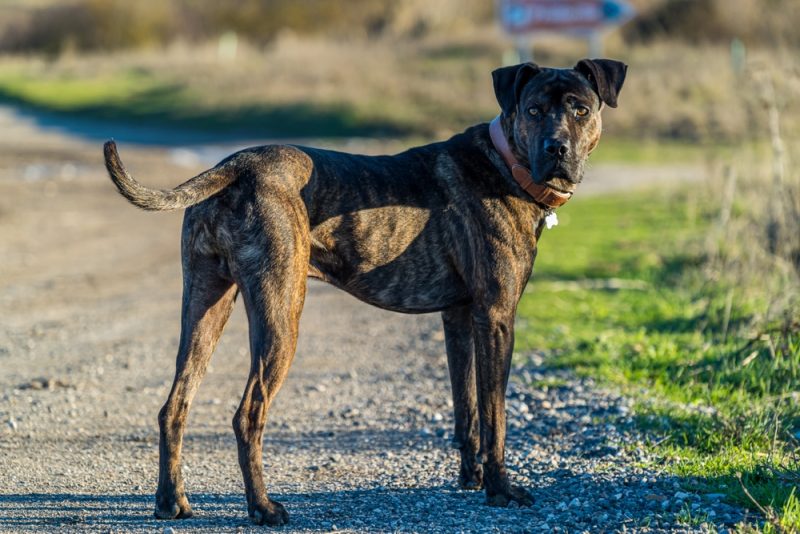
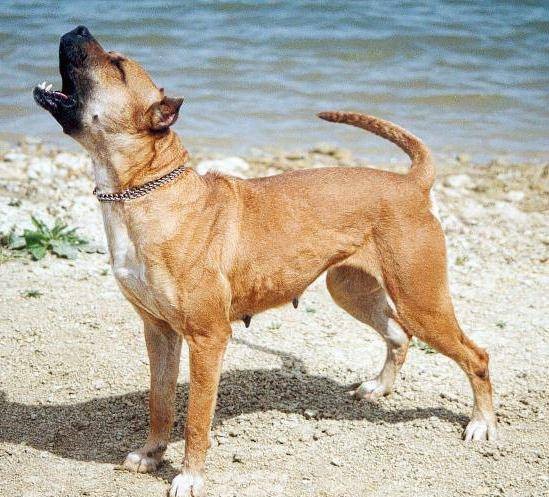
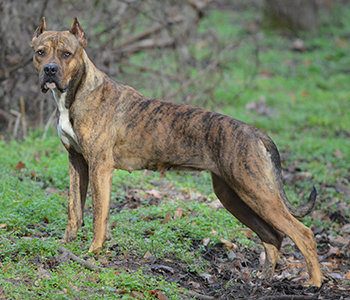
The appearance of the Spanish Alano is a testament to functionality. There is nothing superfluous about him, no decorative features that would hinder work. These are athletes built for speed and power struggles.
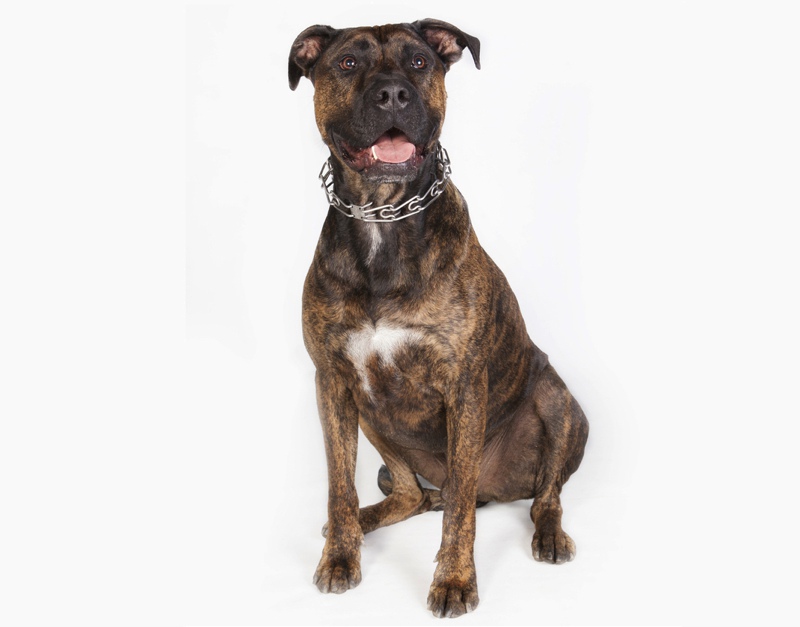
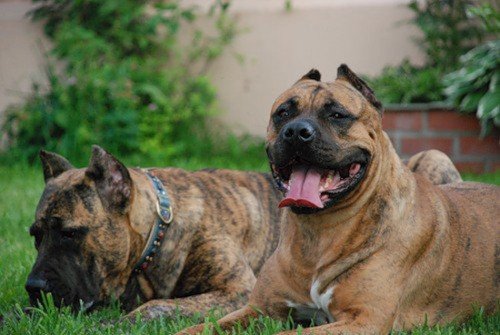
Head: Brachycephalic type, but not extreme. The skull is broad and strong. The muzzle is short, wide, with very powerful jaws. An important feature is the black mask, which is often present regardless of the main coat color.
Body: The body is slightly rectangular in format. The back is straight and muscular, and the loin is broad. The chest is deep but not barrel-shaped, allowing the dog to breathe effectively during a gallop.
Limbs: Strong, with well-defined joint angles. Paws are large and compact ("cat feet"), ensuring excellent grip on the ground.
Skin and Coat: Spanish Bulldogs are distinguished by thick skin that protects against boar tusks and bull horns. It forms a slight dewlap on the neck. The coat is short and coarse to the touch.
Color: Brindle is the most popular (all shades - from light to black brindle). Red, fawn, and wolf-gray colors are also common. White markings are often found on the broad chest.
Compared to other heavy Molossers, such as the Dogue de Bordeaux, the Alano appears "drier" and leaner, resembling a sprinter rather than a weightlifter. His movements are light and extensive, allowing him to cover large distances without fatigue.
Interesting Facts About the Breed
Tree Climbers: Despite their bulk, Alanos are so agile and coordinated that they are capable of scrambling up trees after a wild cat or other prey. This "feline" jumping ability is unique for Molossers.
Unique Grip: The Alano can hold prey with its jaws for a long time without chewing, simply fixing it in place. This allowed hunters to approach and take the beast alive (or finish it with a dagger) without risk to the dogs.
Relative of the Staffy? The Alano is considered one of the ancestors of many modern breeds, including the American Staffordshire Terrier and the Dogo Argentino, having passed on its strength and courage to them.
Natural Flock Guardian: Much like the Akbash Dog, the Alano can make independent decisions regarding herd protection without waiting for the shepherd's command if a predator is close.
History of the Breed: From Ancient Warriors to Modern Companions
The history of the Spanish Alano reads like an adventure novel. The breed's name comes from the Alans, a nomadic tribe that invaded the Iberian Peninsula in the 5th century. These warlike tribes brought massive, ferocious dogs with them to protect their herds and participate in warfare. It was these dogs that became the ancestors of the modern Spanish Bulldog.
The Alano, or Spanish Bulldog, is an ancient breed officially mentioned in literature since 1350. King Alfonso XI described these dogs in his "Book of Hunting" as indispensable helpers whose bite could immobilize a wild boar or a bull. Robust and durable Molosser-type dogs aided hunters for centuries in game baiting, holding the beast until the humans arrived.
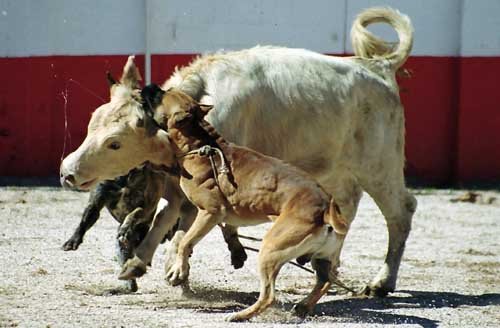
Beyond hunting, they were actively used as guardians of cattle. Semi-wild herds of bulls required strict control, and the Alano handled this task perfectly. The breed gained its greatest fame through participation in bullfighting during the sport's early stages. Courageous dogs with powerful jaws faced off against enraged bulls, demonstrating miracles of bravery and agility.
By the way, Spain has gifted the world many magnificent breeds. If you are interested in other Spanish Molossers, we recommend checking out the Dogo Canario, which shares similar roots, or the legendary Ca de Bou (Majorca Mastiff), whose history is also closely tied to bulls and port cities.
In the 20th century, the breed found itself on the verge of extinction. The ban on using dogs in bullfighting, along with changes in hunting methods and agriculture, left the Alano "unemployed." Until the 1970s, the breed was considered extinct. However, a group of enthusiasts and kinologists found surviving representatives of working lines in remote cattle-ranching regions of Extremadura and Castile. Painstaking work on revival began. Although Spanish Bulldogs are not yet recognized internationally by the FCI, the Royal Spanish Canine Society (RSCE) has recognized them, and their combination of a stable psyche and physical strength has led them to service in police and search-and-rescue units.
Temperament: Nerves of Steel and a Fiery Heart
The most important quality of the strong and brave Spanish Bulldog is an amazingly balanced psyche. For a dog with such powerful hunting and guarding instincts, this is a significant asset. In a home setting, the Alano behaves calmly, perhaps even somewhat phlegmatically, conserving energy for work.
A properly raised puppy grows up obedient and does not resist the owner's commands. However, this is only if the dog considers the owner an undeniable authority. This is not a dog that will serve for food; he serves out of respect. Alanos demonstrate rapid reactions and will fearlessly rush into a duel if there is a threat to the owner or territory. Keeping in mind that these dogs are capable of cornering not only game but also a bull, they are catagorically not recommended for novice owners, insecure individuals, or those who lack time for serious training.
Within the family, Alanos are gentle and patient. They have a high pain threshold, so they are calm regarding children's pranks (although adult supervision is mandatory). Their guarding behavior is based on territory control: they do not bark in vain but attack lightning-fast and without warning if an intruder crosses the line.
Training and Socialization: How to Manage Power?
Immense physical strength and distinct dominance instincts demand the earliest possible start to Alano training. Socialization should begin from the first days the puppy arrives in the home: introducing him to people, other animals, urban noise, and cars. An unsocialized Alano can become dangerous to those around him.
The pet should be handled gently, yet firmly and consistently. Physical punishment is unacceptable - it will only embitter the dog and destroy the bond. It is important to immediately establish the authority of the owner, who knows how to put a disobedient dog in its place using voice and body language. The serious, almost human gaze of Spanish Bulldogs proves that these are dogs of high intelligence. They quickly tire of monotonous tasks and repeated repetition of the same command ("sit-sit-sit"), so the training program must be engaging, dynamic, and built on play and prey drive.
For livestock work or guarding, their training resembles the preparation of other specialized breeds. For instance, the Alano's working style shares traits with how the Australian Cattle Dog works, although the Alano uses more physical force and direct contact (gripping) to stop the animal.
Pros and Cons of the Breed
Pros (+)
Cons (-)
Balanced Psyche: Unlike many baiting breeds, Alanos are calm and not hysterical.
Dominance: Requires an experienced owner capable of establishing hierarchy without violence.
Robust Health: The breed formed in harsh conditions, thus has high immunity.
Need for Activity: This is not an apartment dog; exercise is vital for him.
Versatility: Can be a hunter, guardian, athlete, and companion.
Salivation: Although less than Boxers, "wet kisses" are guaranteed.
Loyalty to "Their Own": Very attached to the family, patient with the owner's children.
Dog Aggression: Conflicts with other dogs are possible, especially of the same sex.
Silence: Barks extremely rarely and only when necessary.
Rarity: Puppies are hard to find and expensive.
Care and Maintenance: Minimum Hassle
The fact that the Spanish Bulldog lacks an undercoat, and the dog itself is undemanding in care, does not make it an ideal apartment pet. By locking an Alano within four walls without work, the owner risks facing destructive behavior or even aggression born of boredom. A house in the country with a large yard and a high fence will allow the bulldog to burn off energy and patrol the perimeter.
Basic care procedures:
Coat: The dog's short coat is regularly cleaned using a rubber mitt or a natural bristle brush. This not only removes dead hair but also massages the skin.
Bathing: Bathing is rare, only when the coat begins to smell unpleasant or the dog is heavily soiled. Frequent washing strips away the protective oily layer.
Claws: The owner must monitor the length of the claws. Alanos are active dogs, and usually, the claws wear down naturally, but if the dog runs on soft ground, they need trimming.
Ears and Eyes: Regular inspection and cleaning of the ears will help avoid infections.
Nutrition
Nutrition: The Foundation of Might
Health and risks
Health and Common Diseases: The Price of Endurance
Frequently Asked Questions (FAQ) · 3
Is the Alano suitable for a family with children?
Yes, they are very tolerant of children in their "pack." However, due to their large size and activity levels, they should not be left alone with toddlers unsupervised. The dog might accidentally knock a child over.
Are these dogs aggressive towards people?
A stable, purebred Alano does not show unprovoked aggression towards people. They are distrustful of strangers but attack only when there is a real threat. This is not a breed that lunges at passersby.
Can an Alano be kept on a chain?
Categorically no. Keeping this proud dog on a chain breaks its psyche, making it bitter and uncontrollable. Kennel housing is possible, but only on the condition of regular walks and interaction with the owner.
Video About the Breed
FAQ
Where does the Alano come from?
The name comes from the nomadic Alans, who brought huge working dogs to the Iberian Peninsula in the 5th century; the breed is officially mentioned in literature from 1350 (in King Alfonso XI's "Book of the Hunt").
What was the Alano used for?
It is a versatile working mastiff: a war dog, a catcher and holder of boar on the hunt, a driver of semi-wild bulls, and in early times a participant in the bullfight.
Is the Alano suitable for a family?
Yes, for confident owners — it is a devoted, level-headed dog controllable by its master; but it is dominant, wary of strangers and needs a firm hand, space and early socialization.