

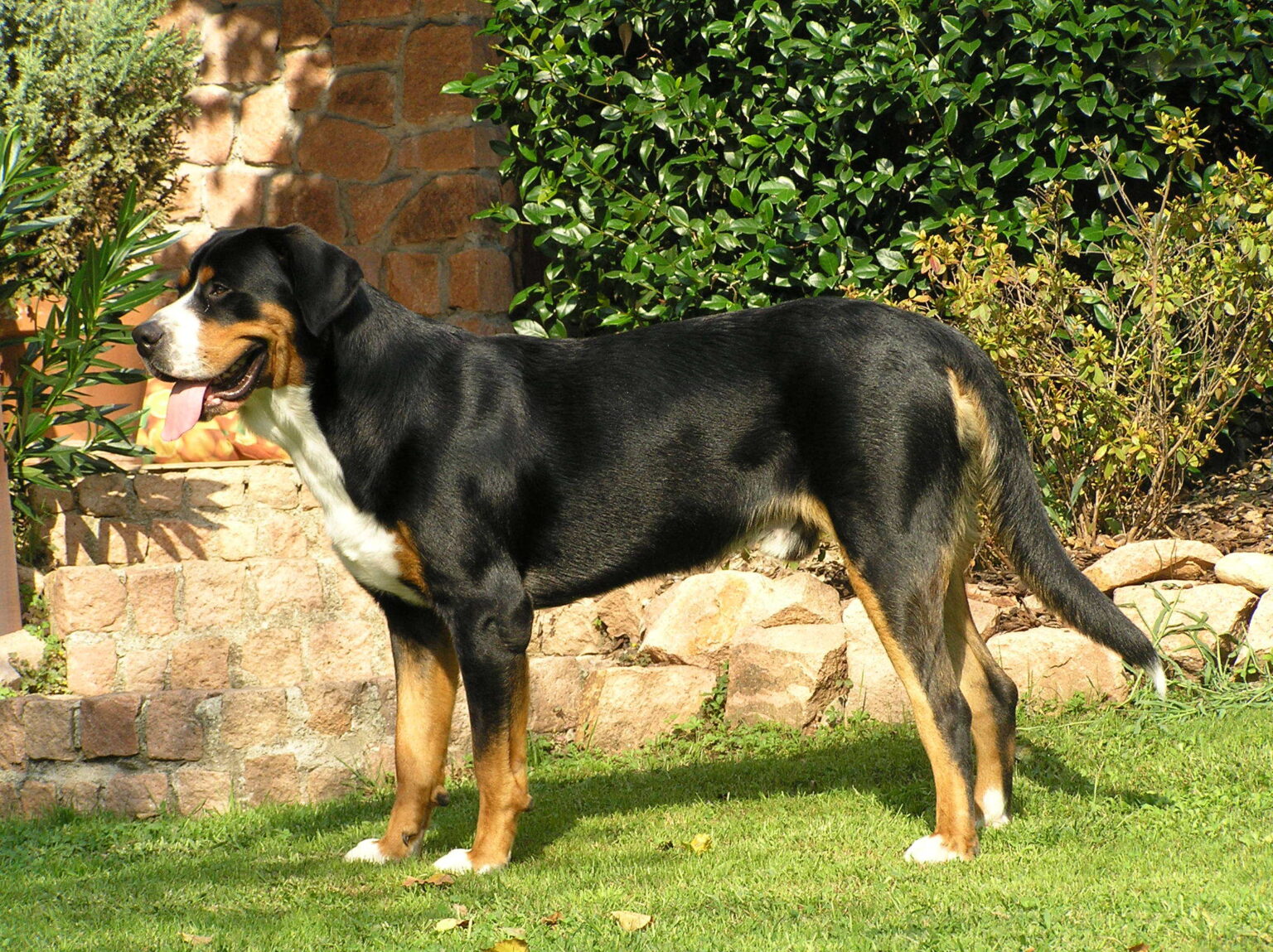
| Height | 60–72 cm |
| Weight | 36–64 kg |
| Lifespan | 8–11 years |
| FCI group | 2 · pinschers, schnauzers, molossoids, mountain dogs |
| Origin | Switzerland |
Exact ratings
Common health issues
Nutrition
The Greater Swiss Mountain Dog, or “Grosser” as it’s often called, is a majestic and powerful member of one of the four Swiss mountain dog breeds. This dog is impressive not only for its size but also for its balanced temperament, loyalty, and incredible work ethic. Historically bred as a versatile farm dog, it served as a protector, herder, and even a draft animal, which earned it the nickname “the poor man’s horse.” Today, it’s primarily a wonderful companion and a dependable family member who hasn’t lost its working capabilities. The Grosser is a perfect blend of strength, composure, and good-naturedness all in one package. You can learn more about this amazing breed later in this article on Tvaryny.
These dogs are true all-rounders, capable of being vigilant guardians and gentle caretakers for children. They are ideally suited for life in a private home with a large yard, where they can fulfill their need for space and activity. No matter what, the Greater Swiss Mountain Dog will become an irreplaceable helper and a faithful friend, bringing vibrancy to your life and ensuring you’re never bored.
Greater Swiss Mountain Dog: Main Breed Characteristics
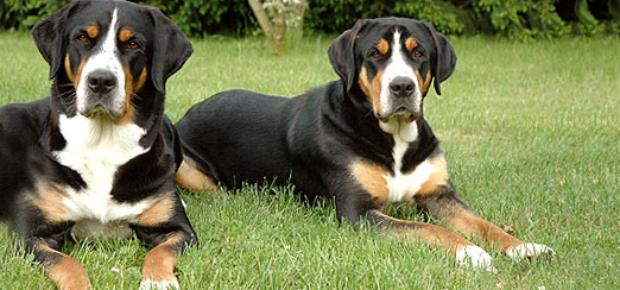
| Origin | Switzerland, Alps |
| FCI Classification | Group 2 (Pinschers and Schnauzers, Molossian-type and Swiss Mountain and Cattle Dogs), Section 3 (Swiss Mountain and Cattle Dogs), No. 58 |
| Alternative Names | Grosser, Grosser Schweizer Sennenhund |
| Lifespan | 8-11 years |
| Height at Withers | Males: 25.5–28.5 in Females: 23.5–27 in |
| Weight | Males: 110–145 lbs Females: 105–120 lbs |
| Temperament | Calm, confident, friendly, vigilant, loyal, courageous |
| Exercise Needs | Moderate (daily long walks, moderate activity) |
| Shedding Tendency | High (especially seasonal) |
| Attitude Towards Children | Excellent, patient and gentle |
| Compatibility with Other Pets | Good, with early socialization |
| Purpose | Companion dog, guard dog, family dog, formerly a draft and herding dog |
The History of the Greater Swiss Mountain Dog
The exact origins of these majestic Alpine dogs are lost to history, but the most popular theory connects them to Roman Molossus dogs. It’s believed that when Julius Caesar’s legions crossed the Alps, they were accompanied by large and powerful mastiff-type dogs. These dogs remained in the region, interbreeding with local herding breeds, which gave rise to the Sennenhunds. For centuries, farmers, butchers, and merchants used them to guard livestock and pull carts filled with milk and meat to the markets. Thanks to their strength and endurance, they were essential helpers in the rugged mountain environment.
By the end of the 19th century, with the growth of modern transportation and the emergence of other breeds, the need for Grossers began to wane, and the breed teetered on the brink of extinction. For a long time, they were even considered a short-haired variety of the Bernese Mountain Dog. The turning point came in 1908 when at a dog show in Langenthal, Professor Albert Heim, a prominent cynologist and researcher of Swiss breeds, saw two such dogs. He immediately recognized them as representatives of an ancient, nearly extinct breed of “large butcher dogs” and successfully advocated for their recognition as a separate breed—the Greater Swiss Mountain Dog. In 1912, the “Club for Greater Swiss Mountain Dogs” was founded in Switzerland, which began a dedicated effort to revive and popularize the breed. During World War II, the Swiss army actively used Grossers as draft and guard dogs, which helped increase their numbers. The Fédération Cynologique Internationale (FCI) officially recognized the breed in 1939. Other Swiss breeds include the Appenzeller Mountain Dog and the Entlebucher Mountain Dog.
What the Greater Swiss Mountain Dog Looks Like: Standard and Appearance
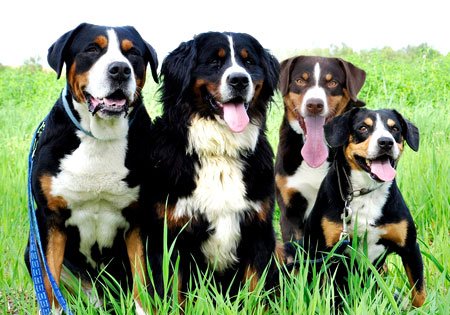
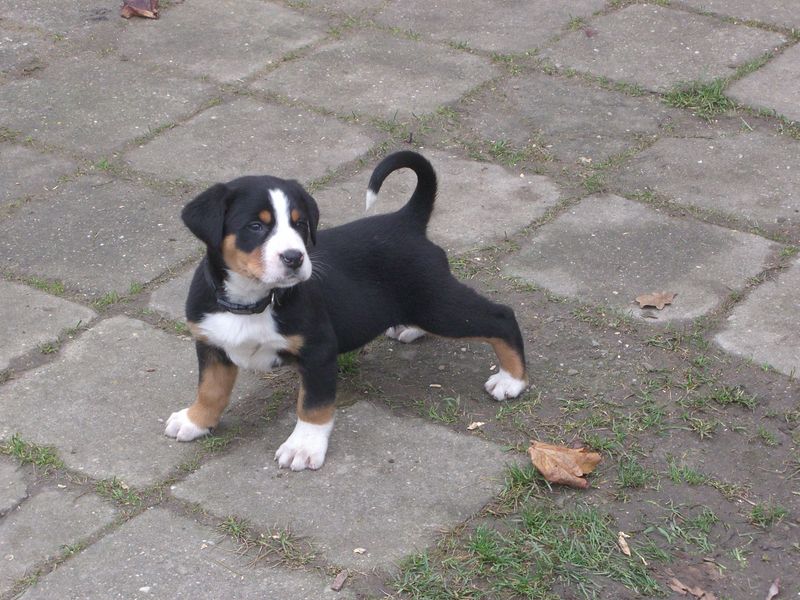
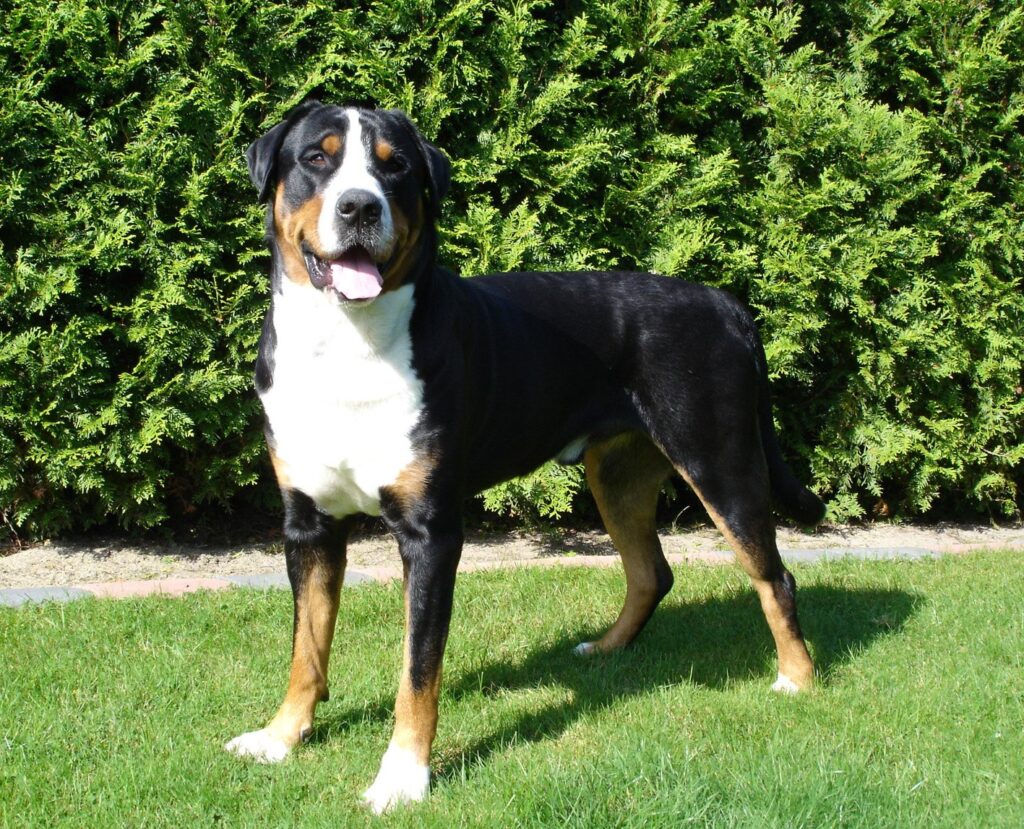
The Greater Swiss Mountain Dog is a large, sturdy, and muscular dog with a heavy bone structure that exudes strength and calm. Its appearance is harmonious and well-proportioned, without any clumsiness.
- Head: Massive but proportional to the body. The skull is broad and flat. The stop is smooth. The muzzle is long and strong.
- Eyes: Almond-shaped, medium size, from hazel to chestnut brown. The expression is lively, intelligent, and friendly. The eyelids are tight-fitting.
- Ears: Medium-sized, triangular, set high. At rest, they hang close to the cheeks, and when the dog is alert, they lift slightly at the base and turn forward.
- Body: Powerful and slightly elongated. The neck is strong and muscular, without a dewlap. The back is straight, broad, and strong. The chest is deep and wide, with an oval shape.
- Tail: Long, heavy, and a continuation of the backline. At rest, it hangs down; when moving or excited, it is lifted to the level of the back or slightly above, but it never curls into a ring.
- Limbs: Straight, parallel, with a strong bone structure. The paws are rounded, compact, with strong claws.
Coat and Coloring
The Grosser has a double coat. The outer layer is of medium length, dense, and harsh. Beneath it is a thick, soft undercoat, usually gray or black, which provides excellent protection against cold and moisture.
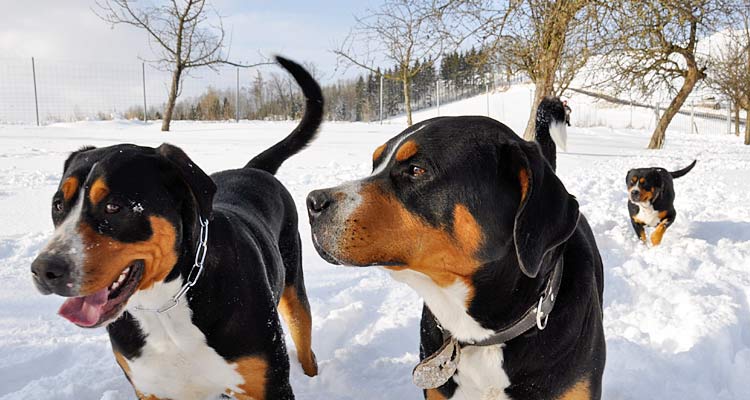
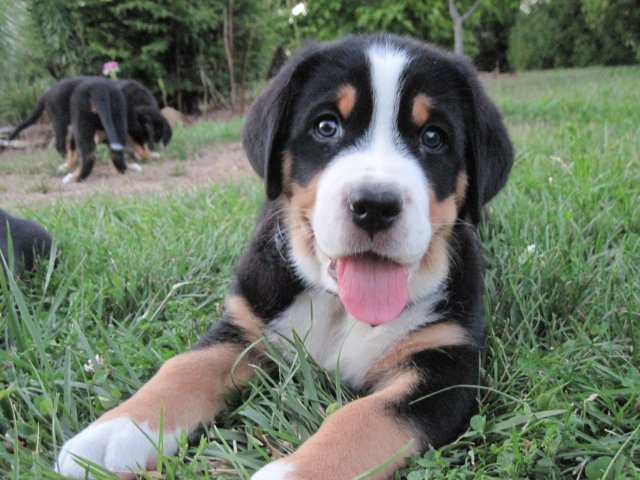
The coloring is the breed’s calling card. It is always tricolored: the primary color is a rich black, with symmetrical rust-brown (tan) and pure white markings.
- Black: Covers most of the body, neck, head, and tail.
- Tan: Located on the cheeks, above the eyes (like “eyebrows”), on all four legs between the black and white, and under the tail.
- White Markings: Must be symmetrical. These include a blaze on the muzzle that extends into a “cross” on the chest, white “socks” on the paws, and a white tail tip. A white “collar” or a large white patch on the back of the neck are considered undesirable.
Character: Temperament and Behavior of the Swiss Mountain Dog
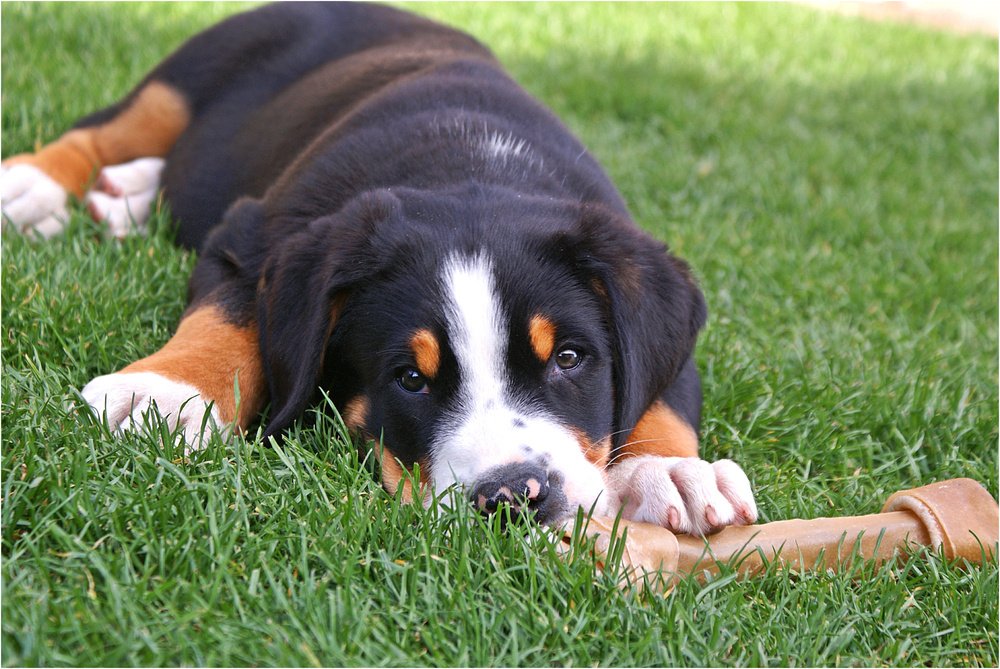
Behind the imposing exterior of the Greater Swiss Mountain Dog lies a heart of gold. This is a calm, composed, and extremely loyal dog. They form deep bonds with their family and have a hard time with loneliness. The Grosser is like a shadow family member who always wants to be close to people, but isn’t overly demanding. They shouldn’t be left alone in a yard or kennel for long periods; they need constant interaction with their owners.
Vigilance and Guarding Instincts. They make wonderful guard dogs. Their deep, loud bark is enough to deter any uninvited guest. These dogs seem to be always on alert, never truly asleep. However, unlike many working breeds, Grossers are not prone to unwarranted aggression. They will first give a warning bark and only use force in the event of a real threat to their family or territory.
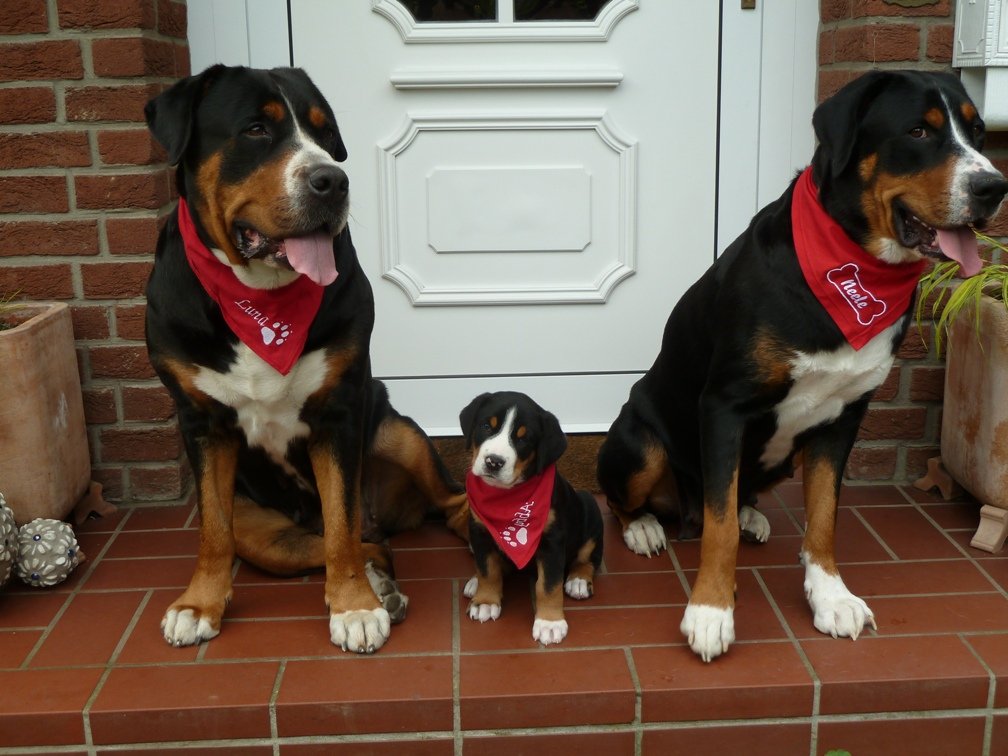
Attitude Towards Children and Other Pets. Greater Swiss Mountain Dogs get along great with children of all ages. They are very patient and careful, making them excellent “nannies.” The only small concern is that due to their large size, they can accidentally knock over a small child, so games should always be supervised by an adult. They usually live peacefully with other pets, including cats and other dogs, especially if they grew up together. Their innate self-confidence doesn’t require them to dominate others, which sets them apart from more high-strung breeds, such as the Airedale Terrier or the Border Terrier, which have a much stronger prey drive.
Health: Common Ailments and Prevention
Proper Care
The Greater Swiss Mountain Dog is a breed that feels most comfortable in a private home with a fenced-in yard. Apartment living is possible, but only if the owner is willing to provide long and active daily walks. These dogs don’t need exhausting workouts like some running breeds, but they do require daily physical activity: park walks, playing fetch, swimming, or even pulling small loads in a special cart (carting)—an activity they will immensely enjoy.
Coat Care
The Grosser’s coat doesn’t require complex grooming, but shedding is something you need to be ready for. They shed all year, with two peak periods in the spring and fall when they shed their undercoat heavily. During these times, you need to brush the dog daily with a furminator or a special rake to remove the undercoat. The rest of the year, brushing 1-2 times a week is enough to keep the coat tidy and prevent mats. Bathe the dog as needed when it gets dirty, usually no more than 2-3 times a year, to avoid damaging the skin’s natural protective layer.
Hygiene Procedures
- Ears: Regularly (once a week) check the ear canals. Clean them with a special lotion if dirt builds up. Hanging ears create a favorable environment for infections.
- Claws: Trim the claws about once a month if they don’t wear down naturally during walks on hard surfaces.
- Eyes: Periodically wipe the corners of the eyes with a clean cloth moistened with a chamomile infusion or a special solution to remove any natural discharge.
- Teeth: To prevent tartar buildup, regularly brush your dog’s teeth with a special paste or give them dental chews.
Training and Socialization
Training a Greater Swiss Mountain Dog is a task that requires patience, consistency, and confidence. They are smart dogs, but they aren’t inclined to blindly follow commands like, for example, German Shepherds. Grossers were bred for independent work, so they can sometimes be stubborn and make their own decisions. Training and socialization should begin from a very young age.
The key to success is positive reinforcement. Use treats, praise, and play as rewards. Harshness, yelling, and physical punishment are absolutely unacceptable—they can lead to the dog becoming withdrawn, fearful, or, conversely, uncontrollable. It’s important to immediately establish clear rules and boundaries so the dog understands that you are the leader. Socializing a puppy involves introducing it to various people, animals, sounds, and situations. This will help raise a balanced and confident dog that reacts appropriately to the world around it. Its calm demeanor contrasts sharply with the reactivity of some terriers, for instance, the Airedale Terrier, which requires much more management in an urban environment.
Nutrition: Key Recommendations
Pros and Cons of the Breed
| Advantages (+) | Disadvantages (-) |
|---|---|
| A loyal and loving companion | Needs a lot of space, not for a small apartment |
| An excellent family dog, patient with children | Heavy shedding, especially seasonally |
| Innate guarding qualities, a reliable protector | Prone to serious genetic diseases (dysplasia, bloat) |
| A calm and balanced temperament | High upkeep costs (food, vet services) |
| High intelligence, though sometimes stubborn | Requires early socialization and consistent training |
| Doesn’t need intensive physical exercise | Drooling, especially after drinking |
| A striking and majestic appearance | A shorter lifespan compared to smaller breeds |
Interesting Facts About the Greater Swiss Mountain Dog
- The Four Brothers: The Greater Swiss Mountain Dog is the largest and probably the oldest of the four Sennenhund breeds. The other three are the long-haired Bernese Mountain Dog, and the short-haired Appenzeller Mountain Dog and Entlebucher Mountain Dog.
- “The Poor Man’s Horse”: In Switzerland, Grossers were used for a long time to pull carts with milk jugs and other goods to the market, which is how they got this nickname.
- Rescue Dog: Although it’s not their main purpose, thanks to their strength, endurance, and excellent sense of smell, Grossers have sometimes been used in mountain search and rescue operations.
- Slow to Mature: Greater Swiss Mountain Dogs mature slowly both physically and mentally. They remain “puppies at heart” until they are 2-3 years old.
- Not Noisy: Despite their guarding qualities, Grossers are not prone to barking without reason. They only speak up when they feel it’s necessary.
Frequently Asked Questions About the Breed (FAQ)
Is the Greater Swiss Mountain Dog suitable for apartment living? It’s not the best option. Due to their large size and need for space, the dog will feel cramped. Apartment living is only possible if the owner is prepared to provide long (at least 2 hours) and engaging daily walks. The ideal place is a private home with a large yard.
How much does a Greater Swiss Mountain Dog puppy cost? The cost of a puppy from a responsible breeder with documentation, vaccinations, and health tests for the parents can be quite high. The price depends on the pedigree, the puppy’s class (pet, breeding, or show), and the breeder’s reputation. A cheap puppy sold without papers almost always costs more in the end: the screening the parents never had shows up later at the vet.
Do they shed a lot? Yes, quite a lot. Shedding occurs all year, with two peak periods in the spring and fall. Be prepared for dog hair to be everywhere, and regular brushing will become your duty.
Is this breed suitable for an inexperienced owner? It’s not recommended. Their large size, strength, and a certain stubbornness require a confident and experienced hand, as well as an understanding of dog psychology. A beginner may struggle with training and socialization, which can lead to behavioral issues in the adult dog.
How long do they live? Unfortunately, like most giant breeds, they are not long-lived. The average lifespan is 8-11 years.
Video about the Breed
- Calm, level-headed, good-natured
- Devoted, patient with children
- All-purpose farm worker
- Reliable guard without needless aggression
- A giant — needs space, not for an apartment
- Sheds heavily
- Shorter giant lifespan (8–11 years)
- Cautious and reserved with strangers
| Bernese Mountain Dog | Appenzeller Mountain Dog | Newfoundland | |
|---|---|---|---|
| Height | 58–70 cm | 48–58 cm | 66–71 cm |
| Energy | 3 | 5 | 2.5 |
| Apartment | 2 | 2 | 2 |
| Beginners | 3 | 2.5 | 2.5 |
Why was the Greater Swiss Mountain Dog called the “poor man's horse”?
Is the “Grosser” good for a family?
How long does the Greater Swiss Mountain Dog live?
FCI Standard No. 58 · Schweizerische Kynologische Gesellschaft
For apartments · For kids · For beginners · Active · Smartest · Hypoallergenic · All rankings →