Group 1 · herding dogs · Belgium (Tervuren Village)
Tervuren
An elegant red intellectual of the Belgian pastures: intelligent, energetic, devoted and sensitive. The Tervuren is the long-haired variety of the Belgian Shepherd; a brilliant working dog and companion for active people, it needs work for mind and body, or boredom turns to anxiety.
Apartment · not suitableKidsCats · with caveatsOther dogsBeginners · not suitable
The Tervuren(Tervueren) is an elegant, intelligent, and energetic dog, one of four varieties of Belgian Shepherds. Renowned for its loyalty, diligent work ethic, and versatility, the Tervuren excels as a herding dog, guardian, athlete, and devoted companion. You can discover more about amazing breeds like this one, and many others, right here on Tvaryny.
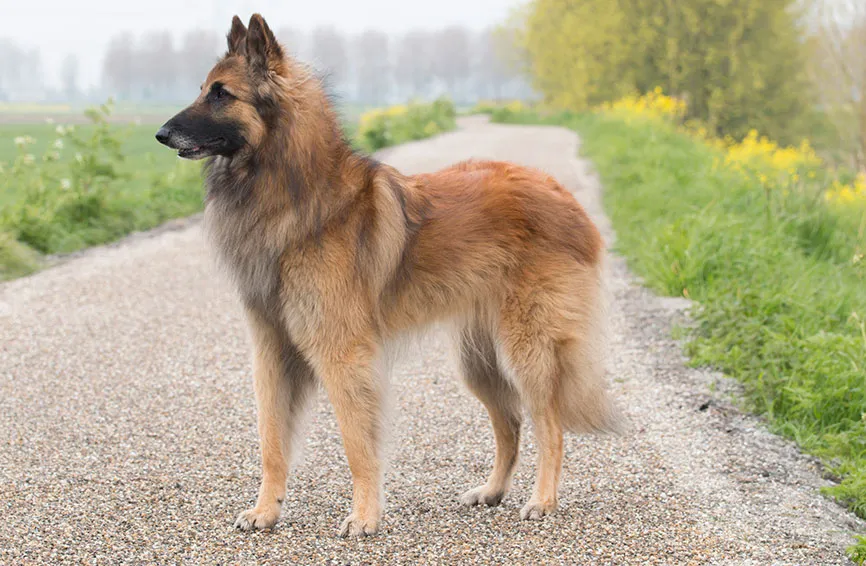
The Tervuren is a medium-sized dog with a harmonious build that exudes both strength and elegance. Its thick, long coat, distinctive coloring, and proudly held head convey an impression of nobility and alertness. This breed demands an active lifestyle, intellectual engagement, and a close bond with its owner. It's an ideal fit for experienced owners prepared to dedicate time to training, exercise, and socialization.
Tervuren: A Brief Breed Overview
Tervuren: A Brief Breed Overview · 15
Characteristic
Value
Origin
Belgium (Tervuren Village)
Year of Recognition
Late 19th - Early 20th Century (standardization), 1959 (AKC recognition as a distinct breed)
FCI Classification
Group 1 (Sheepdogs and Cattle Dogs), Section 1 (Sheepdogs)
Males: 55–75 lbs (25–34 kg); Females: 45–60 lbs (20–27 kg)
Temperament
Intelligent, alert, active, loyal, sensitive, sometimes reserved with strangers, requires socialization
Energy Level
High
Exercise Needs
Very high (minimum 2 hours of activity per day)
Grooming Needs
High (regular brushing of long coat)
Shedding
Intense (seasonal; males once a year, females twice a year)
Suitable for Apartment Living
Possible with very active and long walks, but thrives better in a rural setting
Suitable for Inexperienced Owners
No, requires experience and consistency
Attitude Towards Children
Good if raised with them and socialized, but requires supervision
Attitude Towards Other Animals
Requires early socialization; may have a strong herding instinct
The Tervuren and Other Belgian Shepherds
The Tervuren is one of four officially recognized varieties of the Belgian Shepherd. All share a common origin and similar character traits (intelligence, energy, loyalty, working qualities), but differ mainly in coat type and color.
Variety
Coat Type
Color
Tervuren
Long
Fawn/red/gray with a black mask and charbonné overlay
While FCI standards group them as a single breed, in some countries (e.g., the USA), each variety is registered separately. It's important to understand that despite their outward differences, all are Belgian Shepherds with similar needs for activity, training, and socialization.
Interesting Facts About the Tervuren
The breed's name comes from the Belgian village of Tervuren, where one of the founding lines of these dogs lived.
During World War I and II, Belgian Shepherds, including Tervurens, were used as messenger dogs, medics, and for locating the wounded.
Tervurens often achieve success in various dog sports, demonstrating their agility, speed, and intelligence.
A Tervuren's coloring can change with age – puppies are born lighter, and the characteristic "charbonné" overlay and richness of the red color develop gradually.
Tervurens are generally considered more sensitive and less "tough" in character than their short-haired relatives, the Malinois, although individual differences always exist.
History of the Tervuren Breed
The Tervuren's history is closely intertwined with that of all Belgian Shepherds. In the late 19th century, Belgium had many diverse herding dogs, differing in coat type and color but sharing common working qualities. They were indispensable helpers for farmers, herding livestock, guarding property, and protecting flocks from predators.
In 1891, the Belgian Shepherd Dog Club (Club du Chien de Berger Belge) was founded in Brussels. Professor Adolphe Reul of the Cureghem Veterinary School conducted a study of 117 dogs and classified three main coat types: long-haired, short-haired, and rough-haired. Initially, long-haired dogs with reddish or fawn coats, a black "mask," and a "charbonné" overlay (black tips on the hairs) were not distinguished separately.
A key figure in the establishment of the Tervuren specifically was breeder M.F. Corbeel from the village of Tervuren, near Brussels. He purposefully bred fawn and black long-haired dogs, laying the foundation for the modern Tervuren standard. The breed was named in honor of his native village. Although these dogs were not initially included in the first standards, their working qualities and appealing appearance gained recognition, and over time, the Tervuren was officially recognized as one of the four varieties of the Belgian Shepherd.
In the United States (AKC) and Great Britain (The Kennel Club), the Tervuren is recognized as a separate breed, while the Fédération Cynologique Internationale (FCI) considers all four types—Groenendael (black long-haired), Laekenois (fawn rough-haired), Malinois (fawn short-haired), and Tervuren—as varieties of a single breed, the "Belgian Shepherd Dog."
What the Tervuren Looks Like: Standard and Appearance Description
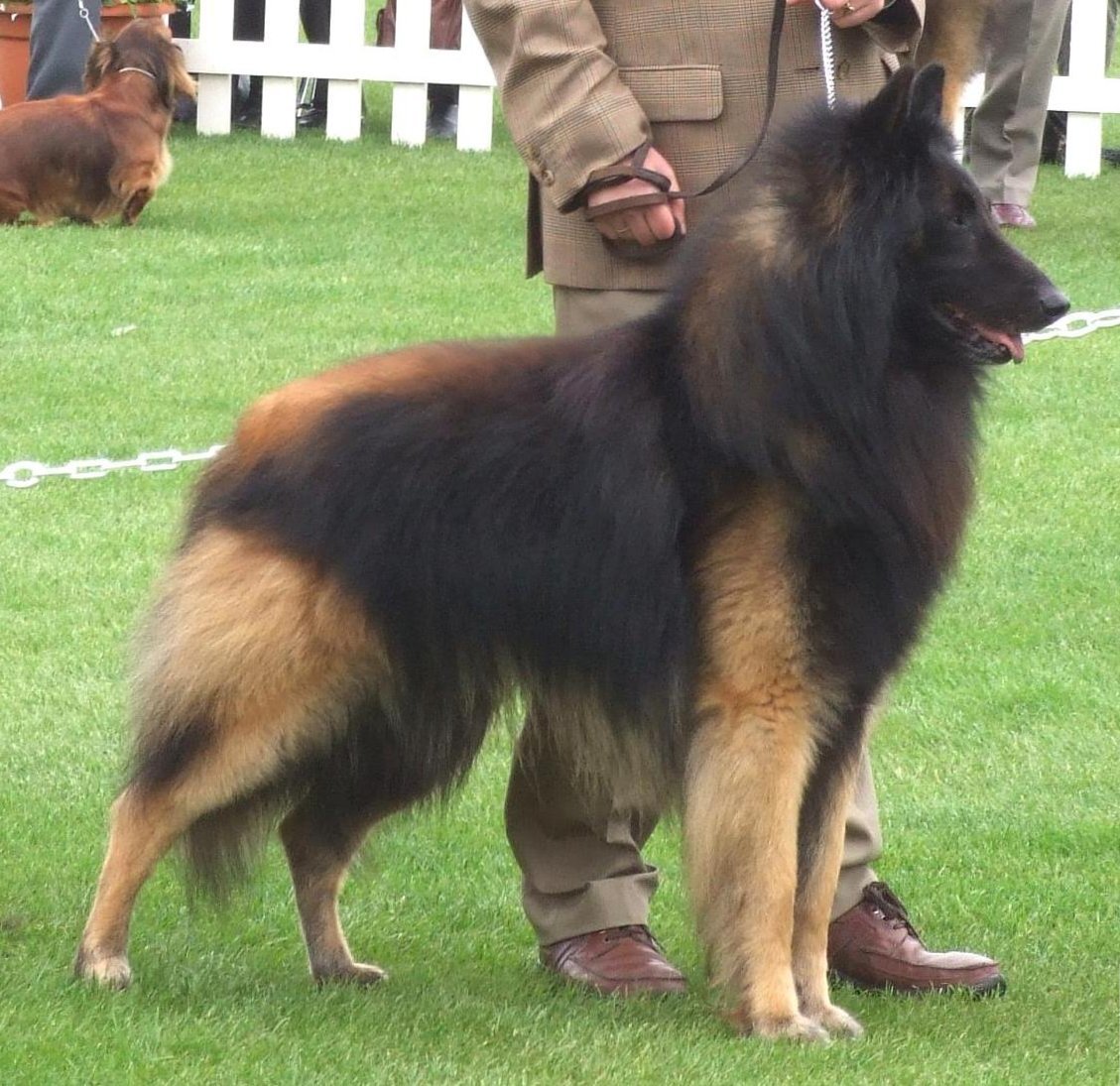
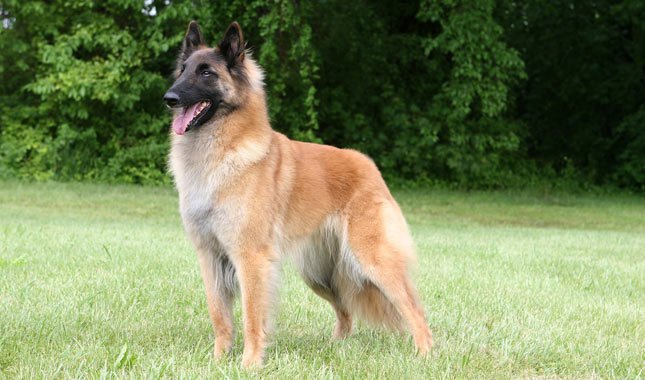
The Tervuren is a well-built, muscular, yet elegant dog with a square frame (body length approximately equal to height at the withers). It conveys an impression of strength, agility, and endurance without any heaviness.
Head: Long, clean-cut, proudly carried. Skull of medium width, rather flat forehead. Stop (transition from forehead to muzzle) moderate. Muzzle well-filled under the eyes, gradually tapering to the nose.
Eyes: Medium size, almond-shaped, dark (preferably dark brown). Expression lively, intelligent, alert.
Ears: Set high, triangular, erect, proportionate to the size of the head.
Nose: Black.
Bite: Scissor bite.
Neck: Muscular, slightly arched, without dewlap.
Body: Powerful but not heavy. Back straight, firm. Loin short, broad, muscular. Croup slightly sloping. Chest deep, but not too wide.
Tail: Medium length, thick at the base, reaching the hock or slightly longer. Carried low at rest, raised during movement but not above the topline and not curled. Well-plumed.
Limbs: Forelegs straight, parallel, with strong bone. Hind legs powerful, with well-angulated joints. Feet rounded, "cat-like," with tightly arched toes and black pads.
Coat: The distinguishing feature of the Tervuren is its long, dense, straight coat with a very thick undercoat, providing excellent protection against the elements. On the head, outer side of the ears, and lower parts of the limbs, the hair is short. On the neck and chest, it forms a profuse "collar" and "mane" (especially pronounced in males). The back of the forelegs has "feathering," and the hind legs have dense "breeches."
Color: The primary color ranges from shades of fawn and red to gray. Characteristic features include a black "mask" on the muzzle and a "charbonné" overlay – black tips on the outer hairs, creating a darkening effect, especially noticeable on the back and sides. The fawn/red shade should be warm and rich. A small amount of white is permissible on the chest and paw tips.
Tervuren Character: Temperament and Behavior
The Tervuren is an exceptionally intelligent, energetic, and loyal dog. It's often called the "Einstein" of the dog world due to its quick wit and ability to learn rapidly. However, this high intelligence demands constant stimulation and engagement.
Key Character Traits:
Loyalty and Affection: Tervurens form deep bonds with their families, often choosing one member as "their" primary owner. They are very people-oriented and require consistent attention and interaction. Prolonged loneliness or neglect can lead to depression and destructive behavior.
Energy and Activity: This is a very active dog that needs significant physical exercise—at least two hours of active walks, running, games, or training daily. A bored Tervuren will find its own activities, and you probably won't like what it comes up with!
Alertness and Guarding Qualities: Like all Belgian Shepherds, the Tervuren possesses strong watchdog instincts. They are attentive, observant, and can be reserved with strangers, making them good protectors. Early socialization is crucial to ensure the dog reacts appropriately to guests and new situations.
Sensitivity: Tervurens have a delicate emotional nature and are very sensitive to their owner's mood and training methods. They do not tolerate harshness, yelling, or rough handling – this can make them timid or, conversely, stubborn. They respond best to positive reinforcement, patience, and consistency.
Intelligence and Trainability: Thanks to their high intelligence, Tervurens quickly learn commands and excel in various dog sports (agility, obedience, frisbee, herding). They need not only physical but also mental stimulation.
Potential for Jealousy: Due to their strong attachment to their owner, they may display jealousy towards other animals or even family members.
The Tervuren is not the best choice for inexperienced owners or those unwilling to dedicate ample time and energy to a dog. This breed is for an active, responsible individual or family seeking not just a pet, but a devoted partner and companion for shared activities.
Tervuren Training and Socialization
The Tervuren is an exceptionally capable learner, but its training requires an understanding of the breed's unique characteristics, consistency, patience, and a positive approach. Thanks to their high intelligence and desire to please their owner, they quickly grasp commands but can just as quickly become "bored" with monotonous repetitions or "shut down" from harsh methods.
Key Aspects of Training and Socialization:
Early Socialization: This is critically important for the Tervuren. Introduce your puppy to various people, sounds, places, and other animals (under supervision) from an early age. This will help raise a confident, well-balanced dog that reacts appropriately to new situations and doesn't display excessive shyness or aggression towards strangers.
Positive Reinforcement: Tervurens are very sensitive. Use reward-based methods (treats, praise, toys). Absolutely avoid physical punishment, yelling, and harshness – this can lead to a loss of trust, fear, and behavioral problems.
Consistency and Clarity: Establish clear rules and boundaries from day one and ensure all family members adhere to them. Commands should be clear and given in a confident, calm voice.
Mental Stimulation: In addition to physical activity, the Tervuren needs "brain work." This can include obedience training, trick training, scent games, and interactive toys. A bored Tervuren can become destructive.
Dog Sports: This breed excels in many disciplines: agility, flyball, obedience, frisbee, herding, search and rescue work. Engaging in sports helps channel the dog's energy constructively and strengthens the bond with its owner.
Training Classes: Classes with a professional instructor (especially puppy and basic obedience courses) will be very beneficial for both the dog and the owner, helping to build rapport and avoid common mistakes.
Remember that the Tervuren needs a leader – a calm, confident, and consistent owner who can provide the necessary activity, stimulation, and clear rules.
Pros and Cons of the Tervuren Breed
Pros
High Intelligence: Easy to train, capable of performing complex tasks.
Loyalty: Deeply devoted to their family, excellent companions.
Versatility: Can be outstanding working dogs (herders, guardians, rescuers), athletes, and family pets.
Energetic: An ideal partner for active individuals, loves walks, running, and games.
Beautiful Appearance: Elegant build and lovely long coat.
Good Guarding Qualities: Alert and attentive to their territory.
Cons
High Activity Needs: Requires a lot of physical and mental exercise daily. Not suitable for sedentary individuals.
Needs Experienced Owner: Sensitive, requires consistent training and positive reinforcement. Not for beginners.
Complex Coat Care: Requires regular brushing, especially during intense shedding.
How to Care for a Tervuren's Coat
The Tervuren's luxurious long coat requires regular and thorough care to stay healthy, clean, and free of mats. This is especially important during seasonal shedding, which can be quite intense.
Main Grooming Procedures:
Brushing: This is the most crucial part of care. It's recommended to brush your Tervuren at least 2–3 times a week using a wide-toothed comb and a slicker brush. This helps remove dead hair, prevent matting (especially behind the ears, on the "breeches," and under the armpits), and distribute natural oils through the coat, giving it shine.
Care During Shedding: During intense shedding periods (typically spring and fall, and for females also after heat cycles/whelping), the dog needs to be brushed daily. Using a deshedding tool or specialized undercoat rakes can significantly ease this process.
Bathing: Tervurens do not need to be bathed too frequently to avoid stripping the natural protective oils from their skin and coat. Usually, bathing every few months or as needed if they get very dirty is sufficient. Use a high-quality shampoo for long-haired dogs. After bathing, the coat must be thoroughly dried with a hairdryer (on a low setting), brushing it simultaneously.
Trimming: Tervurens do not require body clipping. Only neat trimming of hair between the paw pads and around the ears is permissible for hygiene and a tidy appearance.
Nail Care: Regularly trim nails (usually every 3–4 weeks) if they don't wear down naturally during walks. Clicking nails on the floor is a sign it's time for a trim.
Ear Care: Periodically check the ears for redness, dirt, or foul odor. Clean them as needed with a specialized ear cleaner.
Dental Care: Regular brushing with dog-specific toothpaste will help prevent tartar buildup and gum disease.
Accustom your puppy to grooming procedures from an early age, making them a positive experience with praise and treats. This will significantly simplify caring for an adult dog.
Nutrition
Tervuren Nutrition: Key Recommendations
Health and risks
Tervuren Health: Typical Diseases and Prevention
Frequently Asked Questions About the Breed (FAQ) · 6
Is the Tervuren suitable for a family with children?
Yes, a Tervuren can be a good family dog if raised with children and well-socialized. However, due to its energy, size, and herding instincts (it may try to "herd" children by nipping at their heels), interactions with small children should always be supervised by adults. It's important to teach children how to behave correctly and respectfully with the dog.
Does the Tervuren shed a lot?
Yes, the Tervuren has a thick undercoat and sheds quite intensely, especially seasonally (spring/fall). Females also shed after heat cycles. Daily brushing is required during shedding periods.
Can a Tervuren live in an apartment?
Theoretically yes, but these are not ideal conditions for such an active breed. If a Tervuren lives in an apartment, it must be provided with very long (at least 2–3 hours a day) and active walks, with opportunities to run off-leash (in a safe area), play, and train. They thrive better in a private home with a fenced yard.
Is the Tervuren easy to train?
Tervurens are very intelligent and highly trainable, but they require the right approach. They learn quickly but need consistency, patience, positive reinforcement, and mental stimulation. Due to their sensitivity, they respond poorly to harshness.
Are Tervurens noisy?
They can be prone to barking, as they are alert guard dogs. Proper socialization and training can help control excessive barking.
How much does a Tervuren puppy cost?
The price of a Tervuren puppy from a responsible breeder can vary depending on pedigree, parents' titles, and region. It's important to choose based on the breeder's reputation and the health of the puppies, not just the price. Expect a wait: established breeders have their litters spoken for well in advance.
Video About the Tervuren Breed
FAQ
How does the Tervuren differ from the Malinois?
They are varieties of the Belgian Shepherd: the Tervuren is long-haired red-fawn, the Malinois short-haired. The Tervuren is usually a touch softer, but it needs just as much work.
Is the Tervuren suitable for a beginner?
Rather not — an intense working dog with a great need for exercise and mental work; experience and an active lifestyle are needed.
How much exercise does the Tervuren need?
A lot — daily long activities AND mental tasks; without them it grows bored, anxious and destructive.