

Cat skin disease at a glance
- Itching, hair loss, dandruff or sores are a symptom, not a diagnosis: there are dozens of causes (allergy, fungus, parasites, bacteria) and the treatments differ.
- The most common cause is flea allergy dermatitis: one bite is enough for an allergic cat, so flea control is needed year-round, even for a strictly indoor cat.
- Ringworm (dermatophytosis) is contagious to people and children; a firm diagnosis needs a fungal culture, because a Wood’s lamp does not always fluoresce.
- ⛔ Never put steroid cream on the skin without a diagnosis — on ringworm it makes the disease far worse. Only a vet can pin down the cause (cytology, skin scraping, culture).
Skin and coat problems are one of the most common reasons owners bring a cat to the vet. The state of the coat is an indicator of the animal’s overall health. A dull, brittle coat, dandruff, itching or hair loss can signal a wide range of skin diseases in cats, from simple irritation to serious systemic illness. Spotting the cause early and treating it properly is the key to your pet’s health.
The skin is a cat’s largest organ and performs vital functions: protection against infection, temperature regulation and sensory perception. Any breach of this barrier can cause discomfort, pain and a lower quality of life. In this article we take a detailed look at the most common dermatological problems our furry friends face.
Dermatitis: skin in danger
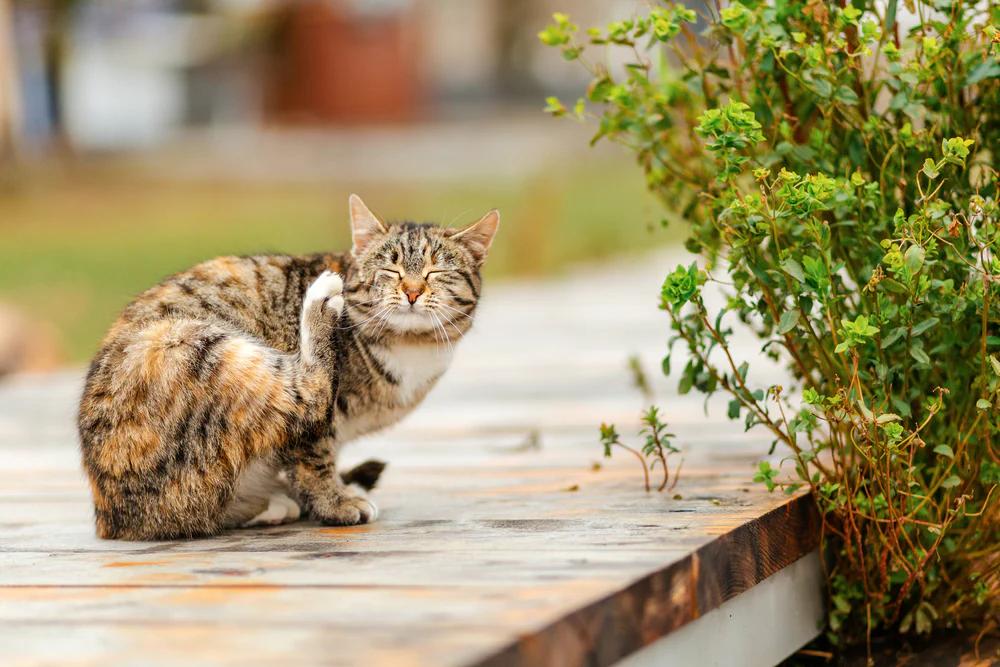
The word “dermatitis” is a general term meaning inflammation of the skin. It is not a single disease but rather a syndrome with many possible causes. Inflamed cat skin becomes vulnerable to secondary infections (bacterial or fungal), which greatly complicates both the course of the illness and its diagnosis. The causes of dermatitis can be extremely varied: from allergic reactions (to food, pollen, flea saliva) to bacterial, fungal or parasitic infections.
The main signs to watch for:
- Reddened skin (erythema): Individual patches or the whole skin surface may look inflamed.
- Intense itching: The cat constantly scratches, over-grooms or even chews out its fur. This is the key symptom of most forms of dermatitis.
- Rash: Blisters, small nodules (papules) or pustules may appear.
- Scaling and dandruff (seborrhea): The skin becomes dry, with large numbers of white or yellowish flakes.
- Hair loss (alopecia): Often the result of constant scratching and inflammation of the hair follicles.
- Change in pigmentation: Skin at the site of chronic inflammation may darken.
Ringworm and its types
The term “ringworm” (scientific name dermatophytosis) often causes panic in owners, and not without reason. It is a fungal disease that affects the surface layers of the skin, the hair and the claws. The most unpleasant part is that it is a zoonosis — it can pass from animal to human (especially to children) and to other animals.
The most common agents of ringworm in cats are fungi of the genus Microsporum (most often M. canis, which cats carry, often without symptoms) and Trichophyton. The spores of these fungi are extremely hardy in the environment and can stay viable for months on furniture, carpets and clothing.
Classic symptoms of dermatophytosis:
- Round areas of alopecia: Clearly outlined patches where the hair has fallen out. They often start on the head, ears and paws, but can appear anywhere.
- Scaling and crusts: The center of the patch may be covered with dry, greyish scales, sometimes with reddening at the edges.
- Brittle hair: Hairs at the edge of the affected area become fragile and break off near the base, giving a “clipped” look.
- Itching may be present, but is often mild or absent, which sets ringworm apart from allergic dermatitis.
There are also atypical forms, especially in long-haired cats (for example, Persians), where the disease can run a hidden course, showing only slight scaling, or as nodular lesions (a kerion). Diagnosis is made with a Wood’s lamp (but not all species fluoresce), microscopy of the hair and the “gold standard” — a culture on a growth medium.
Regular parasite control — the foundation of healthy skin
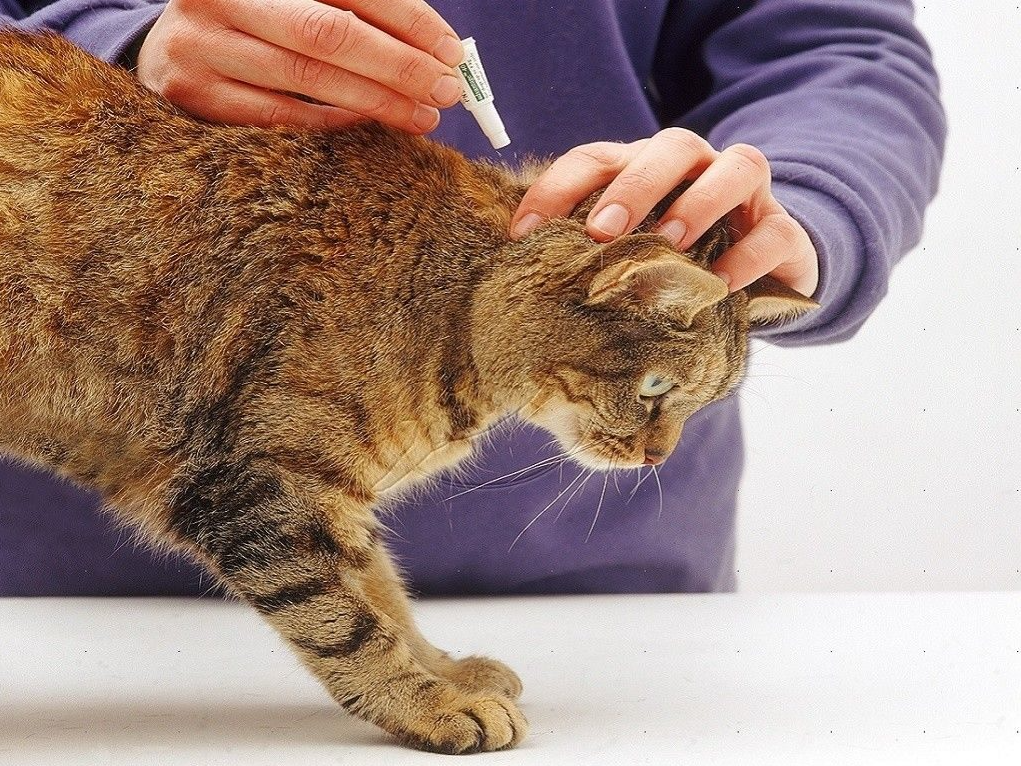
The most effective way to fight many skin problems, especially flea allergy dermatitis, is to prevent them in the first place. Since FAD is the most common allergy in cats, strict, uninterrupted control of external parasites is the basis of skin-disease prevention in cats.
Many owners wrongly believe:
- “My cat doesn’t go outside, so it doesn’t need treatment.” This is a dangerous mistake. Owners can bring in flea eggs or larvae on their shoes or clothing. Fleas can also enter the home from a basement, a stairwell or from neighbours’ animals.
- “I treat the cat when I see fleas.” This doesn’t work. First, for an allergic cat a single bite is enough to trigger a reaction lasting weeks. Second, the adult fleas you see are only about 5% of the whole population (the other 95% are eggs, larvae and pupae in your carpet and floor cracks).
Modern veterinary medicine offers a wide choice of effective, safe products:
- Spot-on drops: The most popular option. The active ingredient is applied to the skin, absorbed and spread, protecting the animal for a month (or longer, depending on the product).
- Tablets: A convenient option for animals that are hard to bathe or that often come into contact with water. They work from the inside, killing the parasites that bite.
- Collars: Provide long-lasting protection (up to 8 months), but it is important to choose a quality product to avoid local skin irritation (contact dermatitis).
The key word is regularity. Treatment should be given all year round, without breaks, strictly according to the product instructions. The same applies to deworming, since internal parasites also weaken immunity and can indirectly affect the skin, worsening allergic signs.
Flea allergy dermatitis: what is it?
Flea allergy dermatitis (FAD) is one of the most common skin diseases in cats and, at the same time, the most frequently diagnosed type of dermatitis. It’s important to understand: the problem is not simply that the cat has fleas, but that the animal has developed an allergic reaction to proteins in the saliva of these insects.
For an allergic cat, a single flea bite is enough to set off a chain reaction of intense itching that lasts for weeks. Even if you have never seen fleas on your pet (cats are master groomers and often “catch” them and swallow them), this does not rule out a diagnosis of FAD.
Typical signs of flea dermatitis in a cat include:
- Relentless itching: The cat over-grooms, scratches and bites itself, sometimes furiously.
- Location: Most often the back half of the body is affected — the lower back, the base of the tail, the belly and the back of the thighs.
- Miliary dermatitis: Tiny, millet-like crusts and papules that are easy to feel when you stroke the cat (a “sandpaper” feel).
- Self-induced alopecia: Excessive grooming leads to thinning or complete hair loss; the skin itself may look normal or reddened.
- Self-trauma: Scratches and sores (excoriations) that can easily become infected with bacteria, leading to secondary pyoderma.
Other skin diseases
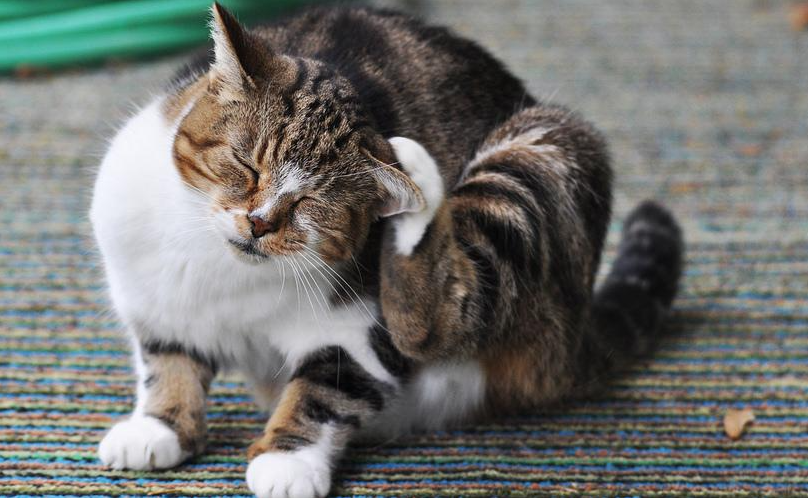
The range of skin diseases in cats is not limited to fleas and ringworm. There are many other problems that need attention and a specific approach.
Allergic reactions (other than FAD)
1. Food allergy or hypersensitivity: This is a reaction to certain protein components in food (for example, chicken, beef, fish, dairy). Contrary to popular belief, food allergy shows itself not so much through digestive problems as through non-seasonal itching that responds poorly to medication. The head, neck and ears are often affected (causing ear inflammation).
2. Atopic dermatitis: This is an allergy to environmental factors such as dust mites, mold and plant pollen. The itching may be seasonal (with pollen allergy) or year-round (with dust mites). Diagnosis is difficult and requires ruling out all other causes of itching (especially FAD and food allergy).
Parasitic diseases (other than fleas)
1. Otodectosis (ear mites): Caused by Otodectes cynotis mites. Although they live mainly in the ear canal, causing intense itching and dark, “coffee-ground” discharge, they can also cause dermatitis on other parts of the body, especially the neck and head.
2. Notoedric mange (feline scabies): Caused by the mite Notoedres cati. This is a highly contagious disease with unbearable itching, thickening of the skin and crusts, especially on the head, ears and neck.
3. Demodicosis: Caused by mites of the genus Demodex, which are normal inhabitants of the skin but, under certain conditions (usually severe weakening of the immune system, e.g. through viral infections or cancer), start to multiply rapidly, causing alopecia and inflammation.
Infectious and autoimmune problems
1. Bacterial infections (pyoderma): Usually secondary, i.e. they develop on the back of another problem (allergy, injury, parasites) when the skin barrier is damaged. They show as pustules, weeping areas (acute moist eczema) and an unpleasant smell.
2. Yeast infections (Malassezia): Malassezia fungi are also part of the normal flora, but can cause dermatitis (often greasy, with an unpleasant smell) with allergies or hormonal imbalance, especially in skin folds or the ears.
3. Autoimmune diseases: For example, pemphigus foliaceus. The immune system mistakenly attacks the skin’s own cells. This is a rare but serious disease that shows as crusts and erosions, often on the nose, ears and paw pads.
Comparison of common cat skin diseases
| Disease | Key sign | Itching | Contagious to people? |
|---|---|---|---|
| Flea allergy dermatitis | Tiny millet-like crusts on the lower back and tail base | Very strong | No (the fleas themselves bite) |
| Ringworm (dermatophytosis) | Round bald patches with scaling | Mild or absent | Yes |
| Food allergy | Non-seasonal itching of head, neck, ears | Strong | No |
| Atopic dermatitis | Itching, seasonal or year-round | Strong | No |
| Ear mites (otodectosis) | Dark “coffee-ground” ear discharge | Strong in the ears | No |
| Notoedric mange (scabies) | Crusts on head, ears, neck | Unbearable | Rarely, temporarily |
| Pyoderma / Malassezia | Pustules, greasy skin, odor | Variable | No |
Treating skin diseases
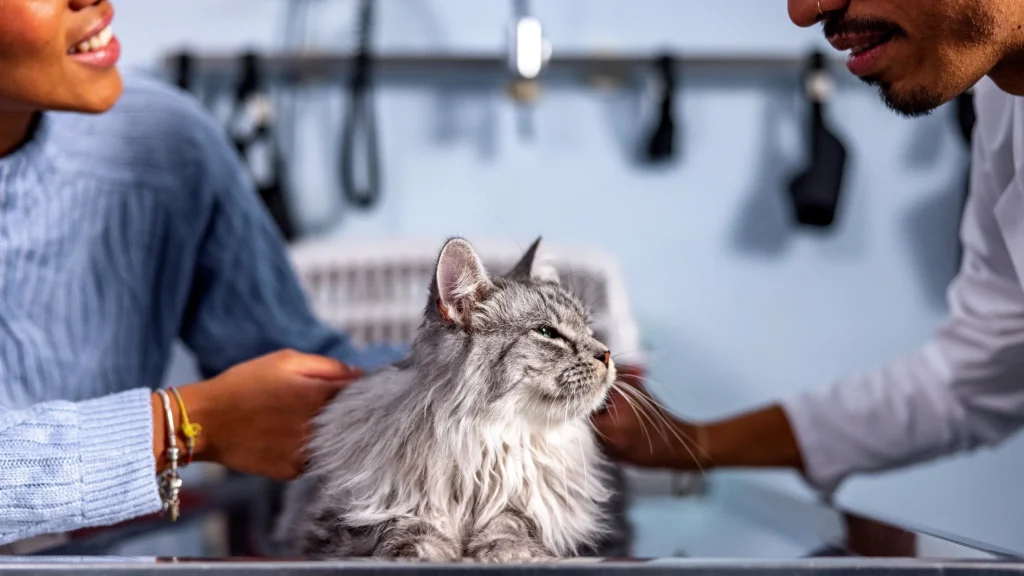
The most important rule every owner must learn: never self-medicate! Many skin diseases in cats have similar symptoms but need radically different treatment. Trying to “smear on an ointment” or give “an allergy tablet” without an exact diagnosis can not only fail to help but do real harm.
For example: Using steroid (hormonal) ointments, which temporarily relieve the itch of an allergy, is a disaster with a fungal infection (ringworm). The hormone suppresses local immunity, letting the fungus spread at incredible speed.
Step 1: Diagnosis at the veterinary clinic
Treatment always starts with an exact diagnosis. Be ready to tell the vet in detail about:
- When the symptoms started and how they developed.
- The animal’s diet (including all treats).
- The parasite-control schedule (which product and when it was last used).
- Whether there are other animals in the home and how they are.
The vet will do a full examination and will most likely order additional tests:
- Wood’s lamp: Some strains of Microsporum give a bright green glow.
- Hair microscopy and skin scraping: To detect parasites (mites) or fungal spores.
- Cytology: Examining a smear or skin impression under a microscope to find bacteria, yeast and inflammatory cells.
- Dermatophyte culture: The “gold standard” for diagnosing ringworm.
- Blood tests: To assess overall health and detect systemic problems.
- Diagnostic diet: If food allergy is suspected, a special elimination diet is prescribed for 6–8 weeks.
Step 2: A comprehensive approach to treatment
The treatment strategy depends on the diagnosis:
For ringworm: A combination of systemic antifungal drugs (tablets or suspensions) and topical treatment (medicated shampoos, ointments). Treatment is long (often 1.5–2 months or more, until negative cultures are obtained) and requires thorough disinfection of the home.
For flea allergy dermatitis: The basis is total, lifelong flea control (treating both the animal and the environment). A short course of medication may also be needed to relieve the itch and treat any secondary infection.
For allergies (atopic, food): This is a condition that is brought under control but not fully cured. Treatment of dermatitis in cats of an allergic nature includes:
- Removing the allergen (a change of diet, flea control, reducing contact with environmental allergens).
- Controlling the itch (special veterinary medicines, not human ones!).
- Treating secondary infections (antibiotics, antifungals).
- Supporting the skin barrier (medicated shampoos, omega-3 fatty-acid supplements).
For bacterial and yeast infections: Antibiotics or antifungals are used (topically or systemically), but always alongside a search for and removal of the underlying cause (allergy, parasites and so on).
Healthy skin and a glossy coat are not just about looks — they are a sign of your cat’s wellbeing. Any change is a reason for close attention. Don’t ignore itching, hair loss or the appearance of strange patches. Seeing a veterinary dermatologist early, getting an accurate diagnosis and following the treatment plan strictly is the only sure road to your pet’s recovery.
FAQ
How can I tell ringworm from an allergy?
Ringworm usually barely itches and produces round, clearly outlined bald patches, and it is contagious. An allergy means strong itching with no clear borders. The two can only be told apart reliably in the lab (culture, cytology, scraping).
Does a strictly indoor cat need flea treatment?
Yes, and all year round. Flea eggs and larvae are easily carried into the home on shoes or clothing, and for an allergic cat a single bite is enough to trigger weeks of intense itching.
Can ringworm spread to people?
Yes, dermatophytosis is a zoonosis. Children and people with weakened immunity are especially vulnerable. Treat the cat, keep up good hygiene and disinfect the home.
Why shouldn’t I use a steroid cream myself?
A steroid cream relieves the itch temporarily, but with a fungal infection (ringworm) it suppresses local immunity, so the fungus spreads even faster. Without an exact diagnosis it is dangerous.
How long does ringworm take to treat in a cat?
Usually 1.5–2 months or longer — until two consecutive negative cultures — together with thorough disinfection of the home, because the spores survive on furniture and carpets for months.