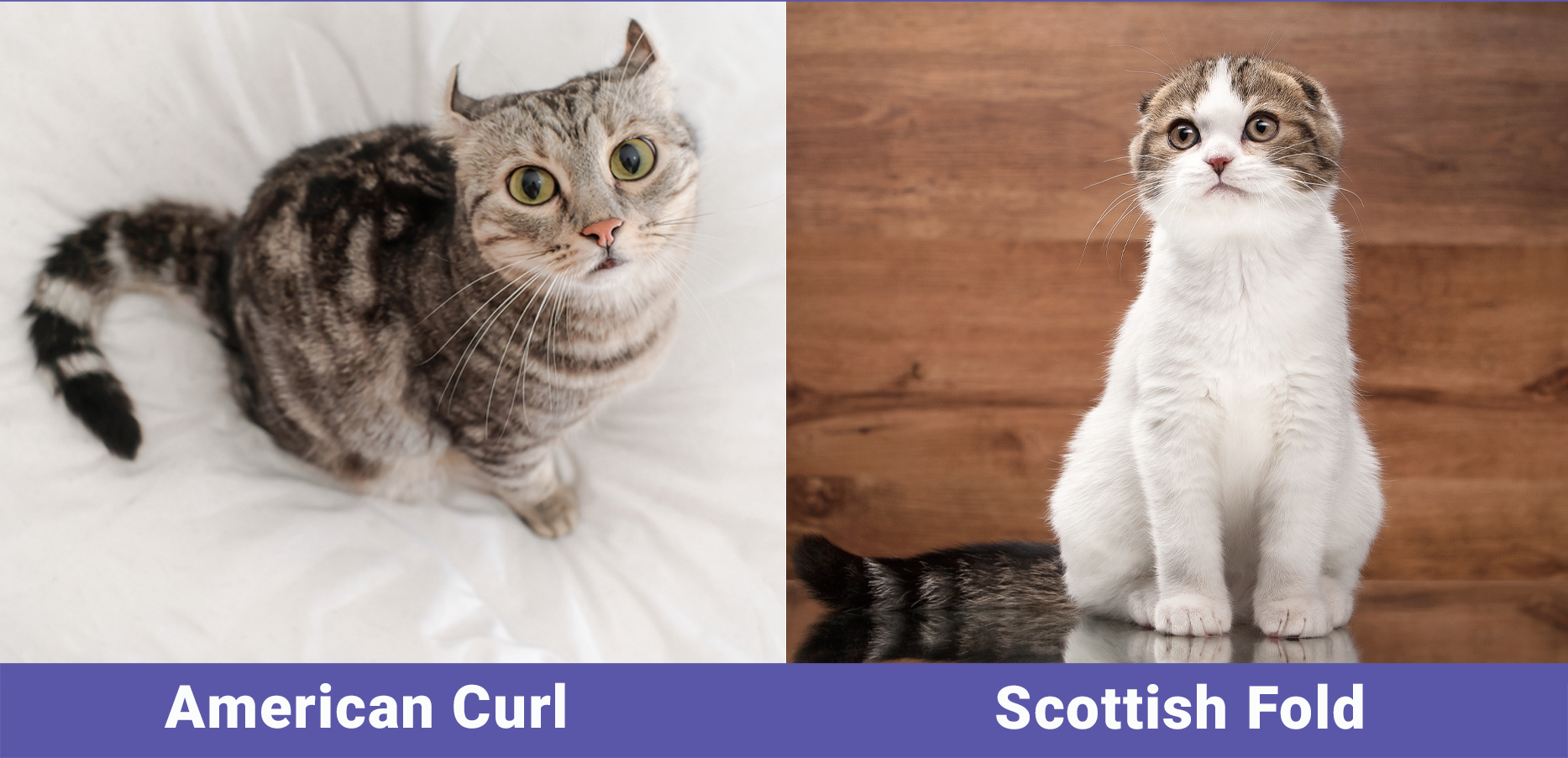
In the cat world, ears do more than just listen - they are a powerful communication tool. Their position tells us everything about a pet's mood: from relaxed contentment to aggression or fear. However, some breeds defy standard feline beauty norms by nature (and with a little help from breeders). We're talking about cats with unusal ear shapes. The most striking representatives of this group are the mysterious American Curl and the globally popular Scottish Fold. Find out more on Tvaryny.
The Scottish Fold: The Cost of a "Baby Face" and Genetic Nuances
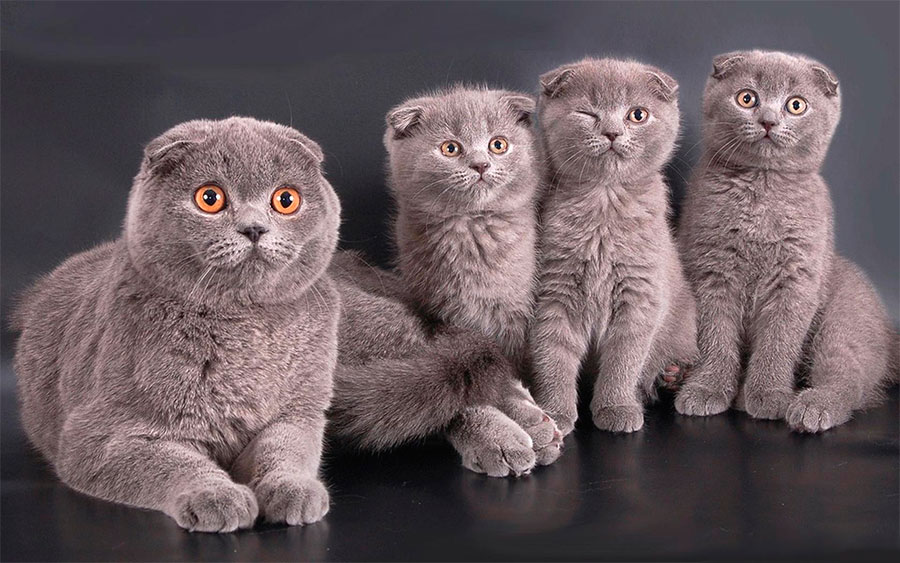
The Scottish Fold is a breed you can't mistake for any other, thanks to its signature "surprised" look and ears that are tightly pressed to the head. This feature gives the head a round shape, making the adult animal look like a cute little owl or a plush teddy bear.
Origin Story: It All Started with Susie
The history of the breed began in 1961 on a farm in Scotland, where a white cat named Susie was found with unusual ears. She wasn't the result of complex selection - it was a spontaneous natural mutation. All modern Folds trace their lineage back to her. Interestingly, the fold gene (Fd) is dominant, but working with it requires meticulous precision from breeders.
Genetics and Health: What Sellers Don't Tell You
This is the most critical section for a future owner. The trait that makes the ears curl is actually a cartilage defect. Unfortunately, this defect affects not just the ears, but the entire skeletal and cartilage system of the body. This condition is called osteochondrodysplasia.
- The Golden Rule of Breeding: You must never cross two lop-eared cats (Fold + Fold). Offspring from such a pair are born with severe skeletal disabilities, often incompatible with life or doomed to constant pain.
- Correct Breeding: Only the heterozygous option (Fold + Straight) produces healthy offspring, where some kittens will have straight ears (Scottish Straight) and others will be folded.
Even with proper breeding, Scottish Folds are in the risk group for joint diseases. Owners should pay close attention to their pet's gait and willingness to jump. If the cat avoids heights or limps, it's a reason for an immediate visit to the vet.
Temperament and Behavior
Folds are true aristocrats. They are balanced, calm, and very attached to people, yet unobtrusive. You won't find them swinging from the drapes. Often, you can catch them in funny poses: they love to sit in the "Buddha pose" (on their hind legs with front paws on their belly) or sleep on their backs. Genetics works wonders not just with ears but also with fur, like with curly cats: Cornish Rex and Devon Rex, which are also the result of interesting natural mutations but have a completely different, more high-strung temperament compared to the sedate Scots.
The American Curl: The Elf of the Cat World
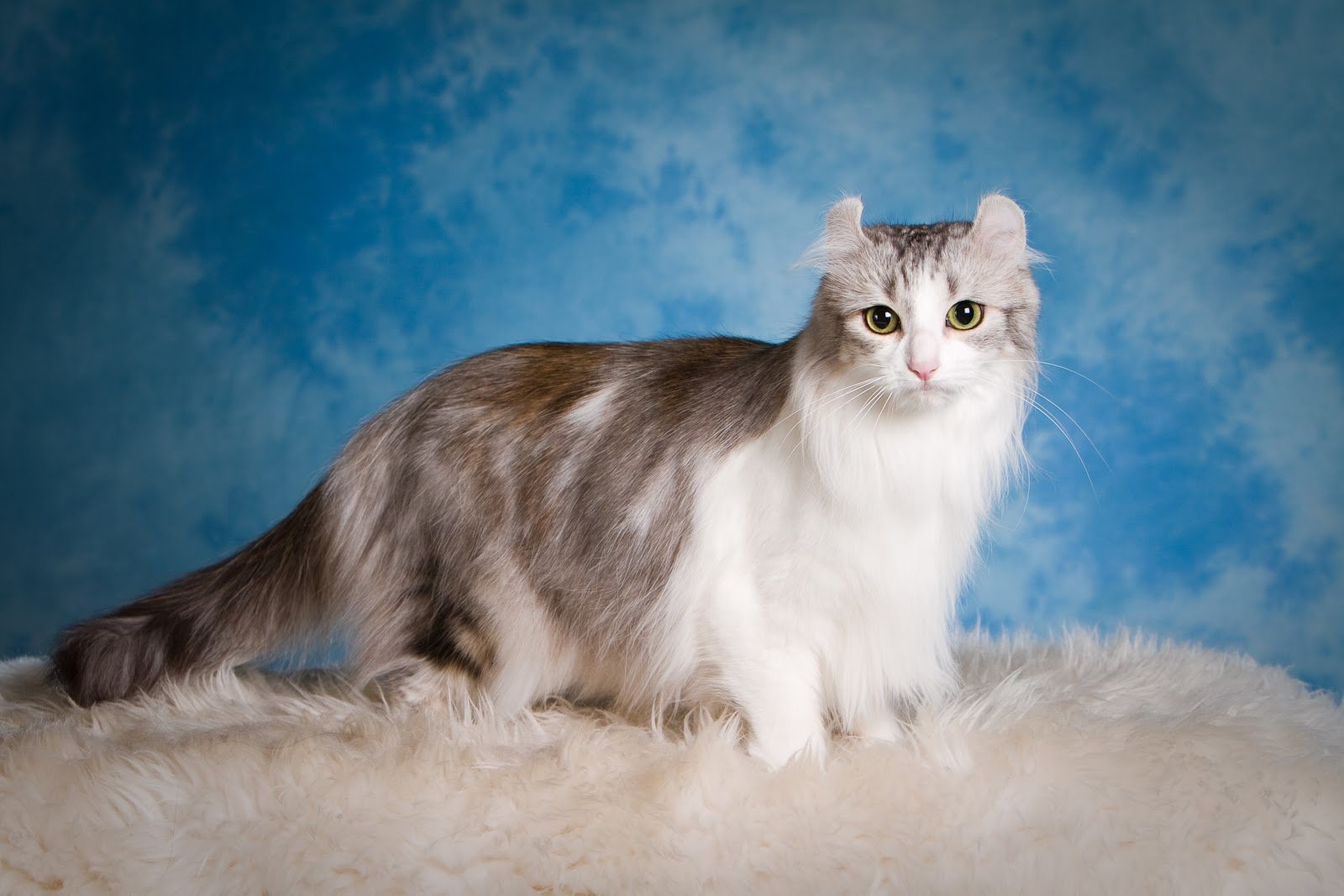
While the Scot's ears try to hide, the American Curl's ears open up to the world, elegantly sweeping backward. This gives the cat an expression of constant alertness and surprise, but unlike the Fold, it looks more refined and "wild".
Unique Ear Anatomy
All Curl kittens are born with straight ears. The magic begins on day 3–5 of life, when the ears start to curl backward. The final "curl" forms by 4 months. The angle of the arc can vary from 90 to 180 degrees. According to breed standards, the tips of the ears should not touch the back of the head.
The key difference from Scottish cats lies in the cartilage structure. In Curls, the ear feels firm to the touch, like a human's, but flexible at the base. The genetic mutation of Curls does not carry the severe bone health issues seen in Folds. It's a healthier mutation that doesn't impact general skeletal development.
Temperament: The Eternal Kitten
American Curls are often called the "Peter Pans" of the feline world. They retain their playfulness and childlike spontaneity well into old age. These are highly social cats that handle loneliness poorly. They love being in the center of the action, helping you at the computer or in the kitchen. If you like exotic breeds and active animals, you might also be interested in spotted predators: Bengal cat and Ocicat, which can rival Curls in their energy levels.
Comparison Table: Folds vs. Curls
To make your choice easier, we've organized the main differences between these two breeds in a handy table. Your choice should be based on more than just Instagram photos.
Comparison Table: Folds vs. Curls · 6
| Feature | Scottish Fold | American Curl |
|---|---|---|
| Ear Shape | Folded forward and down, tight against head | Curled backward in an arc |
| Mutation Type | Affects cartilage and bones throughout body | Locally affects ear cartilage |
| Health | Prone to joint issues (High risk) | Generaly robust health |
| Temperament | Calm, phlegmatic, "couch potato" | Active, playful, social |
| Care Requirements | Strict monitoring of joints, ear cleaning | Careful ear cleaning (cartilage is fragile!) |
| Coat | Short or semi-long (Highland) | Short or semi-long |
Care Tips: Ears Are a High-Maintenance Zone
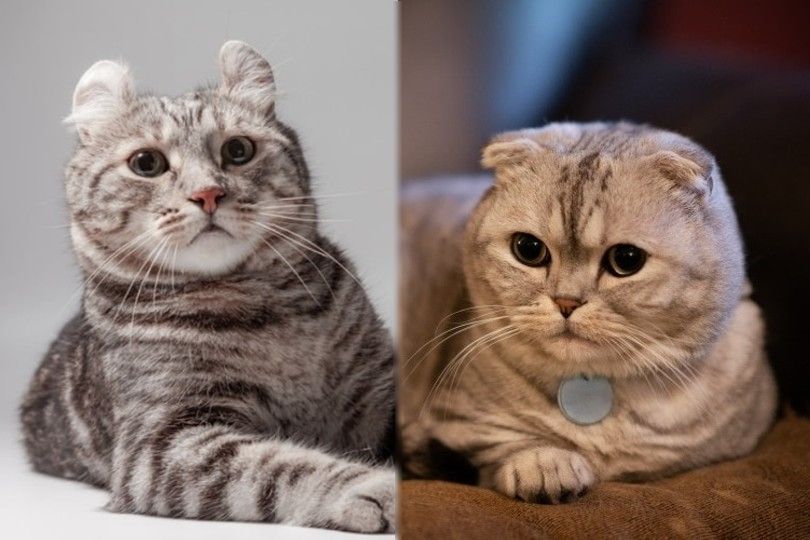
Regardless of which one you choose, cats with unusual ear shapes require specific hygiene. The structure of the ear canal in both breeds encourages the accumulation of wax and dirt, creating an ideal environment for bacteria and ear mites.
How to Clean a Scottish Fold's Ears?
Because the ear is tightly closed, ventilation inside is compromised. You need to inspect the ears at least once a week. Gently fold back the ear (don't pull hard!) and check for dark buildup or a bad smell. Use special cleaning lotions that soften the wax. It's better to avoid using cotton swabs deep inside so you don't push the dirt further in.
Nuances of Caring for an American Curl
With Curls, the situation is different but no less serious. Their ear cartilage is hard and brittle. You cannot roughly bend or tug it - this can lead to micro-cracks in the cartilage, which is very painful for the animal and can permanently deform the ear shape. Clean only the visible part, acting as delicately as possible.
Conclusion: Which One to Choose?
Choosing between a Scottish Fold and an American Curl is a choice between two different life philosophies. If you are looking for a calm friend who will decorate your sofa and keep you warm on winter evenings, and you are ready to monitor their diet and joint health - the Scot is the ideal option. Remember that they need special care in their mature years.
However, if your home is filled with children's laughter, you love activity, and you want a cat that will fetch a ball and surprise guests with its "elfin" looks - choose the American Curl. It is a healthier breed with minimal genetic risks but maximum energy.
Most importantly, remember that the unusal ear shape is just an external attribute. Inside each of them lives a little predator that needs your love, quality food, and regular check-ups at the vet.
Frequently Asked Questions (FAQ)
Are cats with folded/curled ears deaf?
No, the ear shape does not affect hearing acuity in either Folds or Curls. They hear just as well as ordinary cats.
Can you straighten a Curl's ears back?
No, and don't try to. This is a genetically determined cartilage shape. Attempts to mechanically change it will cause the animal pain.
How long do Scottish Folds live?
With good care and the absence of severe forms of osteochondrodysplasia, they live 12–15 years.