The dream of having a little leopard in your own living room is becoming a reality for more and more families. Exotic looks, the grace of a wild beast, and a mesmerizing gaze - these are the traits that unite the heroes of our article today. However, behind the similar "wild" facade hide two completely different origin stories and two distinct temperaments. If you are on the fence between these breeds, it is important to understand that the difference is not just skin deep. Find out more at Tvaryny.
Appearance: Rosettes vs. "Fingerprints"

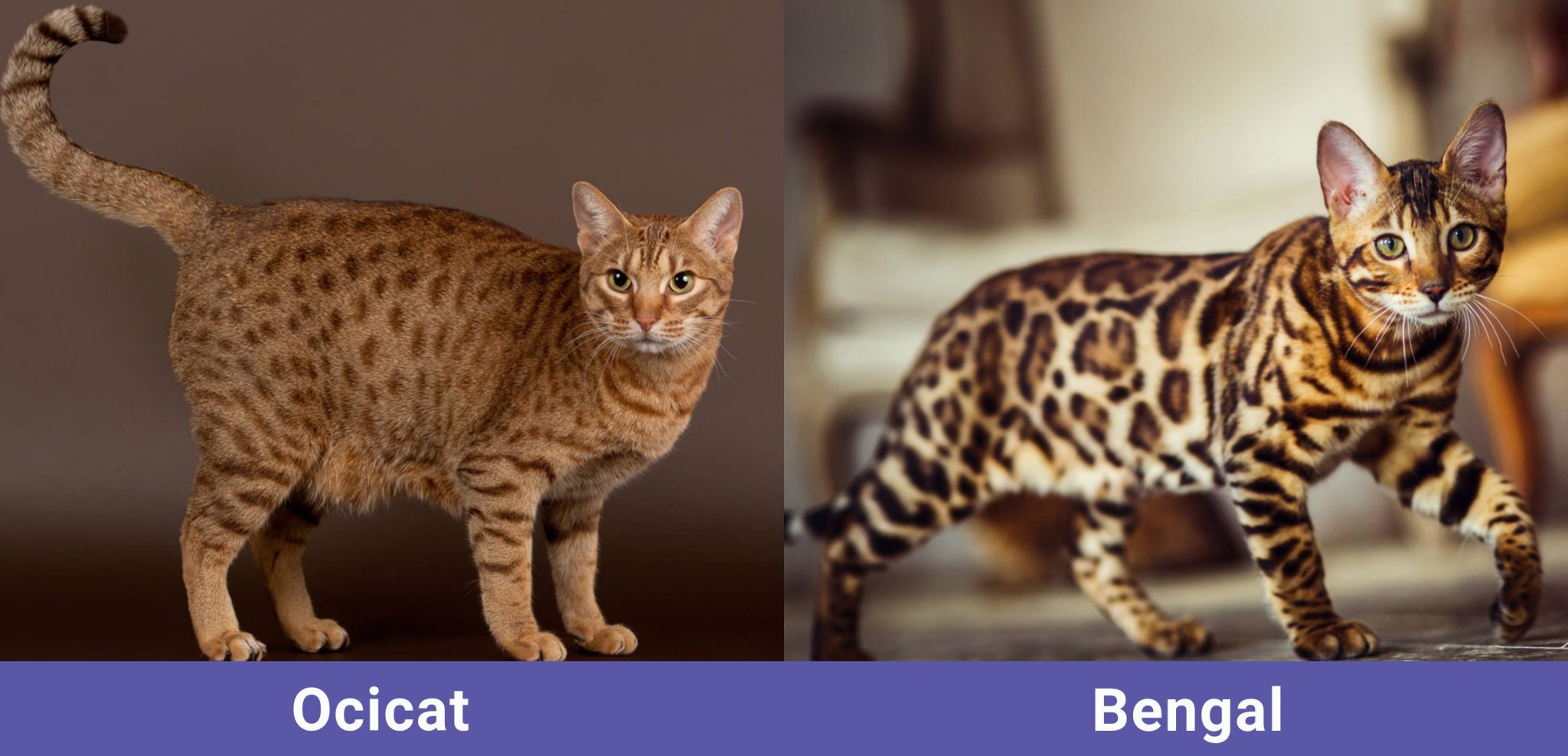
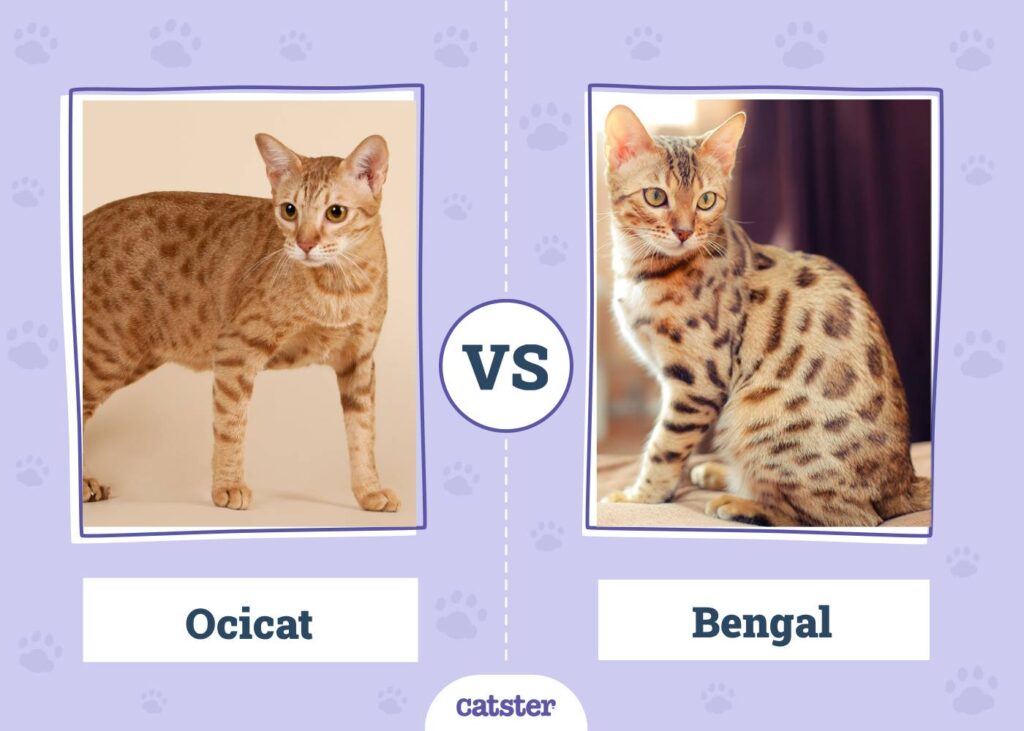
An inexperienced eye might confuse these spotted cat breeds, but in reality, their patterns differ significantly.
Bengal Coat: Glitter and Rosettes
The Bengal's body is often adorned with "rosettes" - spots with a lighter center and a dark outline, resembling the markings of a jaguar or leopard. Bengal fur possesses a unique property known as glitter. This is a shimmering effect, as if the hairs have been dusted with gold powder, which is particularly noticeable in the sun. To the touch, it feels like expensive silk.
Ocicat: Classic Spots
The Ocicat's spots are usually solid, without a light core. They are arranged in rows along the spine and chaotically on the flanks, resembling a human thumbprint. The Ocicat's build also differs slightly - they look more athletic and "cobby," whereas Bengals are often longer and more supple.
Origin: Wild Blood vs. Imitation
This is perhaps the most crucial section, explaining 90% of the differences in these cats' behavior.
The Bengal Cat is a true hybrid. The breed emerged from crossing a domestic cat with a wild Asian Leopard Cat (ALC). The first generations (F1-F3) are considered hybrids and often possess a difficult character. Modern domestic Bengals are usually F4 generation and beyond, where little wild blood remains, but enough to preserve unique instincts, a love for water, and specific movement patterns.
The Ocicat is a brilliant "forgery" of nature, created by humans. Despite the name (derived from "ocelot") and appearance, there is not a single drop of wild blood in this cat. The breed arose accidentally in 1964 during an attempt to breed a Siamese cat with tabby markings. The Ocicat's genetic cocktail consists of:
- Siamese;
- Abyssinian;
- American Shorthair.
So, if the Bengal is a tamed "savage," the Ocicat is an absolutely domestic cat in a camouflage suit.
Temperament: Hurricane vs. Intellectual

When choosing a domestic leopard, you are choosing a lifestyle. Here lies the key benefit of our comparison - saving your home renovation and nervous system from the wrong choice.
Bengals are endless energy. These are cats that live in three dimensions. They have a vital need for tall cat trees, shelves near the ceiling, and room to run. They often love water (and may join you in the shower) and are very vocal. Their voice is specific, sometimes resembling a chirp rather than a meow. If you are interested in comparing them with other active breeds, take a look at the article "Energetic Acrobats: Abyssinian Cat vs Bengal Cat," where we analyze this in more detail.
Ocicats are often called "dogs in a cat's body." They are incredibly social, bonding not to a place, but to a person. An Ocicat will greet you at the door, carry toys in its mouth (fetch is their favorite game) and easily learns commands. They are active but not destructive. Unlike the Bengal, the Ocicat tolerates loneliness poorly. If you are out of the house all day, this breed will be sad.
Care and Health Features
Both breeds have short coats without a thick undercoat, so grooming a Bengal or Ocicat in terms of brushing is minimal. Going over them once a week with a rubber grooming mitt is sufficient. However, there are nuances worth noting.
Nutrition
Due to high activity levels, the metabolism of both breeds is accelerated. They need high-quality food with a high meat content (holistic or super-premium). Bengals often have sensitive digestion, so you need to pay attention to their diet and avoid sudden changes in food. Ocicats, on the other hand, are prone to overeating, so portion control is important.
Genetic Diseases
| Issue | Bengal Cat | Ocicat |
|---|---|---|
| Hypertrophic Cardiomyopathy (HCM) | High risk, screening required | Risk exists (heritage from American Shorthair) |
| Progressive Retinal Atrophy (PRA) | Occurs, genetic tests availalbe | Occurs (heritage from Abyssinians) |
| Pyruvate Kinase Deficiency (PK Def) | Widespread | Less common |
| Renal Amyloidosis | Rare | Possible (heritage from Abyssinians) |
If You Want Exotic, But No Spots
It happens that a future owner wants an unusual cat but is not ready to put up with the temperament of a "mini-leopard" or has an allergy to intense shedding (although Bengals shed little, they are not hypoallergenic). In such a case, it is worth looking at other exotic options. For example, "Curly Cats: Cornish Rex and Devon Rex" could be an excellent alternative. They have an alien appearance and the same dog-like character as Ocicats, but they leave significantly less hair around the house.
Which Cat Suits You?
To summarize, let's define the ideal owner for each of the breeds.
You need a Bengal if:
- You want true wild aesthetics and are ready to pay for it with time and money.
- You have a large apartment or house with the ability to install "cat highways."
- You are not scared of noise and midnight zoomies.
- You are ready to dedicate at least 1–2 hours a day to play.
You need an Ocicat if:
- You want the look of a predator but the character of a companion.
- You plan to teach the cat commands.
- You have other pets (Ocicats get along brilliantly with dogs).
- You want a stable psyche without the surprises of "wild blood."
The Price Question
The price for kittens of both breeds in the US is quite high, but Bengals are usally more expensive due to the complexity of breeding and their massive popularity. The price for a pet-class Bengal kitten starts from $1,500 - $2,000 and can reach $3,500+ for elite representatives with rosettes on gold. Ocicats are a rarer breed compared to others on our market, so finding a breeder can be more difficult. Their price typically varies between $800 and $1,500.
Remember that buying a kitten "from an ad" without papers at a low price risks getting an animal with a bouquet of genetic diseases or an unstable psyche, which is particularly critical in the case of Bengals.
Conclusion
The choice between a Bengal cat and an Ocicat is a choice between the elements and intelect, between a challenge and partnership. The Bengal will force you to change your life to suit him, whereas the Ocicat will adapt to you, becoming a loyal friend. Both breeds are beautiful, and both deserve the best living conditions.
Which breed appeals to you more? Are you ready for an active life with a Bengal, or do you prefer the dog-like devotion of the Ocicat? Share your thoughts in the comments, we would love to read them!