Energetic Acrobats: Abyssinian Cat vs Bengal Cat

By tvaryny
13 Min Read

Choosing a pet is always an exciting adventure, especially when your heart is torn between two of the most striking representatives of the feline world. If you are not just looking for a fluffy pillow for your couch, but a true partner, companion, and source of endless energy, then your choice has likely narrowed down to two breeds: the Abyssinian and the Bengal. Both of these breeds impress with their grace, intelligence, and wild appearance, seemingly transporting us to the world of jungles or savannas. But which one is right for you? Are you ready for the challenges these active animals throw your way? In this article, we will conduct a detailed comparison to help you make the right choice, as there are quite a few nuances here. Read more on Tvaryny.

We will look not only at the physical differences that are obvious at first glance but also delve into the psychology, needs, and care requirements of these “energizers.” This is not just a comparison – it is a guide into the world of active cats that will help you understand if you are ready to share your life with a miniature leopard or puma.

Origins: Pharaohs’ Legacy vs. Wild Jungles

To understand a cat’s character, it is worth looking into its history. The Abyssinian and Bengal breeds have radically different backgrounds, which still influence thier behavior today.

The Abyssinian Cat: Living History

Abyssinians are one of the oldest breeds, surrounded by an aura of mystery. Their appearance strikingly resembles images of cats on ancient Egyptian frescoes and statuettes of the goddess Bastet. For a long time, it was believed they originated from the Nile Valley (modern-day Ethiopia, formerly Abyssinia). The first known representative of the breed, a cat named Zula, was brought from Ethiopia by a British soldier in 1868. However, modern genetic research has corrected this romantic legend. Scientists found that the genetic marker of Abyssinians is most often found in street cats along the coast of the Indian Ocean and Southeast Asia. Likely, British traders and sailors brought these graceful animals from India to Europe, where breeders refined their look, creating the “miniature puma” image we know today.

Despite disputes about geography, one thing remains unchanged: this breed has lived alongside humans for centuries, making them extremely social and people-oriented creatures.

The Bengal Cat: A Wild Hybrid

The history of Bengals is much shorter and more dramatic. It is a relatively young breed that arose from an ambitious experiment. In the 1960s, American biologist Jean Mill crossed a domestic cat with a wild Asian Leopard Cat (ALC). The goal was to create an animal with the gentle personality of a house pet but the exotic look of a wild predator. It was a difficult path: the first generations of hybrids (F1, F2, F3) were often wild, skittish, or aggressive. Only cats of the fourth generation (F4) and beyond are considered true domestic Bengals (SBT – Stud Book Tradition) that we can safely keep at home.

The Bengal is a triumph of modern felinology, living proof that humans can tame wild nature while preserving its beauty. But this “wild blood” still bubbles in their veins, manifesting in incredible energy and hunting instincts.

Appearance: Refined Minimalism vs. Luxurious Patterns

Although both breeds are shorthaired, it is impossible to mix them up. They represent different poles of feline beauty.

Coat and Color

The Abyssinian cat is famous for its unique ticked coat. Each hair on its body has several bands of different colors (light and dark), creating a shimmering or iridescent effect. This phenomenon is called “ticking.” They do not have spots or stripes on their body (though stripes may appear on the face and tail); their coat resembles the fur of a wild rabbit or puma. The most popular color is “ruddy,” a rich reddish-brown with black ticking. There are also sorrel (red), blue, and fawn (beige) variations.

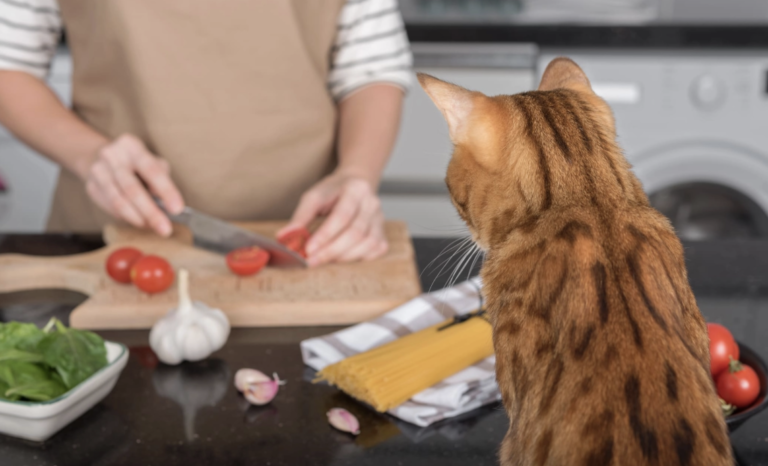
The Bengal cat is a leopard in your living room. The main pride of the Bengal is its contrasting pattern. This can be spots or, most highly prized, rosettes – spots with a dark outline and a lighter center, like jaguars. There is also a marble pattern, where the design looks like swirling marble. A special feature of Bengals is “glitter” – an effect of gold or silver shimmer on the fur, especialy noticeable in the sun. A Bengal’s coat feels like silk or satin to the touch; it is very dense and incredibly soft.

Build

Abyssinians have the body of a gymnast: medium-sized, very flexible, muscular, but refined. They stand on high legs and seem always ready to jump. The ears are large and set wide apart, giving them an alert look. Bengals are more massive and stocky. Their body is long, with a powerful bone structure and defined muscles. The hind legs are slightly longer than the front ones, ensuring their characteristic stalking gait, as if they are constantly tracking prey.

Temperament: Intellectuals and Hunters

This is perhaps the most important part of our comparison. If you are choosing between these breeds, you already know that a quiet life is off the table. But how exactly do they show their activity?

Energy Levels and Playfulness

The Abyssinian is an “action cat.” It wants to participate in everything you do. Are you washing dishes? It will sit on your shoulder or catch drops of water. Are you working at the computer? It will “help” press the keys. They are often called the “clowns of the cat world” for their amusing behavior and acrobatic tricks. They don’t tire of playing even in adulthood. Their energy is directed toward social interaction and exploring heights.

The Bengal cat has a different kind of energy. This is the energy of a hunter. Bengals need active play where they can chase, grab, and tear apart toys. If an Abyssinian might just watch you from the top of a cabinet, a Bengal will likely knock a vase off that cabinet to see how it shatters, or simply because it’s bored. Bengals are known for their love of water – they can calmly jump into the bath with you or play with water in a bowl, turning the kitchen into a pool.

Intelligence and Training

Both breeds are extremely smart, perhaps even too smart. They easily learn to open doors, drawers, and turn on lights. However, there is a difference in motivation. Abyssinians are “dogs in cat bodies”; they are people-oriented and can perform commands like “fetch” or “sit” for praise and attention. Bengals are also excellent at training, but they are more independent. They will do tricks if they are interested or if a tasty treat is at stake. Bengals are masters of puzzle solving; interactive feeders are a must-have for them.

By the way, if you’re interested in other large and smart breeds, we recommend checking out our article on comparing the giants of the feline world.

Vocalization

Here the difference is substantial. Abyssinians are generally quite quiet. Their voice is gentle, similar to melodic cooing. They communicate via purring and short chirps. Bengals, on the other hand, are opera singers (sometimes in heavy metal style). They are very talkative and have a wide range of sounds: from a standard meow to a specific guttural sound and loud screaming when they demand something. If you love silence, a Bengal might be a test for you.

Care Requirements: What a Future Owner Needs to Know

Getting an Abyssinian or a Bengal is like bringing a toddler into your home who never grows up. You will have to adapt your space.

Vertical Space

This is critically important for both. If you don’t have a tall cat tree, they will find an alternative: curtains, bookshelves, kitchen cabinets. Abyssinians love to observe from above, supervising their territory. Bengals use height as a strategic ambush point. Neglecting this need will lead to stress for the animal and destruction of your apartment.

Attention and Loneliness

Abyssinian cats are very social and tolerate loneliness poorly. If you work 10-12 hours a day and live alone, an Abyssinian will suffer, which can lead to depression or psychogenic alopecia (licking fur off until bald). The ideal solution is to get a second pet – another cat or even a dog, with whom Abyssinians get along wonderfully.

Bengals are a bit more self-sufficient, but that doesn’t mean they can be ignored. A bored Bengal is a destructive force. They may start marking territory, ruining belongings, or screaming loudly. They need active play and mental stimulation rather than just cuddles.

Health and Genetics

Both breeds are relatively healthy, but they have their weak points (“Achilles’ heels”) that you should know about before buying a kitten.

  • Abyssinian Cat:
    • Pyruvate Kinase Deficiency (PK Def): Hereditary anemia. There is a genetic test.
    • Progressive Retinal Atrophy (PRA): An eye disease that can lead to blindness. Also tested.
    • Renal Amyloidosis: A serious kidney disease; unfortunately, there is no genetic test yet.
    • Gingivitis: Abyssinians are prone to gum disease, so teeth brushing should become a routine.
  • Bengal Cat:
    • Hypertrophic Cardiomyopathy (HCM): A common heart disease. Responsible breeders perform heart ultrasounds on their breeding cats annually.
    • Pyruvate Kinase Deficiency (PK Def) and PRA: Same as Abyssinians (legacy of common ancestors during breed formation).
    • Flat Chested Kitten Syndrome (FCK): Occurs in kittens.
    • Sensitive Digestion: Many Bengals require a specialized diet and react poorly to food changes.

When buying a kitten, always demand the parents’ genetic test results from the breeder. This is not a 100% guarantee of health, but it significantly reduces risks.

Comparison Table

To systematize everything mentioned above, we have prepared a convenient table. It will help you quickly assess the main parameters of the breeds.

CharacteristicAbyssinian CatBengal Cat
AppearanceRefined, ticked coat, puma-likeMuscular, spots/rosettes, mini-leopard
TemperamentExtrovert, clown, “velcro cat”Independent hunter, active explorer
Activity LevelVery high (acrobatics)Very high (running, jumping, water)
VoiceQuiet, melodicLoud, distinct, chatty
Attitude Toward ChildrenExcellent, loves to playGood, but dislikes disrespect
GroomingMinimalMinimal
Need for CompanyCritically highHigh, but can entertain itself
Average Cost (USA)$1,200 to $2,500 (pet quality)$1,500 to $3,000 (pet quality)
Share This Article