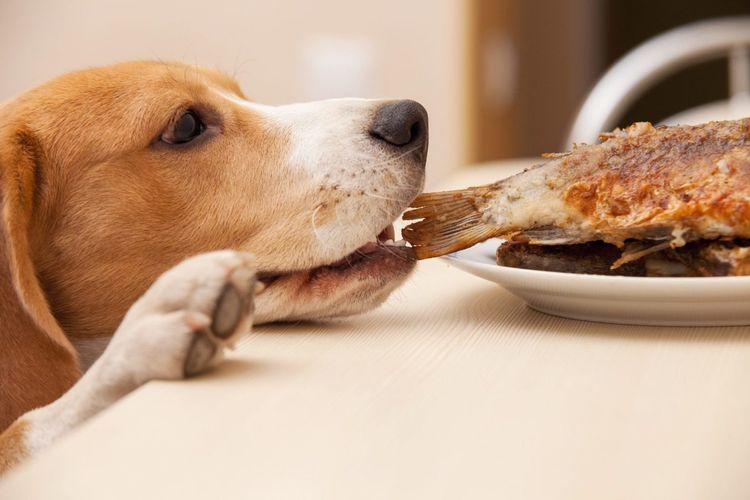
Does this look familiar? You sit down to dinner, and suddenly, the saddest pair of eyes in the world appears at the table. A quiet sigh, a gentle whine, and maybe even a cautious paw on your knee. This is classic begging - behavior that might seem cute but actually creates a host of problems. Constant scrounging for food isn't just annoying during family dinners; it can lead to health problems for your pet and misunderstandings in the family. But there's good news: a peaceful, guilt-free dinner is possible. It just takes knowledge, patience, and consistency.
Understanding how to teach a pet not to beg for food isn't about punishment; it's about setting clear, healthy boundaries. It's part of what we call 'dog etiquette.' And mastering it is much easier than you think. We'll explore five proven methods to help you reclaim peace at the dinner table. We'll cover this and much more later on Tvaryny.
Why it's not just 'cute,' but a real problem
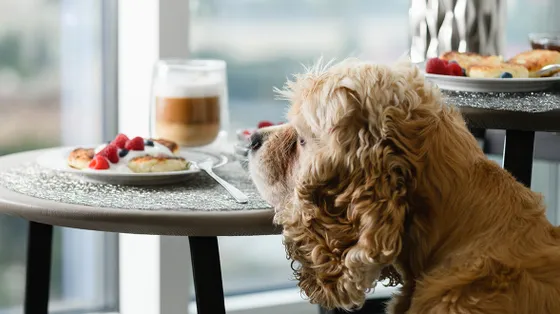
Before we get to the methods, let's be clear about why this behavior needs to stop. It's not just about your comfort.
- Health risks. Human food is often too fatty, salty, or sweet for dogs. This is a direct path to obesity, gastrointestinal problems, and even pancreatitis. Moreover, some products (like onions, garlic, chocolate, and grapes) are toxic to them.
- Behavioral problems. When a pet begs from the table and gets food, it reinforces their persistence. Over time, this can escalate into more demanding behavior: barking, jumping, or stealing food from the table when you turn your back.
- Social discomfort. It might be cute when you're alone, but it becomes incredibly awkward when you have guests over. Not everyone appreciates a dog resting its head on their lap or staring intently at them while they eat.
The Psychology of a Beggar: Why Do They Do It?
Dogs aren't manipulators in the human sense. Their behavior is driven by simpler motives:
1. They are opportunists. Dogs evolved alongside humans for millennia as scavengers. Their instinct says: 'See food, eat food.'
2. It works! And this is the biggest reason. At least once, someone in the family couldn't resist and gave them a scrap. The dog instantly learned: 'If I sit here and make sad eyes, I get a reward.' We are the ones, often unknowingly, who train them to beg.
3. They are social. For dogs, a shared meal is an important social ritual. They simply want to be part of the 'pack' and take part in the process.
5 Key Ways to Teach Your Dog Not to Beg
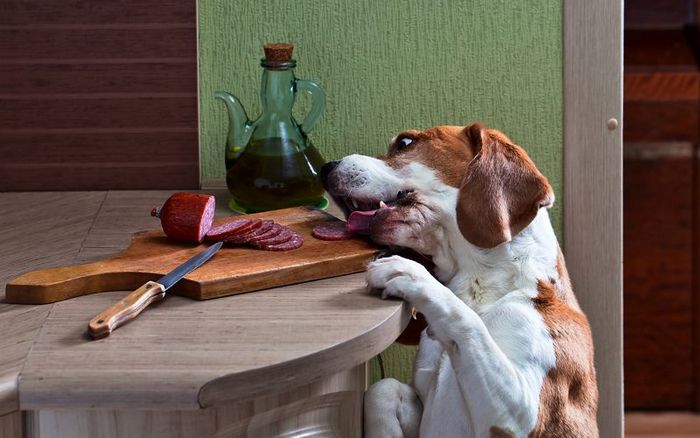
Solving this problem requires a comprehensive approach. It's not enough to just say 'no.' You need to offer your pet an alternative model of behavior. Here are five reliable strategies.
1. The 'Absolute Ignore' Method (Behavior Management)
This is the most important rule, and the hardest to follow. You must completely stop feeding the dog from the table. Always. No exceptions.
'Ignoring' means a total lack of attention. When the dog starts to beg:
- Don't look at them.
- Don't talk to them (not even to scold, as 'no!' is still attention).
- Don't push them away with your hand.
Act as if the dog doesn't exist. This requires 100% consistency from every single member of the family and any guests. If even one person 'cracks,' all your progress will be lost, and the dog will learn that they just need to beg longer and harder.
2. Teach 'Go to Your Spot!' (Positive Reinforcement)
Instead of just forbidding the unwanted behavior (begging), teach the dog a desirable behavior. In this case, to lie calmly in their own spot while you eat.
How to do it:
- Define the 'spot.' This could be a mat, a bed, or a towel in the corner of the kitchen or dining room - somewhere the dog can see you but isn't in the way.
- Train outside of mealtimes. Start simple: lead the dog to the mat, say the command (e.g., 'Spot!'), and as soon as all four paws are on it, praise them and give a treat. Repeat, gradually asking them to sit, then to lie down.
- Give a 'long-lasting' reward. When you sit down to eat, send the dog to their 'spot' and give them something high-value that will occupy them for a long time: a special chew bone, a Kong toy filled with peanut butter, or a bully stick.
The goal is to create an association: 'When the humans eat, I go to my spot and get the best treats in the world.' The dog will be busy and happy, and you will dine in peace.
3. Change the Routine: Dog First, Then You
Often, a dog begs simply because they're hungry. It's logical. Try changing your feeding schedule. Feed the dog their own food, in their own bowl, 10–15 minutes before you sit down at the table yourself.
A full animal is far less motivated to scrounge for scraps. This doesn't eliminate the need for ignoring or the 'Spot' command, but it significantly reduces the 'pressure' from the dog. They've already had their portion, and now it's easier for them to relax.
4. Create a 'Dog-Free' Zone (Temporary Barriers)
If training the dog during meals is proving difficult, or you simply don't have the energy for it right now (e.g., guests are over), use environmental management. This isn't punishment, but a temporary measure.
Use:
- Baby gates: Use them to block the entrance to the kitchen or dining room.
- An indoor pen (playpen): Set it up in the room so the dog is nearby but can't reach the table.
- A leash: Temporarily tether the dog to the leg of a heavy table or sofa, just far enough away that they can't reach you.
Again, remember to give the dog something appealing (a toy, a chew) so they don't feel punished, but are simply occupied.
5. The Last Resort: Isolation
This is a step many dislike, but it can be necessary if the begging is accompanied by barking or jumping. If the dog is too agitated and isn't responding to 'Spot' or ignoring, calmly (without anger or shouting) remove them from the room for the duration of your meal.
Put them in another room, again, with their favorite toy or treat. This isn't a 'time-out' as punishment, but simply removing the animal from a situation they can't handle. It gives you a chance to eat in peace and teaches the dog that this behavoir leads not to food, but to the end of social contact.
What You Must Absolutely NOT Do
Knowing how to stop a dog from begging also means knowing what to avoid. These actions will sabotage all your progress:
- DO NOT feed from the table. Never. Not even 'healthy' food (like a carrot or a piece of meat). The dog doesn't understand the difference in food; they only understand the act of getting food from the table. Want to give them a carrot? Great. Put it in their bowl after you have finished eating.
- DO NOT scold or punish. Shouting 'No!', 'Down!', 'Go away!' is all attention. For a dog, this can even be positive reinforcement ('I whined, and my owner paid attention to me!'). It only raises stress levels and doesn't solve the problem.
- DO NOT give in for the 'last bite.' Many people think, 'I've finished eating, so now I can give them something.' This is the worst thing you can do. You are training the dog to wait patiently until the end of your meal to get a guaranteed reward.
The 'Extinction Burst': Why It Gets Worse Before It Gets Better
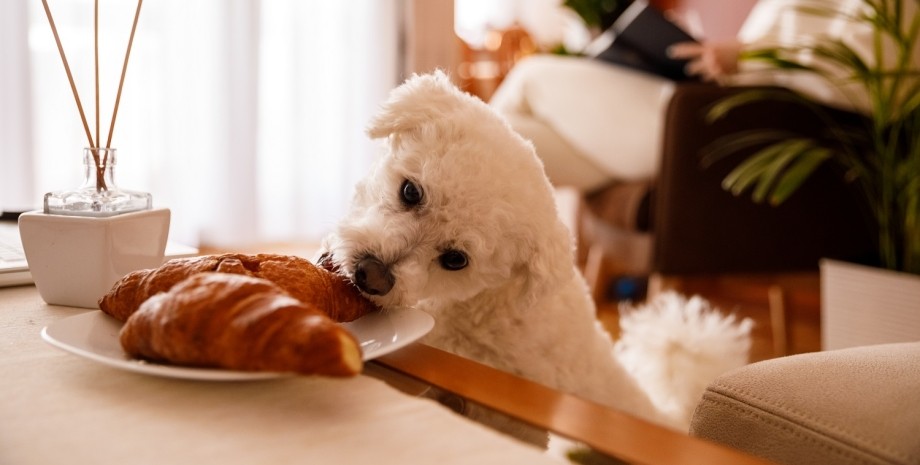
Here's a crucial psychological point you need to know. When you start to consistently ignore the dog (Method 1), their behavior will likely get dramatically worse before it gets better. This phenomenon is called an 'extinction burst.'
The dog thinks, 'This is weird, it used to work. I must not be doing it well enough.' And they'll start begging more actively: whining louder, nudging with their nose, barking. This is a sign of victory! It means the dog has noticed the change and is trying to get the old 'working' system back. Your job is to simply ride out this moment. If you give in at this exact point, you will teach the dog that to get food, they don't just need to beg, but to beg very hard.
Cleanliness and Scent: The Unseen Trigger
Sometimes, we unknowingly provoke the dog ourselves. A dog's nose is thousands of times more sensitive than ours. If crumbs, drops of sauce, or scraps fall on the floor during cooking or dinner, the dog sees this as an invitation to 'vacuum'.
Try to maintain cleanliness around the dining area. This is especially important if you have carpets or fabric furniture that absorb odors. A constant smell of food will be a trigger for the animal. Learning effective ways to get rid of pet hair and odors in the home can also reduce teh temptation for your pet.
Conclusion: A Peaceful Dinner Is a Reality
As you can see, teaching a dog not to beg isn't a single magic trick, but consistent work. Don't expect results overnight. If your dog has been practicing this begging for years, it will take several weeks to break the habit.
The key to success is 100% consistency. Choose the methods that work for you (ideally, a combination of 'Ignore,' 'Spot,' and feeding the dog before you), and stick to them. Explain the rules to everyone in the household.
Remember, you're doing this not because you're a 'mean' owner, but because you are a responsible and loving leader. You are setting healthy boundaries that make your life together better, safer, and far more peaceful. Your reward isn't just a quiet dinner, but a well-behaved, balanced, and happy dog.