
A decorative rabbit isn't just a fluffy bundle of joy that wiggles its nose cutely. It is a personality with character, dog-like intelligence, and needs that are frequently underestimated. Many people buy a bunny on impulse after seeing those soulful eyes in a pet shop, but unfortunatley, within a month, they face reality: chewed cables, night-time thumping, and specific dietary requirements. Does this mean a rabbit is a bad pet? Not at all! They are wonderful companions if you know the rules of the game. In this complete guide, we will break down 7 fundamental rules that will turn your pet's life into a fairytale and yours into a peaceful coexistence. Learn more on Tvaryny.
Rule #1: A Home is a Castle, Not a Prison

The most common mistake beginners make is buying a small cage "like for a hamster." Remember this axiom: a rabbit cage must be large enough for the animal to stand fully upright on its hind legs and make at least three hops in length. However, even a "gilded cage" cannot replace freedom.
The Ideal Housing Formula
- Minimum Size: For a dwarf rabbit - approx. 40x24 inches (100x60 cm). For larger breeds - at least 4 feet (120 cm) in length.
- Flooring: No wire floors! Mesh flooring leads to pododermatitis (sore hocks and wounds on the paws). Use a plastic tray lined with a PVC mat or special bedding (wood pellets).
- Zoning: The rabbit must have a "bedroom" (house), "dining room" (hay rack and bowls), and "bathroom" (corner litter box).
Important: The modern trend in decorative rabbit care is "free roam" or pen living. The cage often remains open 24/7 and serves merely as a base for resting and toilet needs.
Rule #2: The Bunny Food Pyramid
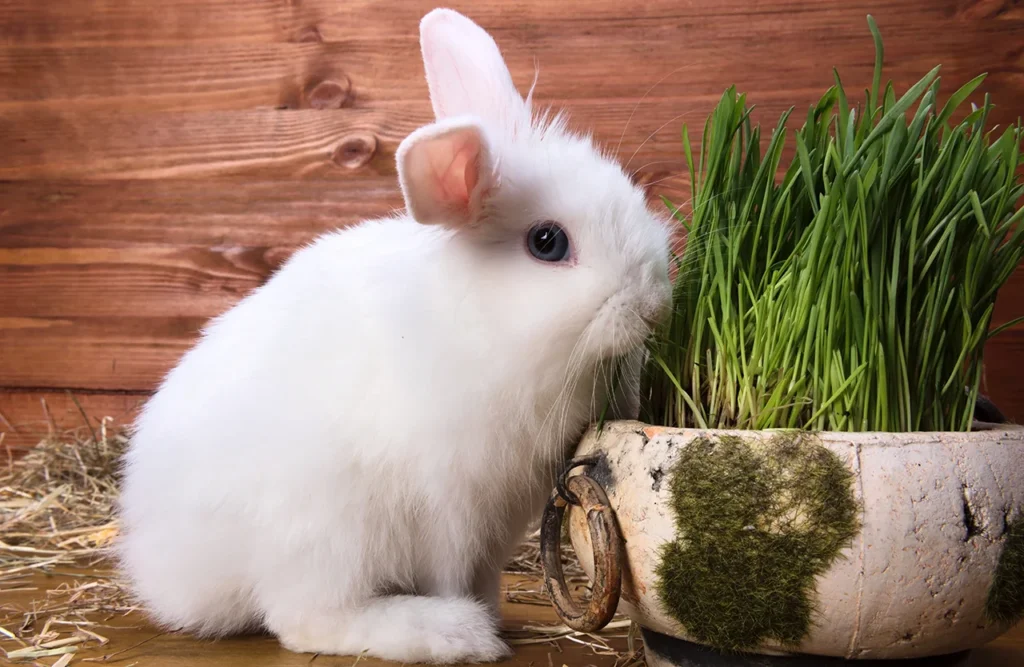
Rabbit nutrition is a topic surrounded by the most myths. "Rabbits eat cabbage and carrots" is a cartoon stereotype that has killed many animals. The digestive system of lagomorphs works continuously, and any failure can lead to gastrointestinal stasis (GI stasis), which is deadly.
| Product | Share in Diet | Comment |
|---|---|---|
| Hay | 80–85% | Must be available 24/7. Promotes tooth wear. |
| Greens & Herbs | 10–15% | Lettuce, dill, parsley, carrot tops. |
| Vegetables | ~5% | Only as a treat. Carrots, zucchini, pumpkin. |
| Commercial Food | 1 tbsp | Only grain-free grass pellets without dyes. |
| Fruit/Berries | Rarely | A small piece of apple once a week. |
A Categorical "No":
Never give a rabbit: bread, crackers, cookies, potatoes, onions, garlic, chocolate, or grain mixtures (with corn kernels and seeds). This is poison or a cause of serious tooth and gut problems.
Rule #3: Hygiene and Potty Training

Rabbits are very tidy animals. They are easily litter trained, just like cats. However, unlike cats, they don't bury their "business," so the box must be comfortable.
The secret to success is simple: hang the hay rack (feeder) directly above the litter box. Rabbits love to chew and eliminate at the same time. It's physiology. If you provide such a setup, 90% of the "droppings" will end up where they should.
By the way, if you are choosing between a rabbit and another small pet, it is worth knowing the specifics of each species. For example, chinchillas have completely different hygiene requirements (sand baths). You can read more about this in the article "Chinchilla from A to Z: The Complete Care Guide for a Happy Pet Life".
Rule #4: Health and Veterinary Checks

A decorative rabbit is a master at masking pain. In the wild, a weak animal becomes lunch for a predator, so they endure until the very last moment. If a rabbit sits in a corner, refuses food, or has a bloated stomach - you have mere hours to get to an exotic pet vet.
The Mandatory Check-up:
- Vaccination: Once a year (or every six months, depending on the vaccine), the rabbit must be vaccinated against Myxomatosis and Viral Hemorrhagic Disease (VHD). These diseases are transmitted by mosquitoes and hay, so even indoor rabbits are at risk.
- Spaying/Neutering: This is esential, not a whim. Unspayed females have an 80% risk of uterine cancer after 3–4 years. Furthermore, hormones make animals aggressive and compel them to mark territory.
- Teeth: Rabbit teeth grow throughout their lives. If the diet is incorrect (too little hay), teeth do not wear down, forming "spurs" that injure the cheeks and tongue.
Rule #5: Safety in the Apartment (Bunny-proofing)

Letting a rabbit roam a room that hasn't been prepared is like giving a child a pair of scissors. Their explorer instinct works through their teeth. Anything lying on the floor is considered lawful prey.
Safety Checklist:
- Wires: Hide all cables in special plastic tubing or raise them to a height of over 20 inches (50 cm). A bitten live wire is the most common cause of tragedies.
- Houseplants: Ficus, Dieffenbachia, and Azaleas are poisonous to bunnies. Remove pots from the floor and low stands.
- Gaps: Block access under low sofas and behind cabinets where the animal could get stuck.
Rule #6: Psychology and Training
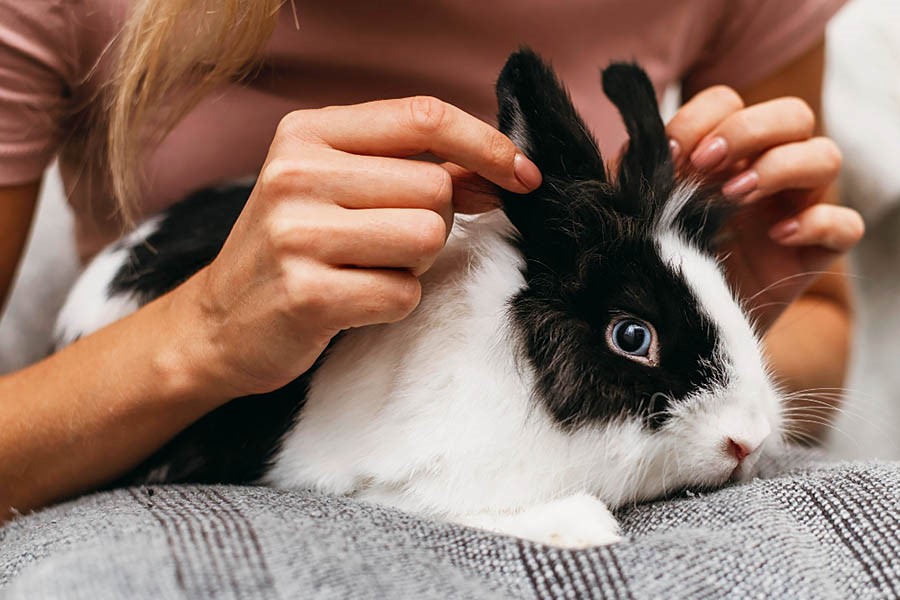
Rabbits do not understand punishment. Yelling at them or, heaven forbid, hitting them with a newspaper is the path to losing trust. The animal will become fearful or aggressive. Rabbit training is built exclusively on positive reinforcement.
If your pet behaves badly (chews furniture or makes noise), it is often a signal of boredom or stress. In this regard, they are similar to other intelligent animals. For instance, birds can also display destructive behavior if they lack attention, sometimes even learning forbidden words. The principle of "patience and kindness" works with everyone.
Bunny Body Language
To understand your friend, learn their signals:
- Thumping back leg: "I am annoyed" or "I sense danger!"
- Soft tooth purring (when you pet him): The equivalent of a cat's purr. He feels good.
- Loud tooth grinding: Severe pain. You need a vet.
- "Binky" (jump with a mid-air twist): The highest measure of joy.
- Nudging with nose: "Pet me" or "Get out of the way."
Rule #7: Attention and Socialization

Rabbits are social animals. In nature, they live in groups. Loneliness is stressful for them. The ideal option is to keep a pair of fixed rabbits (boy + girl). If the rabbit is alone, you must become its "flock."
Set aside at least 2–3 hours a day for interaction. This doesn't necessarily mean active games. You can simply sit on the floor with a laptop or book while the rabbit runs around. Sooner or later, he will come over to see what you are busy with and settle down nearby.
Summary: Are You Ready for a Rabbit?
Caring for a decorative rabbit requires time, finances, and patience. It is not an "easy starter" for a child; it is a full-fledged family member that demands respect. But in return, you get a creature that will meet you at the door, stand funnily on its hind legs begging for a treat, and warm you with its heat on winter evenings.
By following these 7 rules, you will ensure your bunny has a long (8–12 years) and happy life. And a happy rabbit is a source of endless positivity for the whole family.