

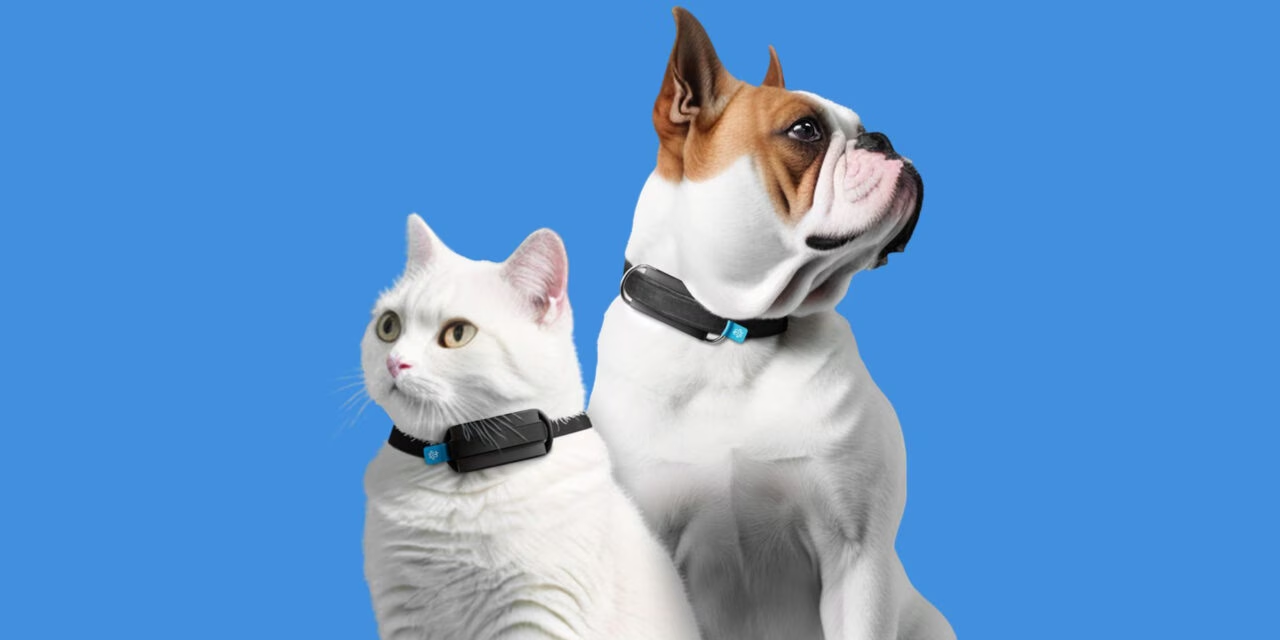
Today, we are used to our smartwatches counting steps, heart rate, and even blood oxygen levels. Instant access to health data has become the norm for humans. But what about our four-legged friends? Unfortunately, a dog can’t complain about shortness of breath during a walk, and a cat won’t tell you it’s feeling heart palpitations. Heart diseases in animals are often called “silent killers” because symptoms only become noticeable when the disease has advanced significantly. However, technology isn’t standing still. Your smartphone, which is always at hand, can become a powerful diagnostic tool. Find out more onTvaryny.
Why it matters: the hidden threat of heart disease
To understand the value of mobile apps, we first need to understand the physiology. The most common acquired heart diseases in dogs (e.g., mitral valve endocardiosis) and cats (hypertrophic cardiomyopathy) have a long asymptomatic period. An animal might look completely healthy, play actively, and eat with gusto, while its heart is already working at max capacity.
When the heart stops pumping blood effectively, congestive heart failure develops. Fluid begins to accumulate in the lungs (pulmonary edema) or in the abdominal cavity. This is the stage where owners usually notice the problem: the animal starts coughing, has trouble breathing, or becomes lethargic. But often this happens too late for simple medication control.
Key fact: An increase in respiratory rate during sleep is one of the earliest and most reliable indicators that an animal is developing pulmonary edema due to heart issues.
The gold standard of diagnostics: SRR (Sleeping Respiratory Rate)
Veterinary cardiologists around the world agree on one thing: monitoring Sleeping Respiratory Rate (SRR) is the best way to monitor at-risk patients at home.
The norm for dogs and cats is less than 30 breaths per minute during deep sleep. Ideally, this figure hovers between 15-25 breaths. If the rate rises steadily and approaches 30 or crosses this line, it is a warning signal (a “red flag”) requiring an immediate visit to the vet. Mobile apps are needed precisely to record these changes.
Overview of the best apps for pet heart monitoring
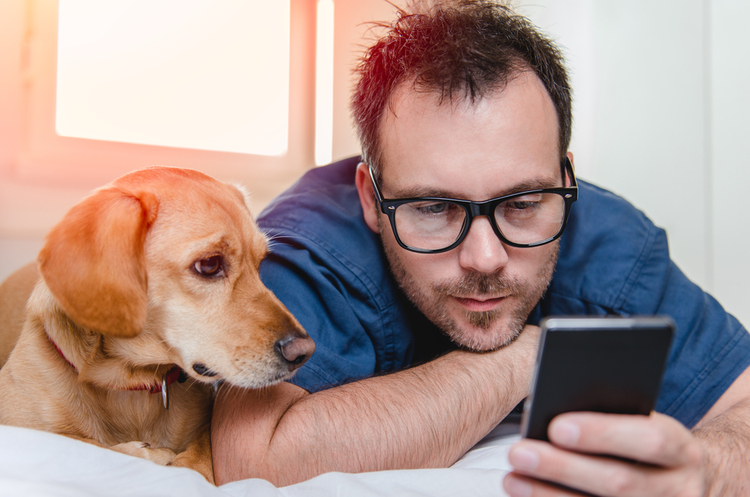
Of course, you can write data down in a notebook or an Excel spreadsheet. But specialized apps offer charts, reminders, and the ability to export data for your doctor. Here are a few tools that will turn your smartphone into a cardiac monitor.
1. Cardalis (iOS / Android)
This is arguably the most famous specialized app in the world of veterinary cardiology, developed by the pharmaceutical company Ceva. It was created specifically for SRR monitoring.
- How it works: You start the timer and tap the screen every time the animal takes a breath. The app automatically calculates the rate per minute.
- Benefits: Builds visual charts. If the rate exceeds the norm, the app flashes a warning. Data can be emailed to the vet directly from the program.
- Who it’s for: Owners of dogs with valvular endocardiosis and Dobermans/Boxers with dilated cardiomyopathy.
2. 11 Pets: Pet Care
This is a comprehensive pet care organizer that includes a “Vital Signs” module.
- Functionality: Besides reminders for vaccinations and parasite treatment, it allows you to keep a log of heart rate and respiratory rate.
- Feature: Suitable for those who don’t want ten different icons on their screen and prefer to keep all their pet’s info in one place.
3. BPM Counters (Tap Tempo)
You don’t necessarily have to use strictly veterinary software. Music apps or simple rhythm counters (BPM counters) handle the task perfectly.
You simply tap the screen in time with the dog’s breathing. This eliminates the “counting in your head” error, where you might lose count or get distracted. The result is instant and accurate.
Instructions: How to properly measure respiratory rate with a smartphone
Even the best app is useless if the input data is wrong. Measurement accuracy is the foundation of digital veterinary medicine. Here is a step-by-step algorithm on how to get valid data.
Step 1: Choose the right moment
The animal must be fast asleep. Not just dozing, when ears twitch at every sound, but proper sleep. The best time is in the evening after a walk and feeding. It’s imporant that the room isn’t too hot, as high air temperature naturally accelerates breathing (this is a thermoregulation mechanism, especially in dogs).
Step 2: Define the breathing cycle
One inhale + one exhale = one cycle. Watch the animal’s chest.
Chest rise (inhale) -> Fall (exhale) -> Pause.
We count “One”.
Next rise and fall – “Two”.
Step 3: Using the smartphone
Open the app (e.g., Cardalis). Try not to touch the animal with the phone or shine the screen in its eyes so as not to wake it. If you use a timer, measure the number of breaths for a full minute. Some methods allow counting for 15 seconds and multiplying by 4, but for animals with heart pathologies, breathing can be uneven (arrhythmic), so counting for a full minute is always more accurate.
Risk groups: who needs this the most?
Digital veterinary medicine is useful for everyone, but for some breeds, installing a heart monitoring app is mandatory from a young age. If your animal belongs to the list below, start keeping stats today to know their individual “baseline”.
Dogs:
- Cavalier King Charles Spaniel: extremely prone to myxomatous mitral valve degeneration.
- Dobermans and Boxers: high-risk group for dilated cardiomyopathy (DCM). The disease can develop silently for years.
- Dachshunds, Poodles, Chihuahuas: prone to valve diseases in older age.
- Giant breeds (Great Danes, Irish Wolfhounds): also in the risk zone for DCM.
Cats:
- Maine Coons, Ragdolls, Sphynx, British Shorthairs: genetic predisposition to thickening of the heart walls (HCM).
- Ordinary domestic cats: unfortunately, lack of a pedigree doesn’t guarantee protection against heart disease.
Data analysis: when to run to the vet?
You have installed the app and taken measurements for a week. What next? Here is how to interpret the numbers on your smartphone screen.
- Stable norm: If indicators are always within 15-25 breaths per minute – relax, everything is fine. Continue monitroing once a week or every two weeks.
- Gray zone: If you notice the average rate has started to rise (e.g., it was 20, but has become a steady 27-28) – this is cause for concern. Take measurements daily for the next 3-4 days.
- Red zone: The rate during sleep exceeds 30 breaths per minute. Or you see the animal breathing with effort, engaging abdominal muscles. This is an emergency. Even if the animal behaves normally during the day, nighttime figures >30 indicate the onset of pulmonary edema.
It is important to understand: one random reading of 35 breaths might be a mistake (the animal was dreaming of chasing a rabbit, or it’s simply hot). But a series of high figures recorded in the app is an objective clinical picture.
The future is here: not just apps
Smartphones are just the beginning. The Pet Tech market is booming. There are already “smart collars” (e.g., Whistle or Fi) that work like fitness trackers. They monitor activity, sleep, and even scratching frequency.
Some of the latest collar developments are attempting to integrate ECG sensors and real-time pulse measurement. Although the accuracy of such gadgets currently lags behind medical equipment, the trend is obvious: veterinary medicine is becoming preventive and digital. And in this system, your smartphone is the main control panel for your friend’s health.
Conclusion
Digital veterinary medicine isn’t about replacing the doctor with a robot. It’s about a partnership between the owner, technology, and the vet. Using apps to count respiratory rate takes exactly two minutes of your time per week. But these two minutes give you a priceless resource – control over the situation.
Don’t wait until symptoms become obvious. Download the app, wait for your pet to fall asleep, and do the first test. Perhaps this simple click on the screen will one day save a life.