

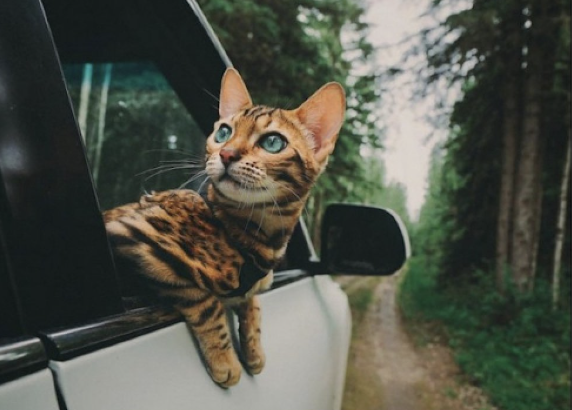
You are standing in the middle of the room with an open suitcase. From under the couch comes that anxious, deep meow that simply breaks your heart into tiny pieces. Your kitty has already figured it out. He feels the changes in the air, sees unfamiliar objects, and panicks. For him, any disruption of his usual routine is a red alert. As an animal psychologist and volunteer who has spent years helping street and shelter animals find homes, I have seen this fear hundreds of times. But I also know that a trip doesn’t have to be a tragedy. Welcome to tvaryny.com, where we learn to understand our pets on a much deeper level. Today, we’re going to talk about how to make traveling comfortable for your fluffy friend.
My experience in animal rescue has taught me one crucial lesson. Cats are never “bad” or “hysterical” on the road. They are just absolutely terrified. For them, their territory is their entire world. It’s their personal fortress. When we take them outside this fortress, the ground literally slips from under their paws. That is why our main mission is to become their island of safety. A solid anchor they can rely on during the storm.
Why does traveling scare our fluffballs so much?
To help them, we first need to get to the root of the problem. Cats are territorial predators. In the wild, they are also prey. Their survival depends entirely on having total control over their environment. They know every single scent in your apartment. And here lies the first blind spot for a cat in a car – foreign smells! They remember every shadow and every corner where they can safely hide.
While an energetic Drever (Swedish Dachshund) might joyfully jump into the car, expecting a bright new adventure with its owner, for a cat, any change of location is a potential threat to its life. The car hums and vibrates constantly. Unfamiliar objects flash past the window. The cat’s vestibular system experiences a massive overload. This isn’t just a temper tantrum. It is a genuine physiological and psychological shock.
The carrier is not a prison – it’s a personal safety bunker
The biggest mistake caring owners make is pulling out the transport carrier just five minutes before leaving the house. In that moment, you find yourself chasing a desperately struggling cat and forcefully stuffing him inside. What will the animal remember? “This plastic box equals pure evil, pain, and loss of freedom.”
Working with a cat requires maximum subtlety. It is completely different from systematic dog training. For example, when you are learning the secrets of potty training your puppy with pee pads, strict consistency and discipline are key. With cats, we have to use cunning. Our goal is to gently convince the whisker-bearer that he chose this safe haven all by himself.
Steps to trust: how to make your cat love the carrier
- Open access long before the trip: Bring out the carrier 2-3 weeks before D-Day. Remove the door completely. Place it in your kitty’s favorite room. Let it become just another piece of furniture.
- Creating coziness: Put a soft blanket or an old sweater that smells like you inside. Your scent is the best tranquilizer in the world.
- Positive associations: Start feeding your fluffball near the carrier. On the first day, place the bowl a yard away. The next day – closer. Eventually, put it right at the back of the plastic box.
- Happy pheromones: Use synthetic pheromones (like Feliway). Spray the inside 15 minutes before the cat enters. This sends a subconscious signal: “It’s safe here, we are home.”
- Test closures: When your cat is sleeping peacefully inside, try carefully reattaching the door. Close it for just a few seconds. Generously reward your pet with a delicious treat afterwards.
The absolute worst thing you can do is use the carrier exclusively for vet visits that involve painful shots. If possible, sometimes just carry your cat around the apartment in it and give him treats. We must break the “carrier equals pain” association.
Animal psychologist and volunteer
Which carrier should you choose for a perfect trip?
The market offers a sea of options. You can find backpacks with portholes, soft bags, and hard plastic boxes. Speaking from my volunteer experience of transporting highly stressed animals, I have a clear answer. The best choice is a rigid plastic carrier. Why? It holds its shape perfectly. It protects against accidental bumps in transit. It’s incredibly easy to wash if an accident happens out of fear. Most importantly, you can cover it with a cloth to create a dark, secure “burrow.”
Porthole backpacks look very stylish in photos, but they often become a living hell for cats. They create a terrible greenhouse effect due to poor ventilation. The clear plastic leaves the animal completely exposed to all visual stimuli. The cat feels like merchandise in a shop window right in the middle of a raging storm.
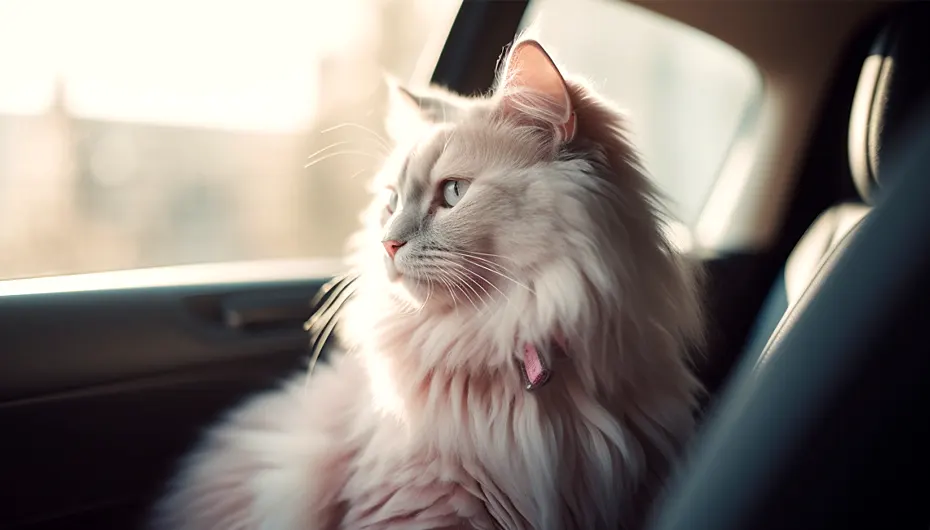
Packing the cat suitcase: a caring owner’s checklist
To avoid panic on the road, you need the right set of items on hand. I always advise my clients and adopters to pack a separate bag for the cat. Believe me, in a moment of crisis, you realy don’t want to frantically search all your pockets for wet wipes.
| What to take | Why it’s needed | Animal psychologist’s advice |
|---|---|---|
| Absorbent pee pads | To line the bottom of the carrier in case of bathroom “accidents”. | Layer two or three pads on top of each other. If the cat goes to the bathroom, you just pull out the dirty top layer without having to take the animal out. |
| Travel bowl/water dispenser | To maintain hydration during long trips. | Offer water only during stops. Do not leave a full bowl while moving – the water will spill and scare the pet even more. |
| Unscented wet wipes | For cleaning paws, fur, or the box itself. | Strictly NO strong scents (no aloe or citrus!). Sharp smells provoke nausea and dramatically increase stress. |
| Favorite toy or blanket | A source of a familiar, homey scent. | Put in an item the cat has slept with over the past few weeks. This serves as a powerful psychological anchor. |
| Harness and leash | For safely opening the carrier during stops or at the vet. | Put the harness on at home, BEFORE placing the cat in the box. In a state of shock, a cat can bolt from the car in a split second. |
Day X: survival secrets on the road
So, this nerve-wracking day has finally arrived. You are all packed. The cat is sitting in his box (which you pre-treated with pheromones). What do you do next? How can you minimize his suffering and save your own nerves?
- Fasting before departure: A cat’s vestibular system is extremely fragile. They often suffer from motion sickness. The last meal should be 4-6 hours before you hit the road. Water can be left out a little longer. Vomiting in a cramped, enclosed space causes terrifying stress.
- The magic of darkness: As soon as you step out of your apartment, throw a light, breathable cloth over the carrier. When the cat cannot see flashing trees, cars, and people, his nervous system receives far fewer danger signals. Darkness acts as a safe hideout.
- Temperature control: Cats overheat instantly when they panic. The car must absolutely not be hot. In the summer, make sure to turn on the air conditioning. However, always ensure that the icy draft isn’t blowing directly onto the animal.
- Your voice is medicine: Talk to him. Use a calm, low, and measured tone. Do not wail, “Oh my poor baby, you are so scared!”. Your anxiety will instantly transfer to your furball. Radiate absolute confidence: “Everything is fine, my sweetie, we are going to a safe place, I am right here.”
- Musical accompaniment: No heavy metal or blasting radio. The ideal scenario is complete silence. Alternatively, you can play special calming music for cats (easily found on YouTube) or soft classical music at the lowest volume.
What about sedatives?
I get asked this question almost every day. As a volunteer, I am categorically against “prescribing” medication over the internet or listening to your neighbor’s advice. If you know your cat is prone to severe panic attacks (breathing heavily with an open mouth, drooling, or falling into a catatonic stupor), you must consult a vet a few weeks before the trip.
Mild herbal drops (for example, lemon balm or hops based) have a cumulative effect. You need to start giving them 7-10 days in advance. Serious sedatives that truly “switch off” anxiety should only be prescribed by a qualified doctor. They will evaluate your pet’s heart and kidney health first. Never give animals human sedatives or valerian root. The latter acts as a massive stimulant for them. Instead of sleep, you will get a hyperactive and aggressive cat trapped in a confined space.
We have arrived: proper adaptation in a new place
The greatest relief is turning off the engine and arriving at your destination. But for the kitty, this is just the beginning of a whole new phase of stress. It doesn’t matter if it is a hotel, a new rental apartment, or a summer cabin. To him, it is an alien territory. It is full of hidden dangers and unknown scents.
Do not let the cat run loose all over the house in an initial burst of euphoria. Dedicate one small room just for him (a bedroom or even a warm bathroom will do). Put his litter box, food and water bowls, and the open carrier right there. Do not pull him out of the box by force! Simply open the door, sit down next to it on the floor, and wait. The cat must decide on his own when he is ready to step out. For a brave soul, this might take 5 minutes. But for a rescued street kitten who is still learning to trust humans, it could take an entire, long night.
Allow him to hide under the bed – it is his sacred right to feel safe in a new place. Don’t try to fish him out of there with a mop. Just speak to him tenderly and very quietly. Offer the most delicious wet canned food. When he realizes that this new territory holds his familiar scent, his belongings, and most importantly – his loving human, his terrified little heart will begin to calm down.
Every cat is an incredible, profound universe with its own personal boundaries. Your empathy, love, and boundless patience can turn the most terrifying journey into another beautiful step toward absolute, mutual trust.
Animal psychologist
Traveling with a furry friend is a massive challenge. But it is also a wonderful opportunity to show him that you will always be his ultimate protector. It really doesn’t matter whether you are in your home apartment or thousands of miles away. Take care of your whiskered children. Have an ocean of tolerance for them. And may every trip you take together always end with peaceful, quiet purring right on your lap.