

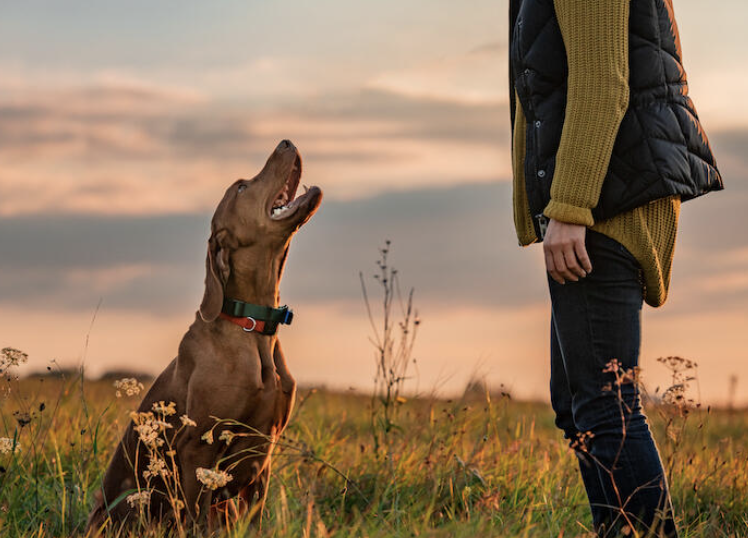
Grab your treat pouch. Load it up with the tastiest liver and call your furry sidekick over! We are kicking off a training session that will totally flip your idea of obedience upside down. Forget about boring hours of drilling on the training field. No more hoarse voices or tight leashes. Dynamics, drive, and total mutual understanding – that is our goal. Readers of tvaryny.com often ask me about perfect focus. How do you achieve it when squirrels are darting around, frisbees are flying, and other dogs are barking? The answer is simple. And it fits right in the palm of your hand.
It is the clicker. A little plastic box with a metal plate inside. It sounds like a minor detail. But in skilled hands, it is a true magic wand for shaping absolutely any behavior. Are you ready to get your dog’s brain working so hard that they start offering you perfect command execution on their own? Then let’s get to it. We only have 15 minutes for this trianing. And we are going to squeeze the absolute maximum out of them!
What is a clicker and why it is the ultimate upgrade for your training
In agility and dog sports, we work at crazy speeds. The dog flies down the course. They clear jumps. They weave through the poles. There is no time for long speeches here. We need a marker. A clear, fast, and emotionless signal. A signal that tells the pup: “Bingo! You just did exactly what was needed, and a reward is flying your way.” The clicker serves exactly this function. It literally takes a snapshot of the correct action at the exact moment it happens.
Imagine trying to explain the rules of a complex game to a foreigner. You only have one word in your arsenal: “Yes”. If you say “Yes” a full second late, they might think you are praising them for scratching their nose. Not for making the right move. It is exactly the same with dogs. Timing is everything. And it is that specific “click” sound that lets you lock in a behavior with millisecond precision.
A clicker does not teach a dog commands. It teaches the dog to think, offer solutions, and understand the rules of the game. It is not a remote control. It is a bridge of understanding between your minds.
Parameter Clicker Training (Modern Approach) Classic Drilling (Old School) Learning Speed Cosmic. The dog catches on to the concept incredibly fast Slow. Lots of physical manipulation and force Dog’s Emotional State Excitement, drive, insane desire to work Stress, avoiding mistakes, passivity Marker Precision Milliseconds (the sound is always consistent) Blurry (your voice changes based on emotion and fatigue) Initiative The dog generates and offers behaviors on their own The dog passively waits for a command or a leash pop
Loading the weapon: how to explain what “click” means to your dog
Before demanding perfect heelwork or complex tricks from your fluffy athlete, you need to “load” the clicker. It is like installing drivers for a new gadget. The dog must clearly grasp a simple neural connection. The sound of the clicker equals the guaranteed appearance of a treat. If you are diving into clicker training for beginners and learning how to teach your dog basic commands with a clicker, you absolutely must start here. Without this solid foundation built in, the clicking will just be weird, meaningless background noise to your dog.
Grab a handful of small, soft, and highly smelly treats. Boiled beef heart works perfectly. You can also use dried lung or special pea-sized sports snacks. Head into a quiet room. There should be no scattered toys, cats, or other distractions around. Let the magic begin!
- Click – treat: Simply press the clicker. Immediately (within 1 second), hand over a treat. The dog can just be standing, sitting, or staring at the wall during this. We do not care. We are just forming an association.
- Repetition: Do this 15-20 times in a row. Sound – food. Sound – food. This is crucial: the click sounds first. ONLY THEN does your hand start moving toward your treat pocket. Never at the same time!
- Focus check: Wait until your dog looks away. Click. If their ears instantly perk up and the dog whips around to look at you with burning eyes – congratulations, your tool is loaded!
- Change locations: Do a few short “click-treat” sets in different rooms. Then in the hallway. And finally, outside in a quiet spot to solidify the result.
Timing is everything: how to become a sniper in dog training
Now your dog knows that a click means hitting the jackpot. So, we start catching the right behaviors. Your task is to “take a picture” of the dog in the exact millisecond they do what you want. Did the dog sit? The click sounds exactly when their butt touches the ground. Not when they have already popped back up to celebrate.
Very often, owners complain about their dogs pulling outside. They feel like their arms are being ripped out of their sockets. They yank on the retractable leash, yell, and get totally stressed out. But all you need to do is grab our handy tool. If you want to teach your dog to walk on a leash beside you and not pull, the clicker will become your ultimate best friend. You just walk normally. The second the leash goes slack for even a moment – you click and deliver a treat. The dog figures it out: “Wow, a loose leash generates food! I am going to keep it loose.” This is the pure magic of operant conditioning in action.
Typical rookie mistakes that kill the drive
Even the coolest tool can definetly break if you use it wrong. In sports, we frequently see handlers confusing their own dogs. They create chaos in their heads instead of a clear system. Let’s break down the major screw-ups so you never repeat them.
- Clicking to get attention. A clicker is not a whistle, a squeaker, or a name tag. Do not blindly click to make the dog come to you or look at you. A click is a marker for a correct action that has ALREADY successfully happened.
- Clicking without a reward. This is an ironclad rule: if you click, you must pay. Even if you accidentally push the button in your pocket. Or if you sneeze and click. You are obligated to hand over a treat. Otherwise, trust in the tool will vanish instantly.
- Late timing. The dog executed the command, and you got happy. You praised them verbally. You started digging in your backpack for a treat, and somewhere in that process, you clicked. No. First comes a sharp click, then everything else follows.
- Sessions that are too long. 15 minutes is the absolute maximum for intense mental workload. It is much better to do three short 5-minute sets. A half-hour marathon will just cause the dog to overheat and lose all interest.
A high-drive workout: a 15-minute daily routine
So, we are tuned in, and the dog is pumped. What should your daily training session look like to boost obedience to a pro level? We break our time down into clear blocks. The pace needs to be so high that the dog physically does not have time to get bored or distracted by crows.
The first 3 minutes are for a warm-up. We work on luring. Grab a treat in your hand. Guide the dog’s nose with your hand, making them spin in a circle. Have them walk in figure-eights between your legs. Click for active movement following the hand. This is a great way to kickstart the nervous system and trigger the “I am ready to work” mode.
The next 7 minutes are for learning something new. Or for aggressively polishing a difficult skill. Take the “stay” command, for example. The dog is sitting. You take one tiny step back. Did the dog hold their position? Click – walk back to them yourself and feed them. Never call the dog to you after clicking during a stay exercise! Otherwise, they will start breaking position just to get the food. Always bring the paycheck to them.
The final 5 minutes are for cooling down and transferring skills to everyday life. Here, we drastically drop the tempo. We teach the dog to simply be calm around you. This is a critical skill for city dwellers. If your goal is stress-free trips to public places, learning about a dog in a cafe and how to teach your pet to lie calmly under the table while you drink coffee is absolutely essential. The clicker works exactly the same way here. Lay out a mat. The dog lies down – click, drop a treat between their paws. They stay lying calmly for another 10 seconds – click again, give a treat. We are marking the state of relaxation.
Shaping: the advanced level of clicker training
Once you have nailed the basics, it is time to move on to shaping. This is a method where you do not prompt the dog at all. No hands, no leash, not even a glance. You simply place an object in front of them. It could be an ordinary cardboard box. And you wait in silence. It takes patience. But the results are absolutely out of this world.
Did the dog look at the box? Click, treat. Did they take a hesitant step toward it? Click, treat. Did they touch the cardboard with their nose? Jackpot! You are “sculpting” the behavior step by step. And the dog starts thinking like a true genius. Shaping drains a dog mentally. Ten minutes of this kind of brain activity replaces an hour of mindless ball chasing.
The best dog is not the one who blindly follows commands out of fear of punishment or a leash pop. It is a partner. One who loves to learn, because for them, every training session is a thrilling quest with a guaranteed prize at the finish line.
Let’s sum up our rules of the game
Whether it is agility, advanced obedience, or just routine evening park walks – the exact same laws of behavior apply everywhere. Your charged-up energy, the right tool in your hand, and consistency work real miracles. Do not wait for some perfect moment. Do not wait for the weekend to get started. Take your clicker on every single morning walk.
Remember the ironclad 15-minute rule. Do not overload your fluffy buddy. Always end the training session on a peak of positivity. Stop before the dog gets tired or loses interest. If you do everything right, you will soon catch yourself thinking an amazing thought. Your dog has started to understand you at a single glance! So tie your sneakers. Fill up your treat pouch, and go create some magic with your best friend. See you on the training field!