Group 5 · spitz and primitive · Sweden, Norrbotten Province
Norrbottenspets
A compact northern spitz from Norrbotten — lively, alert and devoted: clever, energetic, a nimble hunter and a reliable watchdog. The Norrbottenspets is a rare Swedish spitz from the northernmost lands; it blends the qualities of a skilled hunter, a keen watchdog and an affectionate family dog, but needs plenty of exercise and occupation, or it grows bored.
Apartment · with caveatsKidsCats · with caveatsOther dogsBeginners · with caveats
The Norrbottenspets is a lively, intelligent, and devoted dog that originated in the northernmost corners of Sweden. This compact yet resilient spitz embodies energy and vigilance, combining the qualities of an excellent hunter, a reliable watchdog, and an affectionate family member. Despite its ancient history and unique traits, the breed remains relatively rare outside Scandinavia, but its popularity is gradually growing among active lifestyle enthusiasts. They're an ideal fit for people looking for more than just a pet—they seek a true companion for adventures. You can learn more about this incredible dog on Tvaryny.
These dogs can be wonderful working farm helpers and fantastic family pets. While they can live in an apartment, they absolutely need daily, long, and intensive walks. Norrbottenspets are incredibly agile, full of stamina and energy. They have an immense love for all members of their family and are wonderful with children, showing patience and playfulness. These dogs rarely bark without cause, which is certainly a plus, especially for urban residents. You'll typically only hear a Norrbottenspets bark when a stranger approaches their guarded territory, making them excellent and vigilant watchdogs.
Norrbottenspets: Key Breed Information
Norrbottenspets: Key Breed Information · 9
Parameter
Characteristic
Origin
Sweden, Norrbotten Province
FCI Classification
Group 5 (Spitz and Primitive Types), Section 2 (Nordic Hunting Dogs). Standard No. 276.
Life Expectancy
12–15 years, sometimes longer
Height at Withers
Males: 45 cm (+/- 2 cm); Females: 42 cm (+/- 2 cm)
Weight
11–15 kg
Temperament
Brave, alert, friendly, active, self-confident
Use
Hunting small game and birds, companion dog, watchdog
Color
White with yellow or reddish-brown patches
Shedding
Intense, twice a year
Comparison with Other Nordic Breeds
The Norrbottenspets shares many similarities with other Scandinavian breeds but also has its unique traits. For example, it is quite similar to the Finnish Spitz, often called a "barking bird dog," but the Norrbottenspets is typically a bit calmer and less "talkative." Compared to larger hunting dogs like the Norwegian Elkhound Black or the East Siberian Laika, the Norrbottenspets is more compact and adapts better to city life. Unlike another unique Scandinavian breed, the Norwegian Lundehund, which has distinctive anatomical features for puffin hunting, the Norrbottenspets is a more versatile hunter and companion.
Interesting Facts About the Breed
"The dog that returned from the dead": Due to the mistaken declaration of its extinction in 1948, the Norrbottenspets is sometimes called the "Phoenix breed."
Nose color change: In some representatives of the breed, the nose may lighten in winter ("snow nose") and darken again in summer. This is normal.
Hunting technique: When hunting birds, the Norrbottenspets uses its voice to distract and hold the bird in a tree until the hunter approaches.
National heritage: In Sweden and Finland, this breed is considered part of the national cultural heritage.
History of the Norrbottenspets
The history of the Norrbottenspets dates back centuries, closely interwoven with the lives of hunters and farmers in northern Scandinavia. These dogs have been present in what is now Sweden and Finland since at least the 17th century, possibly even earlier. The breed earned its name from the Norrbotten province, Sweden's northernmost region, where these small but valiant spitzes were invaluable companions. They served as versatile dogs: hunting forest birds (like capercaillie and black grouse), squirrels, and other small game, as well as guarding farms against rodents and unwanted visitors.
However, by the early 20th century, with the advent of World War I and shifts in lifestyle, the population of these dogs saw a catastrophic decline. The breed lost its former popularity, and in 1948, the Swedish Kennel Club (SKK) even mistakenly declared it extinct due to the low number of registered individuals. Fortunately, the breed survived thanks to dedicated enthusiasts and farmers in remote areas who continued to appreciate its working qualities. In the 1960s, a group of committed breeders launched a recovery program. They successfully located isolated representatives of the breed and saved it from complete disappearance. Thanks to their efforts, in 1967, the breed was once again officially recognized by Scandinavian kennel clubs. The Fédération Cynologique Internationale (FCI) registered the breed in 1966. Despite these efforts, the Norrbottenspets remains quite rare outside its homeland, though its unique character and capabilities certainly deserve global recognition.
What the Norrbottenspets Looks Like: Standard and Appearance
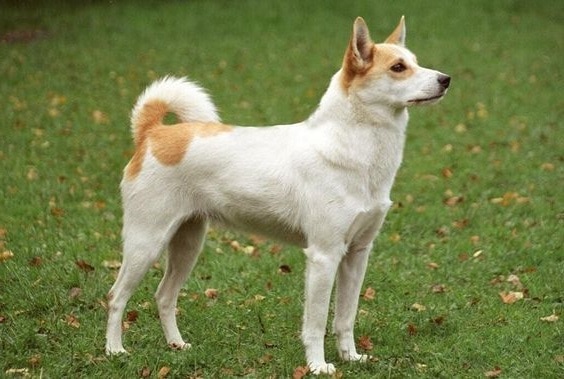
The Norrbottenspets is a compact dog, slightly below medium height, with a square build and a lean, robust physique. It gives the impression of an alert, agile, and self-assured dog.
Head: Wedge-shaped, clean-cut, and strong. The skull is slightly rounded, and the stop (transition from forehead to muzzle) is clearly defined but not overly abrupt.
Muzzle: Tapering, its length is approximately half the length of the head.
Eyes: Almond-shaped, medium-sized, dark in color. The gaze is very attentive and calm.
Ears: Set high, erect, slightly larger than average. The tips of the ears are slightly rounded.
Body: The back is short, straight, and strong. The ribcage is oval and deep, reaching the elbows.
Limbs: Straight, parallel, with well-developed musculature, ensuring speed and endurance.
Tail: Set high, curled into a ring and carried over the back. This is a typical feature of spitz breeds.
Coat: Double, with a soft and dense undercoat and a harsh, straight outer coat of medium length. On the neck, hindquarters, and tail, the hair is longer.
Color: The main color is white. Patches can be yellow or reddish-brown. Ideally, the patches are clearly defined and well-distributed over the body.
Character: Temperament and Behavior
Norrbottenspets are truly precious dogs. They are incredibly kind, sociable, playful, and cheerful. Aggression is not characteristic of them; these animals are always friendly and good-natured toward both people and other dogs, provided they are properly socialized. Representatives of this breed are very active, energetic, and resilient. They possess a keen sense of smell, instant reactions, and impressive speed, making them excellent hunters, especially for birds and small game. Their tireless nature also allows them to track hares and squirrels. Norrbottenspets form strong bonds with people, adoring their families, and are typically obedient and eager to please. This makes them relatively easy to train, even for first-time dog owners.
It’s important to understand that this is not a couch potato dog. It requires both mental and physical stimulation. This is a very curious breed that loves to explore the world. They are vigilant and will always alert their owner to approaching strangers with a loud bark, but they are not prone to causeless noise. They get along wonderfully with children, being patient and fun playmates.
Pros and Cons of the Norrbottenspets Breed
Pros
Cons
✅ Friendly and family-oriented character: Gets along wonderfully with children and other animals (with proper socialization).
❌ High energy level: Requires daily long and active walks. Not suitable for inactive people.
✅ Good health: Rarely suffers from genetic diseases, boasts a strong immune system.
❌ Tendency to bark: Can be noisy, reacting to strangers, which might be a concern in an apartment.
✅ High intelligence: Learns easily, quickly remembers commands.
❌ Strong hunting instinct: May chase small animals, requires a reliable leash on walks.
✅ Compact size: Suitable for apartment living provided sufficient exercise.
❌ Intense shedding: Sheds heavily twice a year, the coat requires thorough brushing.
✅ Simple coat care: Doesn't require professional grooming, regular brushing is sufficient.
❌ Needs mental stimulation: Without games and activities, they can get bored and display destructive behavior.
Training and Socialization
Norrbottenspets are very intelligent dogs with excellent memory, allowing them to quickly learn commands. They are easily trained and typically quickly grasp what's expected of them. However, like all spitz breeds, they can be a bit stubborn and independent. A puppy needs to be trained patiently and consistently, utilizing positive reinforcement methods. Harshness and punishment won't yield results and can damage the relationship with the dog. The most effective training approach will involve encouragement through treats or praise.
Early socialization is critically important. From puppyhood, accustom your puppy to different people, sounds, places, and other dogs. This will help them grow into a confident and well-adjusted dog that calmly perceives the surrounding world. To unlock their hunting instincts, it's usually sufficient to send them on a few hunts with other adult and experienced dogs.
Norrbottenspets Care
Caring for this breed is straightforward, but it requires regularity and attention to detail.
Grooming and Coat Care
Norrbottenspets don't require complex grooming. Their double coat has dirt-repellent properties. Key recommendations:
Brushing: It's sufficient to brush their coat once a week to remove dead hairs and prevent matting.
Shedding: Twice a year (in spring and fall), they undergo intense shedding as their undercoat is completely renewed. During this period, the dog needs to be brushed daily using a deshedding tool or a specialized brush.
Bathing: These dogs rarely get dirty and don't have a strong odor. Bathe them only when necessary, no more than 2–3 times a year, using a specialized dog shampoo.
Claws: Regularly trim their claws (once every 3–4 weeks) if they don't wear down naturally.
Ears and Eyes: Regularly check the cleanliness of their ears and eyes. Eyes can be wiped with a chamomile infusion, and ears cleaned with a special lotion.
Physical Exercise and Activity
This is a critical aspect of Norrbottenspets ownership. This is a very energetic breed that needs at least 1–1.5 hours of active exercise daily. A simple leash walk won't be enough for them. They require running, games, and the opportunity to explore new territories. At home, a Norrbottenspets should have plenty of toys; otherwise, boredom may lead to destructive behavior. They make excellent partners for runs, hikes in the mountains, and can also perform well in sports like agility, flyball, and nosework.
Nutrition
Norrbottenspets Diet: Key Recommendations
Health and risks
Norrbottenspets Health: Typical Ailments and Prevention
Frequently Asked Questions about the Breed (FAQ) · 4
Is the Norrbottenspets suitable for apartment living? Yes, provided you can ensure it receives sufficient daily physical and mental activity. Without adequate exercise, it can become destructive.
Do they get along well with other animals? With early socialization, they generally get along well with other dogs. With cats and small animals, problems may arise due to their strong hunting instinct, so they need to be introduced carefully and under supervision.
Do they bark a lot? They are not prone to causeless barking but will always vocalize if they notice something suspicious. They make excellent watchdogs.
Are they difficult to train? No, they are intelligent and eager to please their owner. However, they can show independence, so training must be consistent and based on positive reinforcement.
Video about the Breed
FAQ
Can the Norrbottenspets be kept in an apartment?
Yes, but only with long, intense daily walks and occupation — it is a very active, energetic breed that grows bored and destroys property without a workload.
Is the Norrbottenspets good with children?
Yes, it loves all members of the family; but it dislikes children pestering it too much, so it is important to teach children to respect the dog's space.
What can the Norrbottenspets do?
It is an all-rounder: a skilled hunter of bird and small game, a keen watchdog and at the same time an affectionate family companion and farm helper.