Group 5 (Spitz and Primitive types), Section 3 (Nordic Watchdogs and Herders) · Iceland
Icelandic Sheepdog
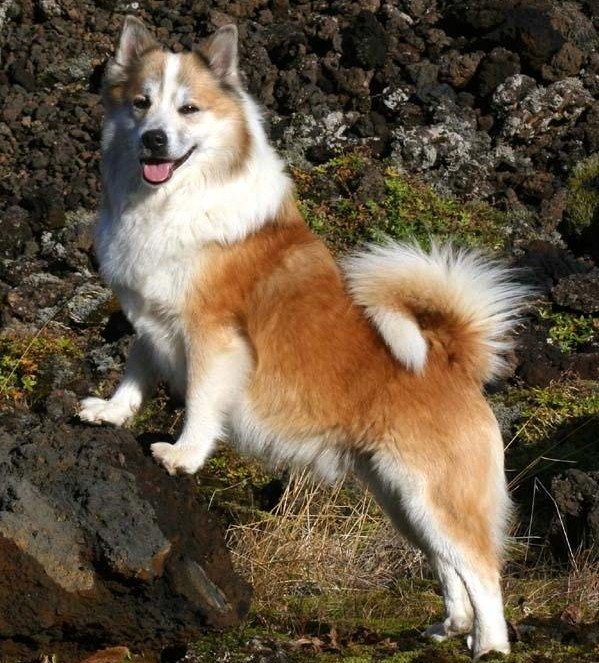
A sunny Icelandic "fox" with an eternal smile: friendly, devoted and energetic. The Icelandic Sheepdog is the only breed of Iceland, a northern herding spitz that greets even strangers like old friends; it is made for family and movement.
Apartment · with caveatsKidsCatsOther dogsBeginners
The Icelandic Sheepdog is a true national treasure of the "Land of Fire and Ice" and the only native breed to originate directly from Iceland. Since ancient times, these fluffy companions have been valued as excellent herders and vigilant guardians of farmsteads. They were also used to hunt birds, but the primary activity of Icelandic dogs remained herding: they were tasked with grazing cattle, sheep, and the famous Icelandic horses. These dogs are also known as Icelandic Spitz or "Viking Dogs." Read more on Tvaryny.
The Icelandic Sheepdog: A Brief Overview and Characteristics
The Icelandic Sheepdog: A Brief Overview and Characteristics · 9
Characteristic
Description / Value
Country of Origin
Iceland
International Name
Icelandic Sheepdog / Íslenskur fjárhundur
FCI Group
Group 5 (Spitz and Primitive types), Section 3 (Nordic Watchdogs and Herders)
First Mentioned
Late 9th Century (settlement period of Iceland), standard approved in 1897
20–35 lbs (10–15 kg) (depending on gender and build)
Coat Type
Double, thick, water-repellent (two types: short-haired and long-haired)
Purpose
Herder, companion, watchdog
Comparison with Other Breeds
Often, future owners choose between several breeds of Spitz. If we compare the Icelandic Sheepdog with its "relatives," it is more contact-oriented and gentler than most hunting huskies. It strongly resembles the Norwegian Buhund, with which it shares common roots, but the Icelander is usually slightly smaller and has more varied coloration. There is also a similarity to the Finnish Lapphund; however, Lapphunds have a more voluminous coat and a calmer temperament.
On the other hand, if you are looking for a small fluffy friend, but the Icelander seems too active or "working" for you, check out the Volpino Italiano. This is a significantly smaller, more decorative breed, which, although it belongs to the Spitz family, is better adapted to life exclusively in an apartment without heavy workloads.
Interesting Facts About the Breed
The Icelandic Sheepdog is depicted on Icelandic postage stamps, emphasizing its status as a national heritage.
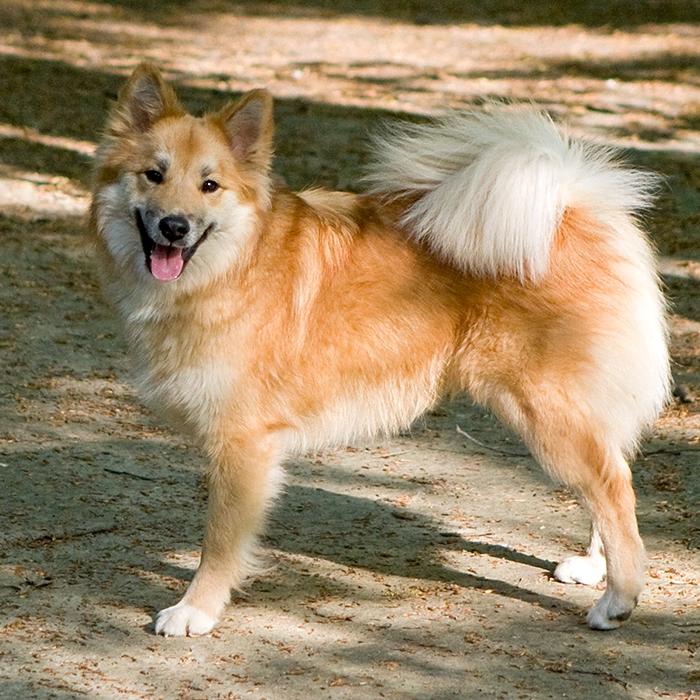
They have a "smile gene" - the relaxed mouth of the dog often resembles a wide smile.
The coat of these dogs has practically no specific "doggy" smell, even when wet.
To this day, in Iceland, these dogs are used to search for lost sheep after snowstorms.
History of the Breed: From Vikings to Modern Day
The history of this breed is inextricably linked with the settlement of Iceland itself. These dogs appeared on the island approximately between 874–930 AD. There is a confirmed theory that they arrived in this harsh territory with the first settlers - the Vikings, who brought their spitz-type dogs from Scandinavia. The ancestors of the modern Icelandic Sheepdog likely shared roots with the ancestors of the Norwegian Buhund, as Vikings frequently traveled between these territories.
For centuries, the dogs lived in complete isolation from the rest of the world. This allowed the breed to develop in a pure state, without the admixture of other bloodlines. In severe climatic conditions, only the strongest, smartest, and most resilient individuals survived. The dog was very popular among the local population and became a vital element of farm life. It was used as a herder: it virtuously managed flocks of sheep on rough terrain, searched for lost lambs in the mountains, and drove them home.
In the Middle Ages, thanks again to Viking trade routes and later merchants, these dogs began to reach Europe. The Icelandic Sheepdog quickly gained popularity among the nobility. It is known that the English aristocracy and Swedish rulers highly valued these "exotic" fluffy dogs. By the end of the 17th century, the dog was already known throughout Europe as the "Iceland Dog" or "Friaar Dog."
Threat of Extinction and Rescue
However, the history of the breed also has tragic chapters. In the 19th century, a terrible epidemic of distemper broke out in Iceland, followed by echinococcosis (a parasitic disease), which threatened the existence of not only dogs but also humans. During this time, the government enacted a strict law limiting the number of dogs on each farm, and in Reykjavik, keeping dogs was banned altogether (this ban partially affects the pet culture in Iceland's capital to this day).
In various corners of Iceland, literally only a few such dogs remained. The population was on the verge of genetic collapse. In the mid-20th century, there were only about 35–40 purebred individuals worldwide. Salvation came thanks to the efforts of enthusiasts, particularly Mark Watson, who traveled around Iceland buying up surviving dogs for breeding. Lovers of this breed managed to save it and ensure the further spread of the species. In 1898, the first breed standard was officially adopted in Denmark, although full recovery took place only in the second half of the 20th century.
What the Icelandic Sheepdog Looks Like: Appearance and Standards
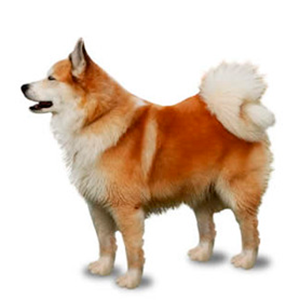
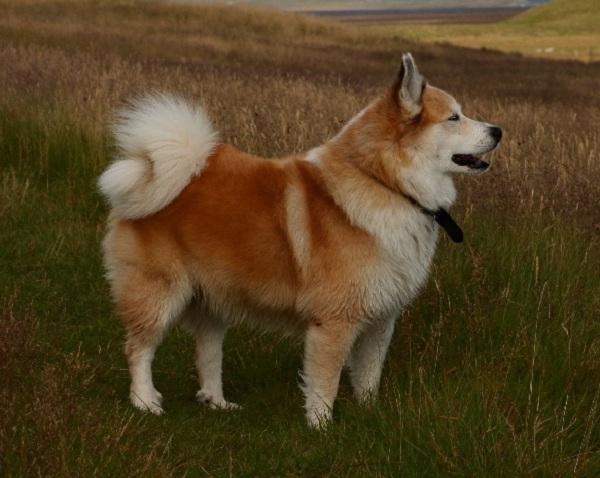
The Icelandic Sheepdog is a classic Nordic Spitz: small in size (slightly smaller than average), compact, and of an almost square format. It radiates energy and endurance. Sexual dimorphism is clearly expressed: males look more masculine and massive, while females are more refined.
Head: Harmoniously combined with the body, forming a triangle when viewed from above. The skull is broad and slightly domed. The transition from forehead to muzzle (stop) is well expressed but not sharp.
Muzzle: Short, straight, gradually tapering toward the nose, but not pointed. Lips fit tightly, black or dark brown (depending on color).
Eyes: Small in size, almond-shaped or round, dark in color. The expression is intelligent, lively, and cheerful (the "signature smile" of the Icelander).
Ears: Erect, medium-sized, triangular, and very mobile. They react to the slightest sound. The tips are slightly rounded.
Neck: Of medium length, muscular, without dewlap, set high, which gives the dog a proud look.
Body: Rectangular and compact. The back is straight, strong, and muscular. The chest is deep and wide; ribs are well sprung. The belly is slightly tucked up.
Limbs: Straight, parallel to each other, with strong bone structure.
Important feature: The presence of double dewclaws on the hind legs is mandatory. This is a unique breed trait that helped dogs climb rocks and ice.
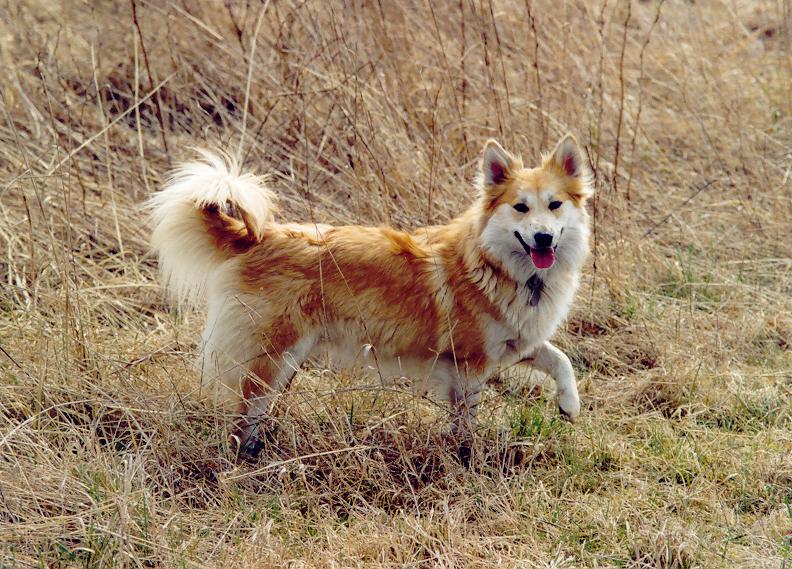
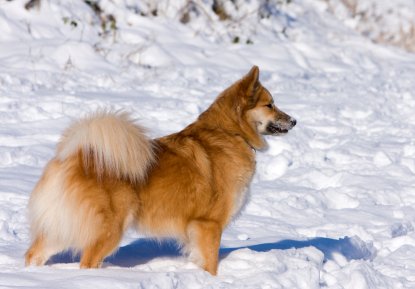
Tail: Medium length, set high, curled into a ring, and resting on the back. Covered with very thick hair, resembling a plume.
Coat and Color
The coat of Icelanders is double, thick, and extremely weather-resistant. It consists of coarse guard hair and a thick, soft undercoat. There are two varieties of coat:
Short-haired type: Medium length hair, quite thick. It is longer on the tail, behind the ears, and on the back of the limbs.
Long-haired type: The guard hair is longer, forming a beautiful ruff on the neck, "trousers" on the hind legs, and a very fluffy tail.
Coloration can vary, but one color must always dominate. The most common options are:
Red in various shades (from light wheaten to red-gold).
Chocolate brown.
Gray (agouti).
Black with white markings (tricolor).
White markings on the muzzle (blaze), chest, tips of paws, and tail are desirable and typical for the breed.
Character: Temperament and Behavior
The Icelandic Sheepdog has an exceptionally peaceful character. It is completely non-confrontational and prefers to walk away from aggression rather than show it. These dogs are intelligent, cheerful, and incredibly sociable. They are very kind and welcoming to people, often greeting guests with joyful barking and a "smile." This is not a breed that will look suspiciously at a stranger from a corner - the Icelander is more likely to jump into your arms to be petted.
Icelandic dogs are real workers, genetically programmed to cooperate with humans. Representatives of this breed always crave to be among people, in the company of their owner. They tolerate loneliness poorly and can suffer from separation anxiety if left alone for a long time. The Icelandic Sheepdog gets along perfectly with other animals, whether cats or other dogs, because it has almost no hunting instinct to chase prey (it is a herder, not a hunter).
Behavioral feature: These dogs have a habit of looking into the sky and barking at birds. This is an ancient instinct - this is how they protected young sheep from birds of prey (eagles and ravens) in the mountains of Iceland.
The character of this dog is formed in the first year and a half of its life - during this time, the owner must always be nearby. You cannot treat these dogs roughly. The Icelandic dog is an incorrigible optimist who will brighten up any gloomy day with his presence.
Pros and Cons of the Breed
Like any breed, the Icelandic Sheepdog has its advantages and disadvantages that a future owner should know about.
Pros (+)
Cons (-)
Very people-oriented, loyal.
Tendency to bark frequently (needs control).
Easy to train, high intelligence.
Heavy shedding twice a year (fur will be everywhere).
No aggression toward people and animals.
Tolerate loneliness poorly (not suitable for an outdoor kennel).
Compact size, convenient for travel.
Need active walks, not "couch potato" dogs.
Hardy and healthy.
May show herding instinct toward cars or joggers.
Training and Socialization
These dogs are incredibly smart and quick-witted. Any person can handle the upbringing of Icelandic Sheepdogs, even someone who has never had a pet, provided that they are ready to devote time to it. Keep in mind that these dogs mature late: up to a year and a half, they behave like puppies, and their character is just forming.
Key Moments of Training:
Positive Reinforcement: Under no circumstances should you treat them roughly. Yelling or physical punishment will make the dog timid and antisocial. Use treats and praise.
Barking Control: Since the breed is "talkative," teach the "Quiet" command from an early age. Do not forbid barking altogether (it is their nature), but teach them to stop on command.
Socialization: Introduce the puppy to different people, sounds, transport, and other dogs so that it grows up confident.
Usually, they quickly memorize commands and understand what is required of them, so no difficulties arise during training. The Icelandic Sheepdog shows excellent results in agility, obedience, and flyball. It is very important for dogs of this breed to please the owner; they always try their best to fulfill all human requirements. And if your dog does not understand something, think about it—maybe the problem is with you, and you are not explaining it clearly enough?
How to Care for the Icelandic Sheepdog's Coat?
The Icelandic Sheepdog is primarily a working dog, which breeders recommend keeping in a large private house with a big yard or on a farm so that the dog has the opportunity to satisfy its need for movement at any time. After all, Icelandic Sheepdogs have grazed and driven herds for ages; they joyfully covered long distances, so they absolutely need intensive physical exercise.
If you live in a city apartment but still decided to buy an Icelandic Sheepdog puppy, be prepared to provide it with long walks (at least 2 hours a day) and active play. Do not let your pet off the leash if there is a road nearby - seeing a bird or a cat, he may run after it, forgetting about caution.
Grooming and Hygiene
Caring for a dog of this breed is not difficult at all, but it requires regularity. Basic procedures:
Brushing: It is recommended to brush Icelandic dogs 1–2 times a week with a metal comb or a slicker brush. This helps remove dead hair and dirt.
Shedding Season: Twice a year (spring and fall), the undercoat of Icelandic Sheepdogs changes intensely. At this time, the dog needs to be brushed daily, otherwise, your home will be covered with a layer of "fluff."
Bathing: The coat of the Icelander has the ability to self-clean. You should bathe the dog only in case of heavy soiling, no more than 3–4 times a year, using shampoos for coarse hair.
Paw Care: Be sure to check the dewclaws on the hind legs. The claws there do not grind down on the asphalt, so they need to be trimmed regularly so that they do not grow into the skin. Also, grease the paw pads with oil or wax in winter.
Ears and Teeth: Regularly clean the pet's ears, wash his eyes with chamomile tea or special lotion, and brush his teeth with special paste and a brush to prevent tartar buildup.
Nutrition
Nutrition: Key Recommendations
Health and risks
Health: Typical Diseases and Prevention
Frequently Asked Questions (FAQ) · 3
Is the Icelandic Sheepdog suitable for an apartment? Yes, but only provided there is very active walking. If you are at work all day, and in the evening are ready only for a 15-minute walk - this breed is not for you. They will be uncomfortable inside four walls with nothing to do.
Do they bark a lot? Yes, this is a vocal breed. Barking is their working tool. They comment on the arrival of guests, play, or a bird they've spotted. This can be corrected by training, but you won't be able to eliminate it completely.
How do they tolerate heat? Due to the thick undercoat, heat is harder for them than cold. In summer, walk early in the morning and late in the evening, and provide constant access to water and shade.
Video About the Breed
FAQ
Is the Icelandic Sheepdog good for a family?
Very — it is one of the friendliest spitz, devoted, affectionate and excellent with children; it greets even strangers like friends.
Does the Icelandic Sheepdog shed a lot?
Yes — the dense double "nordic" coat sheds heavily by season; regular brushing is needed.
Is this breed healthy?
Generally yes — it is a hardy northern dog; mainly joint dysplasia and eye conditions (cataract) occur.